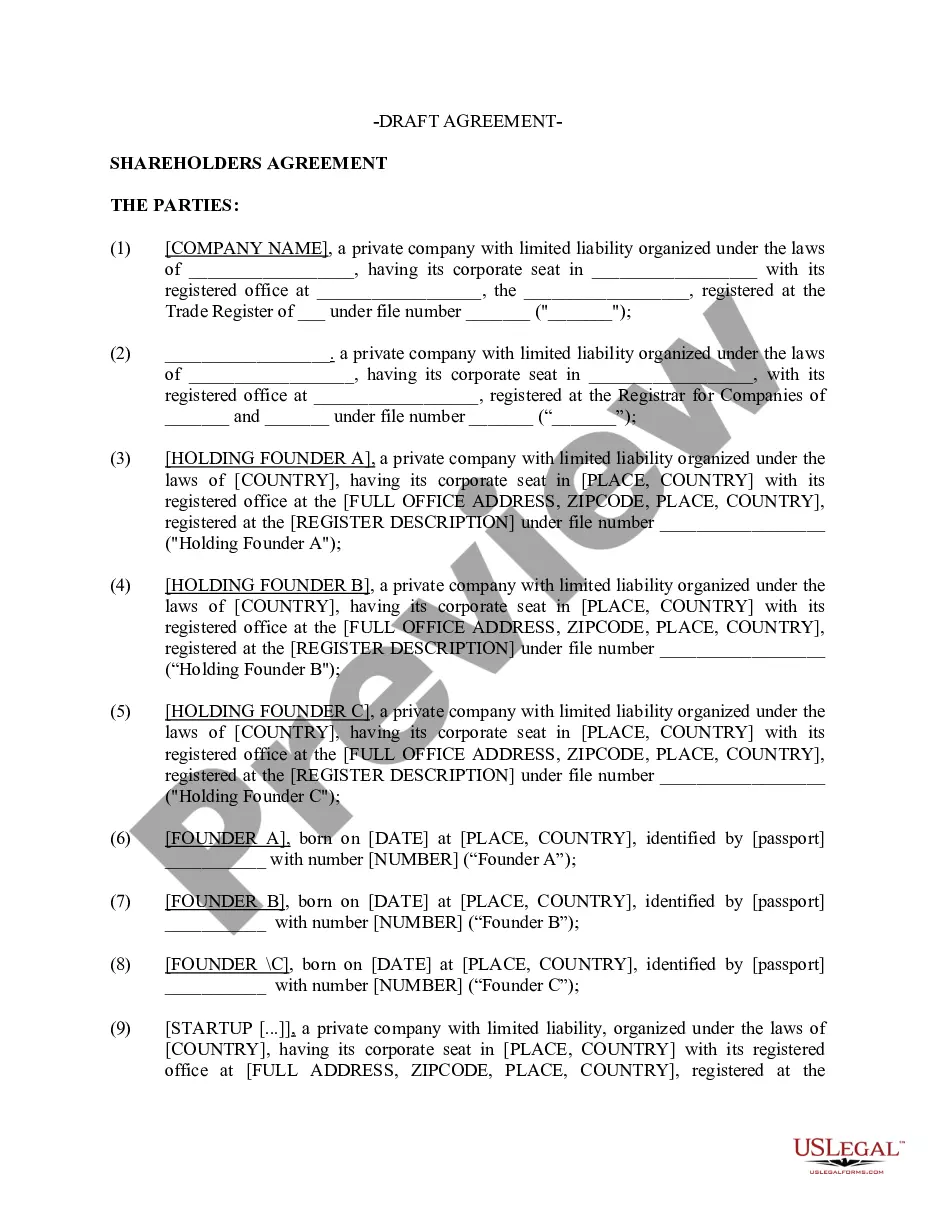
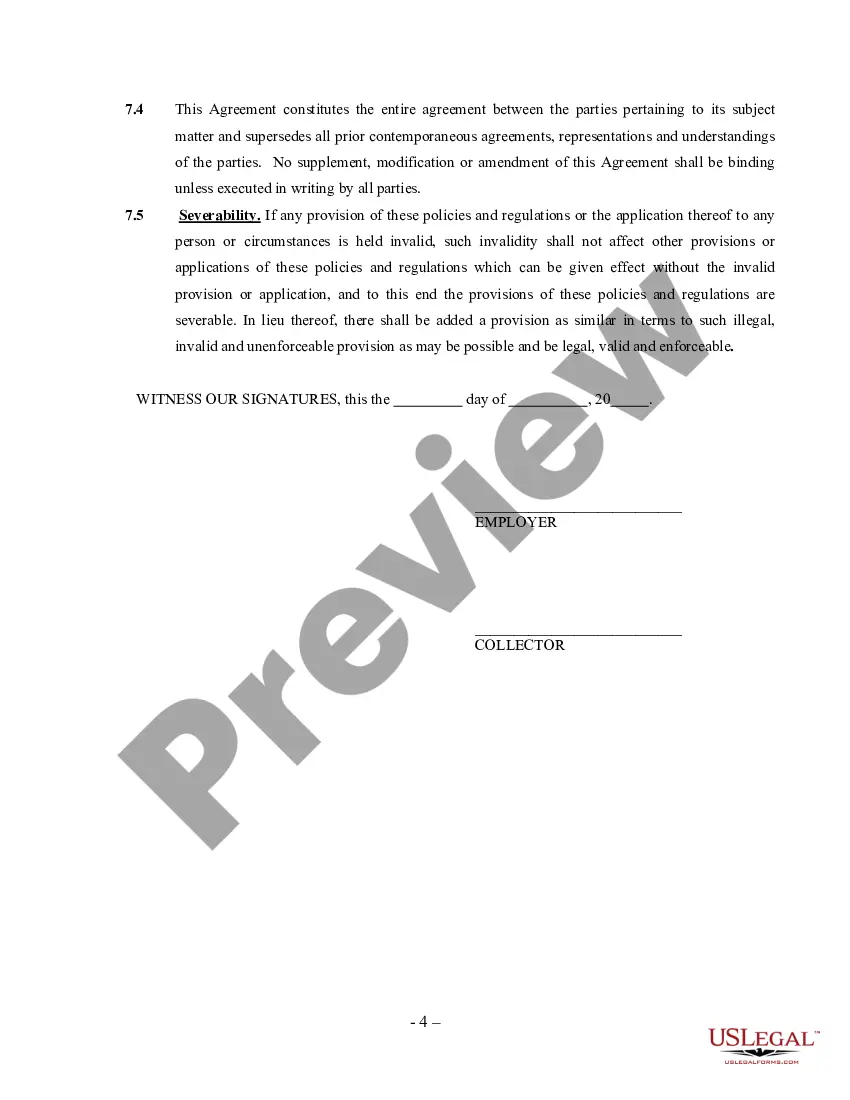
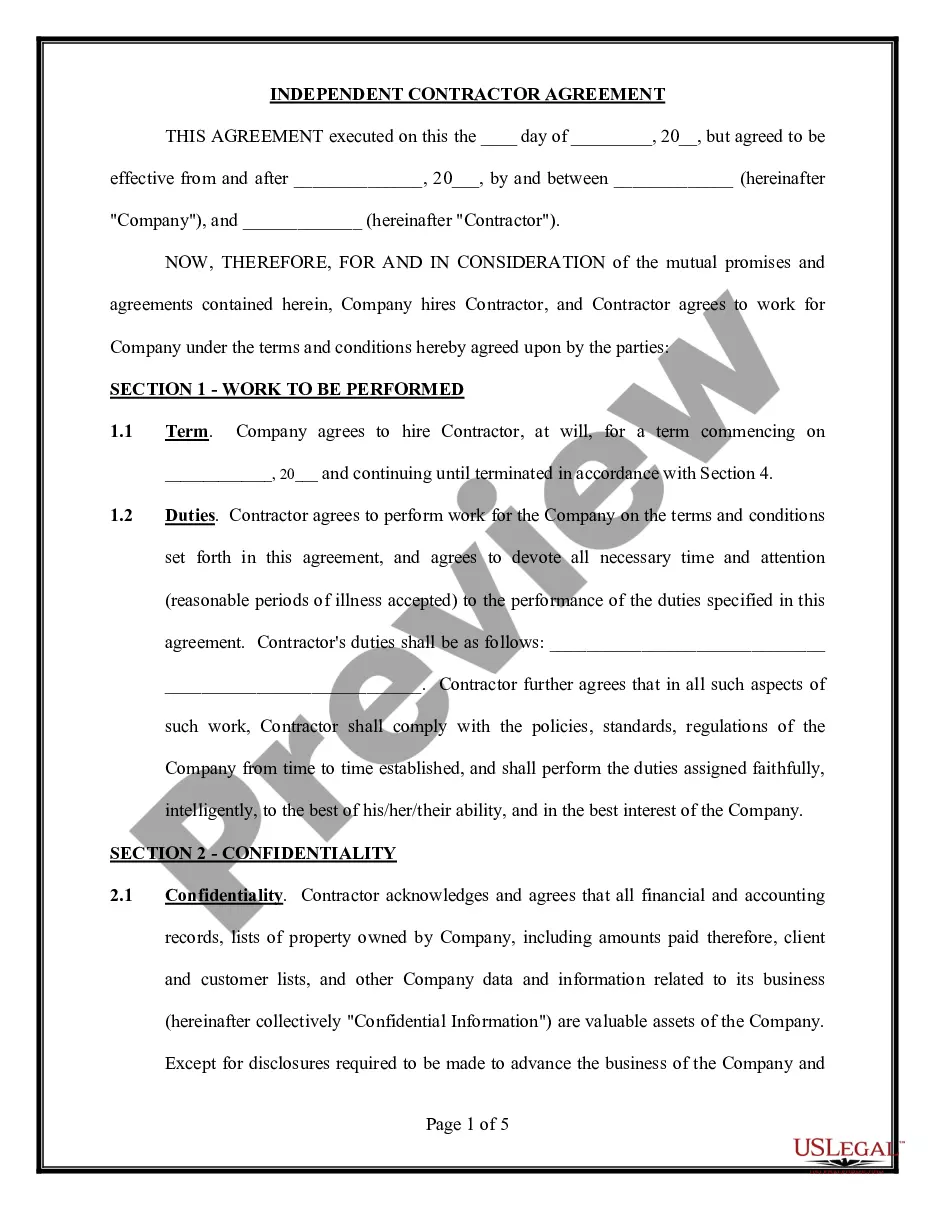
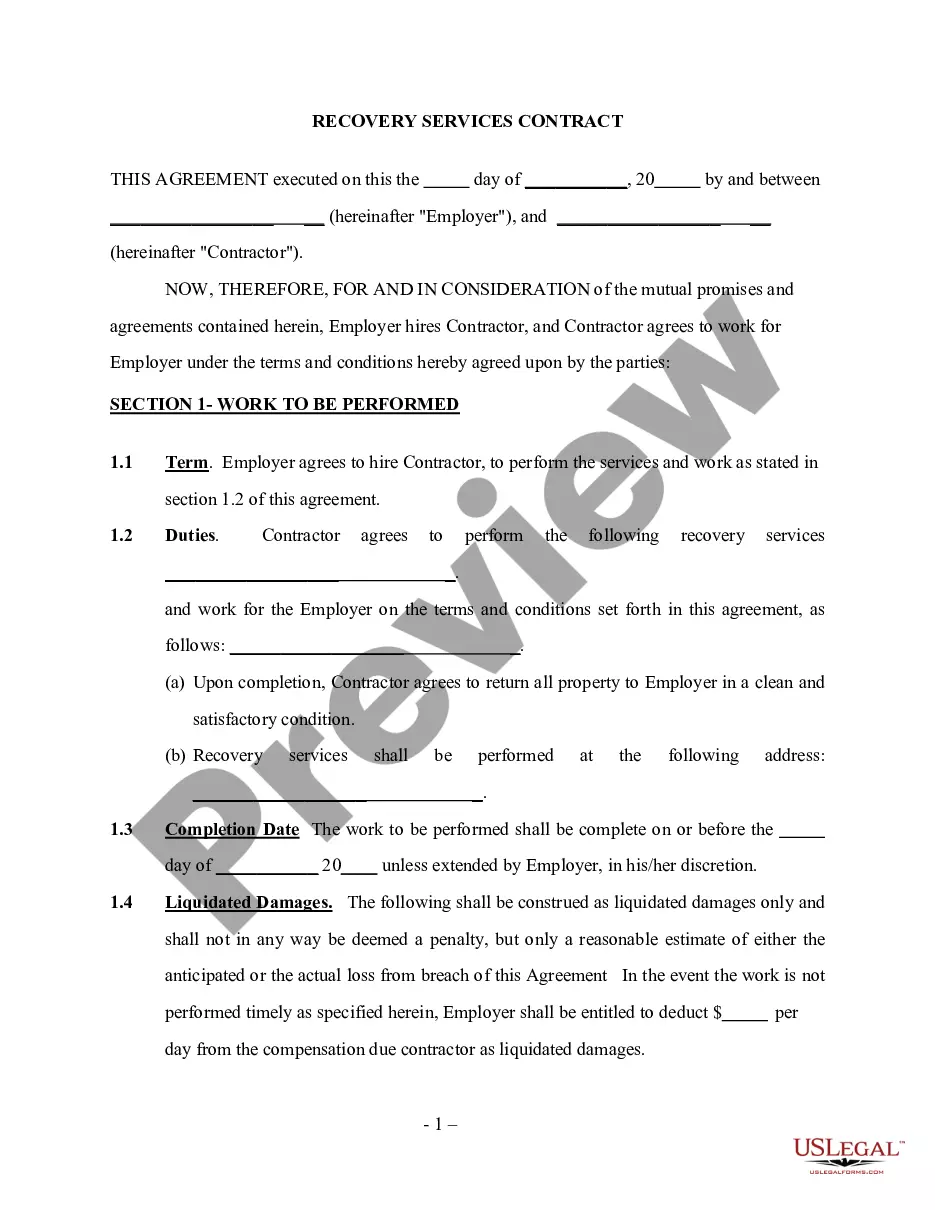
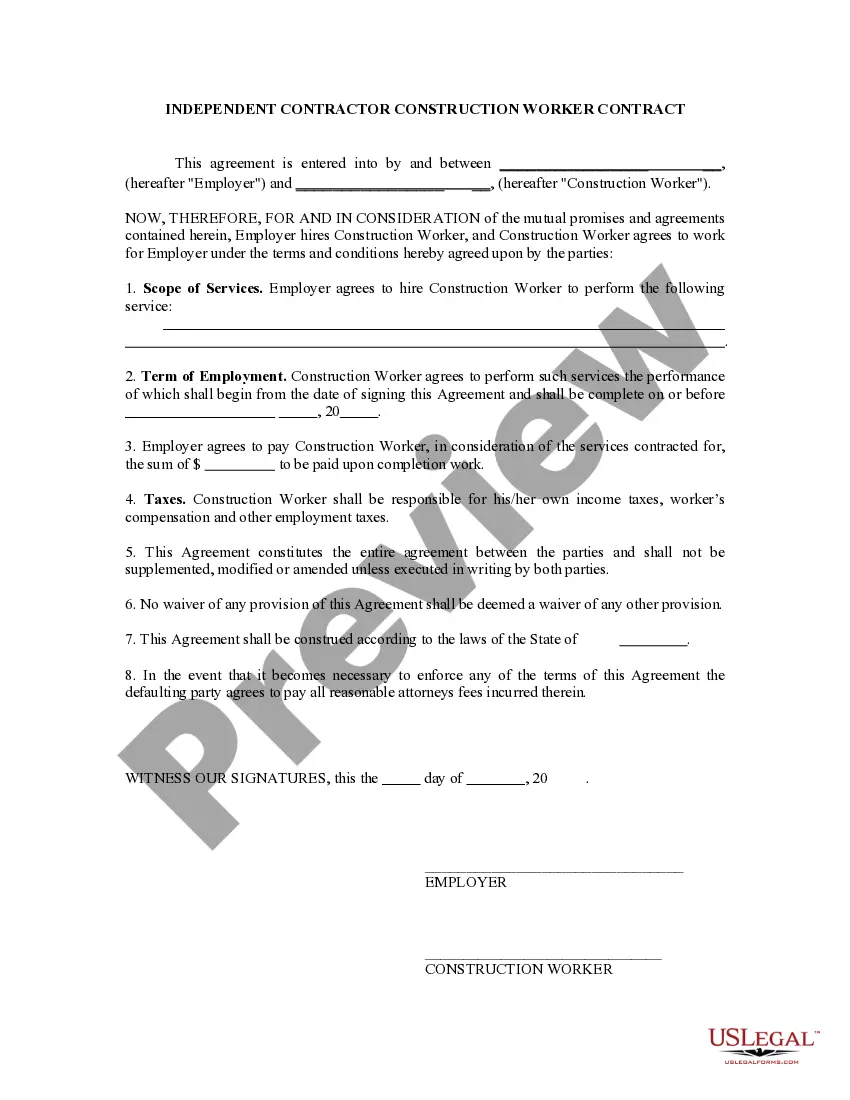
Employer hires a collections specialist on an independent contractor basis to provide collection services for employer as specified in the contract.
New York Collections Agreement - Self-Employed Independent Contractor
State:
Multi-State
Control #:
US-INDC-237
Format:
Word;
Rich Text
Instant download
Description
Free preview
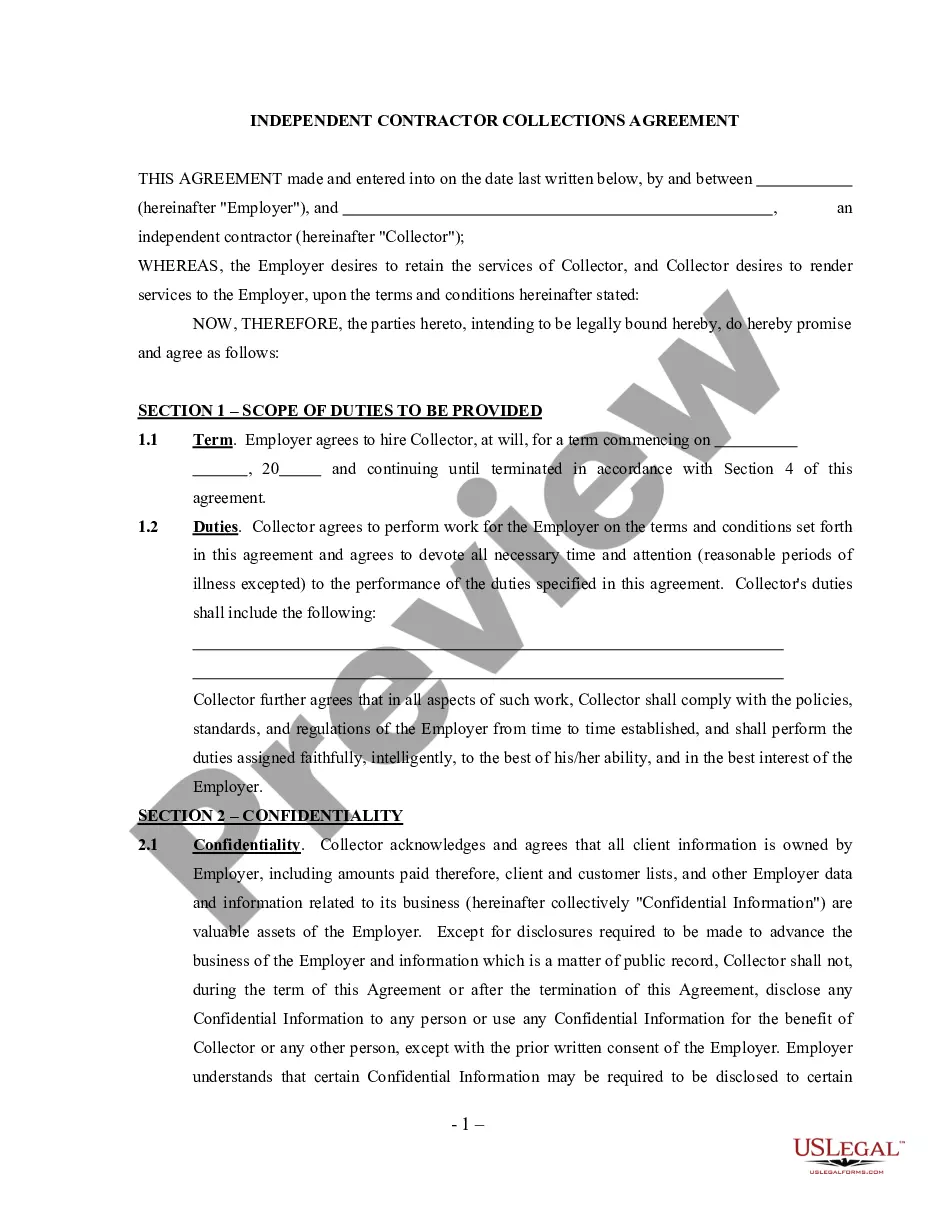
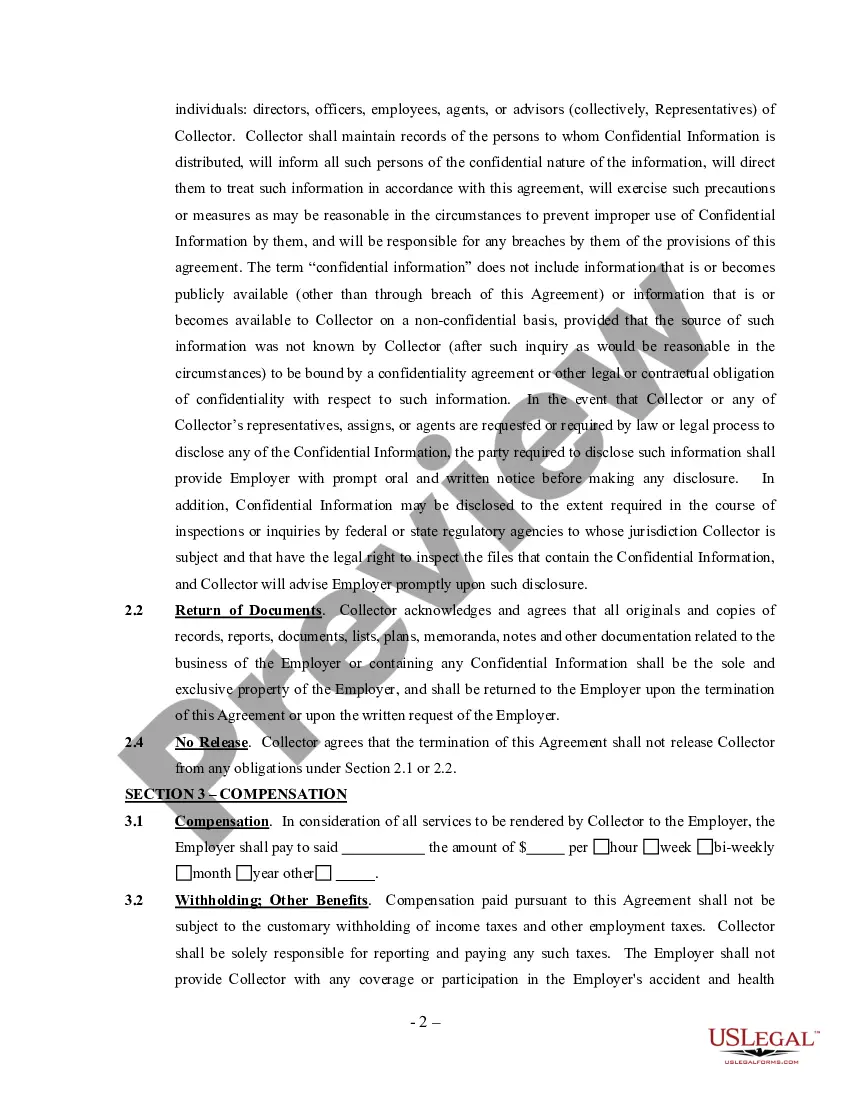
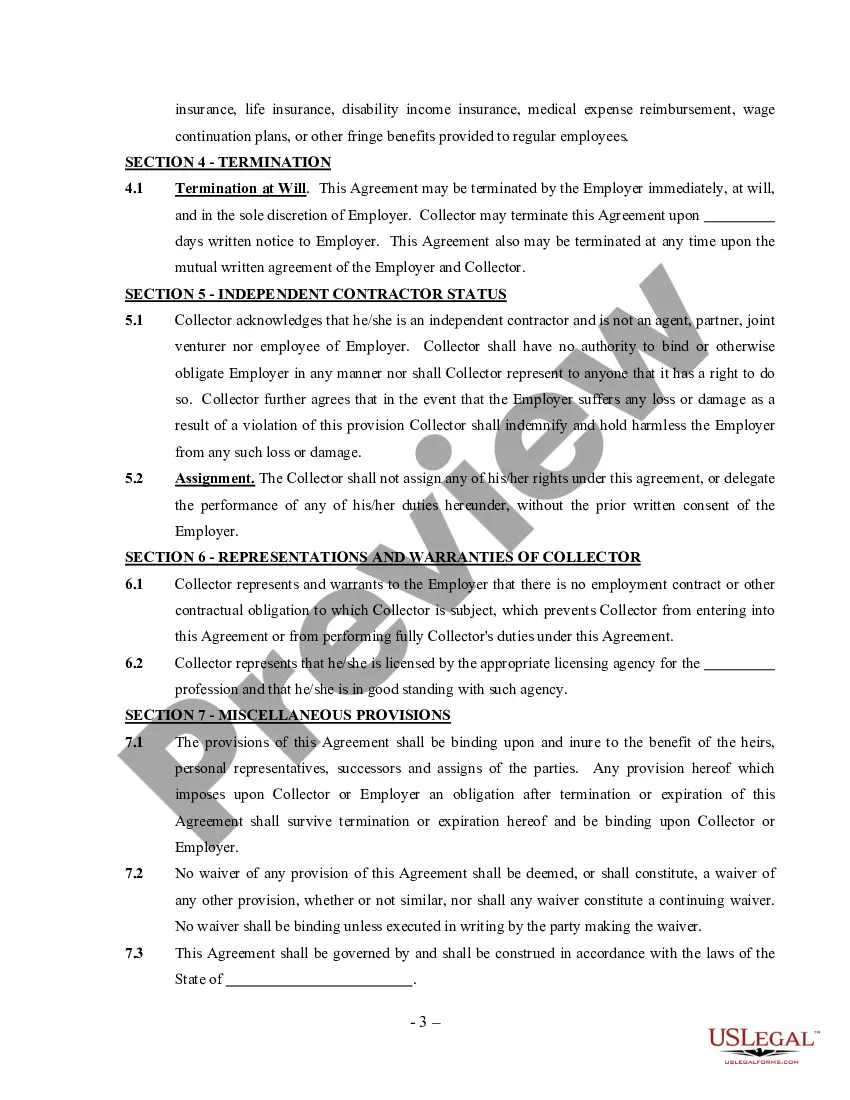
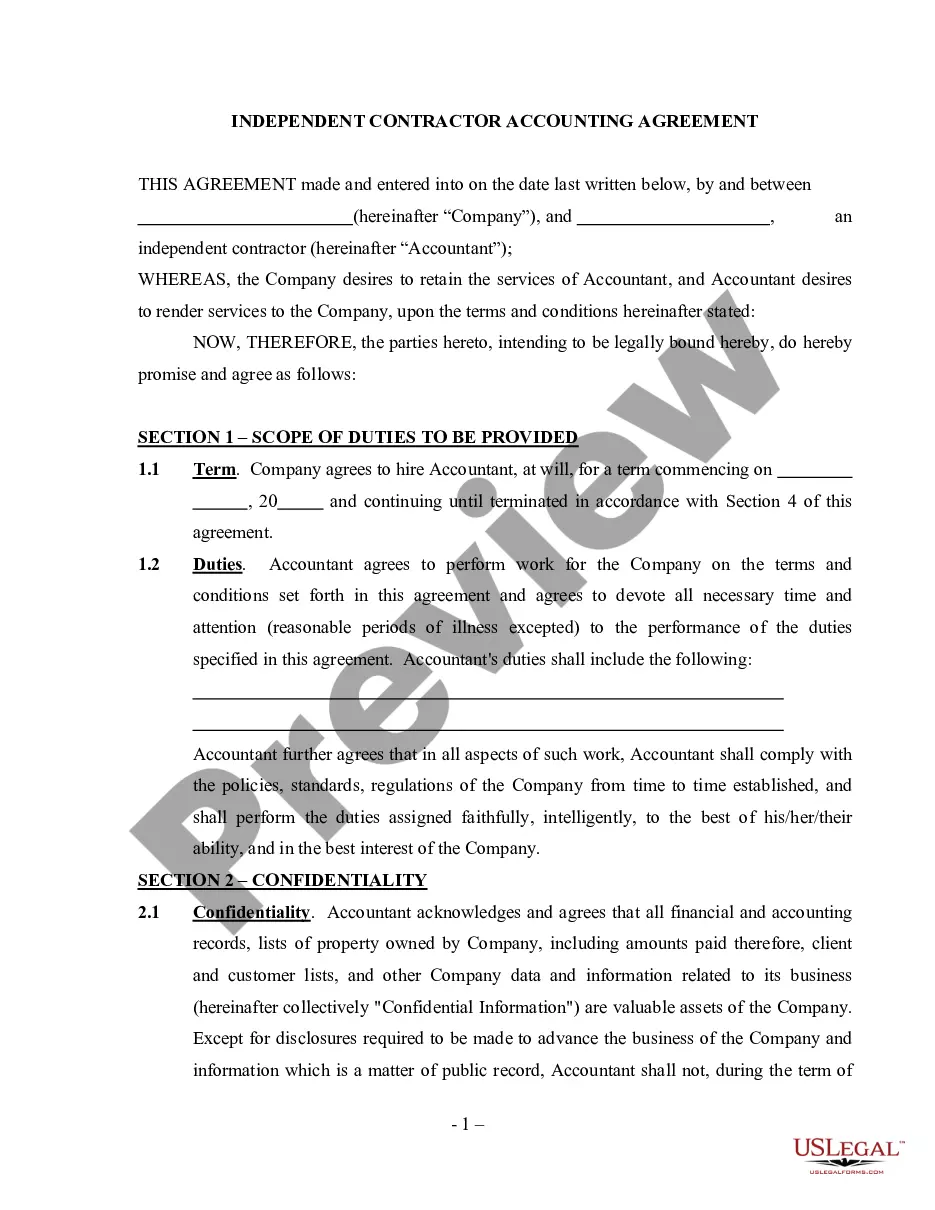
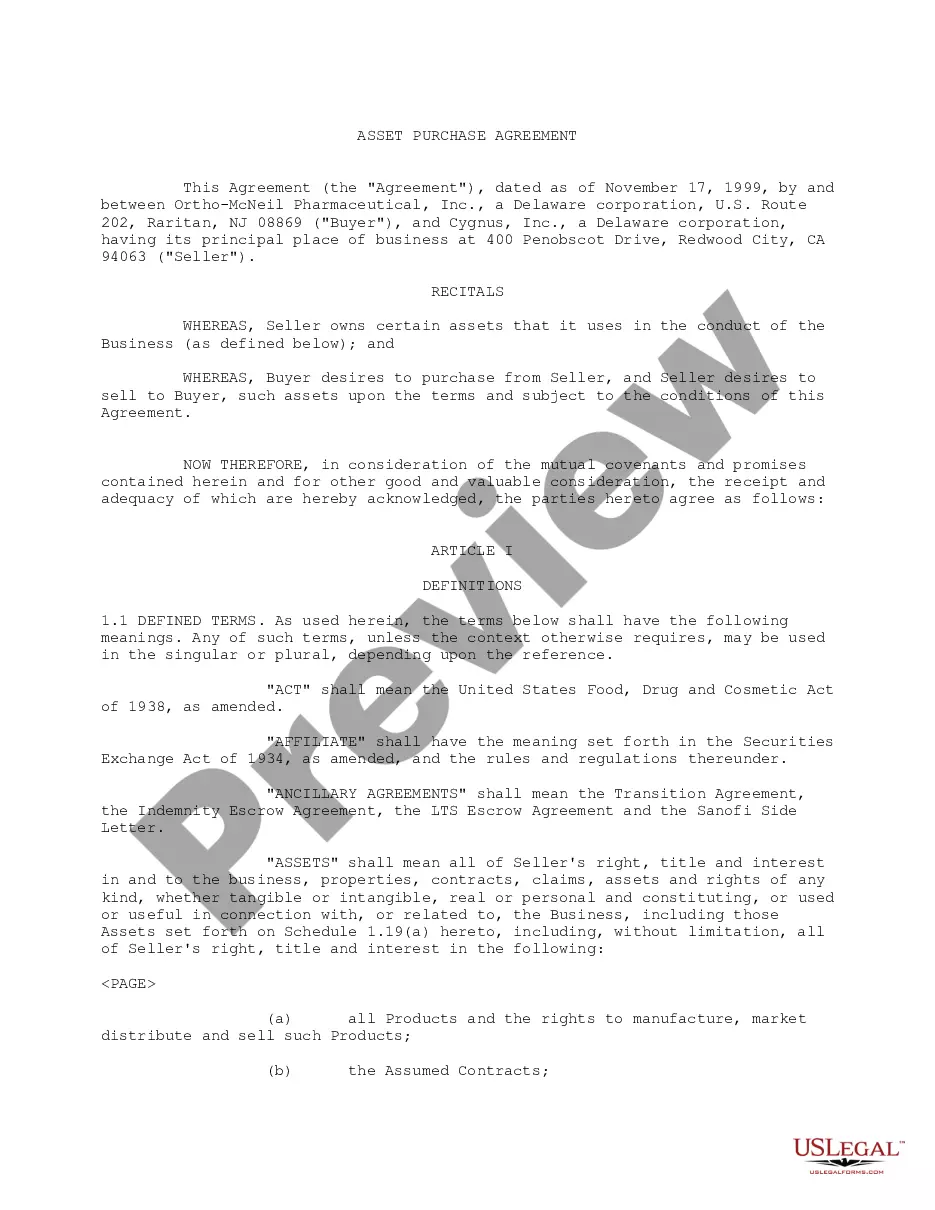
How to fill out Collections Agreement - Self-Employed Independent Contractor?
Are you in the situation where you require documentation for potential business or personal reasons almost every time.
There are numerous legal document templates accessible online, but finding ones you can rely on isn’t simple.
US Legal Forms offers a vast array of form templates, including the New York Collections Agreement - Self-Employed Independent Contractor, which is designed to fulfill state and federal requirements.
Select the payment plan you prefer, complete the necessary information to create your account, and process your order using your PayPal or Visa or Mastercard.
Choose a convenient file format and download your copy. Access all the document templates you have purchased in the My documents section. You can obtain an additional copy of the New York Collections Agreement - Self-Employed Independent Contractor at any time, if needed. Just follow the necessary form to download or print the document template. Utilize US Legal Forms, the most extensive collection of legal forms, to save time and avoid mistakes. The service provides professionally crafted legal document templates that can be utilized for various purposes. Create an account on US Legal Forms and start making your life easier.
- If you are already familiar with the US Legal Forms website and possess an account, simply Log In.
- Then, you can download the New York Collections Agreement - Self-Employed Independent Contractor template.
- If you do not have an account and wish to start using US Legal Forms, follow these steps.
- Find the document you need and ensure it is for the correct city/region.
- Utilize the Preview button to review the document.
- Read the description to confirm you have selected the appropriate document.
- If the document isn’t what you’re looking for, use the Search field to find the template that suits your needs and requirements.
- Once you locate the right document, click Purchase now.
Form popularity
FAQ
To fill out a declaration of independent contractor status form, start by providing your information as the contractor. Next, describe the nature of your work and how you operate your own business. Ensure that this declaration aligns with the New York Collections Agreement - Self-Employed Independent Contractor to confirm your classification and protect your interests.
Independent contractors typically need to fill out a W-9 form, a contract agreement, and possibly additional state-specific forms. Depending on your situation, you may also need to include a declaration of independent contractor status. Always refer to the New York Collections Agreement - Self-Employed Independent Contractor to ensure you have the necessary documentation for compliance.
To fill out an independent contractor agreement, start by entering the names and addresses of both parties. Next, specify the project details, compensation structure, and timelines. Don't forget to incorporate provisions from the New York Collections Agreement - Self-Employed Independent Contractor to maintain clarity and legal validity.
Writing an independent contractor agreement involves clearly defining the scope of work, payment terms, and deadlines. Begin by outlining the contractor’s responsibilities and deliverables. It is essential to include a reference to the New York Collections Agreement - Self-Employed Independent Contractor to ensure both parties understand their rights and obligations.
To fill out an independent contractor form, start by providing your personal information, including your name, address, and contact details. Next, include your business name and tax identification number. Remember to reference the New York Collections Agreement - Self-Employed Independent Contractor to ensure compliance with local regulations and protect your rights.
In New York, independent contractors are generally not required to have workers' compensation insurance. However, if you employ others, you may need coverage to protect all parties. It's wise to consult your New York Collections Agreement - Self-Employed Independent Contractor for specific details regarding insurance needs. Being informed helps you navigate the complexities of contractor regulations.
If you get hurt as an independent contractor, seek medical care immediately. Once you've addressed your health, document the injury and the incident thoroughly. Your New York Collections Agreement - Self-Employed Independent Contractor may guide you on the next steps regarding compensation or liability. Legal advice can help ensure your rights are protected.
You might be liable if a contractor gets hurt, depending on the circumstances of the incident. Liability can arise from negligence or unsafe working conditions. It’s advisable to review your New York Collections Agreement - Self-Employed Independent Contractor to clarify your responsibilities. Consulting with legal experts can provide further insights into liability issues.
Yes, you can claim personal injury if you are self-employed. Document the incident and any related costs, as this information is crucial for your claim. Additionally, review your New York Collections Agreement - Self-Employed Independent Contractor for any relevant provisions that might support your case. Engaging with an attorney can further assist in the claims process.
When a 1099 employee gets injured, they may not have the same protections as traditional employees. They can seek medical treatment and document their injuries. Furthermore, it is essential to evaluate their contract, specifically the New York Collections Agreement - Self-Employed Independent Contractor, to understand available benefits. Legal guidance can help navigate this complex situation.