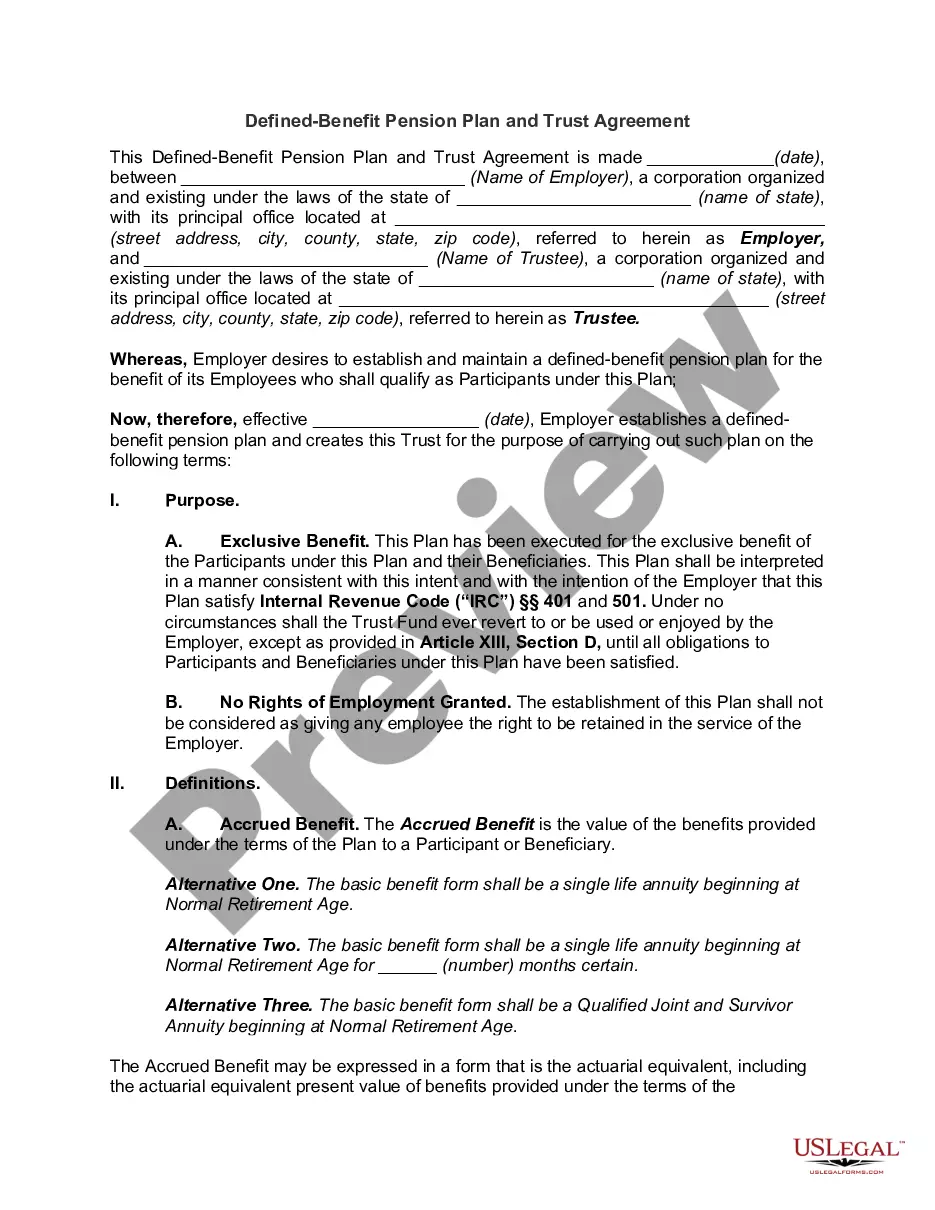
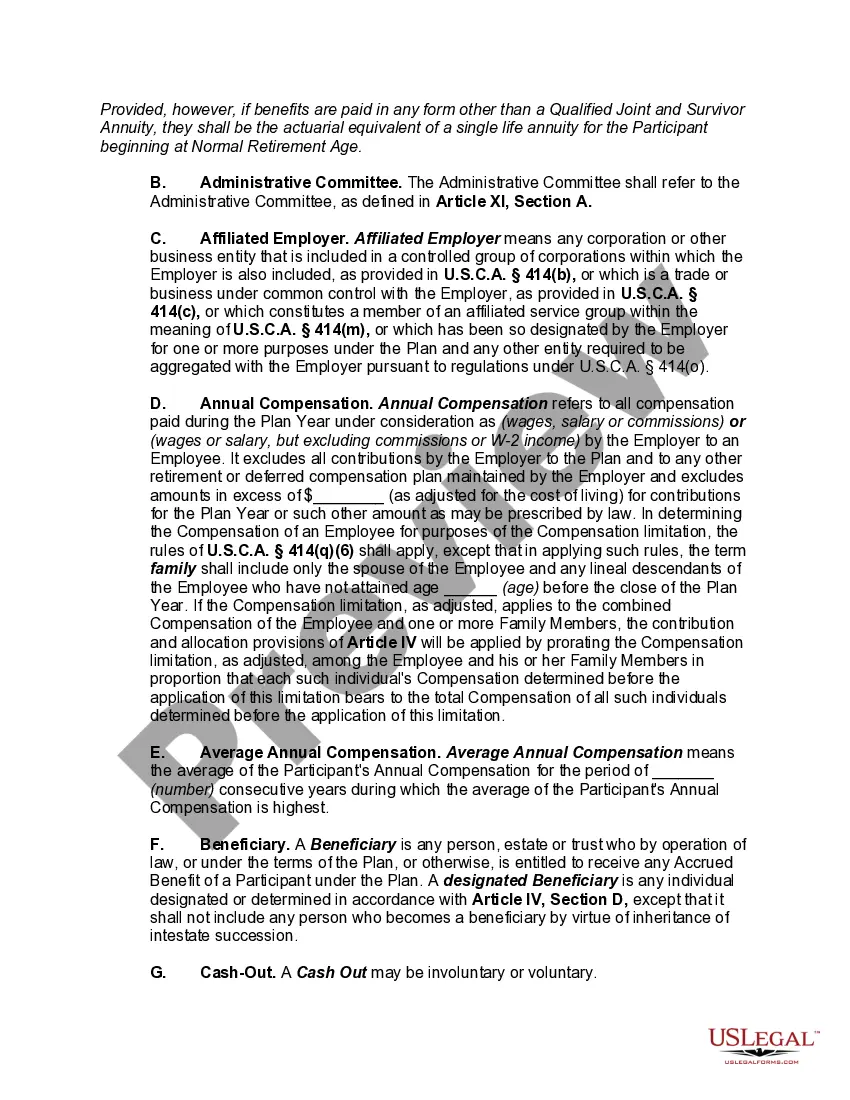
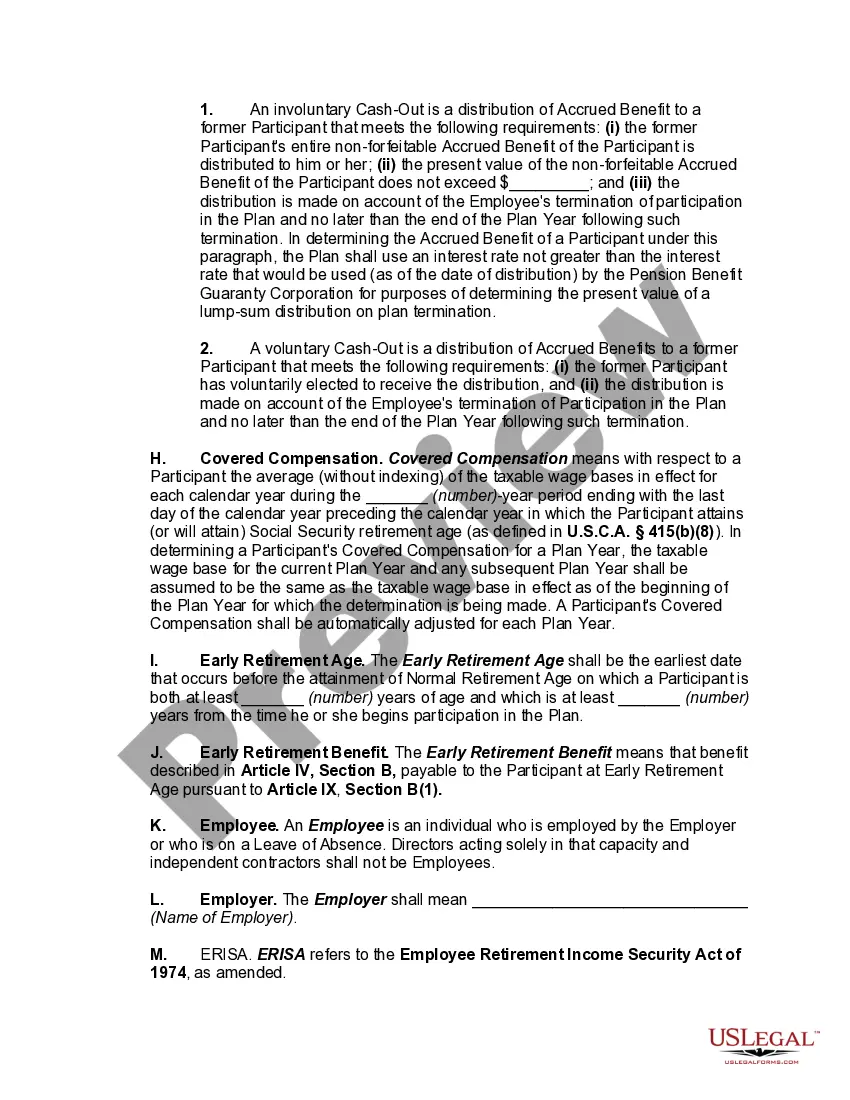
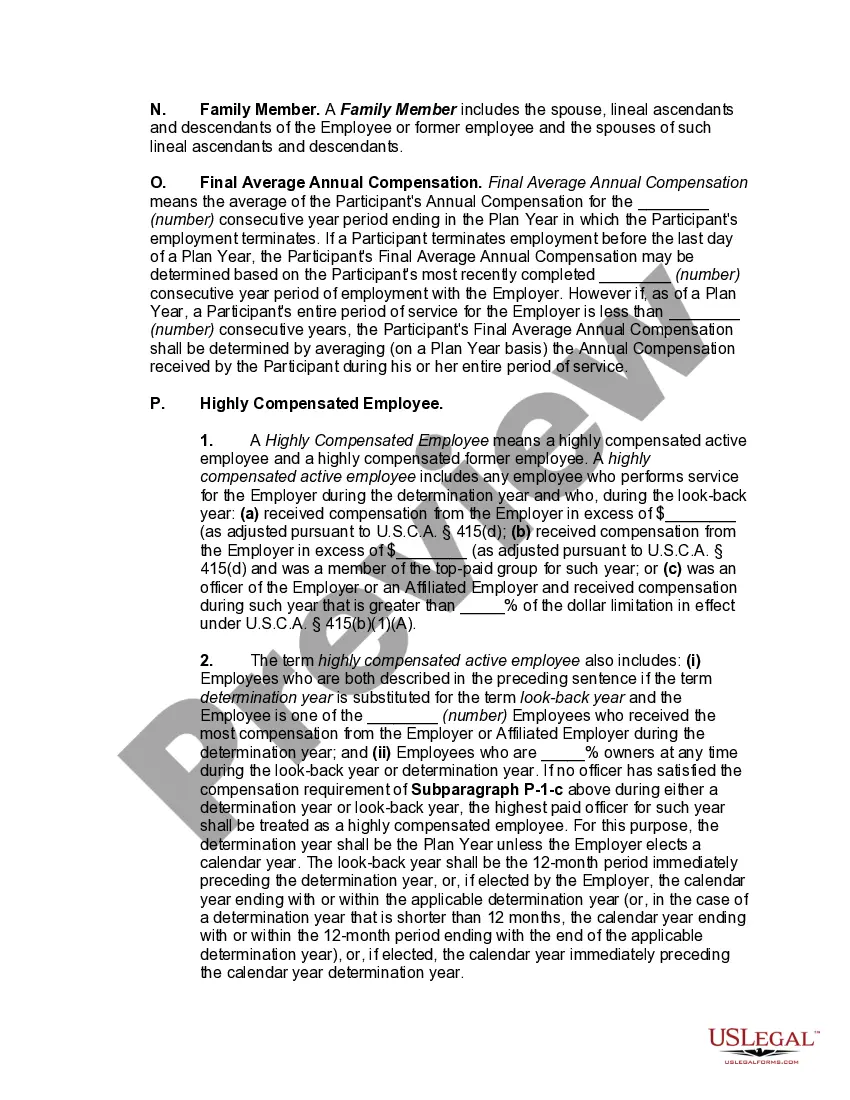
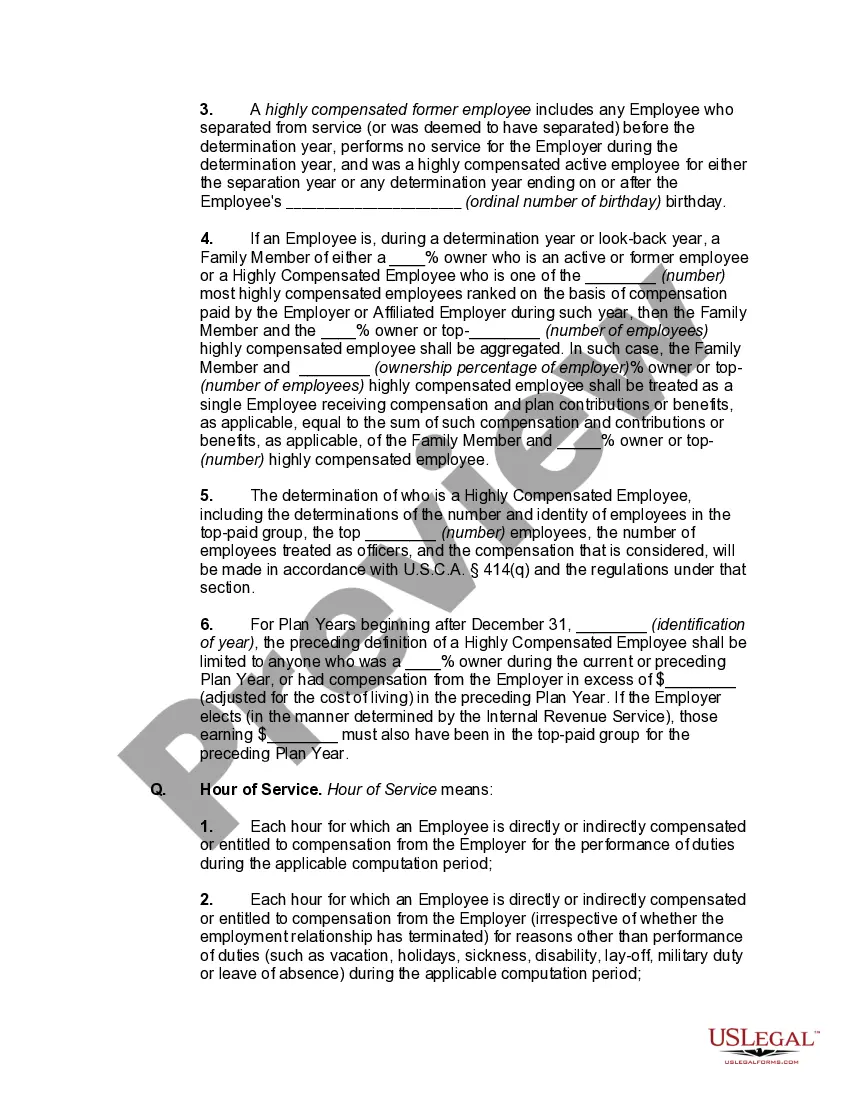
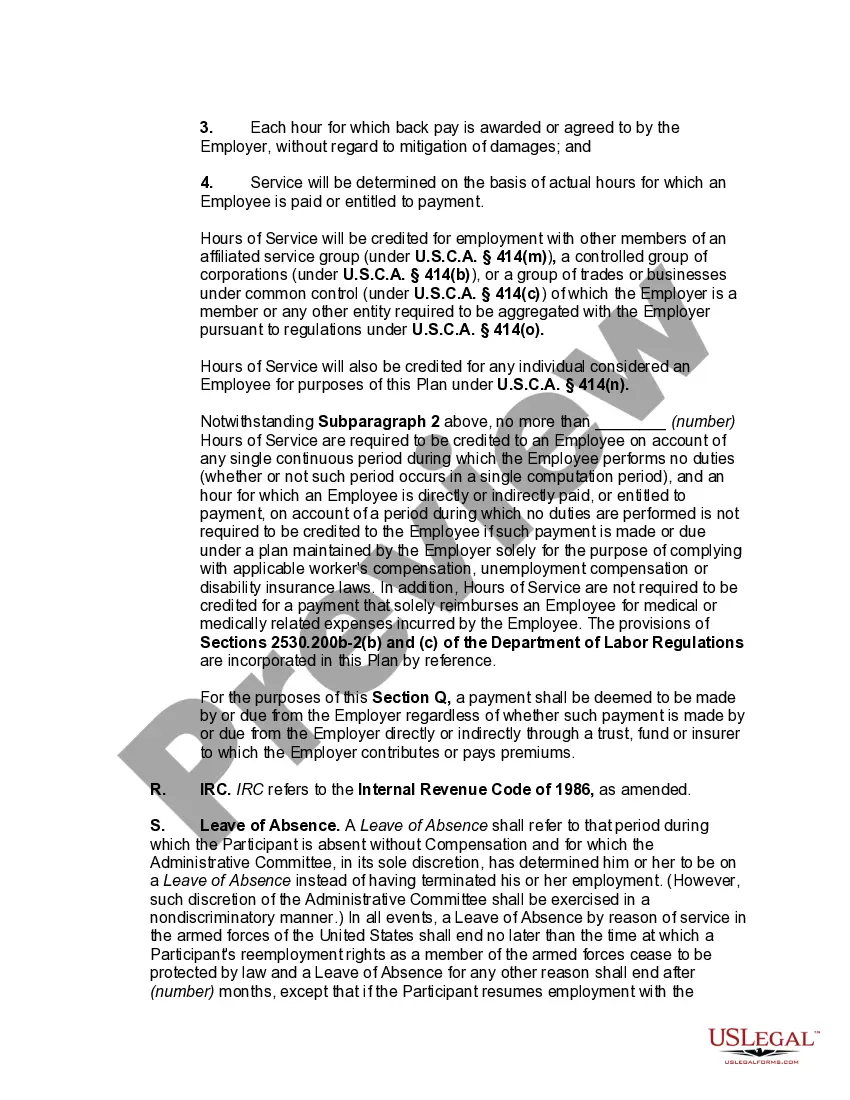
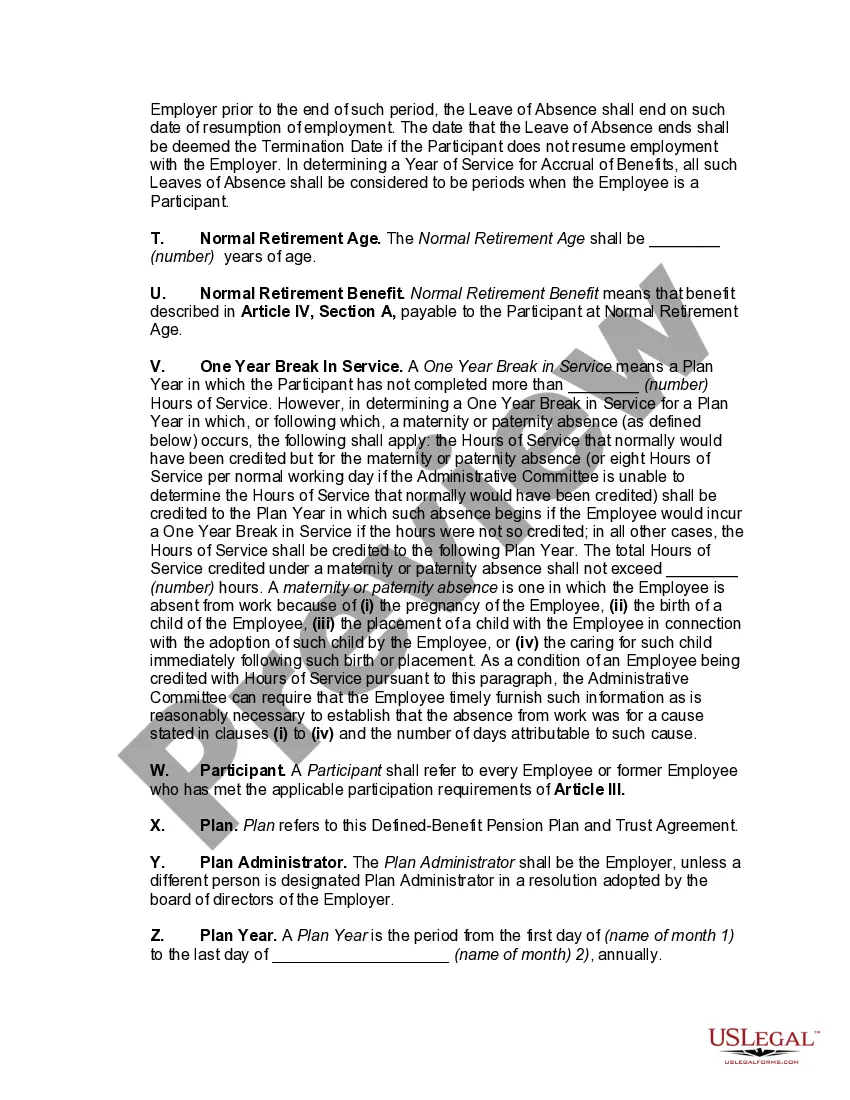
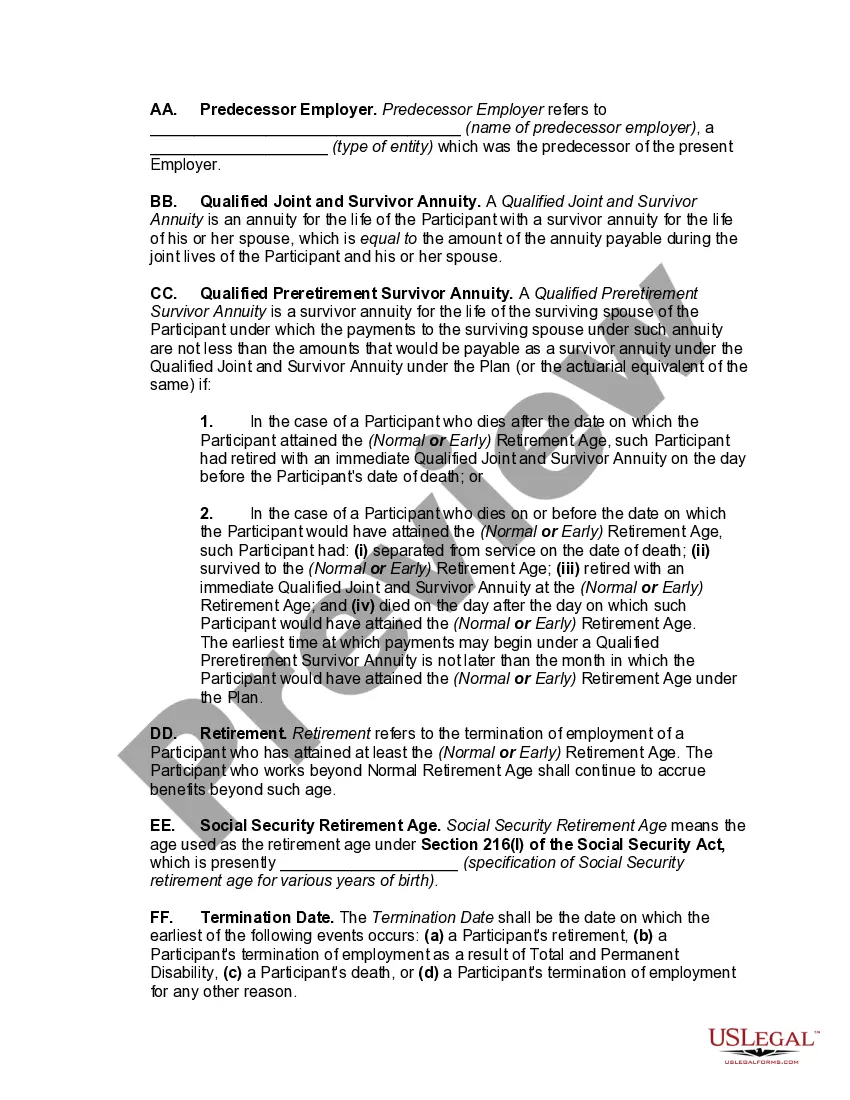
New York Defined-Benefit Pension Plan and Trust Agreement
Description

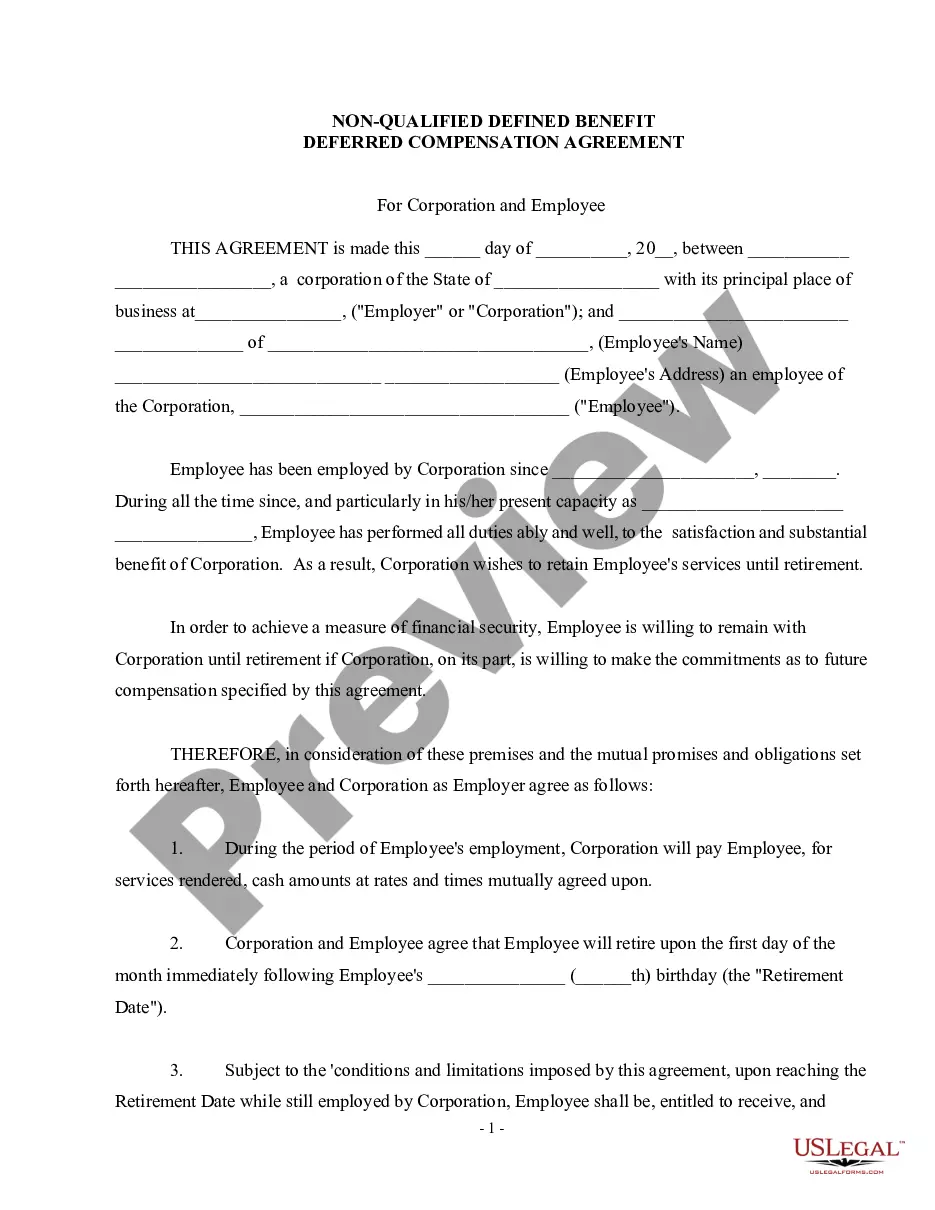
Get your form ready online
Our built-in tools help you complete, sign, share, and store your documents in one place.
Make edits, fill in missing information, and update formatting in US Legal Forms—just like you would in MS Word.
Download a copy, print it, send it by email, or mail it via USPS—whatever works best for your next step.
Sign and collect signatures with our SignNow integration. Send to multiple recipients, set reminders, and more. Go Premium to unlock E-Sign.
If this form requires notarization, complete it online through a secure video call—no need to meet a notary in person or wait for an appointment.
We protect your documents and personal data by following strict security and privacy standards.

Make edits, fill in missing information, and update formatting in US Legal Forms—just like you would in MS Word.

Download a copy, print it, send it by email, or mail it via USPS—whatever works best for your next step.

Sign and collect signatures with our SignNow integration. Send to multiple recipients, set reminders, and more. Go Premium to unlock E-Sign.

If this form requires notarization, complete it online through a secure video call—no need to meet a notary in person or wait for an appointment.

We protect your documents and personal data by following strict security and privacy standards.
Looking for another form?
How to fill out Defined-Benefit Pension Plan And Trust Agreement?
Finding the appropriate legal document template can be challenging.
Of course, there are numerous templates available online, but how do you obtain the legal form you require.
Utilize the US Legal Forms website.
If you are a new user of US Legal Forms, here are simple instructions to follow: Make sure you have chosen the correct form for your specific city/area. You can review the form using the Preview button and read the form description to ensure it is suitable for you. If the form does not fulfill your requirements, utilize the Search field to find the appropriate form. Once you are certain the form is suitable, select the Buy now button to acquire the form. Choose the pricing plan you prefer and enter the necessary information. Create your account and purchase the order using your PayPal account or Visa or Mastercard. Choose the file format and download the legal document template to your device. Complete, modify, and print and sign the received New York Defined-Benefit Pension Plan and Trust Agreement. US Legal Forms is the largest collection of legal forms that provides numerous document templates. Use the service to download professionally crafted papers that adhere to state requirements.
- The service offers a vast array of templates, including the New York Defined-Benefit Pension Plan and Trust Agreement, which can be used for both business and personal needs.
- All of the forms are reviewed by professionals and comply with federal and state regulations.
- If you are already registered, Log In to your account and click the Download button to receive the New York Defined-Benefit Pension Plan and Trust Agreement.
- You can use your account to access the legal forms you have acquired previously.
- Visit the My documents tab in your account to obtain another copy of the document you need.
Form popularity
FAQ
Cons of Pension PlansEmployees have no control over how their pension money is invested.Company failure could lead to bankruptcy and reduction in employee pension benefits.Not all pensions transfer if you change employers.They're difficult to access.
A pension plan is an employee benefit that commits the employer to make regular contributions to a pool of money that is set aside in order to fund payments made to eligible employees after they retire. Traditional pension plans have become increasingly rare in the U.S. private section.
A Pension Plan Trust Account is a subaccount that holds assets for a qualified pension. Pension Plan Trust client accounts are trust accounts containing assets beneficially owned by a number of underlying Pension Plan participants.
An employee trust fund is a form of long-term savings plan established as a job benefit. The best-known forms of employee trust fund are the stock ownership plan and the pension plan. Both the employer and the employee may contribute to an employee trust fund.
A fund that is made up of money that has been contributed to by both the employer and the employee for pension benefits. A trustee takes the funds and invests the money, collects the earnings and interest and distributes the benefits.
Retirement plans themselves cannot be transferred into a trust; those assets must be distributed from the plan first, which triggers income tax on the distribution. If you are older than 72 when you die, money generally must come out of your retirement plan according to the schedule that was required before your death.
In most cases, any pensions you have can be passed outside of your estate and so won't be subject to Inheritance Tax. However, for this to be the case, the pension scheme administrator would need to have discretion as to who the benefits are paid to.
4 Types Of Pension Plans Most Preferred For Retirement PlanningNPS. Regulated by Pension Fund Regulatory and Development Authority (PFRDA), the National Pension Scheme or NPS is a popular option if you want to receive a regular pension after retirement.Pension Funds.Annuity Plans.Pension Plans with Life Cover.
A retirement trust is a strategy where you name your trust as the beneficiary of your retirement accounts. This offers the best of both worlds. The tax benefits of a retirement account and the protection of a trust.
For members retiring under Tiers 4 and 5, the pension for 30 years of service is 60% of final average salary. Each year beyond 30 years adds 1½% to their pension factor, and there is no maximum pension. Tier 6 members retiring prior to age 63 will, without exception, receive a reduced benefit.