New York Internship Programs under State and Federal Law
Description
Get your form ready online
Our built-in tools help you complete, sign, share, and store your documents in one place.
Make edits, fill in missing information, and update formatting in US Legal Forms—just like you would in MS Word.
Download a copy, print it, send it by email, or mail it via USPS—whatever works best for your next step.
Sign and collect signatures with our SignNow integration. Send to multiple recipients, set reminders, and more. Go Premium to unlock E-Sign.
If this form requires notarization, complete it online through a secure video call—no need to meet a notary in person or wait for an appointment.
We protect your documents and personal data by following strict security and privacy standards.

Make edits, fill in missing information, and update formatting in US Legal Forms—just like you would in MS Word.

Download a copy, print it, send it by email, or mail it via USPS—whatever works best for your next step.

Sign and collect signatures with our SignNow integration. Send to multiple recipients, set reminders, and more. Go Premium to unlock E-Sign.

If this form requires notarization, complete it online through a secure video call—no need to meet a notary in person or wait for an appointment.

We protect your documents and personal data by following strict security and privacy standards.
Looking for another form?

How to fill out Internship Programs Under State And Federal Law?
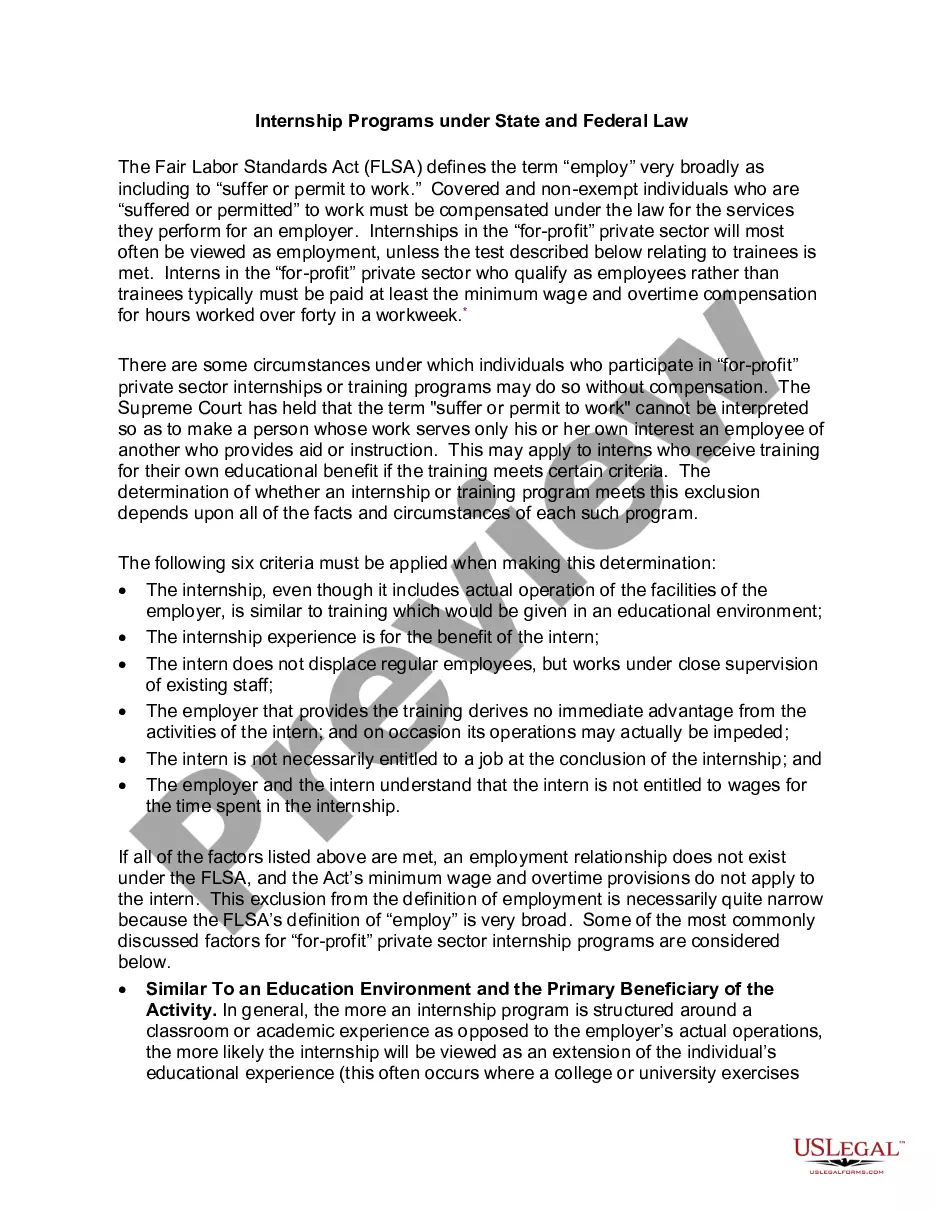
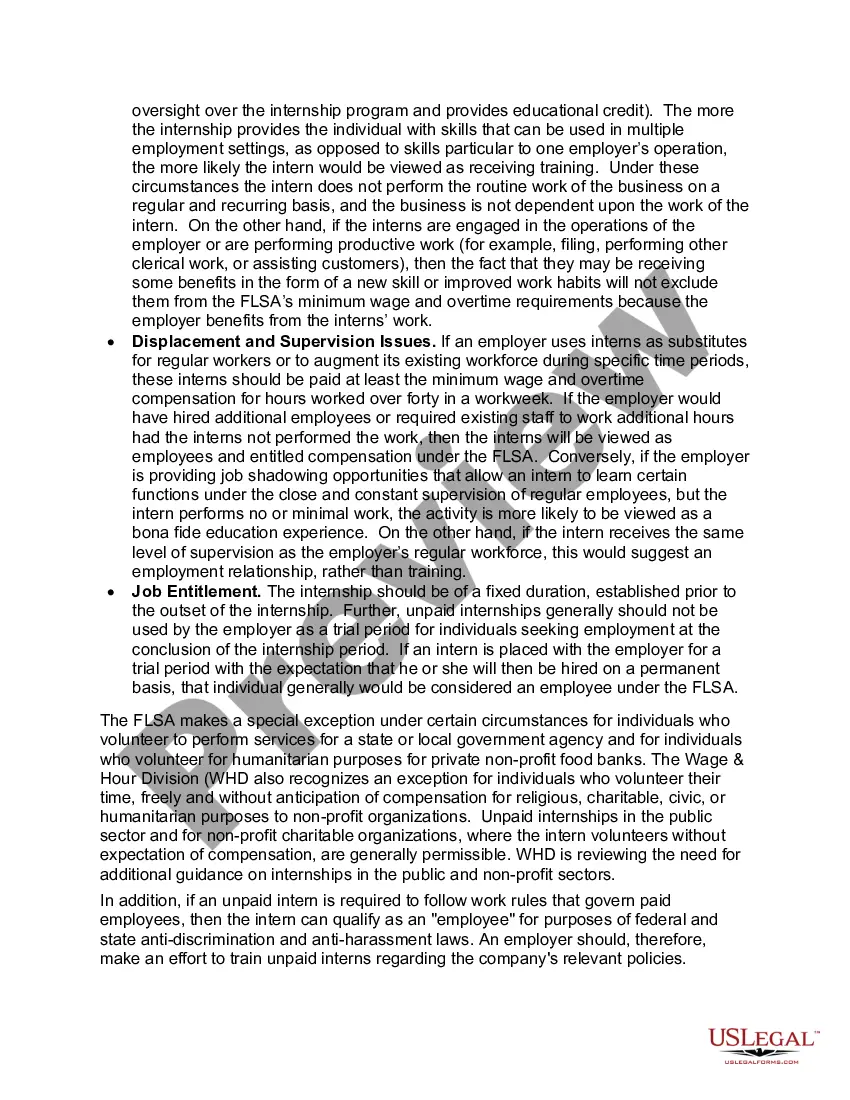
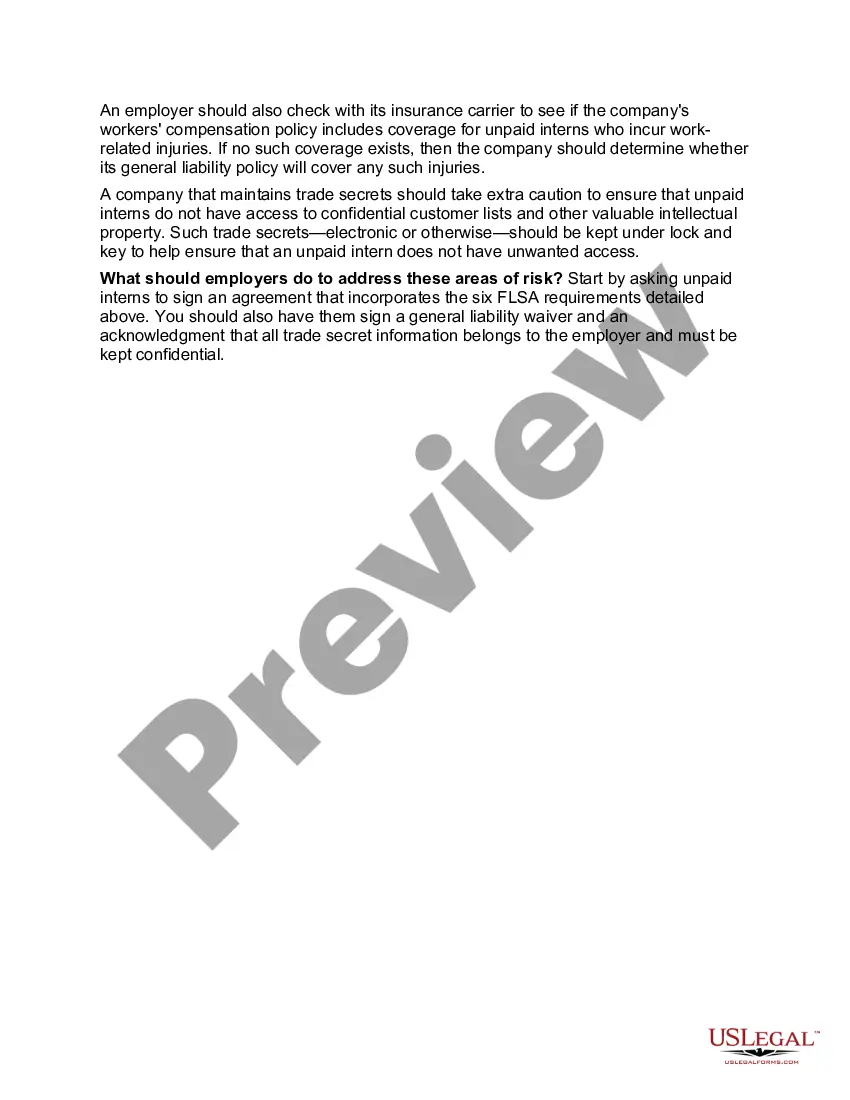
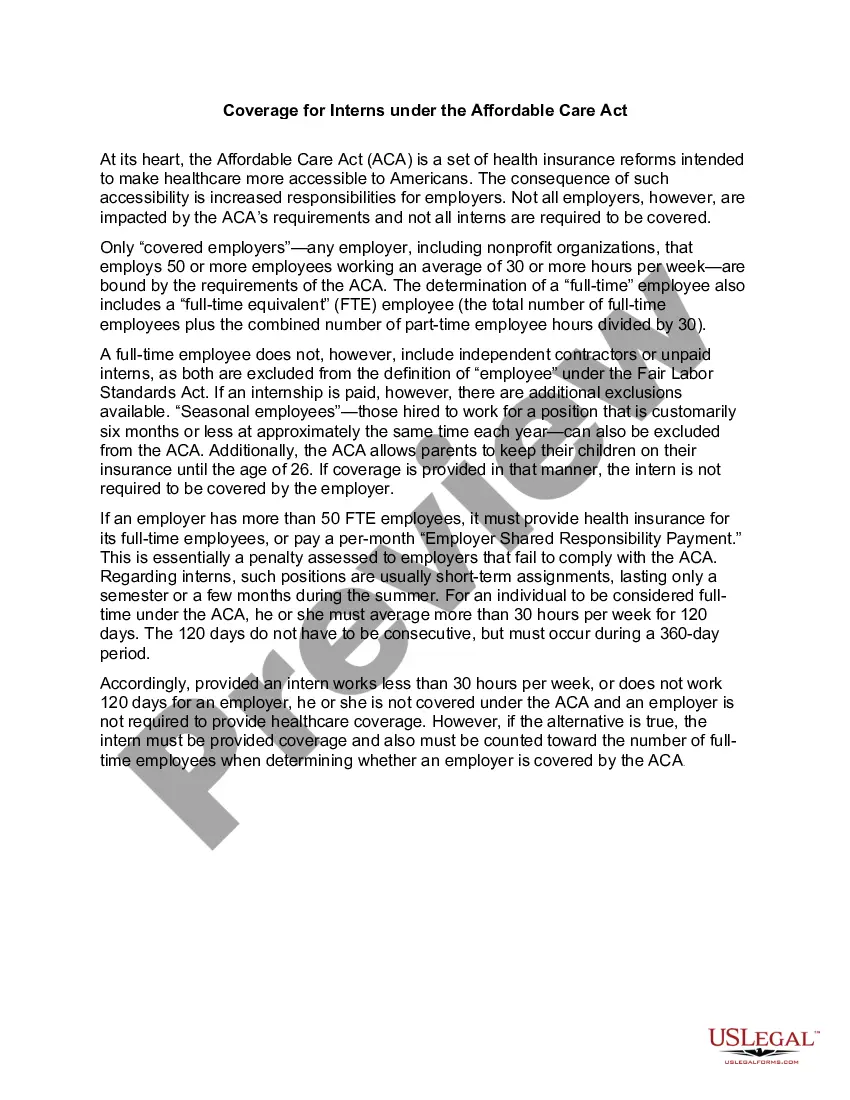
It is feasible to spend time online searching for the appropriate legal document format that meets your state and federal requirements.
US Legal Forms provides a vast array of legal templates that are evaluated by experts.
You can easily download or print the New York Internship Programs under State and Federal Law from our platform.
If available, use the Preview button to view the document format as well.
- If you have an account with US Legal Forms, you can Log In and then click the Download button.
- Afterward, you can fill out, modify, print, or sign the New York Internship Programs under State and Federal Law.
- Every legal document you purchase is yours indefinitely.
- To obtain an additional copy of the purchased form, go to the My documents tab and click the corresponding button.
- If you are using the US Legal Forms site for the first time, follow the simple instructions below.
- First, ensure that you have selected the correct format for the county/city you choose.
- Check the form details to confirm that you have selected the right form.
Form popularity
FAQ
Yes, non-college students can find opportunities in New York Internship Programs under State and Federal Law. Many organizations value practical experience and may offer internships to individuals who demonstrate readiness and commitment. It's essential to research programs that accommodate varying educational backgrounds. Flexibility is a key aspect to be aware of when looking for legal internships.
Most common benefitsThe average salary for a paid intern is $19.02 per hour in New York, NY. 120 salaries reported, updated at April 19, 2022.
In general, an intern is exempt from the New York State Minimum Wage Act and Orders (meaning, the intern does not need to be paid minimum wage, if anything) only if the intern and the business are not in an employment relationship.
Under the Fair Labor Standards Act of 1938, any employee of a for-profit company must be paid for their work. However, interns are not considered employees under the FLSA.
A paid internship is considered employment when the intern enters into a contract with an employer and performs work in return for compensation. The intern must have a contractual employment relationship with an employer and receive some form of compensation.
It is usually to the advantage of the principle that the Intern is defined as an independent contractor rather than an employee because it lessens the principle's obligations towards the Intern.
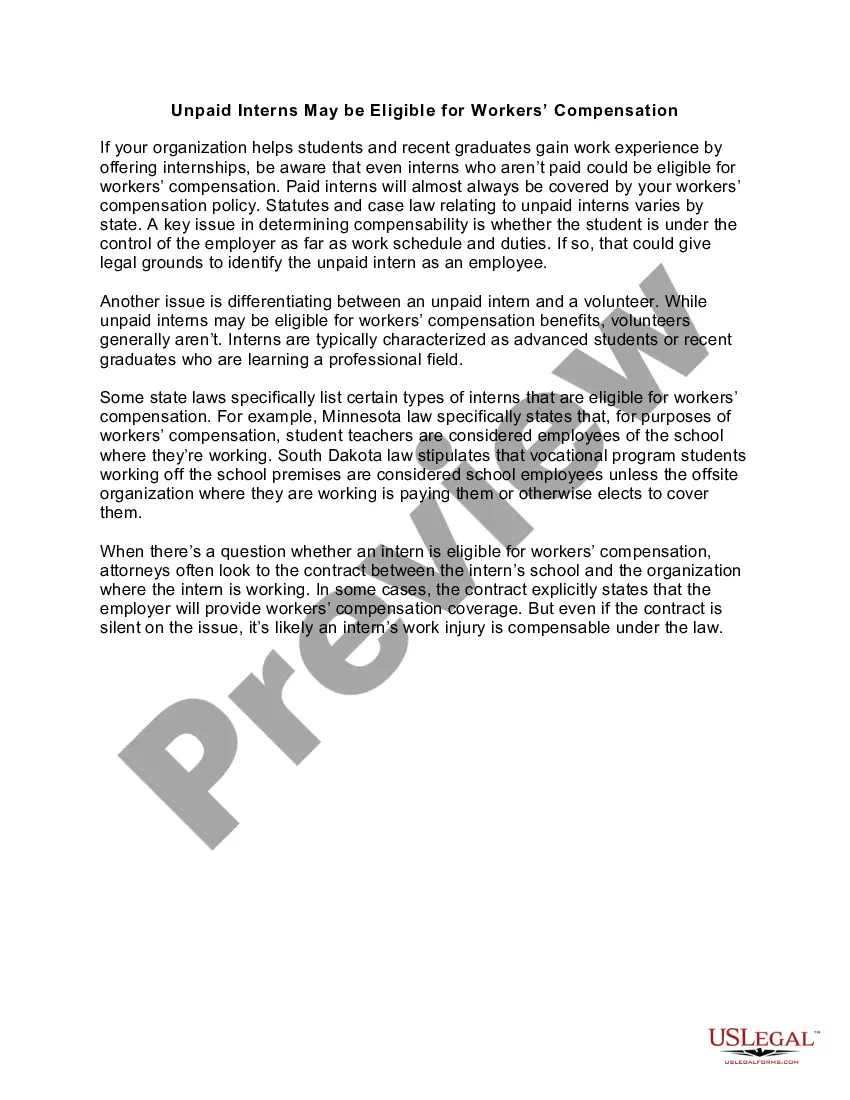
It does not apply to Unemployment Insurance, Workers' Compensation, and/or any other law. Not-for-profit organizations and institutions of any type also may have unpaid interns, if they meet all the criteria for an intern who is not in an employment relationship.
Unpaid internships are legal if the intern is the primary beneficiary of the arrangement. This is determined by the seven-point Primary Beneficiary Test. If an employer is the primary beneficiary, the intern is considered an employee under the Fair Labor Standards Act and entitled to minimum wage.
In New York, for-profit employers must meet six additional requirements to offer unpaid internship opportunities: The trainees or students are notified, in writing, that they will not receive any wages and are not considered employees for minimum wage purposes.
Unpaid internships are legal if the intern is the primary beneficiary of the arrangement. This is determined by the seven-point Primary Beneficiary Test. If an employer is the primary beneficiary, the intern is considered an employee under the Fair Labor Standards Act and entitled to minimum wage.