New York Voting Agreement Among Stockholders to Elect Directors
Description
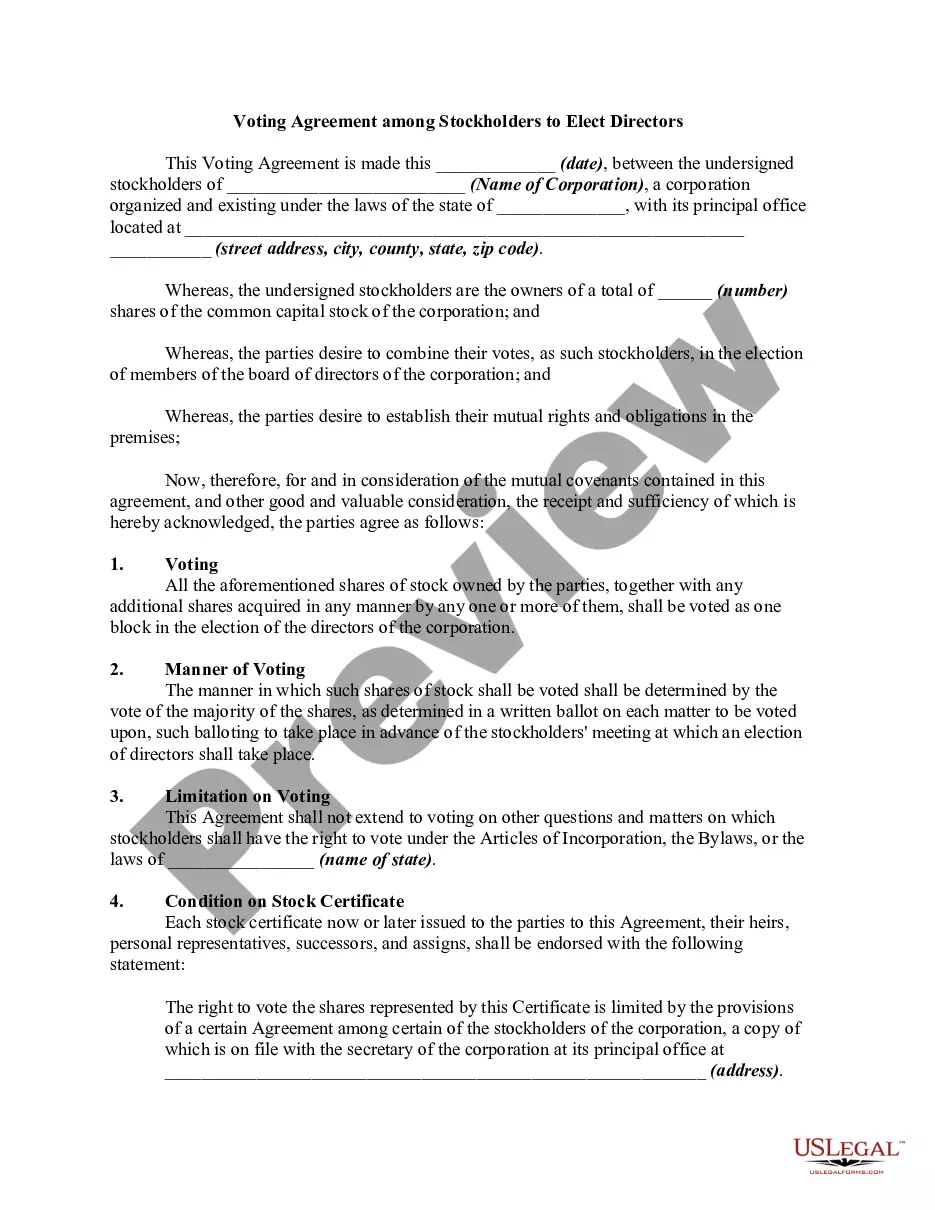
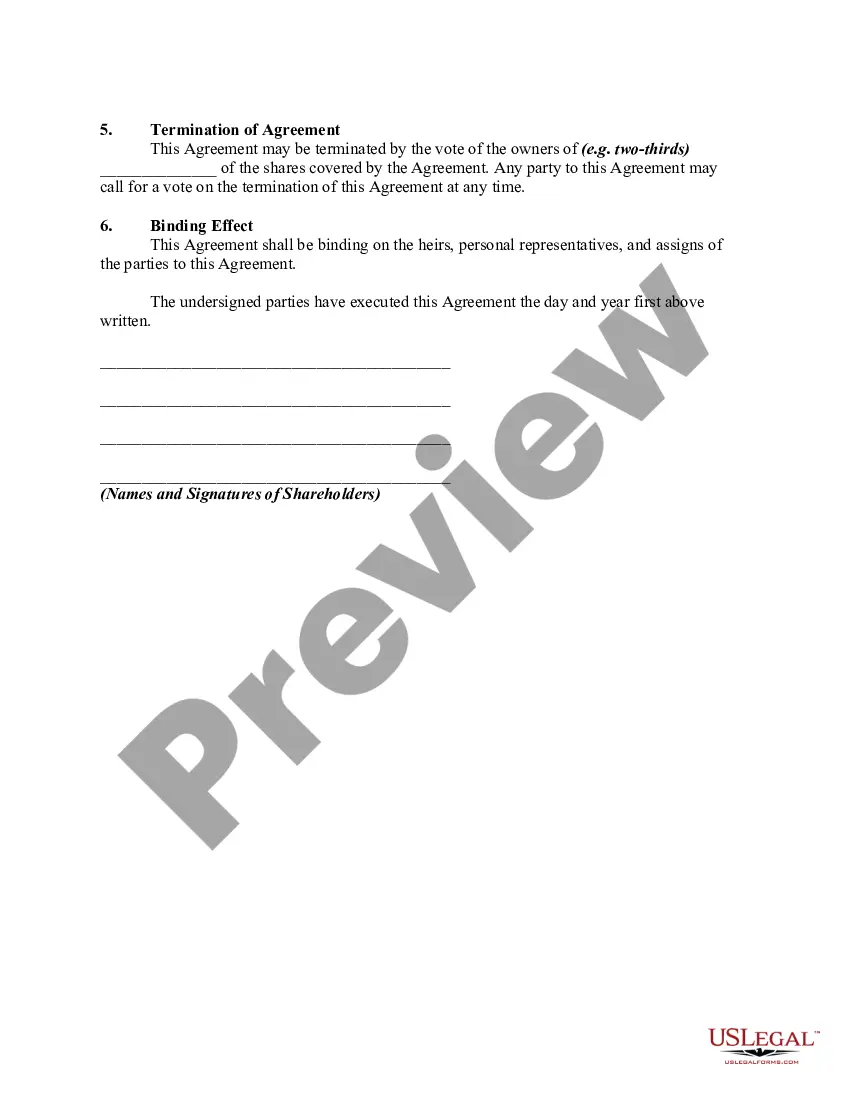
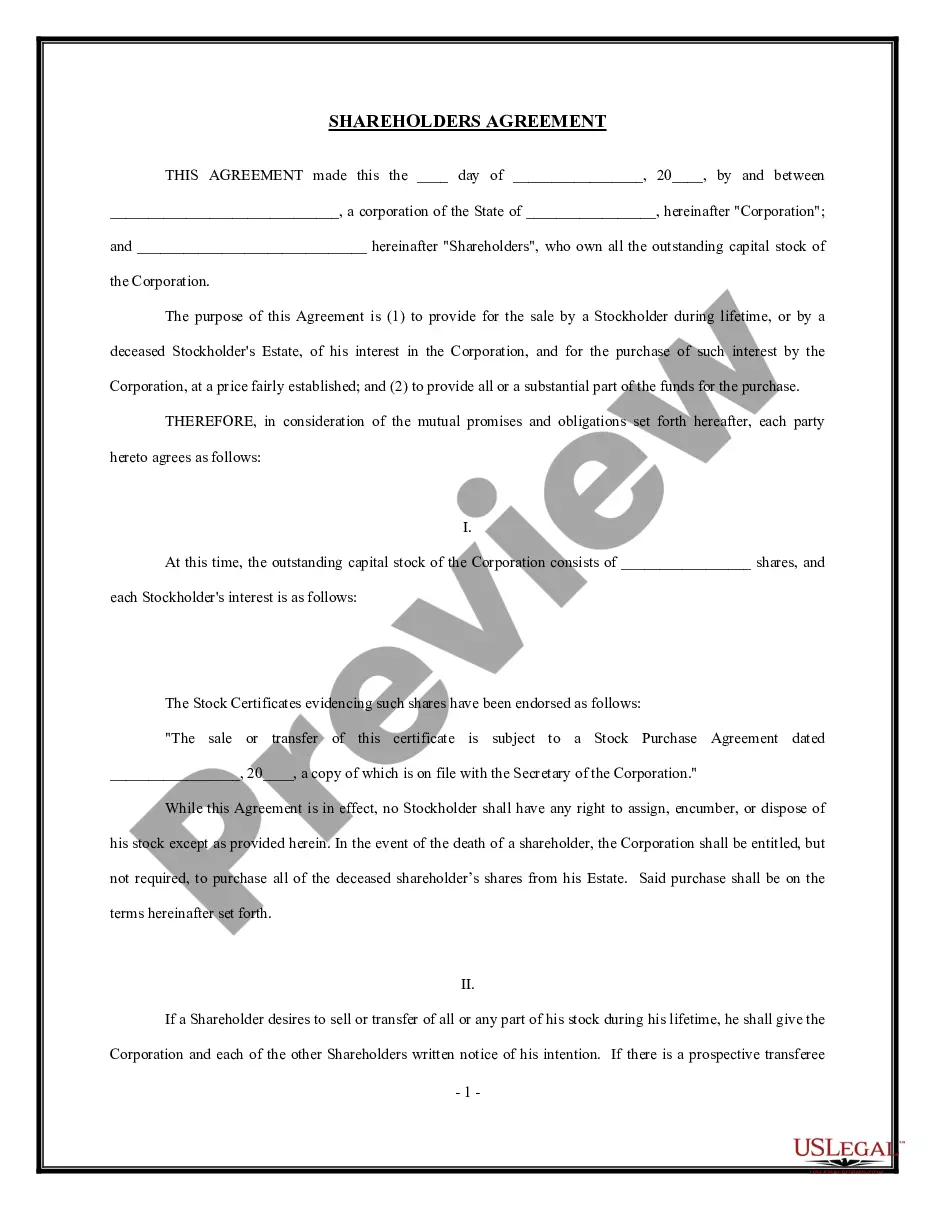
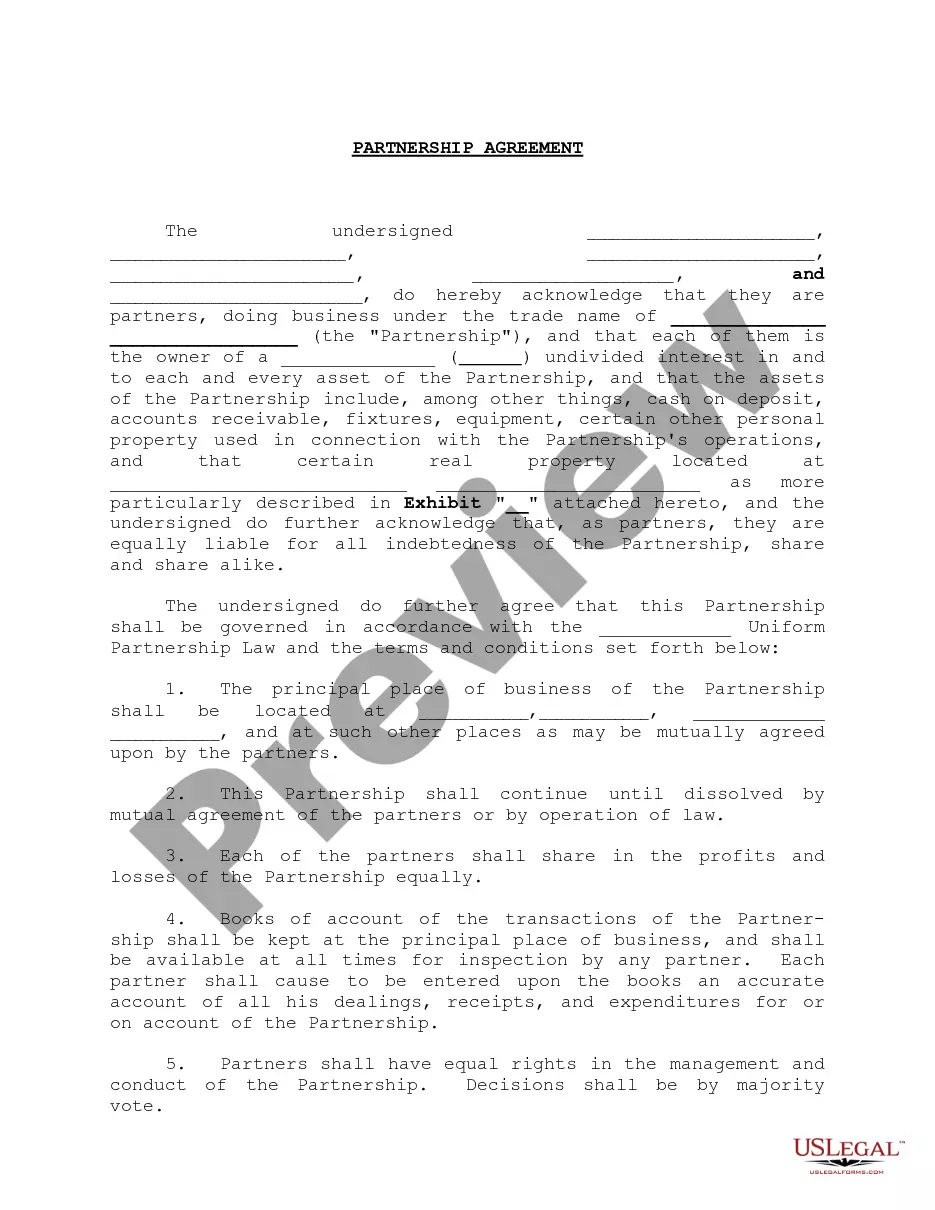

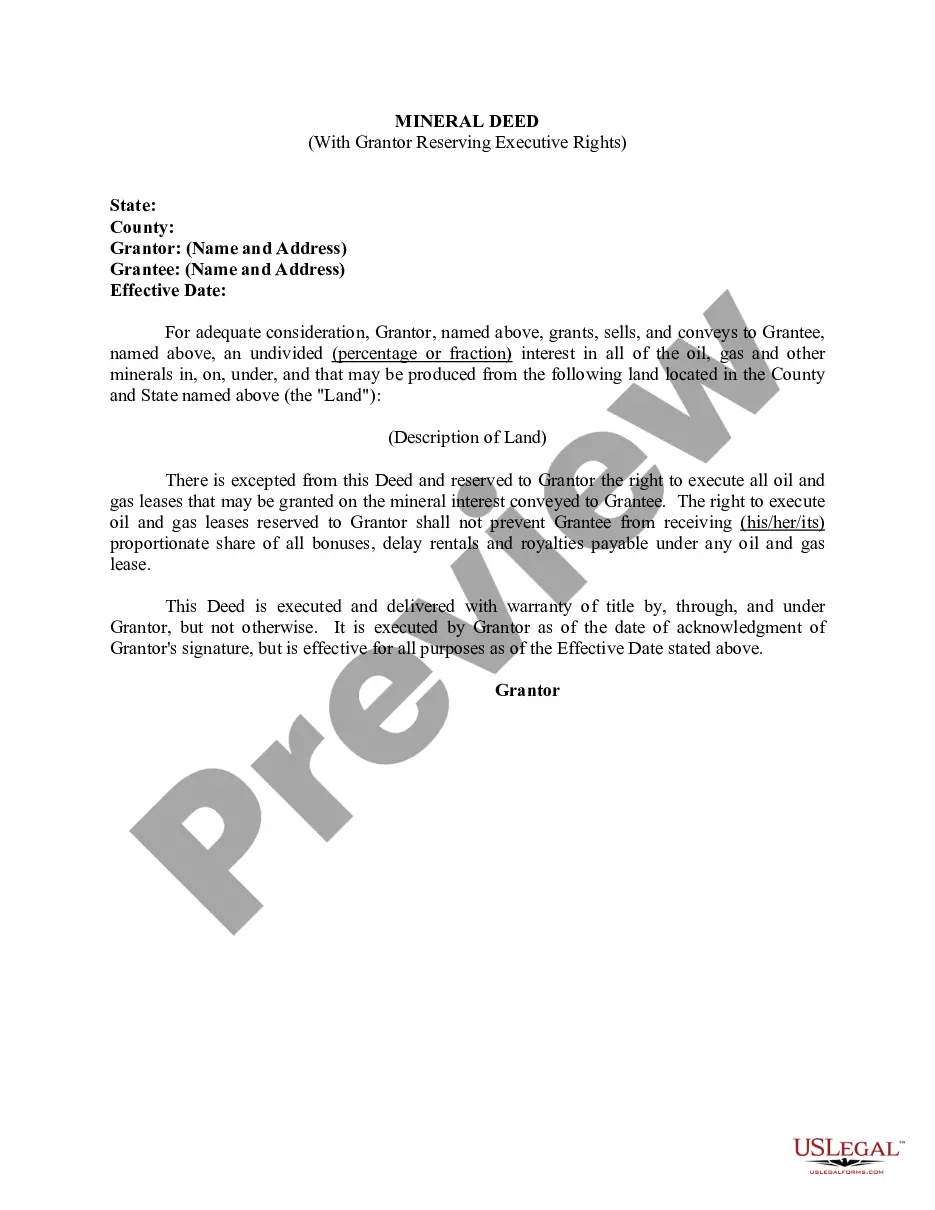
How to fill out Voting Agreement Among Stockholders To Elect Directors?
Locating the appropriate legal document template can be a challenge.
Of course, there are numerous templates available online, but how do you discover the legal form you require.
Utilize the US Legal Forms website. The service offers thousands of templates, such as the New York Voting Agreement Among Stockholders to Elect Directors, which you can use for both business and personal needs.
First, make sure you have selected the right form for your city/region. You can view the form using the Preview option and check the form details to ensure it is suitable for you.
- All of the forms are reviewed by experts and comply with federal and state requirements.
- If you are already registered, Log In to your account and click the Download option to find the New York Voting Agreement Among Stockholders to Elect Directors.
- Use your account to search through the legal forms you have purchased previously.
- Go to the My documents tab of your account and download another copy of the document you need.
- If you are a new user of US Legal Forms, here are simple instructions for you to follow.
Form popularity
FAQ
The board of directors of a public company is elected by shareholders. The board makes key decisions on issues such as mergers and dividends, hires senior managers, and sets their pay.
Stockholders and members may vote in person or by proxy in all meetings of stockholders or members....Each notice of meeting shall further be accompanied by the following:(a) The agenda for the meeting;(b) A proxy form which shall be submitted to the corporate secretary within a reasonable time prior to the meeting;More items...
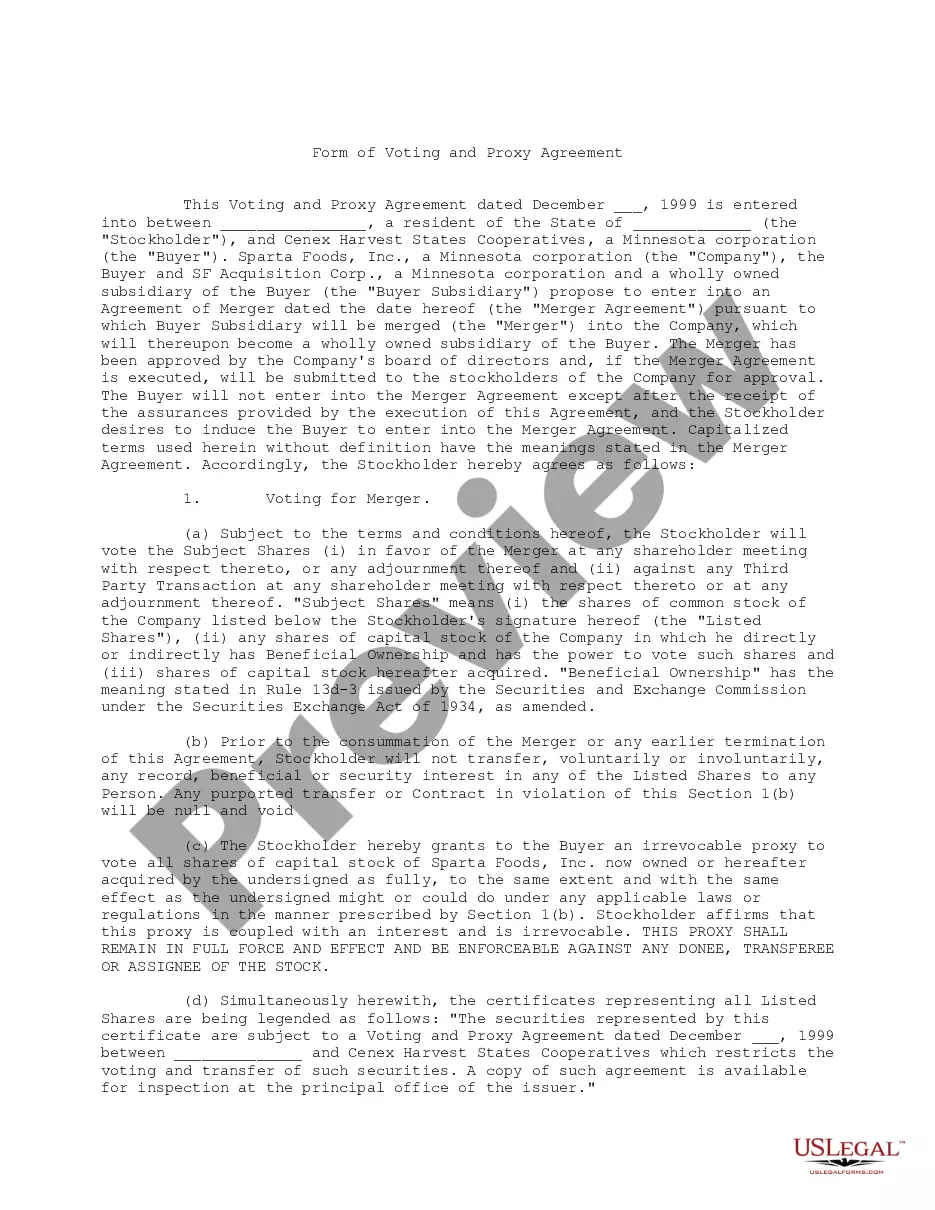
A voting agreement is an agreement between shareholders to vote their shares in a specific way. Instead of delegating voting authority to a third party as is the case in a voting trust, in a voting agreement, each shareholder pledges to abide by the agreement.
Shareholders typically have the right to vote in elections for the board of directors and on proposed operational alterations such as shifts of corporate aims and goals or fundamental structural changes.
Shareholders Elect Directors Articles of incorporation normally specify that shareholders shall elect directors. In practice, what usually happens is that a slate of one or more proposed directors is drawn up by the board of directors, then voted on by shareholders at the annual meeting.
Typically, the Shareholders meet annually to elect the Directors and approve their actions; the Board of Directors meets annually or quarterly to review the Officers' actions and the Officers meet as often as necessary to run the entity.
Shareholder power depends on the level of ownership As such, a shareholder with only 10% of the voting rights and no influence over other shareholders would in practice have much less power over the company than its board of directors.
Shareholder voting rights allow certain stockholders to vote on issues that can impact company performance, including mergers and acquisitions, dividend payouts, new securities, and who is elected to the board of directors.
Key Takeaways. Stockholder voting right allow shareholders of record in a company to vote on certain corporate actions, elect members to the board of directors, and approve issuing new securities or payment of dividends. Shareholders cast votes at a company's annual meeting.
Shareholders typically have the right to vote in elections for the board of directors and on proposed operational alterations such as shifts of corporate aims and goals or fundamental structural changes.