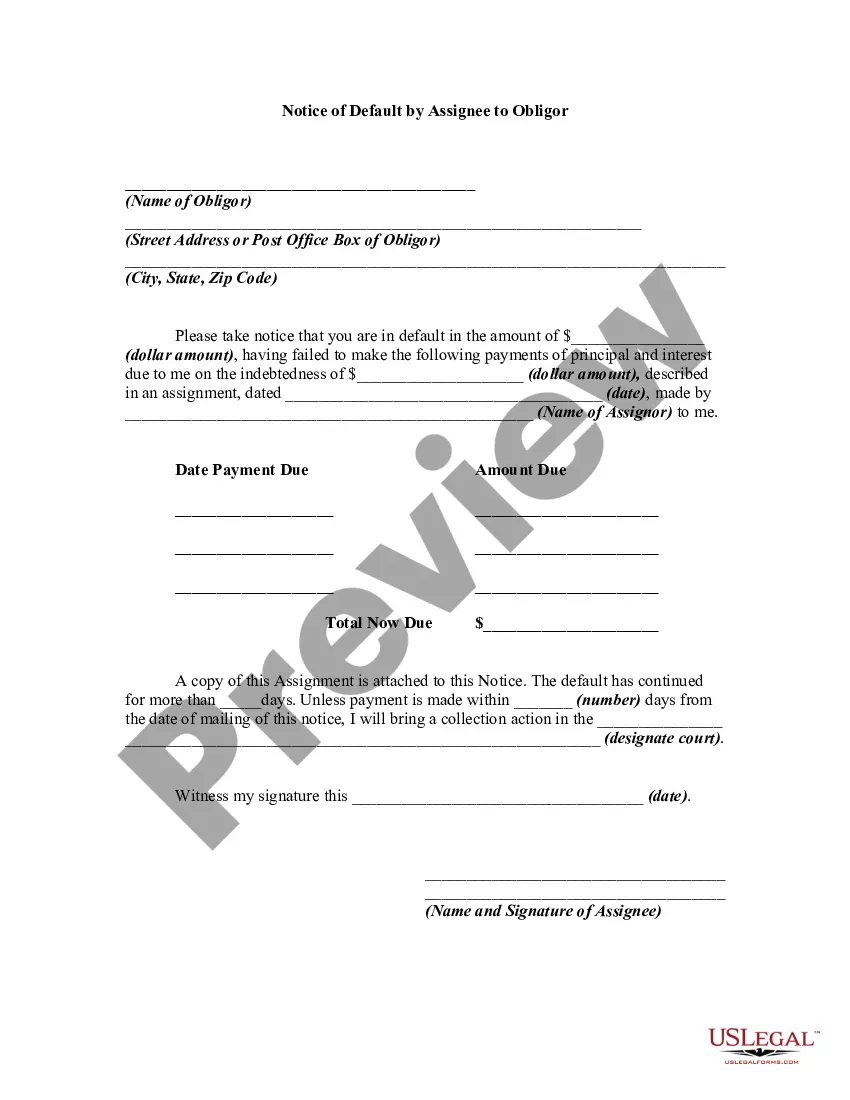
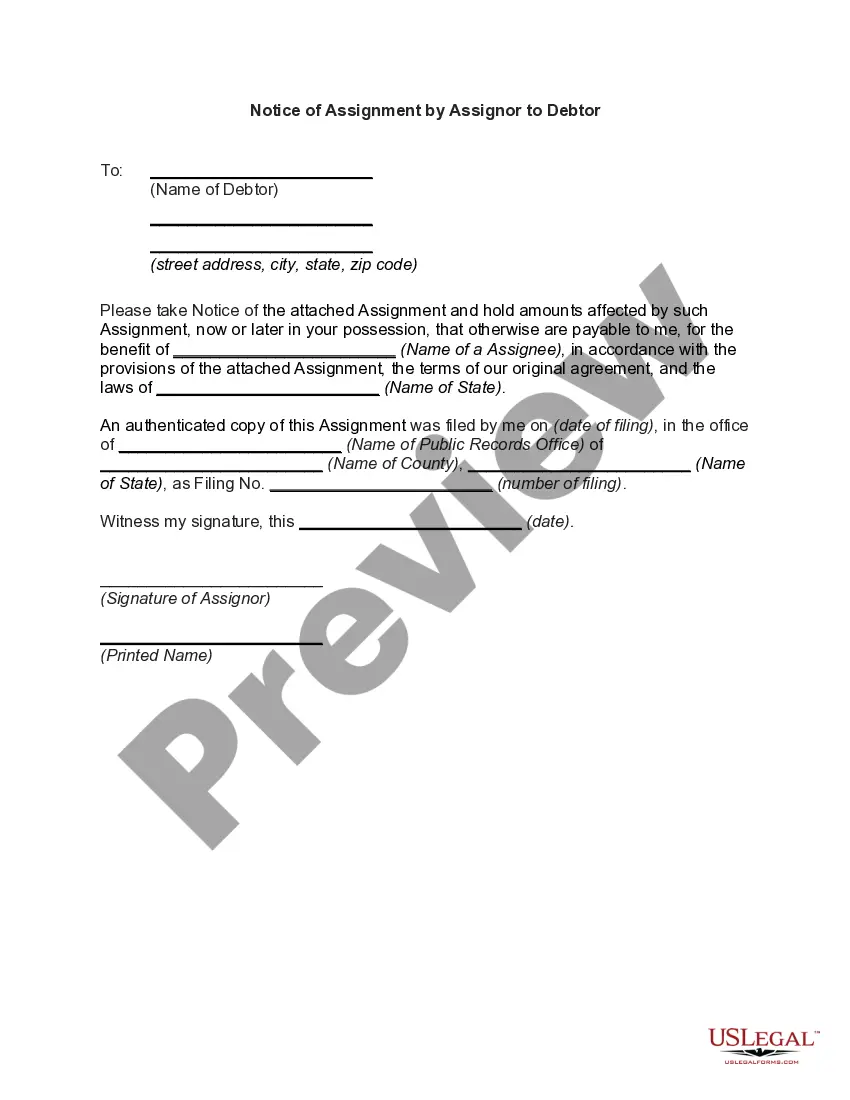
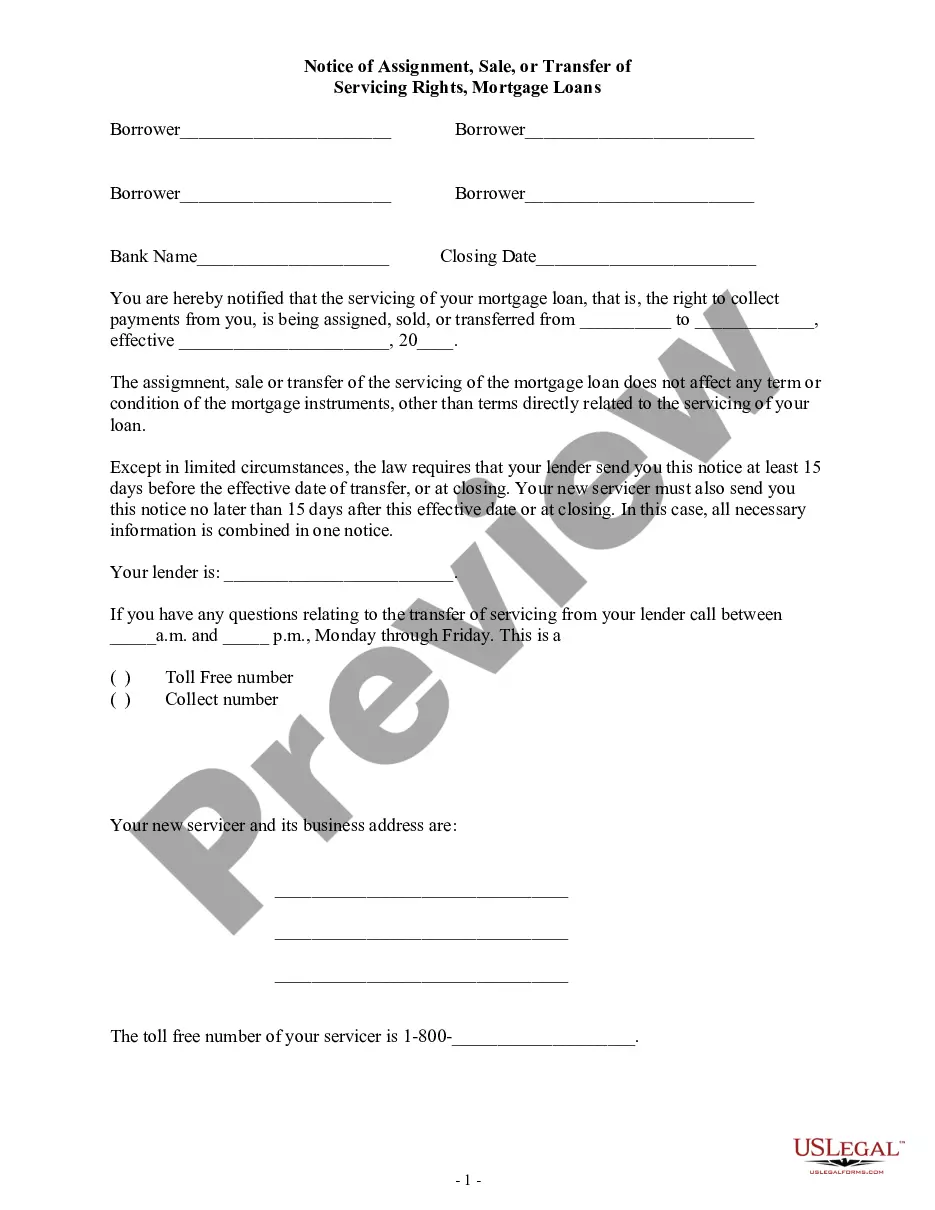
An assignment is a transfer of rights that a party has under a contract to another person, called an assignee. The assigning party is called the assignor. An assignee of a contract may generally sue directly on the contract rather than suing in the name of the assignor. The obligor is the person responsible to make payments to the assignee.
New York Notice of Default by Assignee to Obligor
State:
Multi-State
Category:
Control #:
US-01461BG
Format:
Word;
Rich Text
75 downloads
Description
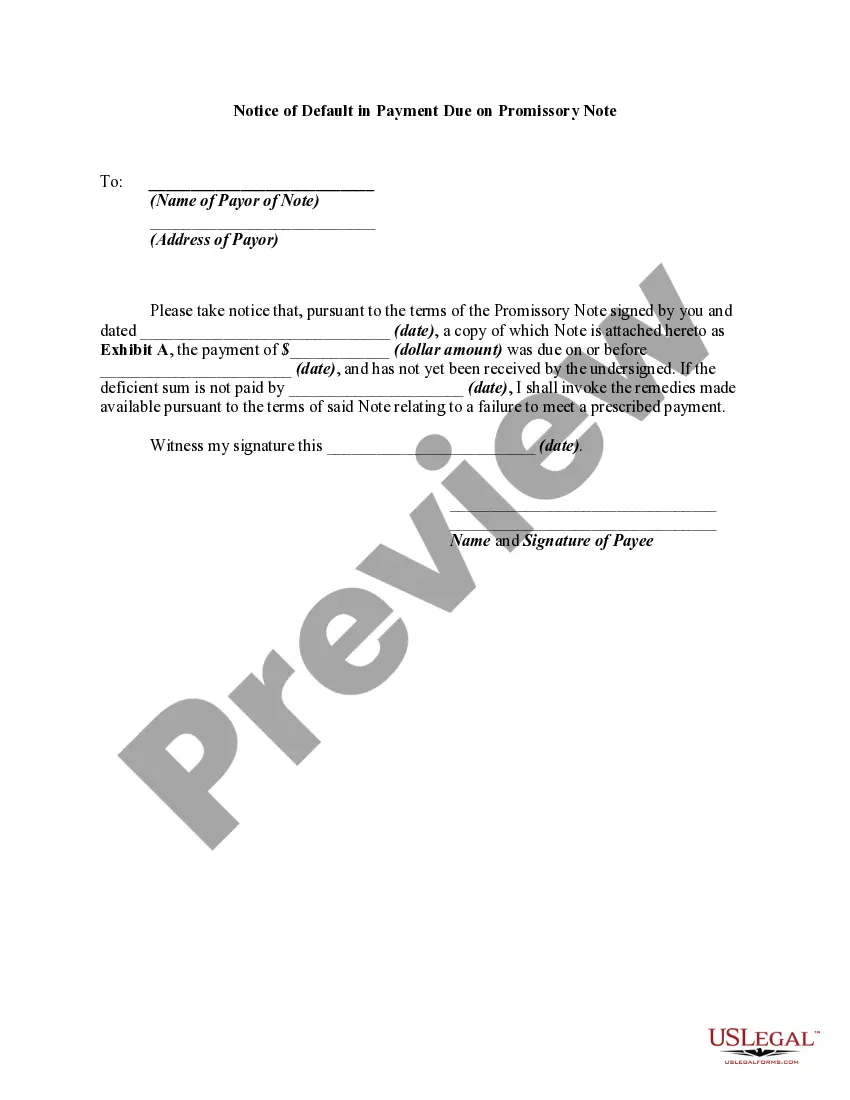
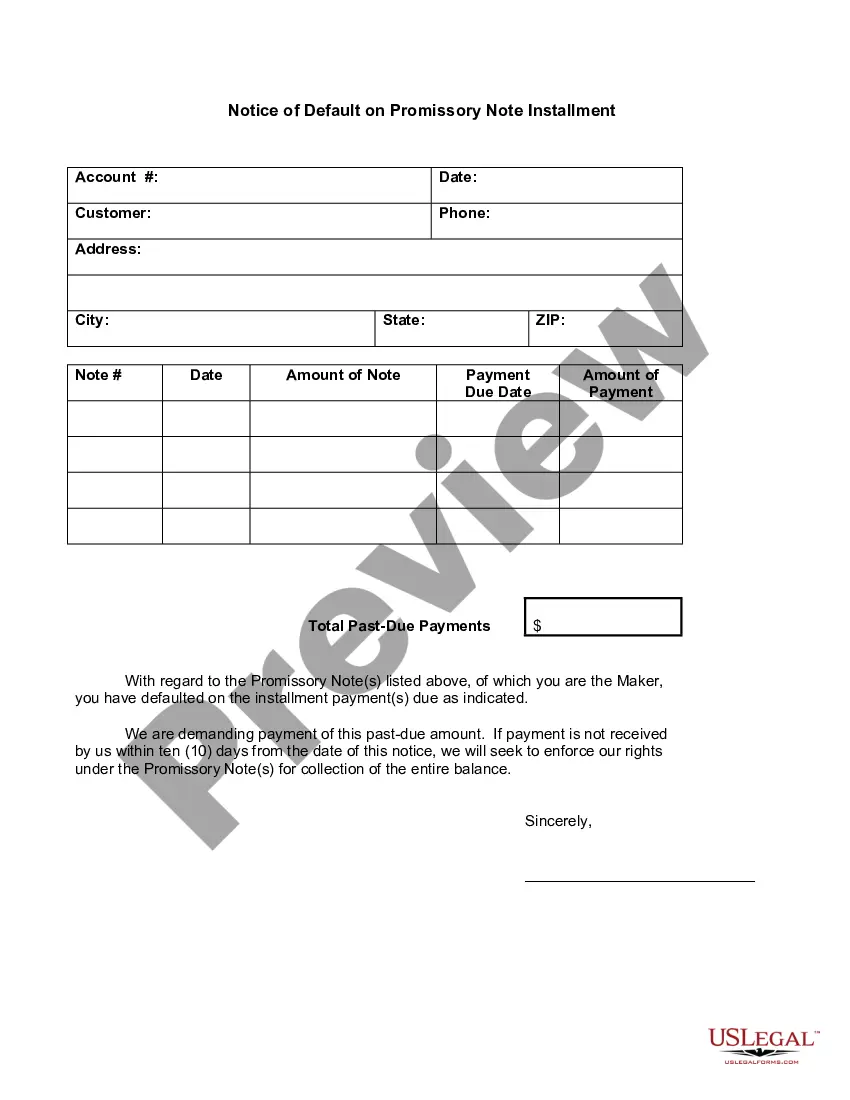
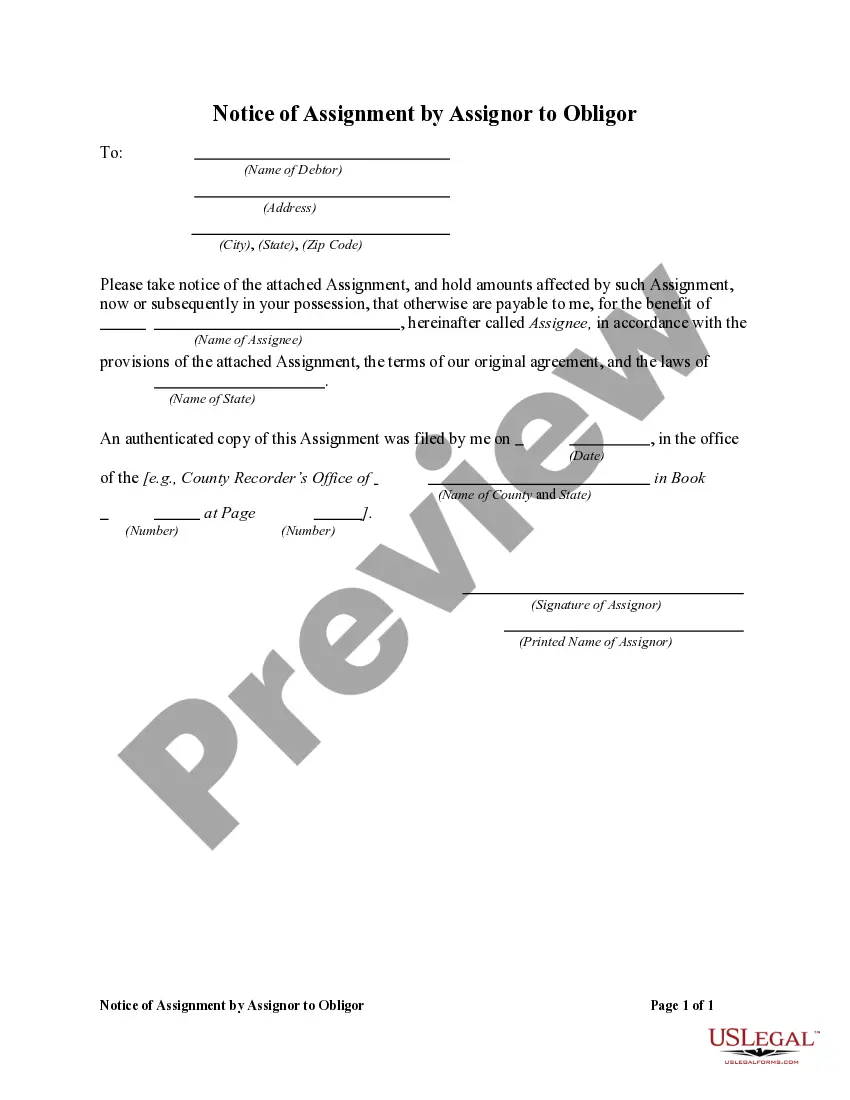
Get your form ready online
Our built-in tools help you complete, sign, share, and store your documents in one place.
Built-in online Word editor
Make edits, fill in missing information, and update formatting in US Legal Forms—just like you would in MS Word.
Export easily
Download a copy, print it, send it by email, or mail it via USPS—whatever works best for your next step.
E-sign your document
Sign and collect signatures with our SignNow integration. Send to multiple recipients, set reminders, and more. Go Premium to unlock E-Sign.
Notarize online 24/7
If this form requires notarization, complete it online through a secure video call—no need to meet a notary in person or wait for an appointment.
Store your document securely
We protect your documents and personal data by following strict security and privacy standards.

Make edits, fill in missing information, and update formatting in US Legal Forms—just like you would in MS Word.

Download a copy, print it, send it by email, or mail it via USPS—whatever works best for your next step.

Sign and collect signatures with our SignNow integration. Send to multiple recipients, set reminders, and more. Go Premium to unlock E-Sign.

If this form requires notarization, complete it online through a secure video call—no need to meet a notary in person or wait for an appointment.

We protect your documents and personal data by following strict security and privacy standards.
Looking for another form?
How to fill out Notice Of Default By Assignee To Obligor?
If you want to be thorough, download, or print sanctioned document templates, use US Legal Forms, the largest collection of legal forms available online.
Utilize the site’s simple and efficient search to find the documents you require.
Numerous templates for business and personal purposes are categorized by types and states, or keywords. Use US Legal Forms to locate the New York Notice of Default by Assignee to Obligor in just a few clicks.
Step 5. Process the transaction. You can use your Visa or MasterCard or PayPal account to complete the transaction.
Step 6. Select the format of your legal form and download it to your device. Step 7. Complete, modify and print or sign the New York Notice of Default by Assignee to Obligor. Each legal document template you purchase is yours forever. You have access to each form you downloaded in your account. Click on the My documents section and select a form to print or download again. Compete and download, and print the New York Notice of Default by Assignee to Obligor with US Legal Forms. There are many professional and state-specific forms you can use for your business or personal needs.
- If you are already a US Legal Forms user, sign in to your account and click the Obtain button to receive the New York Notice of Default by Assignee to Obligor.
- You can also access forms you have previously downloaded in the My documents section of your account.
- If you are using US Legal Forms for the first time, follow the steps below.
- Step 1. Ensure you have selected the form for the correct city/state.
- Step 2. Use the Review option to examine the form’s content. Don’t forget to read the description.
- Step 3. If you are not satisfied with the form, use the Search area at the top of the screen to find other versions of the legal form template.
- Step 4. Once you have found the form you need, click the Purchase now button. Choose the pricing plan you prefer and enter your details to register for an account.
Form popularity
FAQ
The assignor normally remains liable unless there is an agreement to the contrary by the other party to the contract. The effect of a valid assignment is to remove privity between the assignor and the obligor and create privity between the obligor and the assignee.
An unequivocal and complete assignment extinguishes the assignor's rights against the obligor and leaves the assignor without standing to sue the obligor. [i] However, when an assignment is made for collection or security, the assignor retains an equitable ownership.
The assignor was an original party to the contract and is the party that transfers its contractual rights to another party. The other original party to the contract is the obligor. The obligor is the party that is obligated to do something under the terms of a contract.
In a contract involving assignment of rights, the assignee may sue the obligor. This is because the assignee, once the assignee has been assigned rights, is entitled to performance under the contract.
An assignment cannot cause harm or burden to the assignee, unless the assignee clearly agrees to take on that burden. Therefore, the assignor continues to hold all liabilities related to the assignment, unless the contract states otherwise.
Generally, after a valid assignment, all the rights and obligations of the assignor pass to the assignee. The assignee steps into the shoes of the assignor. The assignee is now responsible for fulfilling any remaining obligations under the contract, and the assignee will reap the benefits of the contract.
An assignor is a person, company, or other entity who transfers rights that they hold to another entity. The assignor transfers to the assignee.
The assignor transfers to the assignee. For example, a party (the assignor) that enters into a contract to sell a piece of property can assign the proceeds or benefits of the contract to a third party (the assignee) such as a charity or a trust.
The common law prohibits an assignee from suing in his/her name to enforce the assigned obligation. However, statutes in many jurisdictions allow an assignee of a non negotiable note or other assignable chose in action to bring suit in his/her name to enforce the assigned obligation.
The assignor is the one who grants an assignment, whereas the assignee receives the assignment of rights under a contract. The assignor was a party to the original contract; the assignee was not a party to the original contract. If A and B have a contract and one of them assigns a right to C, then C is the assignee.