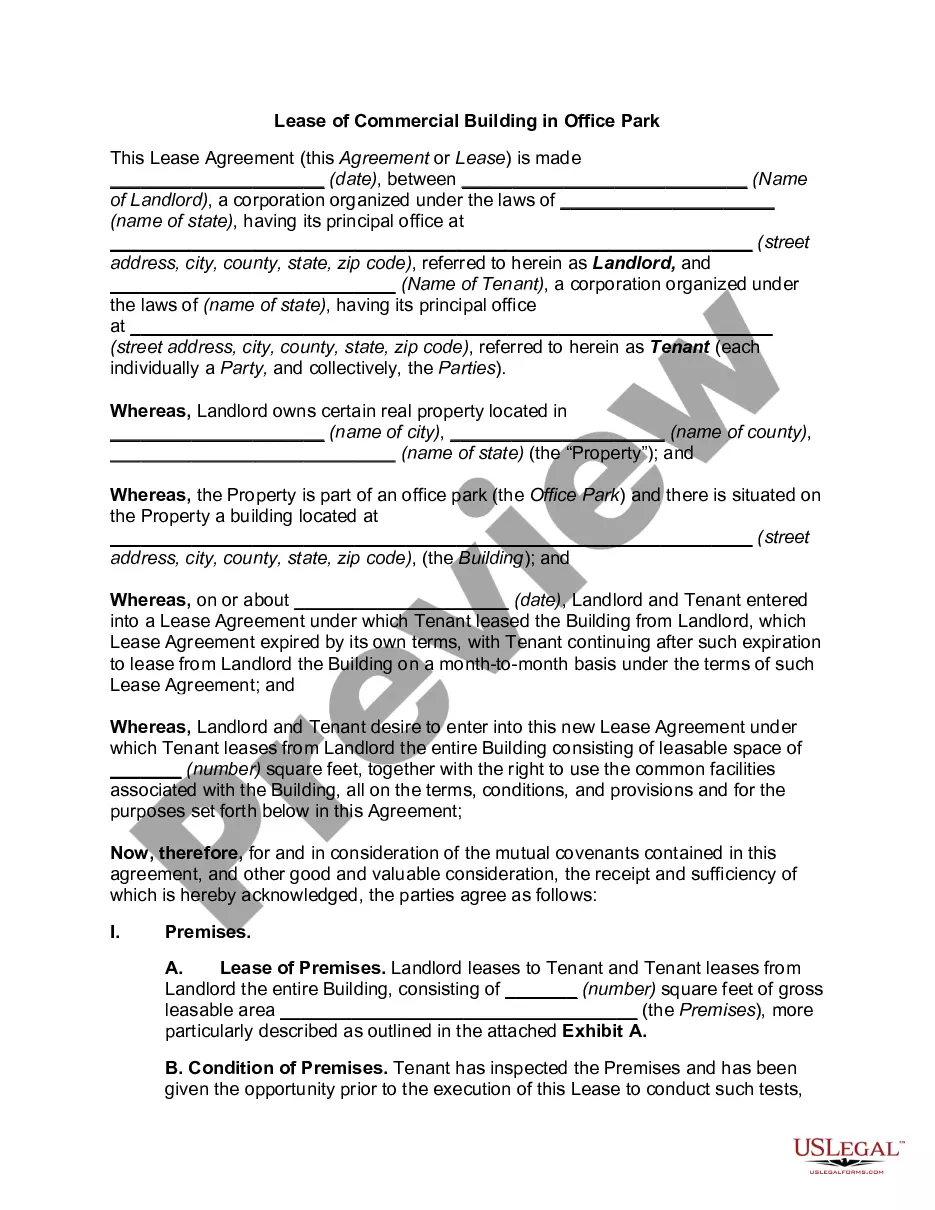
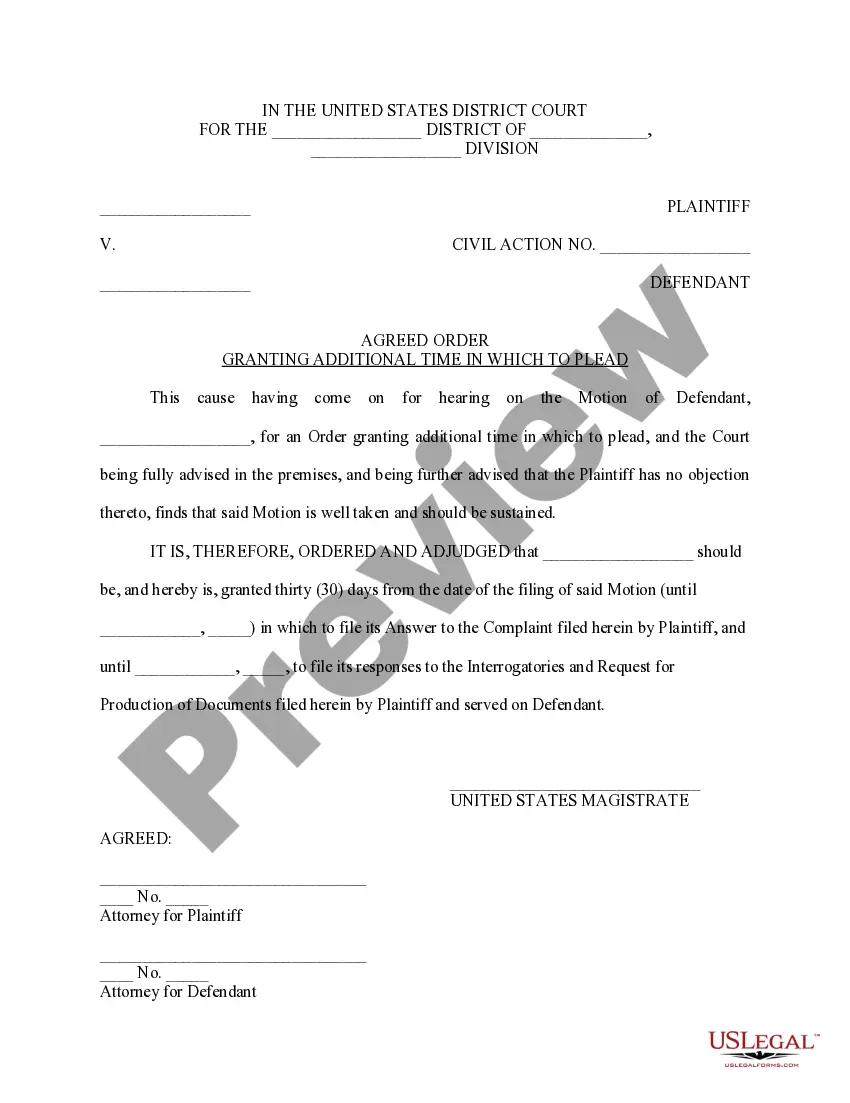
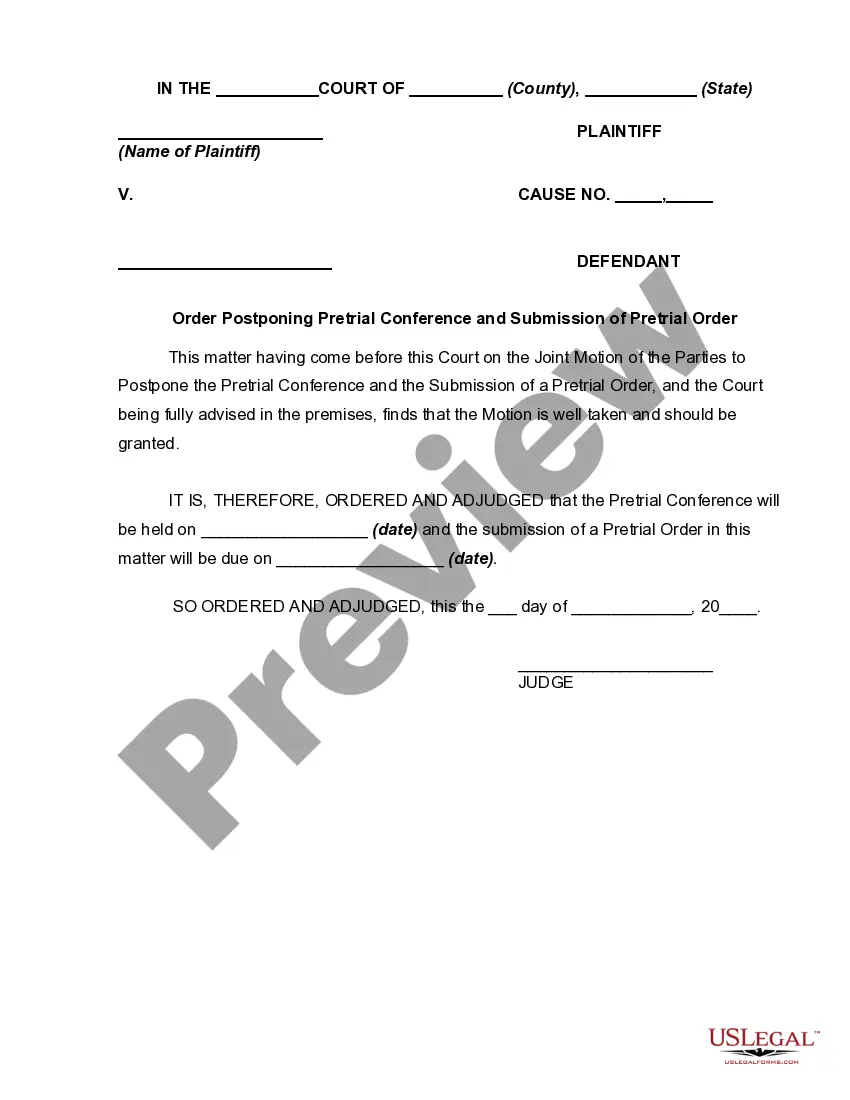
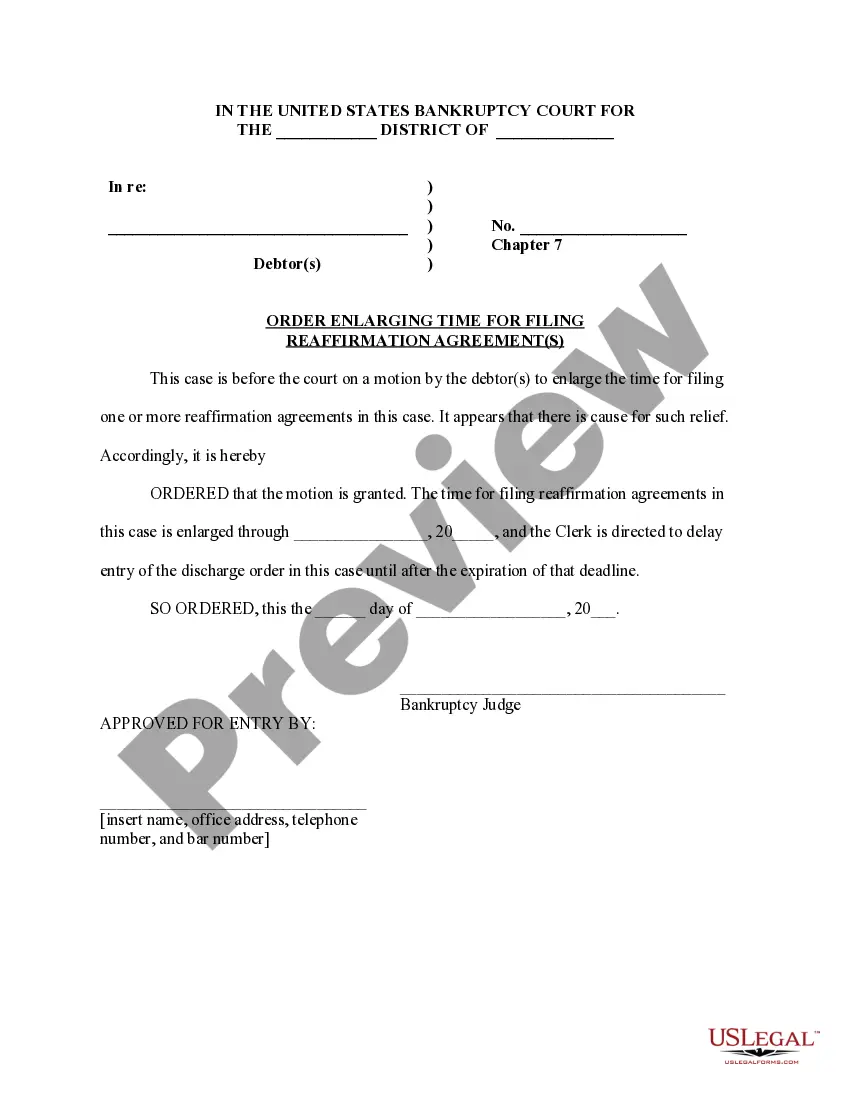
New York Agreed Order Granting Additional Time to Plead and Respond to Interrogatories and Requests for Production
Description
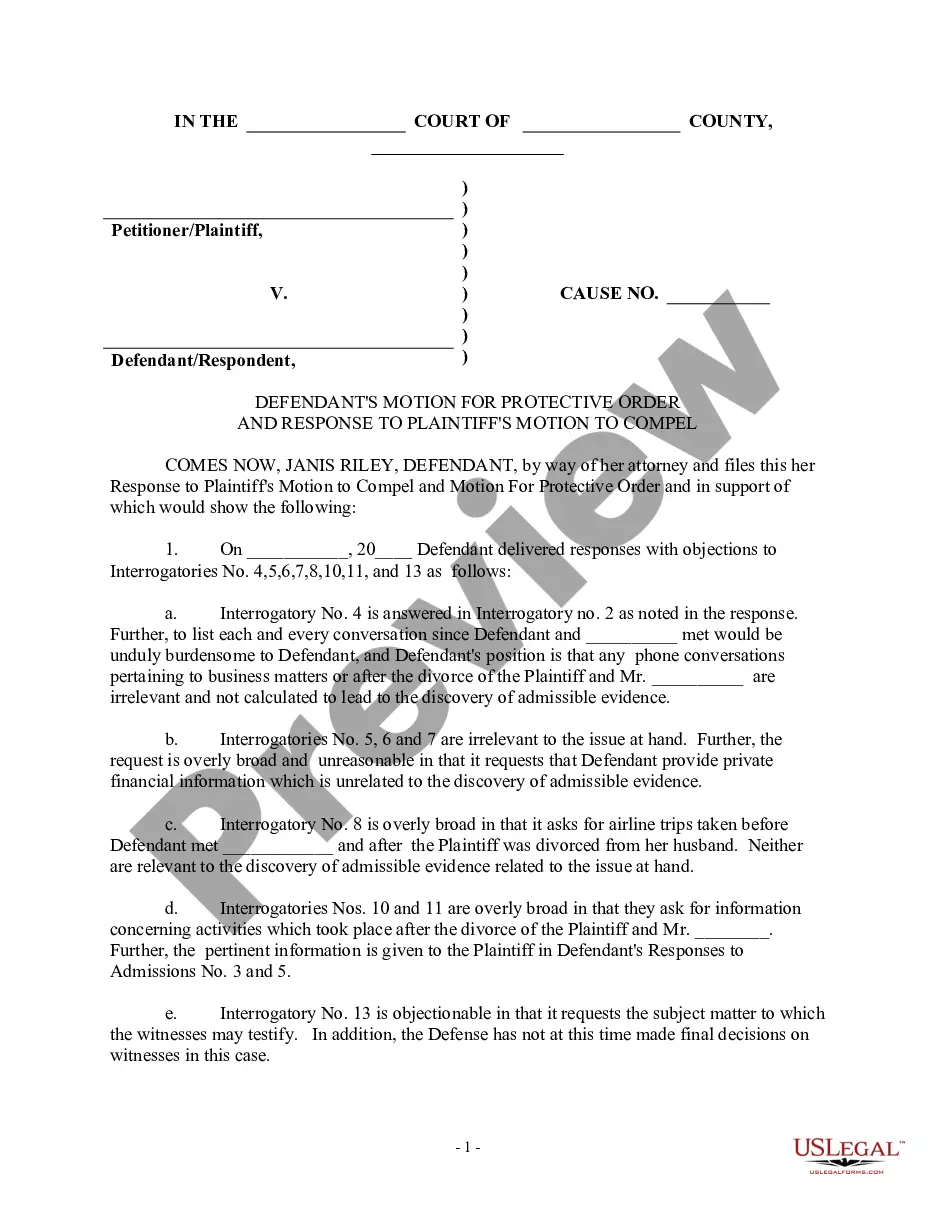
How to fill out Agreed Order Granting Additional Time To Plead And Respond To Interrogatories And Requests For Production?
Have you ever been in a location where you require documents for either business or personal purposes constantly.
There are numerous legal document templates available online, but locating ones you can trust is challenging.
US Legal Forms offers thousands of template documents, such as the New York Agreed Order Granting Additional Time to Plead and Respond to Interrogatories and Requests for Production, which are designed to comply with state and federal regulations.
Once you locate the correct form, click on Get now.
Choose the pricing plan you prefer, fill in the required information to create your account, and pay for the order using your PayPal or credit card.
- If you are already acquainted with the US Legal Forms website and have an account, simply Log In.
- Then, you can download the New York Agreed Order Granting Additional Time to Plead and Respond to Interrogatories and Requests for Production template.
- If you do not possess an account and wish to start using US Legal Forms, follow these instructions.
- Find the form you need and ensure it is for the correct city/state.
- Utilize the Review option to examine the form.
- Check the description to confirm that you have selected the appropriate form.
- If the form is not what you are looking for, use the Search field to find the form that suits your needs.
Form popularity
FAQ
A motion for extension of time to file an answer is a legal document filed in court that requests more time to submit an answer to a complaint. This motion is essential for ensuring that you can adequately prepare your case without rushing. When accompanied by a New York Agreed Order Granting Additional Time to Plead and Respond to Interrogatories and Requests for Production, it can significantly ease the pressure of tight deadlines. To facilitate this process, US Legal Forms provides templates and guidance.
A motion to extend time to answer in New York is a formal request to the court to allow additional time for a party to respond to a legal complaint. This motion is often necessary when a party needs more time to prepare their response or gather necessary information. By filing for a New York Agreed Order Granting Additional Time to Plead and Respond to Interrogatories and Requests for Production, you can secure the time you need. US Legal Forms can help you draft this motion effectively.
Rule 202.7 F of the New York Civil Practice Law and Rules addresses the procedures for responding to discovery requests, including interrogatories. This rule outlines the obligations of parties to provide timely responses and may include provisions for obtaining a New York Agreed Order Granting Additional Time to Plead and Respond to Interrogatories and Requests for Production. Understanding this rule is vital for compliance and avoiding penalties. For detailed guidance, US Legal Forms offers comprehensive resources.
In New York, you typically have 20 days to respond to interrogatories. However, if you have obtained a New York Agreed Order Granting Additional Time to Plead and Respond to Interrogatories and Requests for Production, this timeframe may be extended. It is crucial to adhere to the deadlines outlined in the order to avoid any complications. For assistance in navigating these timelines, consider using US Legal Forms.
In New York, you typically have 20 days to respond to interrogatories after receiving them. However, if you have a New York Agreed Order Granting Additional Time to Plead and Respond to Interrogatories and Requests for Production, this timeframe may be extended. It is essential to monitor these deadlines closely to avoid any potential negative consequences in your case. For assistance with drafting responses or understanding your obligations, consider leveraging the resources available on the US Legal Forms platform.
CPLR Rule 3216 allows a party in a civil case to obtain a court order to dismiss a case if the opposing party has not taken action for a specified period. This rule is significant because it helps streamline cases and ensures that they move forward efficiently. If you are navigating the complexities of a legal case, understanding this rule is crucial, especially when dealing with a New York Agreed Order Granting Additional Time to Plead and Respond to Interrogatories and Requests for Production. Utilizing resources from US Legal Forms can help you draft necessary documents and navigate these legal requirements effectively.
Section 202.8-a - Motion in General (a) Form of Motion Papers. The movant shall specify in the notice of motion, order to show cause, and in a concluding section of a memorandum of law, the exact relief sought.
Local Rule 56.1(d) provides as follows: ?Each statement of material fact by a movant or opponent must be fol- lowed by citation to evidence which would be admissi- ble, set forth as required by Federal Rule of Civil Proce- dure 56(e).? 20.
A sample certification of word count that counsel practicing in the New York Supreme Court or New York County Court must attach to affidavits, affirmations, and memoranda of law, which are generally limited to 7,000 words for documents in chief and 4,200 words for reply documents.
Specifically, pursuant to Uniform Rule 202.7 (f), upon an application for an order to show cause that seeks a temporary restraining order, the application must contain an affirmation demonstrating that there will be significant prejudice to the party seeking the restraining order by the giving of notice.