New York Consent to Change Attorneys
What this document covers
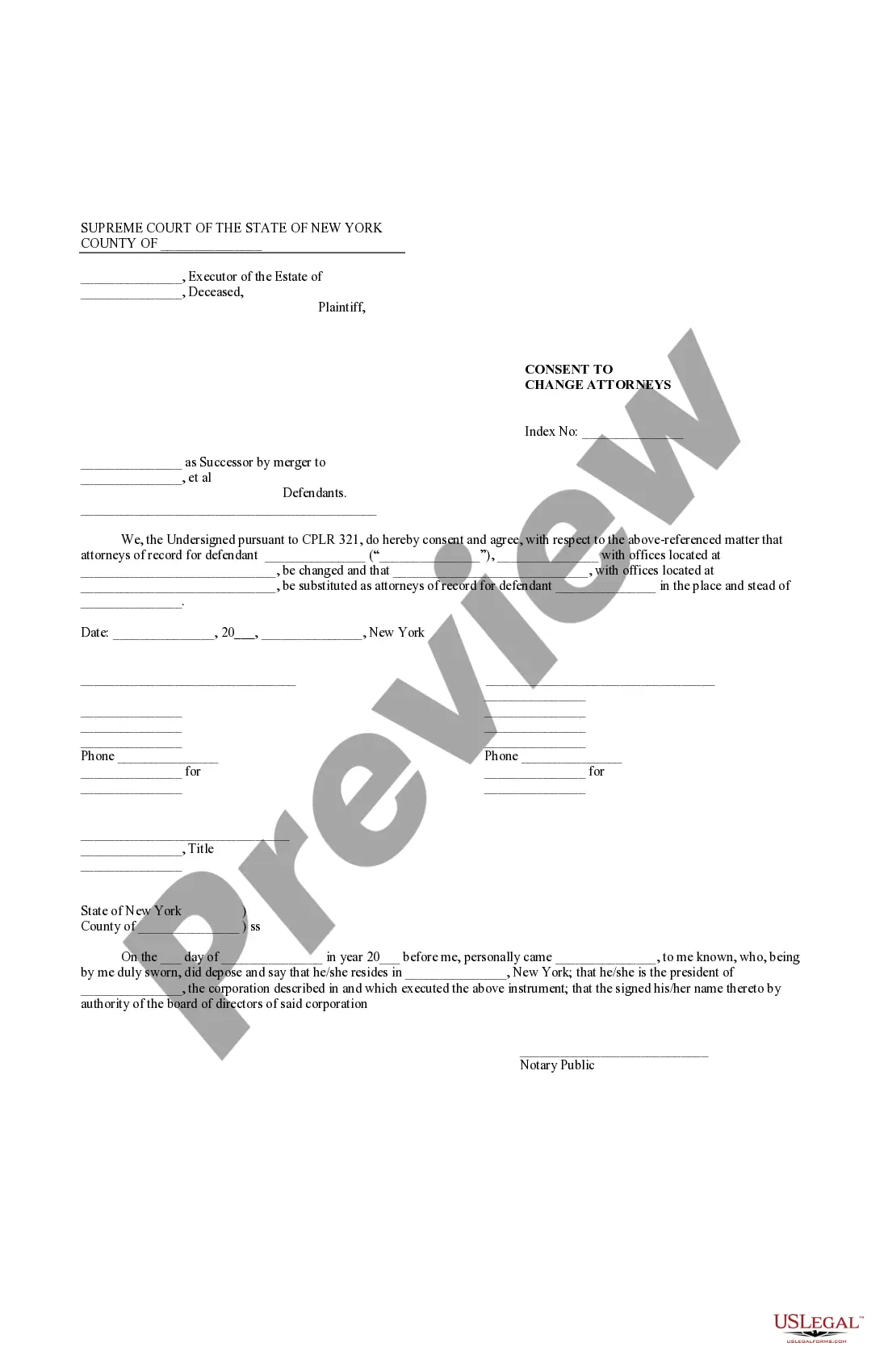
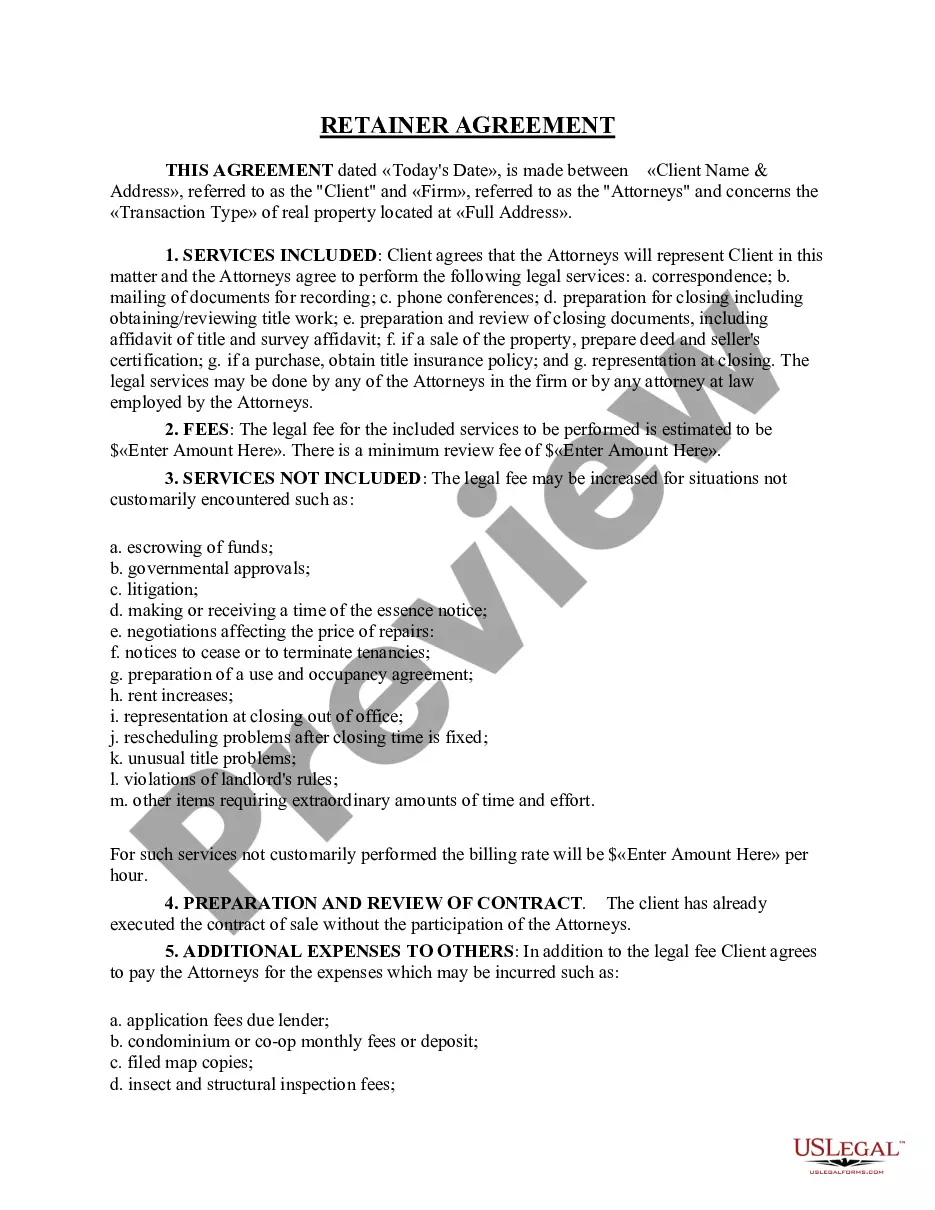
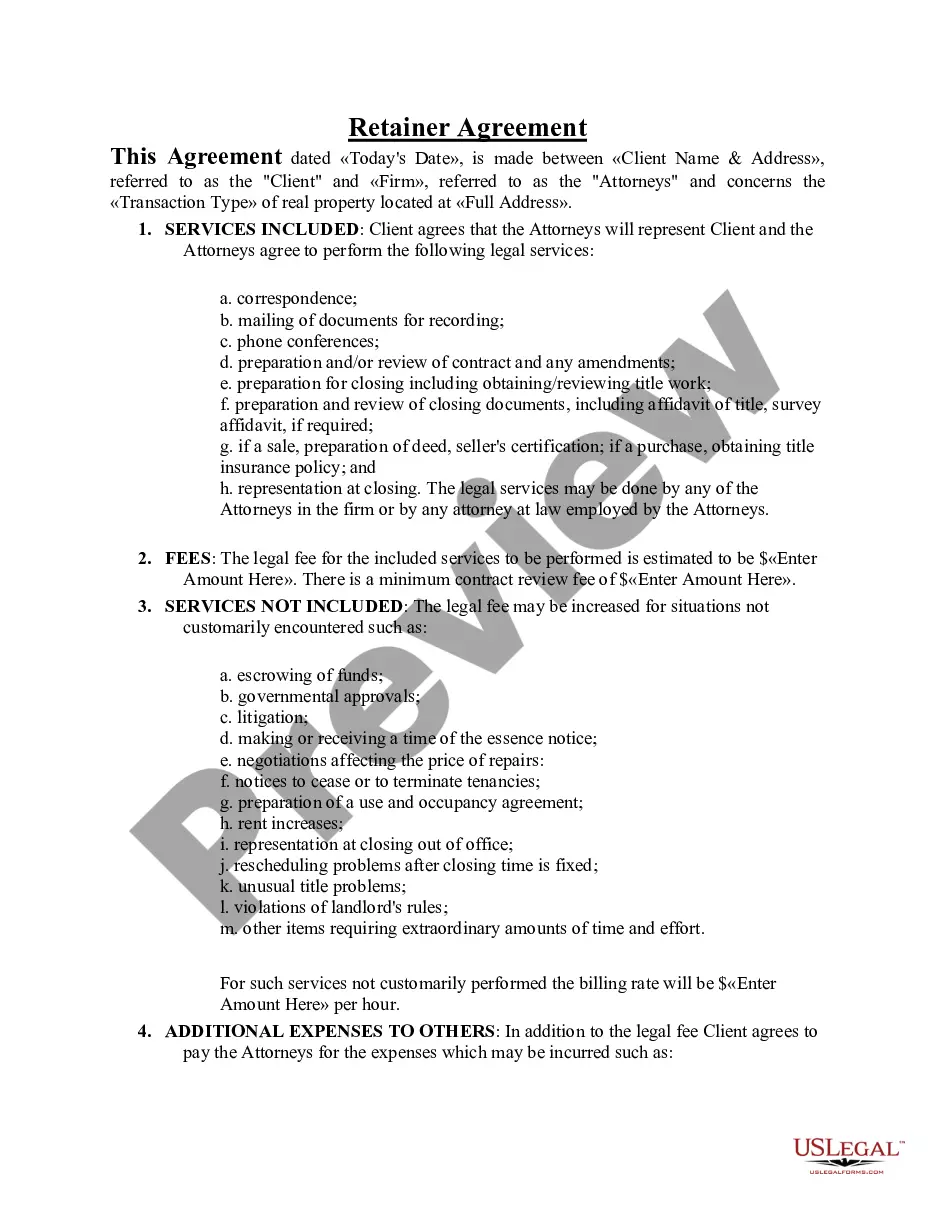
The Consent to Change Attorneys form allows a defendant's current attorneys to officially permit a change of legal representation. This form is necessary when a client wishes to substitute their attorney and ensures that the new attorney is recognized in place of the previous one. Unlike other legal documents that may involve comprehensive agreements, this form specifically addresses the consent required for an attorney transition.
Key components of this form
- Identification of the plaintiff and defendant in the case.
- Details of the current attorney of record and the new attorney being substituted.
- Signature lines for all involved parties to affirm consent.
- A notary section to authenticate the document.
- The date of the consent and commitment to the attorney change.
When this form is needed
This form should be used when a defendant in a legal case decides to change their attorney. Common scenarios include situations where the current attorney is unable to fulfill their responsibilities, when there is a disagreement between the client and attorney, or when the client simply wishes to select a different legal representative to handle their case.
Who this form is for
The following individuals should consider using this form:
- Defendants involved in legal proceedings who wish to change their attorney.
- Executors of estates needing legal representation changes.
- Corporations or entities that require a switch in legal counsel.
How to complete this form
- Fill in the names of the plaintiff and defendants as well as the index number relating to the case.
- Enter the name and office address of the current attorney and the new attorney.
- Confirm the consent by having all parties sign and date the form.
- Include any required notary information to validate the signatures.
- Ensure all contact information is complete and accurate for all parties involved.
Notarization requirements for this form
Yes, this form must be notarized to be legally valid. It requires notarization to confirm the authenticity of the signatures, which is crucial in legal proceedings. US Legal Forms offers integrated online notarization options, making it easy and secure to finalize your document via a video call with a notary public.
Get your form ready online
Our built-in tools help you complete, sign, share, and store your documents in one place.
Make edits, fill in missing information, and update formatting in US Legal Forms—just like you would in MS Word.
Download a copy, print it, send it by email, or mail it via USPS—whatever works best for your next step.
Sign and collect signatures with our SignNow integration. Send to multiple recipients, set reminders, and more. Go Premium to unlock E-Sign.
If this form requires notarization, complete it online through a secure video call—no need to meet a notary in person or wait for an appointment.
We protect your documents and personal data by following strict security and privacy standards.

Make edits, fill in missing information, and update formatting in US Legal Forms—just like you would in MS Word.

Download a copy, print it, send it by email, or mail it via USPS—whatever works best for your next step.

Sign and collect signatures with our SignNow integration. Send to multiple recipients, set reminders, and more. Go Premium to unlock E-Sign.

If this form requires notarization, complete it online through a secure video call—no need to meet a notary in person or wait for an appointment.

We protect your documents and personal data by following strict security and privacy standards.
Common mistakes to avoid
- Failing to include the full names of all parties involved.
- Not providing complete addresses for both the current and new attorneys.
- Omitting signatures from all required individuals.
- Leaving the date field blank or incorrect.
- Not ensuring the form is notarized when required.
Benefits of completing this form online
- Convenience of instant access and download, saving time and effort.
- Editable fields allow you to customize the form to your specific needs.
- Reliable templates drafted by licensed attorneys ensure legal compliance.
- Ability to complete the form at your own pace without legal pressure.
Quick recap
- The Consent to Change Attorneys form is essential for formally switching legal representation.
- It includes specific sections for attorney details, signatures, and notarization.
- Proper completion and notarization are critical to ensure its validity in legal contexts.
Looking for another form?
Form popularity
FAQ
No, it does not look bad to change attorneys.
The answer depends. If the attorney is withdrawing due to your inability to pay or a difference in opinion as to bow the case should be presented should not have a negative affect on you. However, if the attorney withdraws for ethical reasons that may look questionable.
No, it doesn't look bad. However, your new attorney will have to share the fee with the current one. Therefore, you may have trouble finding someone to take over your case.
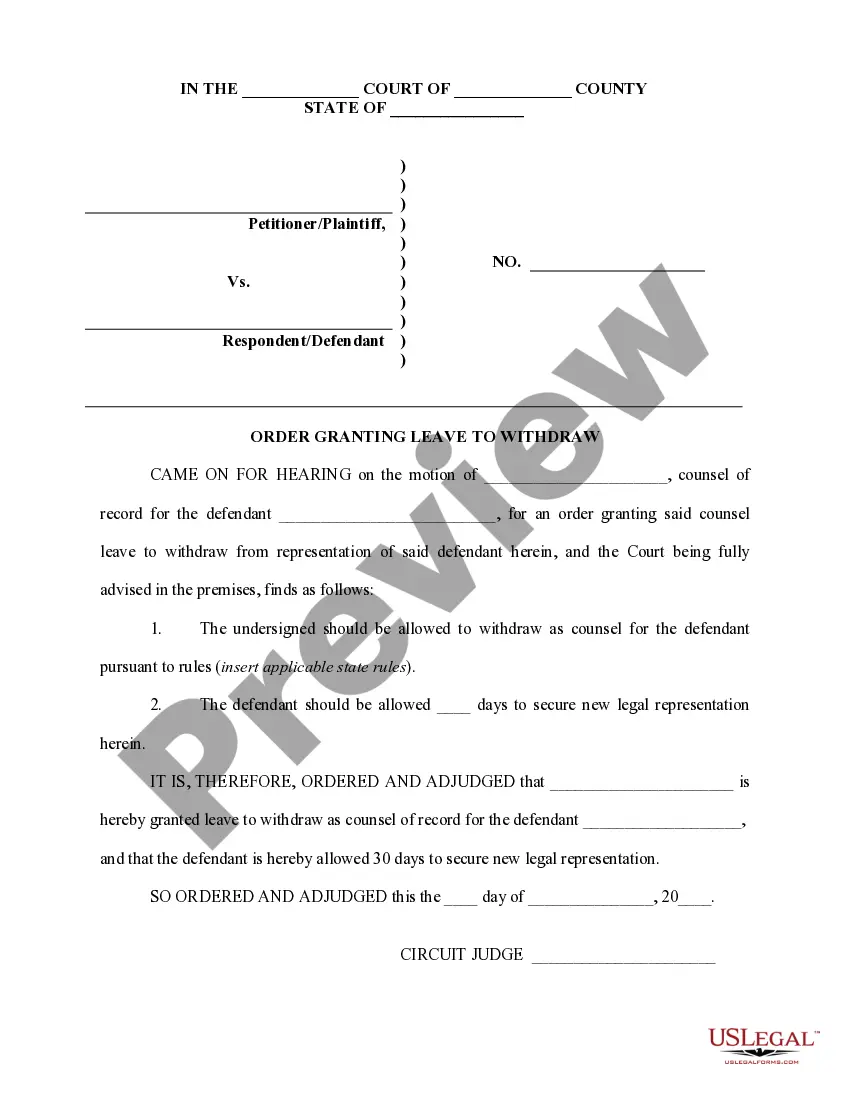
Typically, a lawyer must get the judge's permission before he or she can withdraw from a case. A judge is less likely to approve the withdrawal if the client will be prejudiced or otherwise adversely affected by the lawyer's withdrawal, such as if the case is close to trial.
Firing Your Lawyer. If you do decide to fire your lawyer, you should do so in writing. Your letter should set forth and document any conduct or reasons supporting your decision. It should also give instruction as to where he or she needs to send your file.
8 A lawyer may withdraw if the client refuses to abide by the terms of an agreement relating to the representation, such as an agreement concerning fees or court costs or an agreement limiting the objectives of the representation.
It is essential that lawyers request leave to withdraw at the earliest possible time, and that the client has reasonable notice to obtain other counsel. The court may refuse to grant a request to withdraw only in exceptional circumstances, and the discretion should be used exceedingly sparingly.
You do not have to pay your new lawyer another fee. All lawyers who work on your case, if they are entitled to a fee, will share one fee between them.Your new lawyer will send your old lawyer a letter and they will (hopefully) work it out. There should not be any delay with your case when you change lawyers.
Withdrawal from representation, in United States law, occurs where an attorney terminates a relationship of representing a client.Where litigation has been filed and an attorney is representing the client in court, permission of the court must usually be sought in support of an attorney's withdrawal.