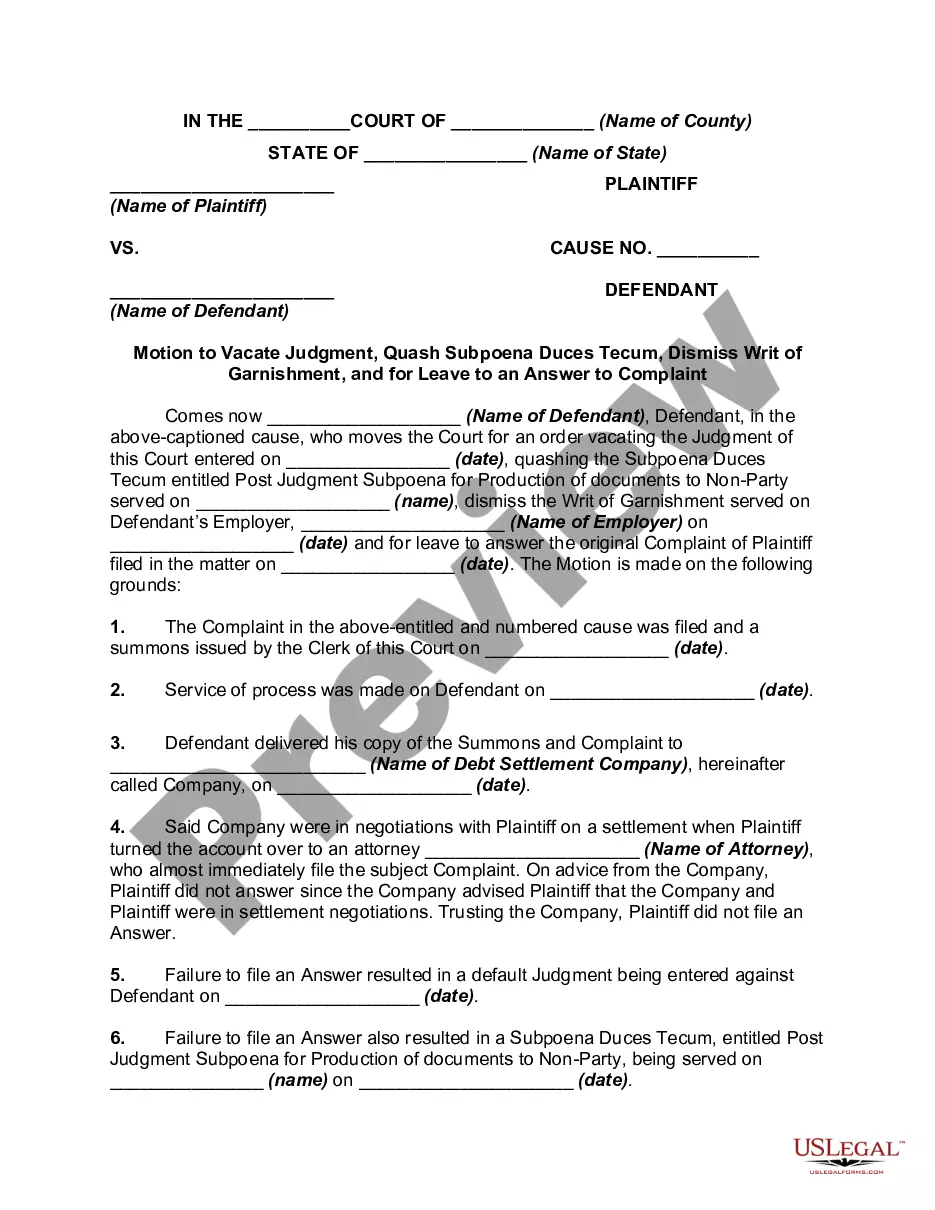
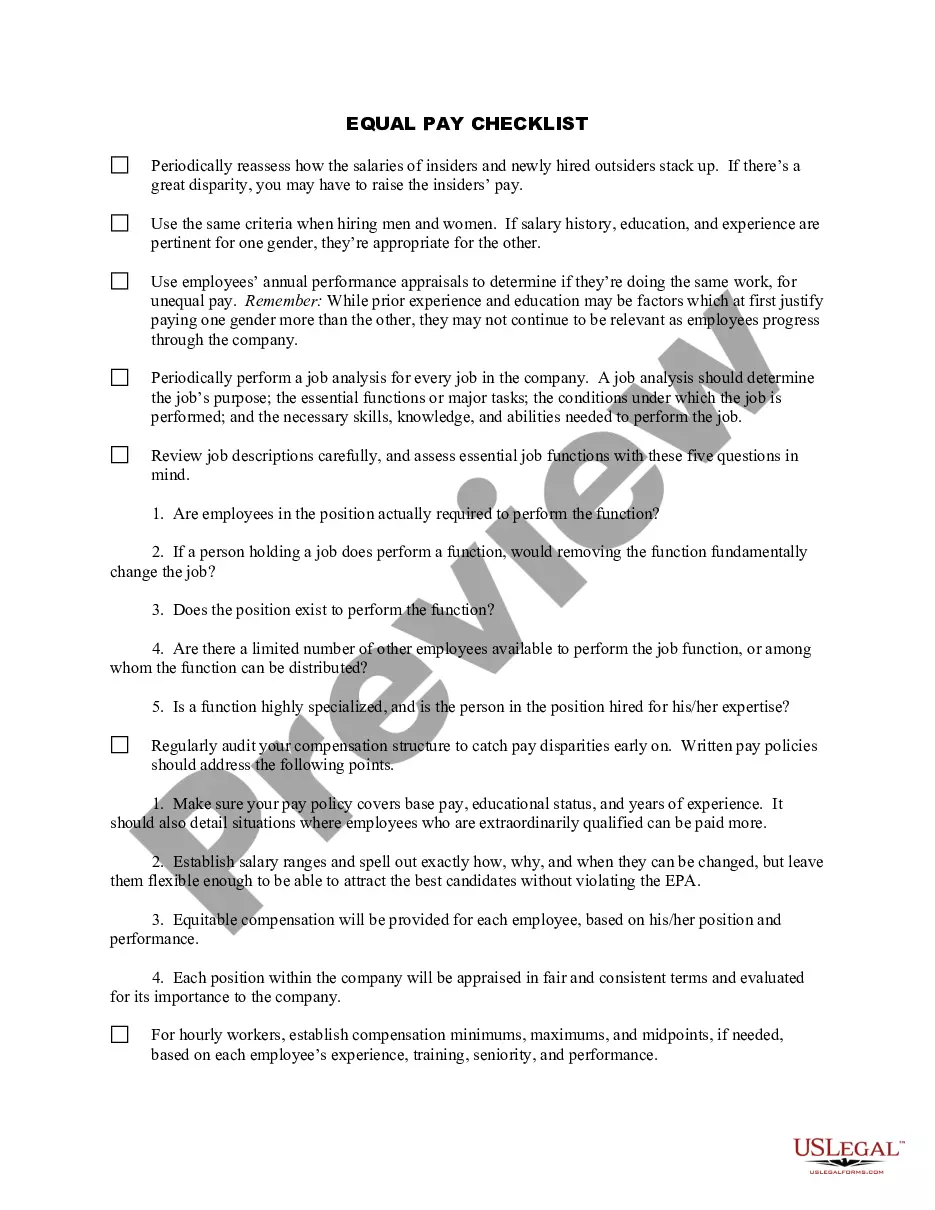
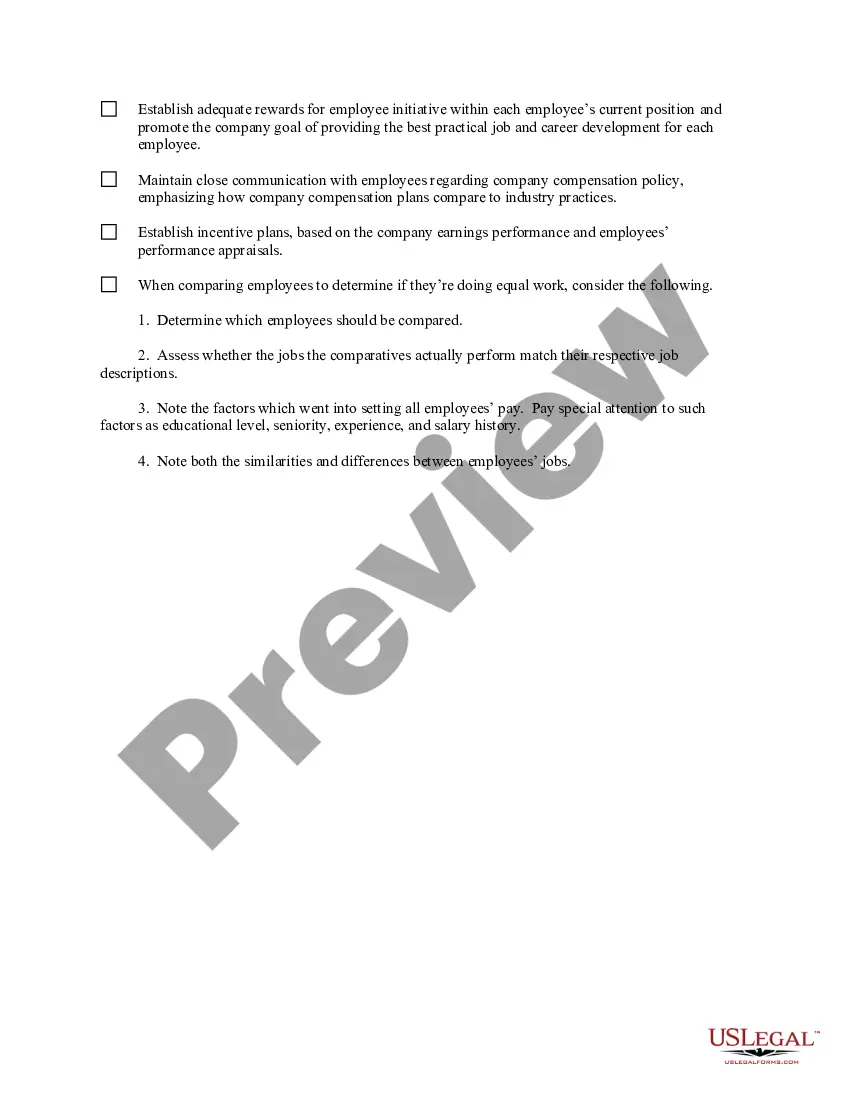
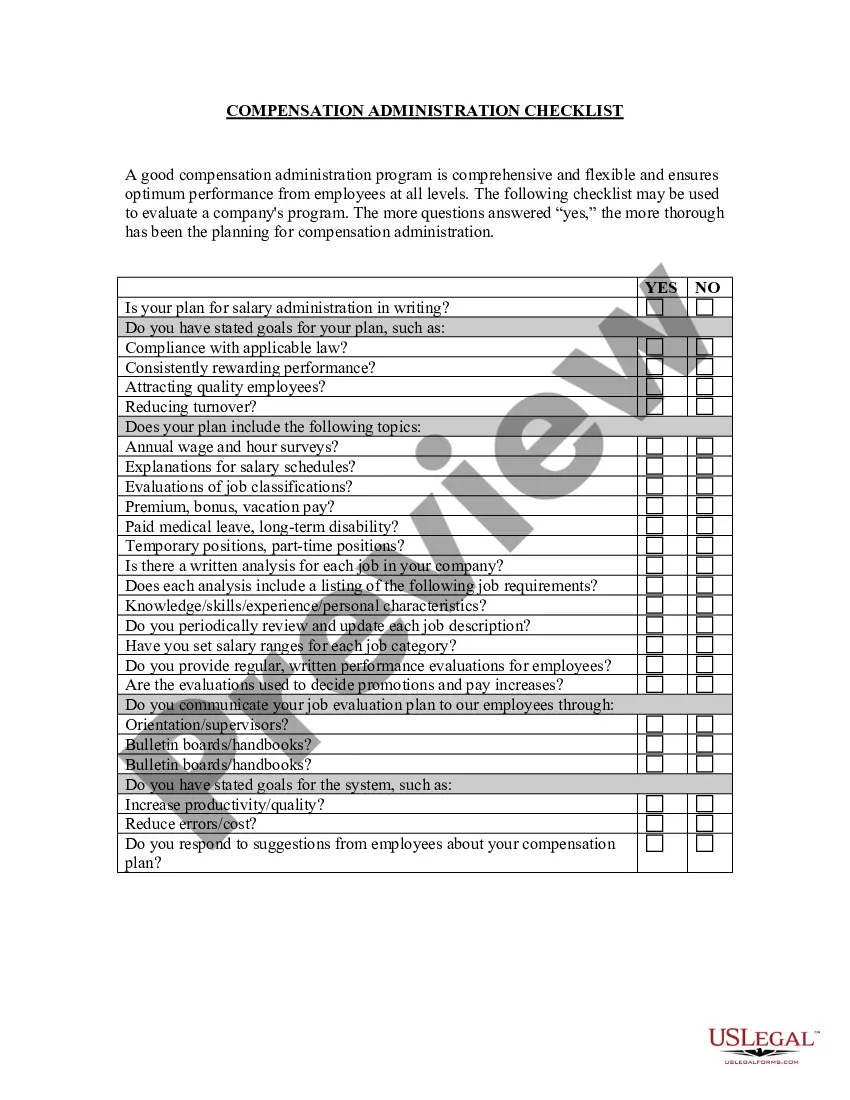
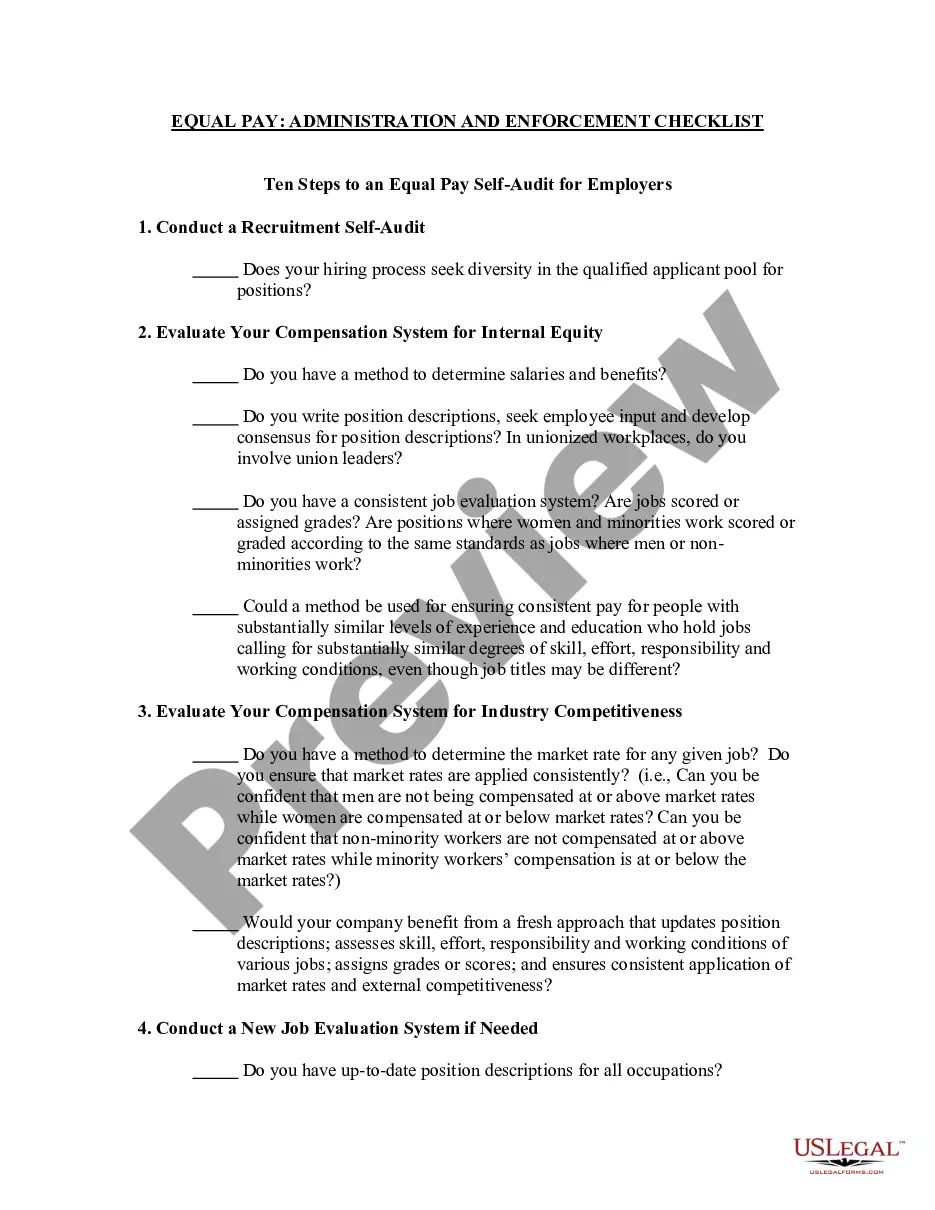
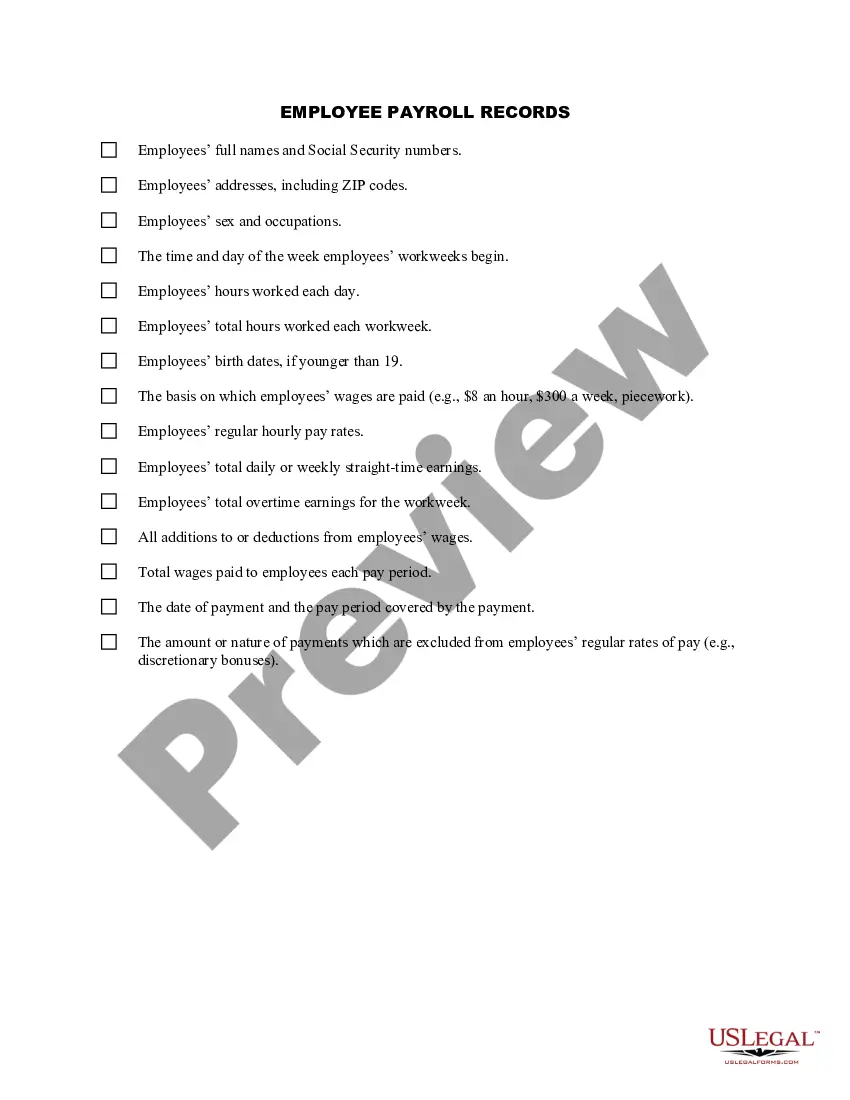
Nevada Equal Pay Checklist
Description
Get your form ready online
Our built-in tools help you complete, sign, share, and store your documents in one place.
Make edits, fill in missing information, and update formatting in US Legal Forms—just like you would in MS Word.
Download a copy, print it, send it by email, or mail it via USPS—whatever works best for your next step.
Sign and collect signatures with our SignNow integration. Send to multiple recipients, set reminders, and more. Go Premium to unlock E-Sign.
If this form requires notarization, complete it online through a secure video call—no need to meet a notary in person or wait for an appointment.
We protect your documents and personal data by following strict security and privacy standards.

Make edits, fill in missing information, and update formatting in US Legal Forms—just like you would in MS Word.

Download a copy, print it, send it by email, or mail it via USPS—whatever works best for your next step.

Sign and collect signatures with our SignNow integration. Send to multiple recipients, set reminders, and more. Go Premium to unlock E-Sign.

If this form requires notarization, complete it online through a secure video call—no need to meet a notary in person or wait for an appointment.

We protect your documents and personal data by following strict security and privacy standards.
Looking for another form?
How to fill out Equal Pay Checklist?
Have you ever found yourself in a situation where you frequently need documents for business or personal purposes almost every workday.
There are numerous legal document templates accessible online, but finding reliable ones can be challenging.
US Legal Forms provides thousands of template forms, including the Nevada Equal Pay Checklist, specifically designed to meet state and federal requirements.
Once you find the correct form, click Buy now.
Select your desired pricing plan, complete the required information to create your account, and proceed with the purchase using your PayPal or Visa/Mastercard.
- If you are already familiar with the US Legal Forms website and have an account, simply Log In.
- After that, you can download the Nevada Equal Pay Checklist template.
- If you do not have an account and wish to start using US Legal Forms, follow these steps.
- Search for the form you need and ensure it is appropriate for your city/state.
- Use the Review button to examine the form.
- Read the description to confirm that you have selected the correct form.
- If the form is not what you are looking for, utilize the Search area to find a form that meets your needs and requirements.
Form popularity
FAQ
Yes, paystubs are required in Nevada. Employers must provide employees with an itemized statement of their wages, which includes details about hours worked and deductions made. This transparency supports compliance with the Nevada Equal Pay Checklist. By ensuring clarity in pay, workers can better understand their earnings and the factors affecting their pay rates.
In Nevada, equal opportunity means ensuring that all individuals have fair access to employment and compensation without discrimination based on race, gender, or other protected characteristics. The Nevada Equal Pay Checklist is a key resource to guide employers in promoting equitable pay practices and complying with state laws. By following this checklist, businesses can identify gaps in pay equity and implement necessary changes. Ensuring equal opportunity not only benefits employees but also enhances the workplace environment for everyone.
Filing an EEOC complaint in Nevada involves several steps to ensure your concerns are addressed properly. You need to complete an intake questionnaire and submit it to the EEOC office. Using the Nevada Equal Pay Checklist can help you identify discriminatory practices related to pay before filing your complaint. For more support and guidance through this process, consider using the resources available on the uslegalforms platform.
The 4/10 rule in Nevada allows employees to work four ten-hour days instead of the traditional five eight-hour days. This rule promotes a better work-life balance and provides employees with an extra day off each week. To understand how this might impact your pay, refer to the Nevada Equal Pay Checklist. This resource can help ensure you are compensated fairly under this scheduling option.
The Equal Rights Act in Nevada aims to ensure fair treatment and equal pay for all employees, regardless of gender or other protected characteristics. This law reinforces the principles laid out in the Nevada Equal Pay Checklist, highlighting the importance of pay equity in the workplace. By implementing these guidelines, employers can foster a more inclusive and equitable environment. If you are looking for resources to comply with these regulations, consider using the tools offered by US Legal Forms to help you navigate the checklist effectively.
In Nevada, employers must provide employees a meal period of 30 minutes for employees who work eight consecutive hours. Employers must also provide a paid break of at least 10 minutes for every four hours worked. Employees who work three and a half hours or less are not eligible for a break period.
Nevada is an at-will employment state. In most states, including Nevada, an employer may not fire an employee if the firing would violate the state's public policies (against discrimination, for example) or a state or federal statute.
While employers can legally state that pay rates are confidential and can try to stop salary discussions from taking place during working hours, this is the extent of their powers under the law. As an employee, you can discuss pay without fear of legal repercussions.
The Nevada Equal Pay Law prohibits discrimination in wages on the basis of sex for equal work on jobs that require equal skill, effort, and responsibility, performed under similar working conditions.
Beginning October 1, 2021, private employers and certain public employers in Nevada will no longer be able to request or rely upon an applicant's wage history to determine the applicant's potential rate of pay.