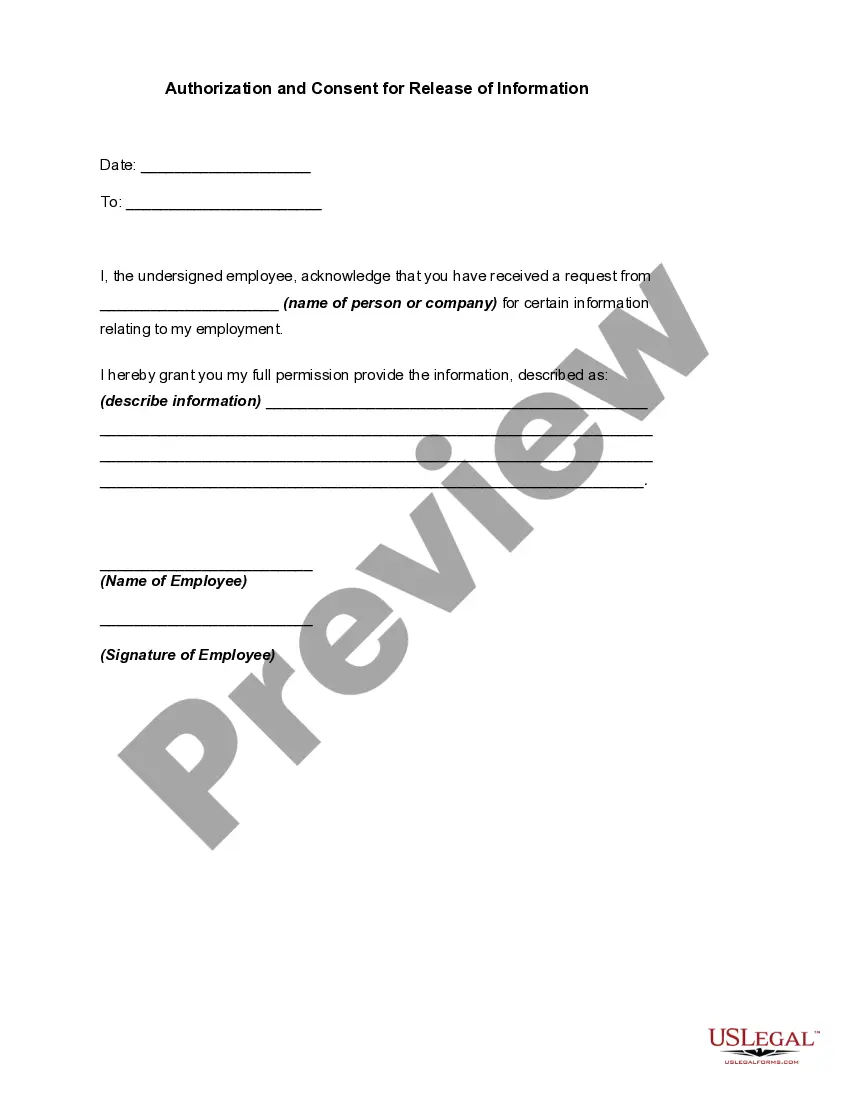
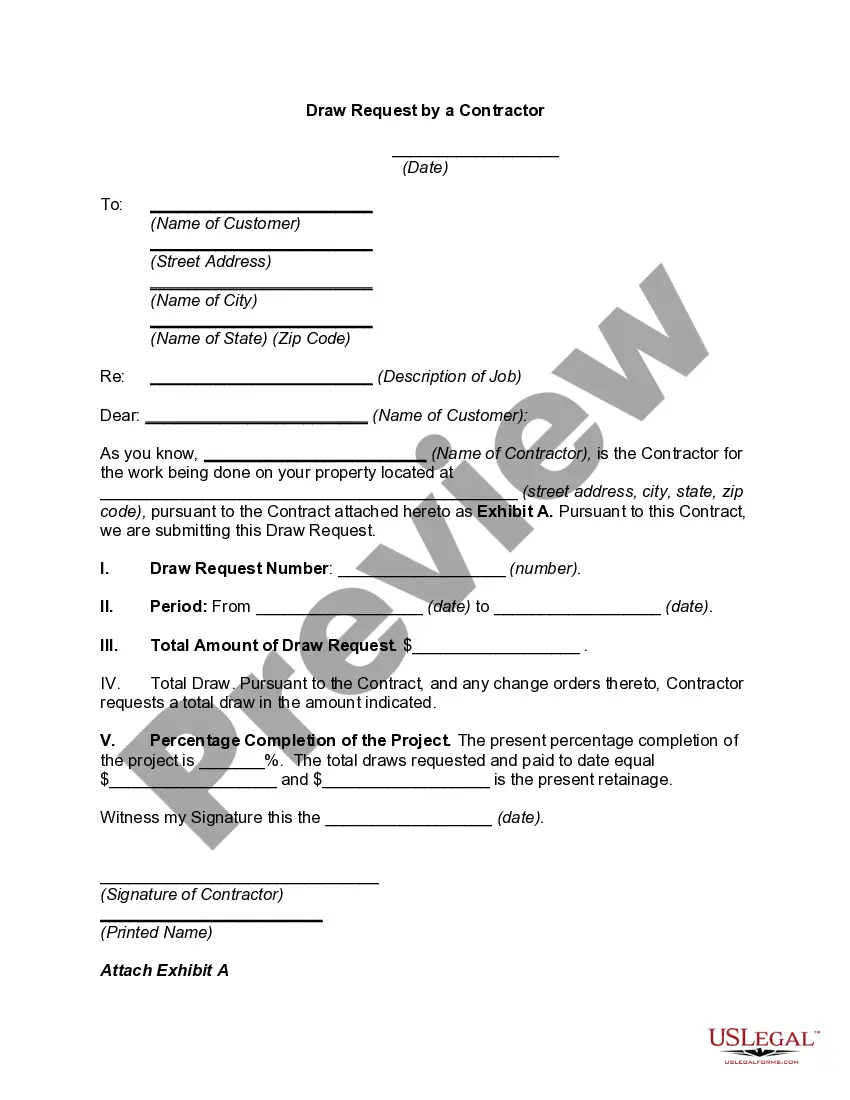
Nevada Draw Request by a Contractor
Description
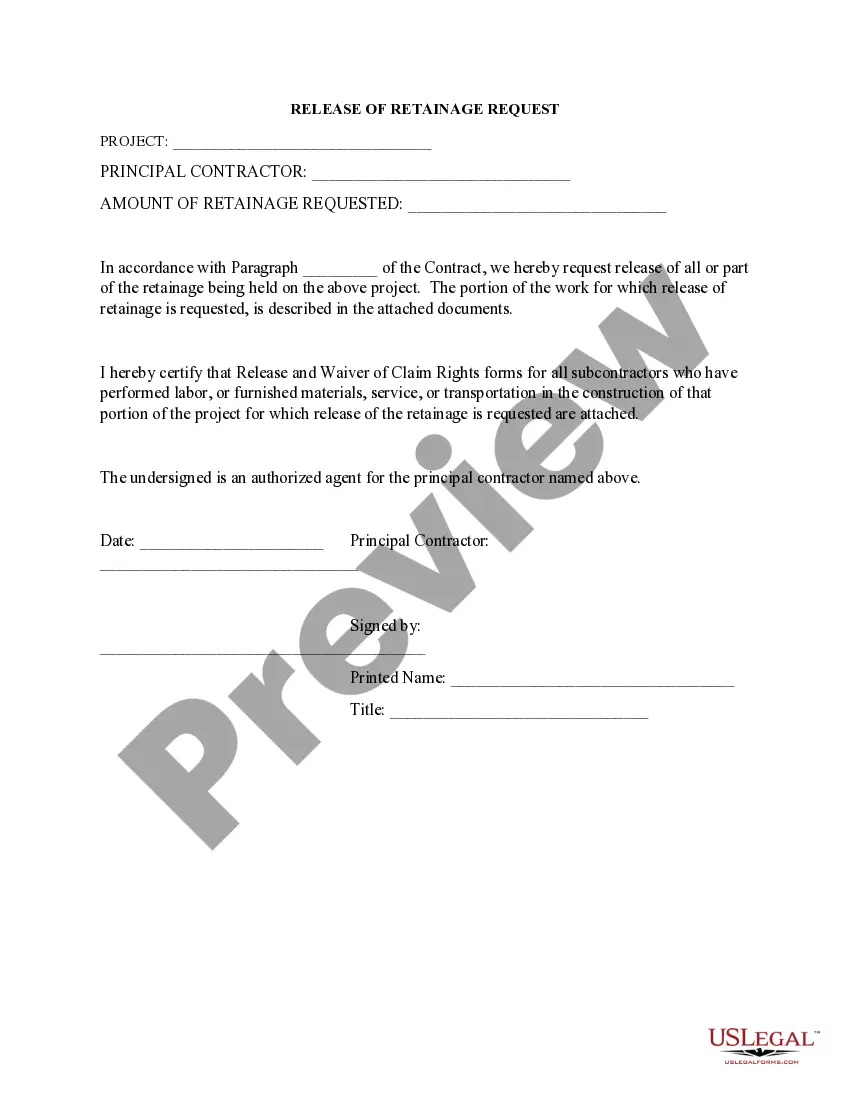
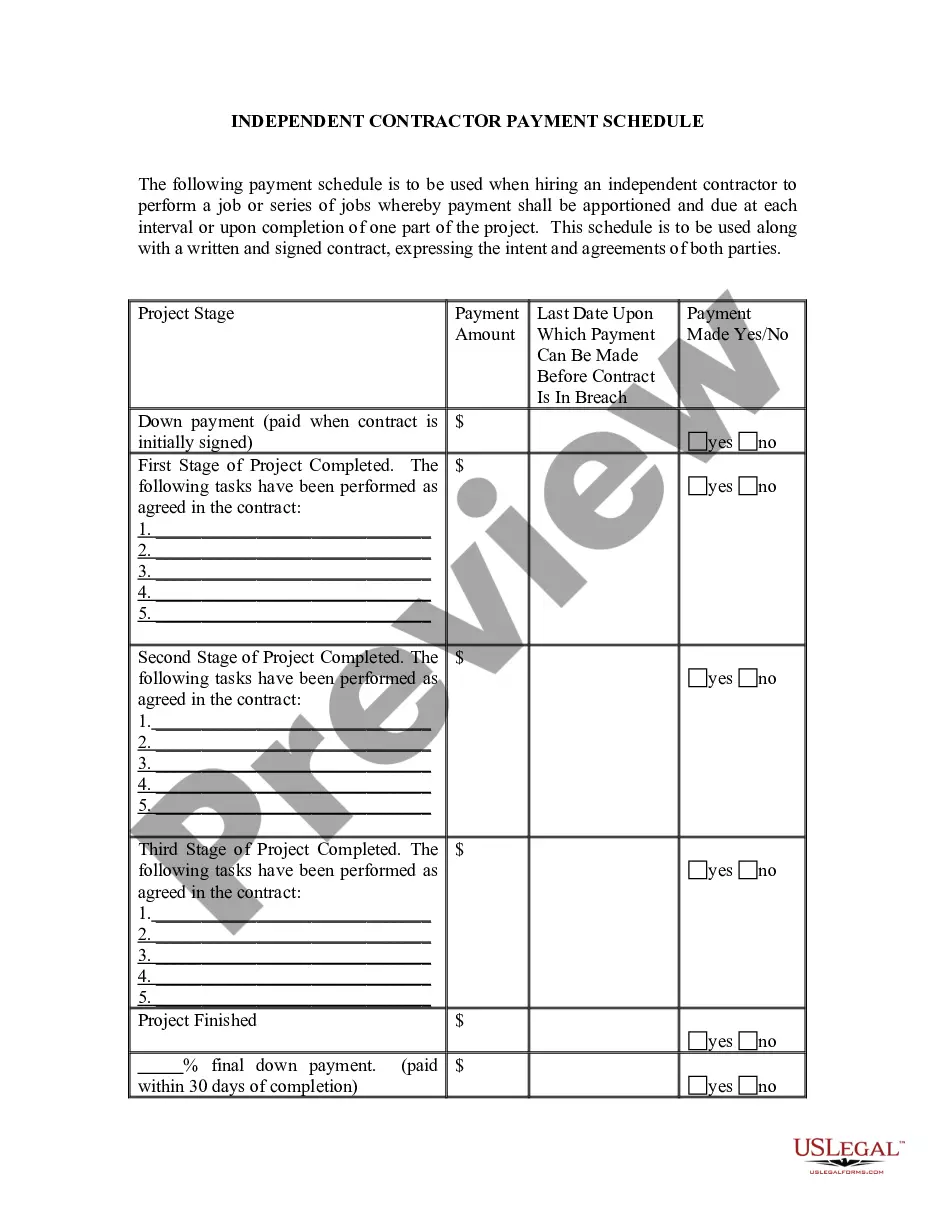
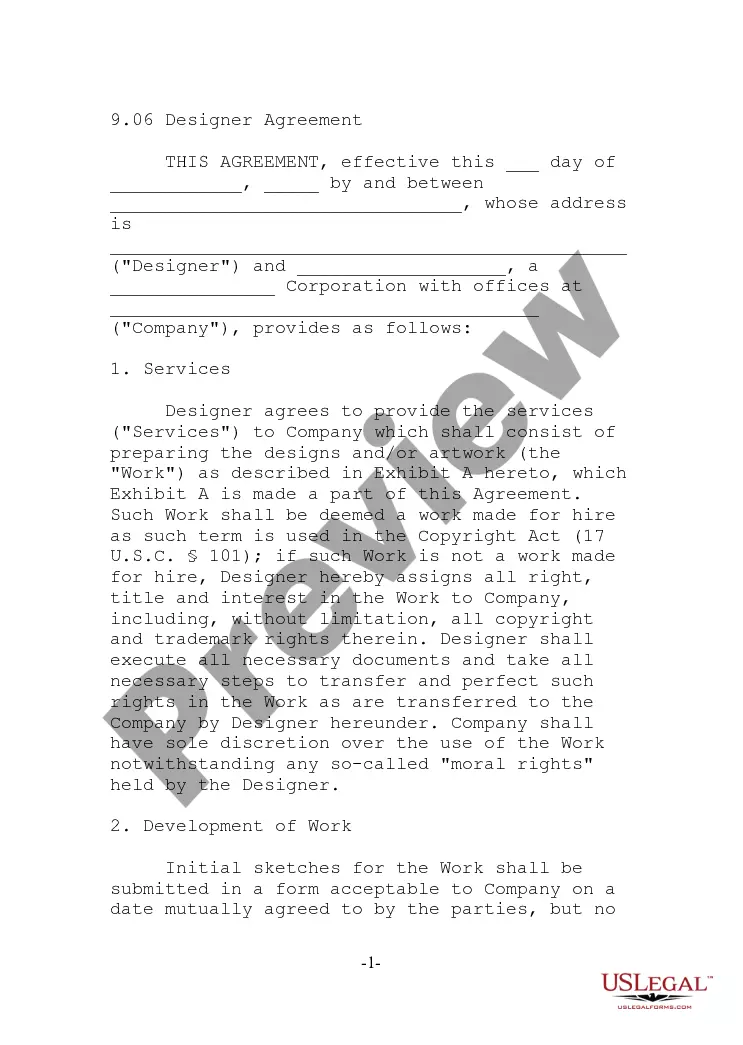
Get your form ready online
Our built-in tools help you complete, sign, share, and store your documents in one place.
Make edits, fill in missing information, and update formatting in US Legal Forms—just like you would in MS Word.
Download a copy, print it, send it by email, or mail it via USPS—whatever works best for your next step.
Sign and collect signatures with our SignNow integration. Send to multiple recipients, set reminders, and more. Go Premium to unlock E-Sign.
If this form requires notarization, complete it online through a secure video call—no need to meet a notary in person or wait for an appointment.
We protect your documents and personal data by following strict security and privacy standards.

Make edits, fill in missing information, and update formatting in US Legal Forms—just like you would in MS Word.

Download a copy, print it, send it by email, or mail it via USPS—whatever works best for your next step.

Sign and collect signatures with our SignNow integration. Send to multiple recipients, set reminders, and more. Go Premium to unlock E-Sign.

If this form requires notarization, complete it online through a secure video call—no need to meet a notary in person or wait for an appointment.

We protect your documents and personal data by following strict security and privacy standards.
Looking for another form?




How to fill out Draw Request By A Contractor?
US Legal Forms - one of the largest collections of legal templates in the United States - offers a range of legal document formats you can download or print.
By using the site, you'll have access to thousands of templates for personal and business purposes, organized by categories, states, or keywords.
You can quickly find the latest versions of documents like the Nevada Draw Request by a Contractor in just minutes.
Read the form description to ensure you have selected the right document.
If the form doesn’t meet your needs, use the Search field at the top of the screen to find one that fits.
- If you already possess a subscription, Log In and download the Nevada Draw Request by a Contractor from the US Legal Forms collection.
- The Download button will appear on every document you view.
- You have access to all previously obtained documents in the My documents section of your account.
- If you're using US Legal Forms for the first time, here are simple instructions to get started.
- Make sure you have selected the correct form for your city/county.
- Click the Preview button to review the content of the form.
Form popularity
FAQ
Stage payments are a part of having building work done and a figure of 30 -40% in advance of work is to be expected and fully justified.
A general contractor, as defined by the Nevada State Contractors Board, is All businesses or individuals who construct or alter any building, highway, road, parking facility, railroad, excavation, or other structure in Nevada. Contractors, even subcontractors, must qualify to be licensed before bidding.
In Nevada and California, advance payments when you sign a contract are limited to 10% of the total estimated job cost or $1,000, whichever is lower.
The average pre-tax net profit for subcontractors is between 2.2 to 3.5 percent. To compensate for the risk, this is barely enough for most contractors to survive. Contractor markup is the percentage added to your direct costs to cover profit and overhead.
Not just in California, but in any state, if you agree to pay a contractor everything up front, you've made a major mistake. Progress Payment Schedules: Contractors do not have to wait for the entire job to end before being paid.
State law requires that anyone contracting to construct a residential swimming pool or spa be properly licensed by the Nevada State Contractors Board. People who hire an unlicensed contractor to save money often end up spending more in the long run.
The following steps can help contractors get the payments they are owed.Create Solid Contracts. A solid contract is the strongest weapon in your arsenal.Optimize Your Contracts.Send Invoices for Progress Payments.Use Preliminary Notices & Conditional Lien Waivers.5 Seek Payment After the Project is Completed.
Avoid paying in cash. Contractors cannot ask for a deposit of more than 10 percent of the total cost of the job or $1,000, whichever is less. (This applies to any home improvement project, including swimming pools.) Stick to your schedule of payments and don't let payments get ahead of the completed work.
If you are considering a home construction, repair, remodel, addition, demolition, electrical, plumbing, air conditioning, landscaping or installing a new pool, you will need a contractor to do the work. In the State of Nevada, that contractor should have a proper contractor's license for his specific trade.
As the homeowner who is commissioning the project, it's reasonable to withhold at least 10% as your final payment. Avoid paying in full upfront, and definitely avoid paying anything before the contractor has evaluated the project in person.