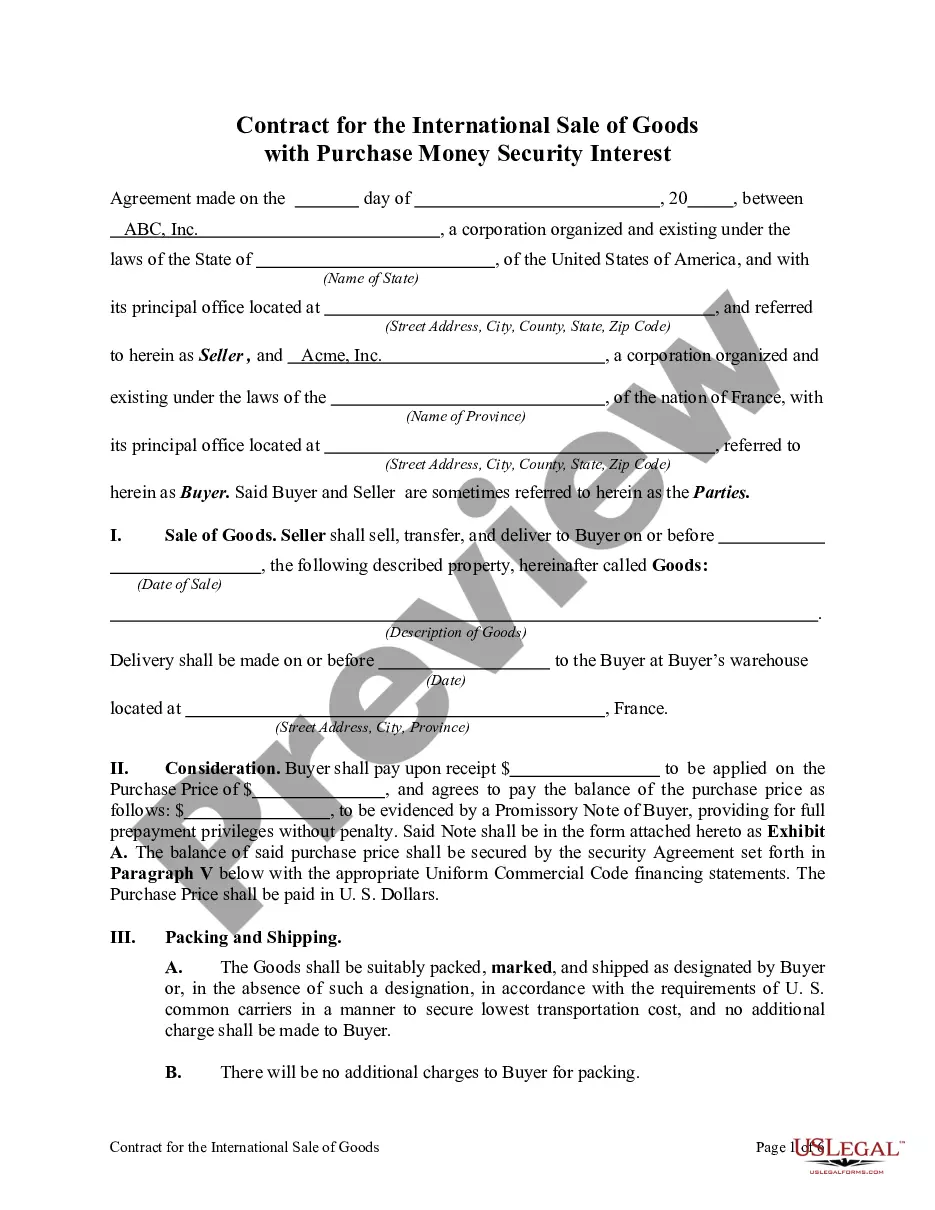
Nevada Provisions for Testamentary Charitable Remainder Unitrust for One Life
Description


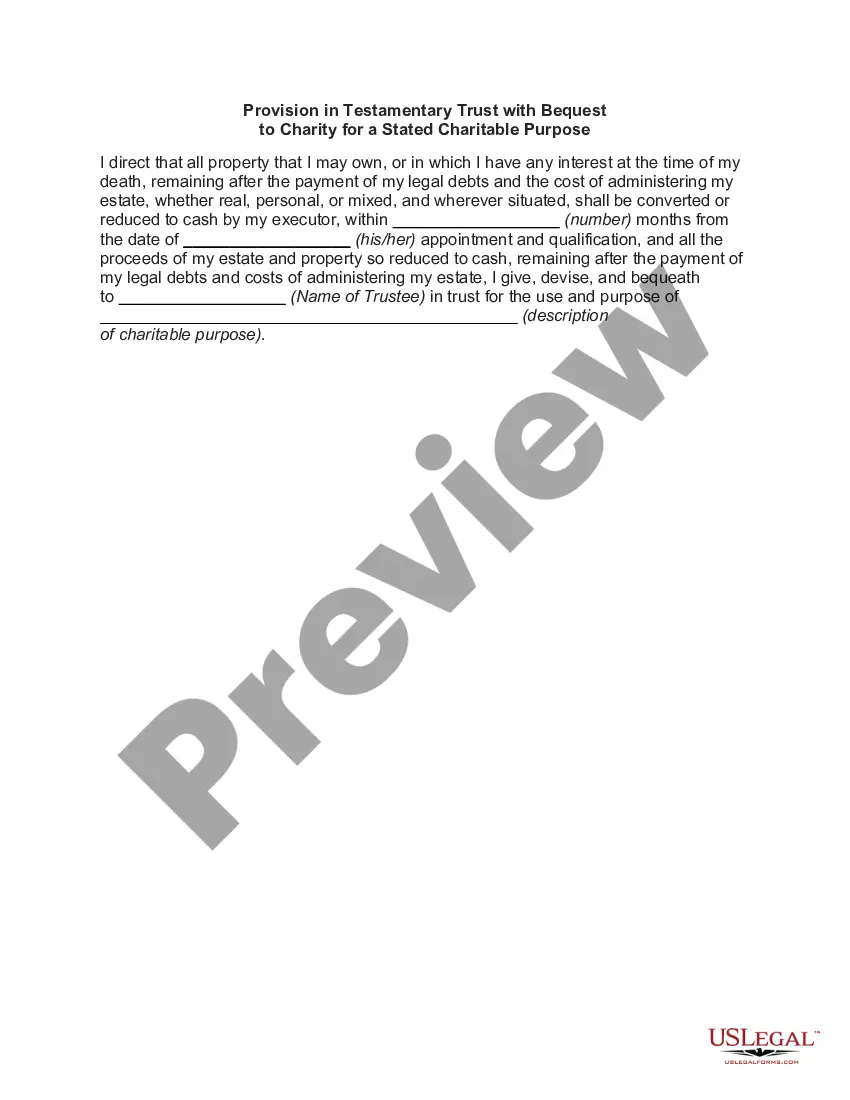
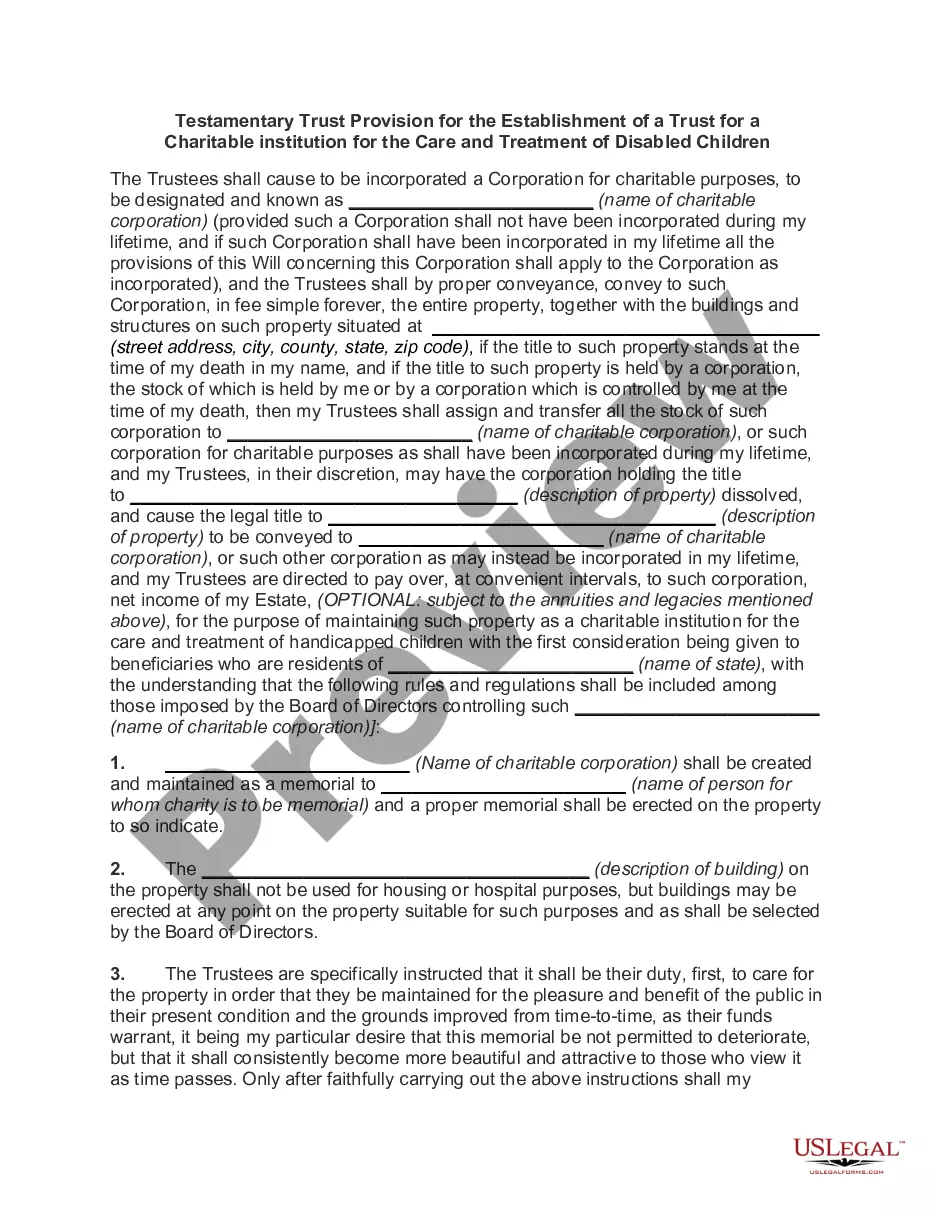
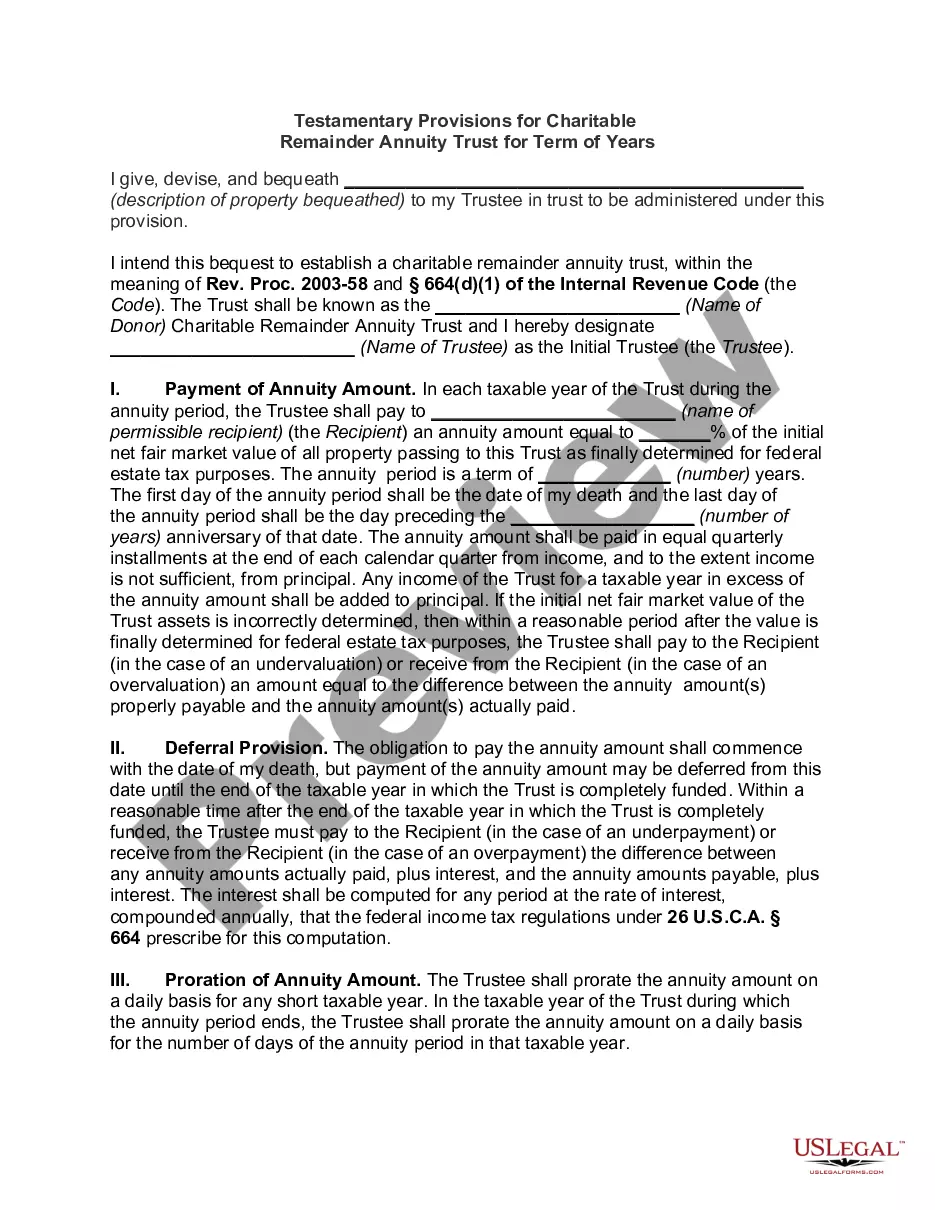
Get your form ready online
Our built-in tools help you complete, sign, share, and store your documents in one place.
Make edits, fill in missing information, and update formatting in US Legal Forms—just like you would in MS Word.
Download a copy, print it, send it by email, or mail it via USPS—whatever works best for your next step.
Sign and collect signatures with our SignNow integration. Send to multiple recipients, set reminders, and more. Go Premium to unlock E-Sign.
If this form requires notarization, complete it online through a secure video call—no need to meet a notary in person or wait for an appointment.
We protect your documents and personal data by following strict security and privacy standards.

Make edits, fill in missing information, and update formatting in US Legal Forms—just like you would in MS Word.

Download a copy, print it, send it by email, or mail it via USPS—whatever works best for your next step.

Sign and collect signatures with our SignNow integration. Send to multiple recipients, set reminders, and more. Go Premium to unlock E-Sign.

If this form requires notarization, complete it online through a secure video call—no need to meet a notary in person or wait for an appointment.

We protect your documents and personal data by following strict security and privacy standards.
Looking for another form?
How to fill out Provisions For Testamentary Charitable Remainder Unitrust For One Life?
Selecting the most suitable legal document format can be a challenge.
Certainly, there are many templates available online, but how do you acquire the legal form you require.
Utilize the US Legal Forms website. The platform provides a vast array of templates, including the Nevada Provisions for Testamentary Charitable Remainder Unitrust for One Life, which can be used for both business and personal needs.
First, ensure you have selected the correct form for your region/state. You can preview the form using the Review button and check the form details to confirm it meets your needs. If the form does not satisfy your requirements, make use of the Search field to find the appropriate document.
- All forms are reviewed by professionals and comply with state and federal requirements.
- If you are already registered, Log In to your account and click the Download button to obtain the Nevada Provisions for Testamentary Charitable Remainder Unitrust for One Life.
- Use your account to search through the legal forms you have previously purchased.
- Visit the My documents section of your account to download an additional copy of the document you need.
- If you are a new user at US Legal Forms, follow these simple instructions.
Form popularity
FAQ
How to Set up a Charitable Remainder TrustCreate a Charitable Remainder Trust.Check with the IRS that the charity you want to benefit is approved.Transfer assets into the Trust.Name the charity as Trustee.Create a provision that states who the lead beneficiary is - remember, this can be yourself or someone else.More items...
How to Set up a Charitable Remainder TrustCreate a Charitable Remainder Trust.Check with the IRS that the charity you want to benefit is approved.Transfer assets into the Trust.Name the charity as Trustee.Create a provision that states who the lead beneficiary is - remember, this can be yourself or someone else.More items...
What does it take in terms of time and financial costs to create and maintain the CRT for life? The time it takes to create the trust depends on how efficiently the attorney and client work together. The one-time cost can be $3,000-$8,000 depending on the complexity of the trust.
Yes, in most cases you can name yourself (and/or spouse) as trustee. As a matter of fact, according to a recent IRS Statistics of Income Bulletin, trust grantors or beneficiaries were the most common listed trustee of charitable remainder trusts.
A testamentary charitable remainder trust is created with assets upon your death. The trust then makes regular income payments to your named heirs for life or a term of up to 20 years. These income payments are calculated annually using a set percentage rate and the value of the trust's assets.
Charitable remainder annuity trusts (CRATs) distribute a fixed annuity amount each year, and additional contributions are not allowed. Charitable remainder unitrusts (CRUTs) distribute a fixed percentage based on the balance of the trust assets (revalued annually), and additional contributions can be made.
A charitable lead trust (CLT) is like the reverse of a charitable remainder trust. This type of trust disperses income to a named charity, while the noncharitable beneficiaries receive the remainder of the donated assets upon your death or at the end of a specific term, similar to a CRT.
The testamentary charitable remainder unitrust (CRUT) is beneficial in that it allows for an income stream to be paid to selected beneficiaries after the donor's death.
There are two types of CRTs, Charitable Remainder Annuity Trusts (CRATS) and Charitable Remainder Unitrusts (CRUTs). Both CRATs and CRUTs require that the payments be made to designated individuals for their lifetimes, or for a fixed term not exceeding 20 years. There are two basic differences between CRATs and CRUTs.
The minimum funding amount to establish a charitable remainder unitrust with Stanford as trustee is at least $200,000, with the actual minimum determined based on the term of the trust and the payout rate.