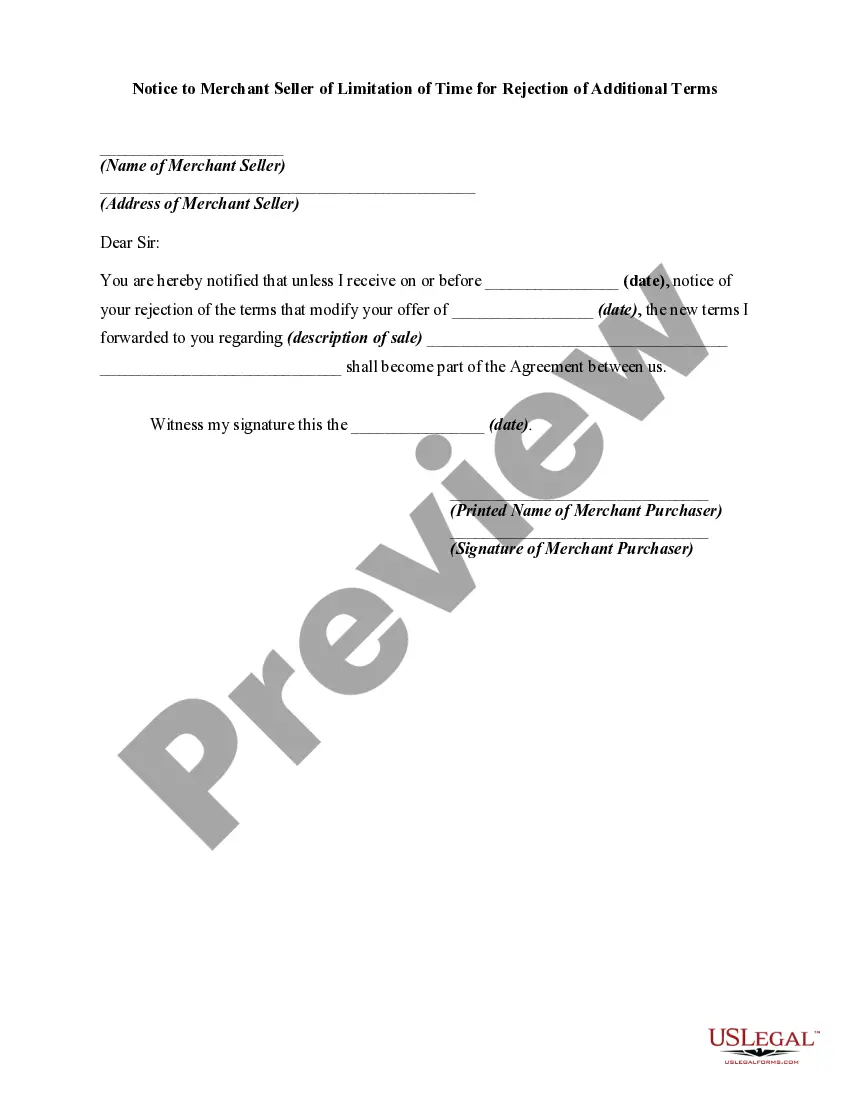
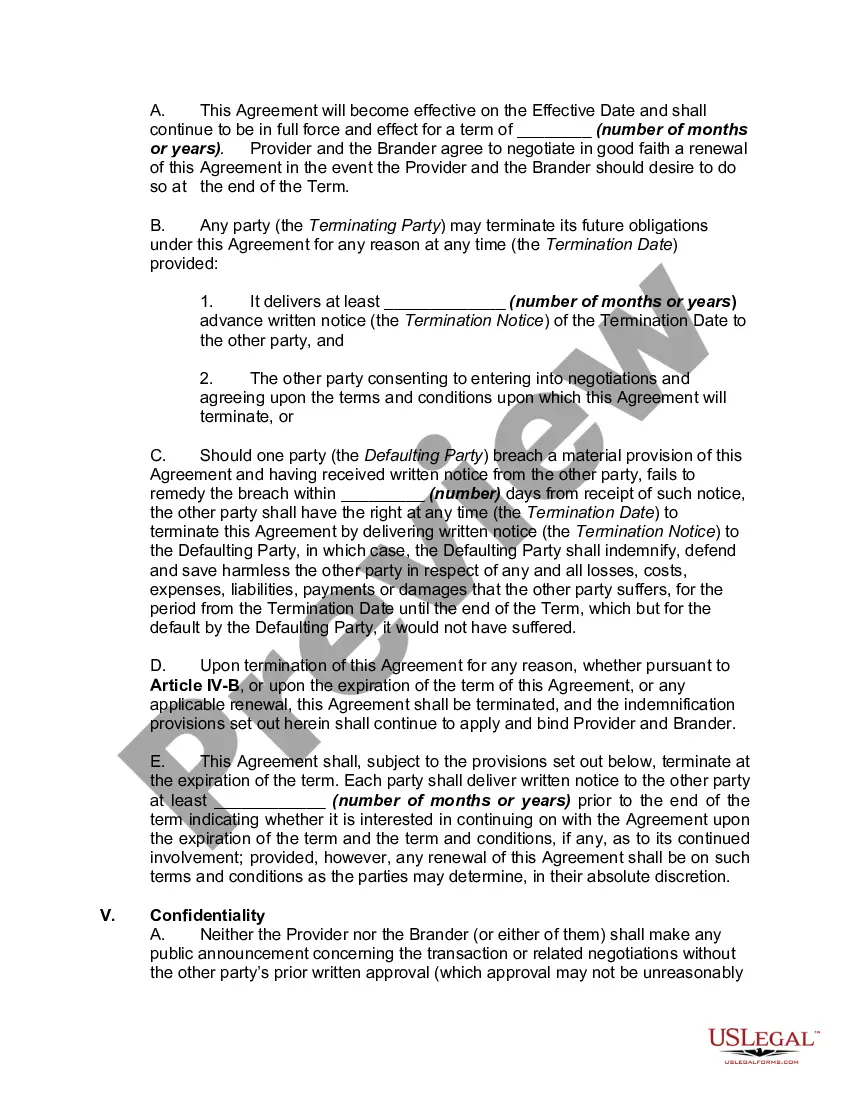
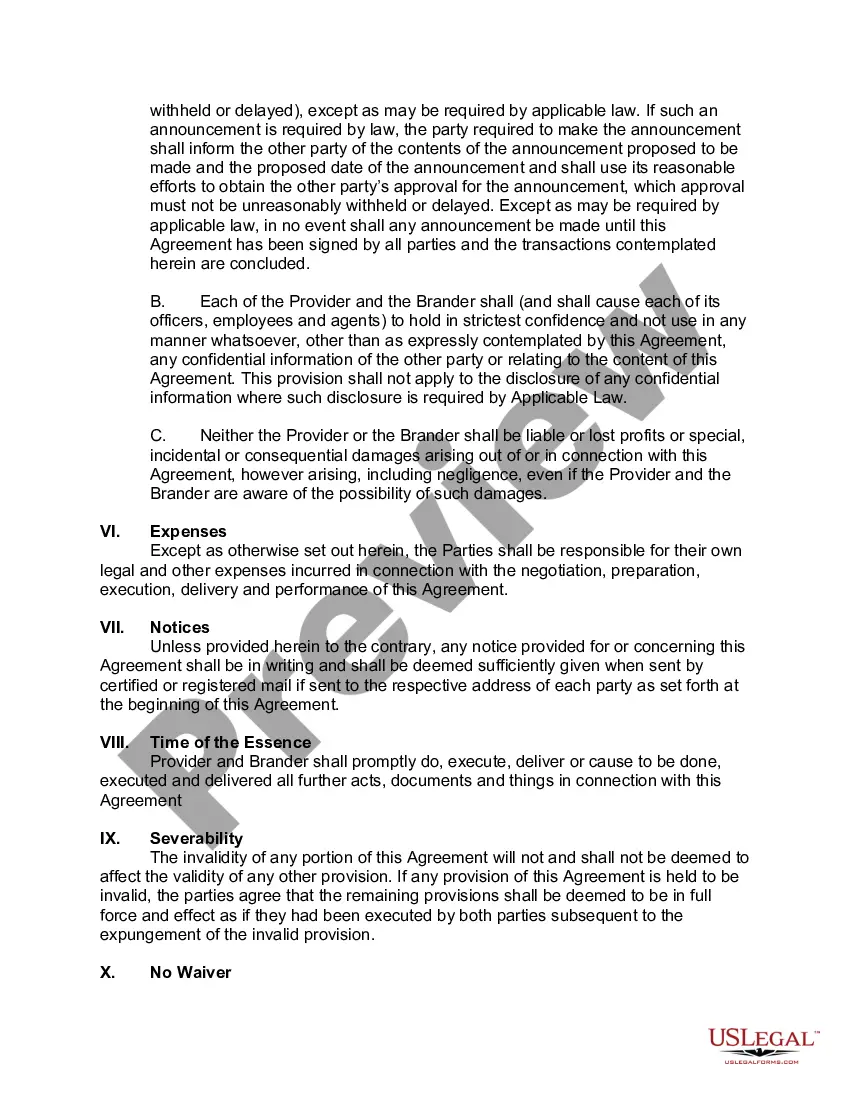
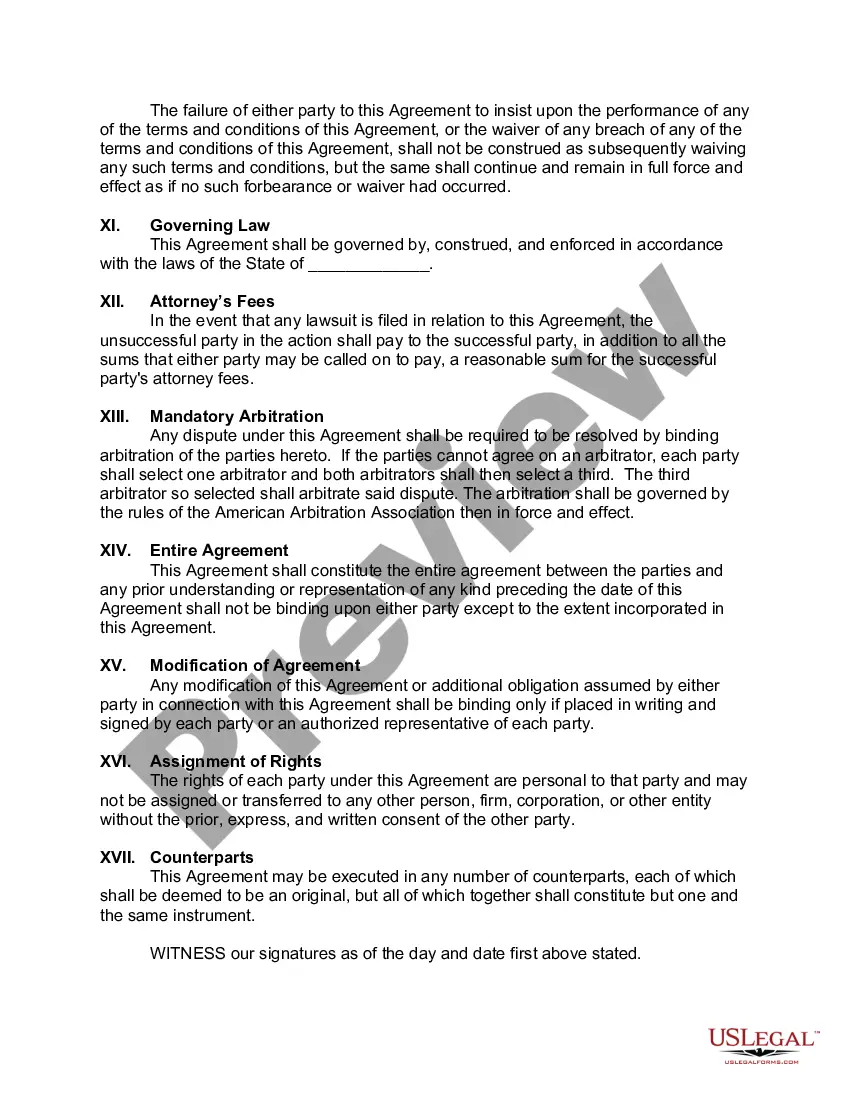
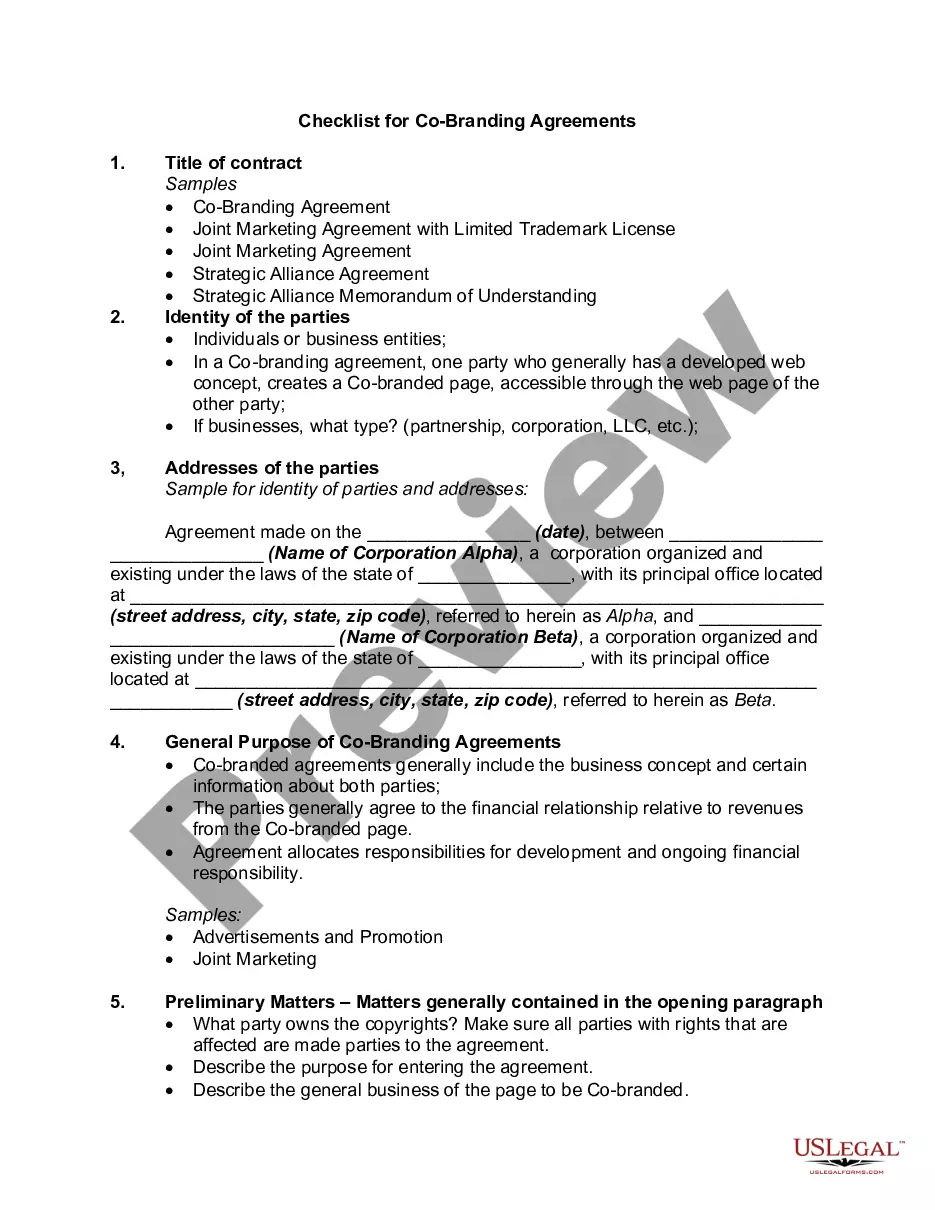
Nevada Co-Branding Agreement
Description
Get your form ready online
Our built-in tools help you complete, sign, share, and store your documents in one place.
Make edits, fill in missing information, and update formatting in US Legal Forms—just like you would in MS Word.
Download a copy, print it, send it by email, or mail it via USPS—whatever works best for your next step.
Sign and collect signatures with our SignNow integration. Send to multiple recipients, set reminders, and more. Go Premium to unlock E-Sign.
If this form requires notarization, complete it online through a secure video call—no need to meet a notary in person or wait for an appointment.
We protect your documents and personal data by following strict security and privacy standards.

Make edits, fill in missing information, and update formatting in US Legal Forms—just like you would in MS Word.

Download a copy, print it, send it by email, or mail it via USPS—whatever works best for your next step.

Sign and collect signatures with our SignNow integration. Send to multiple recipients, set reminders, and more. Go Premium to unlock E-Sign.

If this form requires notarization, complete it online through a secure video call—no need to meet a notary in person or wait for an appointment.

We protect your documents and personal data by following strict security and privacy standards.
Looking for another form?


How to fill out Co-Branding Agreement?
You can dedicate hours online searching for the legal document template that matches the federal and state requirements you need.
US Legal Forms offers a vast array of legal documents that are vetted by professionals.
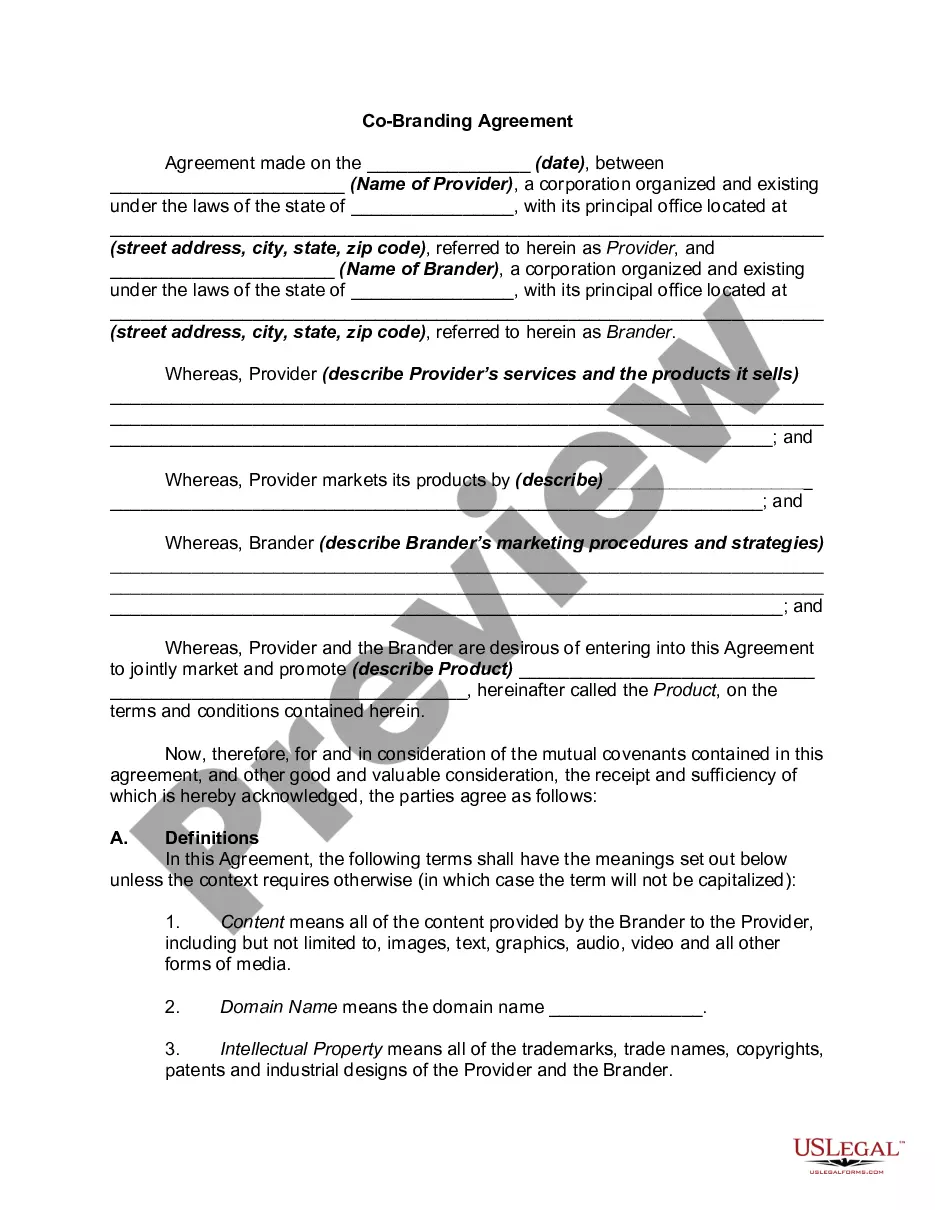
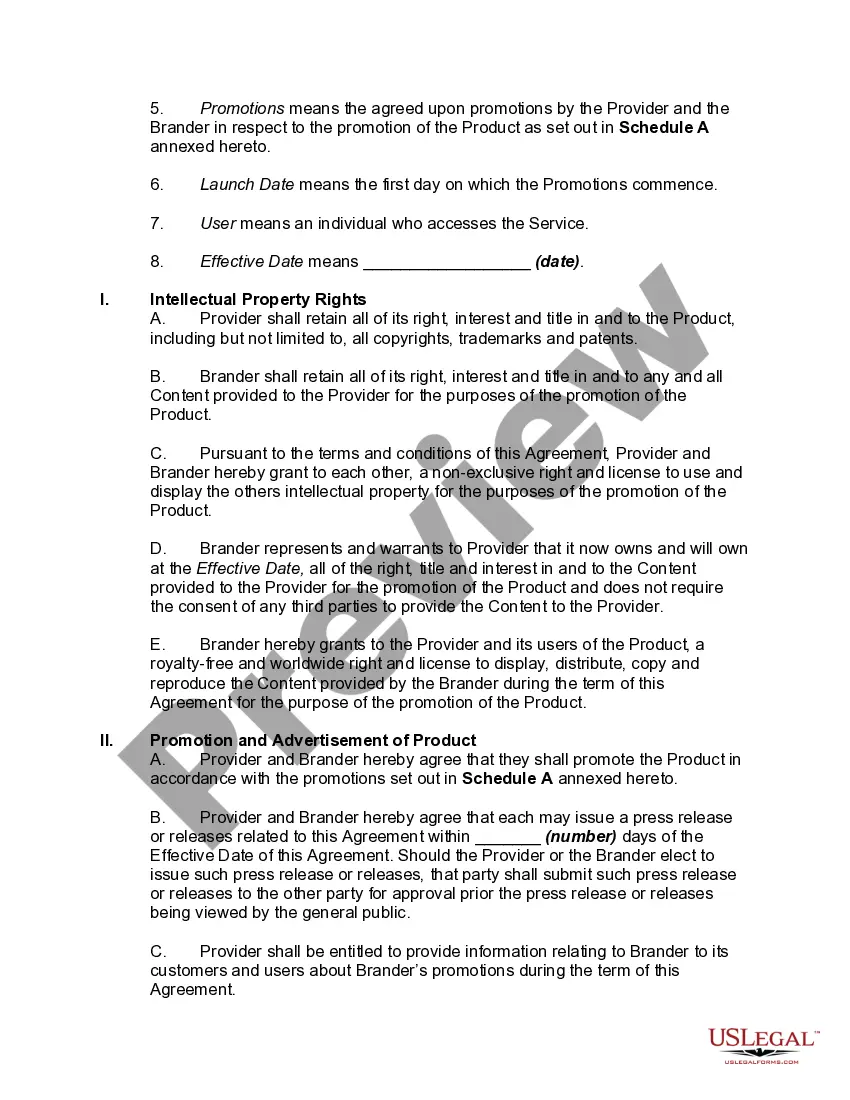
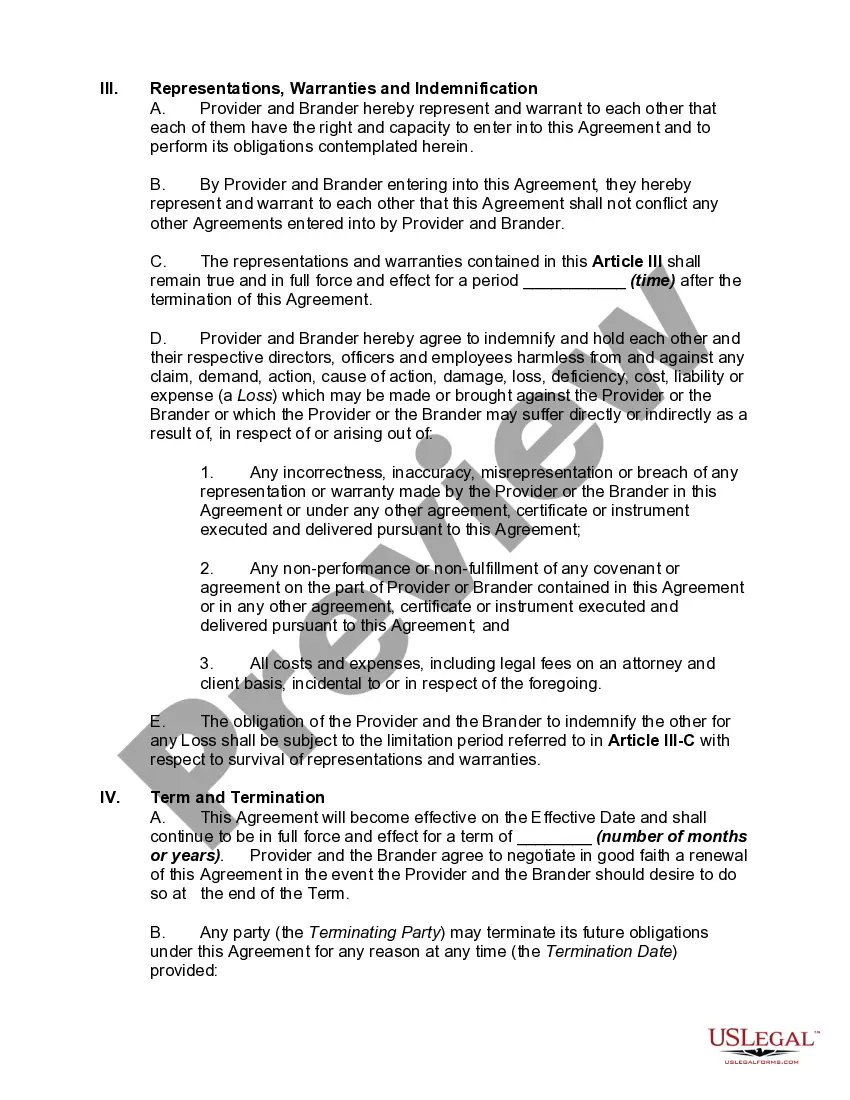
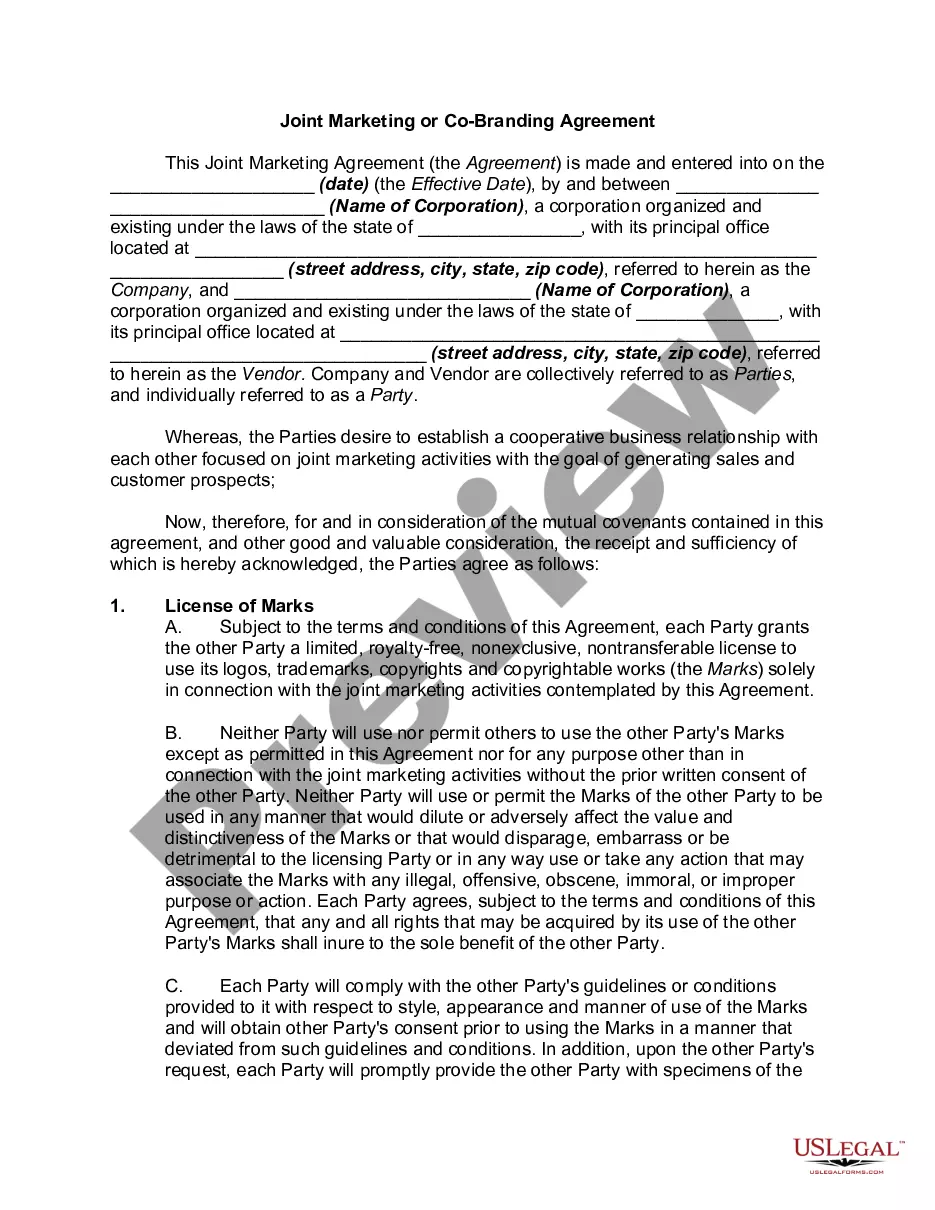
You can easily download or print the Nevada Co-Branding Agreement from our service.
To find an additional version of the document, use the Search area to locate the template that meets your needs and requirements.
- If you have a US Legal Forms account, you can Log In and then click the Download button.
- After that, you can complete, edit, print, or sign the Nevada Co-Branding Agreement.
- Every legal document template you buy is yours indefinitely.
- To obtain an additional copy of any purchased form, go to the My documents tab and click the relevant option.
- If you are using the US Legal Forms website for the first time, follow the simple instructions below.
- First, ensure that you have selected the correct document template for your area/town of choice.
- Read the form description to confirm you have chosen the right template.
Form popularity
FAQ
The three rules of branding include clarity, consistency, and connection. Clarity ensures that your message is easily understood, consistency maintains your brand's identity across all touchpoints, and connection builds emotional ties with your audience. Following these rules is crucial when establishing a Nevada Co-Branding Agreement to ensure that both brands work harmoniously and effectively.
An example of branding is how Apple uses its sleek design, innovative technology, and distinct logo to create a strong identity. This branding strategy is consistent across all its products, influencing customer perception. In a Nevada Co-Branding Agreement, brands can leverage each other’s unique branding elements to enhance customer recognition and loyalty.
A branding agreement is a formal contract that establishes terms of collaboration between brands. This document clarifies the usage rights of logos, taglines, and other brand assets. When creating a Nevada Co-Branding Agreement, it is essential to address aspects like duration, exclusivity, and revenue-sharing to establish a mutually beneficial partnership.
A brand control agreement is a legal document that outlines how one party can use another’s branding elements. This agreement helps maintain consistency and quality across different channels and products. In the case of a Nevada Co-Branding Agreement, a brand control agreement ensures that both parties adhere to agreed-upon brand guidelines.
To do co-branding effectively, you should first identify a partner that complements your brand without competing with it. Next, create a Nevada Co-Branding Agreement that details the roles, responsibilities, and shared goals of both brands. Finally, launch a coordinated marketing campaign that showcases both brands in a way that resonates with both of your audiences.
A branding plan typically includes your brand's mission, values, target audience, and messaging strategy. It outlines how you want your customers to perceive your brand. In the context of a Nevada Co-Branding Agreement, the plan should also define the partnership dynamics and the unique value each brand brings to the collaboration.
The co-branding process involves several key steps: identification of partners, formulation of a Nevada Co-Branding Agreement, and collaborative marketing strategies. Initially, you will want to analyze your market and explore potential partnerships that could enhance your brand. Once you have established an agreement, implement joint campaigns that leverage the strengths of both brands, ensuring clear messaging and brand integrity.
The co-branding process begins with market research to identify suitable partners and assess potential collaboration benefits. Following this, brands draft a Nevada Co-Branding Agreement detailing objectives, marketing strategies, and brand guidelines. Finally, execution involves coordinated marketing efforts to maximize exposure and ensure that both brands complement each other effectively.
To create a successful co-branding initiative, start by identifying potential partners whose brand values align with yours. Next, draft a Nevada Co-Branding Agreement that outlines each brand's roles, responsibilities, and shared goals. It's crucial to establish a communication plan to ensure that both brands work harmoniously throughout the partnership.
The three levels of co-branding include ingredient co-branding, composite co-branding, and sponsored co-branding. Ingredient co-branding involves one brand being part of another’s product, like Intel chips in personal computers. Composite co-branding merges two brands to create a new offering, while sponsored co-branding involves one brand funding the promotion of another, often seen in event sponsorships.