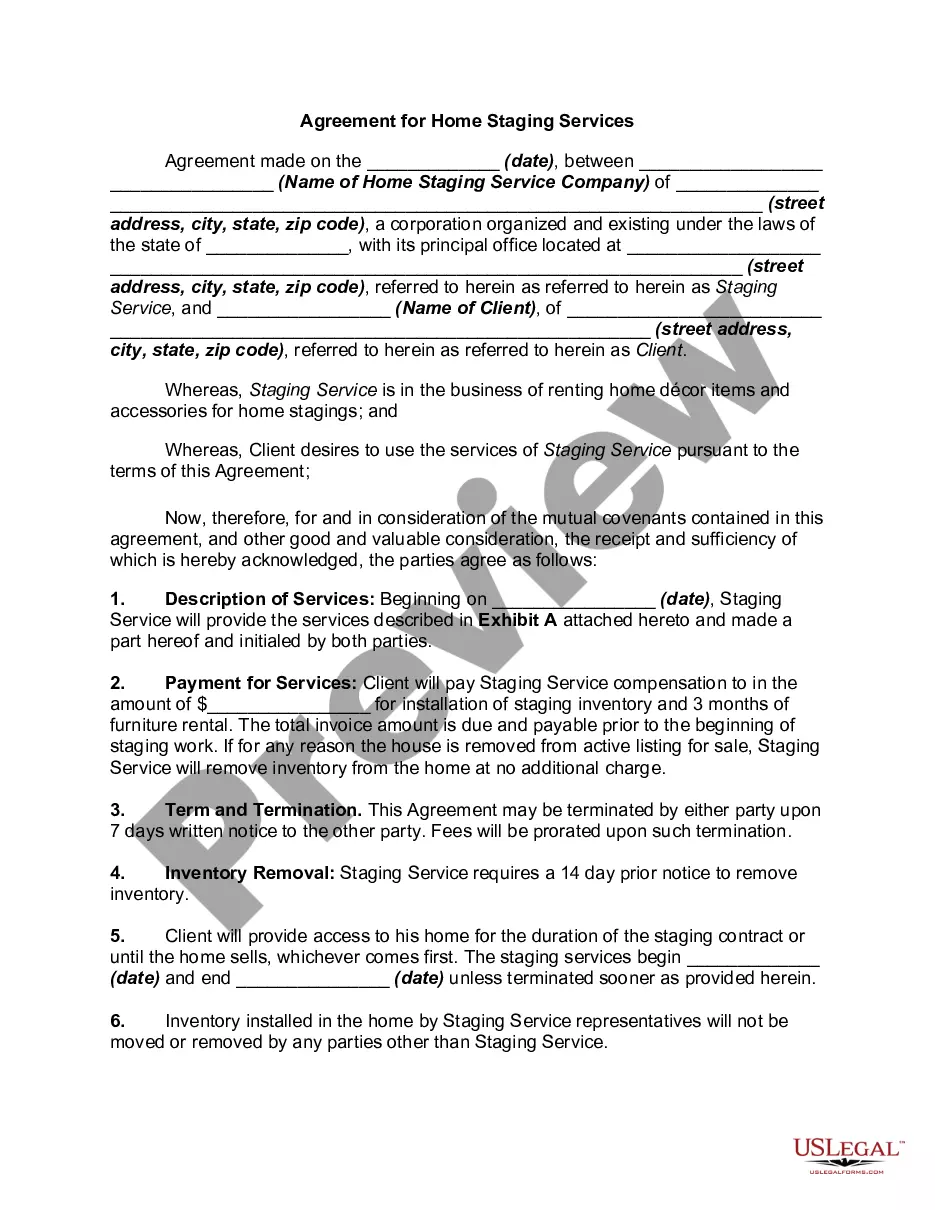
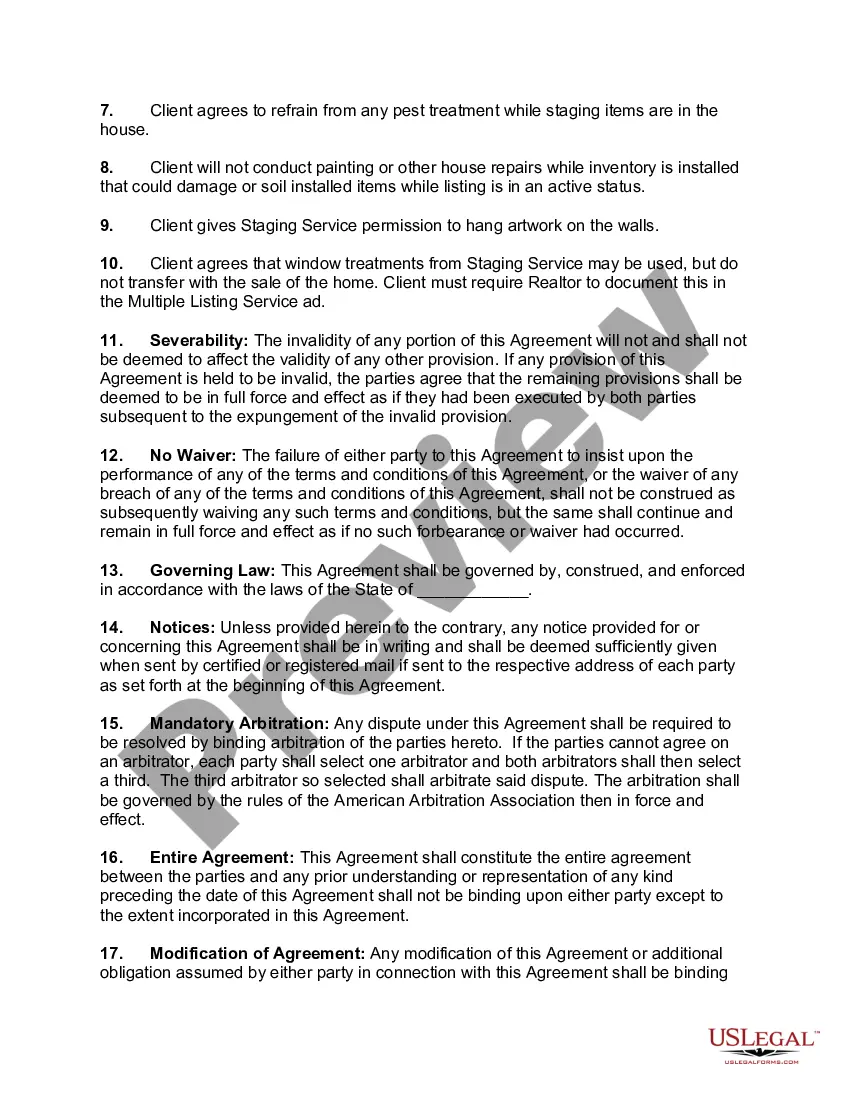
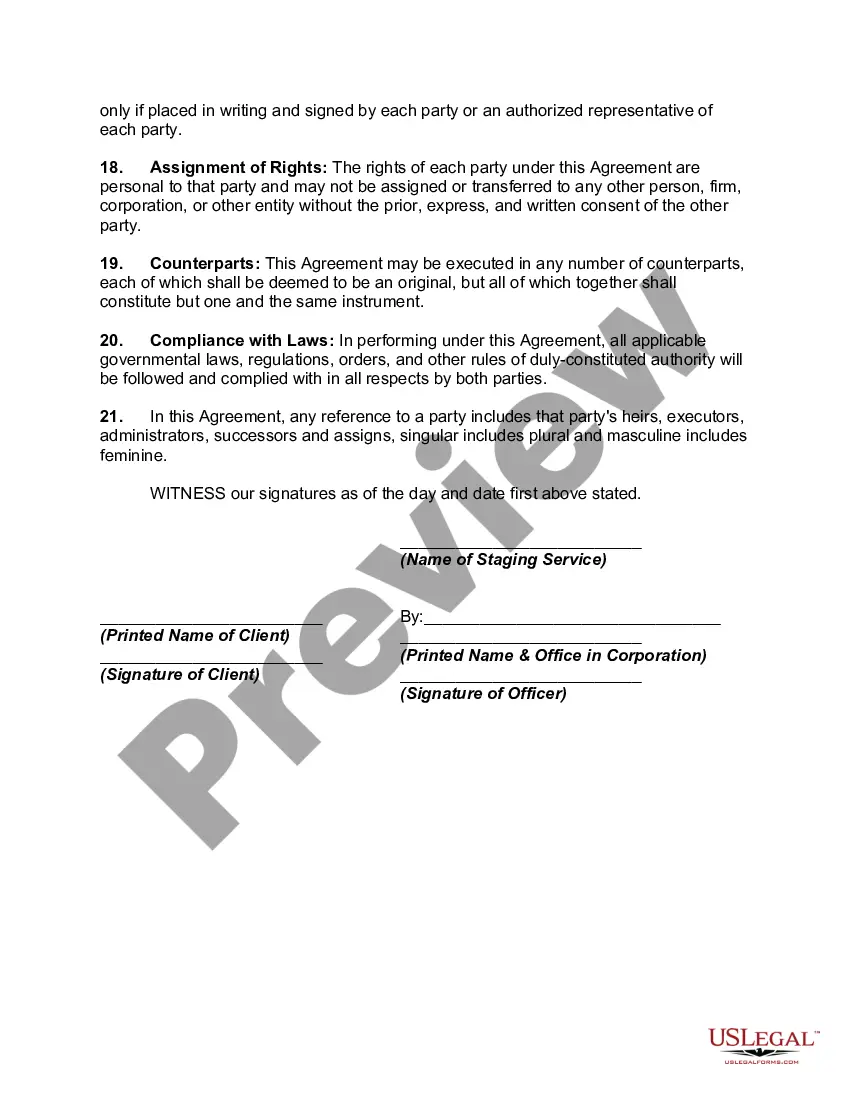
Nevada Agreement for Home Staging Services
Description
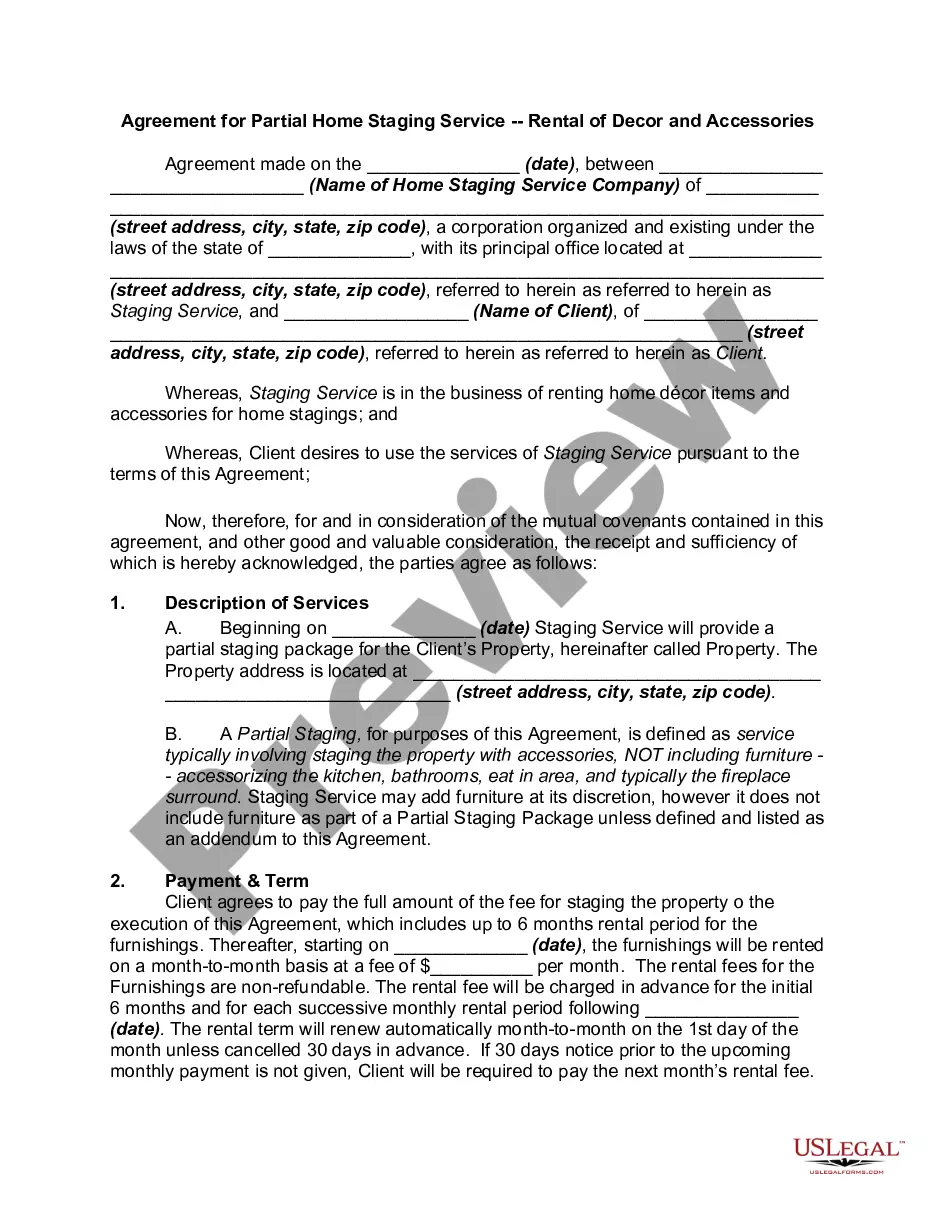
Get your form ready online
Our built-in tools help you complete, sign, share, and store your documents in one place.
Make edits, fill in missing information, and update formatting in US Legal Forms—just like you would in MS Word.
Download a copy, print it, send it by email, or mail it via USPS—whatever works best for your next step.
Sign and collect signatures with our SignNow integration. Send to multiple recipients, set reminders, and more. Go Premium to unlock E-Sign.
If this form requires notarization, complete it online through a secure video call—no need to meet a notary in person or wait for an appointment.
We protect your documents and personal data by following strict security and privacy standards.
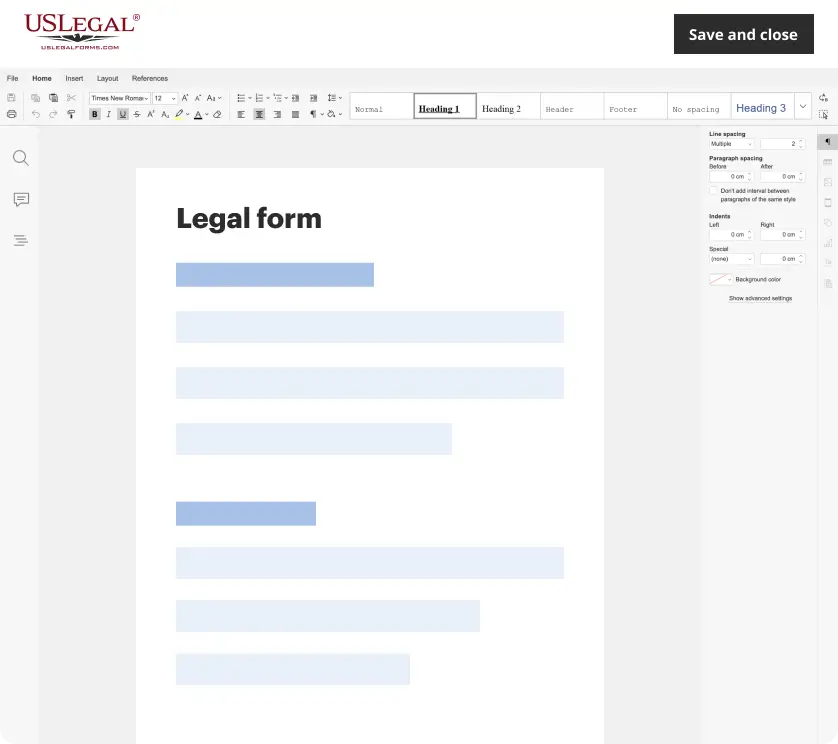
Make edits, fill in missing information, and update formatting in US Legal Forms—just like you would in MS Word.
Download a copy, print it, send it by email, or mail it via USPS—whatever works best for your next step.
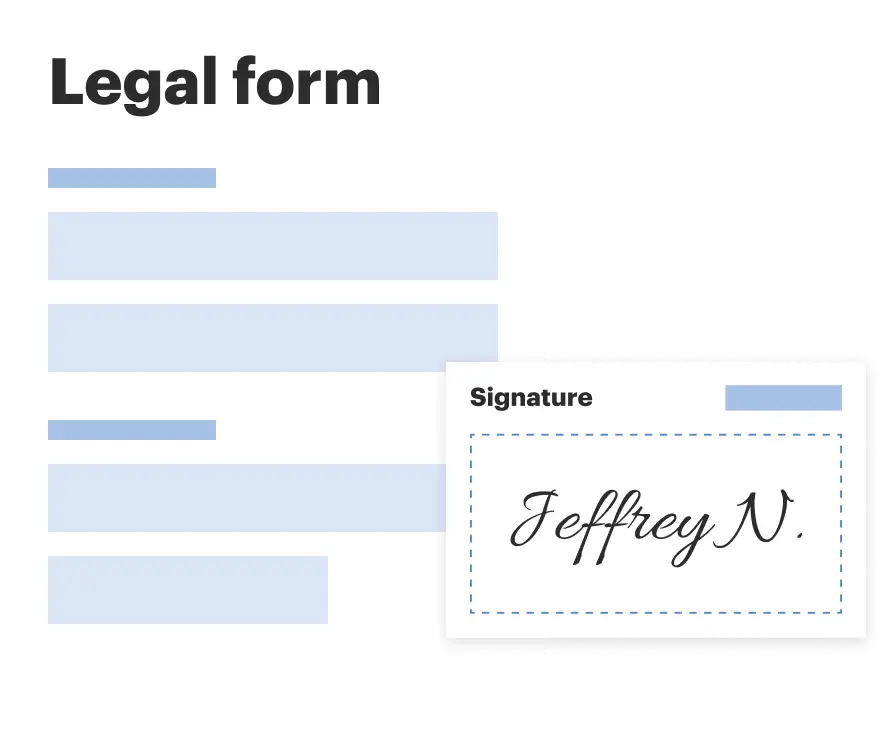
Sign and collect signatures with our SignNow integration. Send to multiple recipients, set reminders, and more. Go Premium to unlock E-Sign.

If this form requires notarization, complete it online through a secure video call—no need to meet a notary in person or wait for an appointment.
We protect your documents and personal data by following strict security and privacy standards.
Looking for another form?






How to fill out Agreement For Home Staging Services?
If you need to compile, acquire, or produce sanctioned document templates, utilize US Legal Forms, the premier collection of legal forms, accessible online.
Employ the website's straightforward and user-friendly search to obtain the documents you require.
Numerous templates for commercial and personal needs are arranged by categories and jurisdictions, or keywords.
Step 3. If you are dissatisfied with the form, use the Search field at the top of the screen to find other variations in the legal form template.
Step 6. Select the format of the legal document and download it onto your device. Step 7. Complete, modify, and print or sign the Nevada Agreement for Home Staging Services.
- Utilize US Legal Forms to obtain the Nevada Agreement for Home Staging Services in just a few clicks.
- If you are already a US Legal Forms user, sign in to your account and then click the Download button to acquire the Nevada Agreement for Home Staging Services.
- You can also access forms you previously purchased in the My documents tab of your account.
- If you're using US Legal Forms for the first time, refer to the guidelines below.
- Step 1. Ensure you have chosen the form for the correct city/state.
- Step 2. Use the Review option to examine the form's details. Don’t forget to read the summary.
Form popularity
FAQ
Staging a home is not typically included in closing costs. Instead, it is seen as an investment to enhance the home’s appeal before it goes on the market. The Nevada Agreement for Home Staging Services can help clarify the responsibilities associated with staging, making it easier for sellers to manage these costs separately.
Yes, home staging companies can be very profitable when they strategically manage their operations and marketing. By utilizing a Nevada Agreement for Home Staging Services, these businesses can protect their interests and establish clear relationships with clients, thereby reducing misunderstandings. Additionally, the right staging approach can lead to quicker sales, thus increasing client satisfaction and referrals, fueling further profitability.
Professional home staging involves preparing a property for sale by enhancing its appearance to appeal to potential buyers. This process often includes furniture placement, decor selection, and even minor renovations, all guided by the Nevada Agreement for Home Staging Services. By showcasing a home’s strengths and minimizing its weaknesses, professional stagers aim to create an inviting atmosphere that fosters quick and profitable sales.
Home stagers typically earn between $2,000 to $10,000 per project, depending on the property's size, location, and the services provided. The income can vary, but experienced stagers who use a Nevada Agreement for Home Staging Services can command higher fees through clear contracts. This agreement helps outline expectations and ensures smooth transactions, adding value to your services and potentially increasing your earnings.
Home staging can be a highly profitable business, especially in a competitive real estate market. By showcasing a property's best features and creating an inviting atmosphere, staged homes typically sell faster and at higher prices. Utilizing a Nevada Agreement for Home Staging Services can streamline the process and help you establish profitable partnerships, ultimately boosting your success in the home staging industry.
Realtors often source staging furniture from rental companies that specialize in home staging services. These companies provide a wide variety of furniture options that can be tailored to fit any home's style and target market. By using a Nevada Agreement for Home Staging Services, realtors can ensure they have access to high-quality staging furniture, enhancing property appeal and increasing the likelihood of a quick sale.
Setting up a staging company involves several steps, including market research, creating a business plan, and acquiring necessary certifications. You'll also need to invest in quality inventory to showcase your staging prowess. Furthermore, a thorough understanding of the Nevada Agreement for Home Staging Services will help you navigate contracts with clients effectively. Consider using platforms like uslegalforms to access templates and guides that facilitate your business setup.
A staging agreement is a legal document that outlines the terms and conditions between a homeowner and a staging professional. It specifies details such as staging fees, duration of services, and the scope of work. By solidifying these terms, both parties can navigate the home staging process smoothly. Utilizing the Nevada Agreement for Home Staging Services can provide a solid foundation for this important agreement.
The 3 foot 5 foot rule in home staging focuses on how spaces appear at different distances. From three feet away, a room should look cohesive and inviting, while from five feet, it needs to seem organized and spacious. By applying these principles, you create an environment that appeals to potential buyers. Including this strategy in your Nevada Agreement for Home Staging Services can ensure that stagers meet these visual standards.
In most cases, the seller pays for home staging to enhance the property's appeal. However, some agents may cover staging costs to expedite the sale, especially in competitive markets. It's essential to outline these financial responsibilities in the Nevada Agreement for Home Staging Services to avoid any misunderstandings. This agreement can clarify who handles the payment and set expectations for both parties.