Federal Pro Se [Non-prisoner] Complaint Form:
** THIS IS NOT A FEDERAL PRO SE COMPLAINT FORM *****
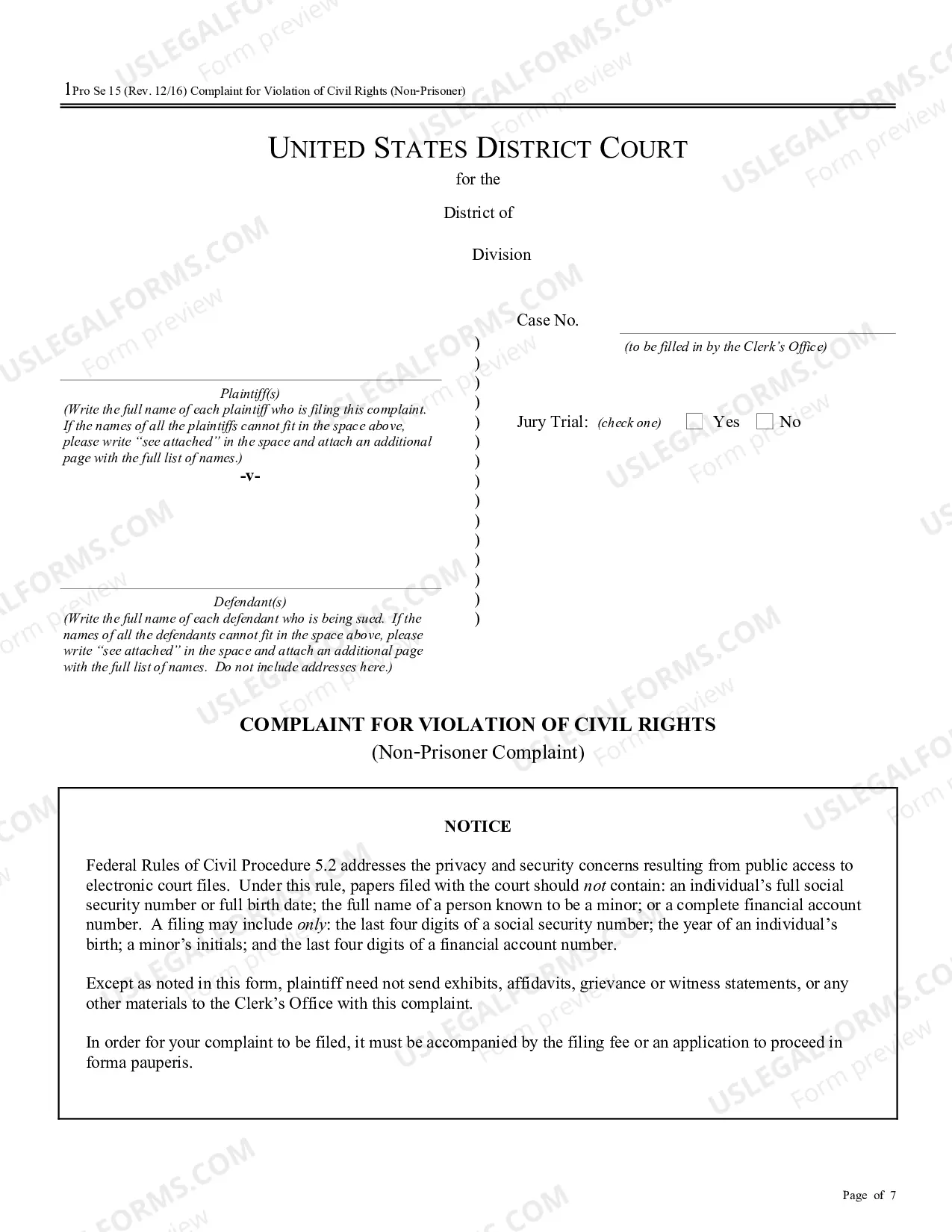
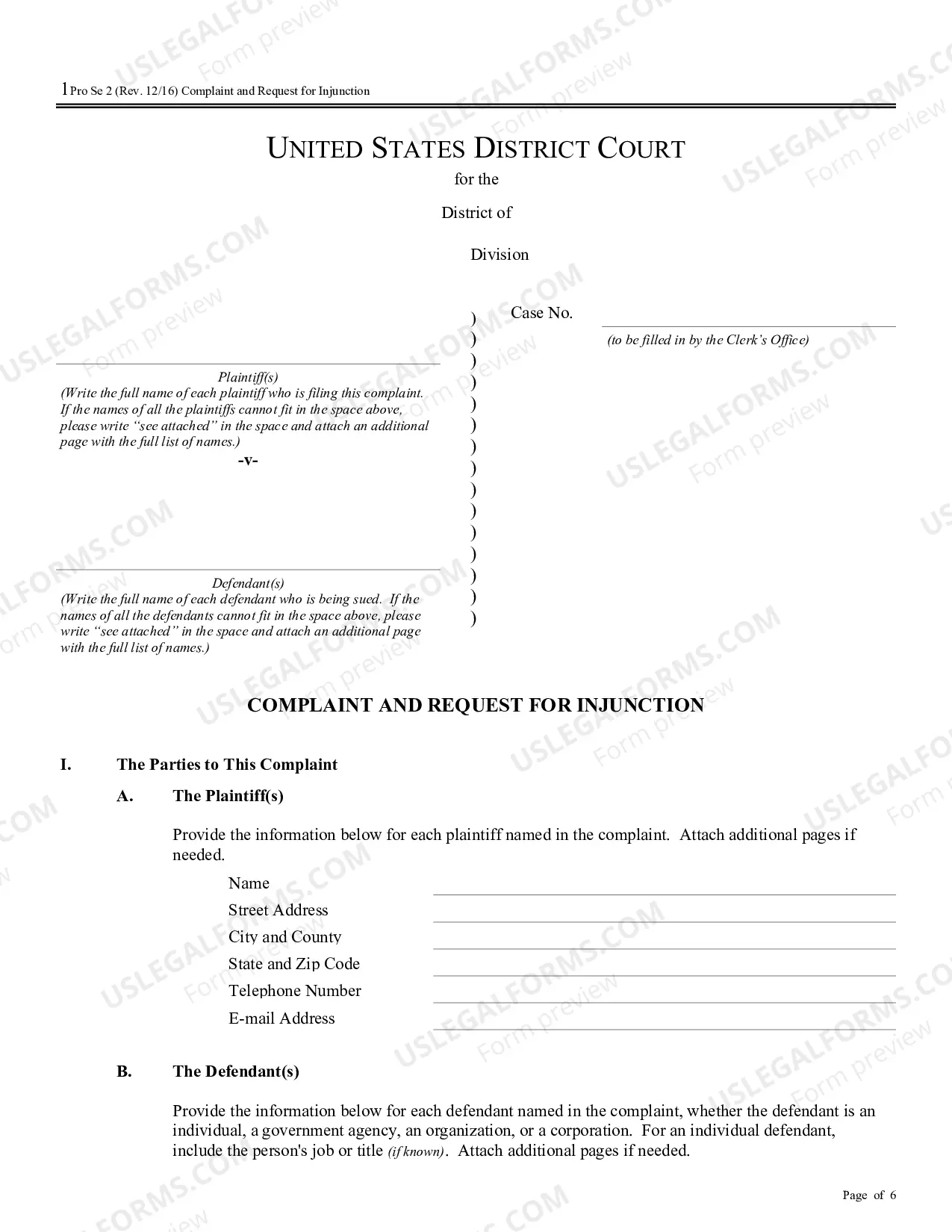
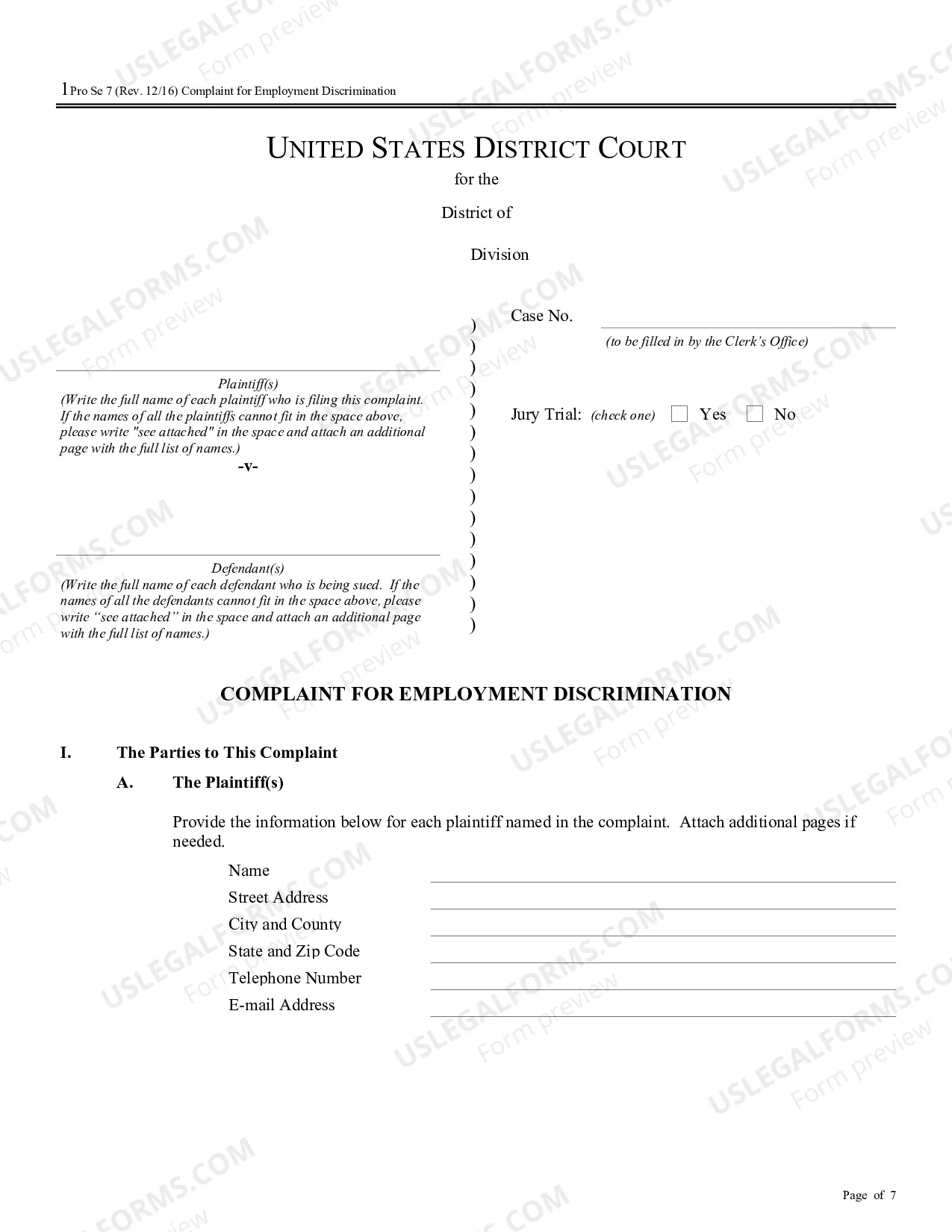
Nevada Federal Pro Se - Non-Prisoner - Complaint Form
State:
Multi-State
Category:
Control #:
US-01991
Format:
Word;
Rich Text
96 downloads
Description
Free preview
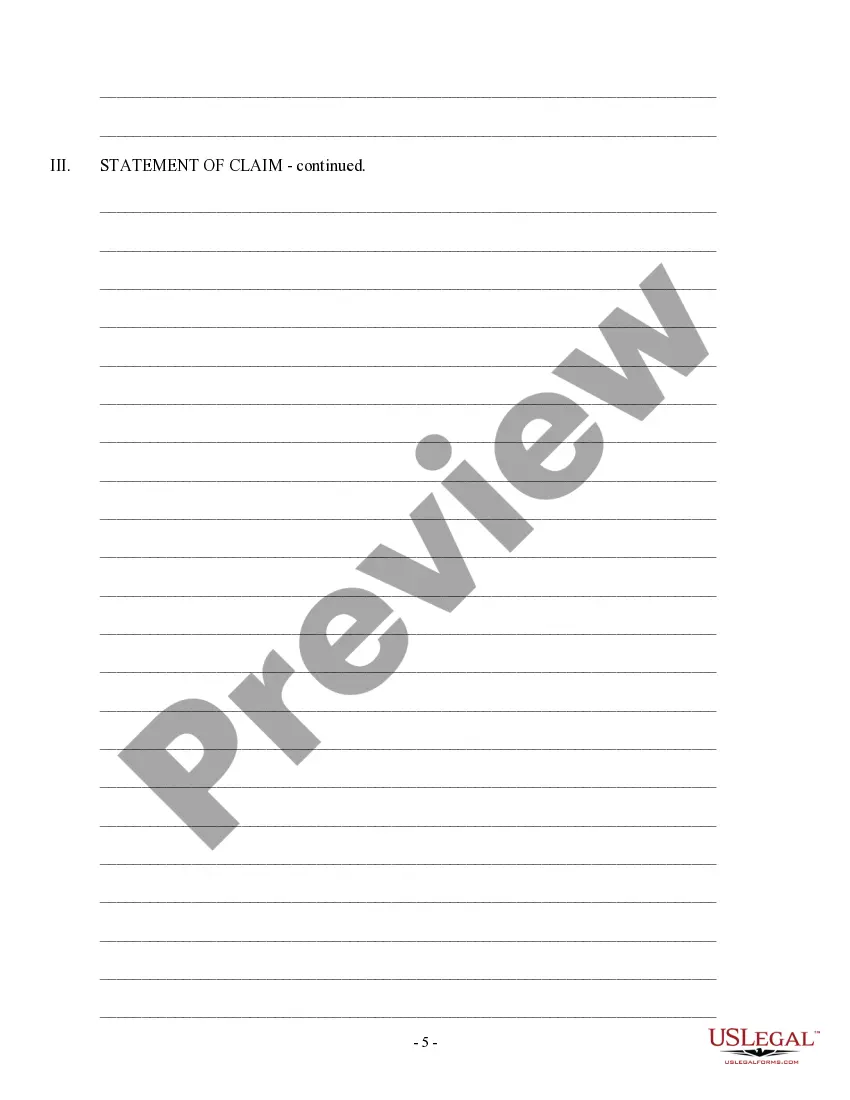
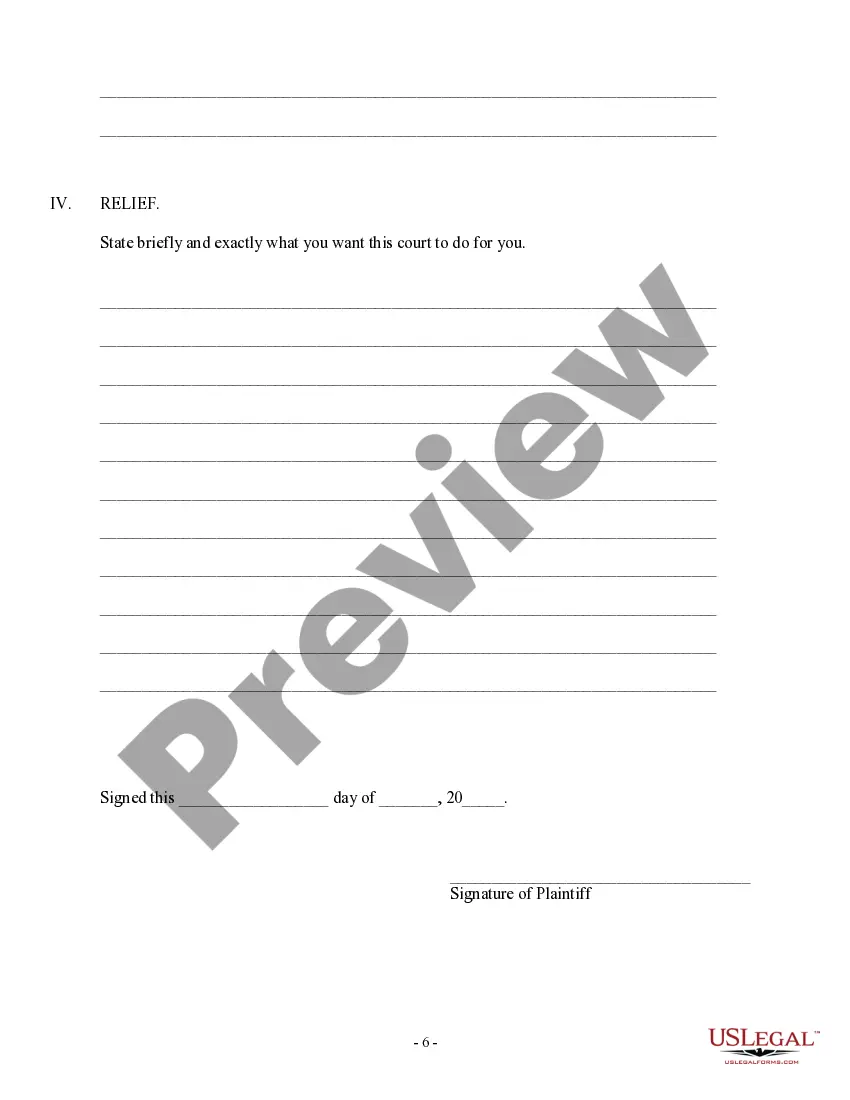
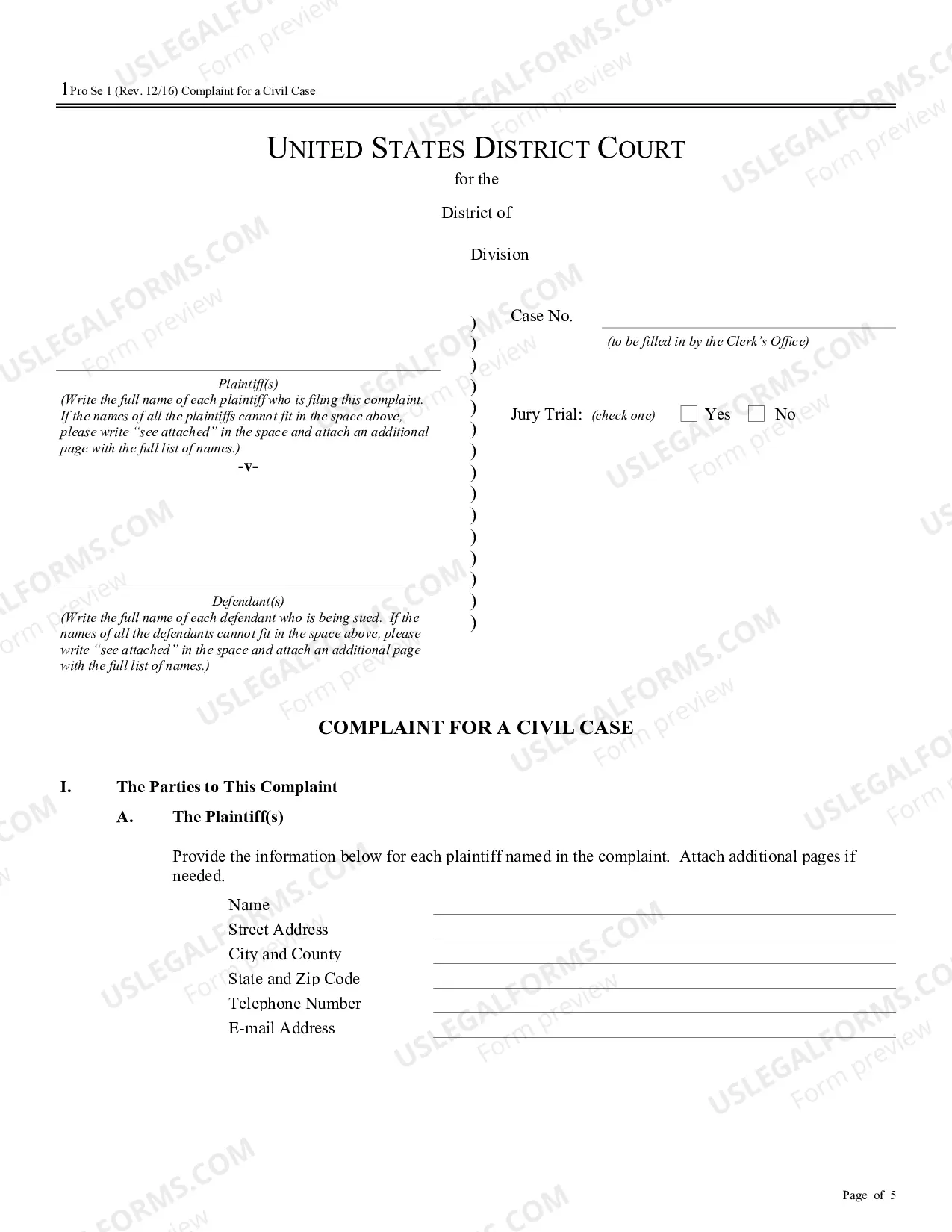
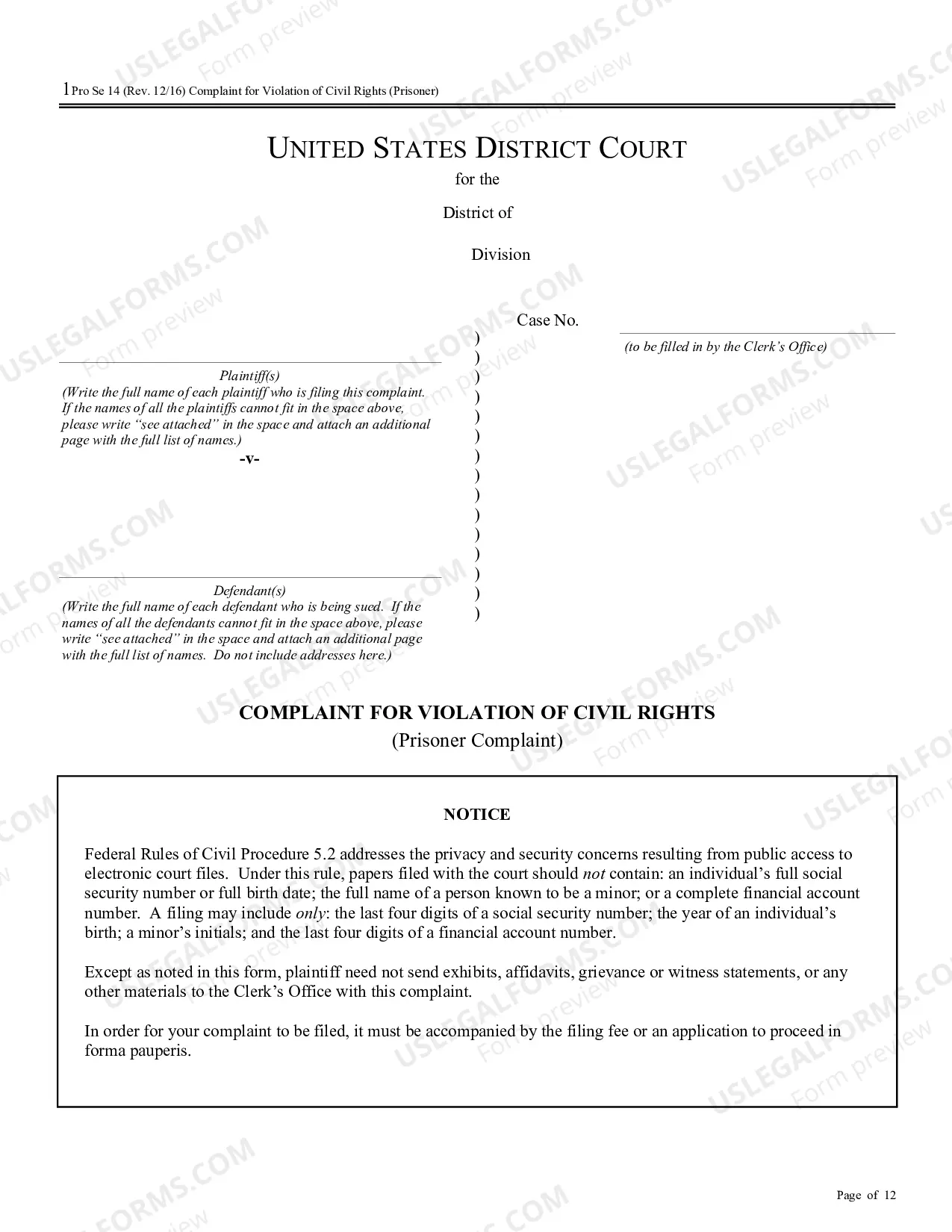
Get your form ready online
Our built-in tools help you complete, sign, share, and store your documents in one place.
Built-in online Word editor
Make edits, fill in missing information, and update formatting in US Legal Forms—just like you would in MS Word.
Export easily
Download a copy, print it, send it by email, or mail it via USPS—whatever works best for your next step.
E-sign your document
Sign and collect signatures with our SignNow integration. Send to multiple recipients, set reminders, and more. Go Premium to unlock E-Sign.
Notarize online 24/7
If this form requires notarization, complete it online through a secure video call—no need to meet a notary in person or wait for an appointment.
Store your document securely
We protect your documents and personal data by following strict security and privacy standards.

Make edits, fill in missing information, and update formatting in US Legal Forms—just like you would in MS Word.

Download a copy, print it, send it by email, or mail it via USPS—whatever works best for your next step.

Sign and collect signatures with our SignNow integration. Send to multiple recipients, set reminders, and more. Go Premium to unlock E-Sign.

If this form requires notarization, complete it online through a secure video call—no need to meet a notary in person or wait for an appointment.

We protect your documents and personal data by following strict security and privacy standards.
Looking for another form?




How to fill out Federal Pro Se - Non-Prisoner - Complaint Form?
If you need to finish, download, or print legal document templates, utilize US Legal Forms, the premier collection of legal forms available online.
Take advantage of the site's straightforward and efficient search to find the documents you require.
Numerous templates for business and personal purposes are categorized by groups and keywords, or you can search for them directly.
Once you have found the form you need, click the Purchase now button. Choose the pricing plan you prefer and enter your details to create an account.
Step 5. Proceed with the transaction. You can use your credit card or PayPal account to complete the purchase. Step 6. Select the format of your legal form and download it to your device. Step 7. Complete, edit, and print or sign the Nevada Federal Pro Se - Non-Prisoner - Complaint Form. Each legal document template you acquire is yours indefinitely. You have access to every form you downloaded in your account. Visit the My documents section and select a form to print or download again. Complete and download, and print the Nevada Federal Pro Se - Non-Prisoner - Complaint Form with US Legal Forms. There are numerous professional and state-specific forms available for your business or personal needs.
- Use US Legal Forms to acquire the Nevada Federal Pro Se - Non-Prisoner - Complaint Form with just a few clicks.
- If you are already a US Legal Forms user, Log In to your account and click the Download button to get the Nevada Federal Pro Se - Non-Prisoner - Complaint Form.
- You can also access forms you have previously downloaded in the My documents section of your account.
- If you are using US Legal Forms for the first time, follow the steps below.
- Step 1. Ensure you have selected the form for your specific city/region.
- Step 2. Use the Review option to examine the form's content. Don’t forget to read through the information.
- Step 3. If you are not satisfied with the form, use the Search field at the top of the screen to find alternative versions of the legal form template.
Form popularity
FAQ
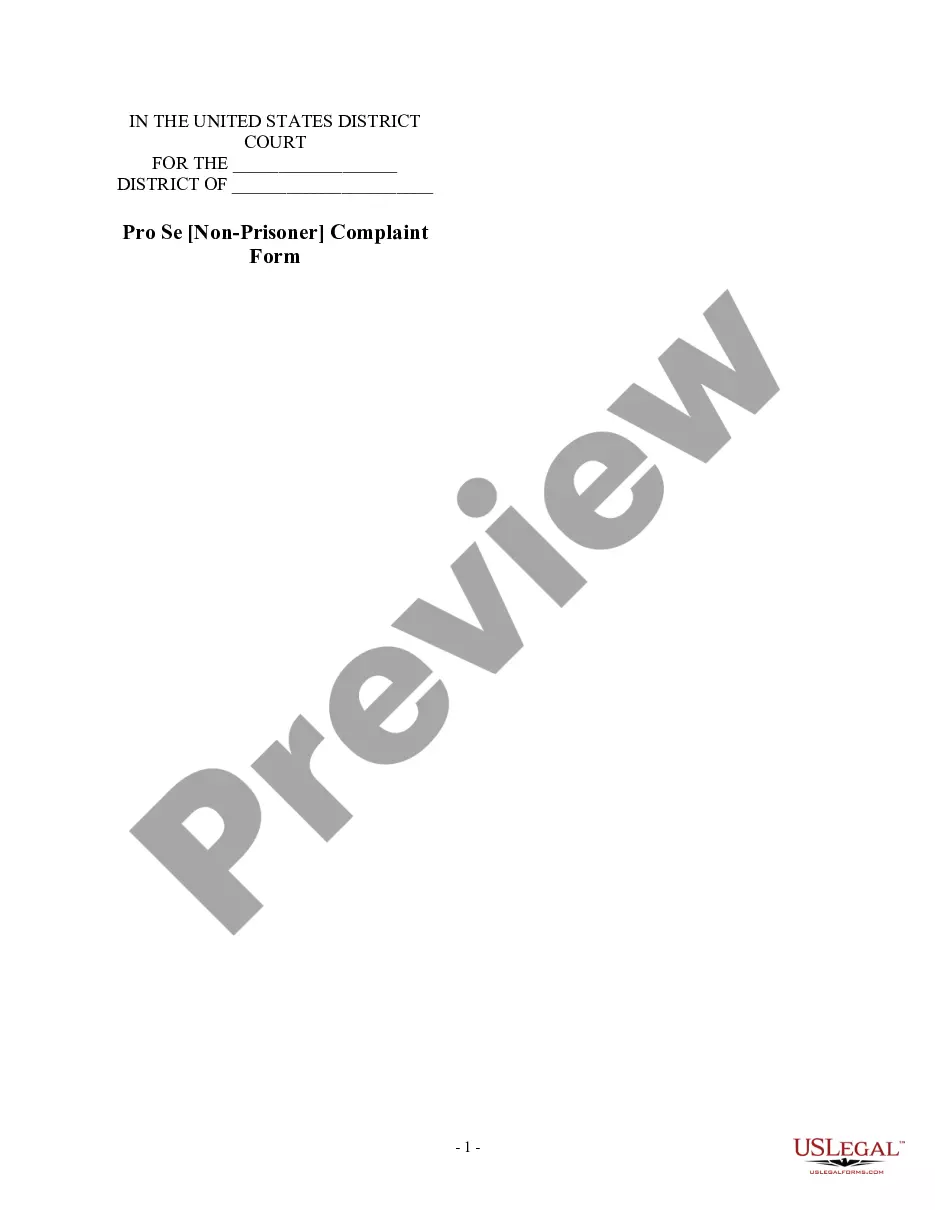
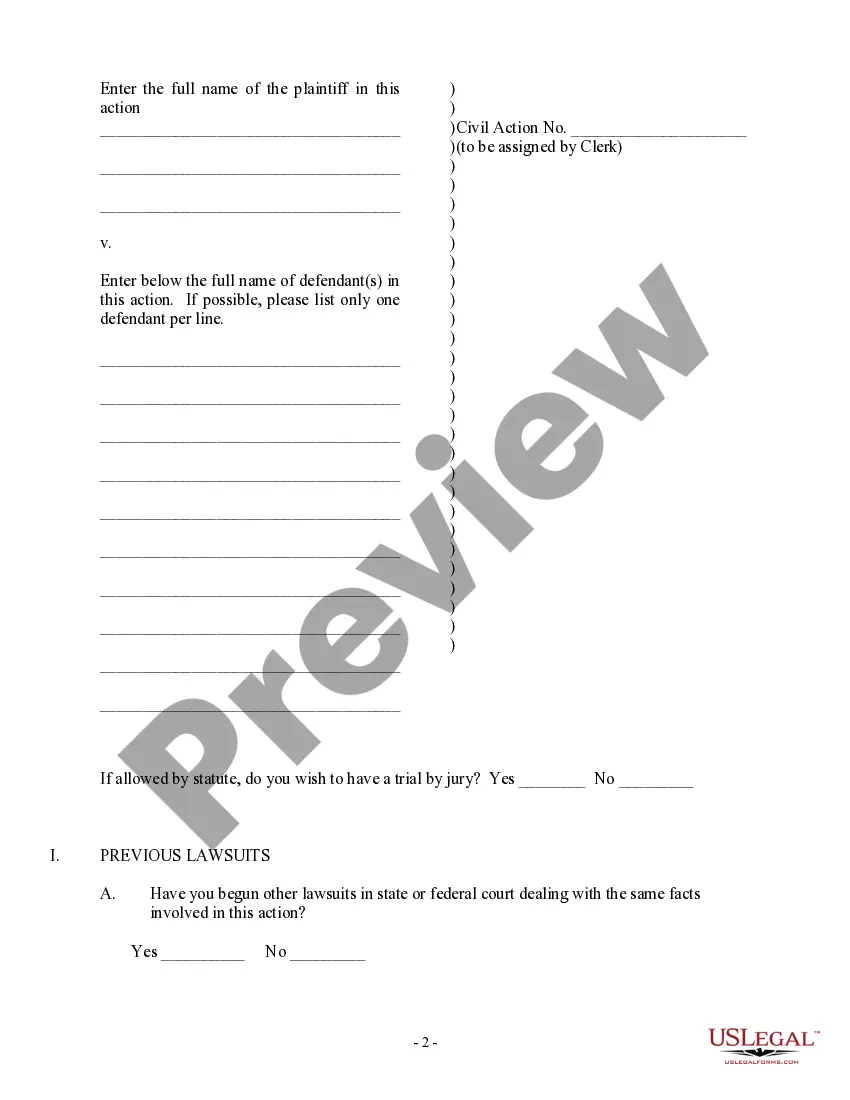
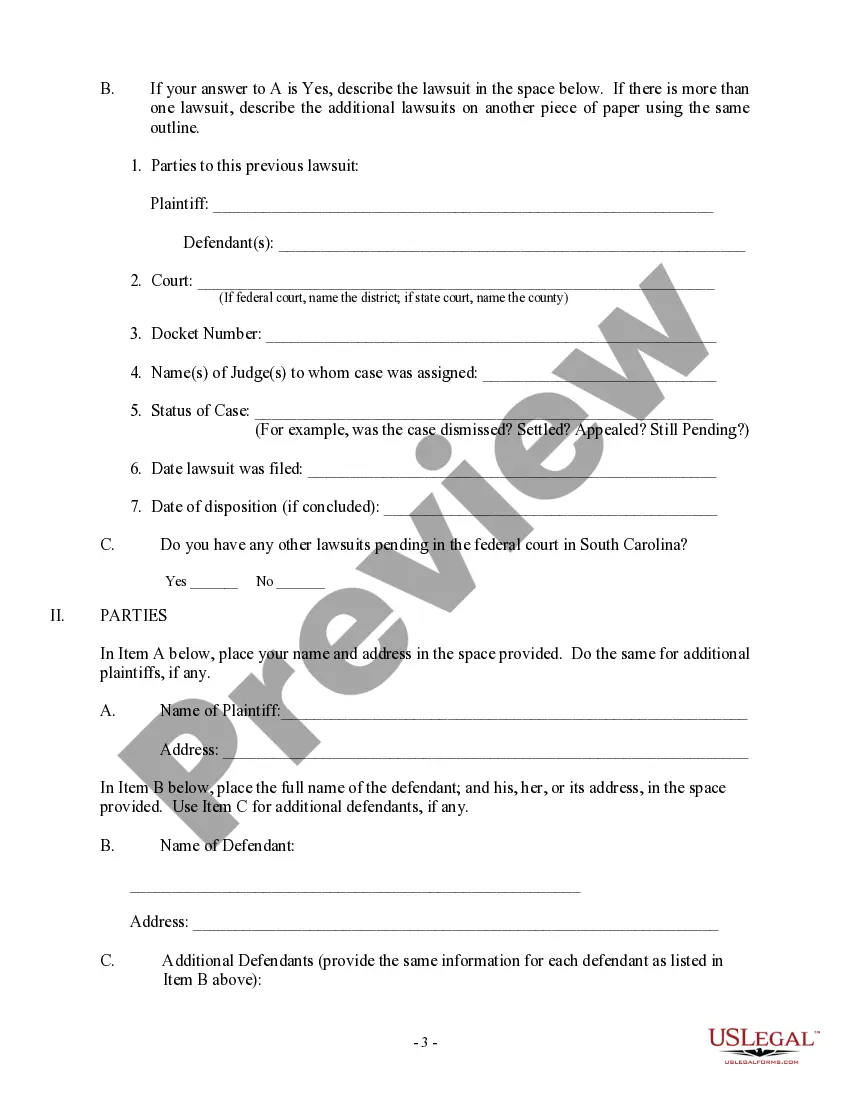
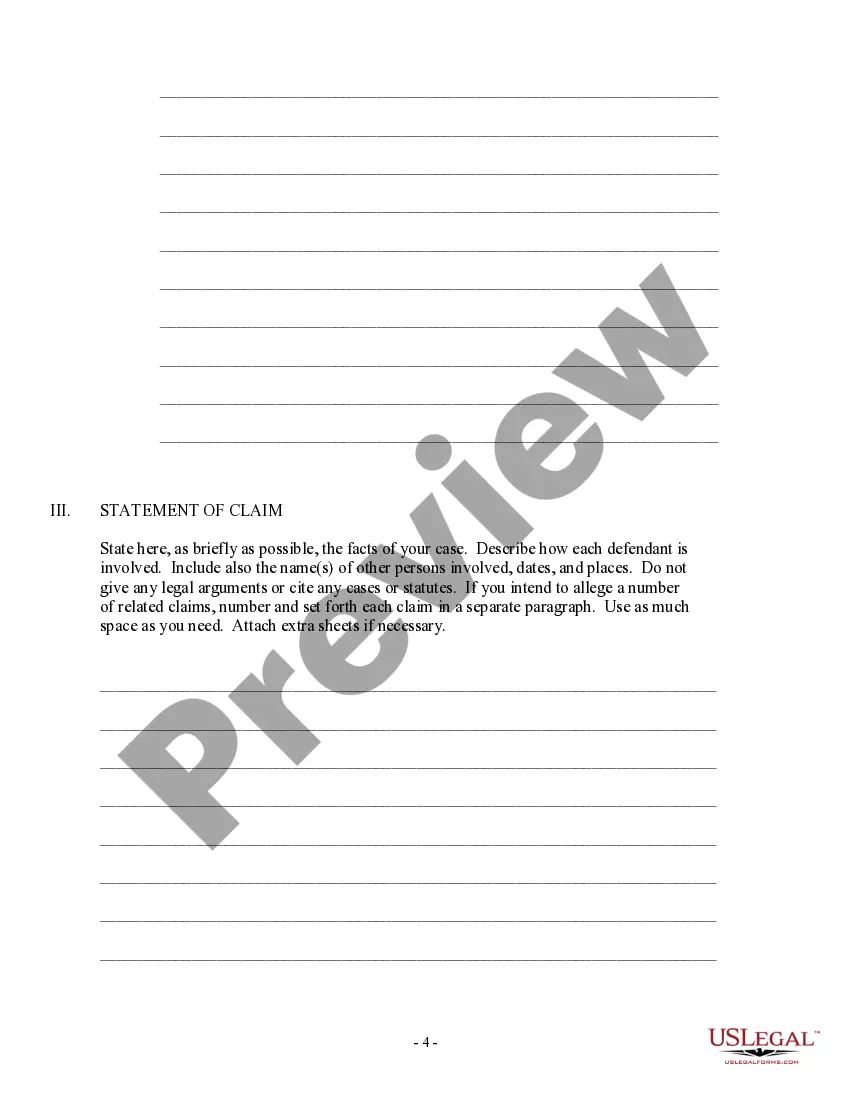
Formatting a federal complaint requires adherence to specific rules set by the court. Use the Nevada Federal Pro Se - Non-Prisoner - Complaint Form for structure, ensuring you include a caption, a statement of jurisdiction, and a clear outline of your claims. Additionally, ensure your complaint is typed and follows the required margin and spacing guidelines.
In response to a complaint, standard answers can include admissions, denials, or affirmative defenses. When preparing your answer, consider using the Nevada Federal Pro Se - Non-Prisoner - Complaint Form as a guide to structure your response effectively. It’s crucial to address each allegation to avoid default judgments.
To file pro se in federal court, you must complete the Nevada Federal Pro Se - Non-Prisoner - Complaint Form. Start by gathering all relevant documents and evidence to support your case. After filling out the form, file it with the appropriate federal court in Nevada, ensuring you follow local rules regarding filing fees and deadlines.
The most common complaint involves allegations of color of law violations. Another common complaint involves racial violence, such as physical assaults, homicides, verbal or written threats, or desecration of property.
Civil rights are rights that citizens have to ensure political and social freedom and equality. An individual citizen can sue a government employee for violating their civil rights under 42 U.S.C. § 1983, also known as the Civil Rights Act of 1871, a federal law.
The types of civil cases that can be brought in the Federal courts are speci- fied in Article III of the United States Consti tution. These include: Cases arising under the United Sta tes Constitution, Federal statutes, and treaties.
To file a lawsuit against a corporation in Nevada, you name the corporation as the defendant when filing the required paperwork. You then prepare a summons and complaint that states the facts and your grounds for the lawsuit.
(1) A defendant shall serve an answer within 20 days after being served with the summons and complaint, unless otherwise provided by statute when service of process is made pursuant to Rule 4(e)(3).
As a result, civil rights cases can include some or all of the following: Freedom from excessive force by police or other law enforcement. Freedom from unreasonable searches or seizures by police or other law enforcement. Freedom from false arrest by police or other law enforcement.
Federal courts are authorized to hear only civil cases that involve one or more of the following: Questions regarding the Constitution. Questions of federal law (as opposed to state law) A dispute among residents of different states with an amount in controversy of more than $75,000.