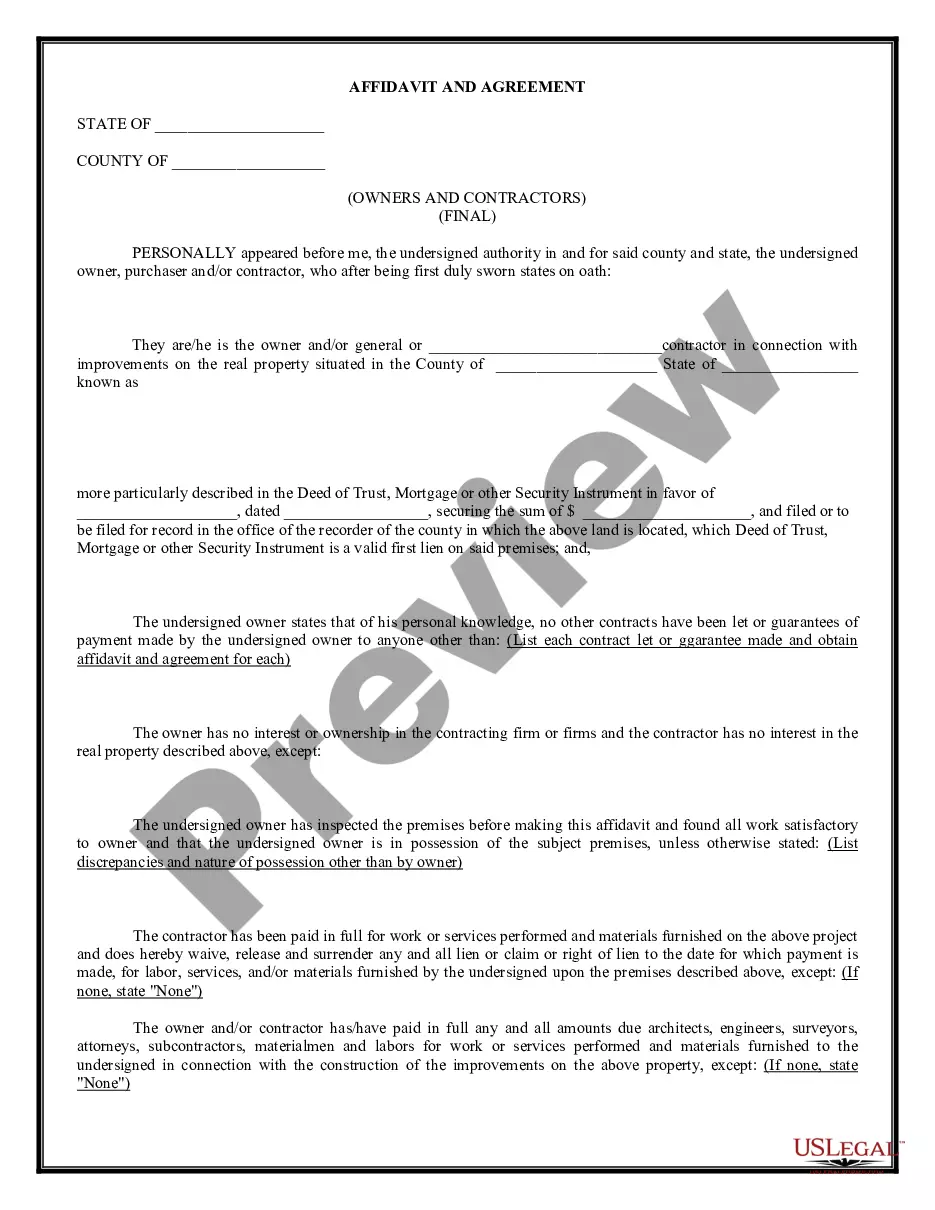
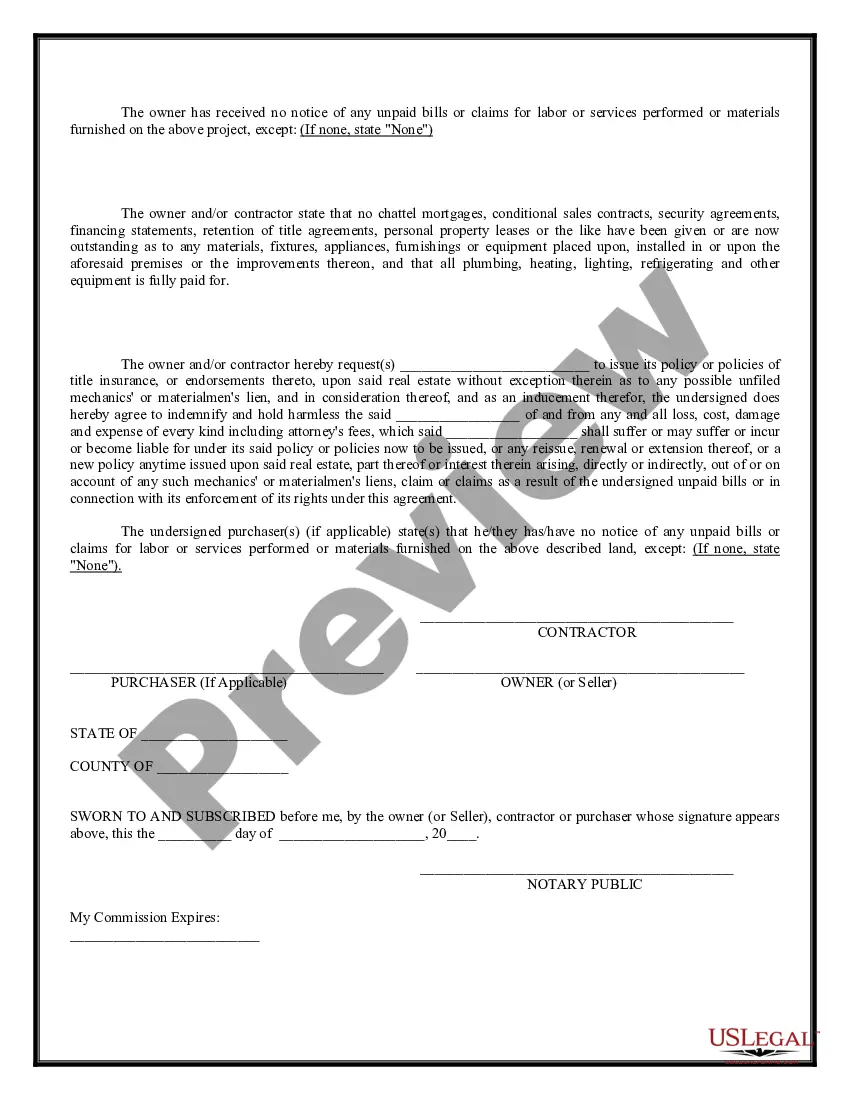
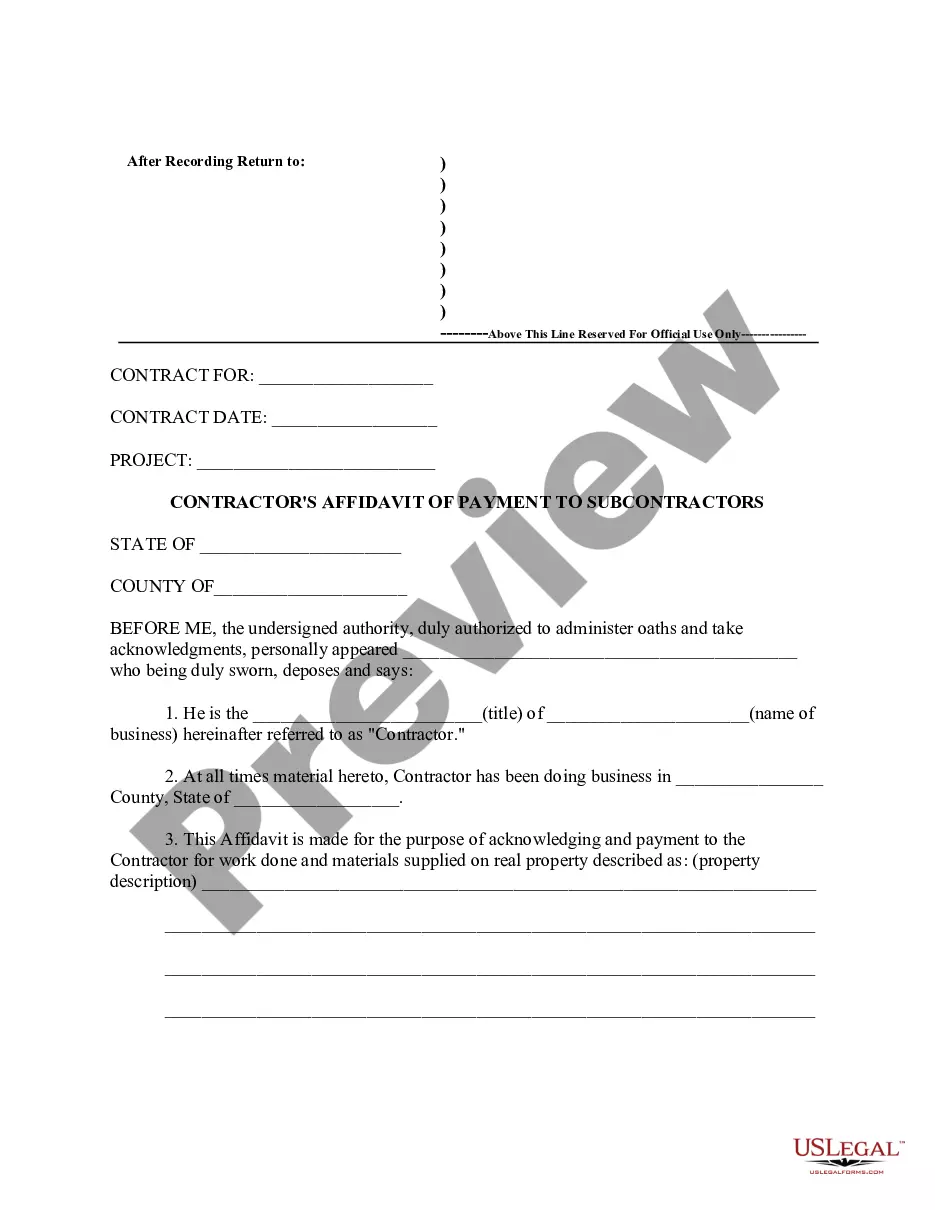
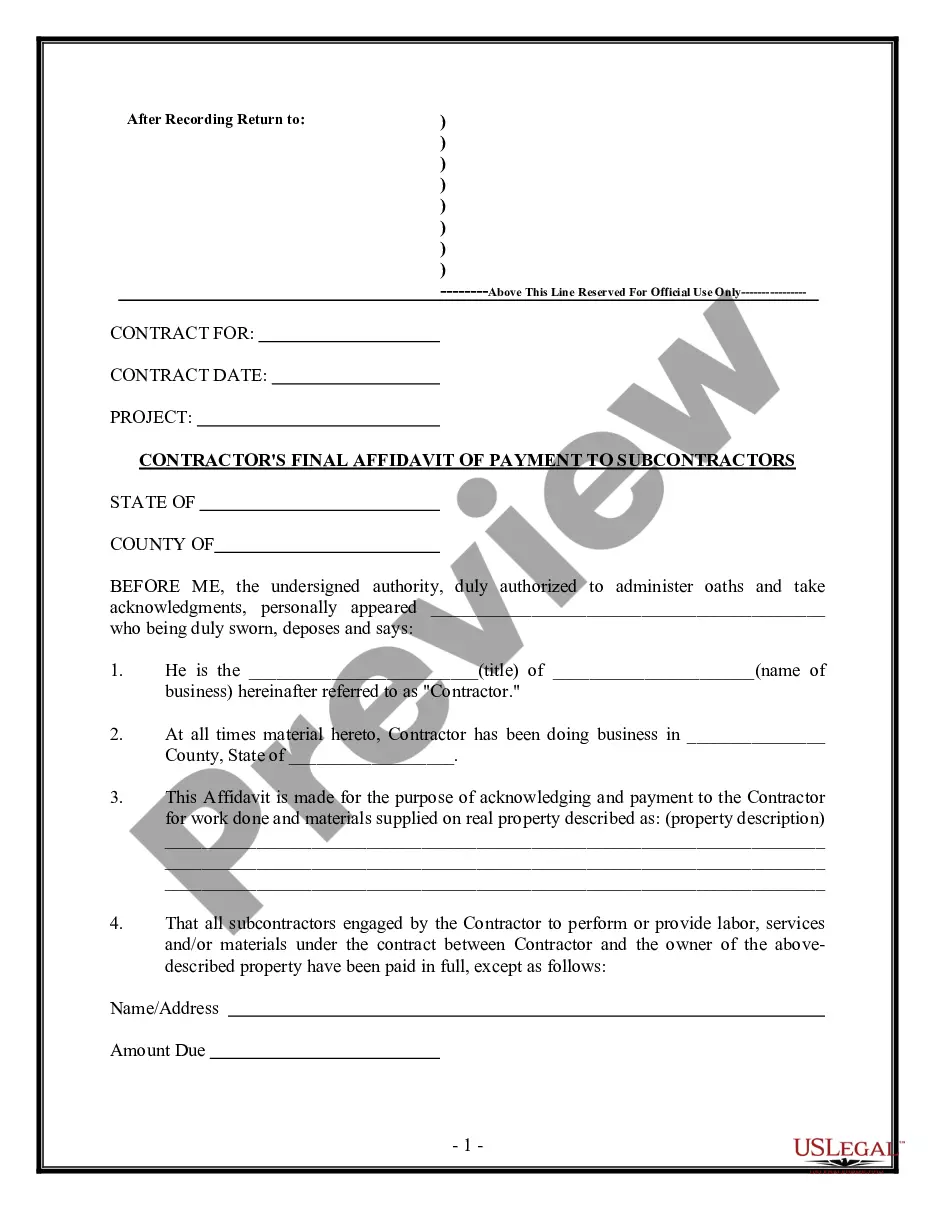
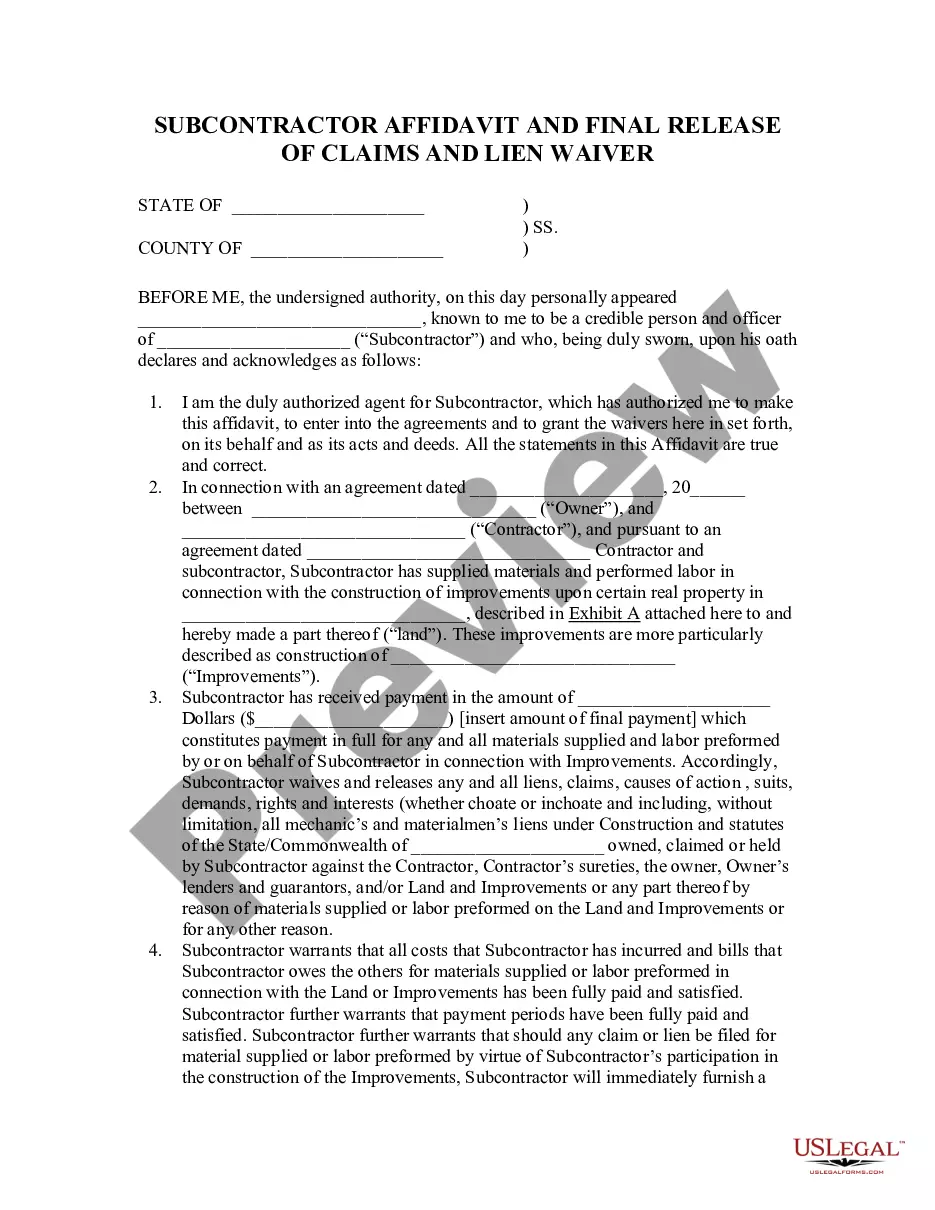
Nevada Owner's and Contractor Affidavit of Completion and Payment to Subcontractors
Description
Get your form ready online
Our built-in tools help you complete, sign, share, and store your documents in one place.
Make edits, fill in missing information, and update formatting in US Legal Forms—just like you would in MS Word.
Download a copy, print it, send it by email, or mail it via USPS—whatever works best for your next step.
Sign and collect signatures with our SignNow integration. Send to multiple recipients, set reminders, and more. Go Premium to unlock E-Sign.
If this form requires notarization, complete it online through a secure video call—no need to meet a notary in person or wait for an appointment.
We protect your documents and personal data by following strict security and privacy standards.

Make edits, fill in missing information, and update formatting in US Legal Forms—just like you would in MS Word.

Download a copy, print it, send it by email, or mail it via USPS—whatever works best for your next step.

Sign and collect signatures with our SignNow integration. Send to multiple recipients, set reminders, and more. Go Premium to unlock E-Sign.

If this form requires notarization, complete it online through a secure video call—no need to meet a notary in person or wait for an appointment.

We protect your documents and personal data by following strict security and privacy standards.
Looking for another form?
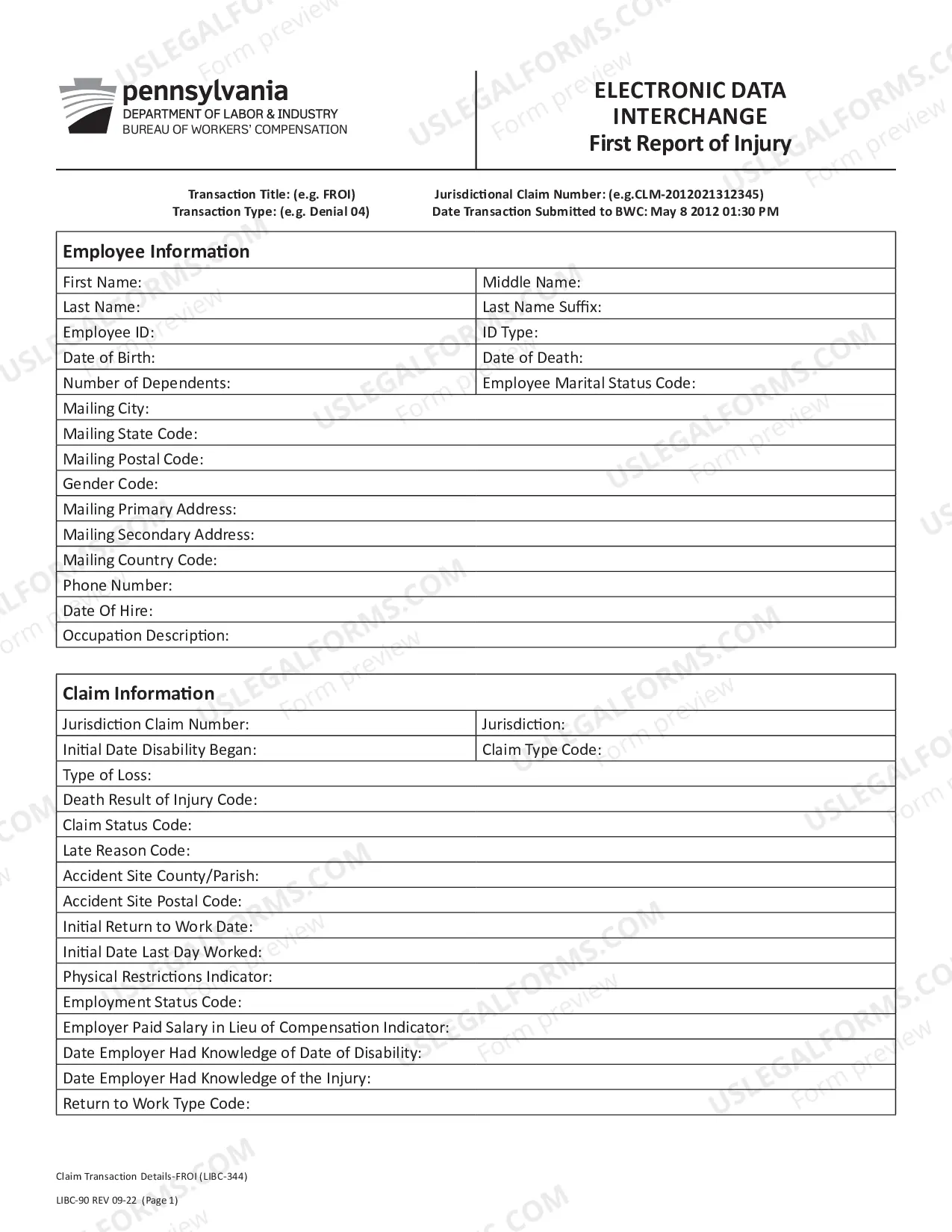
How to fill out Owner's And Contractor Affidavit Of Completion And Payment To Subcontractors?
If you desire to finish, acquire, or print legal document templates, utilize US Legal Forms, the largest collection of legal forms available online.
Employ the site's straightforward and user-friendly search feature to find the documents you need.
A range of templates for business and personal use are organized by categories and states or keywords.
Step 4. Once you have identified the form you need, select the Purchase now button. Choose the payment plan you prefer and enter your credentials to register for an account.
Step 5. Complete the transaction. You can use your credit card or PayPal account to finalize the transaction. Step 6. Choose the format of the legal form and download it onto your device. Step 7. Complete, edit and print or sign the Nevada Owner's and Contractor Affidavit of Completion and Payment to Subcontractors.
- Use US Legal Forms to access the Nevada Owner's and Contractor Affidavit of Completion and Payment to Subcontractors in just a few clicks.
- If you are already a US Legal Forms user, Log In to your account and click the Download button to download the Nevada Owner's and Contractor Affidavit of Completion and Payment to Subcontractors.
- You can also access forms you have previously downloaded in the My documents section of your account.
- If you are using US Legal Forms for the first time, refer to the instructions below.
- Step 1. Ensure you have selected the form for the appropriate state/country.
- Step 2. Use the Preview option to review the content of the form. Be sure to check the summary.
- Step 3. If you are dissatisfied with the form, use the Search field at the top of the screen to find other versions of the legal form template.
Form popularity
FAQ
A notice of intent to default in Nevada is a formal notification sent to alert a contractor of their failure to meet contractual obligations. This notice serves as a precursor to possible legal actions, providing the contractor an opportunity to remedy the situation. Leveraging this notice can also complement the Nevada Owner's and Contractor Affidavit of Completion and Payment to Subcontractors, ensuring that all parties adhere to agreed-upon terms.
Yes, subcontractors generally need a valid license to legally operate in Nevada. Licensing ensures that subcontractors meet state requirements for quality and safety in their work. When engaging subcontractors, it is crucial to ensure they hold the appropriate licenses, as this ties into the Nevada Owner's and Contractor Affidavit of Completion and Payment to Subcontractors for protecting your rights.
Yes, hiring an unlicensed contractor in Nevada can lead to significant legal problems. It may expose you to financial liabilities and reduce your ability to file a claim or enforce a contract. To avoid such risks, ensure that you verify a contractor's licensing status and consider using the Nevada Owner's and Contractor Affidavit of Completion and Payment to Subcontractors for added protection.
A certificate of existence is generally not required to file the Nevada Owner's and Contractor Affidavit of Completion and Payment to Subcontractors. However, some contractors may need it to prove their legal standing and compliance with state laws. Always check local regulations to ensure you meet all necessary documentation requirements.
In Nevada, a notice of completion is not strictly required, but it is highly recommended. Filing this notice can expedite the process of resolving any disputes related to payment and completion of work. Additionally, it helps establish a clear timeline regarding the Nevada Owner's and Contractor Affidavit of Completion and Payment to Subcontractors, protecting both owners and subcontractors.
A notice of non-responsibility in Nevada is a legal statement that protects property owners from liability for unauthorized work on their property. This notice must be filed with the county recorder when a property owner does not consent to the work being performed. By using this notice in conjunction with the Nevada Owner's and Contractor Affidavit of Completion and Payment to Subcontractors, owners can safeguard themselves from potential claims.
The prime contractor has a direct contractual agreement with the property owner. If the contractor isn't paid, he can sue on the contract and record a mechanic's lien. But subcontractors, workers and suppliers don't have a contract with the property owner.
The main contractor is able to withhold payment if the work or goods supplied by a subcontractor are deemed unsuitable. Evidence of this should always be provided along with the option to rectify any shortcomings.
In order to get paid, subcontractors need to issue invoices to the contractors they work for. Every invoice you issue needs to include some basic information, including: An invoice number: a unique code that follows a sequential order.
Certificate. The document that you send to the subcontractor, usually with the payments, as an acknowledgement of the payment.