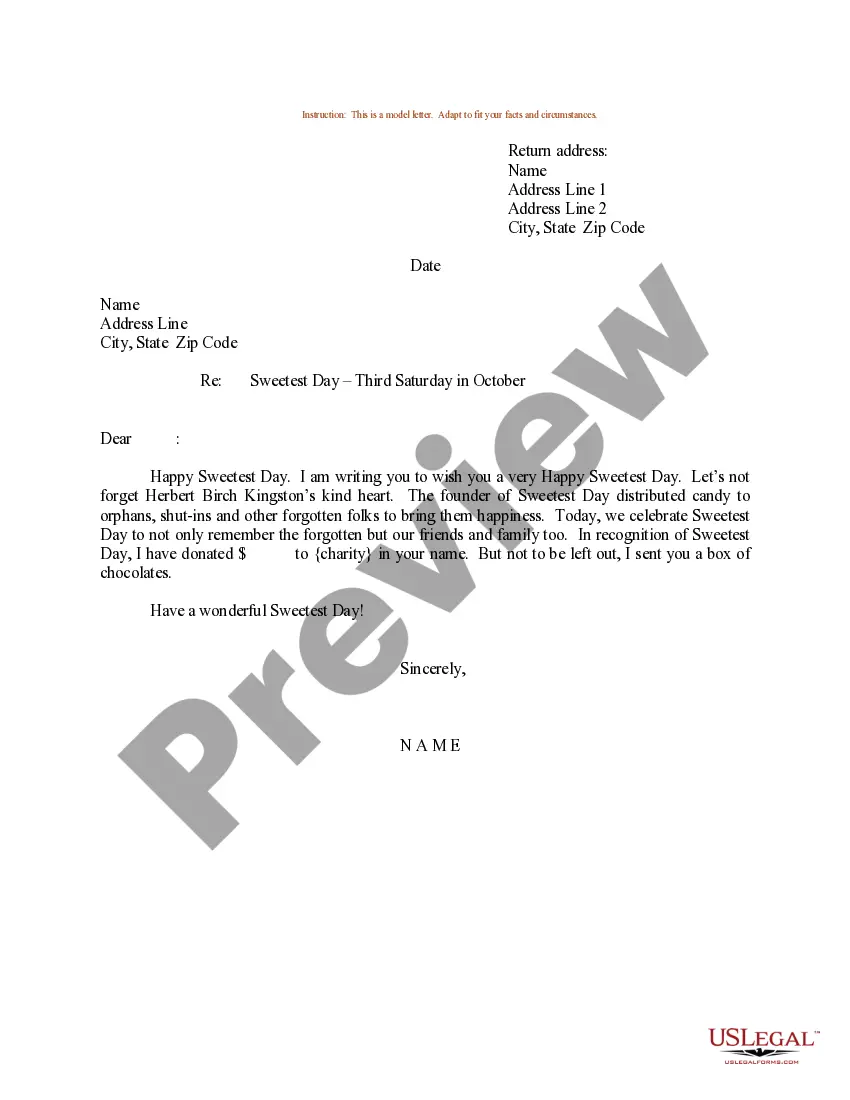
Nevada Personal Injury Release By Individual From Responsibility for Participation in Inherently Dangerous Activity
Description
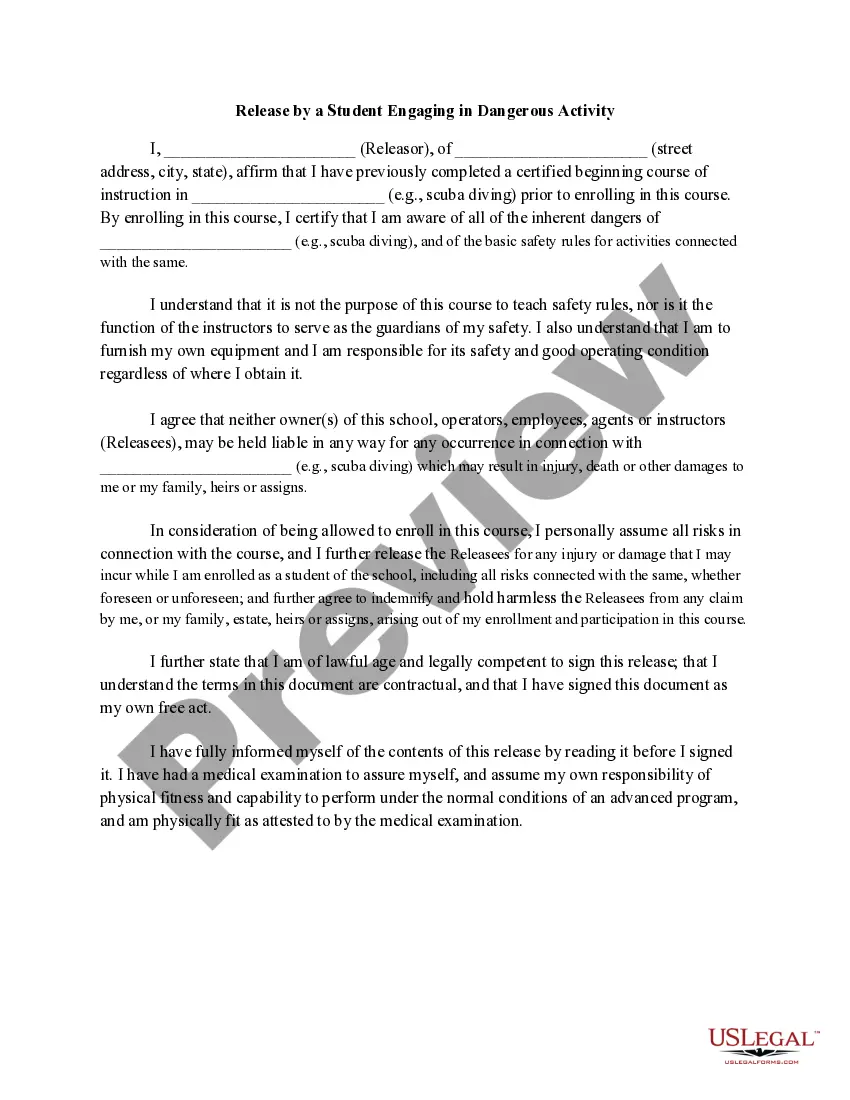
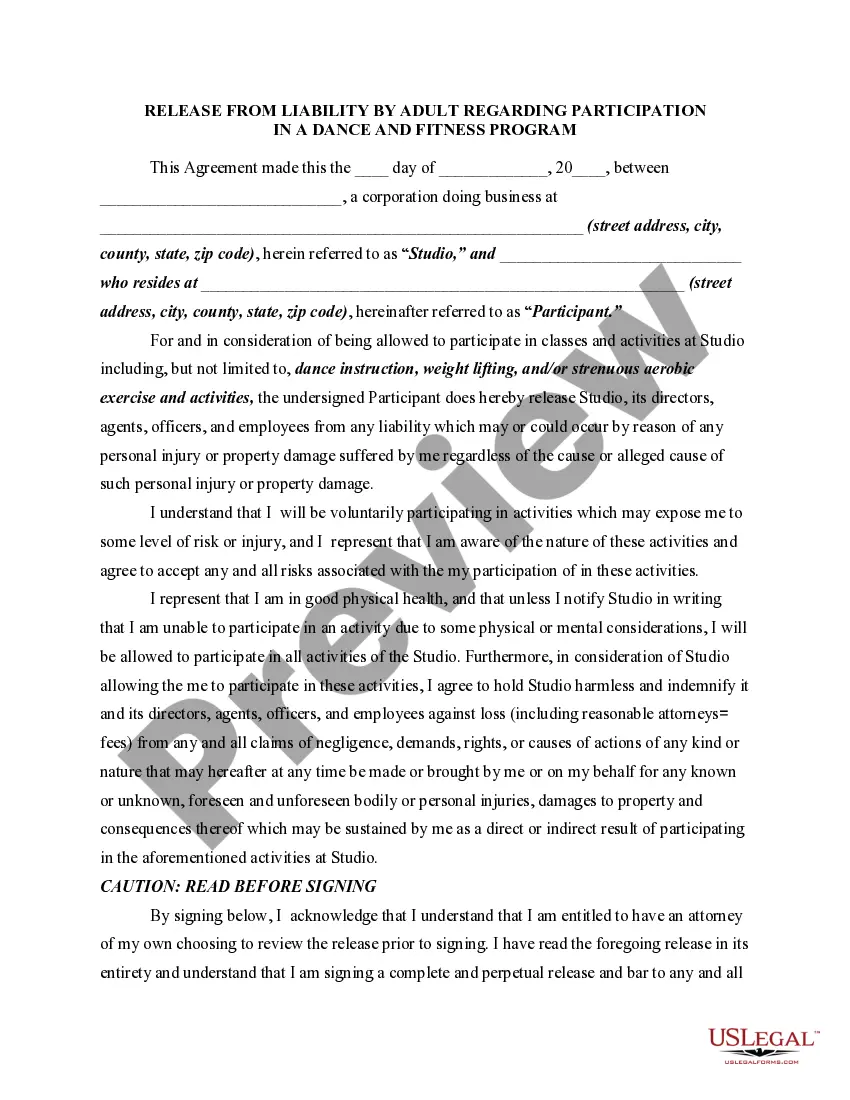
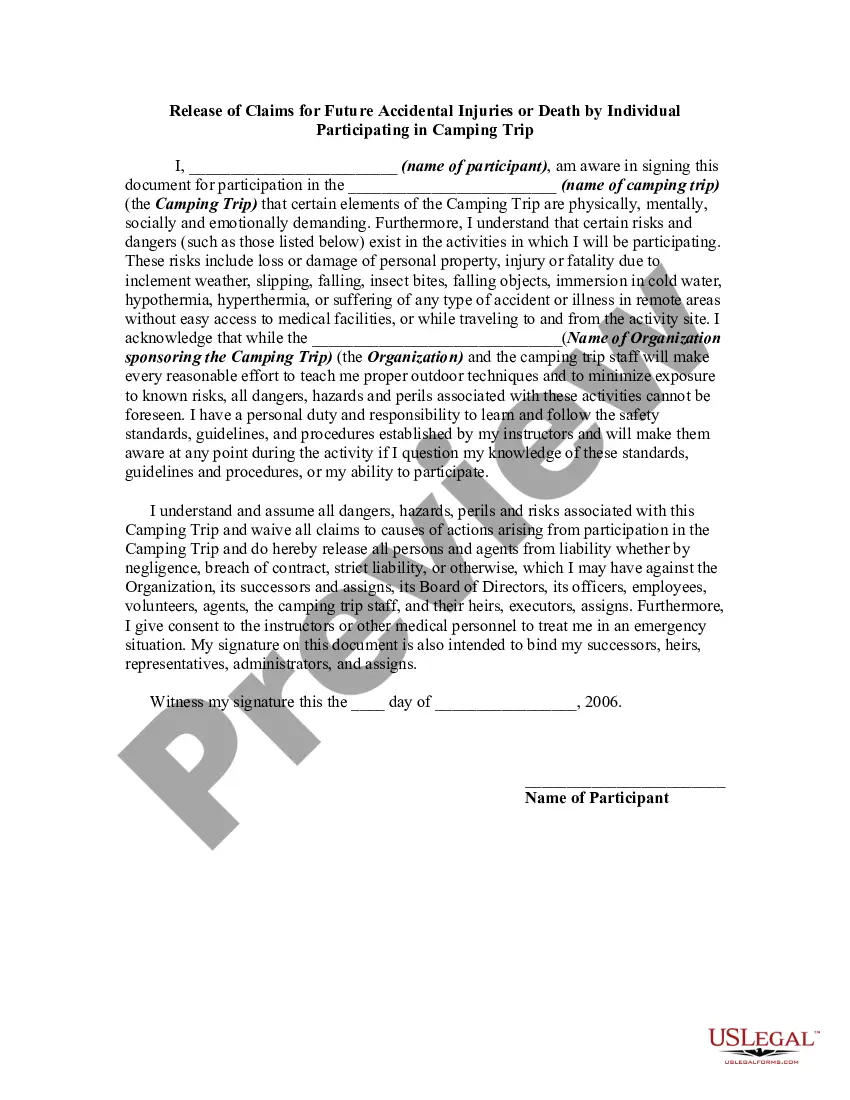

How to fill out Personal Injury Release By Individual From Responsibility For Participation In Inherently Dangerous Activity?
Have you ever been in a situation where you require documents for either business or personal purposes nearly every day.
There are numerous legal document templates available online, but finding reliable ones isn't easy.
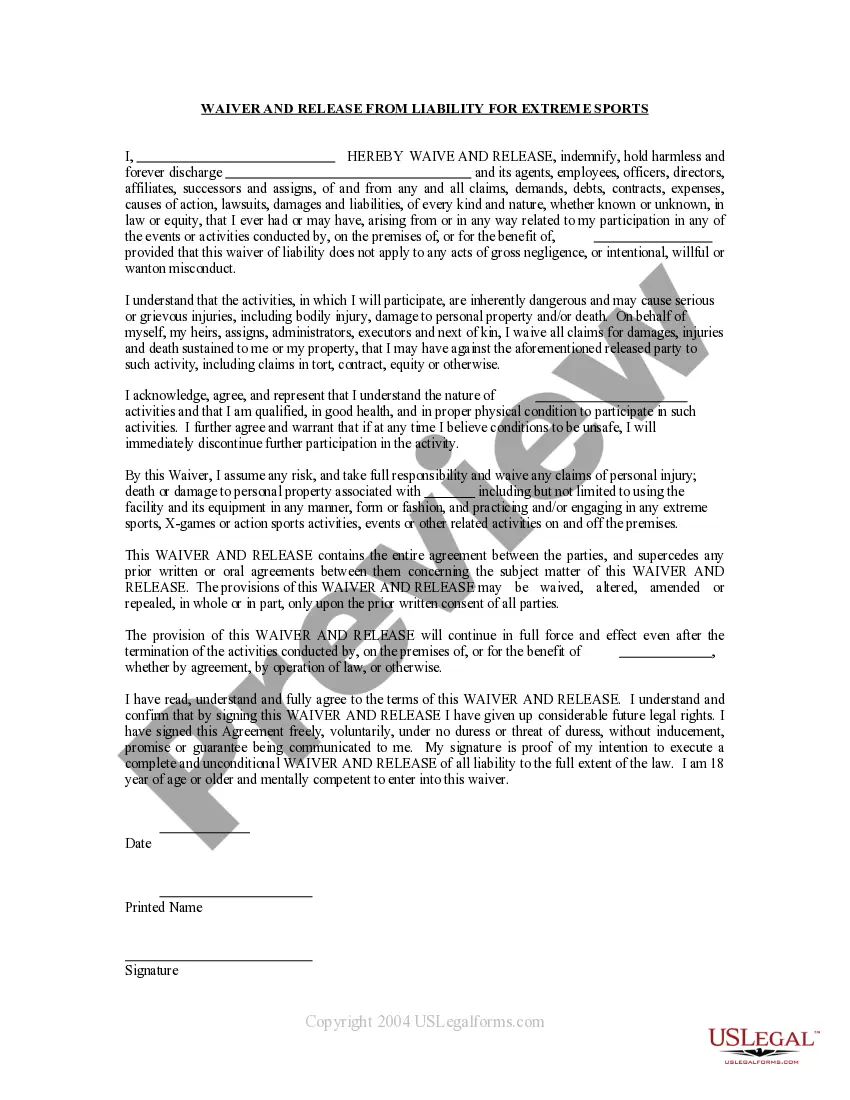
US Legal Forms offers a vast array of form templates, including the Nevada Personal Injury Release By Individual From Liability for Participation in Inherently Dangerous Activity, which can be tailored to meet federal and state requirements.
Once you find the appropriate form, click Download now.
Select the pricing plan you prefer, provide the necessary information to create your account, and complete the transaction using PayPal or Visa/Mastercard.
- If you are already familiar with the US Legal Forms website and have an account, simply Log In.
- Then, you'll be able to download the Nevada Personal Injury Release By Individual From Liability for Participation in Inherently Dangerous Activity template.
- If you don't have an account and want to start using US Legal Forms, follow these steps.
- Find the form you need and ensure it is for the correct city/county.
- Utilize the Review button to examine the document.
- Check the details to confirm you have selected the right form.
- If the form isn't what you are looking for, use the Search field to locate the form that fits your needs.
Form popularity
FAQ
A secondary implied assumption of risk occurs when an individual voluntarily engages in an activity, aware of the potential dangers involved. For instance, if someone participates in a contact sport knowing they might get injured, they assume some responsibility for the risks. This concept is relevant when considering a Nevada Personal Injury Release By Individual From Responsibility for Participation in Inherently Dangerous Activity. Understanding these nuances can help you navigate potential claims effectively.
Liability waivers can be enforceable in Nevada, especially for activities that are inherently dangerous. However, these waivers must meet specific legal standards to be valid. It is advisable to review the terms of any waiver carefully before signing, particularly concerning a Nevada Personal Injury Release By Individual From Responsibility for Participation in Inherently Dangerous Activity. Consulting legal experts will help clarify the enforceability of such documents.
Most personal injury settlements in Nevada typically range from $15,000 to $50,000, though substantial cases can exceed this significantly. The settlement amount depends on various factors, including medical expenses, lost wages, and pain and suffering. Knowing what to expect can prepare you for negotiations or discussions concerning a Nevada Personal Injury Release By Individual From Responsibility for Participation in Inherently Dangerous Activity. Engaging with experienced professionals can be beneficial in understanding these sums.
In Nevada, the contributory negligence rule applies a comparative negligence standard. This means if you are found partially at fault for your injuries, your settlement may be reduced proportionally. It's crucial to understand this rule if you are considering a Nevada Personal Injury Release By Individual From Responsibility for Participation in Inherently Dangerous Activity, as it impacts the liability assessment. Seeking legal counsel can clarify how this rule affects your case.
The average personal injury settlement in Nevada varies significantly based on the case specifics. Generally, settlements can range from a few thousand to several hundred thousand dollars. Factors like the severity of injuries and liability can heavily influence the final amount. Understanding the potential of a Nevada Personal Injury Release By Individual From Responsibility for Participation in Inherently Dangerous Activity can help set realistic expectations.
The Waiver must be clearly worded and unambiguous in its intent to relieve any and all legal liability, even liability for negligence. The Waiver should be prominent and not hidden in the fine print of a long contract. The Waiver must be signed by the person who it is being used against.
An express assumption of risk is often made in writing, usually in the form of a signed waiver or contract. However, an express assumption of risk doesn't have to be in writing, it can also be made verbally. An implied assumption of risk, on the other hand, is not written or stated out loud.
The releasor is the party who agrees to release a potential claim in exchange for something of value. The releasee is the party being released from the claim or a potential claim. The releasor receives consideration in the way of compensation for releasing the claim.
It is covered by the Latin maxim volenti non fit injuria. This maxim stands for the proposition that no wrong can be done to a person who consents to the injury.
A release of liability is a legal agreement between two parties in which one party waives the right to hold another party responsible for potential damages or injuries.