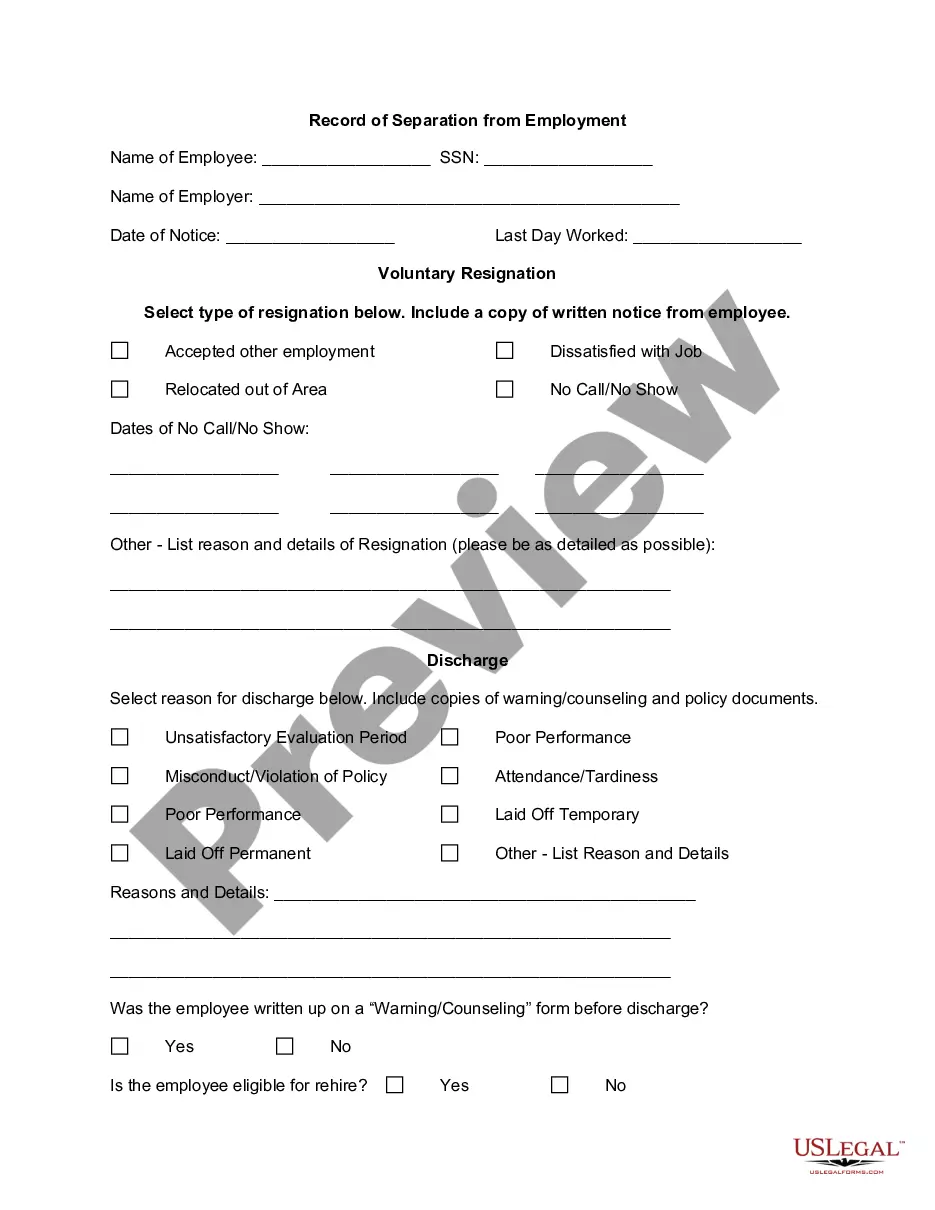
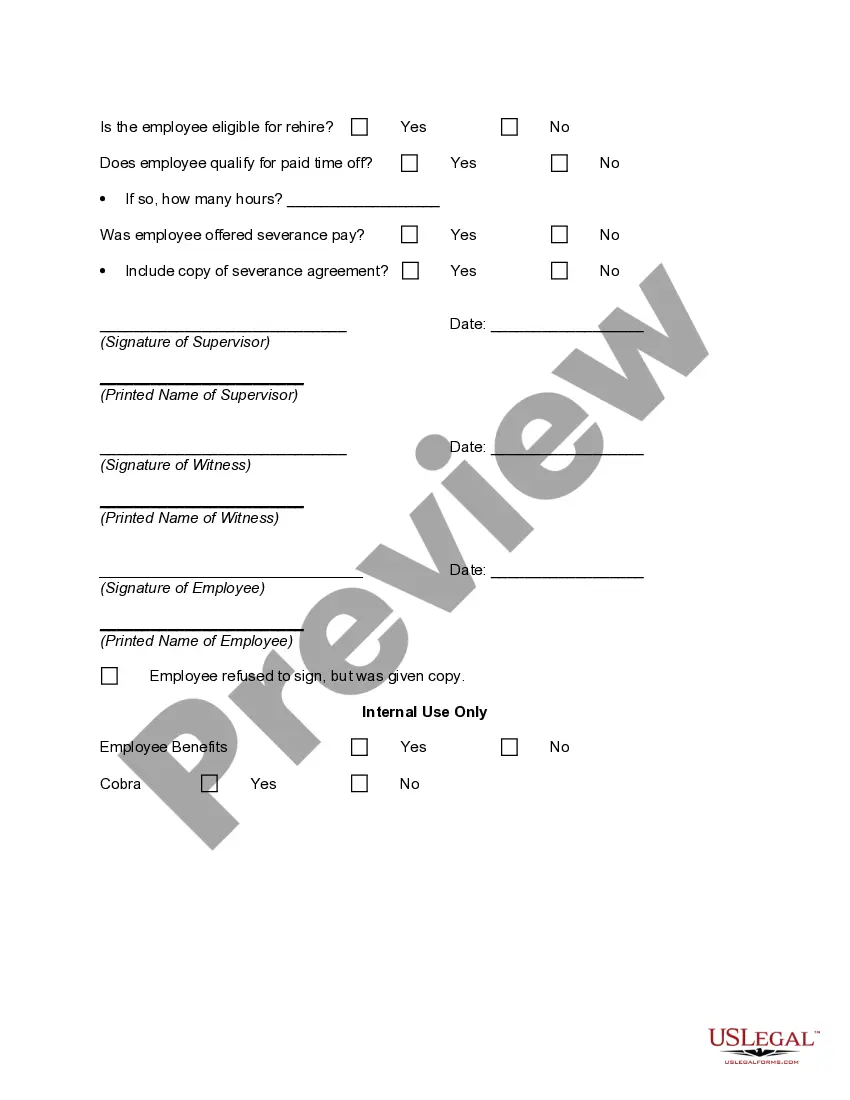
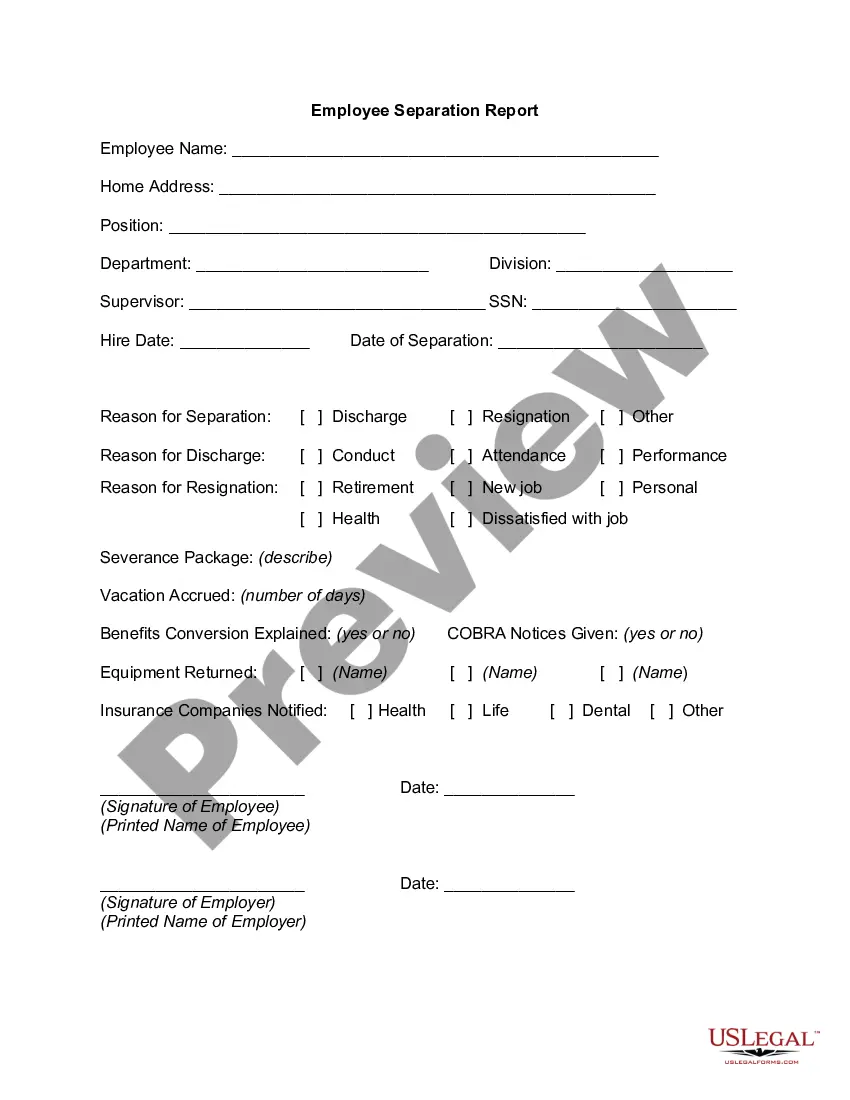
New Mexico Record of Separation from Employment
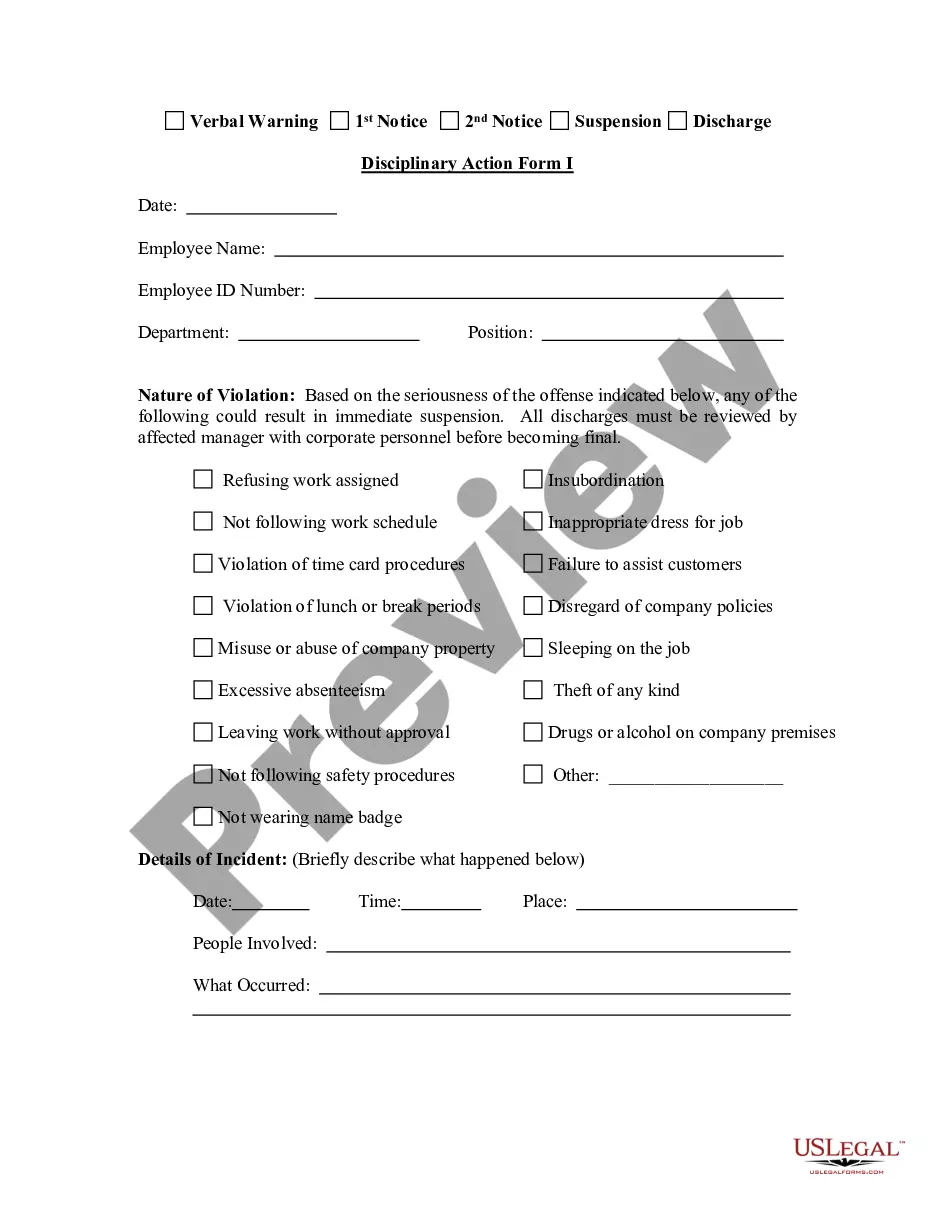
Description
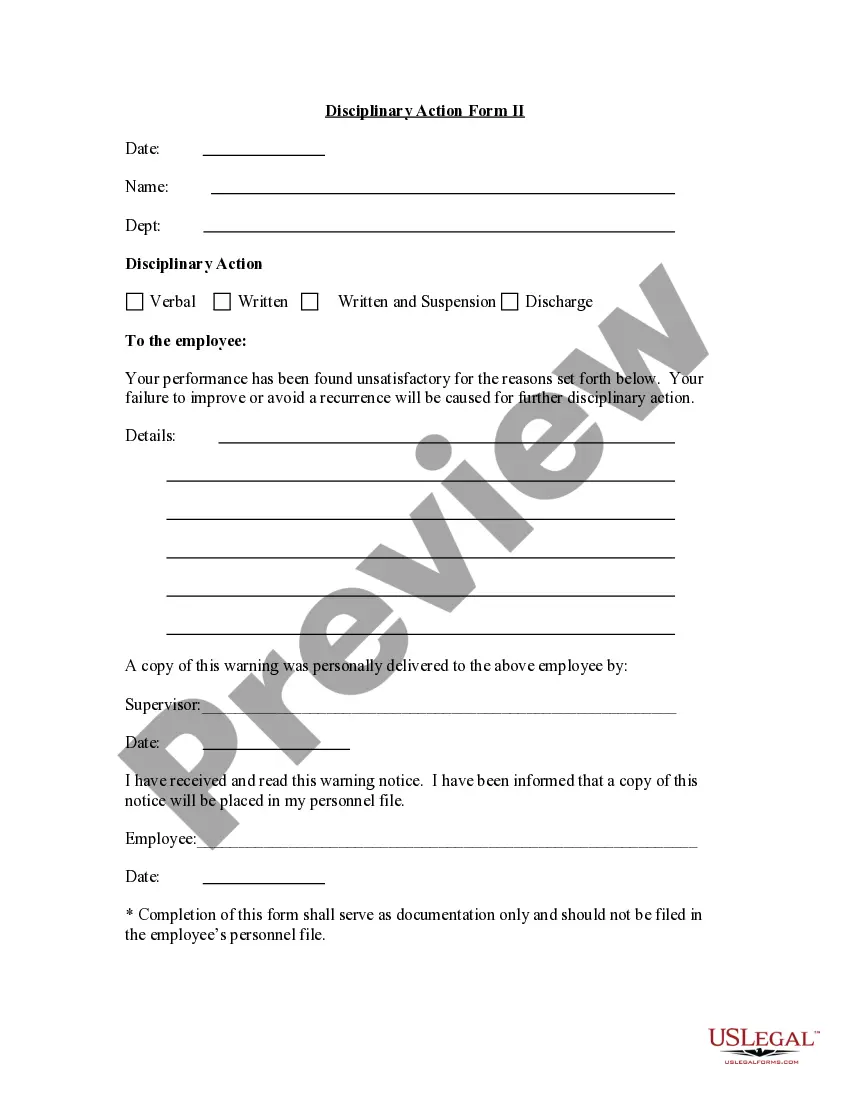
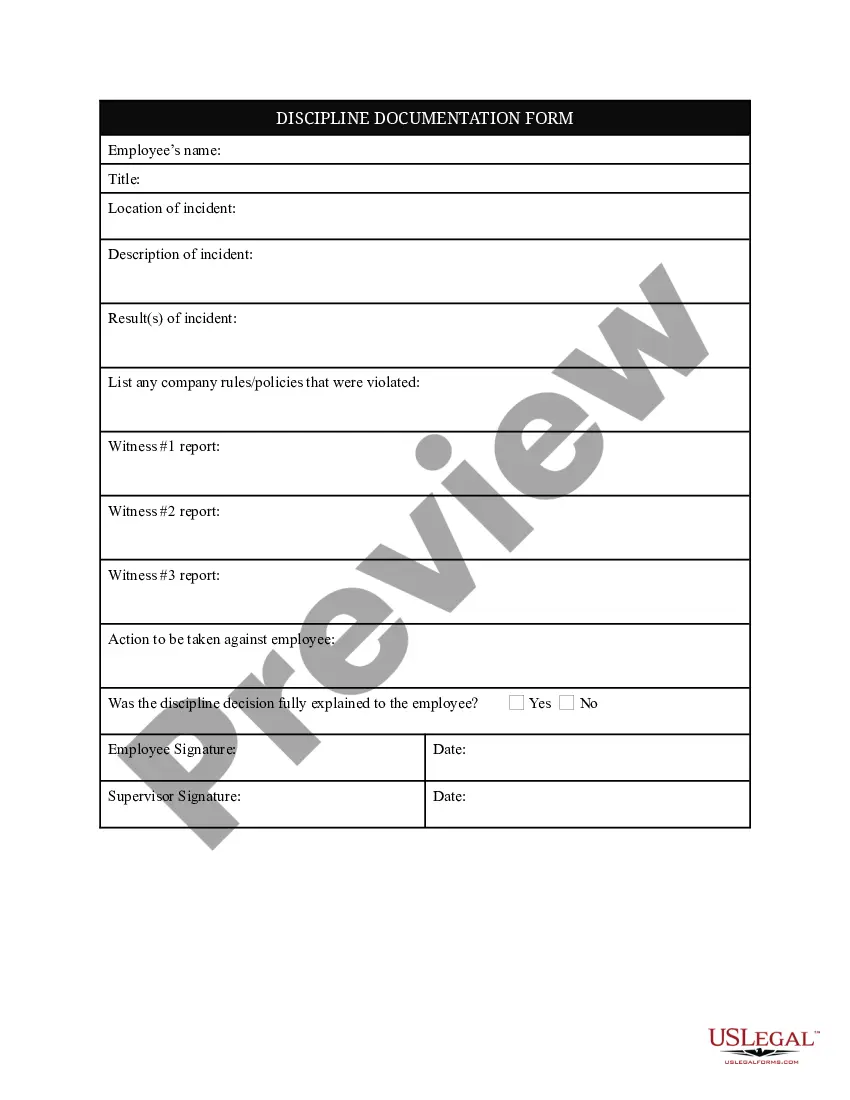
Get your form ready online
Our built-in tools help you complete, sign, share, and store your documents in one place.
Make edits, fill in missing information, and update formatting in US Legal Forms—just like you would in MS Word.
Download a copy, print it, send it by email, or mail it via USPS—whatever works best for your next step.
Sign and collect signatures with our SignNow integration. Send to multiple recipients, set reminders, and more. Go Premium to unlock E-Sign.
If this form requires notarization, complete it online through a secure video call—no need to meet a notary in person or wait for an appointment.
We protect your documents and personal data by following strict security and privacy standards.

Make edits, fill in missing information, and update formatting in US Legal Forms—just like you would in MS Word.

Download a copy, print it, send it by email, or mail it via USPS—whatever works best for your next step.

Sign and collect signatures with our SignNow integration. Send to multiple recipients, set reminders, and more. Go Premium to unlock E-Sign.

If this form requires notarization, complete it online through a secure video call—no need to meet a notary in person or wait for an appointment.

We protect your documents and personal data by following strict security and privacy standards.
Looking for another form?
How to fill out Record Of Separation From Employment?
Finding the appropriate legal document template can be challenging.
Of course, there are numerous templates available online, but how can you locate the legal form you require.
Utilize the US Legal Forms website. This service provides thousands of templates, including the New Mexico Record of Termination of Employment, suitable for both business and personal uses.
Firstly, ensure that you have selected the correct form for your city/state. You can browse the form using the Preview option and read the form description to confirm that it is appropriate for you.
- All forms are verified by experts and satisfy both federal and state regulations.
- If you are already registered, Log In to your account and click on the Download button to obtain the New Mexico Record of Termination of Employment.
- Use your account to browse the legal forms you may have previously purchased.
- Visit the My documents section of your account to get another copy of the document you need.
- If you are a new user of US Legal Forms, here are some simple steps to follow.
Form popularity
FAQ
The effective date of a separation is the day after the last day worked on the job except in the following circumstances. In the following cases, the effective date of separation is the day after the end of these events: an unpaid leave of absence for any reason.
Also referred to as a separation from employment, a termination can be voluntary (the employee's decision) or involuntary (the employer's decision).
When an employee is terminated without prejudice, it means that he or she has been separated from the job for reasons other than his or her work performance, attitude, or behavior. Employees who are terminated without prejudice are eligible to be rehired by the company into the same role or a similar one.
A separated employee is one who leaves an employment situation for any reason, whether voluntary or involuntary. A terminated employee is involuntarily let go, usually because of poor performance or lack of work.
Employment separation refers to the end of an employee's working relationship with a company. This can happen when an employment contract or an at-will agreement between an employer and an employee ends.
Employment separation refers to the end of an employee's working relationship with a company. This can happen when an employment contract or an at-will agreement between an employer and an employee ends.
A separated employee is one who leaves an employment situation for any reason, whether voluntary or involuntary. A terminated employee is involuntarily let go, usually because of poor performance or lack of work.
When a company ends an employee's job, they typically provide a termination letter, also called a letter of separation, stating the reason for termination and next steps. A termination letter is an official and professional way to document and describe the separation between the employee and employer.
Employee separation or separation of employment refers to the process of managing the end of the employment cycle. There are many different types of separations which include both voluntary and involuntary. ESC recommends a formal process for all types of separation.