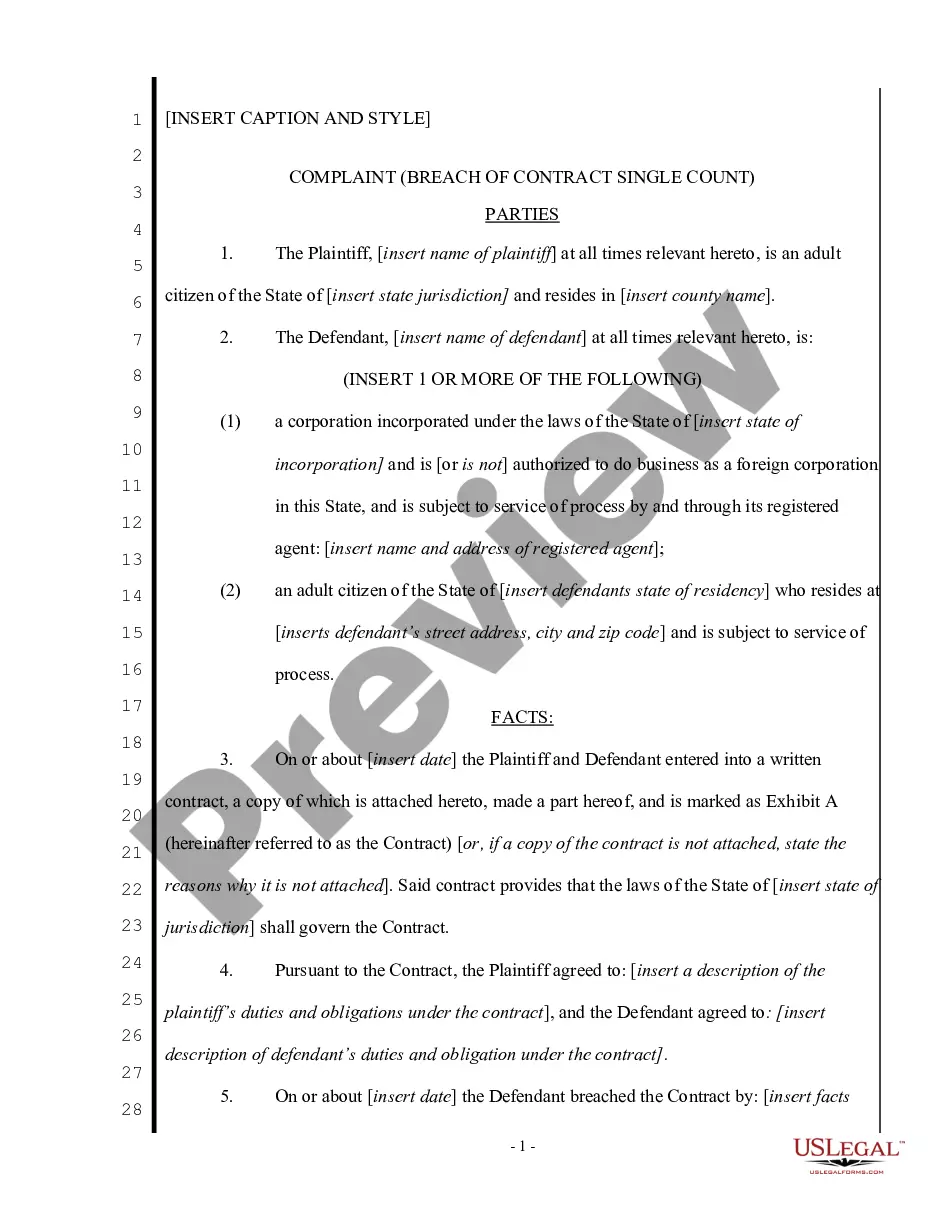
New Jersey Complaint by Municipality Against Contractor for Breach of Contract
Understanding this form
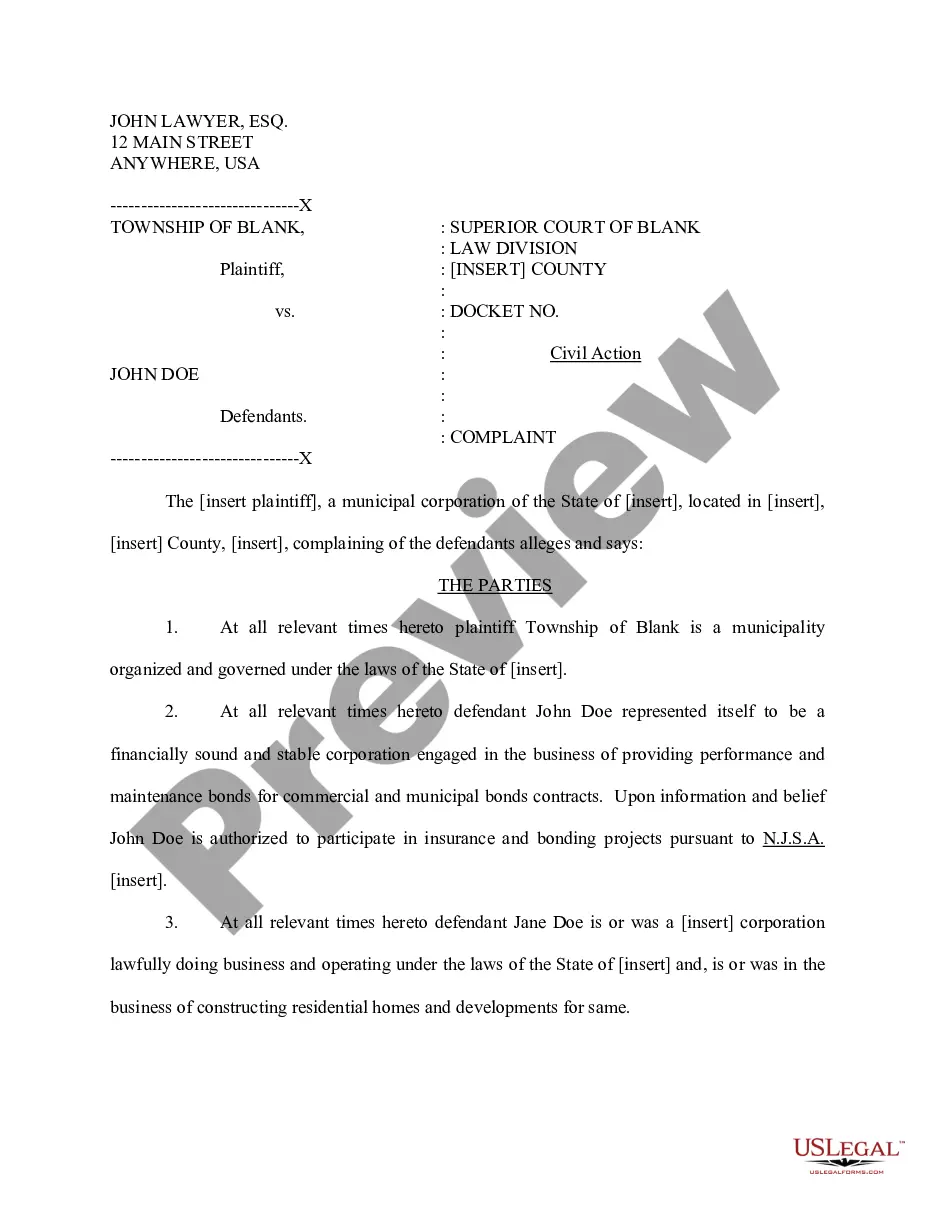
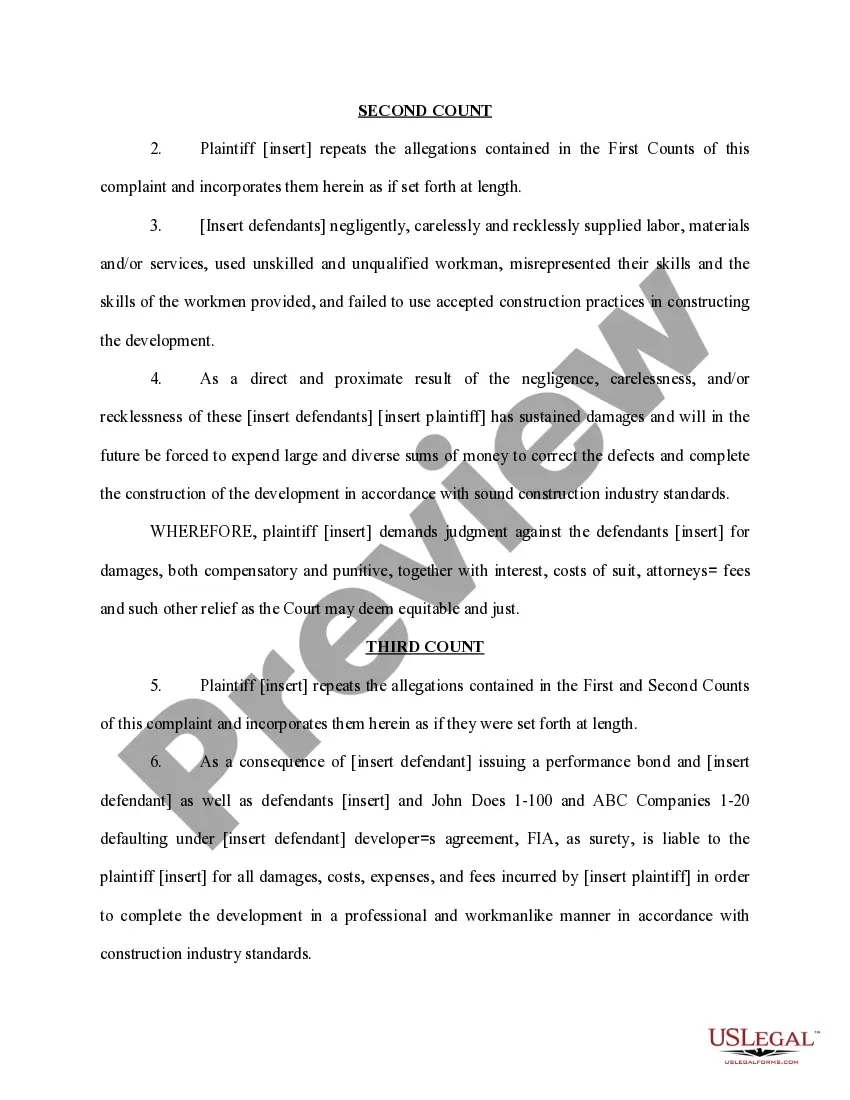
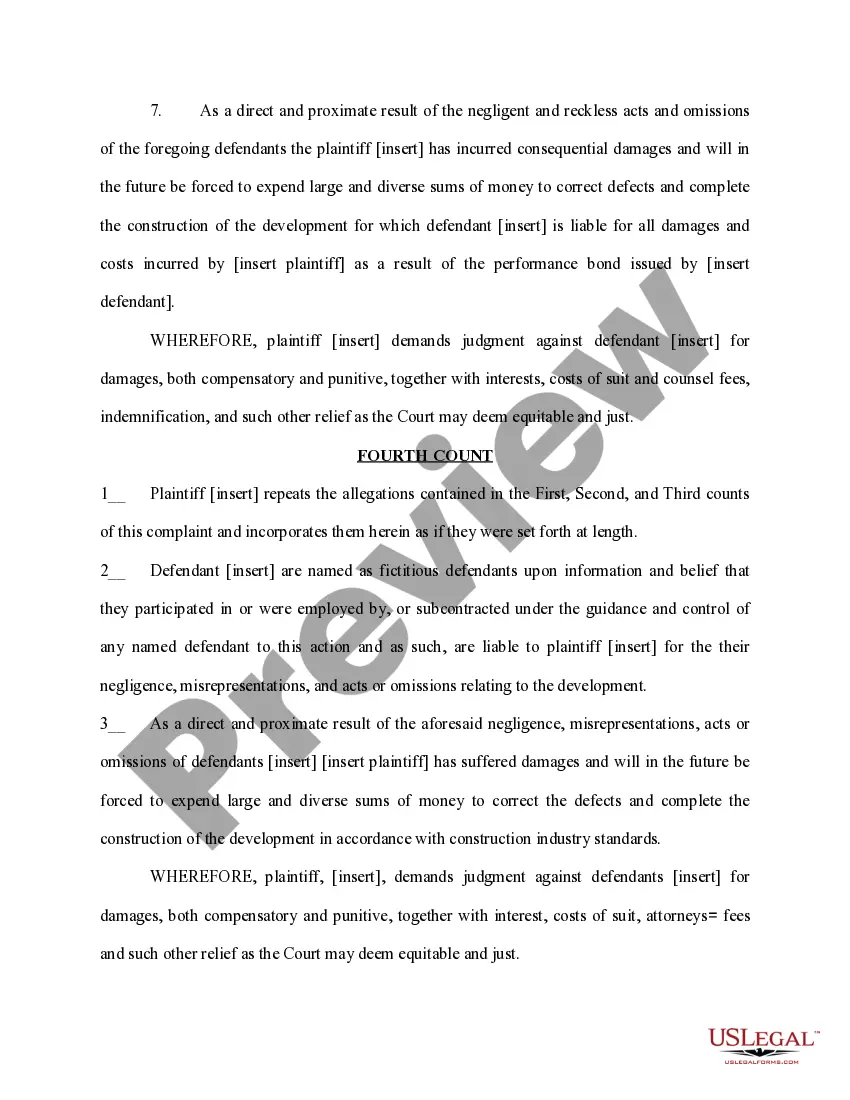
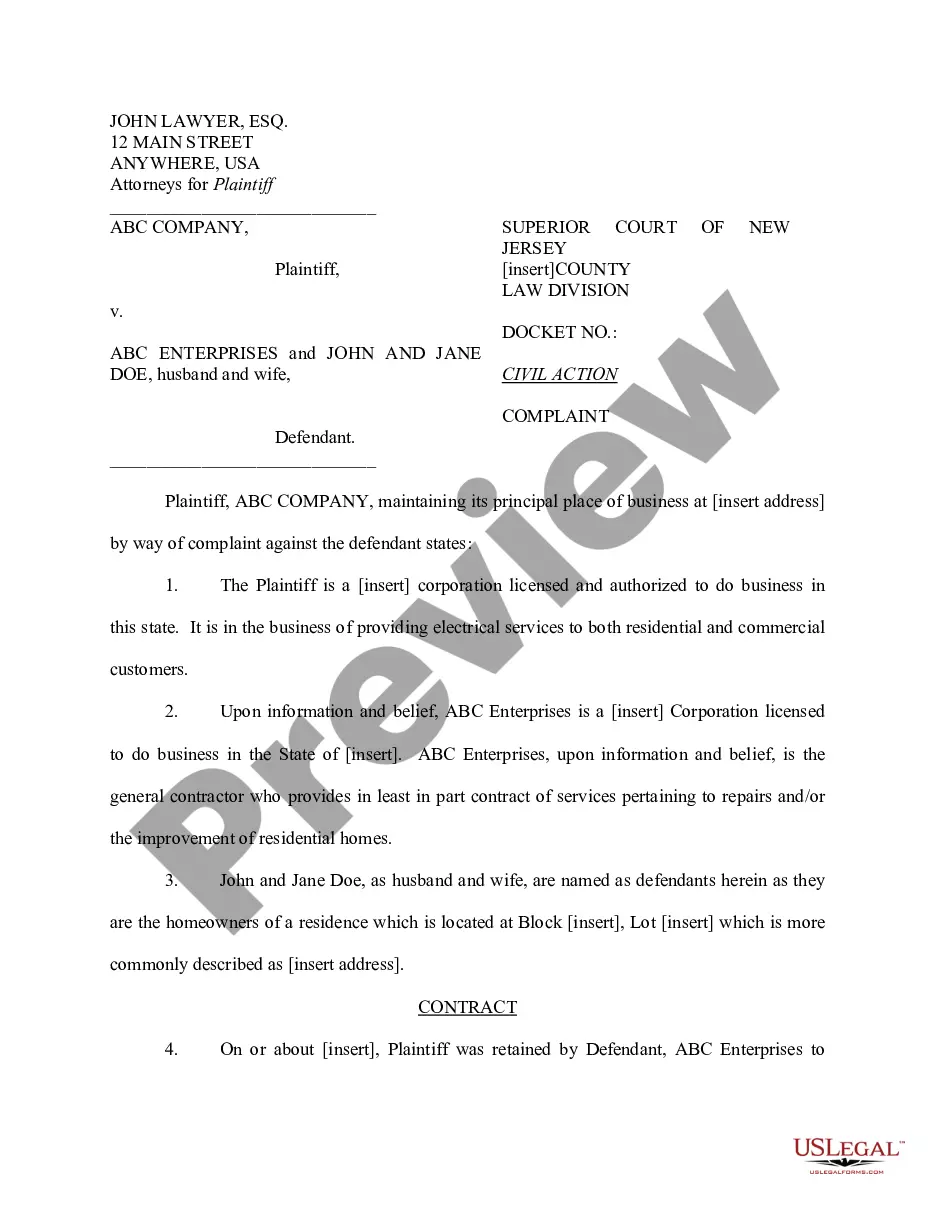
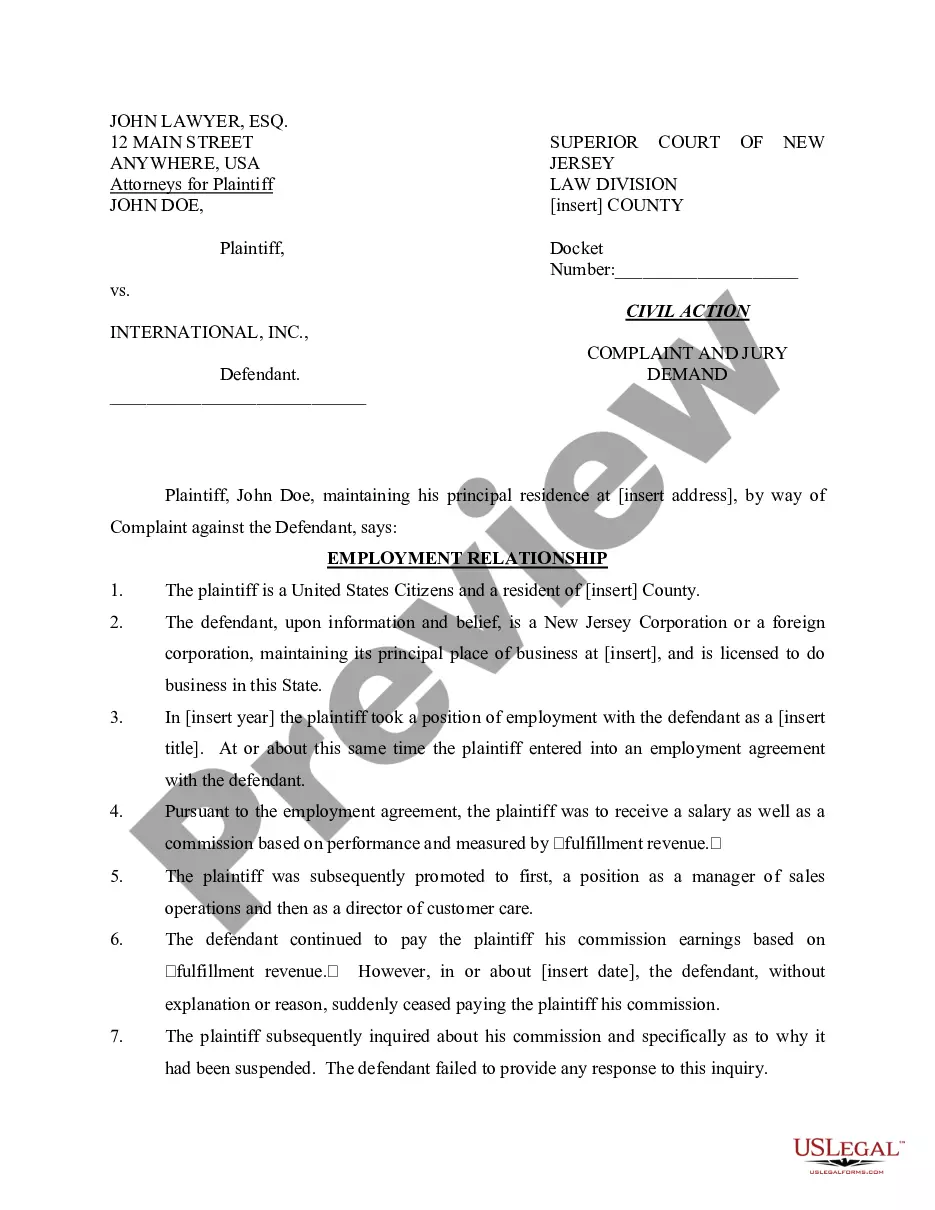
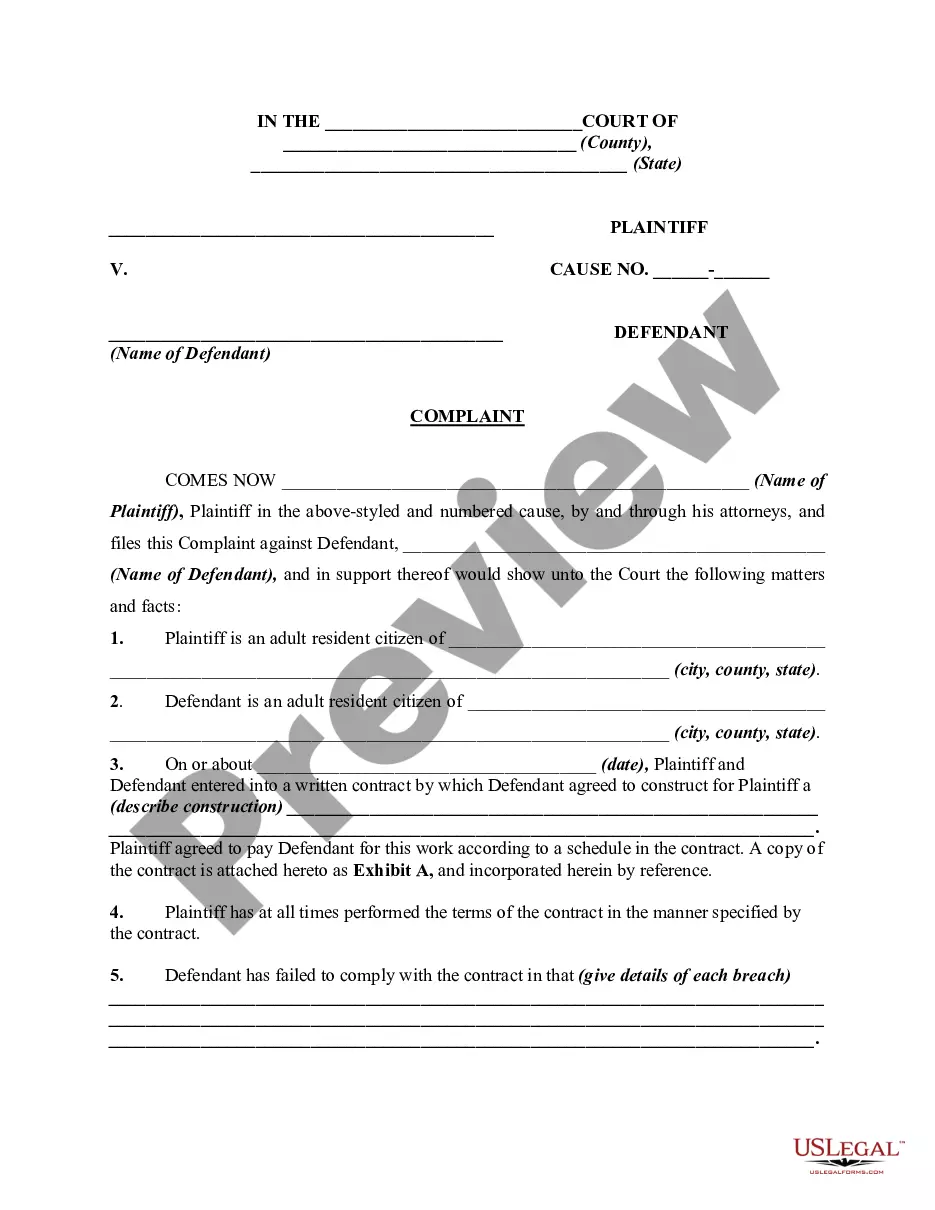
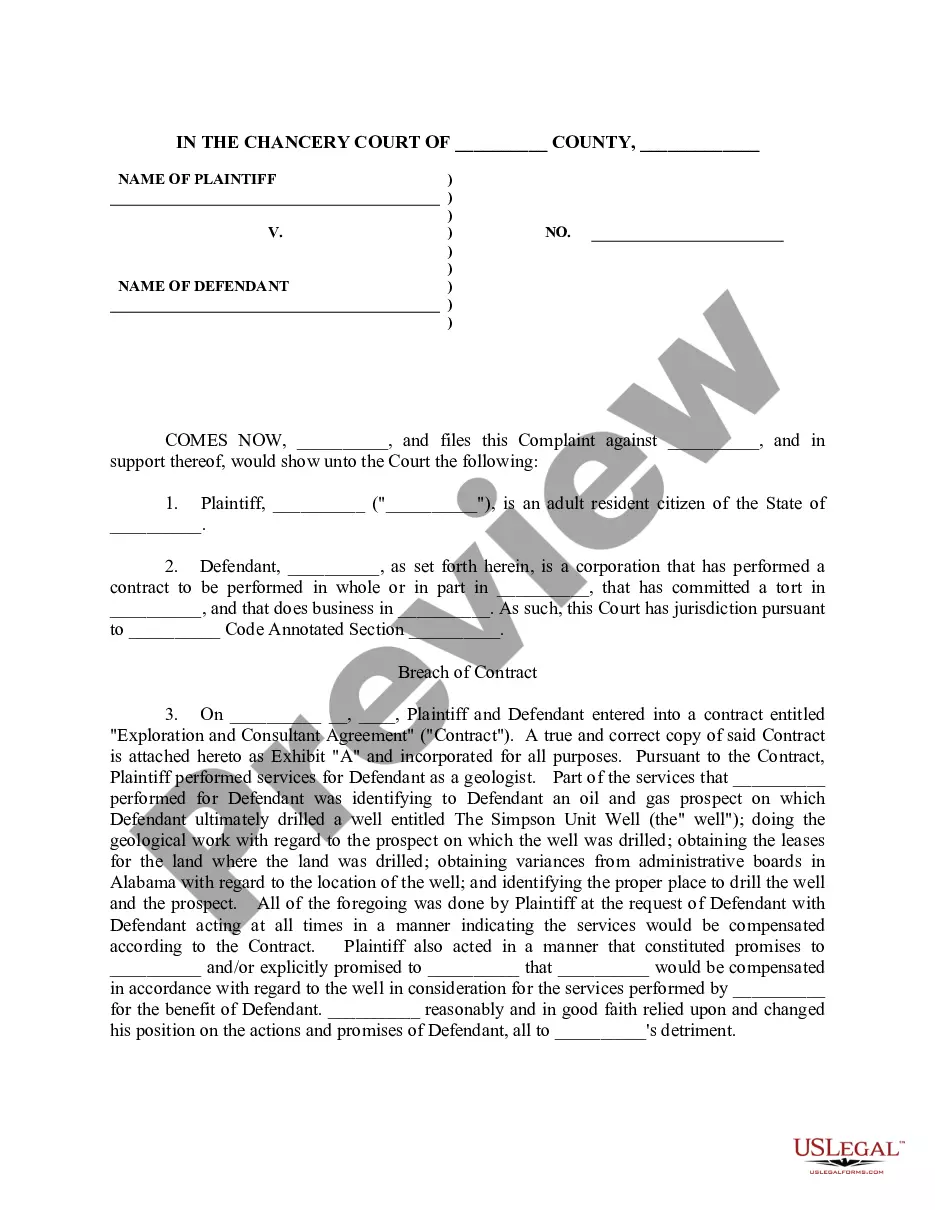
The Complaint by Municipality Against Contractor for Breach of Contract is a legal document used by a municipality to initiate a civil action against a contractor accused of failing to meet the terms of a construction contract. This form specifically addresses breaches related to construction projects, distinguishing it from other complaint forms that may not involve contractual disputes. By using this form, municipalities can seek remedies for damages resulting from the contractor's actions or negligence.
What’s included in this form
- Parties involved: Identifies the plaintiff (municipality) and defendants (contractors).
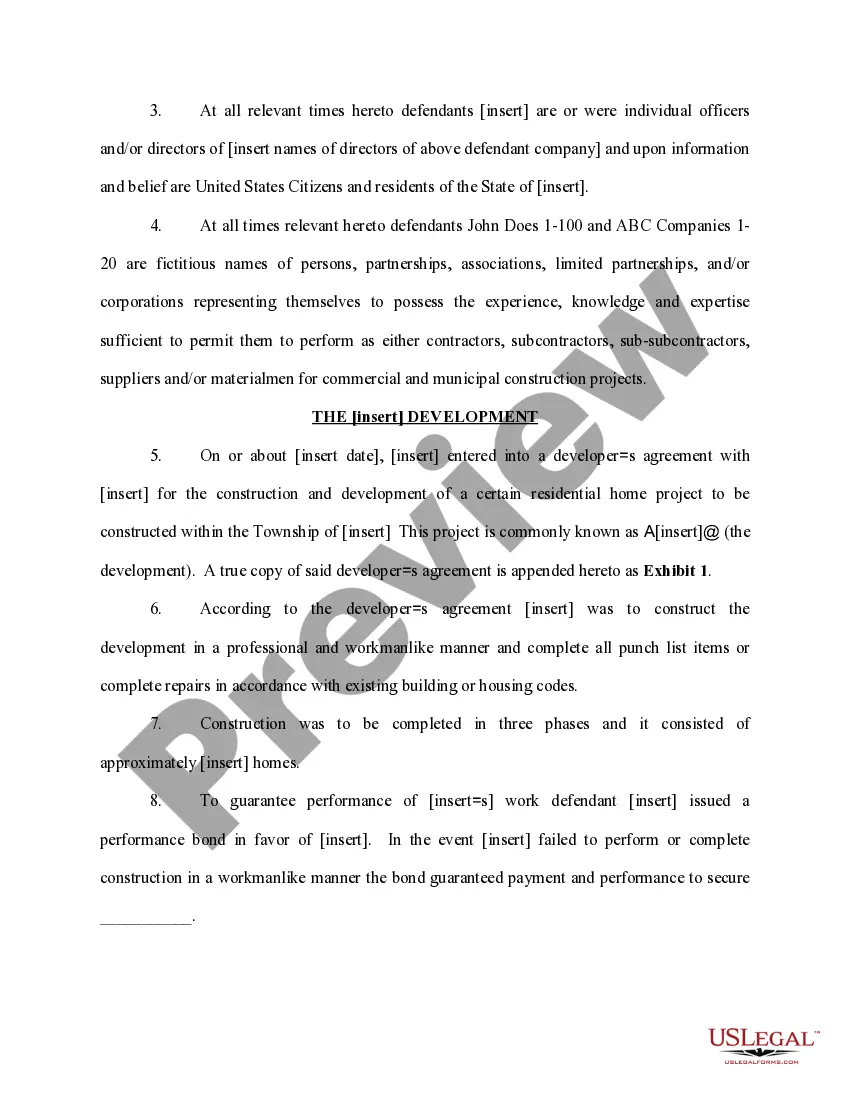
- Details of the development: Provides context about the construction project and its contractual terms.
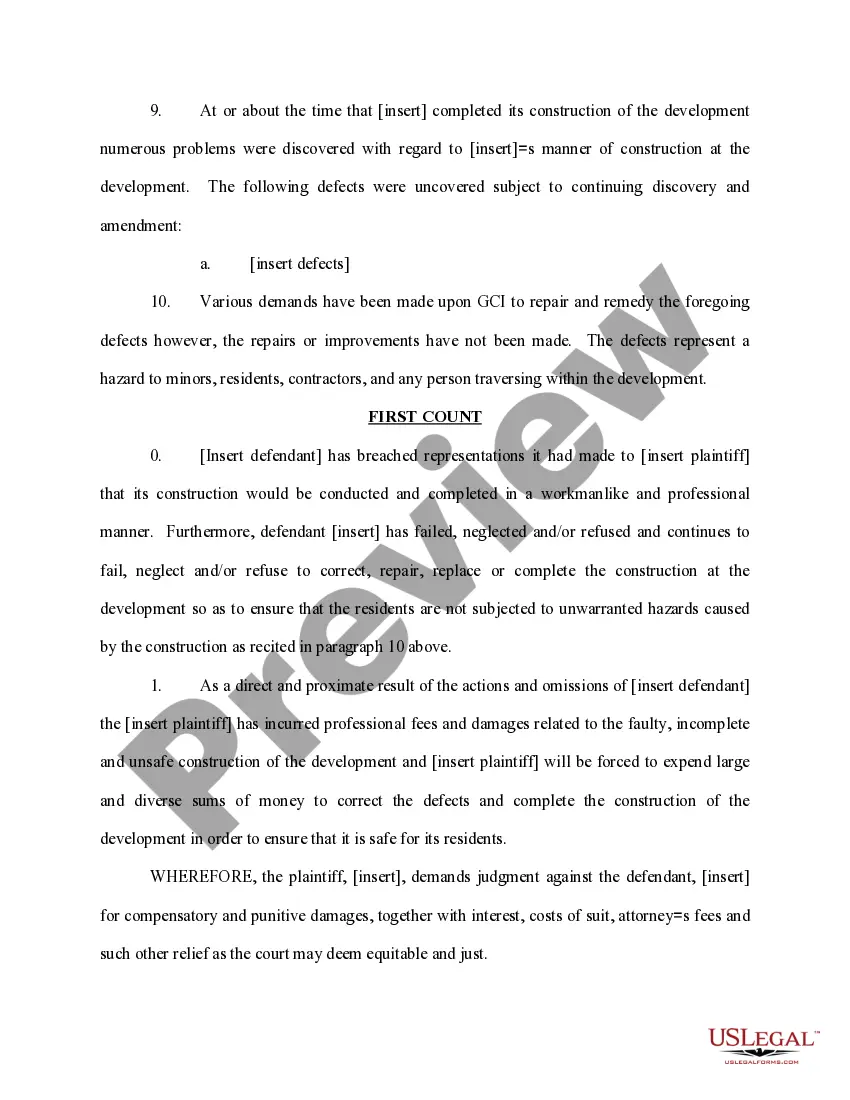
- Allegations: Specifies the breach of contract and any defects in construction.
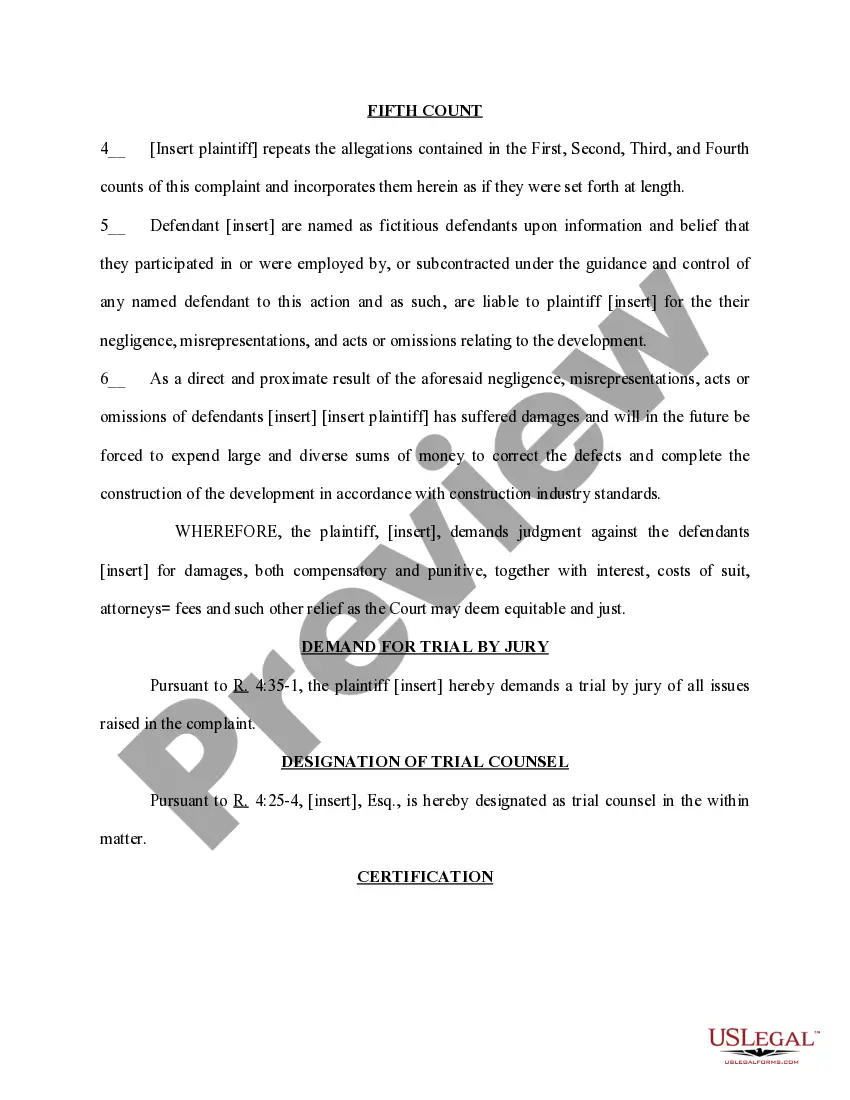
- Claims for relief: Outlines the damages sought, including compensatory and punitive damages.
- Trial demands: Includes a request for a jury trial if applicable.
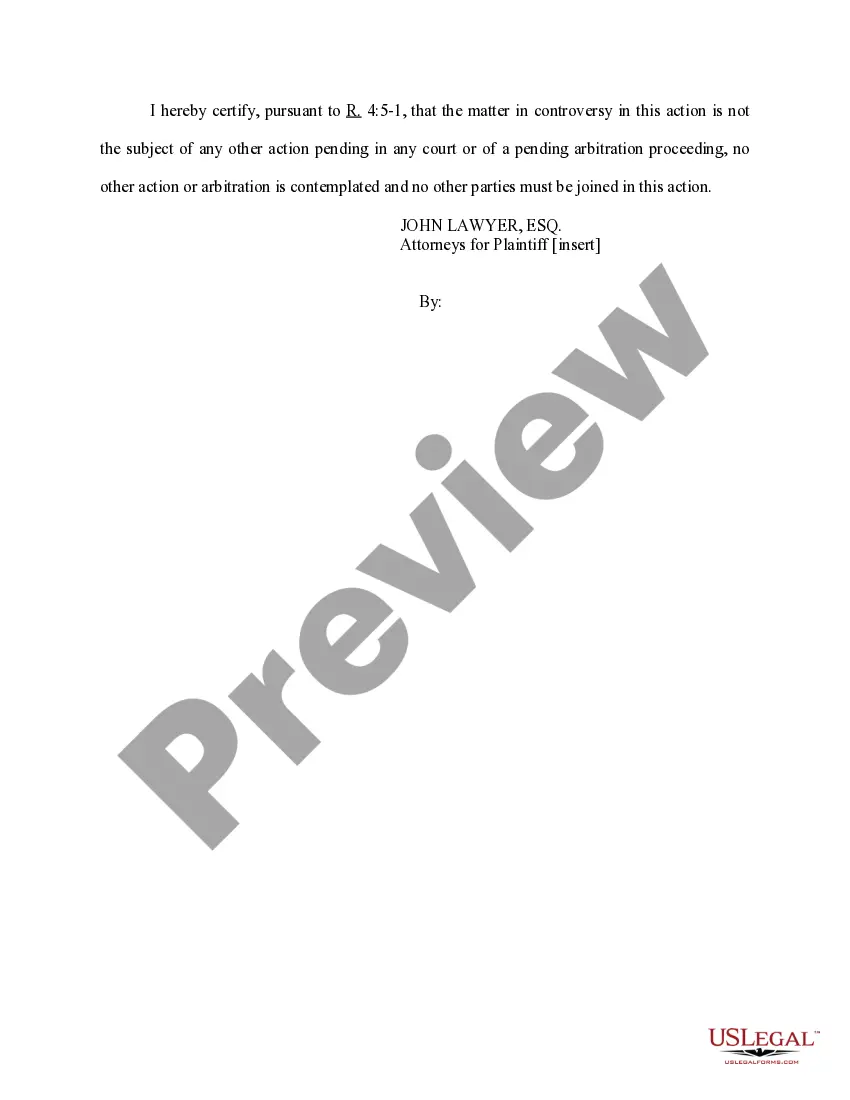
- Certification statement: Confirms that the matter is not currently in other legal proceedings.
When to use this document
This form is needed when a municipality needs to hold a contractor accountable for not fulfilling their contractual obligations in a construction project. Situations may include poor workmanship, failure to complete the project on time, or construction defects that pose hazards to the community. The form allows municipalities to formally assert their claims and seek remedies through the court system.
Who can use this document
- Municipalities that have entered into a construction contract with a contractor.
- Municipal officials or legal representatives responsible for overseeing construction projects.
- Attorneys representing municipalities in breach of contract cases.
Steps to complete this form
- Identify the parties: Fill in the names and details of the plaintiff (municipality) and defendants (contractors).
- Specify the development: Provide information about the construction project, including its name and location.
- State the breaches: Clearly outline the specific breaches of contract and construction defects encountered.
- List the damages: Indicate the compensatory and punitive damages sought as a result of the breach.
- Complete the demand for trial: Include a request for a jury trial if desired.
- Review and certify: Ensure all information is accurate and sign the certification statement.
Notarization guidance
This form does not typically require notarization to be legally valid. However, some jurisdictions or document types may still require it. US Legal Forms provides secure online notarization powered by Notarize, available 24/7 for added convenience.
Get your form ready online
Our built-in tools help you complete, sign, share, and store your documents in one place.
Make edits, fill in missing information, and update formatting in US Legal Forms—just like you would in MS Word.
Download a copy, print it, send it by email, or mail it via USPS—whatever works best for your next step.
Sign and collect signatures with our SignNow integration. Send to multiple recipients, set reminders, and more. Go Premium to unlock E-Sign.
If this form requires notarization, complete it online through a secure video call—no need to meet a notary in person or wait for an appointment.
We protect your documents and personal data by following strict security and privacy standards.

Make edits, fill in missing information, and update formatting in US Legal Forms—just like you would in MS Word.

Download a copy, print it, send it by email, or mail it via USPS—whatever works best for your next step.

Sign and collect signatures with our SignNow integration. Send to multiple recipients, set reminders, and more. Go Premium to unlock E-Sign.

If this form requires notarization, complete it online through a secure video call—no need to meet a notary in person or wait for an appointment.

We protect your documents and personal data by following strict security and privacy standards.
Mistakes to watch out for
- Failing to fully identify all parties involved in the dispute.
- Not providing sufficient details about the breaches or defects.
- Omitting necessary signatures or certifications.
- Using vague language that may undermine the claims made in the complaint.
- Not adhering to the local rules regarding filing or formatting of the complaint.
Benefits of completing this form online
- Convenience: Access and complete the form from anywhere, anytime.
- Editability: Easily modify sections to tailor the form to your specific case.
- Reliability: Forms drafted by licensed attorneys ensure legal compliance and accuracy.
Looking for another form?


Form popularity
FAQ
The New Jersey Division of Consumer Affairs (DCA) is a governmental agency in the U.S. state of New Jersey that is responsible for protecting the public "from fraud, deceit and misrepresentation in the sale of goods and services." The DCA operates within the New Jersey Department of Law and Public Safety in the office
Filing a construction lien on residential projects requires filing a Notice of Unpaid Balance and Right to File Lien within 90 days of the last day of service. The homeowner must also get a copy of that notice within 10 days of its filing.
Consumers who believe they have been cheated or scammed by a business, or suspect any other form of consumer abuse, can file a complaint with the State Division of Consumer Affairs by visiting its website or by calling 1-800-242-5846 (toll free within New Jersey ) or 973-504-6200.
The filing of a Residential Lien Claim is a two step process. BOTH STEPS MUST BE COMPLETED WITHIN 120 DAYS. Within 60 days of the last furnishing of labor or materials, a lien claimant must file a Notice of Unpaid Balance along with a demand for arbitration.
Submit an arbitration demand (for residential projects) Prepare your mechanics lien form. Record your mechanics lien in the local county clerk's office. Serve a copy of the mechanics lien on all higher tier parties. Enforce/Release the mechanics lien.
You should also keep an additional copy of any document filed with the Court for your own records. All copies of the complaint must be identical to the original. FILING FEE The filing fee for a civil complaint is $400.00.
As a general rule, municipalities in New Jersey have long held what is known as sovereign immunity, meaning they cannot be sued for personal injury. This immunity covers cities, towns, counties, school districts and the state of New Jersey.
Obtain the full mailing address of the debtor. Request a Statement for Docketing form from the Clerk of the Special Civil Part in the county where you initially filed your small claims lawsuit.
Anyone who makes or causes to make improvements by providing work or materials in Alberta for an owner, contractor or subcontractor may file an Alberta Builders Lien.