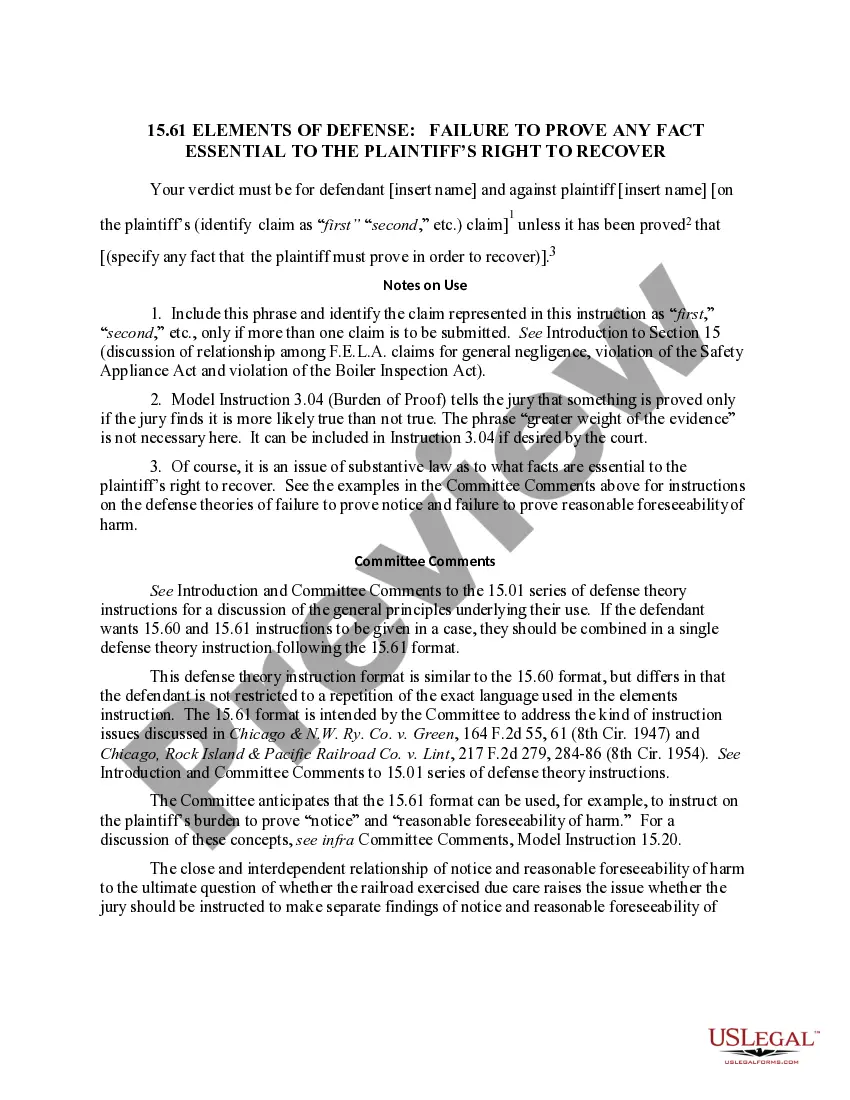
New Mexico Assertion of Right to Be Present
Description
Get your form ready online
Our built-in tools help you complete, sign, share, and store your documents in one place.
Make edits, fill in missing information, and update formatting in US Legal Forms—just like you would in MS Word.
Download a copy, print it, send it by email, or mail it via USPS—whatever works best for your next step.
Sign and collect signatures with our SignNow integration. Send to multiple recipients, set reminders, and more. Go Premium to unlock E-Sign.
If this form requires notarization, complete it online through a secure video call—no need to meet a notary in person or wait for an appointment.
We protect your documents and personal data by following strict security and privacy standards.

Make edits, fill in missing information, and update formatting in US Legal Forms—just like you would in MS Word.

Download a copy, print it, send it by email, or mail it via USPS—whatever works best for your next step.

Sign and collect signatures with our SignNow integration. Send to multiple recipients, set reminders, and more. Go Premium to unlock E-Sign.

If this form requires notarization, complete it online through a secure video call—no need to meet a notary in person or wait for an appointment.

We protect your documents and personal data by following strict security and privacy standards.
Looking for another form?




How to fill out Assertion Of Right To Be Present?
Locating the appropriate valid document template can be quite challenging. Naturally, there exists a range of designs accessible online, but how can you obtain the valid form you require? Utilize the US Legal Forms website. The service offers thousands of designs, such as the New Mexico Assertion of Right to Be Present, which can be utilized for business and personal purposes. All forms are reviewed by experts and comply with state and federal regulations.
If you are already registered, Log In to your account and click the Acquire button to access the New Mexico Assertion of Right to Be Present. Use your account to search through the legal forms you have previously obtained. Visit the My documents section of your account to download another copy of the document you need.
If you are a new user of US Legal Forms, here are simple instructions you should adhere to: First, ensure you have selected the correct form for your area/state. You can browse the form using the Preview button and read the form description to confirm this is the right one for you. If the form does not meet your needs, use the Search box to find the appropriate form. Once you are certain the form is suitable, click the Buy now button to obtain the form. Choose the pricing plan you desire and enter the necessary details. Create your account and complete the purchase using your PayPal account or credit card. Select the file format and download the valid document template to your device. Complete, edit, and print and sign the acquired New Mexico Assertion of Right to Be Present.
US Legal Forms offers a comprehensive selection of legal templates that cater to various personal and business needs.
- US Legal Forms is the largest repository of legal forms where you can find various document designs.
- Utilize the service to download professionally crafted documents that adhere to state regulations.
- Ensure that your forms meet the required legal standards.
- Take advantage of the extensive variety of templates available.
- Access past forms easily through your account.
- Follow simple steps to obtain legal documents online.
Form popularity
FAQ
Rule 1-010 - Form of pleadings A. Caption; names of parties. Every pleading shall contain a caption setting forth the name of the court, the title of the action, the file number, and a designation as in Paragraph A of Rule 1-007 NMRA.
Rule 1-056 - Summary judgment A. For claimant. A party seeking to recover upon a claim, counterclaim or cross-claim or to obtain a declaratory judgment may move with or without supporting affidavits for a summary judgment in his favor upon all or any part thereof.
The two main options are simply responding to the motion to dismiss by arguing that the claims attacked do sufficiently allege a claim for relief, or, alternatively, the plaintiff may amend the complaint to cure any deficiencies.
If the plaintiff does not take action to continue the proceedings within a reasonable amount of time, it can result in the lack of prosecution. The reason for this could be due to various factors, such as illness, financial difficulties, or lack of interest.
At a motion to dismiss hearing, the parties will stand before a judge who will decide whether to grant the motion or deny it. Note that in many federal (and some state) courts, motions to dismiss may be decided solely ?on the papers? without requiring an actual hearing with the parties.
The purpose of a motion to dismiss for failure to state a claim for relief is to test the legal sufficiency of the claim, not the facts that support it, and the possibility of recovery based on a state of facts provable under the claims bars dismissal. Trujillo v. Berry, 1987-NMCA-072, 106 N.M. 86, 738 P.