New Mexico Living Trust for Husband and Wife with One Child
What is this form?
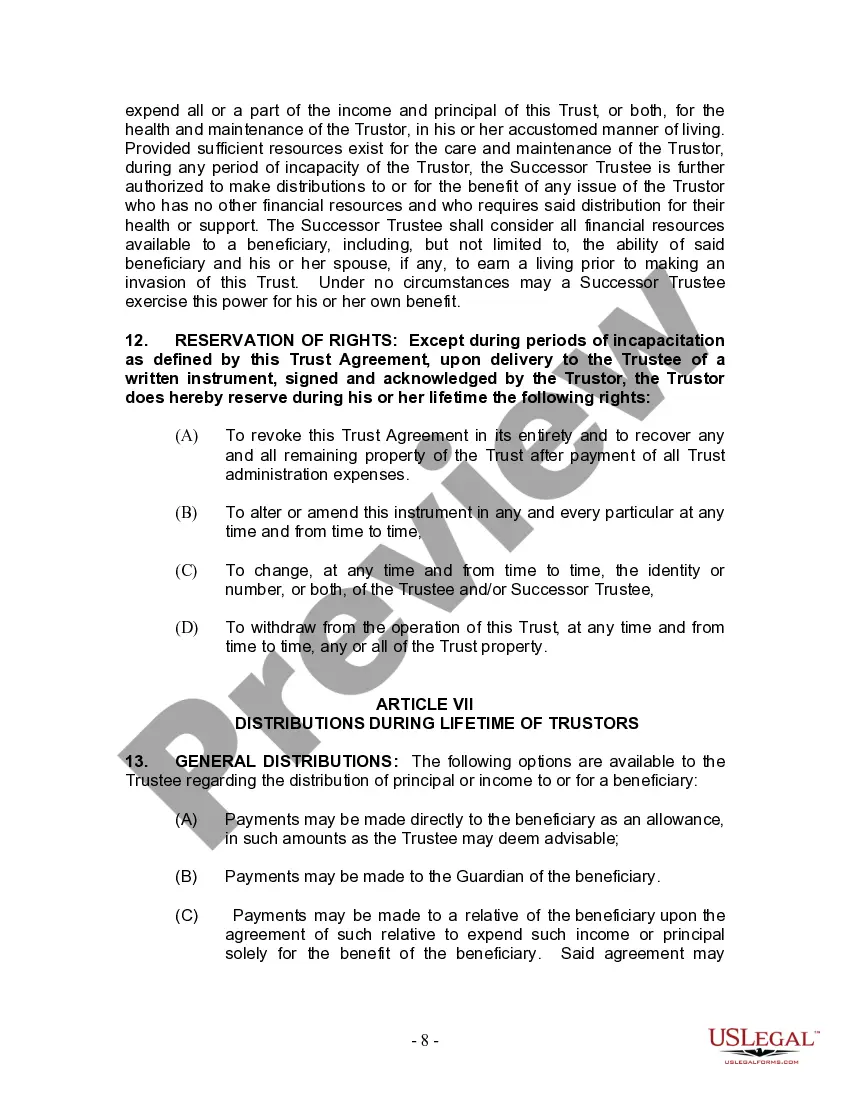
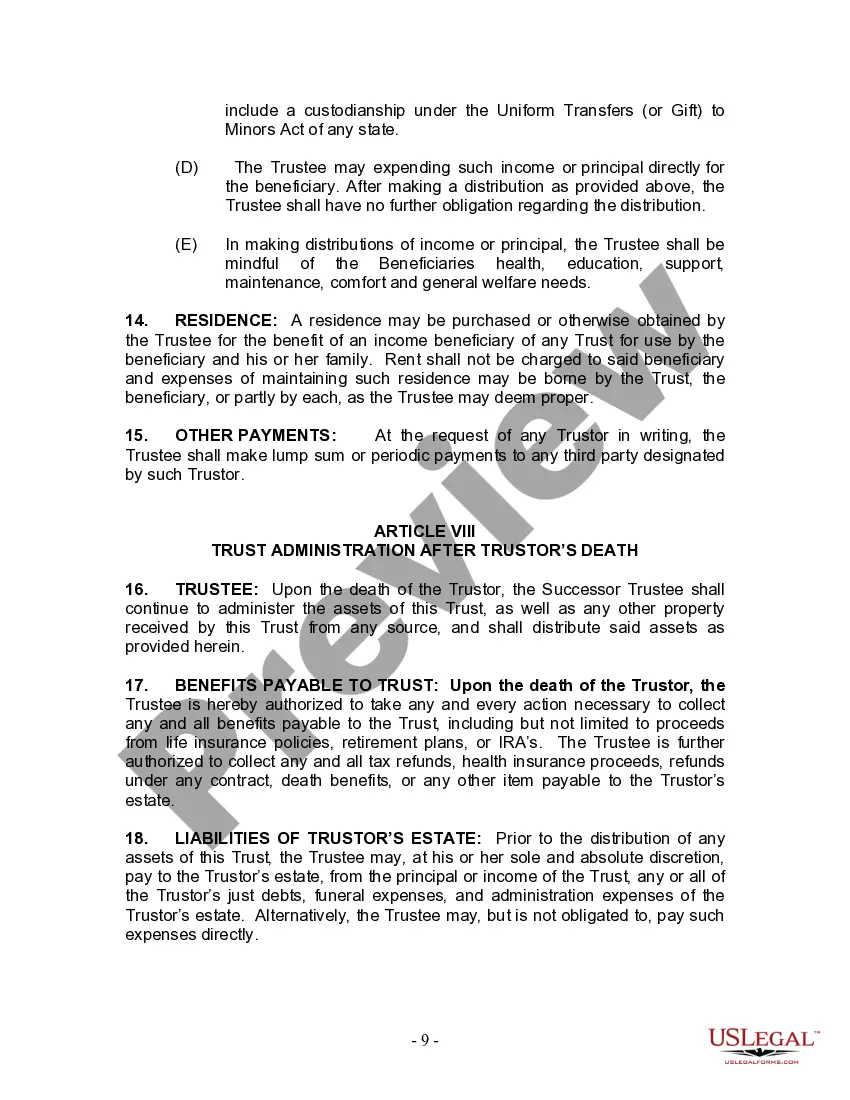
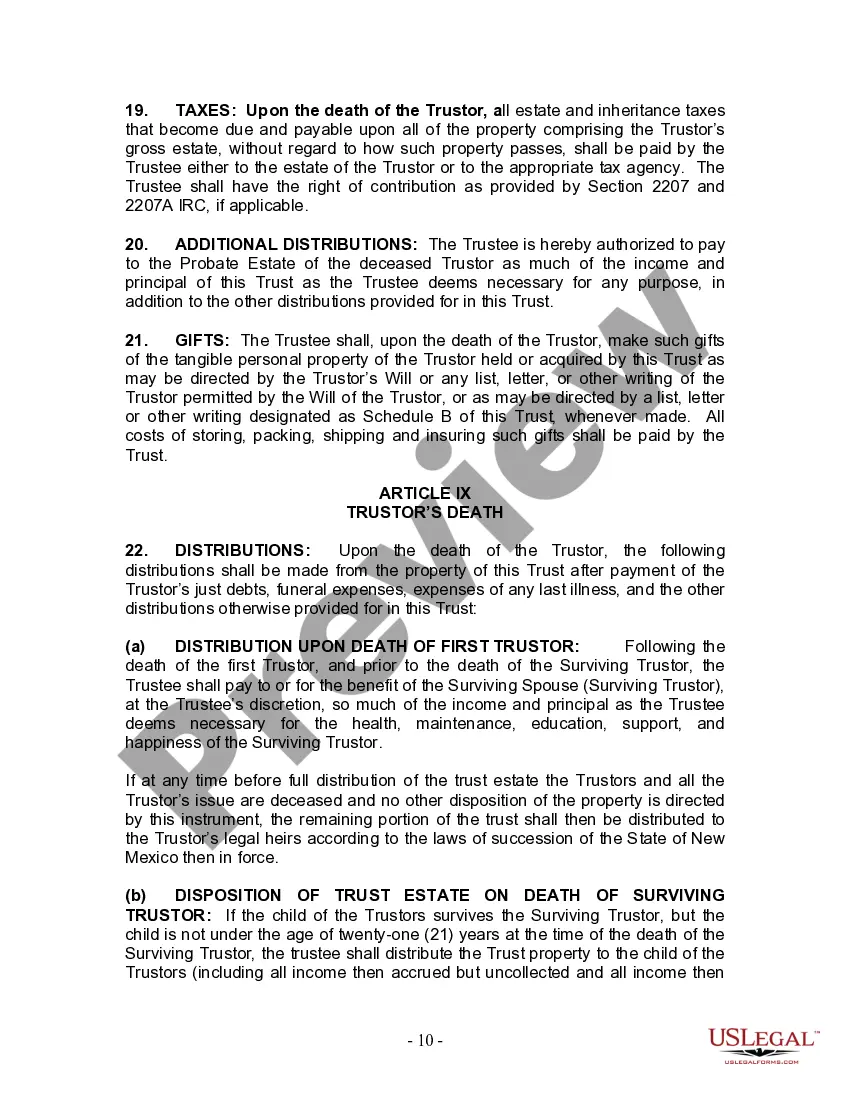
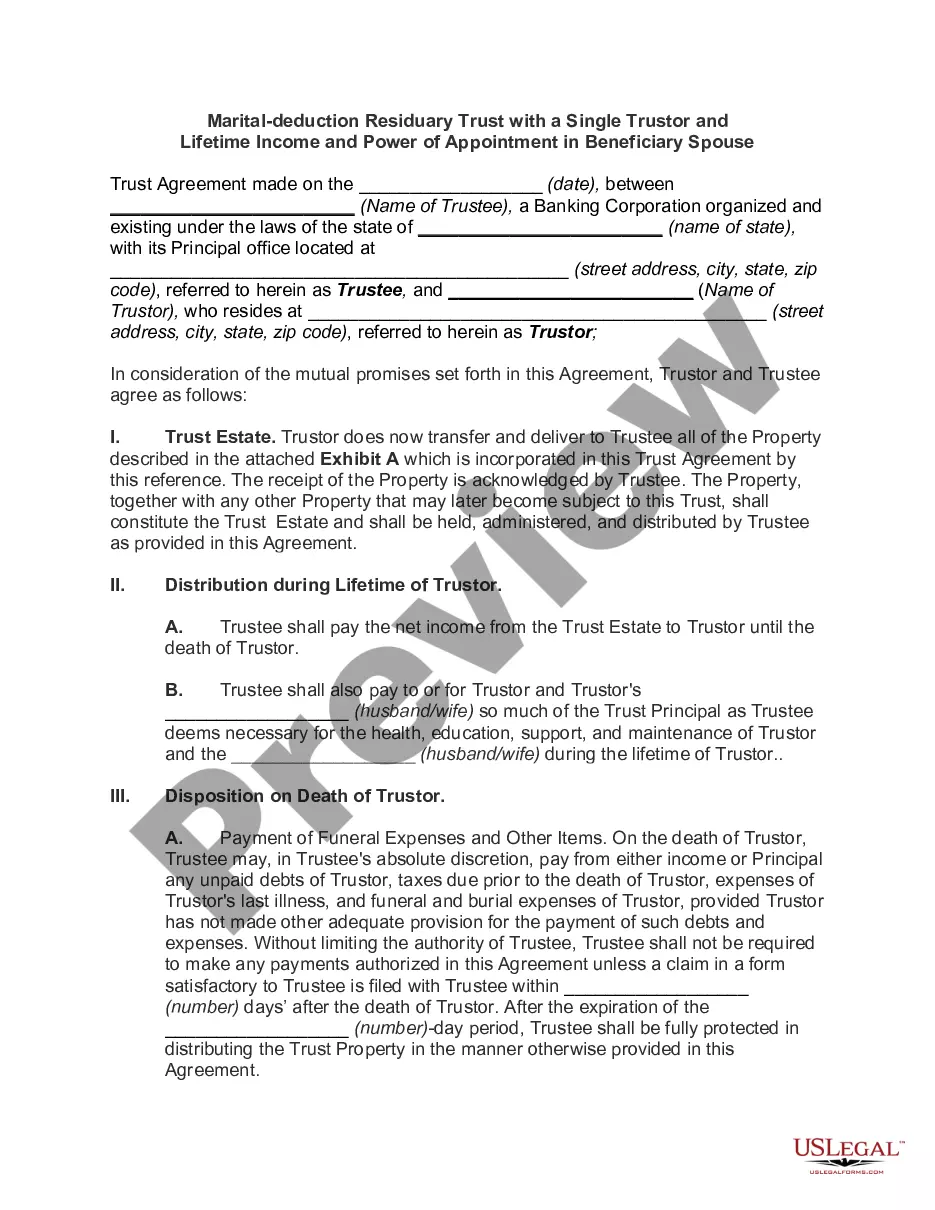
This Living Trust for Husband and Wife with One Child is a legal document designed to create a revocable living trust specifically for a married couple with one child. This type of trust allows the couple to manage their assets during their lifetime and facilitates the transfer of those assets to their child upon their death without going through the probate process. Unlike a simple will, this living trust can offer more privacy and control over asset distribution.
Main sections of this form
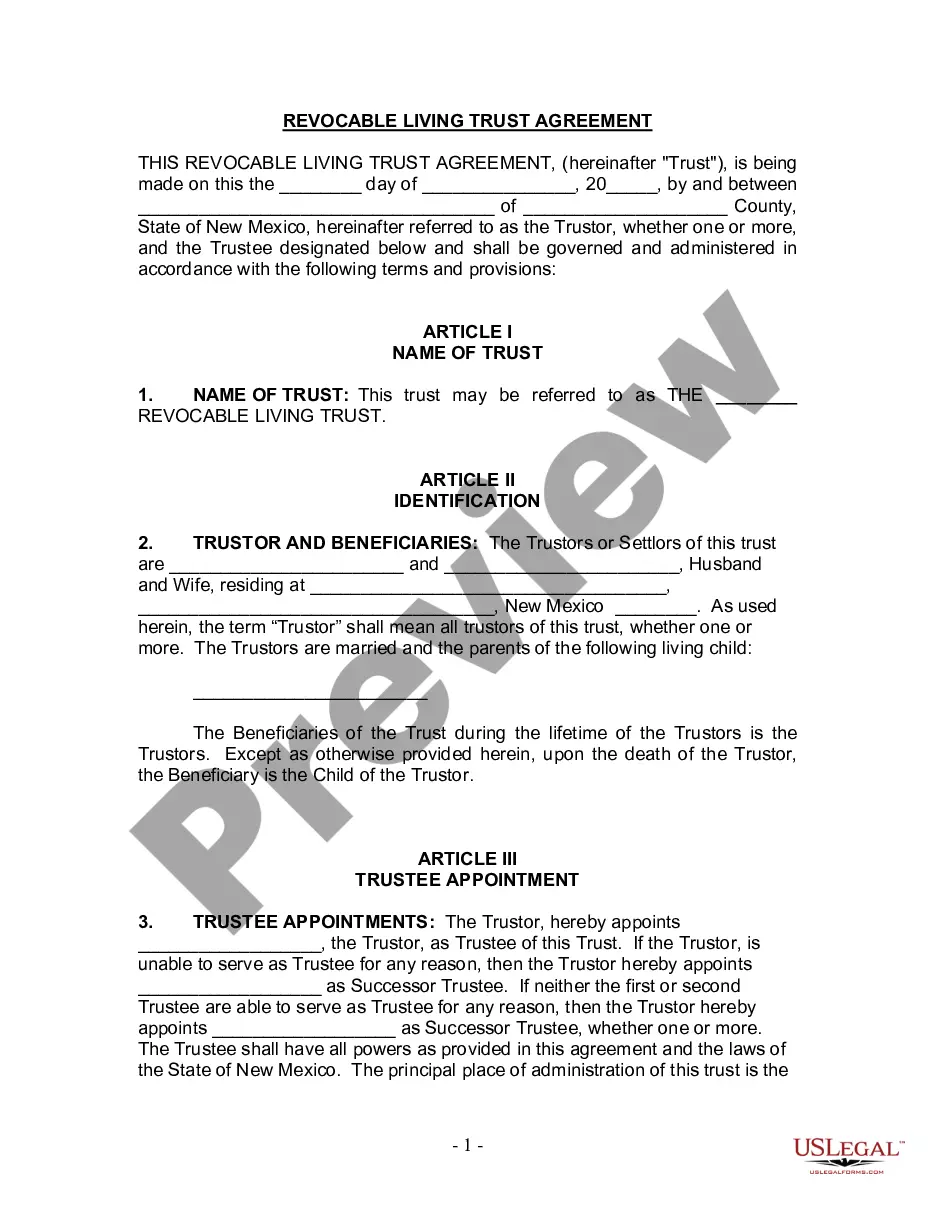
- Trust Name: Designates the specific name of the trust for reference.
- Trustors and Beneficiaries: Identifies the couple as Trustors and their child as the primary beneficiary.
- Trustee Appointment: Designates the couple as Trustees and names successor Trustees.
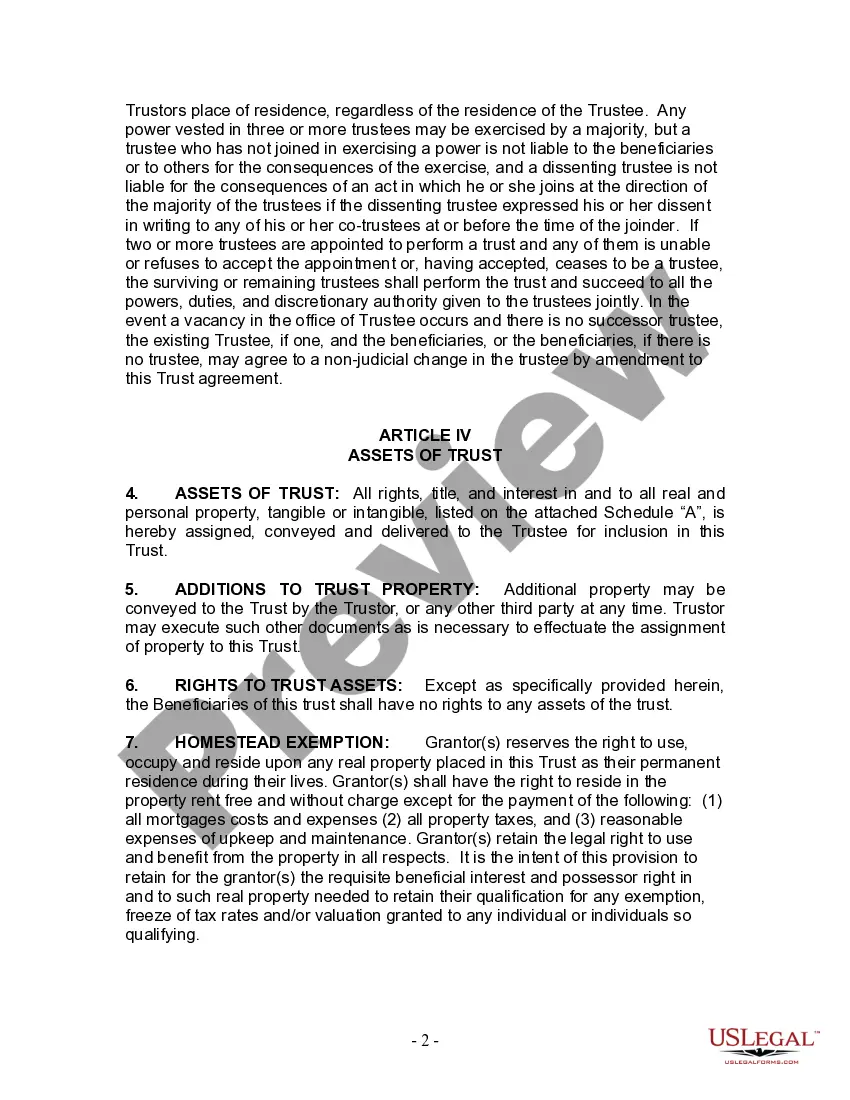
- Assets of Trust: Details all property and assets included in the trust.
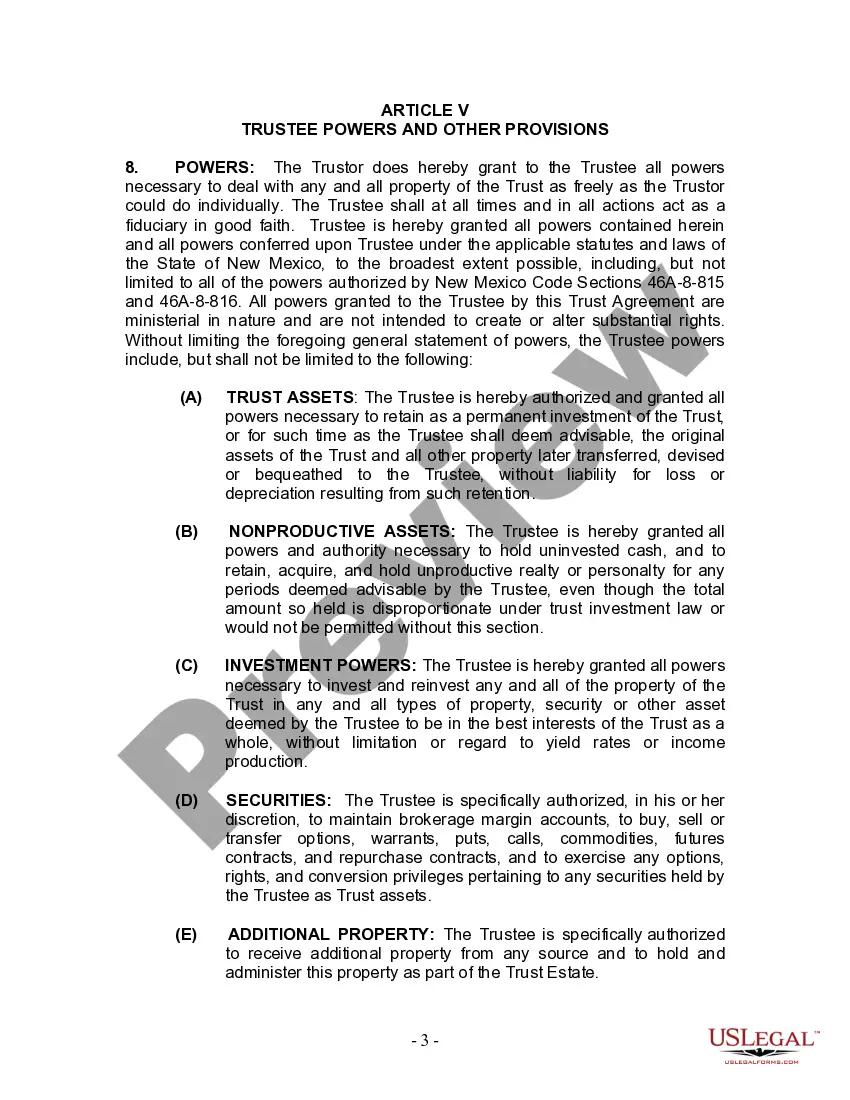
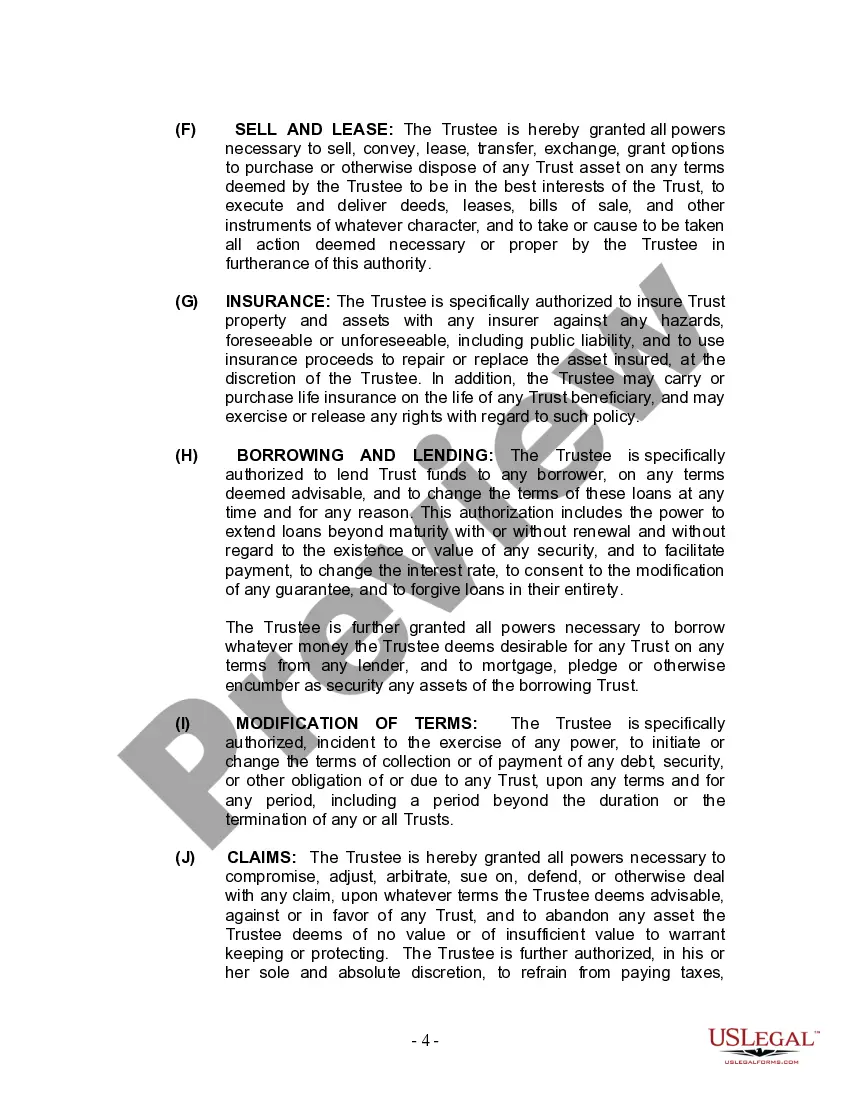
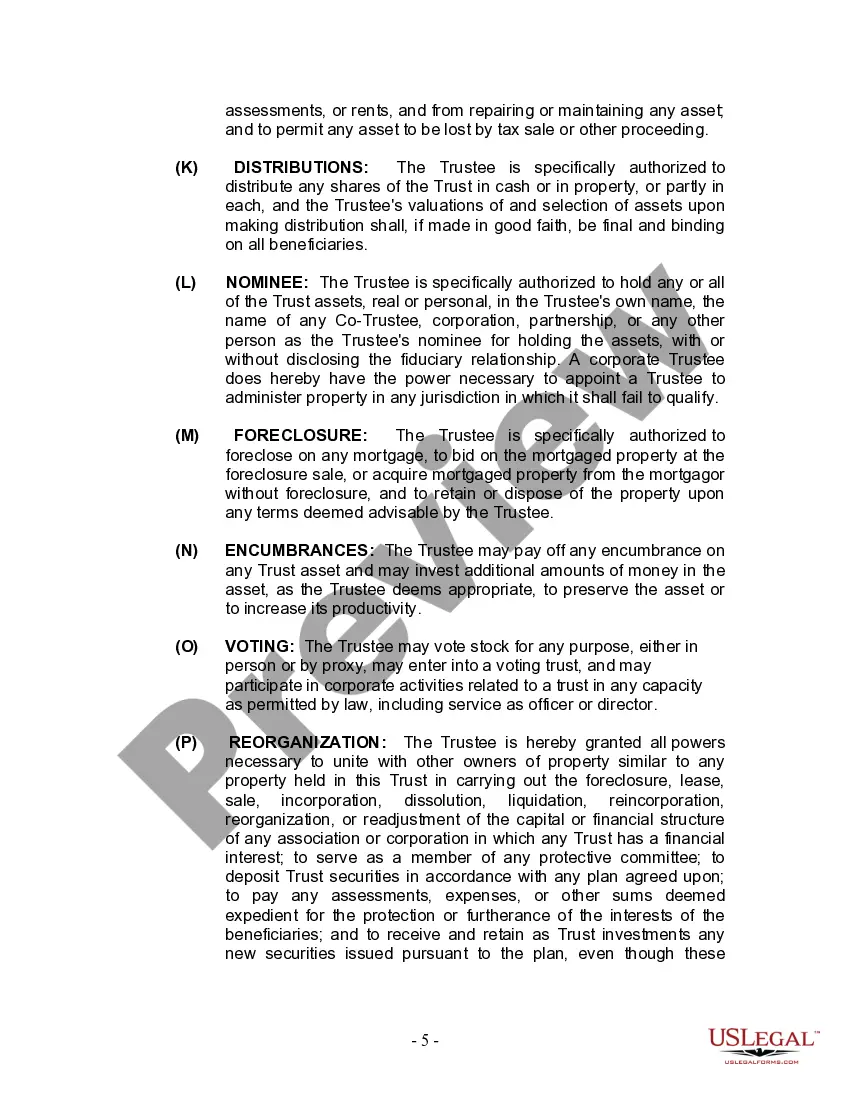
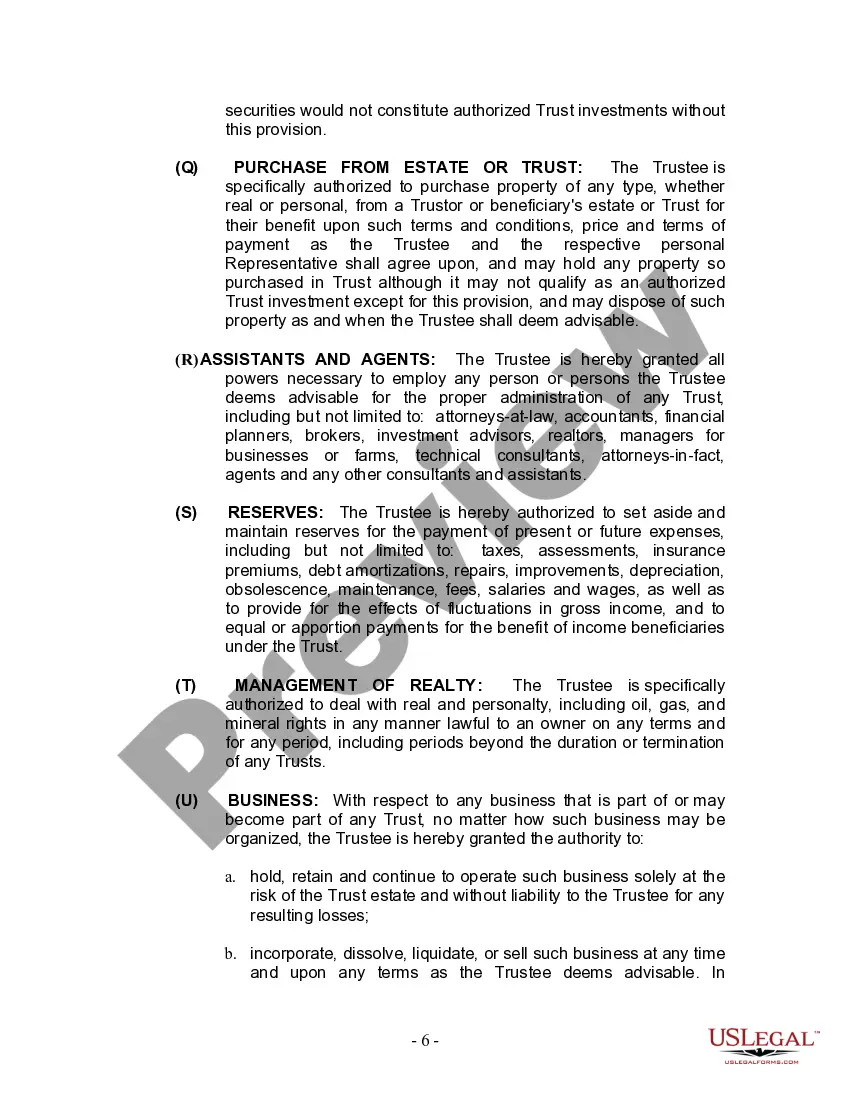
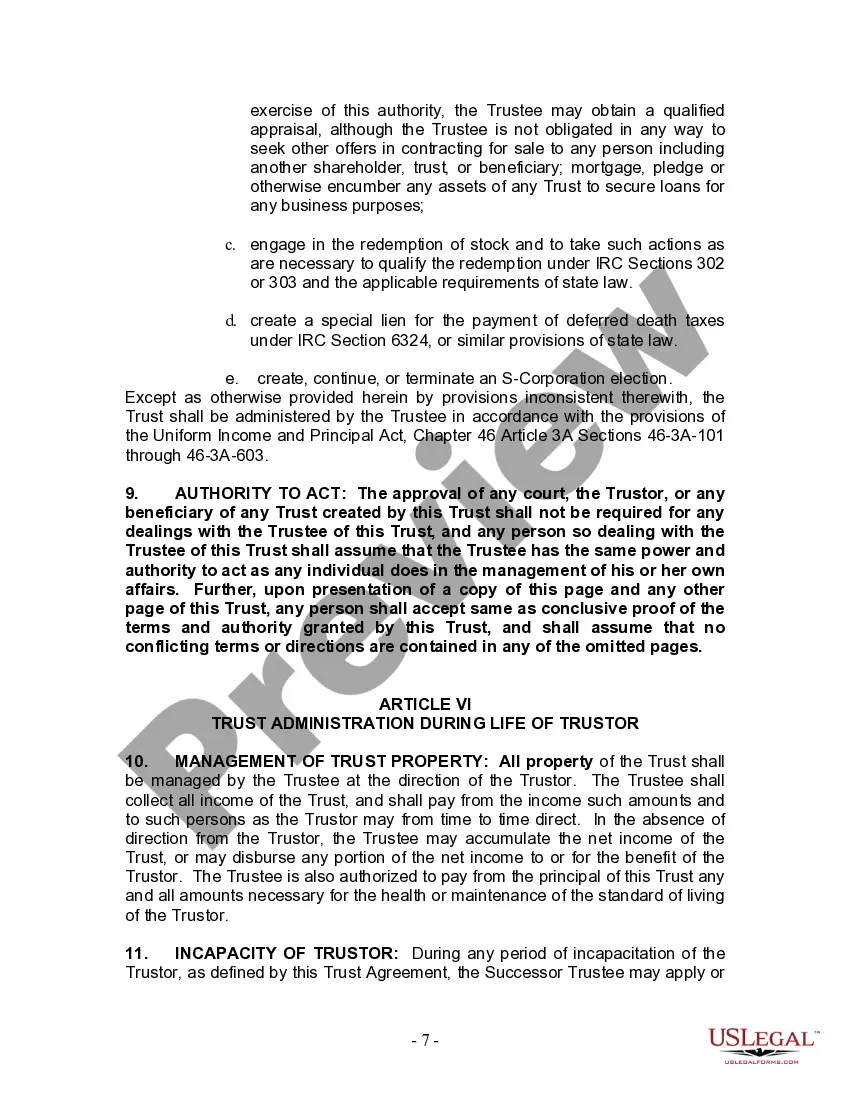
- Trustee Powers: Outlines the extensive powers the Trustee has to manage and distribute the trust assets.
- Distribution Guidelines: Specifies how assets will be distributed upon the death of the Trustors.




When to use this form
This form should be used when a husband and wife want to establish a living trust to manage their joint assets and provide for their child's inheritance. It is particularly useful for couples who wish to avoid probate, maintain privacy, and ensure a smooth transition of asset management upon their passing. Situations include planning for the care of a minor child, estate tax considerations, or a desire for flexibility in asset management during their lifetime.
Who should use this form
This form is intended for:
- Married couples with one child seeking to arrange their estate.
- Individuals looking to manage their assets and provide for their family efficiently.
- Those who prefer to avoid the complexities and potential costs associated with probate.
Steps to complete this form
To complete this form:
- Identify the parties involved: Provide the names and addresses of the Trustors (husband and wife).
- Specify the trust name: Enter the desired name for the trust.
- List the assets: Detail the property and assets that will be included in the trust.
- Designate the Trustees: Indicate who will act as Trustees and successors.
- Enter the beneficiary information: Clearly identify the child as the primary beneficiary and any additional conditions.
- Sign and notarize: Ensure all parties sign the document and have it notarized if required by state laws.
Notarization requirements for this form
Yes, this form must be notarized to be legally valid. US Legal Forms offers integrated online notarization services, allowing you to complete the process securely and conveniently via video call, without the need to travel.
Get your form ready online
Our built-in tools help you complete, sign, share, and store your documents in one place.
Make edits, fill in missing information, and update formatting in US Legal Forms—just like you would in MS Word.
Download a copy, print it, send it by email, or mail it via USPS—whatever works best for your next step.
Sign and collect signatures with our SignNow integration. Send to multiple recipients, set reminders, and more. Go Premium to unlock E-Sign.
If this form requires notarization, complete it online through a secure video call—no need to meet a notary in person or wait for an appointment.
We protect your documents and personal data by following strict security and privacy standards.

Make edits, fill in missing information, and update formatting in US Legal Forms—just like you would in MS Word.

Download a copy, print it, send it by email, or mail it via USPS—whatever works best for your next step.

Sign and collect signatures with our SignNow integration. Send to multiple recipients, set reminders, and more. Go Premium to unlock E-Sign.

If this form requires notarization, complete it online through a secure video call—no need to meet a notary in person or wait for an appointment.

We protect your documents and personal data by following strict security and privacy standards.
Typical mistakes to avoid
- Failing to name a successor Trustee, which can complicate asset management.
- Not fully describing the assets in Schedule A, potentially leading to disputes.
- Omitting necessary signatures or not notarizing the document when required.
- Using vague language when outlining the distribution terms, which may lead to ambiguity.
Benefits of completing this form online
- Convenience of online access: Easily download and fill out the form from anywhere at any time.
- Editability: Modify the document as needed to fit your specific family circumstances.
- Reliability: The forms are drafted by licensed attorneys, ensuring compliance with legal standards.
- Cost-effective: Save on legal fees by using a ready-to-use template.
Quick recap
- A living trust helps avoid probate and ensures seamless asset transfer to beneficiaries.
- This form is specifically designed for married couples with one child.
- Clearly list all assets and ensure proper appointment of trustees to avoid common pitfalls.
Legal terms and meanings
- Trustor: The person or persons who create the trust.
- Beneficiary: The individual or individuals who will benefit from the trust, in this case, the coupleâs child.
- Trustee: The person or entity responsible for managing the trust assets and ensuring terms are followed.
- Revocable Living Trust: A trust that can be modified or revoked by the trustor during their lifetime.
Looking for another form?
Form popularity
FAQ
If marital property is placed in an irrevocable trust, that trust cannot be changed and the assets in it cannot be removed and divided in the divorce. The trust assets remain in the trust until after the death of the grantor, when they are distributed to the beneficiaries in accordance with the trust's terms.
Joint trusts are easier to fund and maintain.In a joint trust, after the death of the first spouse, the surviving spouse has complete control of the assets. When separate trusts are used, the deceased spouses' trust becomes irrevocable and the surviving spouse has limited control over assets.
Separate trusts may offer better protection from creditors, if this is a concern. For example, at the death of the first spouse, the deceased spouse's trust becomes irrevocable, which makes it harder to access by creditors. And yet the surviving spouse can still access it for income and other needs.
With a shared trust, property left by one grantor to the survivor stays in the living trust when the first grantor dies; no transfer is necessary.You can transfer all of it to the trust, and each spouse can name beneficiaries (including each other) to receive his or her separate property.
Separate trusts provide more flexibility in the event of a death in the marriage. Since the trust property is already divided, separate trusts preserve the surviving spouse's ability to amend or revoke assets held within their own trust, while ensuring that the deceased spouse's trust cannot be amended after death.
Q: Can a person have more than one trust? A: Yes, it is not that uncommon for a person to be the beneficiary of multiple trusts. However, caution should be used. Trusts come in many shapes and sizes and can serve multiple purposes and can be established by you or by someone else for your benefit.
Under California law, a marriage automatically invalidates any pre-existing will or trust as to the new spouse's inheritance rights, unless the documents provide for a new spouse, or clearly indicate a new spouse will receive nothing.
Typically, when a married couple utilizes a Revocable Living Trust based estate plan, each spouse creates and funds his or her own separate Revocable Living Trust. This results in two trusts. However, in the right circumstances, a married couple may be better served by creating a single Joint Trust.