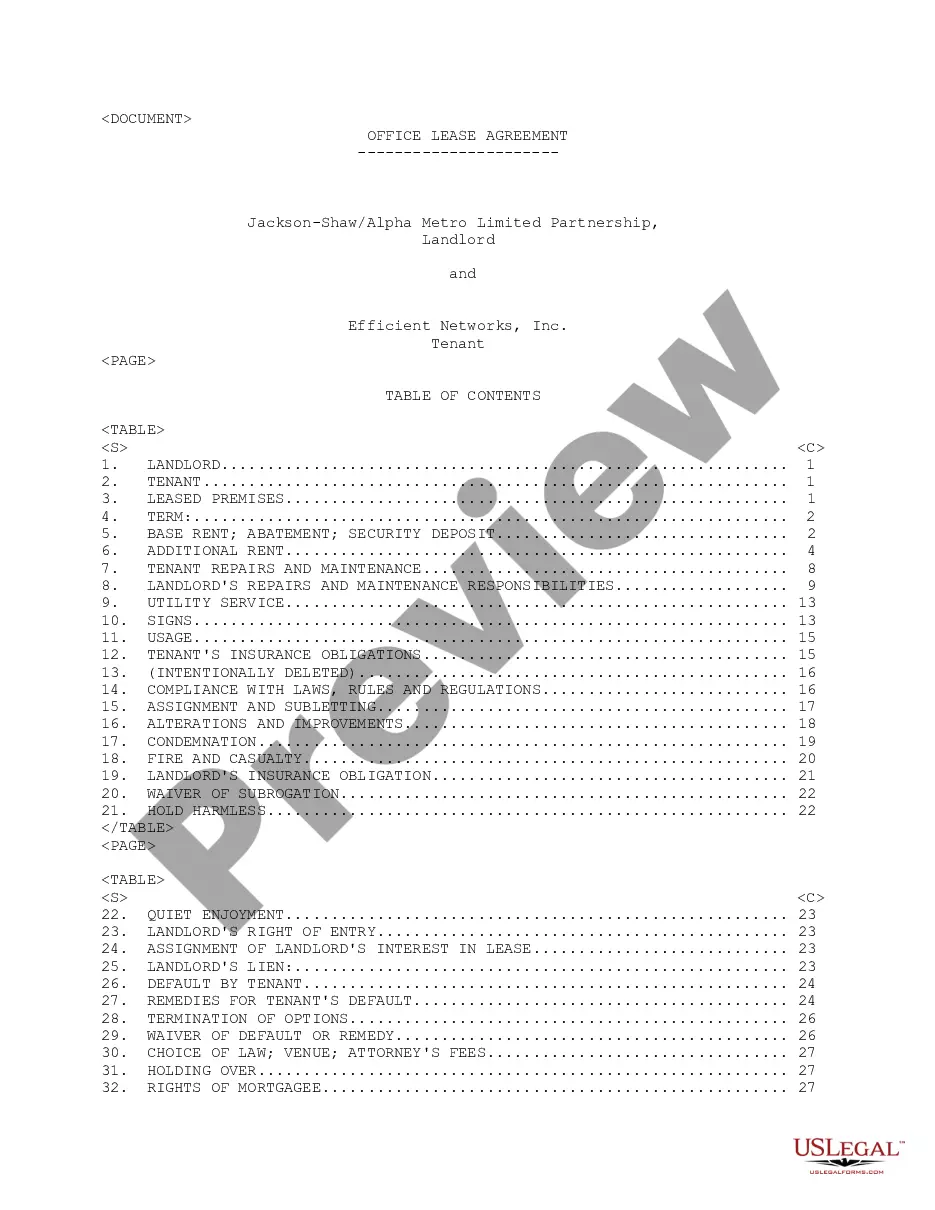
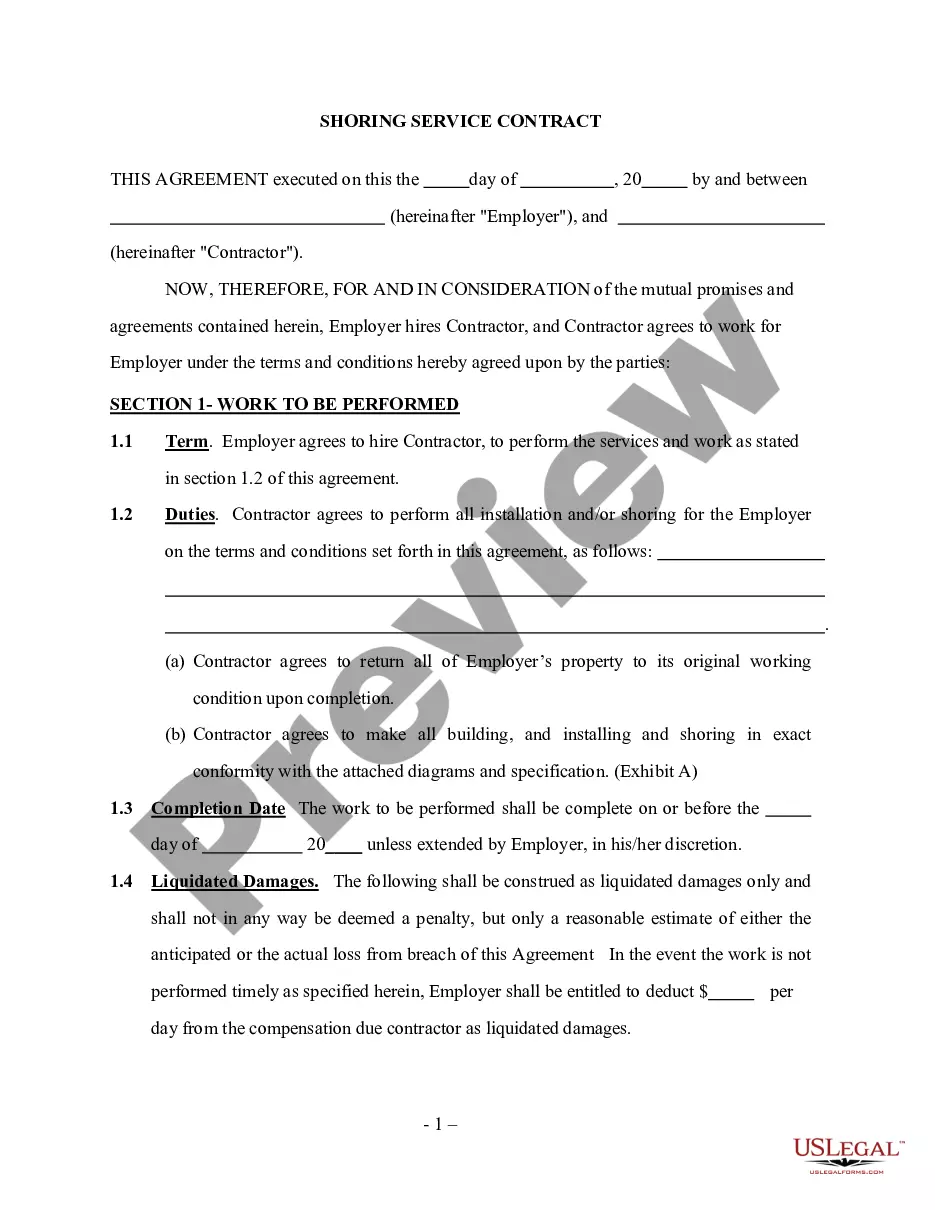
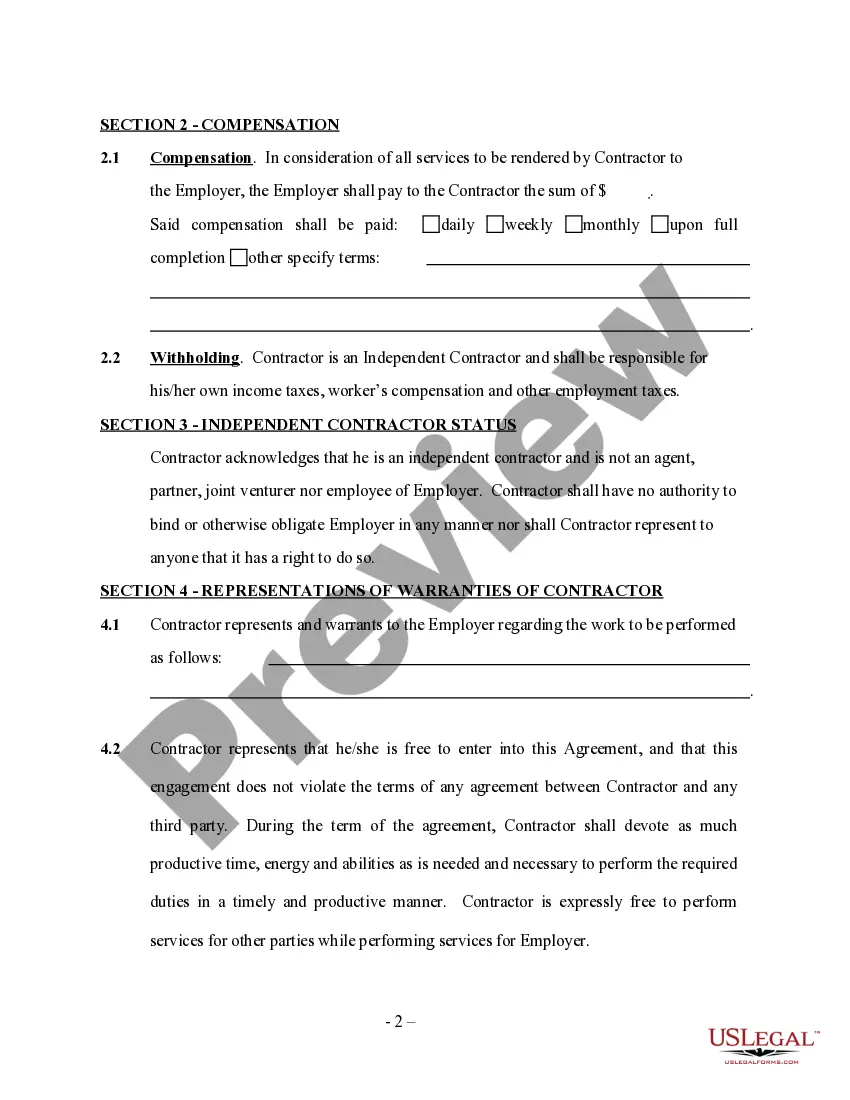
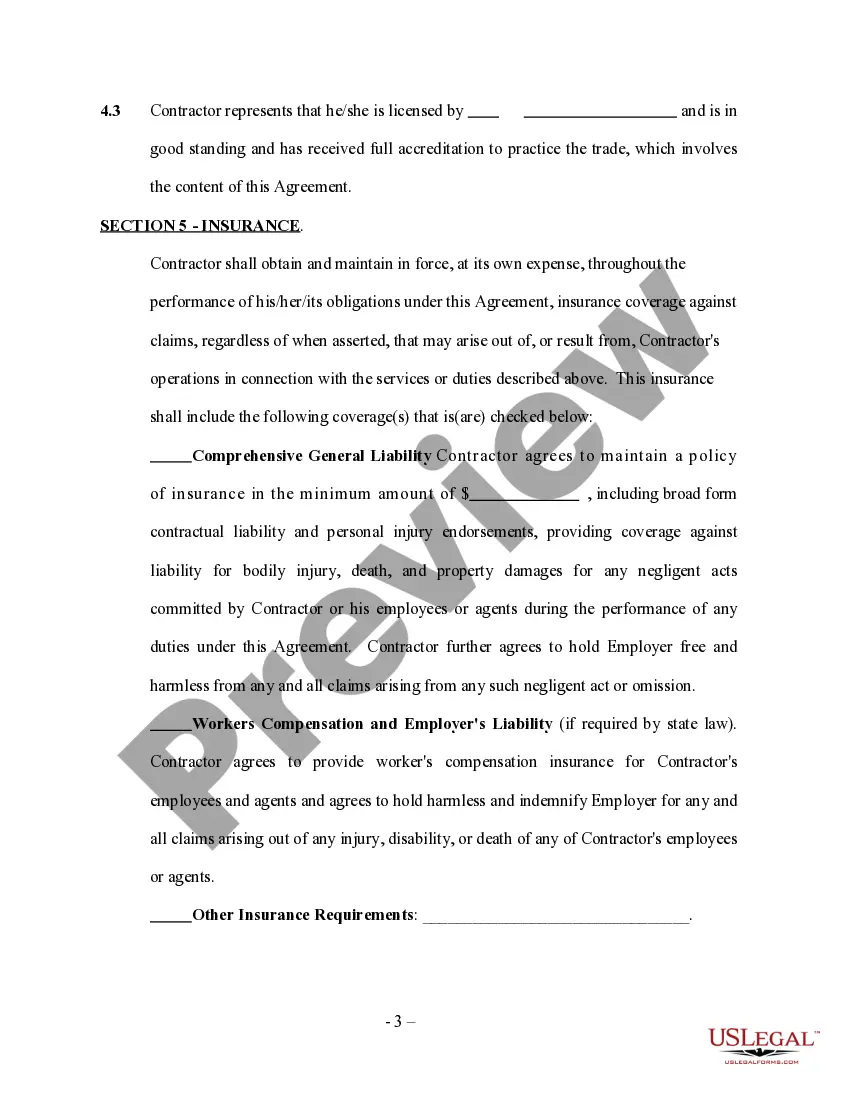
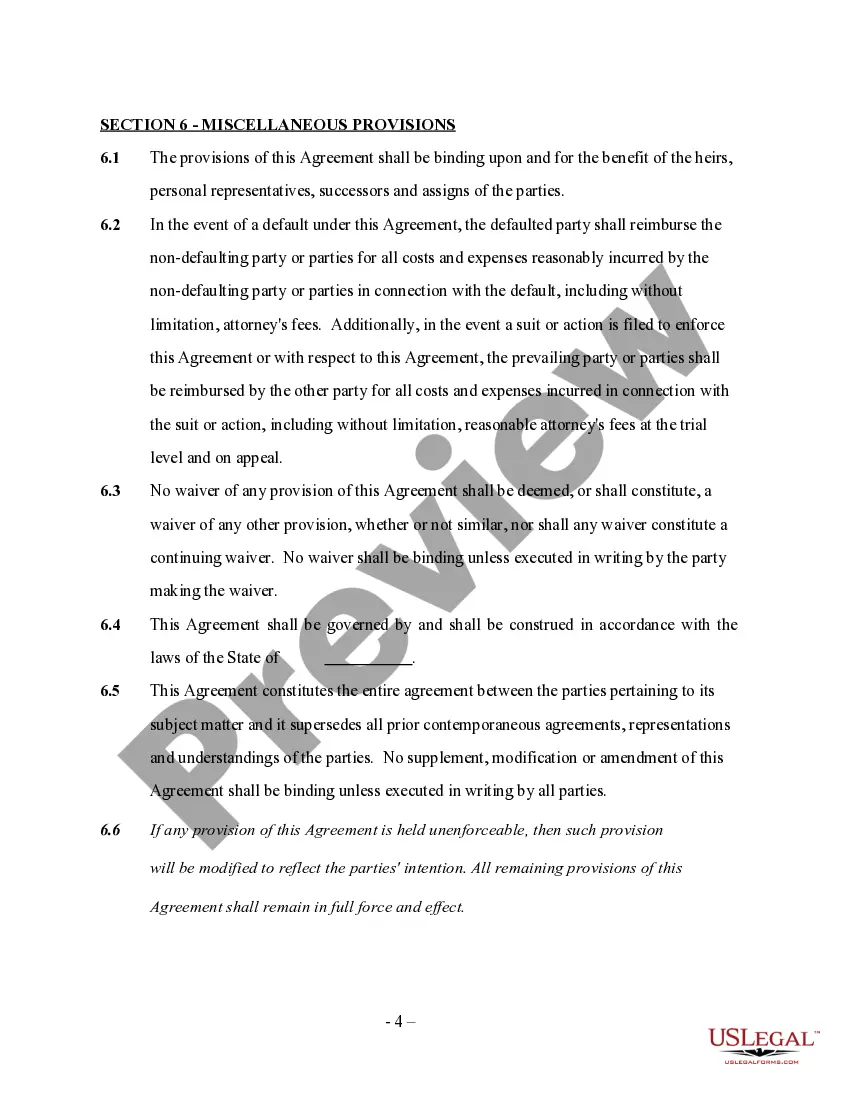
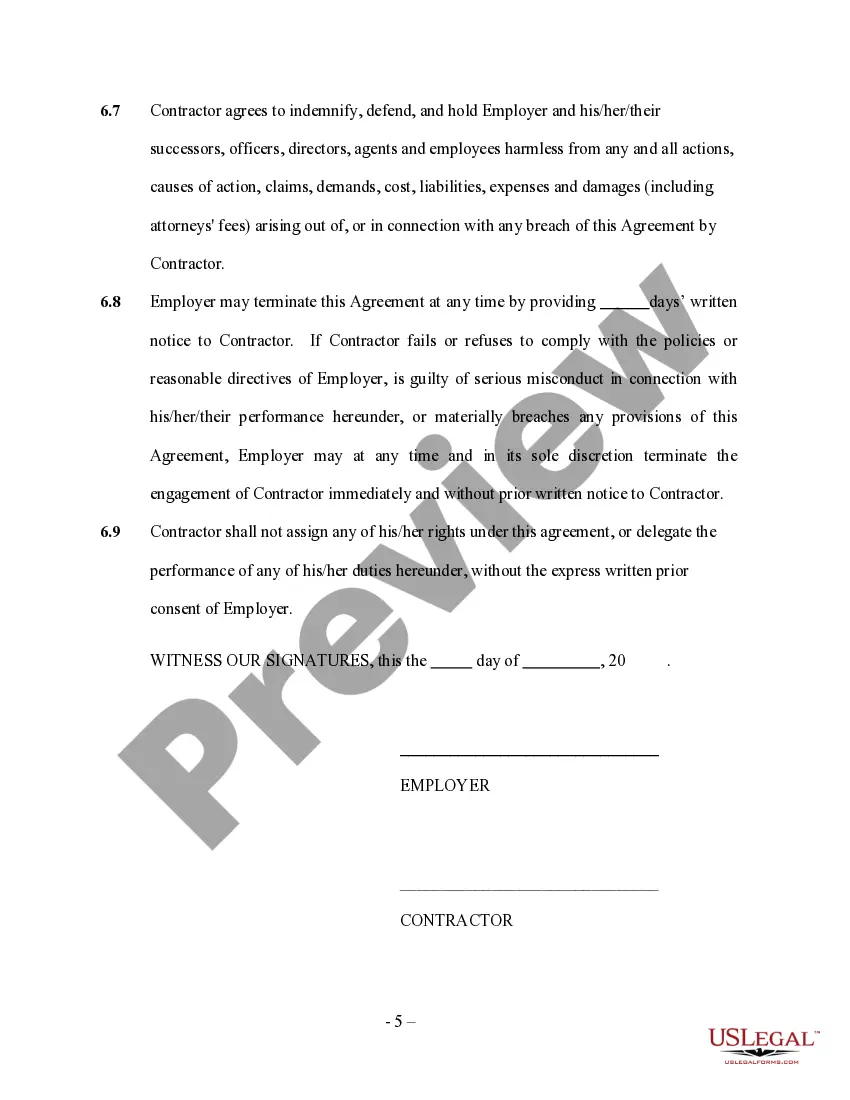
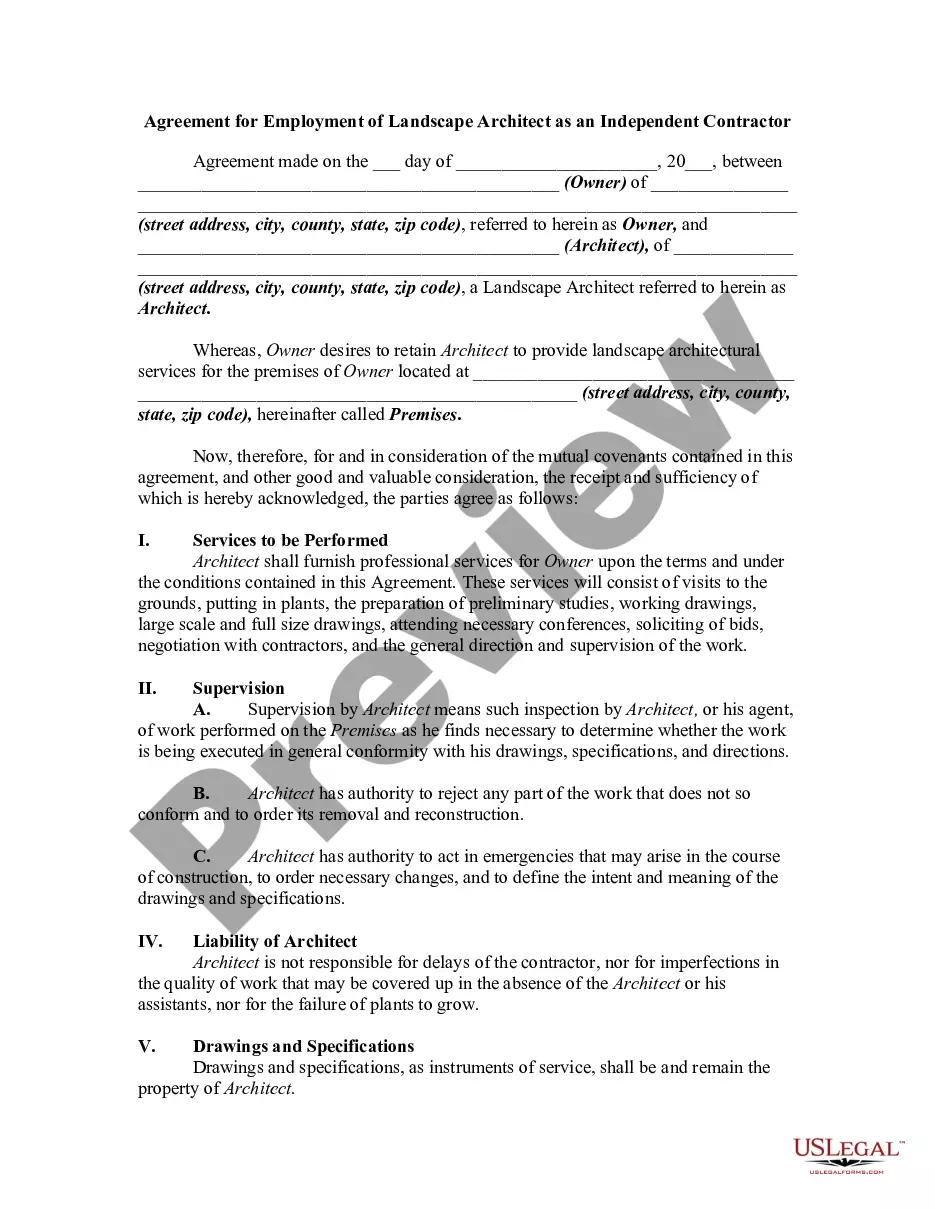
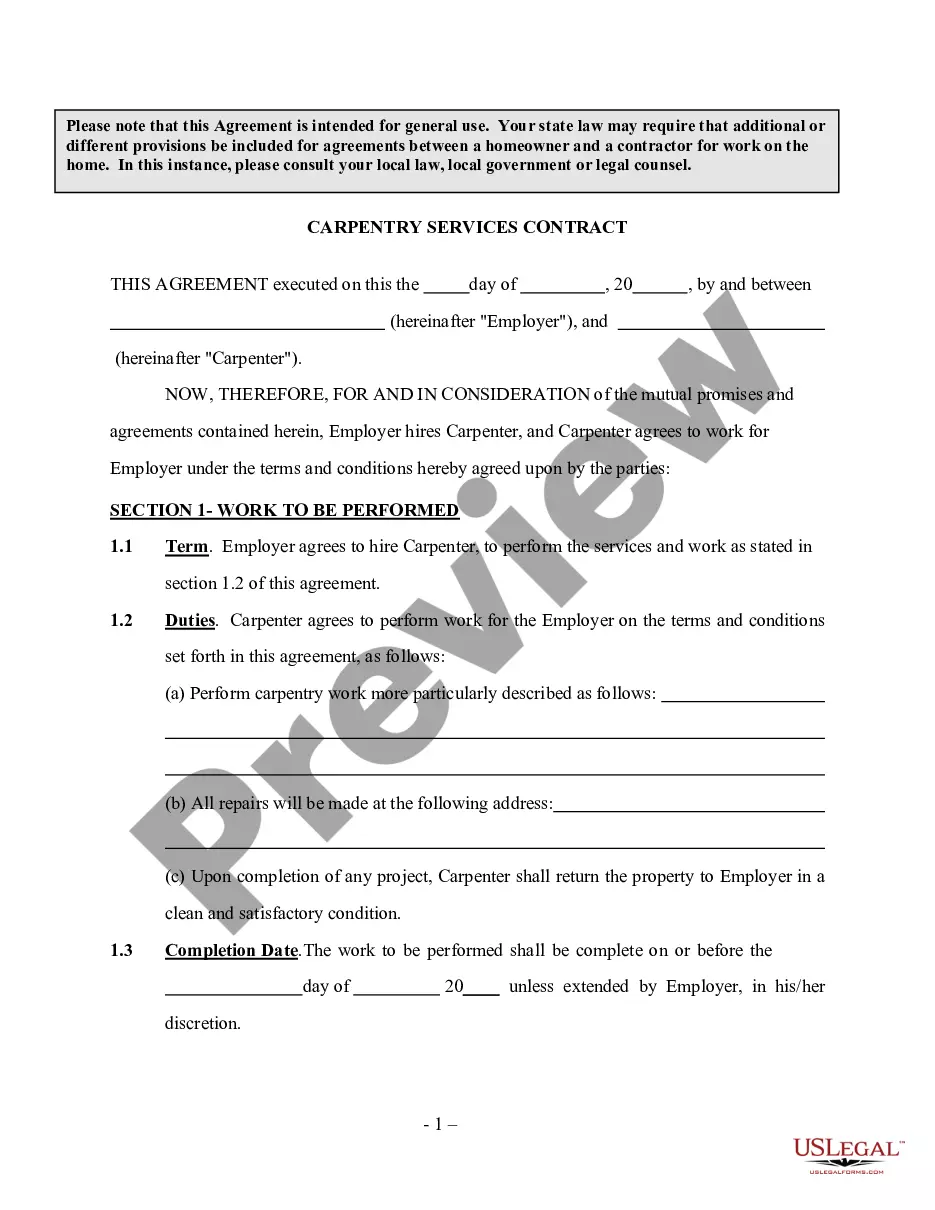
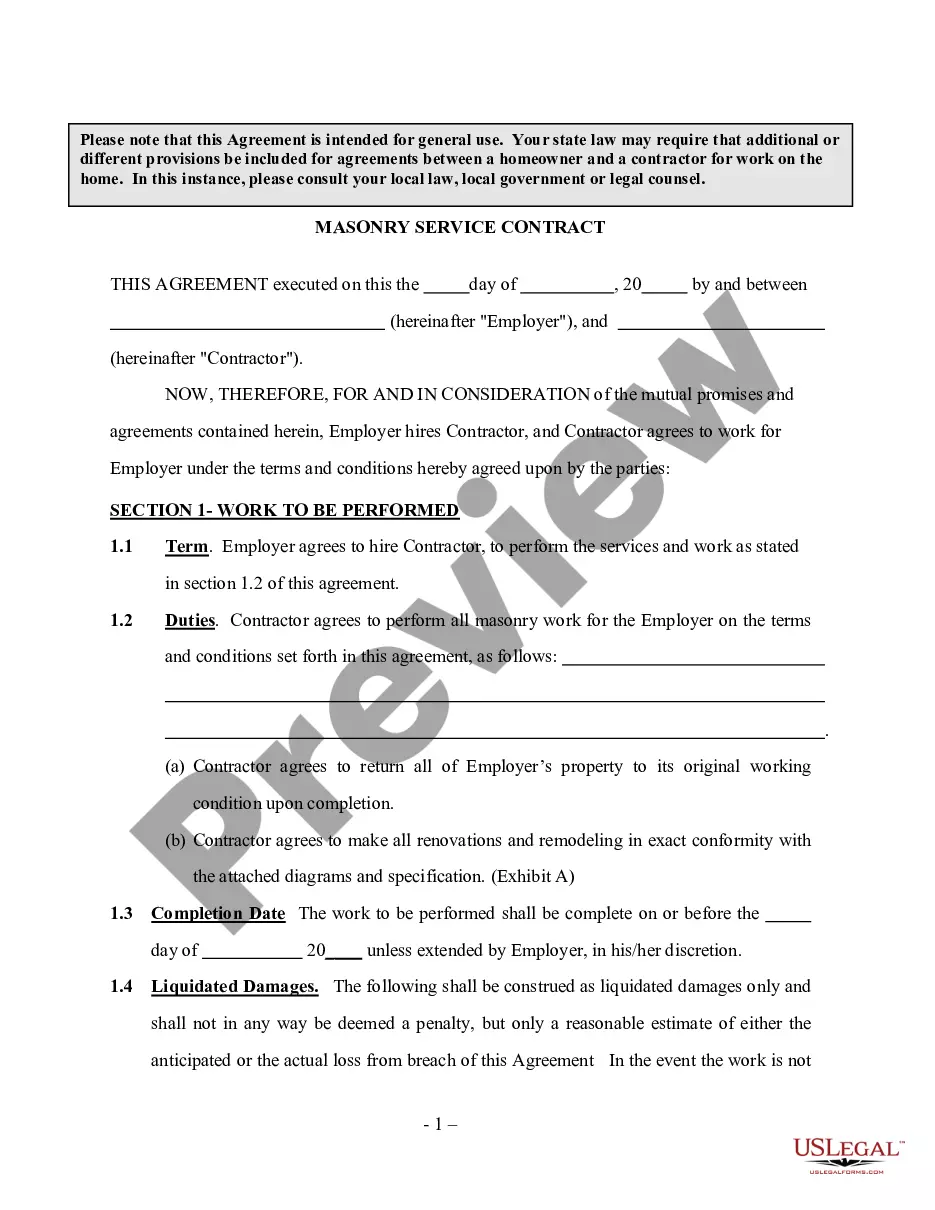
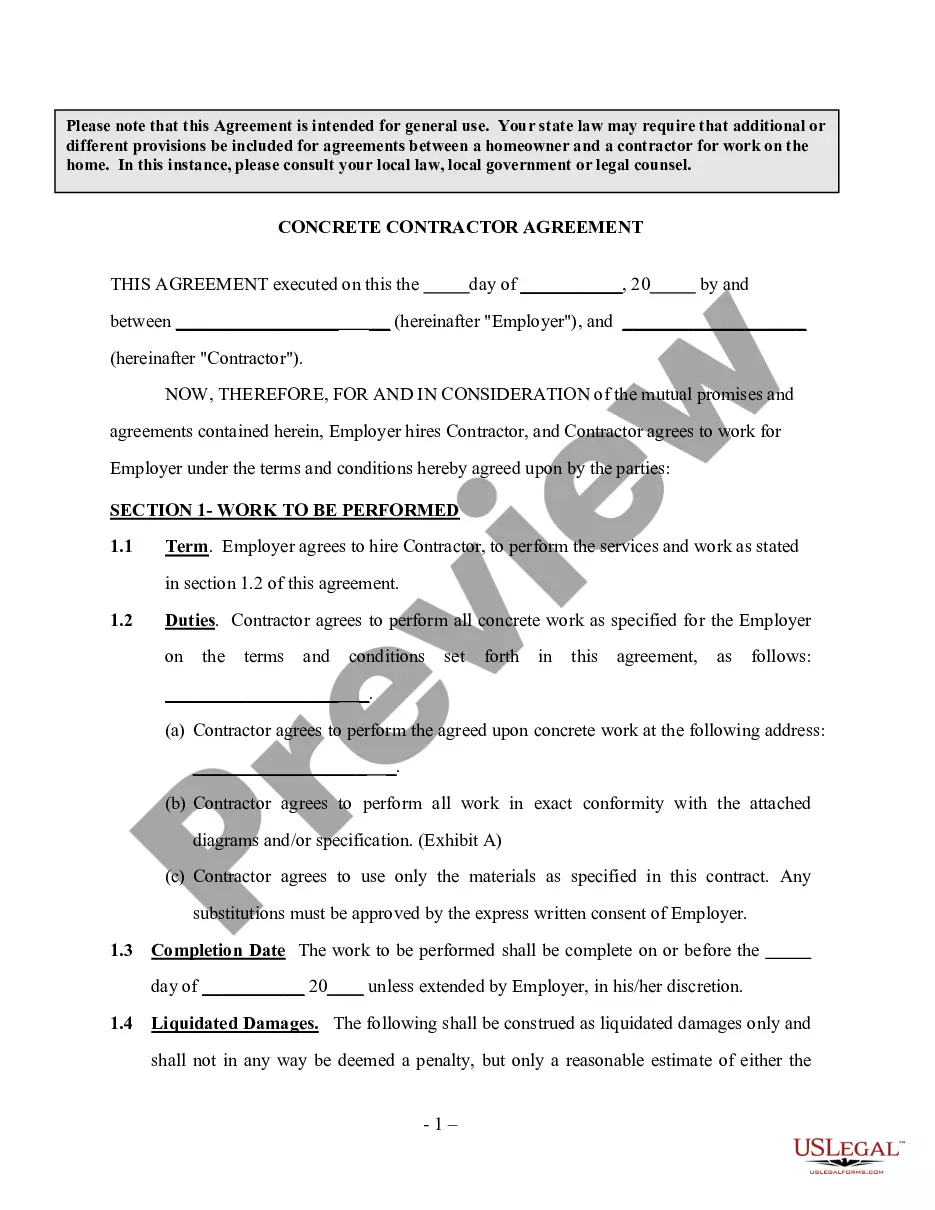
Employer contracts with an independent contractor to provide shoring as specified and agreed upon in the contract.
New Jersey Shoring Services Contract - Self-Employed
State:
Multi-State
Control #:
US-INDC-100
Format:
Word;
Rich Text
Instant download
Description
Free preview
Get your form ready online
Our built-in tools help you complete, sign, share, and store your documents in one place.
Built-in online Word editor
Make edits, fill in missing information, and update formatting in US Legal Forms—just like you would in MS Word.
Export easily
Download a copy, print it, send it by email, or mail it via USPS—whatever works best for your next step.
E-sign your document
Sign and collect signatures with our SignNow integration. Send to multiple recipients, set reminders, and more. Go Premium to unlock E-Sign.
Notarize online 24/7
If this form requires notarization, complete it online through a secure video call—no need to meet a notary in person or wait for an appointment.
Store your document securely
We protect your documents and personal data by following strict security and privacy standards.

Make edits, fill in missing information, and update formatting in US Legal Forms—just like you would in MS Word.

Download a copy, print it, send it by email, or mail it via USPS—whatever works best for your next step.

Sign and collect signatures with our SignNow integration. Send to multiple recipients, set reminders, and more. Go Premium to unlock E-Sign.

If this form requires notarization, complete it online through a secure video call—no need to meet a notary in person or wait for an appointment.

We protect your documents and personal data by following strict security and privacy standards.
Looking for another form?





How to fill out Shoring Services Contract - Self-Employed?
Locating the appropriate legitimate document template can be a challenge.
It goes without saying that there are numerous layouts available online, but how can you find the specific document type you require.
Utilize the US Legal Forms website. This service offers a vast array of templates, such as the New Jersey Shoring Services Contract - Self-Employed, which you can use for both business and personal purposes.
You can browse the form using the Review option and read the form description to ensure it is the correct one for you.
- All of the forms are reviewed by professionals and comply with federal and state regulations.
- If you are currently registered, Log In to your account and select the Acquire option to download the New Jersey Shoring Services Contract - Self-Employed.
- Use your account to browse through the legitimate forms you have previously purchased.
- Navigate to the My documents tab in your account to retrieve another copy of the document you need.
- If you are a new user of US Legal Forms, here are some simple guidelines to follow.
- First, ensure you have selected the right document for your city/state.
Form popularity
FAQ
In New Jersey, independent contractors are generally not required to carry workers' compensation insurance. However, there are exceptions depending on the nature of the work and specific agreements outlined in the New Jersey Shoring Services Contract - Self-Employed. It's important to evaluate the risks of your work and consider voluntary coverage for your peace of mind. Using platforms like uslegalforms can help you navigate these requirements and understand your options better.
Independent contractors must adhere to certain legal requirements to operate correctly under New Jersey law. They need to register their business, obtain the relevant licenses, and ensure compliance with tax regulations. When engaging in a New Jersey Shoring Services Contract - Self-Employed, it is vital to understand these requirements to avoid any legal issues. This ensures both parties protect their interests and operate within the law.
Yes, contract workers are typically classified as self-employed individuals. They operate independently, managing their own taxes and business expenses. In the context of a New Jersey Shoring Services Contract - Self-Employed, understanding this classification is essential for both workers and employers. This structure allows for flexibility and often leads to better financial management for self-employed workers.
To write a self-employed contract, list the services to be provided and the payment structure. Define the duration of the contract and include termination clauses if necessary. Using a template for a New Jersey Shoring Services Contract - Self-Employed can simplify this process and help you cover all key points effectively.
Yes, you can write your own legally binding contract as long as it meets the essential elements of a contract. This includes an offer, acceptance, and consideration. However, for a New Jersey Shoring Services Contract - Self-Employed, consider using a service like USLegalForms to ensure your contract meets all legal requirements.
Filling out an independent contractor agreement involves providing your name, business details, and the scope of work required. Be sure to include payment terms and deadlines for deliverables. A professional New Jersey Shoring Services Contract - Self-Employed will ensure that both parties are protected and aware of their obligations.
To write a self-employment contract, begin with a clear introduction that states the parties involved. Detail the services you will provide, along with the payment rates and terms. A solid New Jersey Shoring Services Contract - Self-Employed outlines expectations, ensuring a mutual understanding between you and your client.
When writing a contract for a 1099 employee, clarify the nature of the work and payment terms. Specify the duration of the contract and any deadlines for deliverables. It’s important to create a New Jersey Shoring Services Contract - Self-Employed that aligns with IRS guidelines to avoid misunderstandings.
To write a simple employment contract, start by outlining the job title, responsibilities, and compensation. Include terms for confidentiality and termination as necessary. Using a well-structured format can help establish a clear New Jersey Shoring Services Contract - Self-Employed that protects both parties.
In New Jersey, a contract is legally binding when it contains an offer, acceptance, and consideration. Additionally, both parties must have the legal capacity to enter into a contract. For a New Jersey Shoring Services Contract - Self-Employed, ensure your agreement is in writing to avoid any misunderstandings.