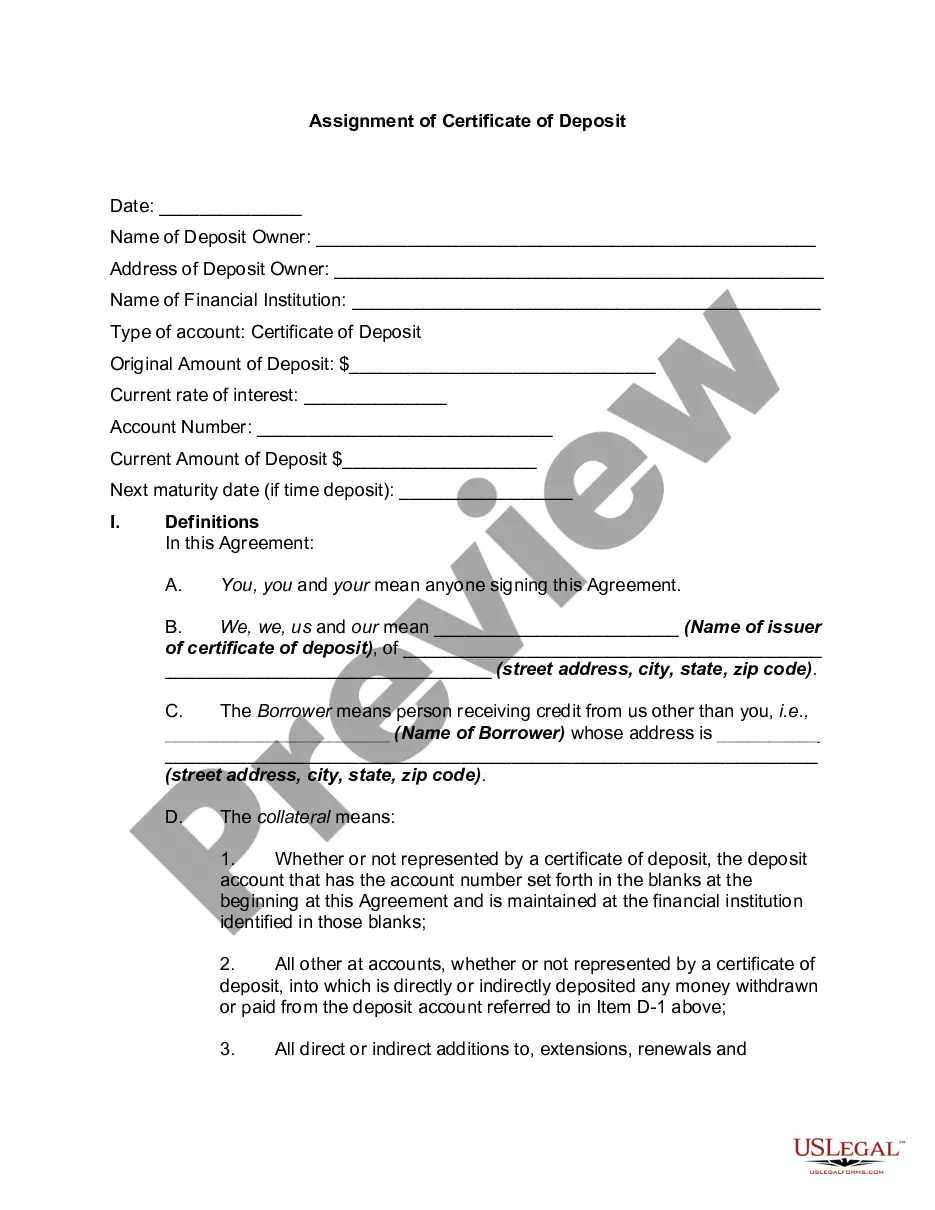
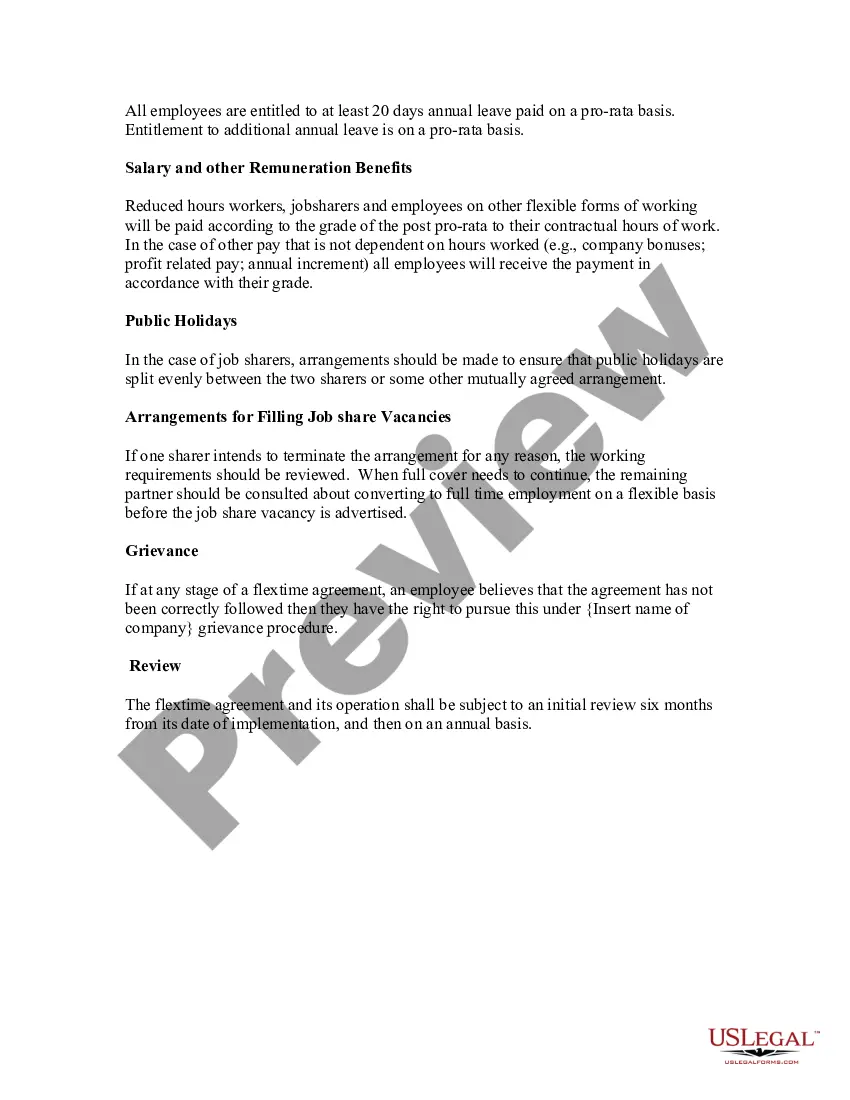
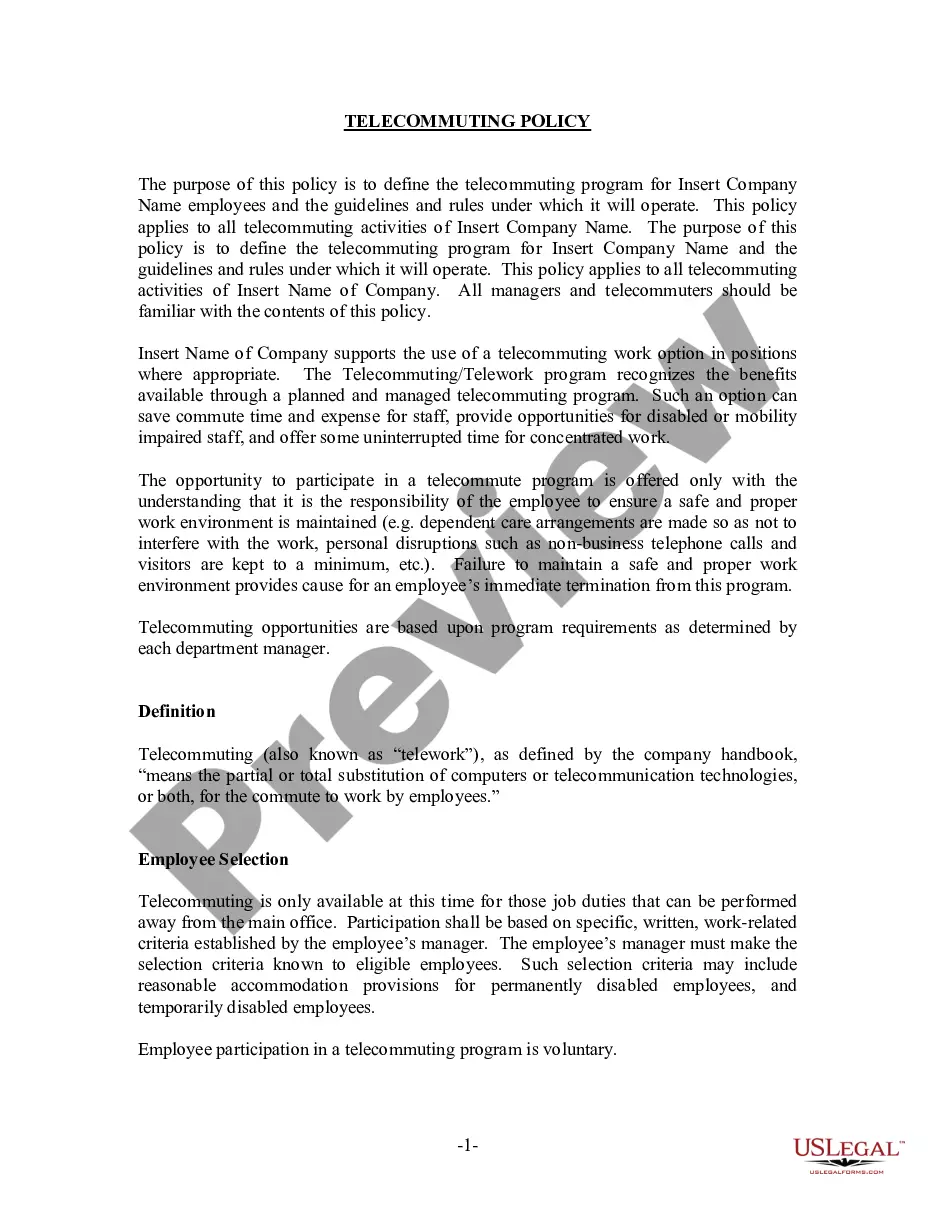
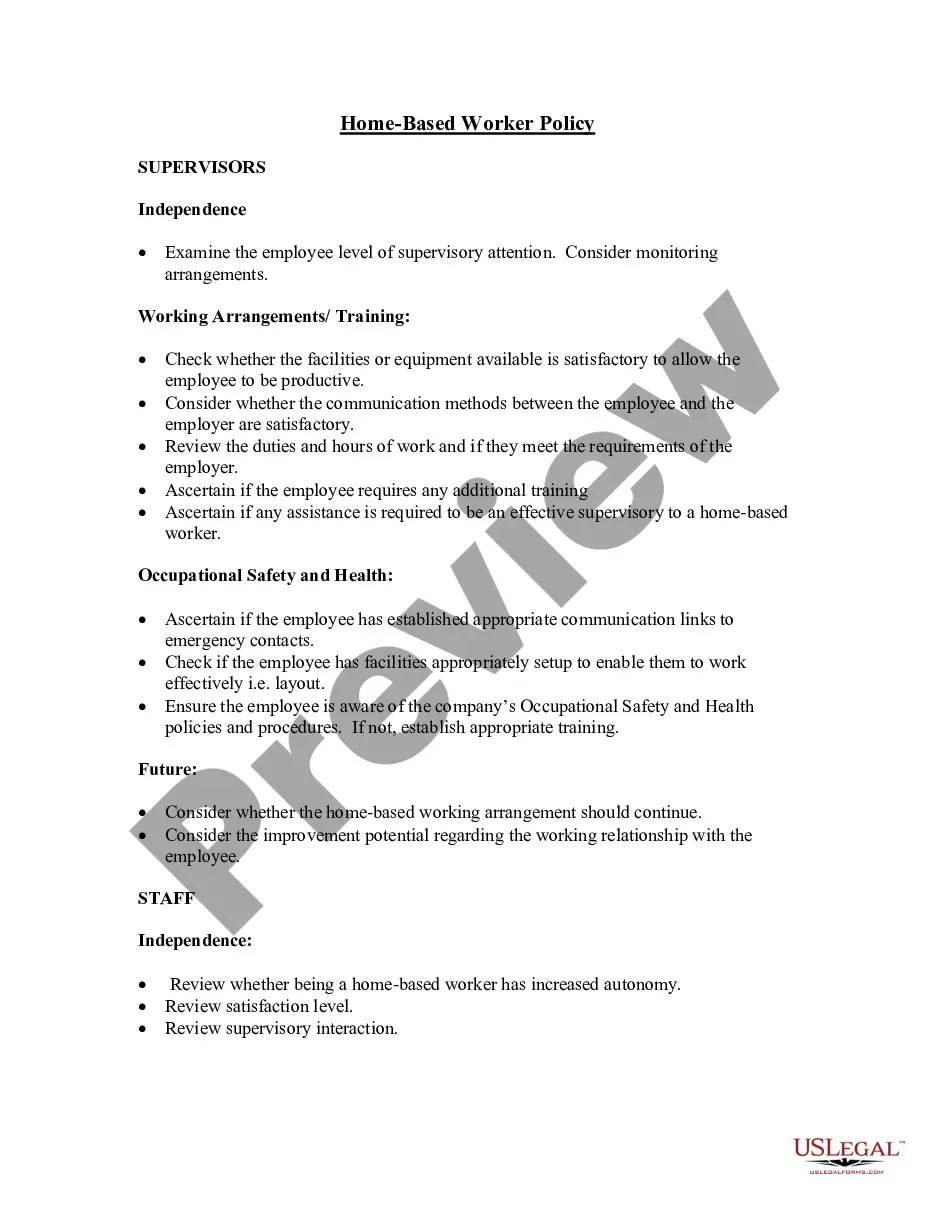
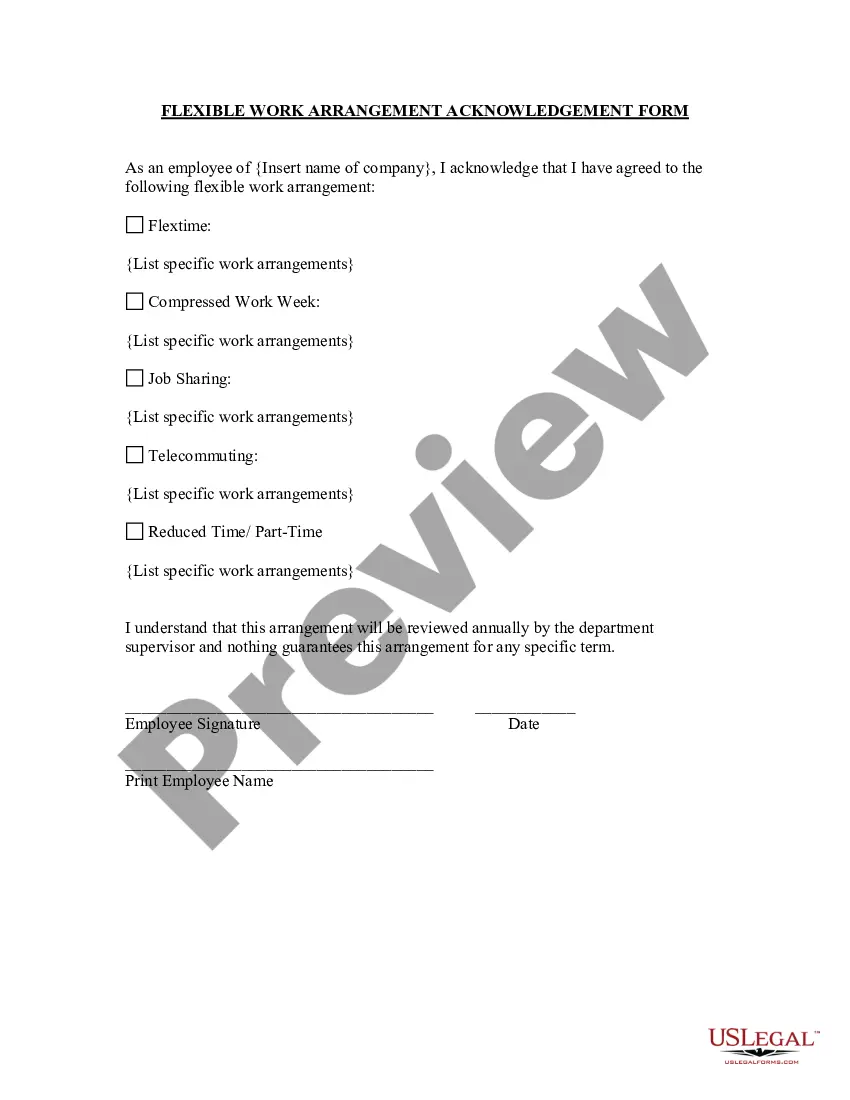
New Jersey Flexible Workplace Policy and Procedure
Description
Get your form ready online
Our built-in tools help you complete, sign, share, and store your documents in one place.
Make edits, fill in missing information, and update formatting in US Legal Forms—just like you would in MS Word.
Download a copy, print it, send it by email, or mail it via USPS—whatever works best for your next step.
Sign and collect signatures with our SignNow integration. Send to multiple recipients, set reminders, and more. Go Premium to unlock E-Sign.
If this form requires notarization, complete it online through a secure video call—no need to meet a notary in person or wait for an appointment.
We protect your documents and personal data by following strict security and privacy standards.
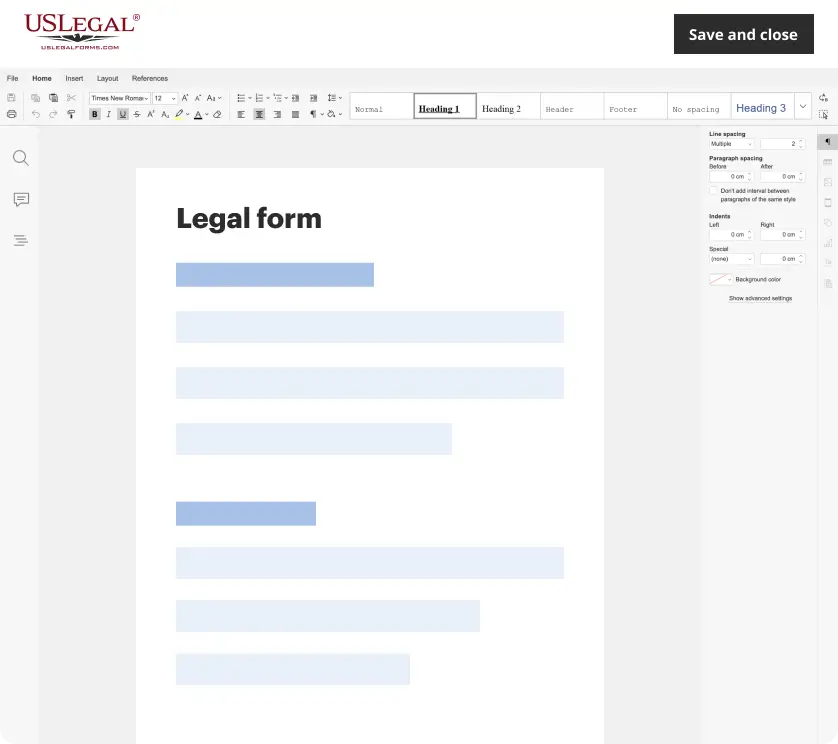
Make edits, fill in missing information, and update formatting in US Legal Forms—just like you would in MS Word.
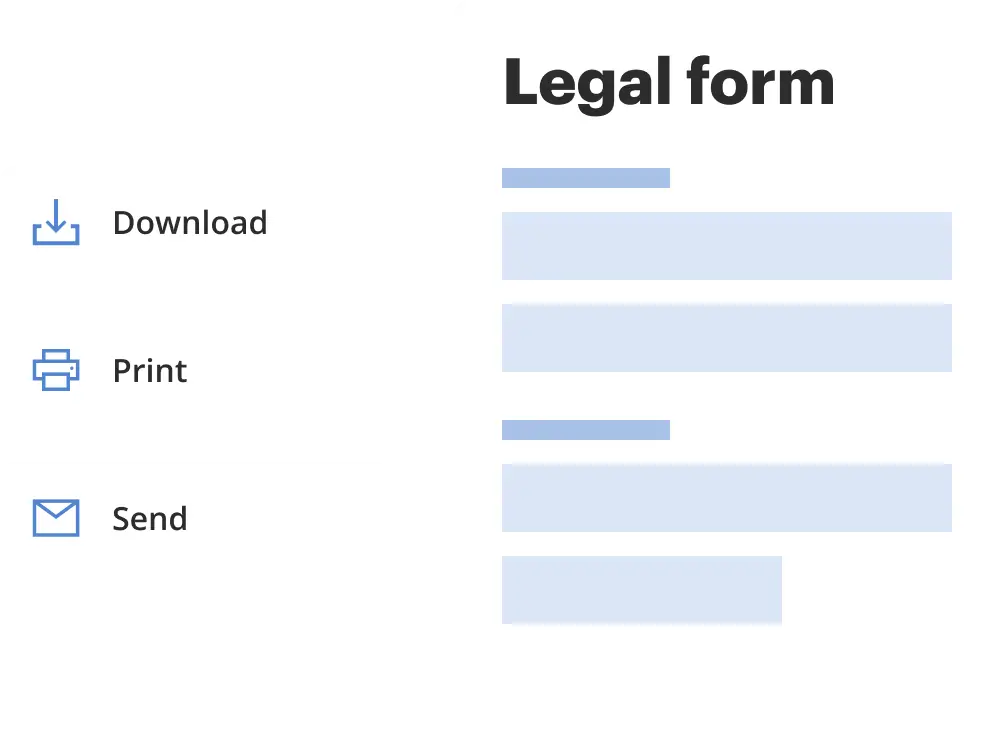
Download a copy, print it, send it by email, or mail it via USPS—whatever works best for your next step.
Sign and collect signatures with our SignNow integration. Send to multiple recipients, set reminders, and more. Go Premium to unlock E-Sign.
If this form requires notarization, complete it online through a secure video call—no need to meet a notary in person or wait for an appointment.
We protect your documents and personal data by following strict security and privacy standards.
Looking for another form?





How to fill out Flexible Workplace Policy And Procedure?
If you require extensive, procure, or producing legal document templates, utilize US Legal Forms, the largest array of legal forms available online.
Use the website's simple and user-friendly search feature to find the documents you seek.
Various templates for business and personal needs are sorted by categories and states, or keywords.
Step 4. Once you have identified the form you need, click the Get now button. Select the pricing plan you prefer and enter your details to register for an account.
Step 5. Complete the transaction. You can use your credit card or PayPal account to finish the purchase.
- Utilize US Legal Forms to find the New Jersey Flexible Workplace Policy and Procedure within a few clicks.
- If you are currently a US Legal Forms user, sign in to your account and click the Download button to save the New Jersey Flexible Workplace Policy and Procedure.
- You can also access forms you previously downloaded in the My documents section of your account.
- If you are using US Legal Forms for the first time, follow the steps below.
- Step 1. Confirm that you have selected the form for the correct city/state.
- Step 2. Use the Review option to browse the form's content. Be sure to read through the description.
- Step 3. If you are not satisfied with the form, utilize the Search field at the top of the screen to find other variations of the legal form template.
Form popularity
FAQ
Examples: 2022 A worker works a three-day per week Monday/Wednesday/Friday schedule on a regular basis. A worker works 20 hours per week and determines her own schedule on a weekly basis. A worker goes from working full time to 30 hours per week as she phases into retirement.
Types of Flexible Work ArrangementsTelecommuting or working remotely.Shortened workweek through a compressed work schedule.Adjusted work hours.Part-time work.Job sharing.Vacation time flexibility.
Flexible policies mean staff can work staggered or reduced hours, work from home or job share. However, if you still require the provider to send you a bill through the post, then bear in mind that some have more flexible policies than others.
Reduced hours, flex hours (where employees set some or all of their schedule), job-sharing, compressed workweeks, and even extended sabbaticals are all flexible options a company might offer. Many companies implement some combination of the above list.
An individual flexibility arrangement is a written agreement used by an employer and employee to change the effect of certain clauses in their award or registered agreement.
What to Consider When Writing a Flexible Working PolicyWho can work remotely.Remote working from abroad.Working hours.Communication.Office working.Financial contributions and expenses.Employee wellbeing.
Types of flexible workingJob sharing. Two people do one job and split the hours.Working from home. It might be possible to do some or all of the work from home or anywhere else other than the normal place of work.Part time.Compressed hours.Flexitime.Annualised hours.Staggered hours.Phased retirement.
The main characteristics of work flexibilityMake work schedules more flexible. The idea of flexible hours is not associated with working fewer hours but with better management of the worker's time; a factor which directly affects their performance.Work based on objectives.Teleworking.Self-management of holidays.
What are examples of flexible work arrangements?Flex time.Reduced hours/Part-time.Compressed work week.Telework/Working Remotely/Telecommuting.Job sharing.Banking of Hours/ Annualized hours.Gradual Retirement.Leaves and Sabbaticals.
Here are four tips to help employers begin a formal flexwork policy.Evaluate why your company wants a formal flexwork policy.Determine what types of flexibility can be offered by your company.Involve your managers and executives in the planning.Train your managers and staff well.