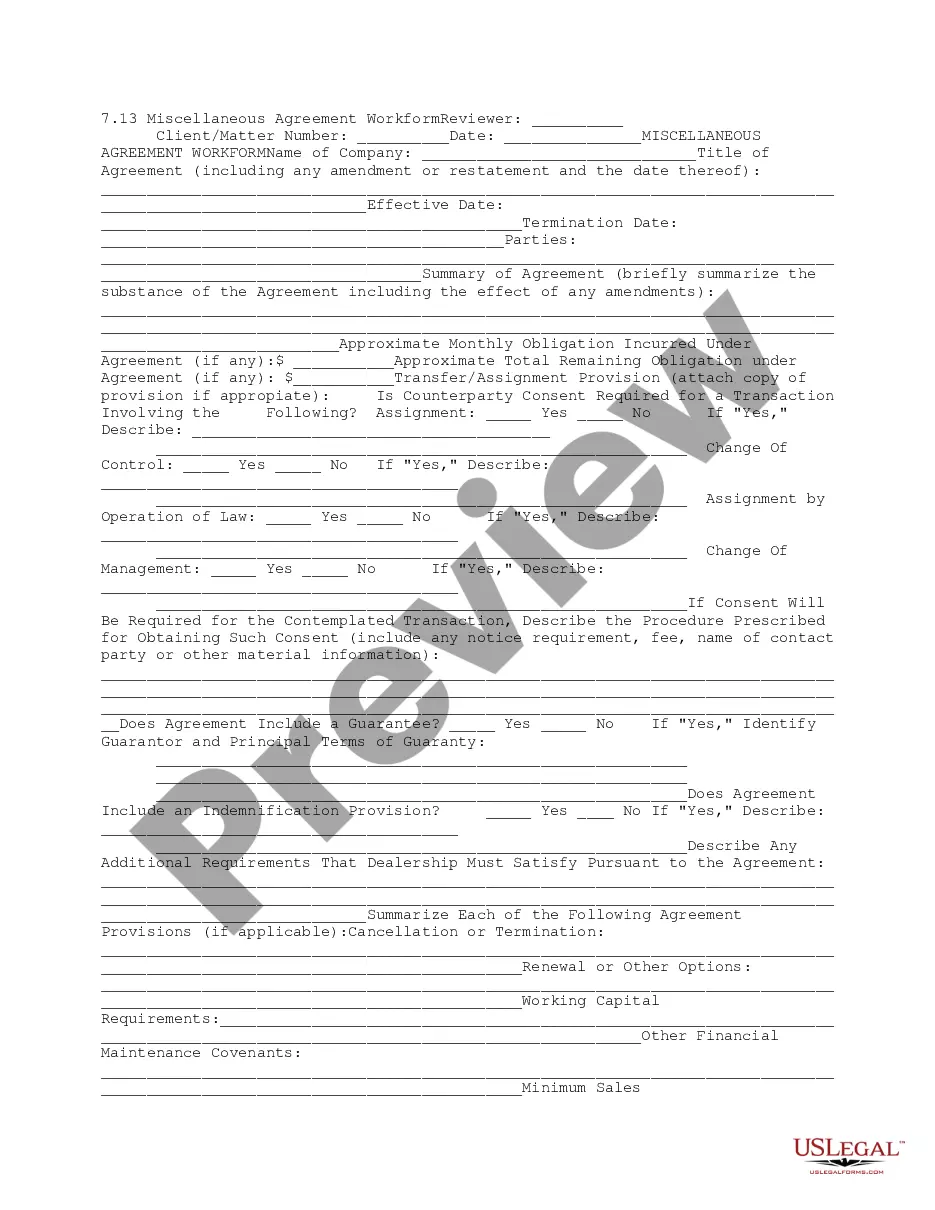
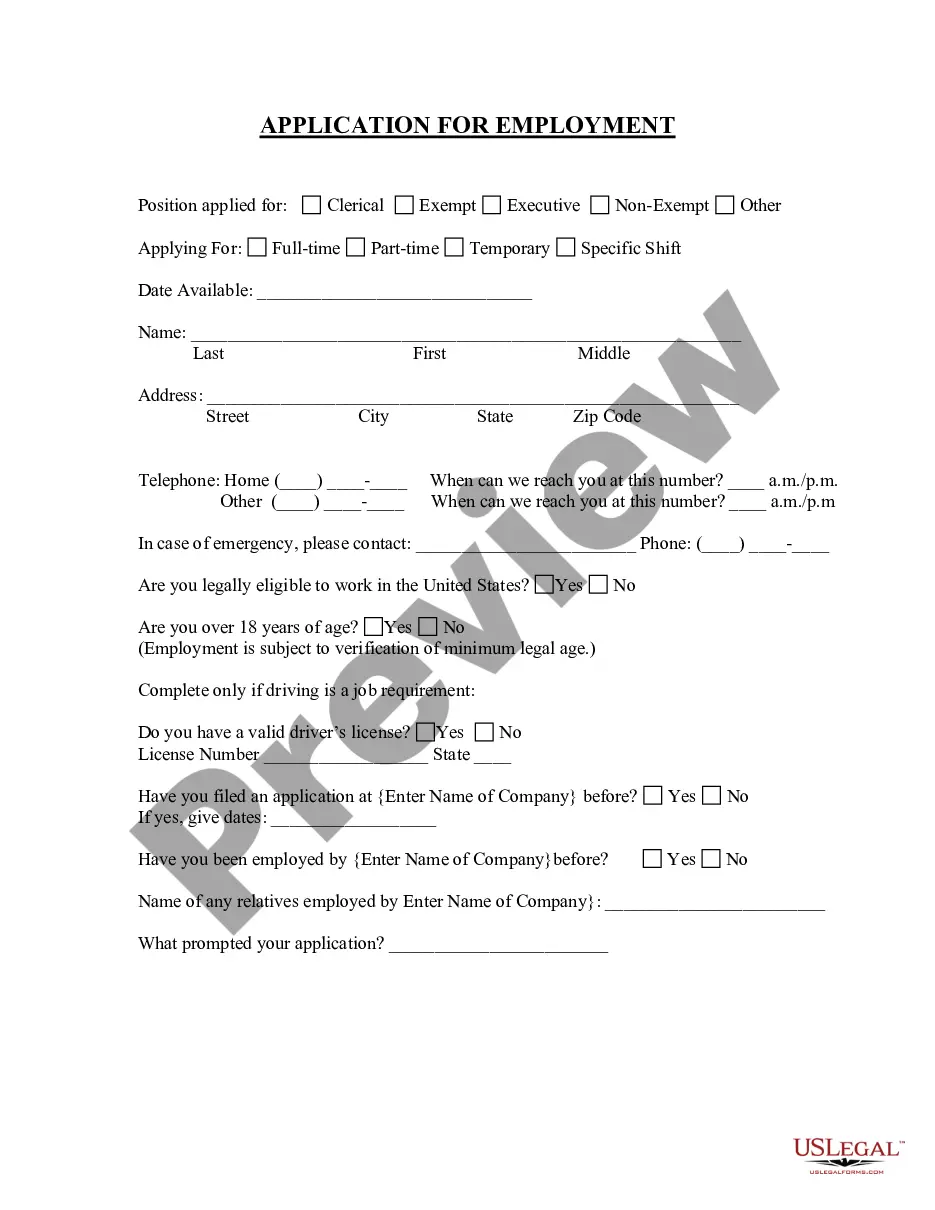
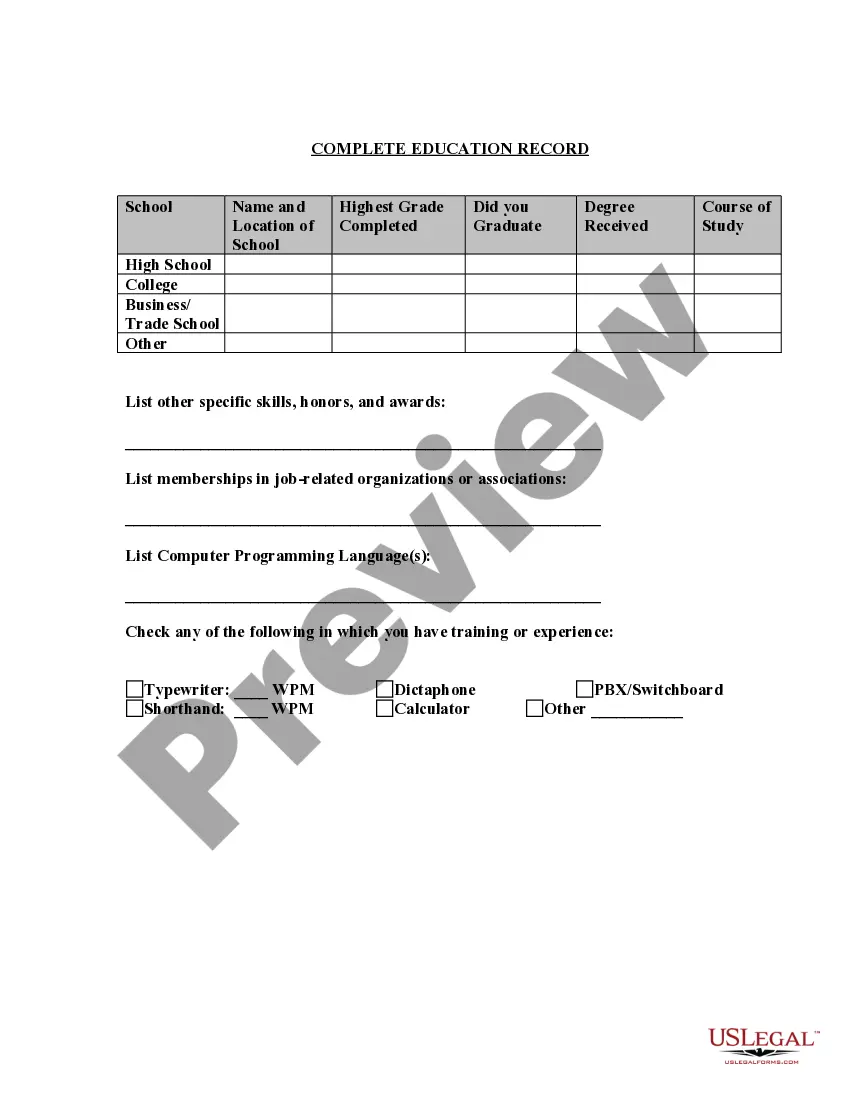
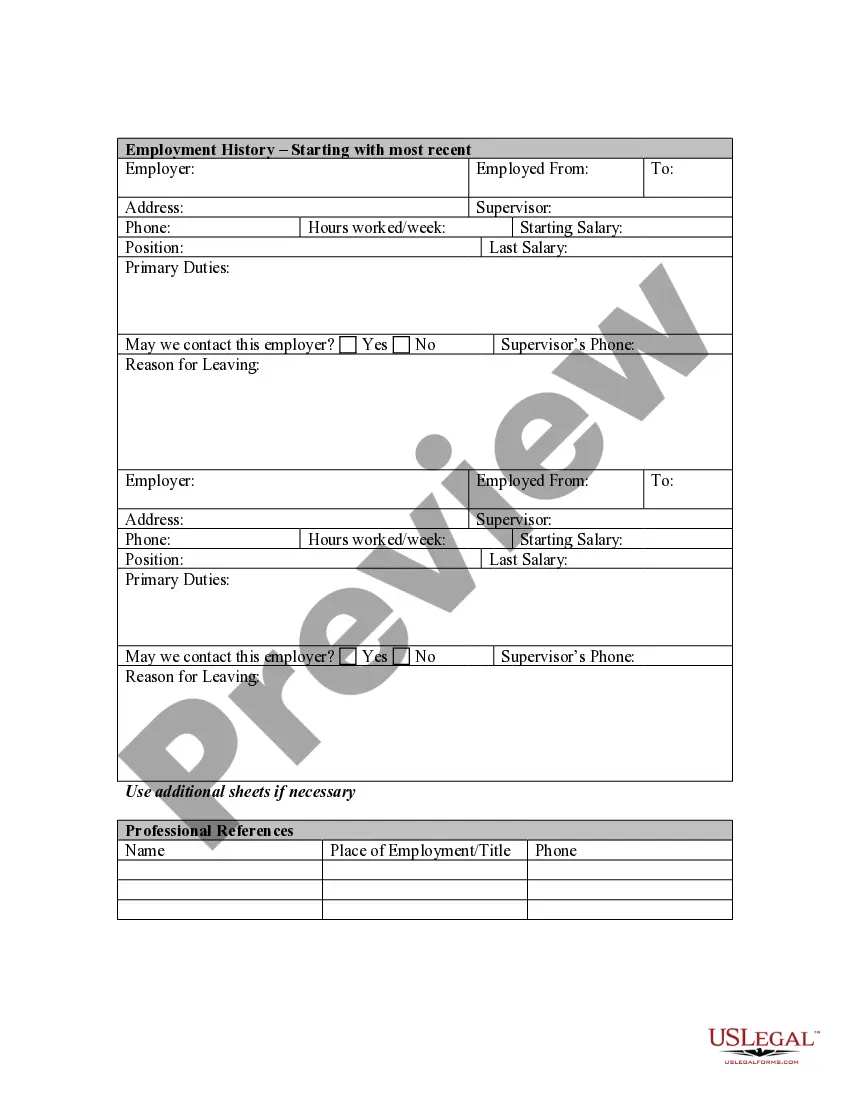
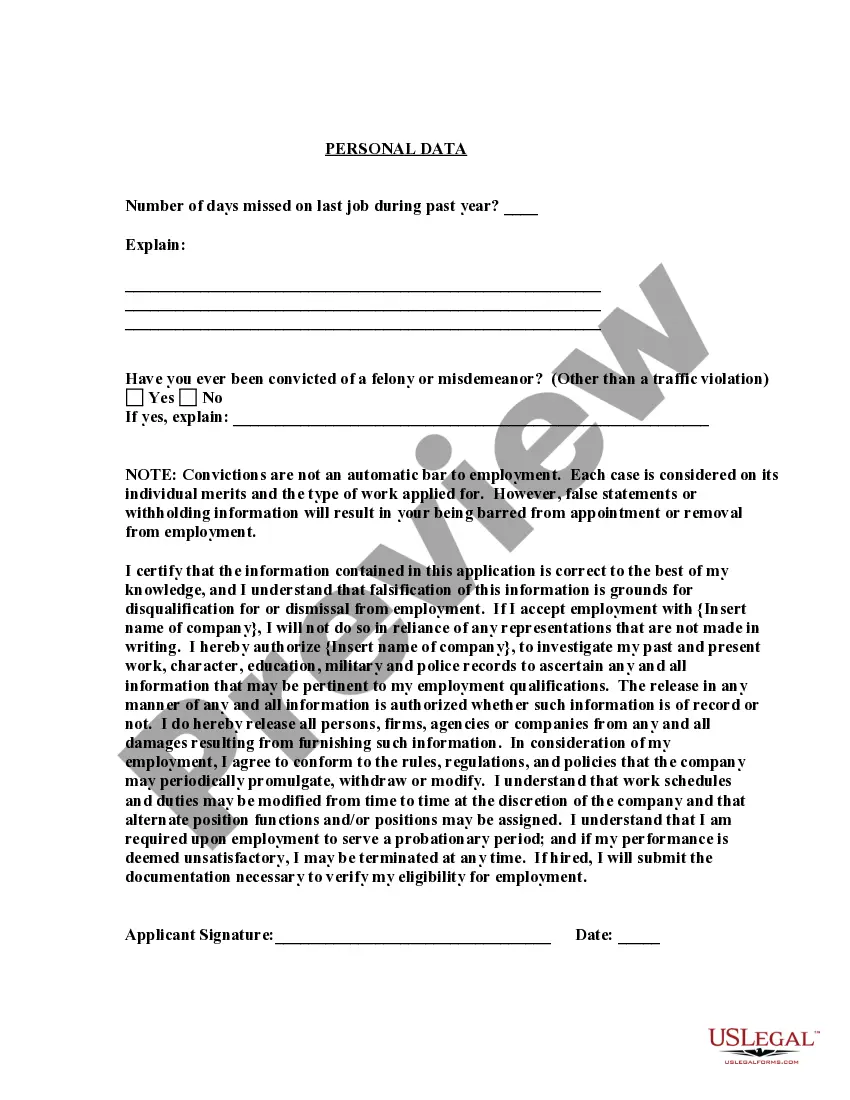
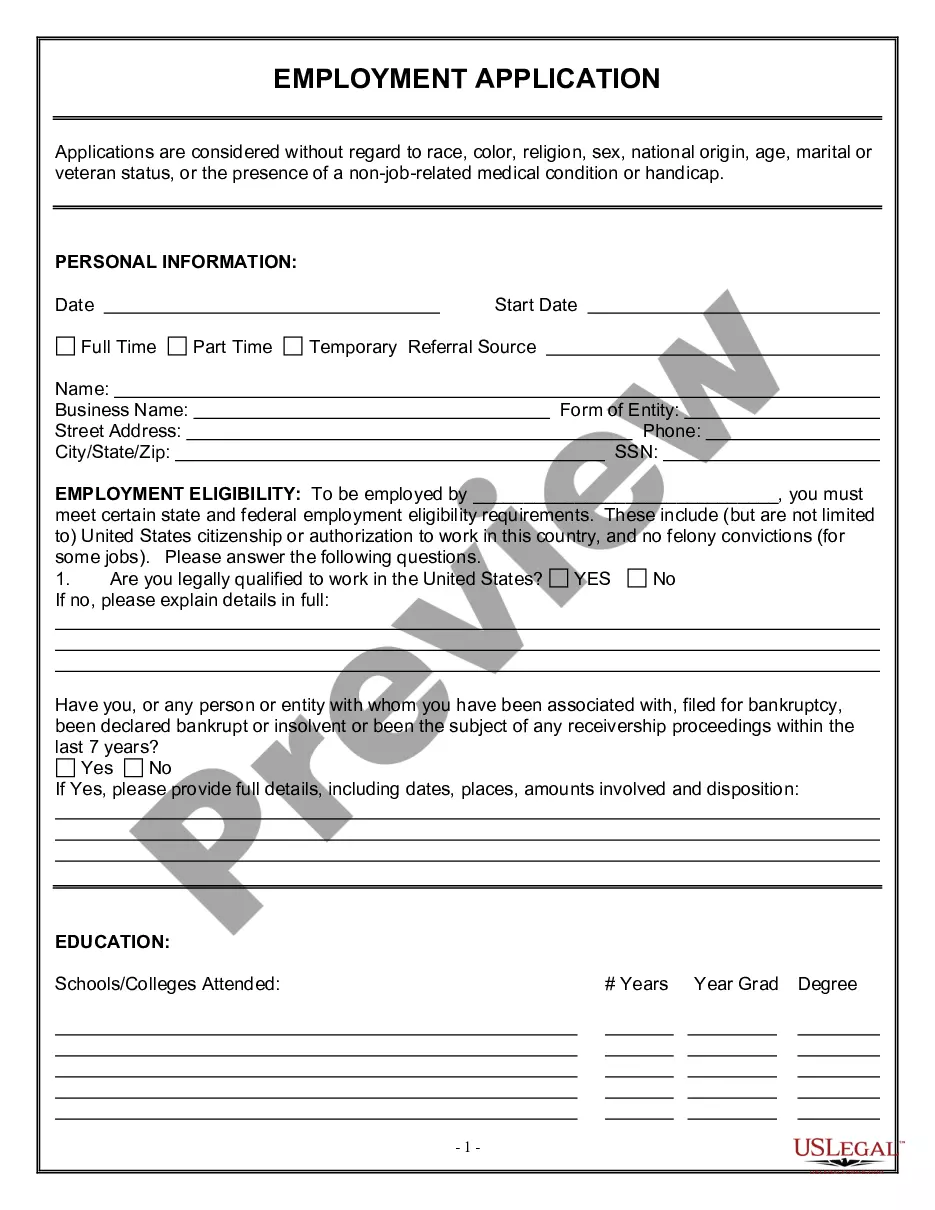
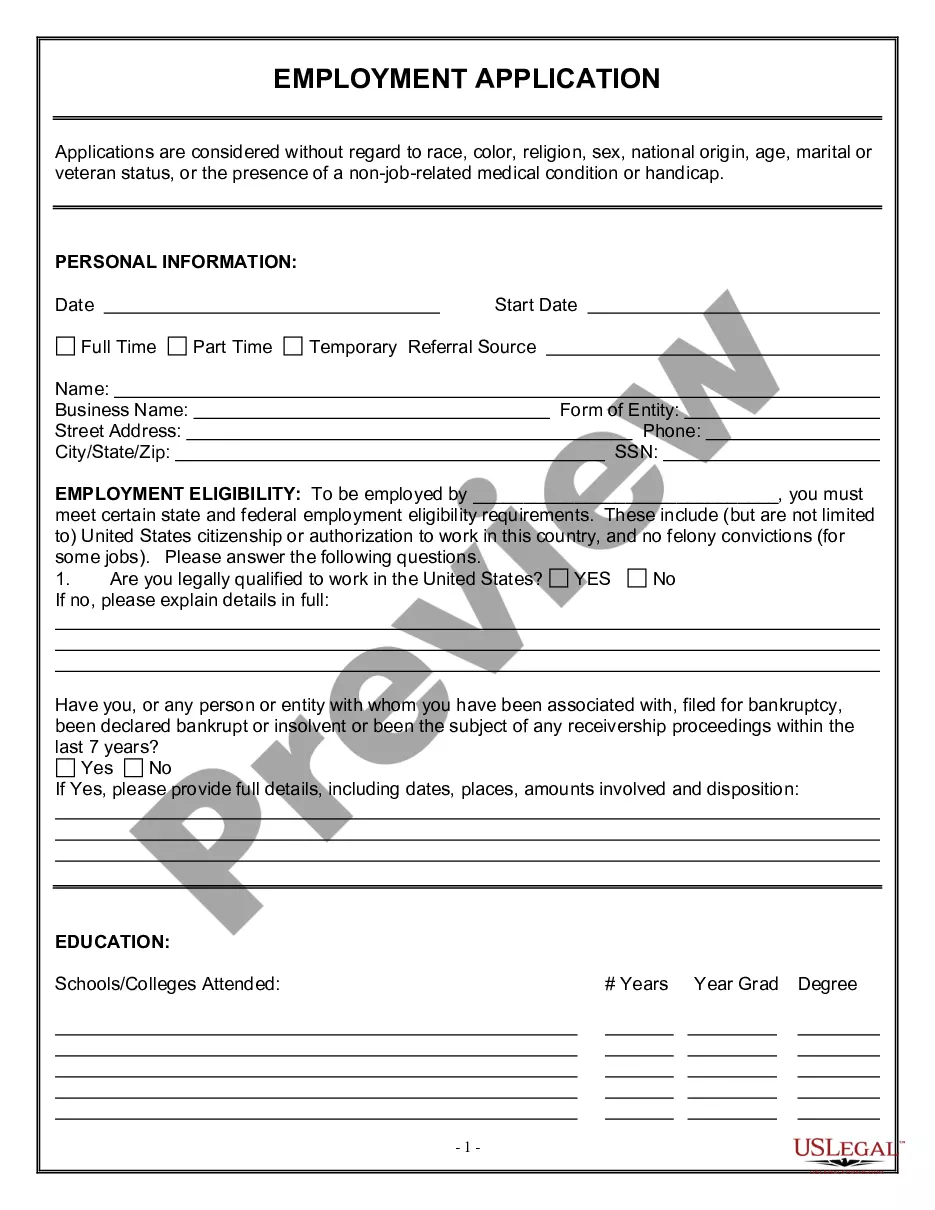
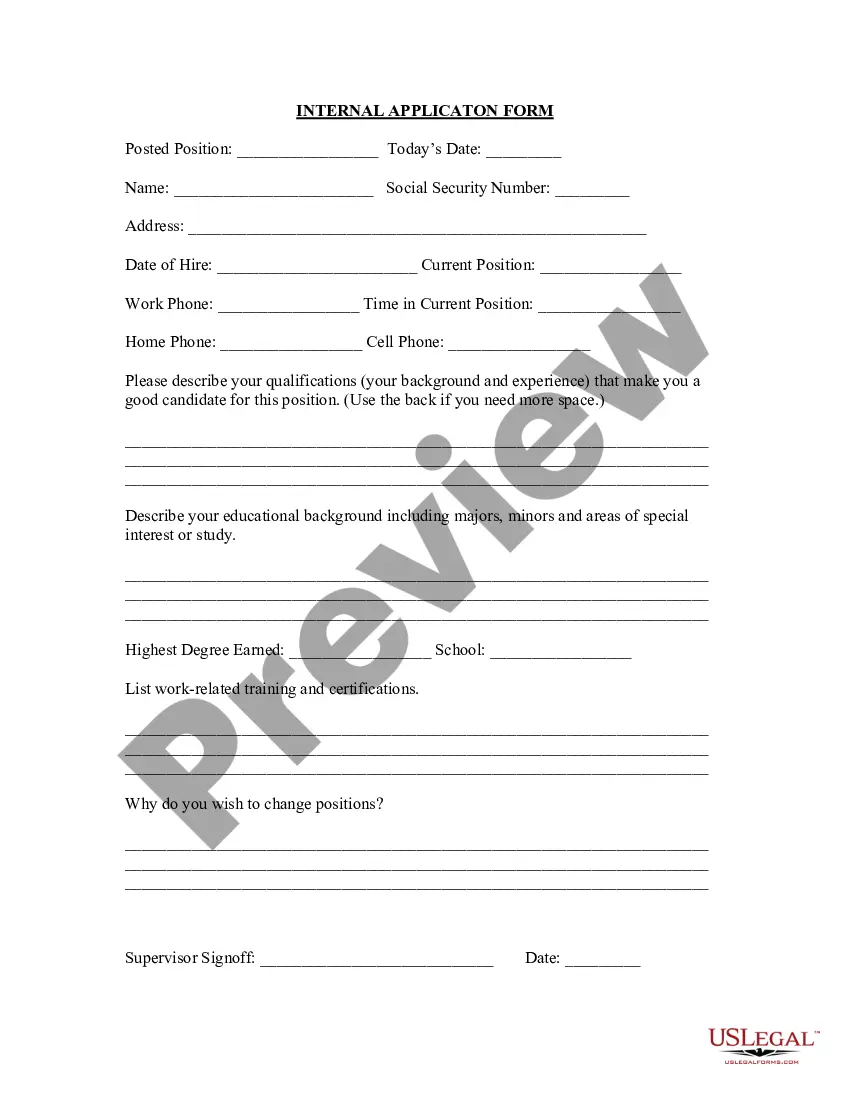
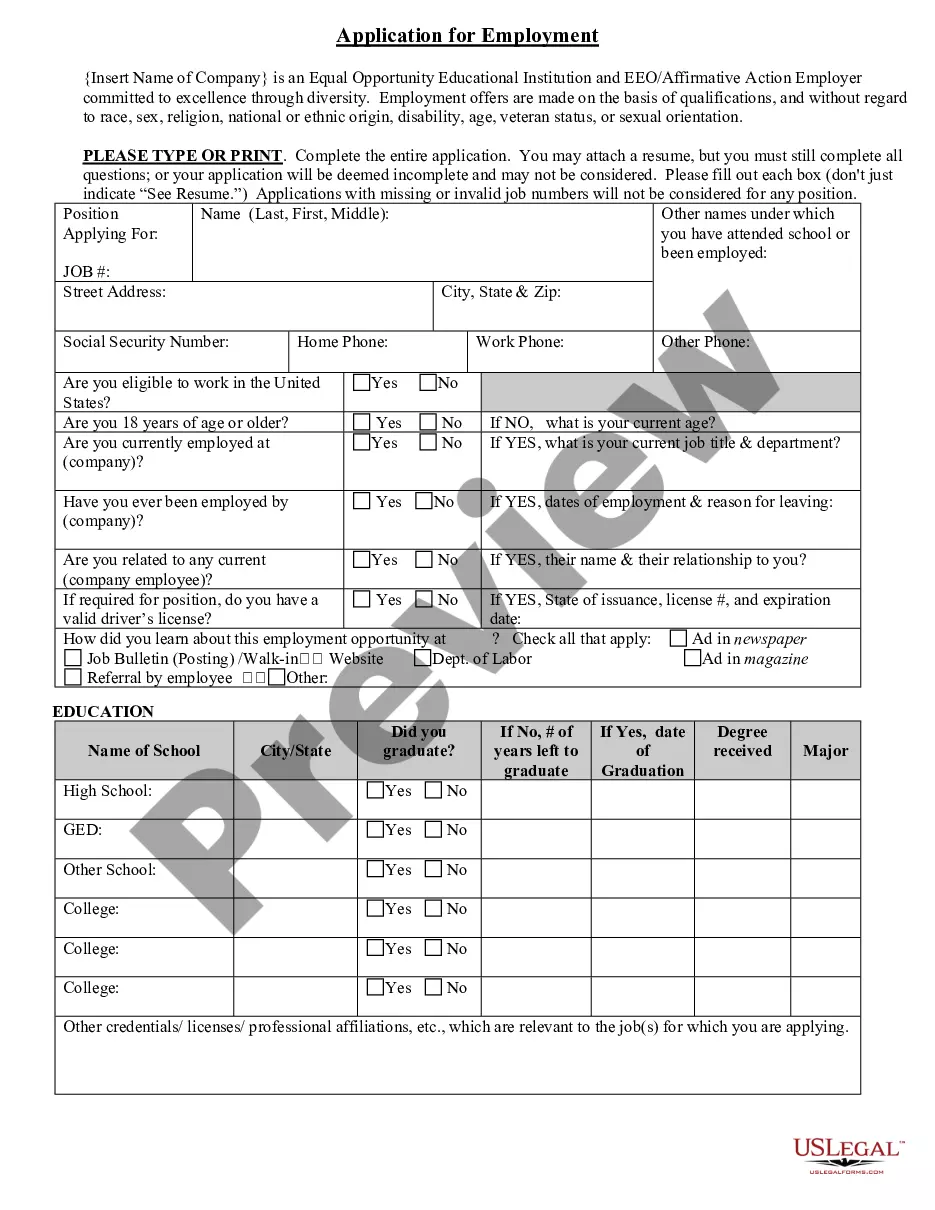
New Jersey Application for Work or Employment - Clerical, Exempt, Executive, or Nonexempt Position
Description

Get your form ready online
Our built-in tools help you complete, sign, share, and store your documents in one place.
Make edits, fill in missing information, and update formatting in US Legal Forms—just like you would in MS Word.
Download a copy, print it, send it by email, or mail it via USPS—whatever works best for your next step.
Sign and collect signatures with our SignNow integration. Send to multiple recipients, set reminders, and more. Go Premium to unlock E-Sign.
If this form requires notarization, complete it online through a secure video call—no need to meet a notary in person or wait for an appointment.
We protect your documents and personal data by following strict security and privacy standards.

Make edits, fill in missing information, and update formatting in US Legal Forms—just like you would in MS Word.

Download a copy, print it, send it by email, or mail it via USPS—whatever works best for your next step.

Sign and collect signatures with our SignNow integration. Send to multiple recipients, set reminders, and more. Go Premium to unlock E-Sign.

If this form requires notarization, complete it online through a secure video call—no need to meet a notary in person or wait for an appointment.

We protect your documents and personal data by following strict security and privacy standards.
Looking for another form?




How to fill out Application For Work Or Employment - Clerical, Exempt, Executive, Or Nonexempt Position?
If you require to obtain, acquire, or print official document templates, utilize US Legal Forms, the foremost collection of official forms accessible online.
Take advantage of the site’s simple and convenient search to find the documents you need.
A variety of templates for business and personal use are organized by category and state, or keywords.
Step 4. Once you have found the form you need, select the Get now option. Choose the payment plan you prefer and enter your details to create an account.
Step 5. Process the payment. You can use your credit card or PayPal account to complete the transaction.
- Use US Legal Forms to obtain the New Jersey Application for Work or Employment - Clerical, Exempt, Executive, or Nonexempt Position with just a few clicks.
- If you are already a US Legal Forms user, Log In to your account and then click the Download option to get the New Jersey Application for Work or Employment - Clerical, Exempt, Executive, or Nonexempt Position.
- You can also access forms you have previously downloaded in the My documents section of your account.
- If you are using US Legal Forms for the first time, follow the instructions below.
- Step 1. Ensure you have selected the form for your specific city/state.
- Step 2. Use the Preview option to review the form’s content. Don’t forget to check the details.
- Step 3. If you are not satisfied with the form, use the Search field located at the top of the screen to find other versions of the official form template.
Form popularity
FAQ
An exempt employee is not entitled overtime pay by the Fair Labor Standards Act (FLSA). These salaried employees receive the same amount of pay per pay period, even if they put in overtime hours. A nonexempt employee is eligible to be paid overtime for work in excess of 40 hours per week, per federal guidelines.
With few exceptions, to be exempt an employee must (a) be paid at least $23,600 per year ($455 per week), and (b) be paid on a salary basis, and also (c) perform exempt job duties. These requirements are outlined in the FLSA Regulations (promulgated by the U.S. Department of Labor).
Simply put, an exempt employee is someone exempt from receiving overtime pay. It is a category of employees who do not qualify for minimum wage or overtime pay as guaranteed by Fair Labor Standard Act (FLSA). Exempt employees are paid a salary instead of hourly wages and their work is professional in nature.
Effective December 31, 2020, in Nassau, Suffolk and Westchester counties, the minimum salary threshold for an employee to qualify as exempt under such exemptions increased to $1,050.00 per week ($54,600.00 per year).
Under federal and New Jersey law, an employee who is classified as exempt is not entitled to be paid overtime, at a rate of one and one-half times his or her normal rate of pay, for hours worked in excess of forty in a workweek.
An exempt employee is not entitled overtime pay by the Fair Labor Standards Act (FLSA). These salaried employees receive the same amount of pay per pay period, even if they put in overtime hours. A nonexempt employee is eligible to be paid overtime for work in excess of 40 hours per week, per federal guidelines.
Exempt employees refer to workers in the United States who are not entitled to overtime pay. This simply implies that employers of exempt employees are not bound by law to pay them for any extra hours of work. The federal standard for work hours in the United States is 40 hours per workweek.
The FLSA includes these job categories as exempt: professional, administrative, executive, outside sales, and computer-related. The details vary by state, but if an employee falls in the above categories, is salaried, and earns a minimum of $684 per week or $35,568 annually, then they are considered exempt.
If you are a non-exempt employee, you have the right to receive minimum hourly wages, overtime at a rate of one-and-one-half times your hourly rate and the right to be paid for all of the hours you work under federal and state law.