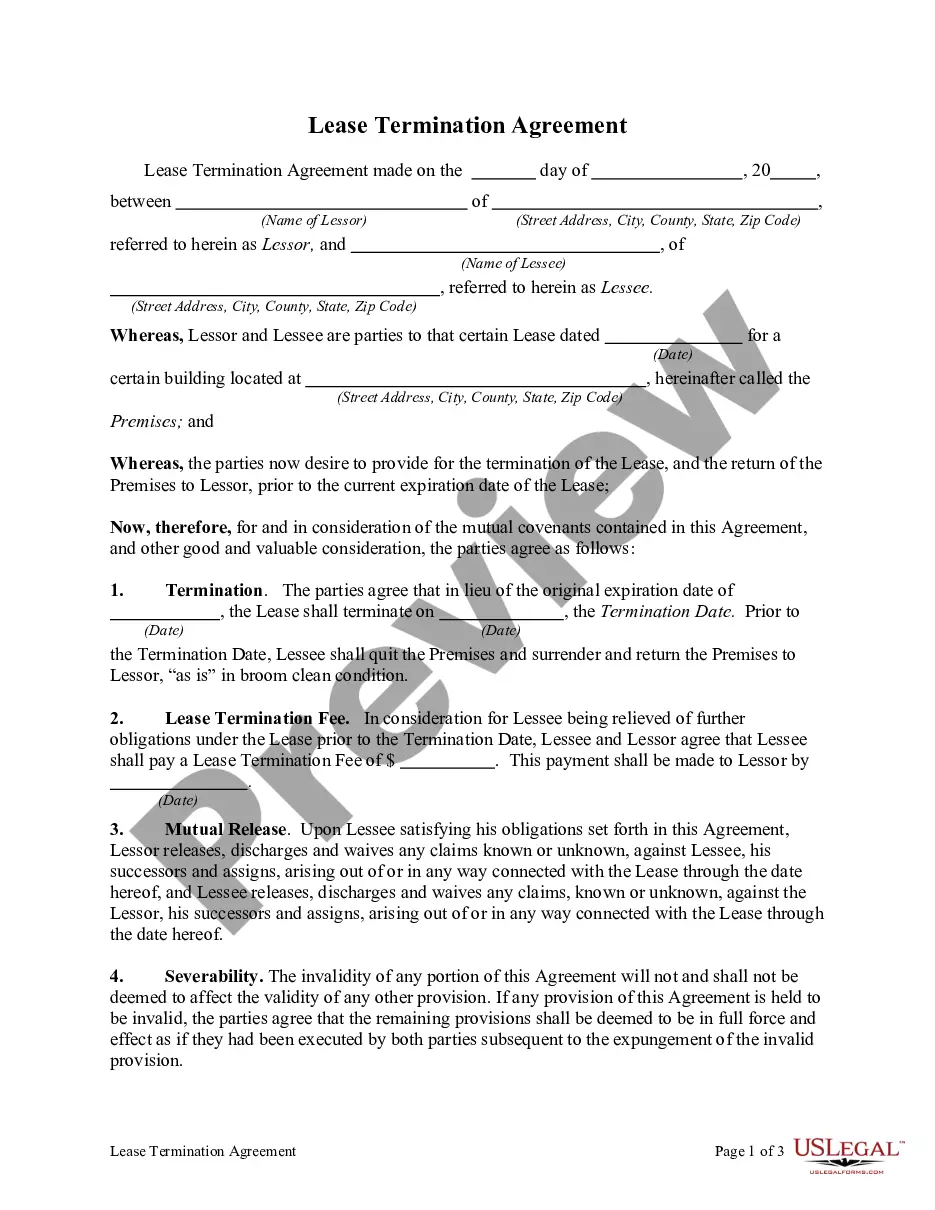
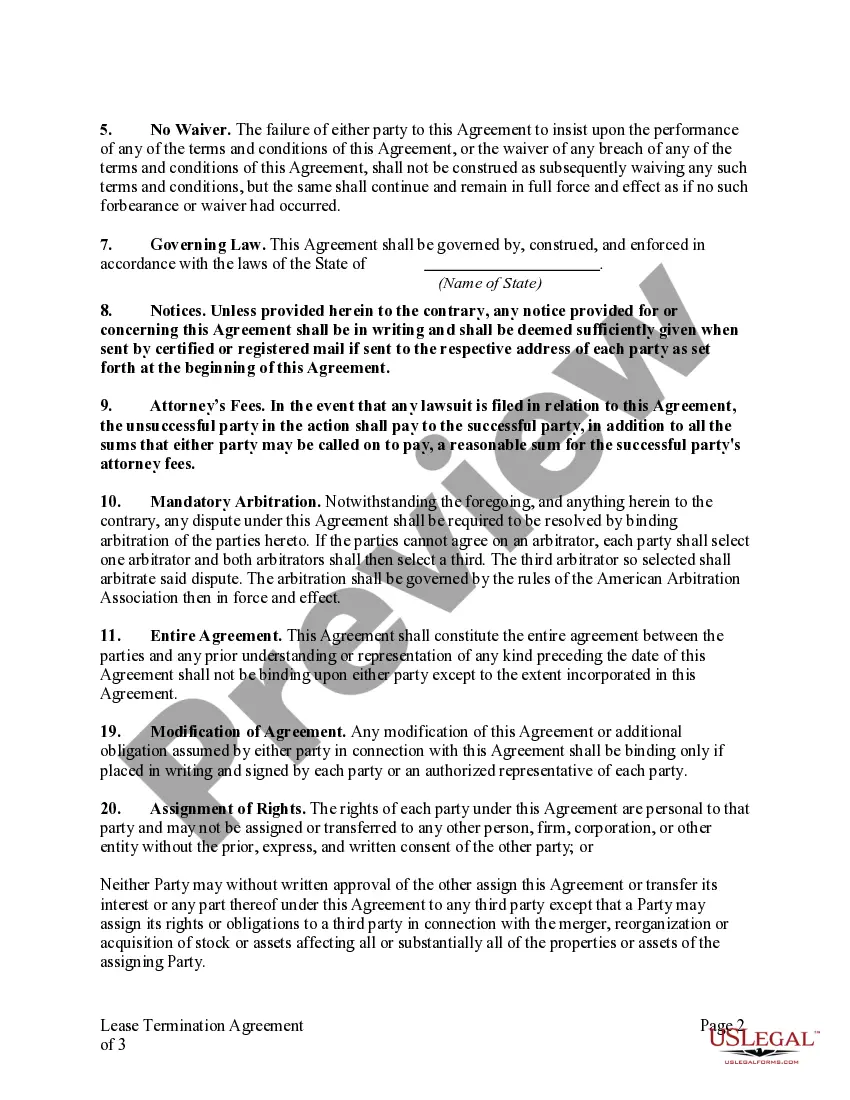
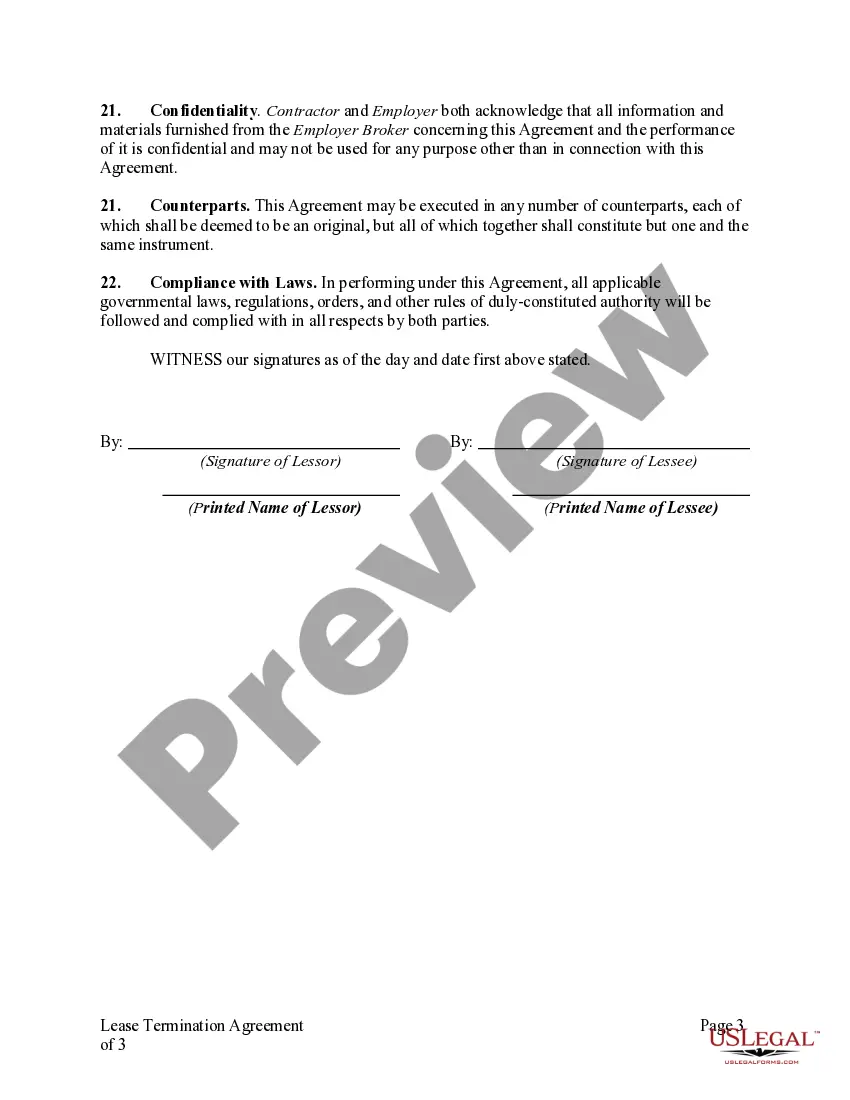
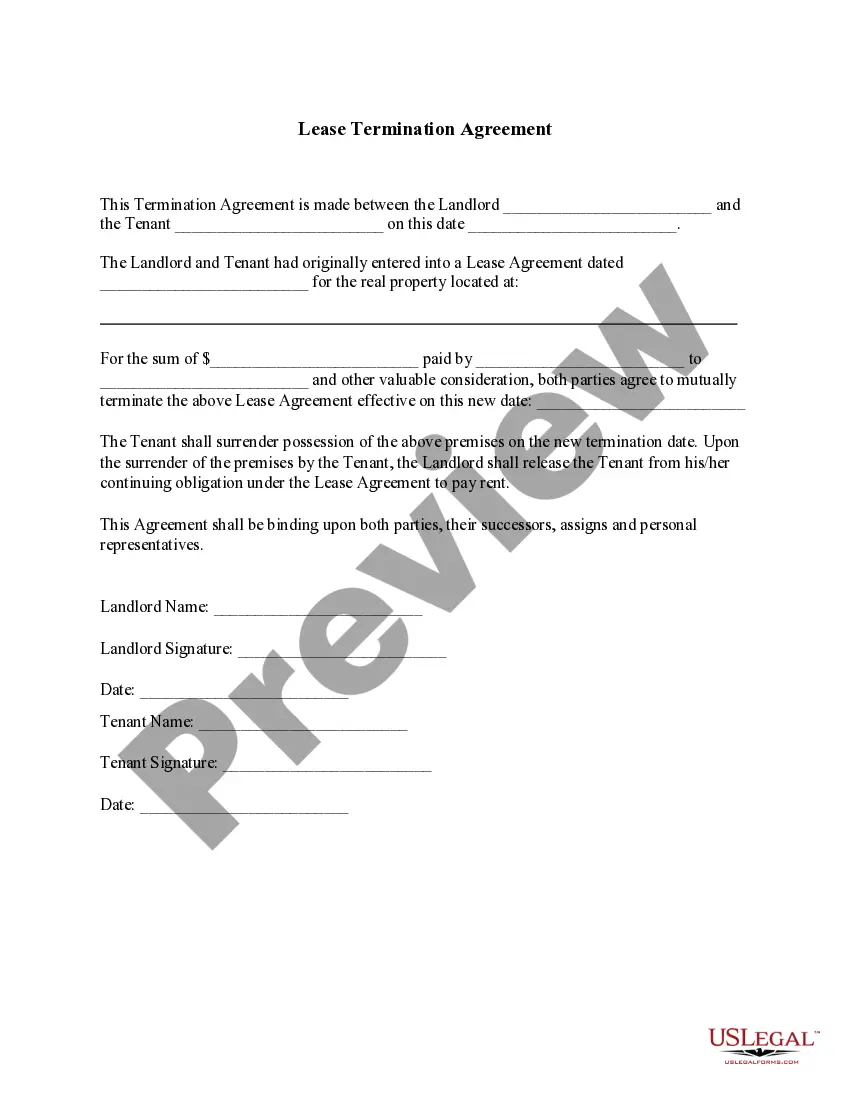
New Jersey Lease Termination Agreement
Description
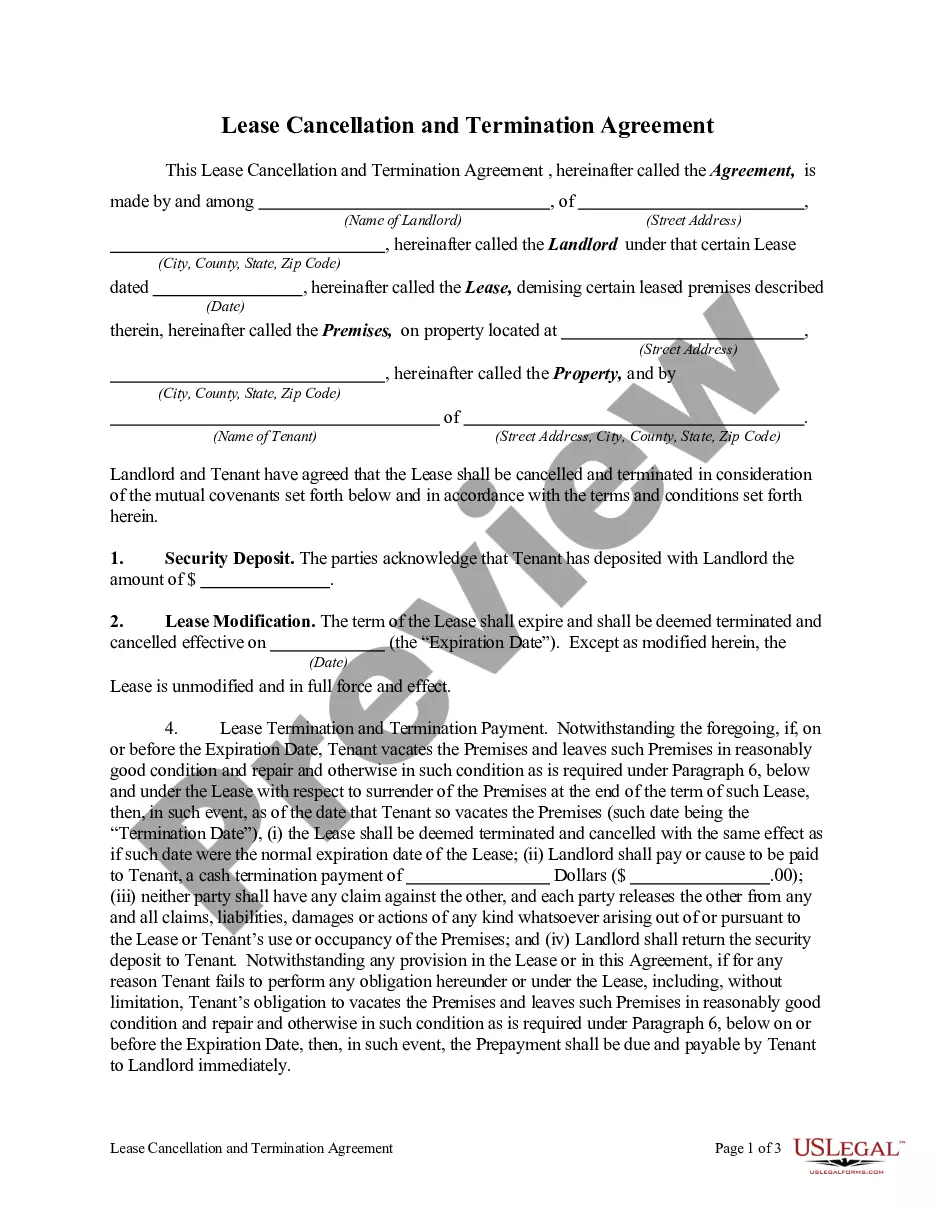
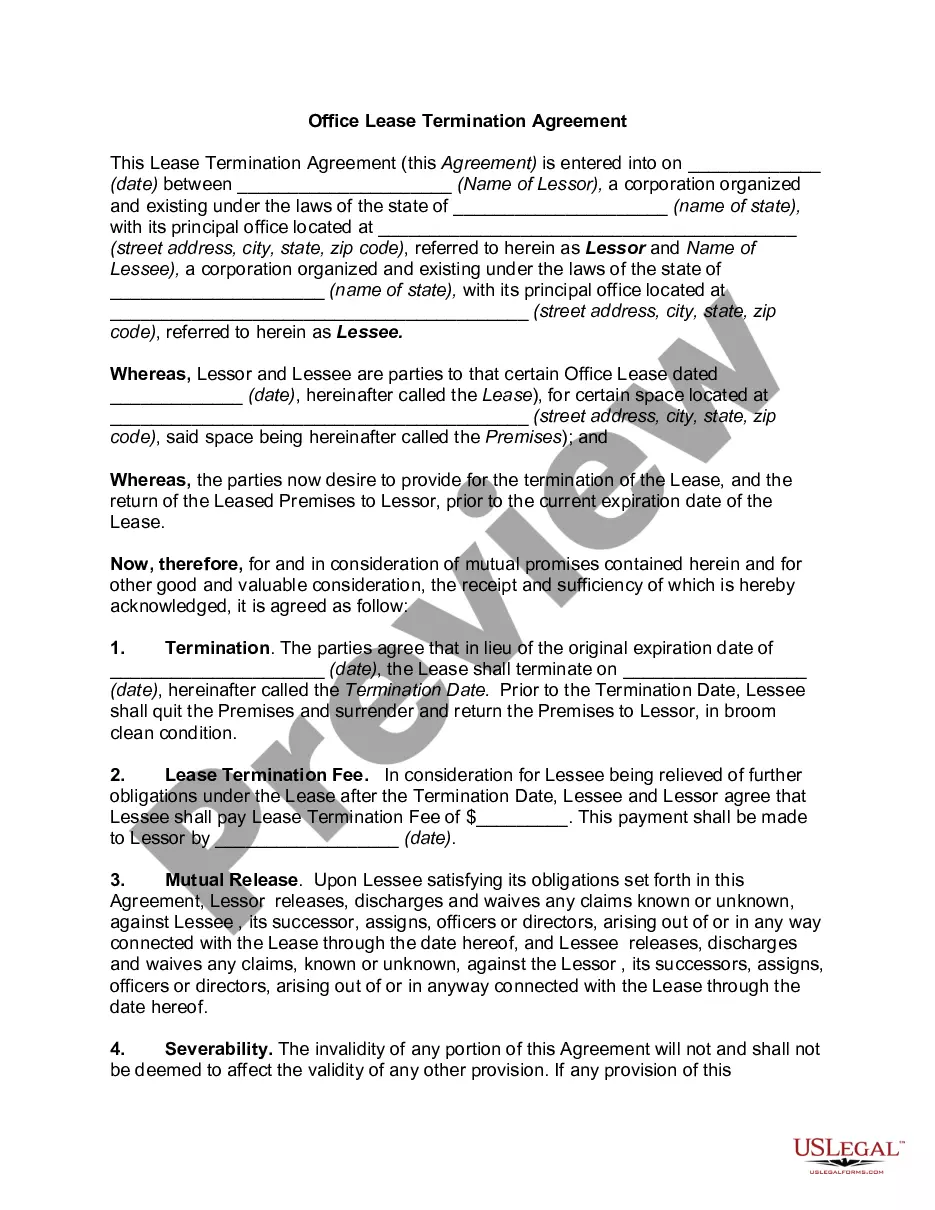
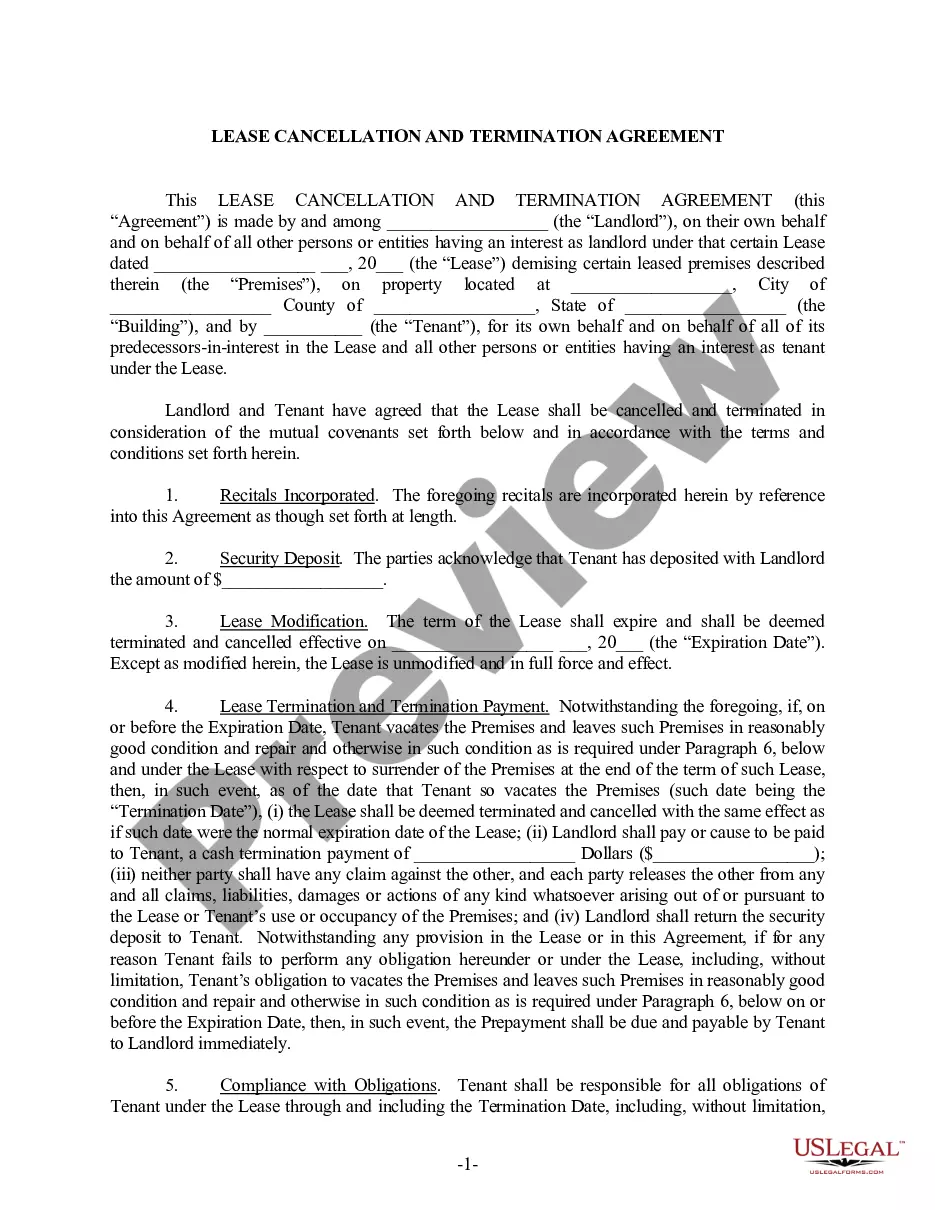
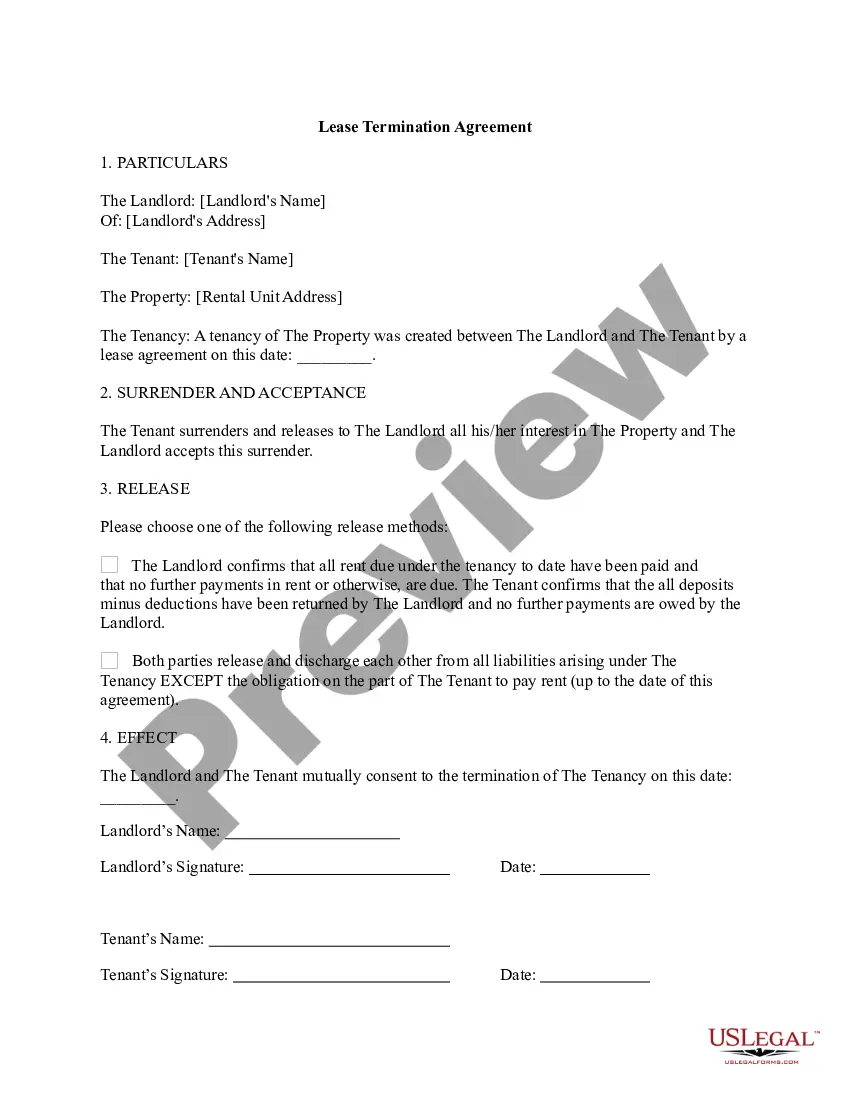
Get your form ready online
Our built-in tools help you complete, sign, share, and store your documents in one place.
Make edits, fill in missing information, and update formatting in US Legal Forms—just like you would in MS Word.
Download a copy, print it, send it by email, or mail it via USPS—whatever works best for your next step.
Sign and collect signatures with our SignNow integration. Send to multiple recipients, set reminders, and more. Go Premium to unlock E-Sign.
If this form requires notarization, complete it online through a secure video call—no need to meet a notary in person or wait for an appointment.
We protect your documents and personal data by following strict security and privacy standards.

Make edits, fill in missing information, and update formatting in US Legal Forms—just like you would in MS Word.

Download a copy, print it, send it by email, or mail it via USPS—whatever works best for your next step.

Sign and collect signatures with our SignNow integration. Send to multiple recipients, set reminders, and more. Go Premium to unlock E-Sign.

If this form requires notarization, complete it online through a secure video call—no need to meet a notary in person or wait for an appointment.

We protect your documents and personal data by following strict security and privacy standards.
Looking for another form?



How to fill out Lease Termination Agreement?
Have you found yourself in a situation where you need documents for either professional or personal purposes almost every day.
There are numerous legal document templates accessible online, but obtaining reliable versions can be challenging.
US Legal Forms offers thousands of template formats, including the New Jersey Lease Termination Agreement, designed to comply with federal and state regulations.
Once you find the appropriate form, click on Get now.
Select the pricing plan you want, fill in the required information to create your account, and complete the transaction using your PayPal or credit card. Choose a convenient document format and download your copy. You can find all the document formats you have purchased in the My documents section. You may download an additional copy of the New Jersey Lease Termination Agreement at any time, if needed. Simply click on the desired form to download or print the document template.
- If you are already familiar with the US Legal Forms website and possess an account, simply Log In.
- Then, you can download the New Jersey Lease Termination Agreement template.
- If you do not have an account and wish to start using US Legal Forms, follow these steps.
- Locate the form you need and ensure it is for your correct area/county.
- Utilize the Preview button to review the form.
- Check the description to ensure you have selected the correct form.
- If the form is not what you are looking for, use the Search field to find the form that suits your needs and requirements.
Form popularity
FAQ
In New Jersey, if a landlord does not intend to renew a lease, they must provide the tenant with written notice. The amount of notice required generally depends on the length of the tenancy—the longer the tenant has lived in the property, the more notice is needed, but typically it is a minimum of 30 days. Landlords should communicate this clearly to ensure compliance with the New Jersey Lease Termination Agreement. Using platforms like USLegalForms can simplify this process, providing templates that offer legal guidance on delivering proper notice.
A 30-day notice to vacate in New Jersey is a formal notice given by a tenant to their landlord, indicating the intention to leave the rental property. This notice provides the landlord with adequate time to find new tenants and allows the tenant to fulfill their lease obligations under the New Jersey Lease Termination Agreement. It's crucial for tenants to deliver this notice in writing to avoid potential disputes. Be sure to retain a copy for your records to demonstrate compliance with state law.
Yes, breaking a lease can potentially harm your credit score, especially if the landlord reports it to the credit bureaus. To protect yourself, it is wise to approach the process with a formal New Jersey Lease Termination Agreement. This document can help you establish a legal framework that outlines your departure, aiming to minimize any negative impact on your credit report.
Returning a lease typically does not directly hurt your credit score, but if your landlord reports it as a breach, it could have consequences. If you properly execute a New Jersey Lease Termination Agreement, it can clarify your intentions and help avoid misunderstandings, protecting your credit in the process.
Common reasons to break a lease include job relocation, safety concerns, and serious financial hardship. Each situation can vary, so it’s beneficial to have a written New Jersey Lease Termination Agreement that clearly outlines your circumstances. This approach can help both you and your landlord come to an amicable understanding.
Yes, breaking a lease can affect your rental history and future rental applications. Landlords often check rental history, and a lease violation may raise concerns. To counter any potential issues, consider utilizing a New Jersey Lease Termination Agreement, which can help validate your reasons for leaving.
Breaking a lease can impact your credit score, but the extent of the drop varies. Typically, if landlords report the breach to credit agencies, you might see a decrease. However, by using a New Jersey Lease Termination Agreement, you can mitigate some negative effects, as it shows a formal resolution to the lease issue.
To terminate a lease in New Jersey, first review your lease agreement for any specific termination procedures. Then, provide written notice to your landlord as outlined in the New Jersey Lease Termination Agreement, detailing your intent to terminate and the effective date. This step is crucial to avoid any misunderstandings or legal complications, and utilizing platforms like uslegalforms can greatly streamline the process.
A lease termination clause typically outlines the conditions under which either party may end the lease agreement. For instance, a clause could specify that either party must provide a written notice 30 days prior to termination. Understanding these clauses in your New Jersey Lease Termination Agreement will help ensure you are compliant and aware of your obligations.
In New Jersey, a good cause to terminate a lease includes reasons such as failure to maintain the property, illegal activity, or significant changes in your financial situation. It’s important to document these issues and refer to the New Jersey Lease Termination Agreement for guidance on your rights. This not only helps you make a strong case but also protects you during the termination process.