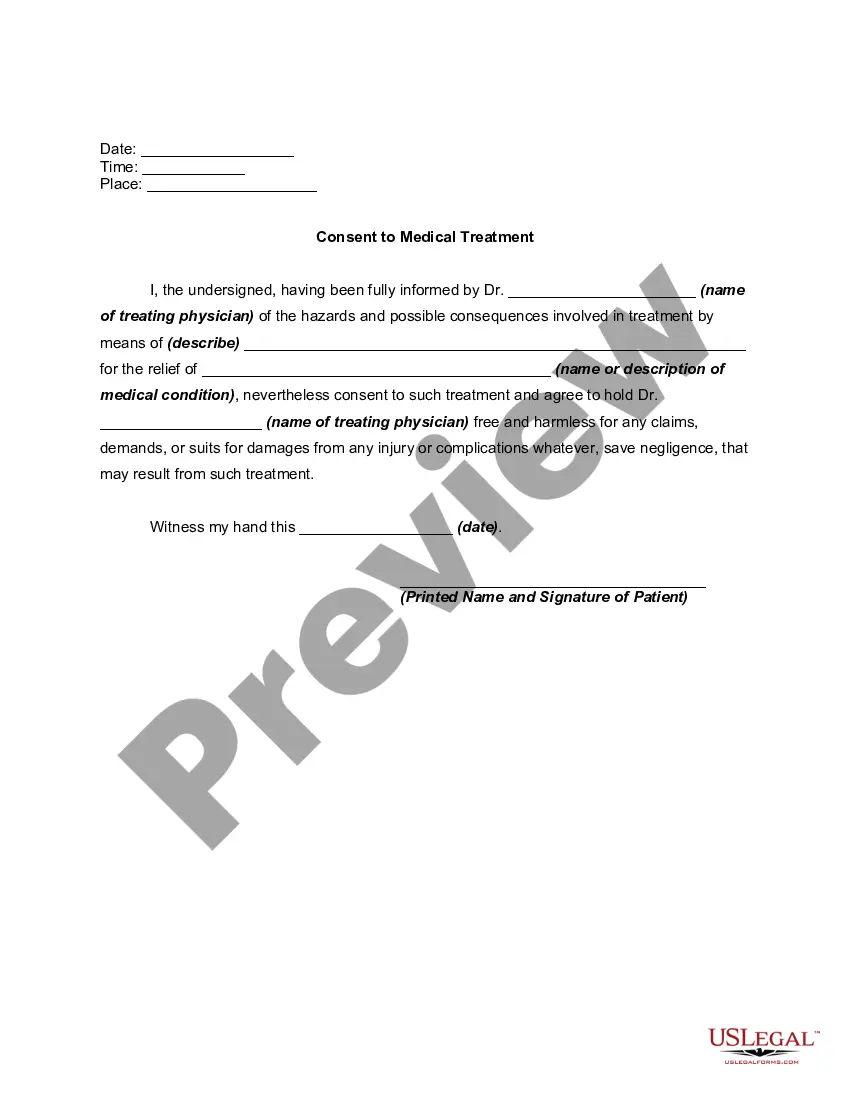
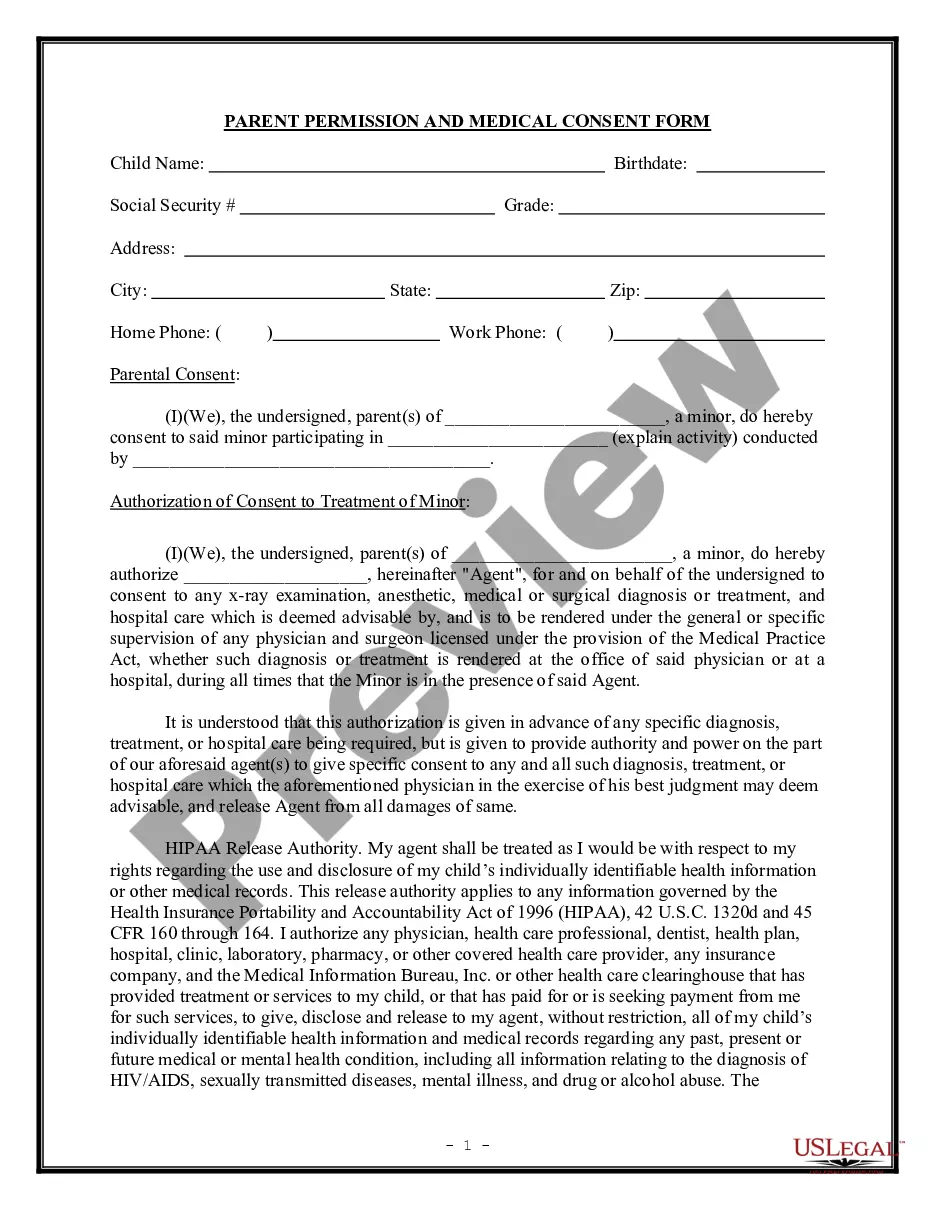
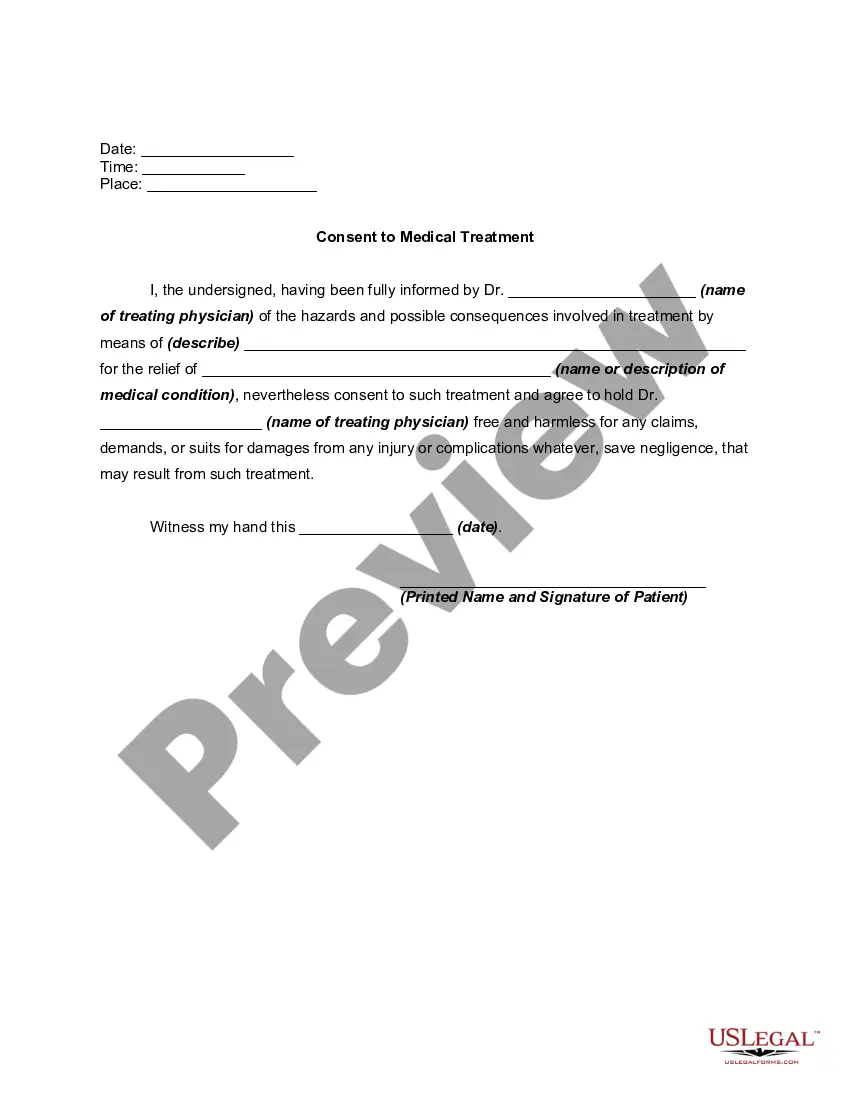
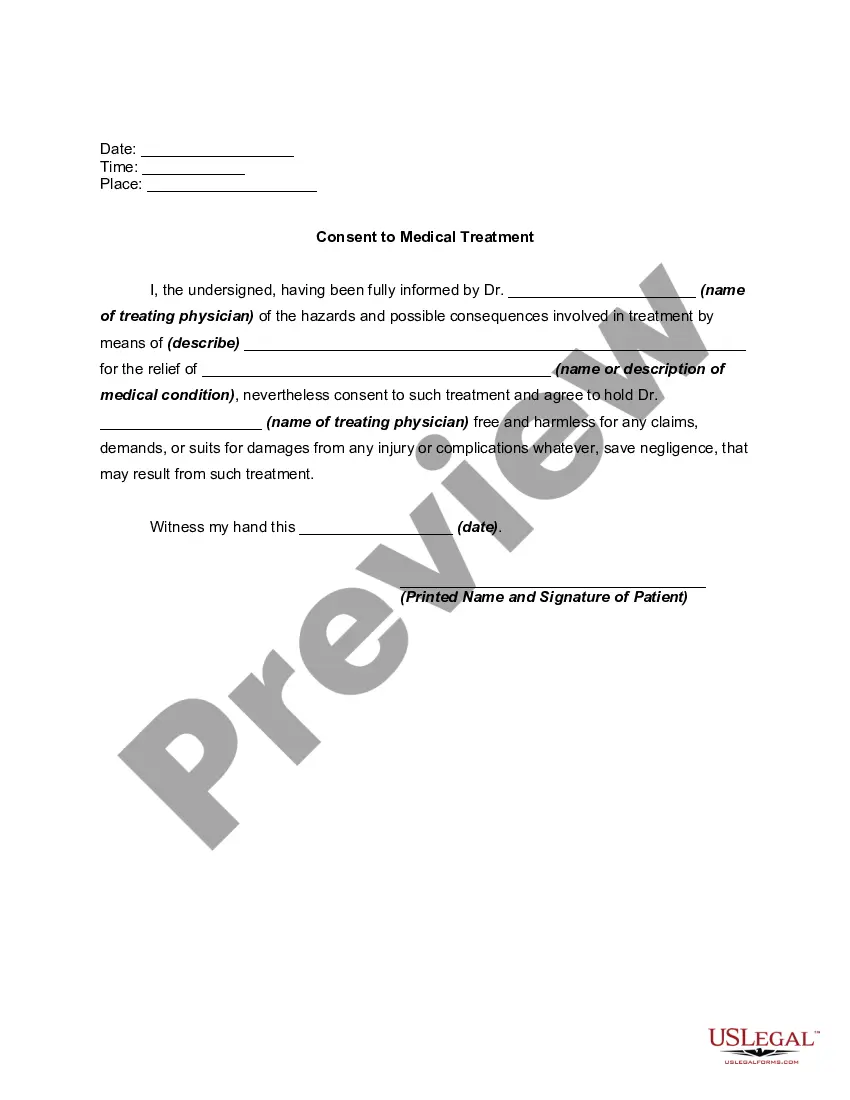
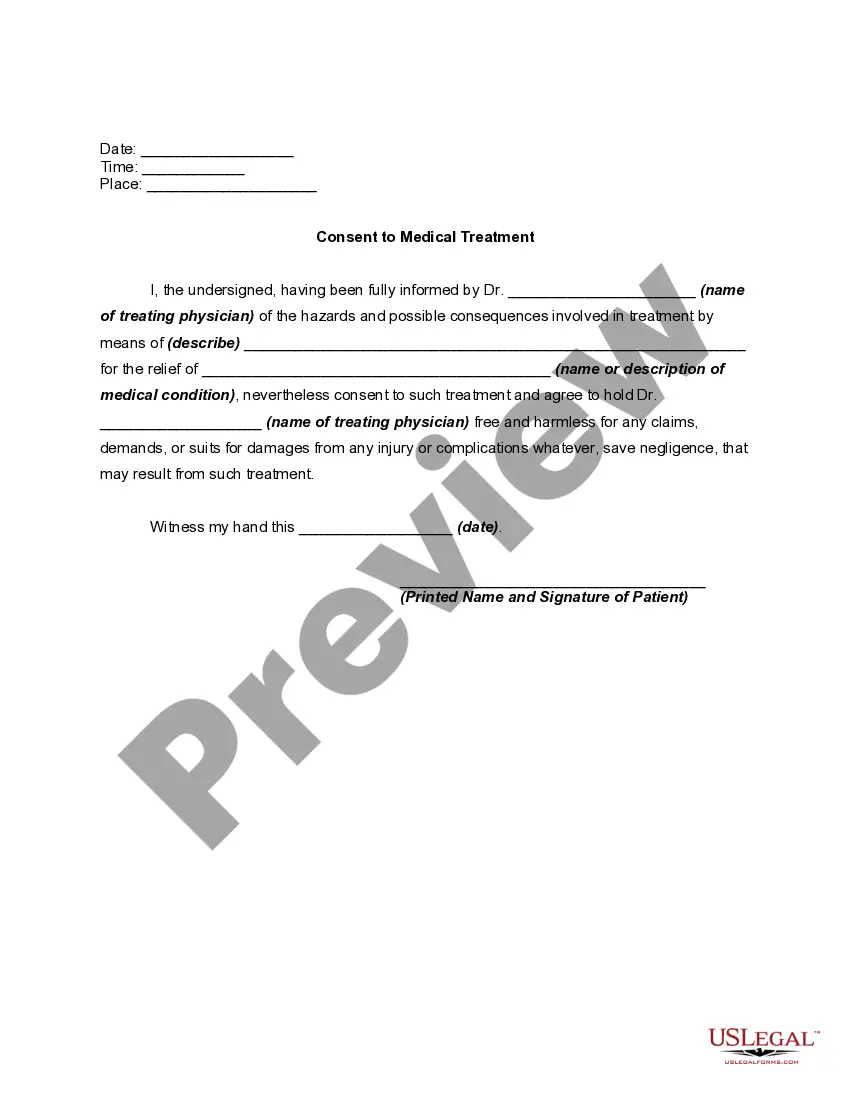
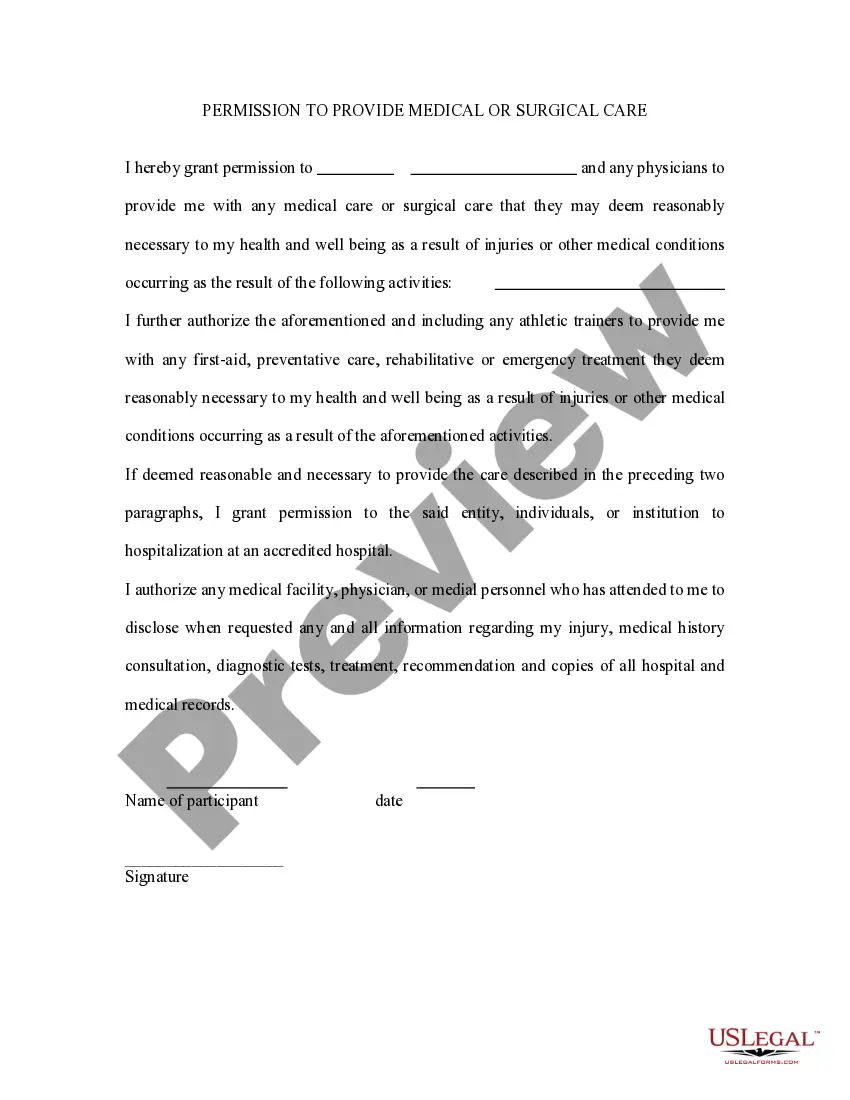
New Jersey Medical Consent for Treatment
Description
Get your form ready online
Our built-in tools help you complete, sign, share, and store your documents in one place.
Make edits, fill in missing information, and update formatting in US Legal Forms—just like you would in MS Word.
Download a copy, print it, send it by email, or mail it via USPS—whatever works best for your next step.
Sign and collect signatures with our SignNow integration. Send to multiple recipients, set reminders, and more. Go Premium to unlock E-Sign.
If this form requires notarization, complete it online through a secure video call—no need to meet a notary in person or wait for an appointment.
We protect your documents and personal data by following strict security and privacy standards.

Make edits, fill in missing information, and update formatting in US Legal Forms—just like you would in MS Word.

Download a copy, print it, send it by email, or mail it via USPS—whatever works best for your next step.

Sign and collect signatures with our SignNow integration. Send to multiple recipients, set reminders, and more. Go Premium to unlock E-Sign.

If this form requires notarization, complete it online through a secure video call—no need to meet a notary in person or wait for an appointment.

We protect your documents and personal data by following strict security and privacy standards.
Looking for another form?
How to fill out Medical Consent For Treatment?
You can invest several hours online looking for the approved document template that meets the federal and state requirements you require.
US Legal Forms provides thousands of legal documents that are verified by professionals.
It is easy to download or print the New Jersey Medical Consent for Treatment from our platform.
If available, use the Review option to look through the document template as well. If you want to find another variation of the form, use the Search field to locate the template that fits your needs and requirements. Once you have identified the format you want, click Acquire now to proceed. Select the pricing plan you prefer, enter your credentials, and register for a free account on US Legal Forms. Complete the transaction. You can use your Visa or Mastercard or PayPal account to purchase the legal document. Choose the format of the document and download it to your device. Make changes to your document if necessary. You can fill out, modify, and sign, and print the New Jersey Medical Consent for Treatment. Download and print thousands of document templates using the US Legal Forms website, which offers the largest collection of legal forms. Utilize professional and state-specific templates to address your business or personal needs.
- If you already have a US Legal Forms account, you can Log In and then click on the Download button.
- Afterward, you can fill out, modify, print, or sign the New Jersey Medical Consent for Treatment.
- Every legal document template you acquire is yours indefinitely.
- To obtain another copy of any downloaded form, navigate to the My documents section and click the corresponding option.
- If this is your first time visiting the US Legal Forms site, follow the simple steps below.
- First, ensure that you have selected the correct document template for the state/city you desire.
- Read the document description to confirm that you have chosen the correct form.
Form popularity
FAQ
There are several exceptions to the requirement for consent in healthcare, including medical emergencies, when the patient is incapacitated, in cases of public health concerns, and when the patient poses a risk to themselves or others. These exceptions are crucial for ensuring timely and necessary medical interventions. Understanding these exceptions as part of New Jersey Medical Consent for Treatment can provide clarity for both patients and providers.
In New Jersey, individuals aged 16 and older can consent to therapy without parental involvement, particularly for mental health services. This policy acknowledges the importance of autonomy in managing one’s mental health. Engaging in discussions about New Jersey Medical Consent for Treatment can help minors and their guardians make informed decisions.
The three main types of consent in healthcare are informed consent, implied consent, and express consent. Informed consent involves detailed understanding and agreement by the patient after discussing treatment options. Implied consent, often applicable in emergencies, is when the patient's actions indicate consent to treatment, while express consent is explicitly stated and documented.
The age of consent for therapy in New Jersey is typically set at 18 years old. Nevertheless, minors aged 16 years and older can consent to their mental health treatment without parental permission in some cases. Knowing the specifics of New Jersey Medical Consent for Treatment empowers individuals seeking therapy to navigate their healthcare options.
In New Jersey, the minimum age for an individual to give consent for medical treatment is 18 years old. However, minors may receive certain treatments, particularly related to mental health, without parental consent. Understanding New Jersey Medical Consent for Treatment can help clarify these situations and ensure appropriate care.
The three types of consent for medical treatment include informed consent, implied consent, and express consent. Informed consent is when a patient clearly understands the treatment options and agrees to proceed. Implied consent typically occurs in emergency situations where immediate treatment is necessary, while express consent is given verbally or in writing before a procedure.
In New Jersey, a 16 year old has the right to refuse mental health treatment under certain circumstances. It is important to consider the individual's ability to understand their condition and the consequences of their decisions. The concept of informed consent plays a vital role in these discussions, as 16 year-olds may seek treatment while still being able to make choices about their care.
Legal consent in New Jersey refers to the requirement for individuals to agree to medical treatment after being informed of the procedures involved. In the context of New Jersey Medical Consent for Treatment, it ensures that healthcare providers respect patient autonomy while delivering care. This consent must be given voluntarily, and individuals should understand the implications of their decisions.
A physician may not honor an advance directive if they believe the specified treatments contradict the standard of care or if the directive is deemed unclear or outdated. Additionally, situations may arise where medical conditions change unexpectedly, rendering the advance directive less applicable. Physicians must prioritize patient safety and ethical considerations. Understanding the implications of New Jersey medical consent for treatment can clarify these circumstances for both patients and providers.
The most common advance directive is the living will, which details the type of medical treatments a patient wishes to receive or refuse. This document can encompass preferences regarding life support, resuscitation, and other critical care measures. Many individuals choose a living will to ensure their treatment aligns with their values and wishes when they cannot voice them. This aligns closely with the principles of New Jersey medical consent for treatment.