New Jersey Agreement between Certified Disability Advocate and Client

State:
Multi-State
Control #:
US-01812BG
Format:
Word
Instant download

Description

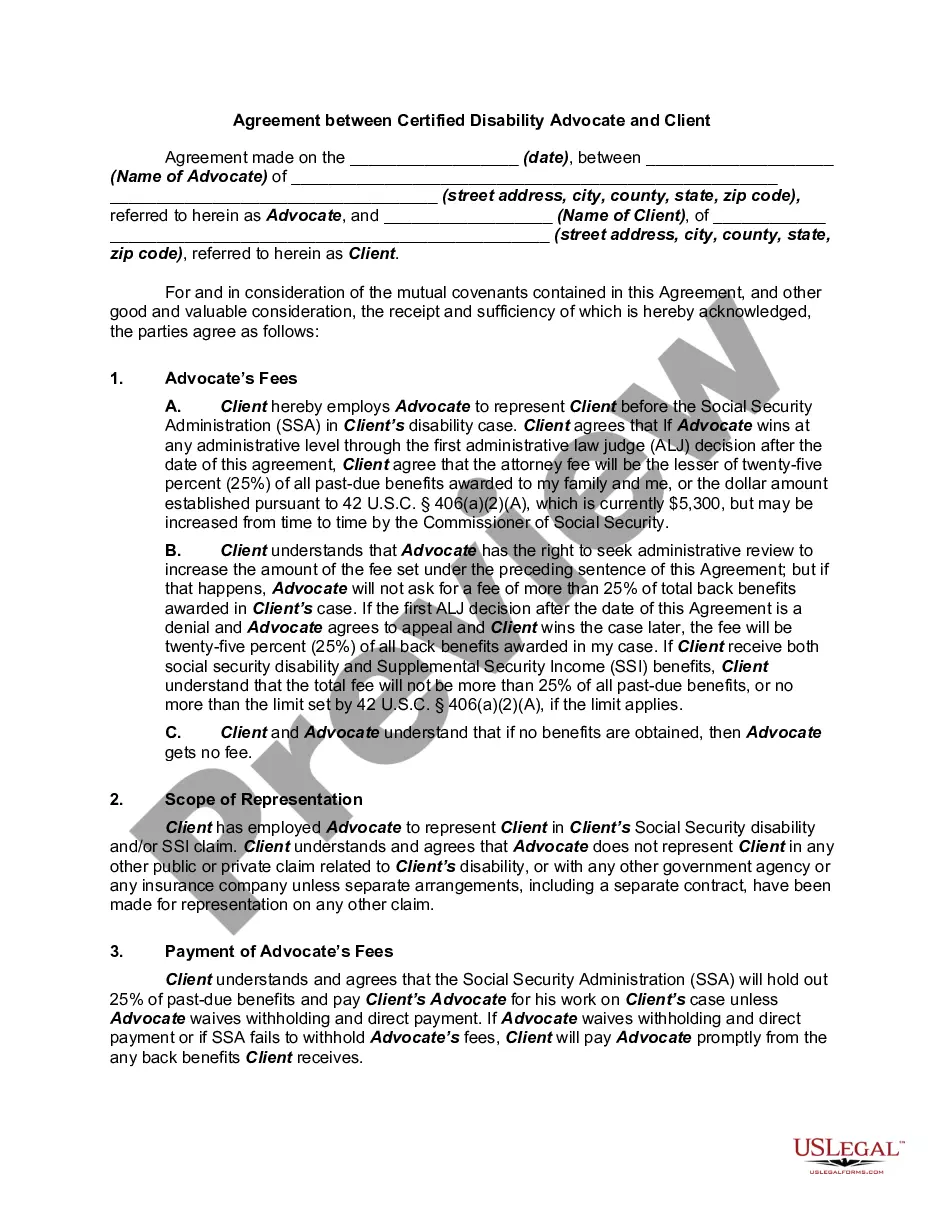
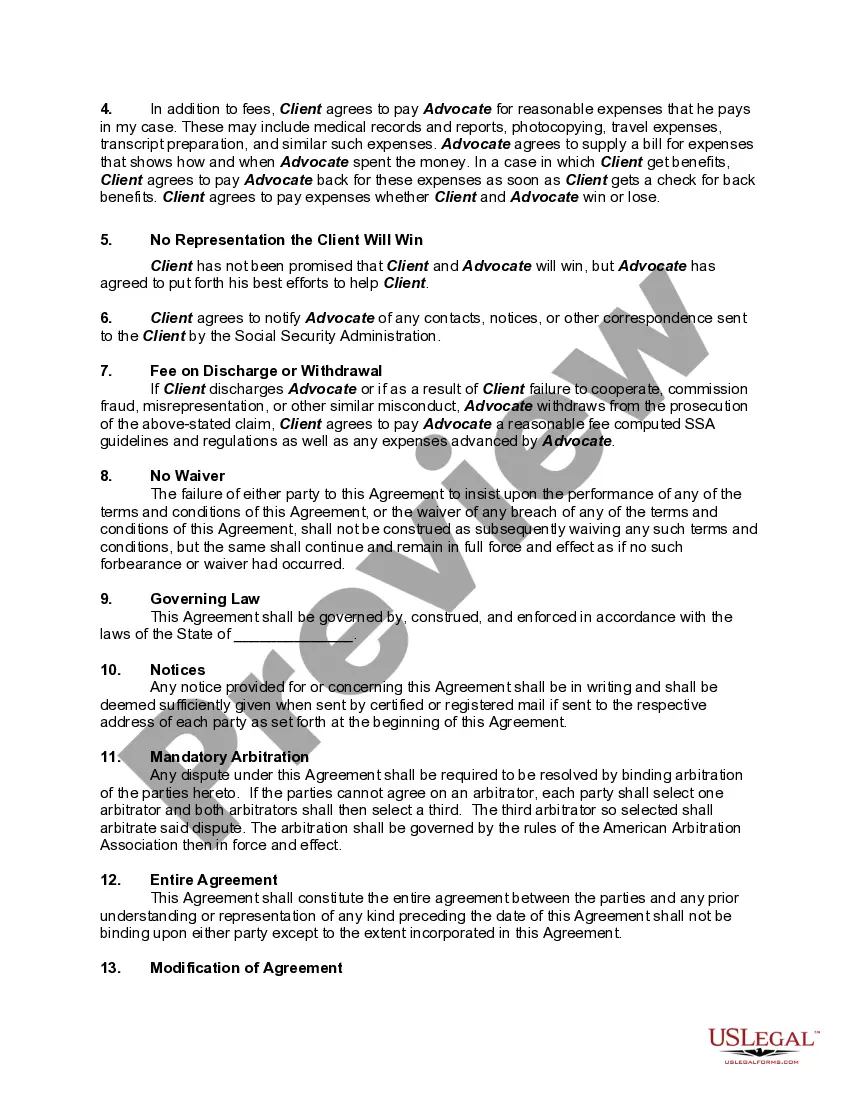
A Disability Advocate, also known as a Disability Consultant or non-attorney Representative, is a specially trained individual who assists others who are applying for Social Security disability benefits.


The duties of a Disability Advocate involve the execution of both formal and informal procedures on behalf of an applicant for Social Security disability benefits. These actions include, but are not limited to, the assessment of a case to determine the approximate percent chance of winning, and the development of a case by requesting copies of the client's medical records. By law, Social Security must consider the advocate's argument before making a final decision. If the advocate's argument is properly structured and supported by the evidence, it can greatly enhance the client's chances of winning benefits.
Free preview
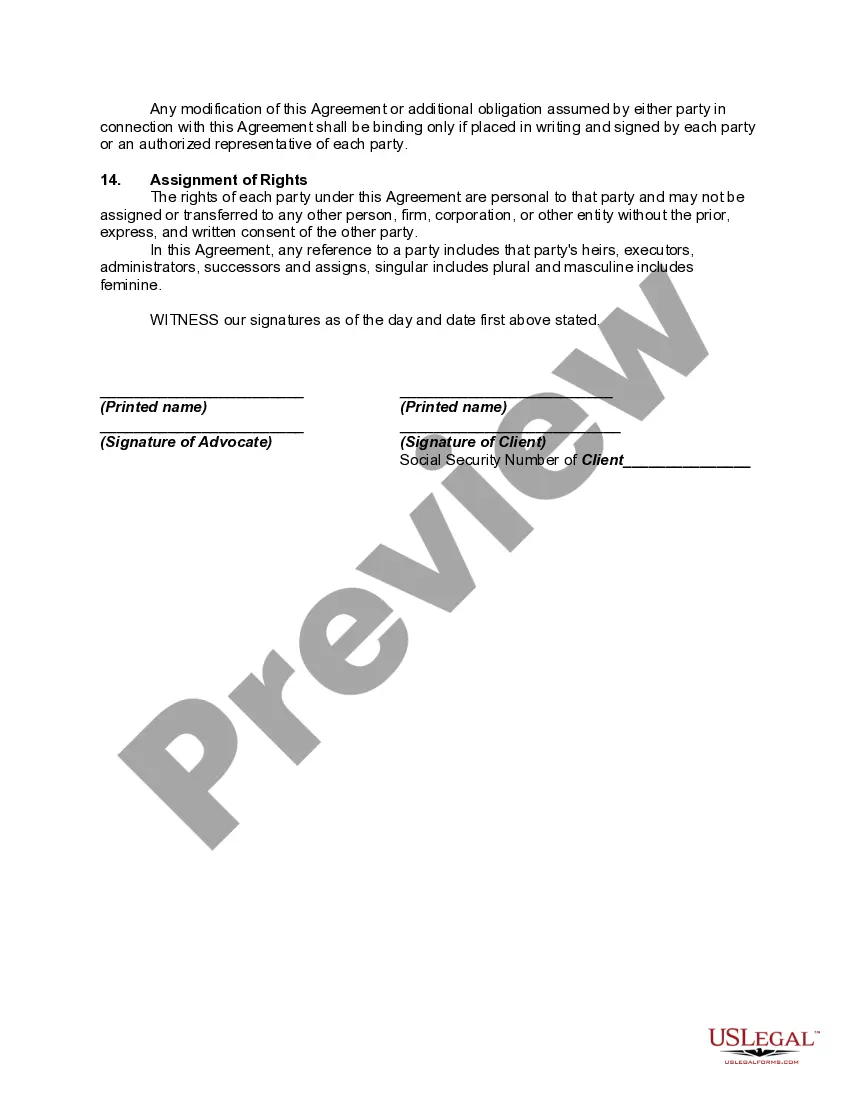
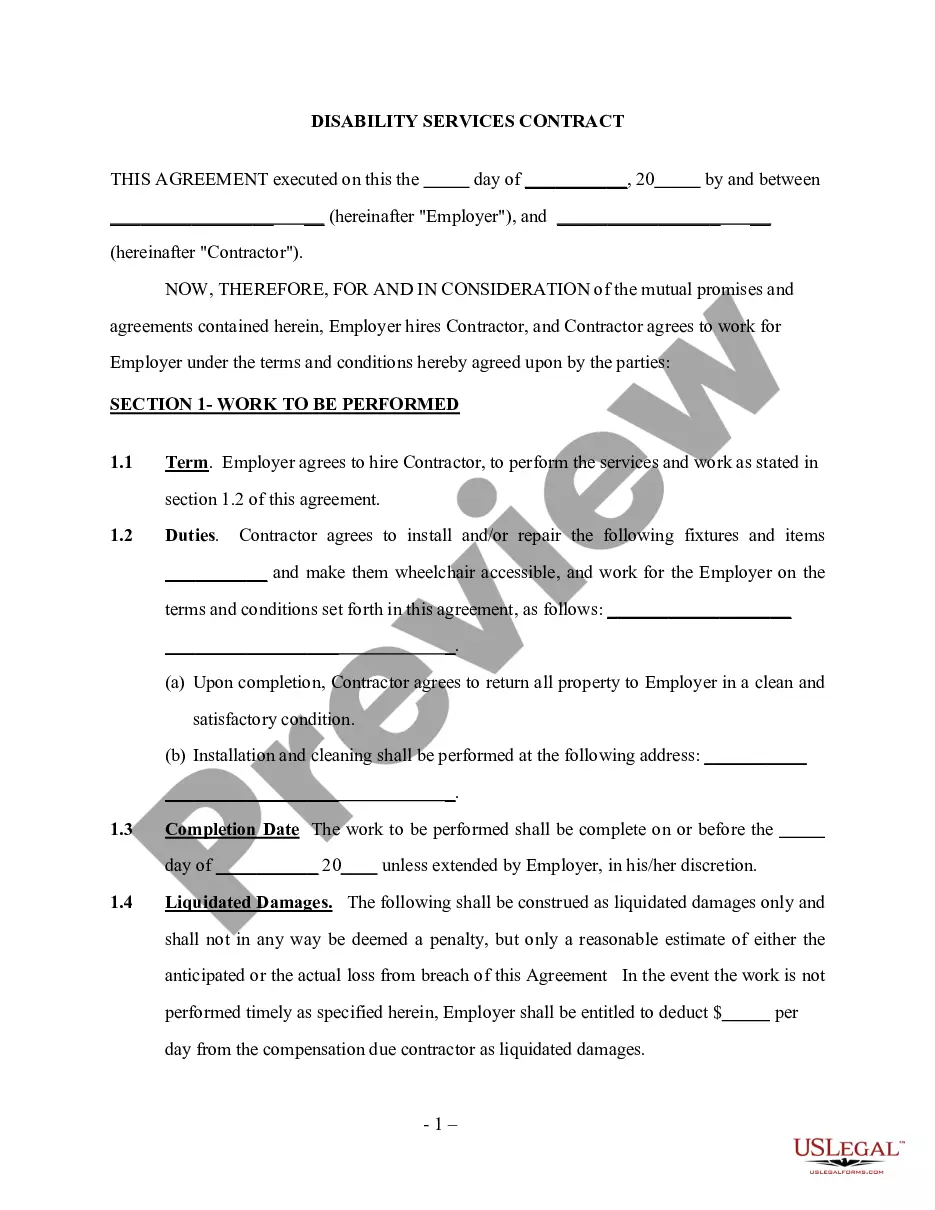
  • Preview Agreement between Certified Disability Advocate and Client
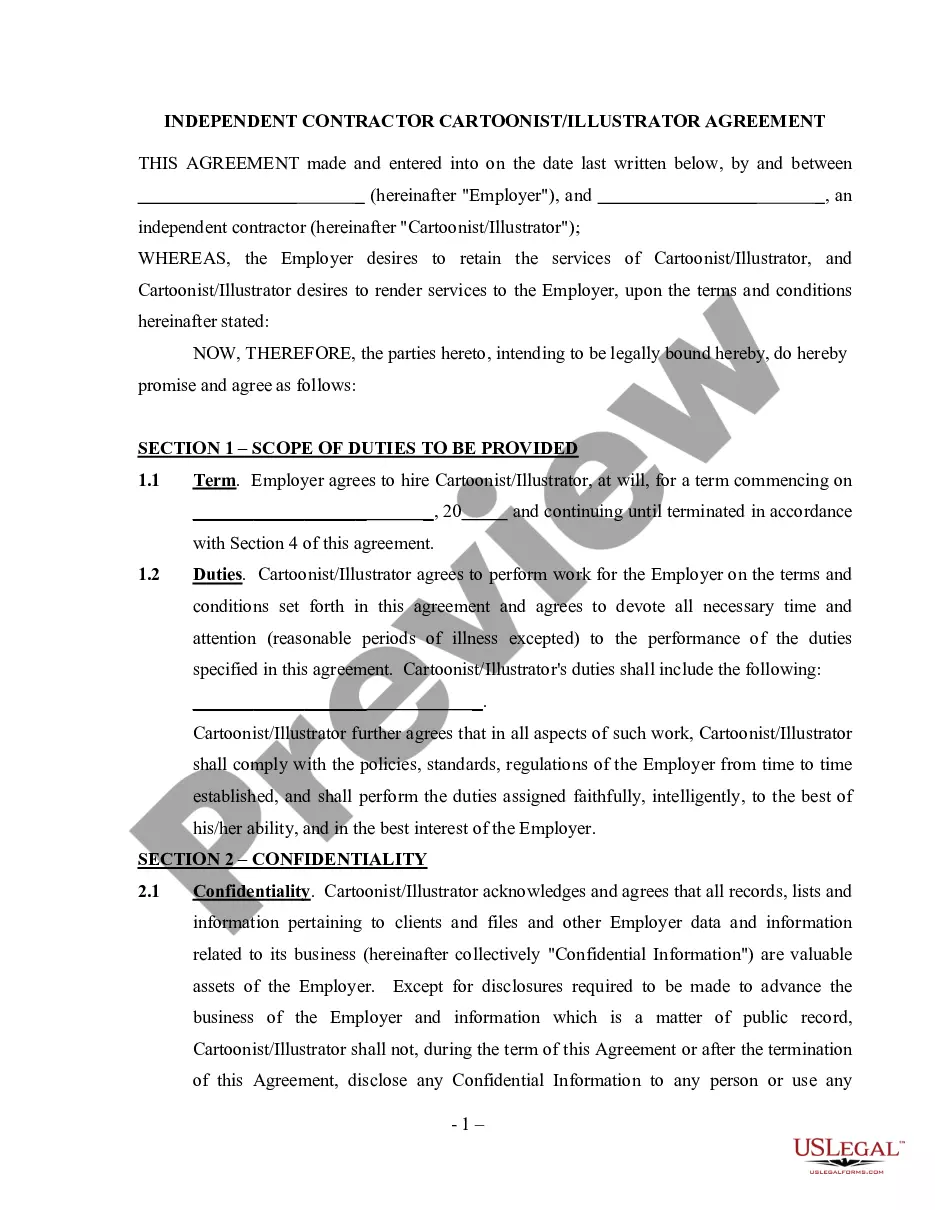
  • Preview Agreement between Certified Disability Advocate and Client
  • Preview Agreement between Certified Disability Advocate and Client

How to fill out Agreement Between Certified Disability Advocate And Client?

You can spend multiple hours online searching for the legal document format that meets the state and federal requirements you need.

US Legal Forms offers thousands of legal documents which can be assessed by experts.

It is easy to obtain or print the New Jersey Agreement between Certified Disability Advocate and Client from your support.

If available, utilize the Review button to browse through the document format as well.

  1. If you already possess a US Legal Forms account, you may Log In and then click the Download button.
  2. Subsequently, you can complete, edit, print, or sign the New Jersey Agreement between Certified Disability Advocate and Client.
  3. Every legal document template you acquire is yours permanently.
  4. To retrieve an extra copy of any purchased form, navigate to the My documents tab and then select the appropriate button.
  5. If you are using the US Legal Forms website for the first time, follow the simple instructions below.
  6. Firstly, ensure that you have selected the correct document format for the region/area you choose.
  7. Review the document description to verify that you have picked the right form.

Form popularity

FAQ

The five common means of reasonable accommodation include modifying work schedules, providing assistive technology, restructuring job duties, offering written materials in accessible formats, and altering physical workspaces. Each of these accommodations can be tailored to meet the specific needs of individuals, as encouraged by the New Jersey Agreement between Certified Disability Advocate and Client. Understanding these options allows clients to effectively advocate for their rights and ensure they receive the necessary support.

The community care program in New Jersey aims to provide support and resources to individuals with disabilities, helping them live independently in their communities. This program plays a vital role in enhancing the quality of life for clients, aligning with the goals of the New Jersey Agreement between Certified Disability Advocate and Client. Through collaboration with certified advocates, clients can access essential services that facilitate their independence and enhance their well-being.

The three principles of accommodation include accessibility, equity, and inclusion. These principles govern how accommodations are designed to ensure that individuals with disabilities can access opportunities equally, as outlined in the New Jersey Agreement between Certified Disability Advocate and Client. By adhering to these principles, advocates and clients can work together to create effective solutions that foster a more inclusive environment.

A reasonable accommodation in New Jersey refers to necessary changes or adaptations that allow individuals with disabilities to participate in various activities, including employment and public services. This concept is crucial under the New Jersey Agreement between Certified Disability Advocate and Client, which outlines how advocates can assist clients in obtaining these accommodations. By identifying specific needs, clients can work closely with their advocates to ensure compliance and support.

The reasonable accommodation law in New Jersey requires employers and public entities to provide adjustments or modifications that enable individuals with disabilities to perform their essential job functions. This law supports the rights of individuals under the New Jersey Agreement between Certified Disability Advocate and Client, ensuring fair treatment in the workplace. It is essential for both employees and employers to understand their rights and responsibilities under this law.

Becoming an advocate for disability requires a commitment to understanding the challenges faced by individuals with disabilities. You can start by educating yourself on relevant laws and resources available. Forming a New Jersey Agreement between Certified Disability Advocate and Client can assist in establishing a solid foundation for supporting clients and ensuring they receive the rights and services they deserve.

To become a disability advocate in New Jersey, you should begin by familiarizing yourself with disability laws and advocacy practices. Participating in training programs and gaining experience through volunteer work can enhance your advocacy skills. Additionally, a New Jersey Agreement between Certified Disability Advocate and Client can provide guidelines on effective strategies while clarifying expectations between advocates and clients.

Eligibility for developmental disability (DD) services in New Jersey is generally granted to individuals diagnosed with specific developmental disorders by age 22. Applicants must demonstrate that disabilities limit their everyday functioning significantly. A New Jersey Agreement between Certified Disability Advocate and Client can outline the support required to navigate the application process, ensuring individuals receive the services needed.

In New Jersey, specific conditions automatically qualify individuals for disability benefits. These can include severe physical or mental impairments that limit one’s ability to work. Establishing a New Jersey Agreement between Certified Disability Advocate and Client can facilitate the smooth collection of required evidence and improve the chances of securing benefits without unnecessary delays.

The Division of Developmental Disabilities (DDD) services in New Jersey are available to individuals with developmental disabilities that significantly impair their daily functioning. Eligibility is often determined through a comprehensive evaluation of the individual's needs. To effectively assist clients, a New Jersey Agreement between Certified Disability Advocate and Client can help outline the assistance necessary to access these vital services.

Trusted and secure by over 3 million people of the world’s leading companies

New Jersey Agreement between Certified Disability Advocate and Client