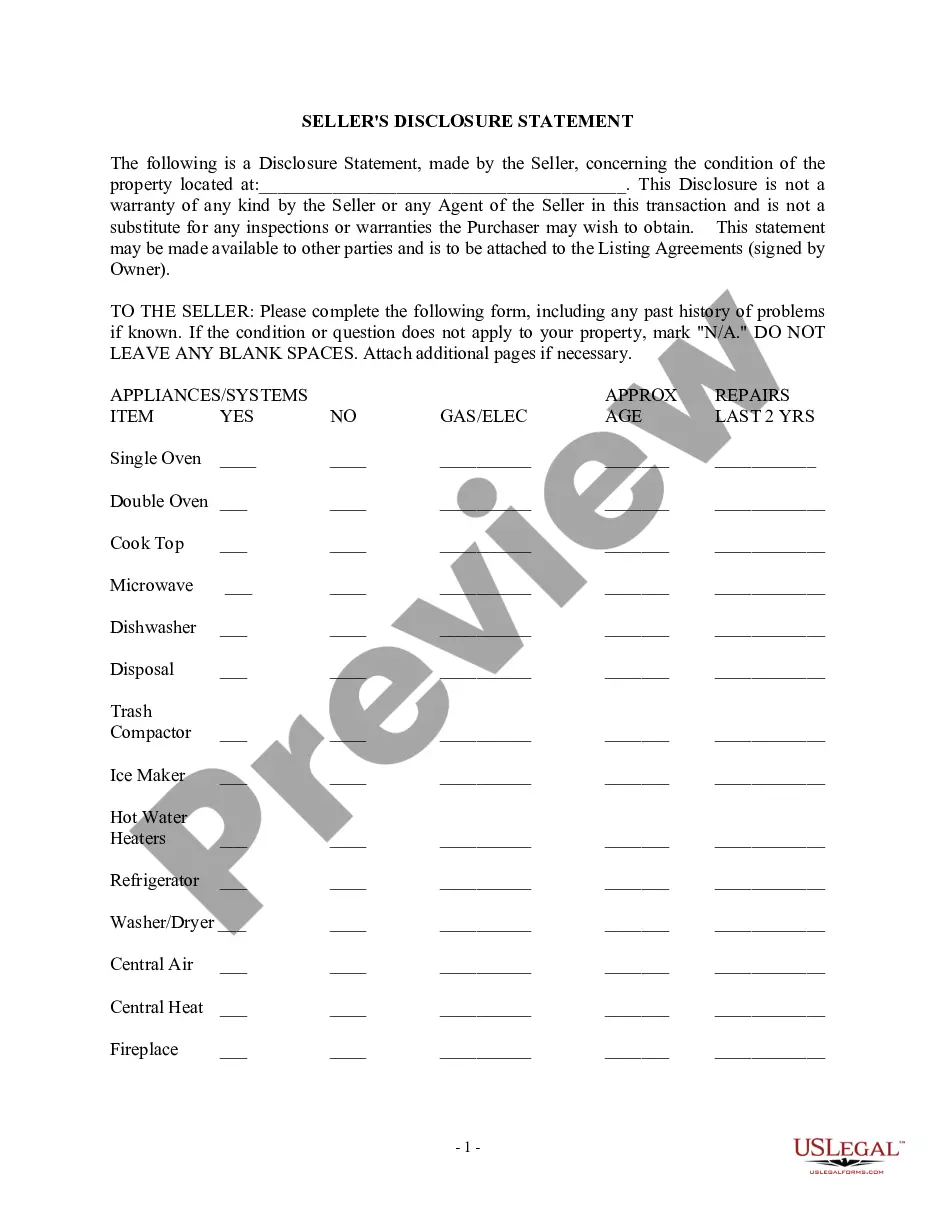
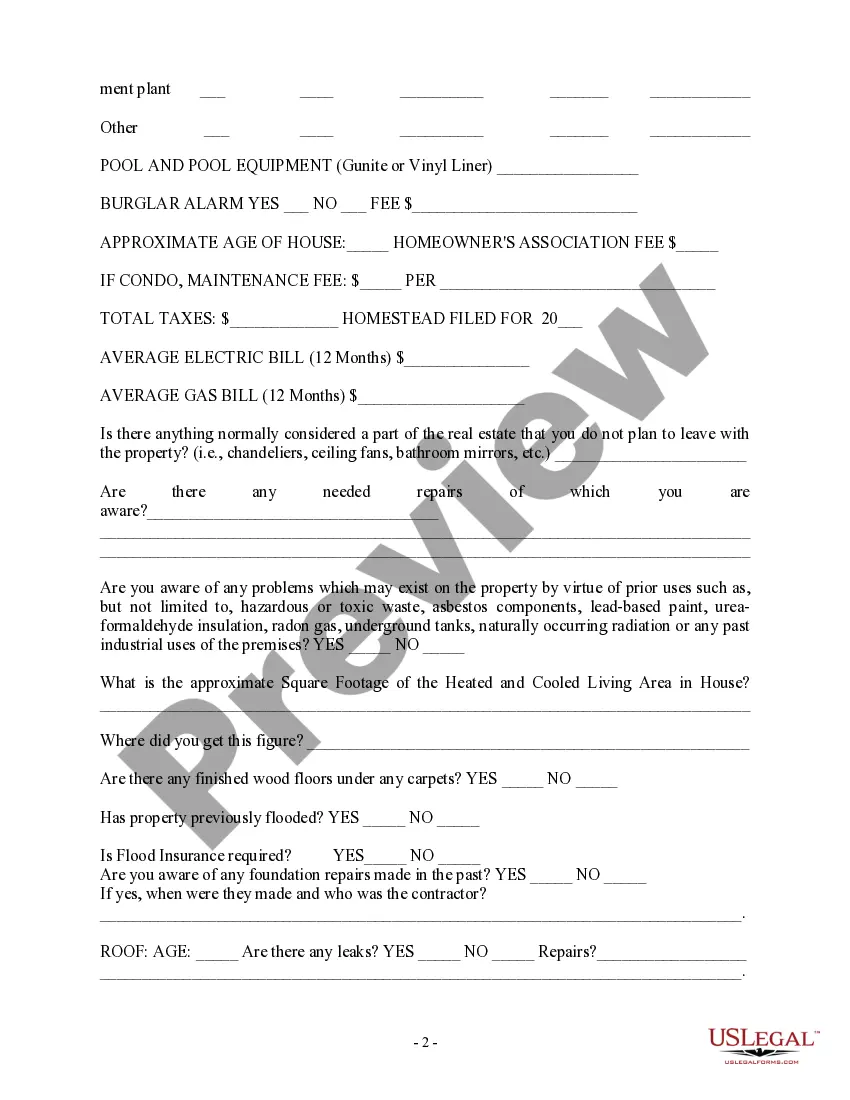
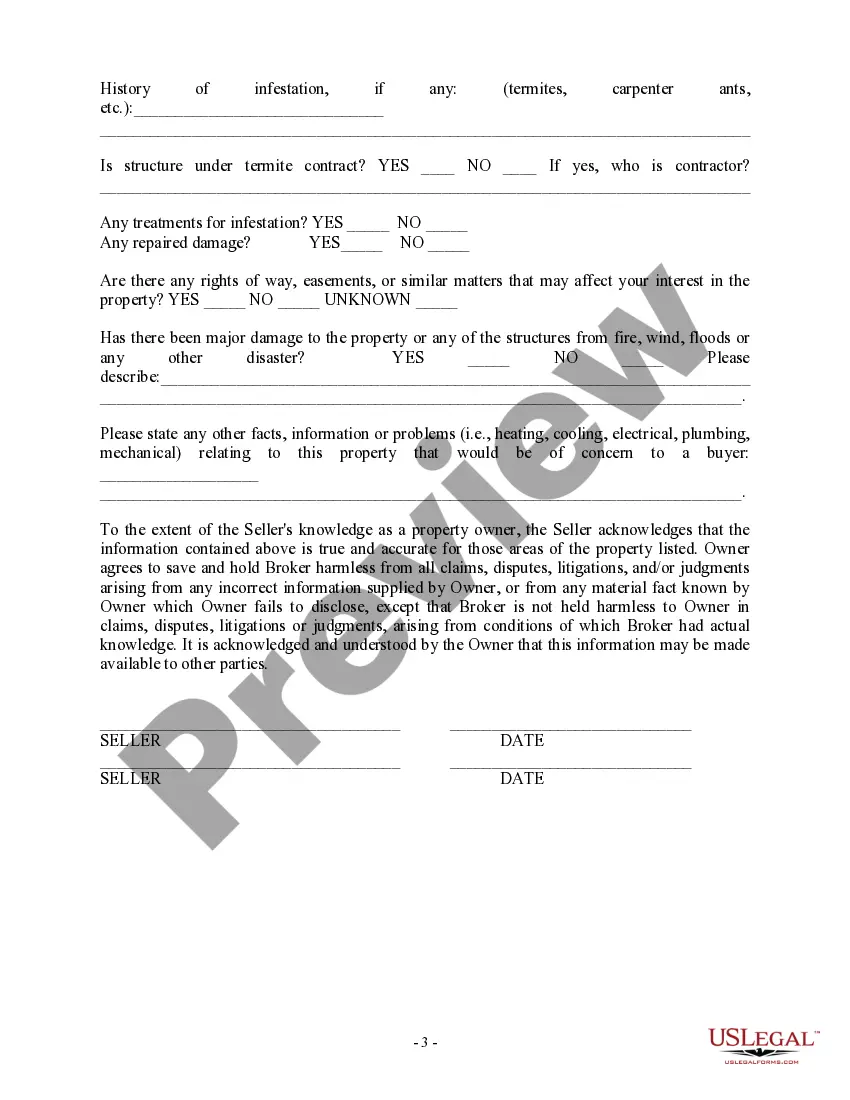
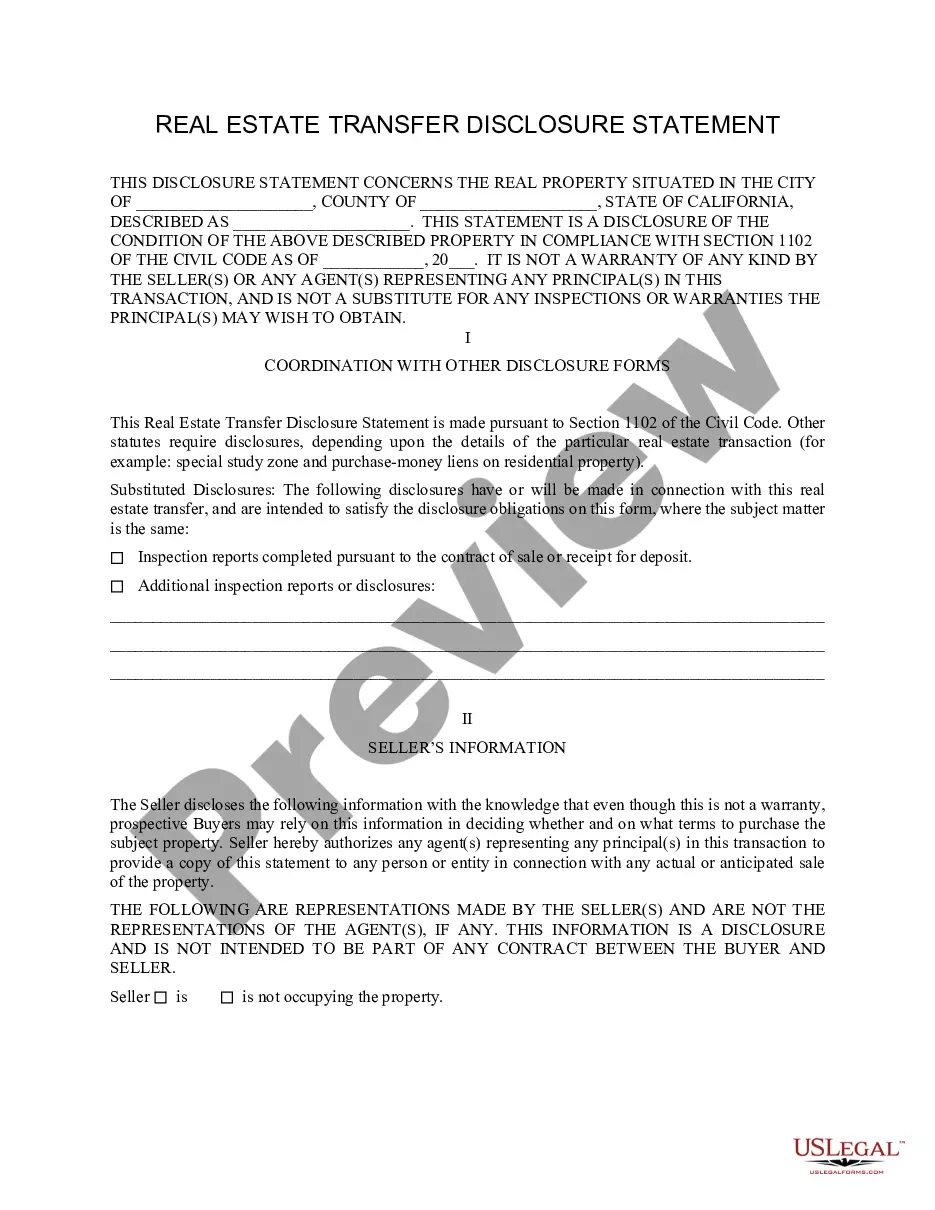
This form is a Seller's Disclosure Statement. This disclosure statement concerns the condition of property described in the document. The seller acknowledges that the information contained in the form is true and accurate.
New Jersey Seller's Real Estate Disclosure Statement
487 downloads
Description
Free preview
Get your form ready online
Our built-in tools help you complete, sign, share, and store your documents in one place.
Built-in online Word editor
Make edits, fill in missing information, and update formatting in US Legal Forms—just like you would in MS Word.
Export easily
Download a copy, print it, send it by email, or mail it via USPS—whatever works best for your next step.
E-sign your document
Sign and collect signatures with our SignNow integration. Send to multiple recipients, set reminders, and more. Go Premium to unlock E-Sign.
Notarize online 24/7
If this form requires notarization, complete it online through a secure video call—no need to meet a notary in person or wait for an appointment.
Store your document securely
We protect your documents and personal data by following strict security and privacy standards.

Make edits, fill in missing information, and update formatting in US Legal Forms—just like you would in MS Word.

Download a copy, print it, send it by email, or mail it via USPS—whatever works best for your next step.

Sign and collect signatures with our SignNow integration. Send to multiple recipients, set reminders, and more. Go Premium to unlock E-Sign.

If this form requires notarization, complete it online through a secure video call—no need to meet a notary in person or wait for an appointment.

We protect your documents and personal data by following strict security and privacy standards.
Looking for another form?

How to fill out Seller's Real Estate Disclosure Statement?
US Legal Forms - one of the largest collections of legal documents in the United States - offers a variety of legal form templates you can download or create.
While using the website, you can discover thousands of forms for business and personal purposes, organized by categories, states, or keywords.
You can find the latest forms such as the New Jersey Seller's Real Estate Disclosure Statement in minutes.
Read the form summary to confirm you have selected the correct form.
If the form does not suit your requirements, utilize the Search area at the top of the screen to find the one that does.
- If you already possess a membership, Log In and download the New Jersey Seller's Real Estate Disclosure Statement from the US Legal Forms library.
- The Download button will appear on every form you view.
- You can access all previously downloaded forms in the My documents section of your account.
- If you would like to utilize US Legal Forms for the first time, here are simple instructions to help you begin.
- Ensure you have selected the correct form for your city/area.
- Click the Review button to review the form’s content.
Form popularity
FAQ
In New Jersey, home sellers have a legal obligation to buyers to disclose information about their property's known defects. Failure to disclose can result in costly legal skirmishes that most homeowners would rather avoid.
In New Jersey, home sellers have a legal obligation to buyers to disclose information about their property's known defects. Failure to disclose can result in costly legal skirmishes that most homeowners would rather avoid.
Here are eight common real estate seller disclosures to be aware of, whether you're on the buyer's side or the seller's side.Death in the Home.Neighborhood Nuisances.Hazards.Homeowners' Association Information.Repairs.Water Damage.Missing Items.Other Possible Disclosures.
The public has demanded this increased level of information. But, there are 12 states that are still considered non-disclosure: Alaska, Idaho, Kansas, Louisiana, Mississippi, Missouri (some counties), Montana, New Mexico, North Dakota, Texas, Utah and Wyoming.
The purpose of a seller's disclosure statement is to disclose all known defects or issues with the residence to a potential purchaser.
Certificates of occupancy are not required in New Jersey for all sales. A temporary certificate of occupancy may be granted for a set time period to accomplish necessary repairs. A certificate of transfer title is sometimes used to transfer ownership where a property fails the municipal inspection.
In New Jersey, home sellers have a legal obligation to buyers to disclose information about their property's known defects. Failure to disclose can result in costly legal skirmishes that most homeowners would rather avoid.
The purpose of a seller's disclosure statement is to disclose all known defects or issues with the residence to a potential purchaser.
Among the numerous types of things a seller in New Jersey is required to disclose are electrical system hazards, structural problems, roof leakage, termites, environmental hazards, and plumbing, water, and sewage issues.