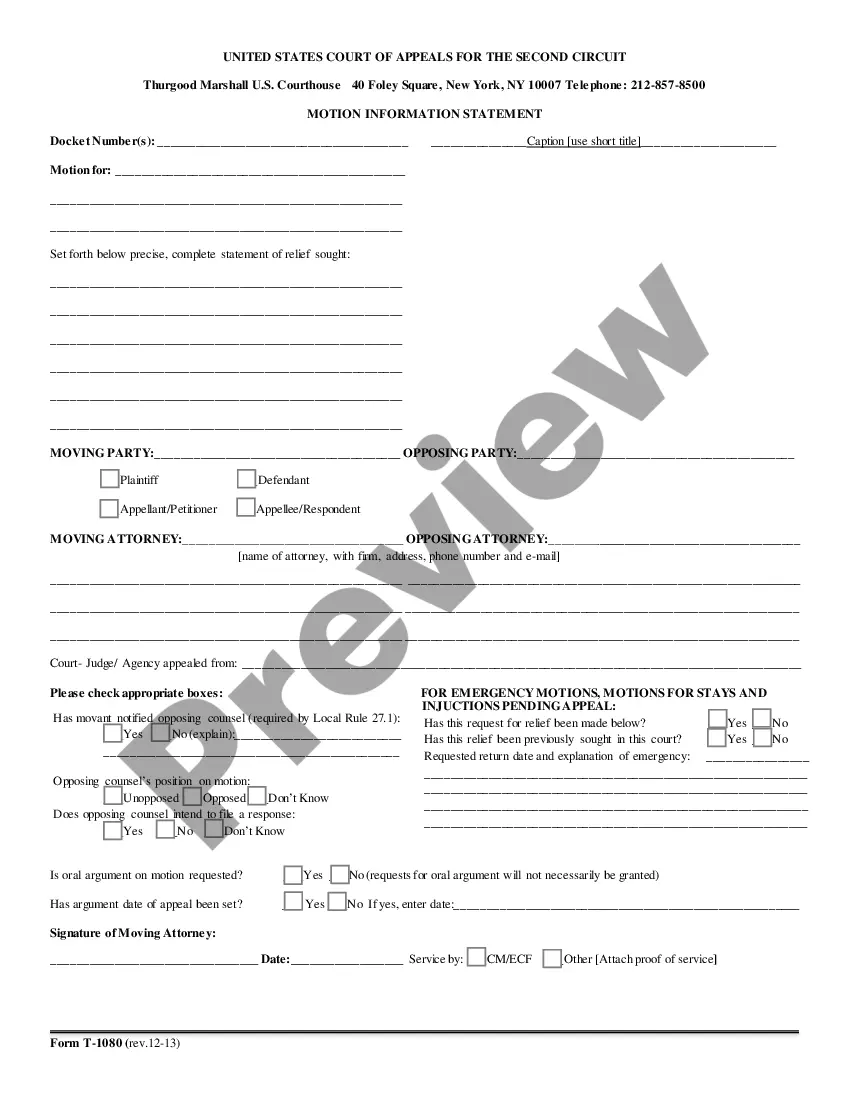
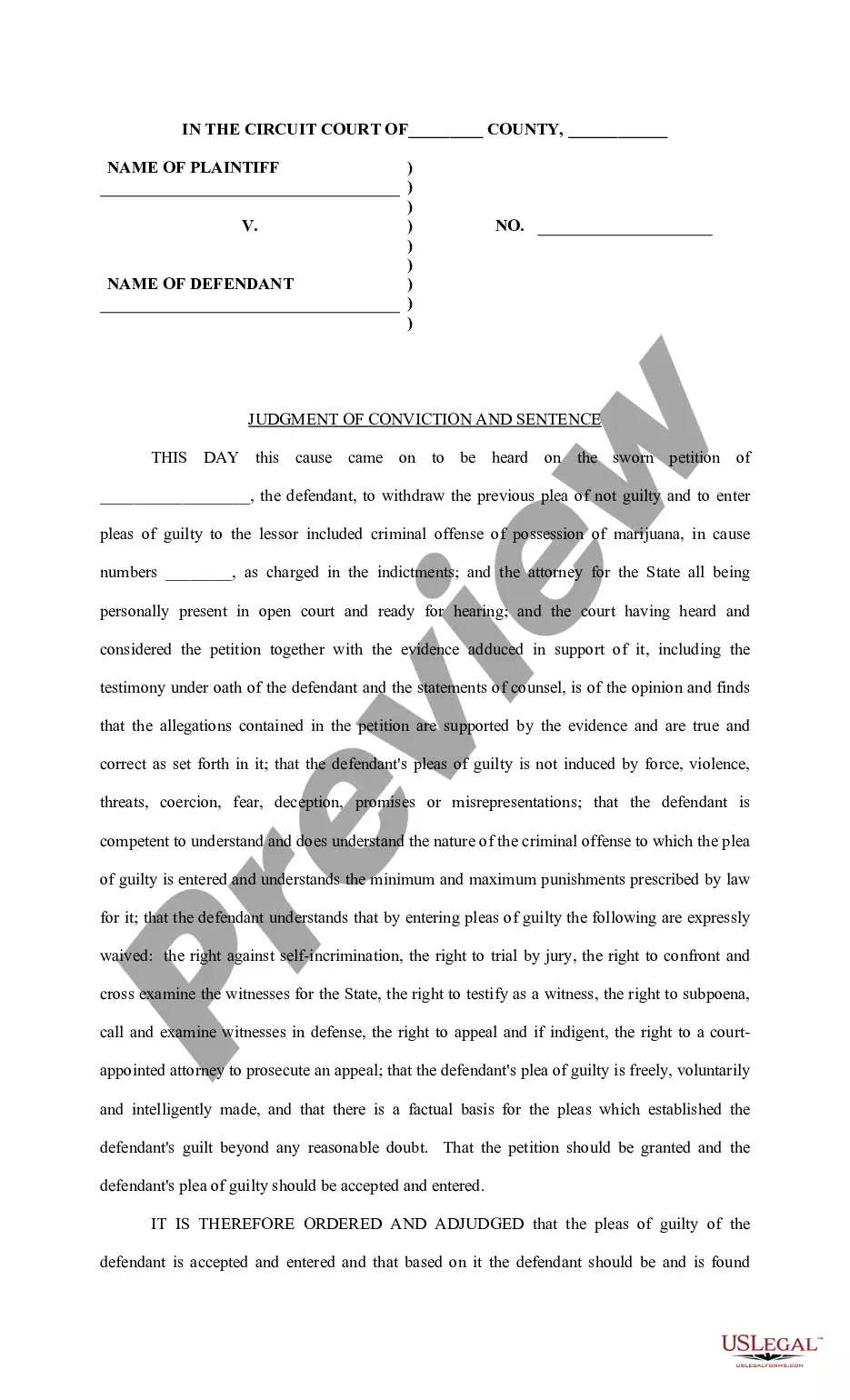
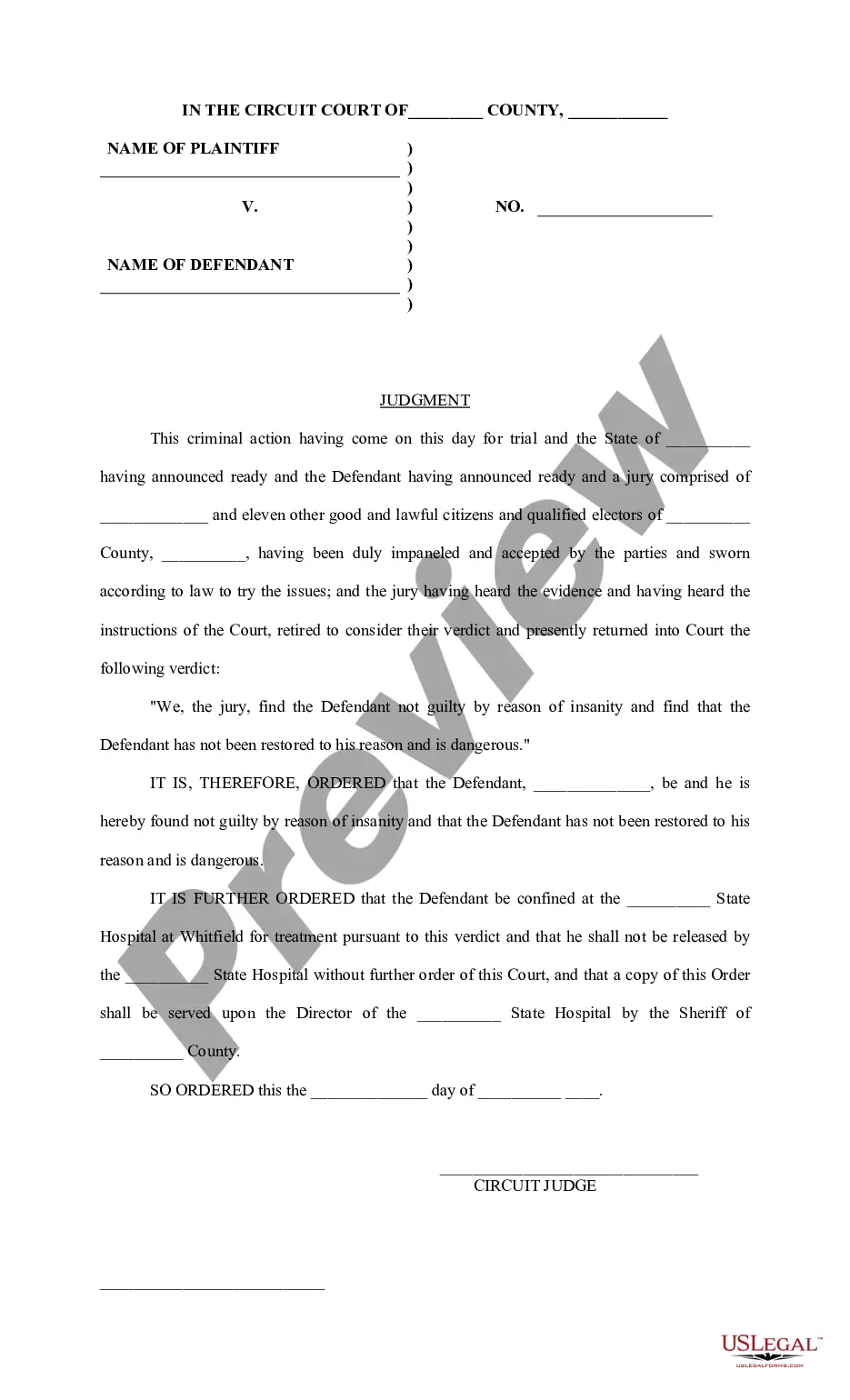
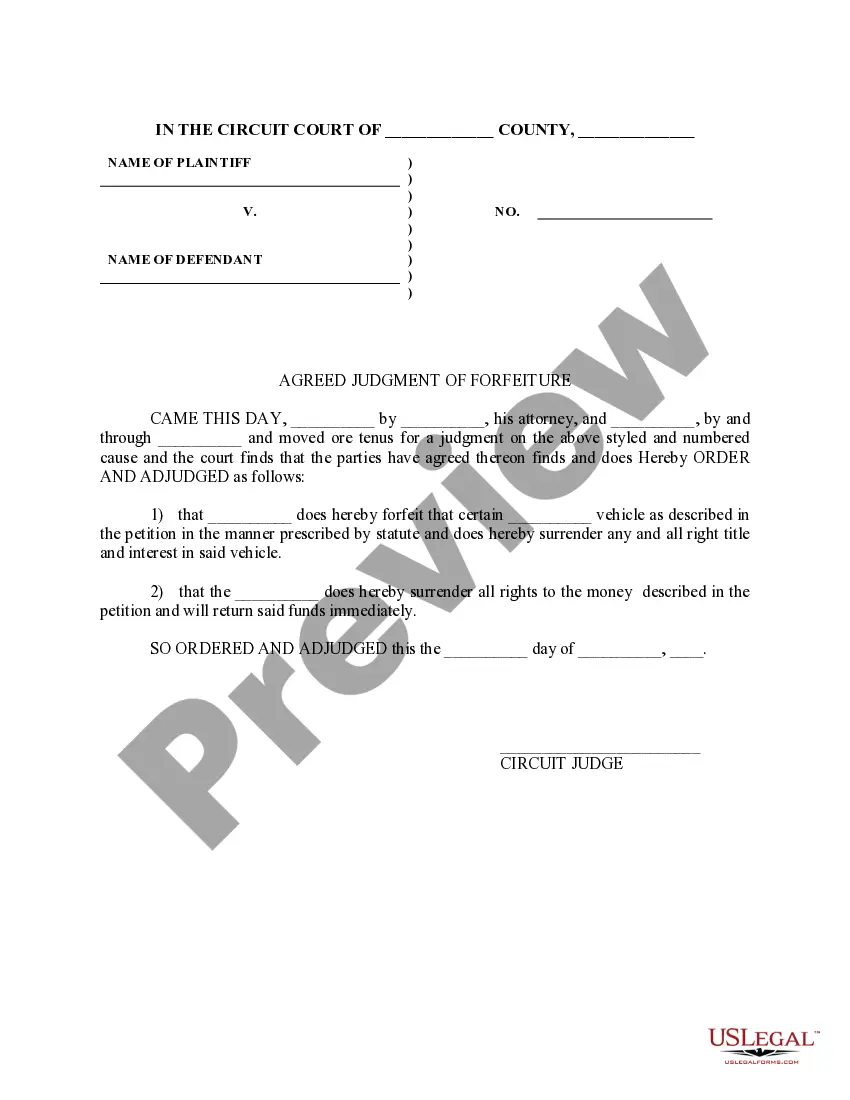
New Jersey Agreed Judgment
Description
Get your form ready online
Our built-in tools help you complete, sign, share, and store your documents in one place.
Make edits, fill in missing information, and update formatting in US Legal Forms—just like you would in MS Word.
Download a copy, print it, send it by email, or mail it via USPS—whatever works best for your next step.
Sign and collect signatures with our SignNow integration. Send to multiple recipients, set reminders, and more. Go Premium to unlock E-Sign.
If this form requires notarization, complete it online through a secure video call—no need to meet a notary in person or wait for an appointment.
We protect your documents and personal data by following strict security and privacy standards.

Make edits, fill in missing information, and update formatting in US Legal Forms—just like you would in MS Word.

Download a copy, print it, send it by email, or mail it via USPS—whatever works best for your next step.

Sign and collect signatures with our SignNow integration. Send to multiple recipients, set reminders, and more. Go Premium to unlock E-Sign.

If this form requires notarization, complete it online through a secure video call—no need to meet a notary in person or wait for an appointment.

We protect your documents and personal data by following strict security and privacy standards.
Looking for another form?




How to fill out Agreed Judgment?
If you wish to compile, retrieve, or print sanctioned document templates, utilize US Legal Forms, the largest selection of legal forms available online. Take advantage of the site’s user-friendly and convenient search feature to locate the documents you need. A variety of templates for corporate and personal purposes are organized by categories and states, or keywords. Use US Legal Forms to find the New Jersey Agreed Judgment with just a few clicks.
If you are currently a US Legal Forms member, Log Into your account and click on the Download button to obtain the New Jersey Agreed Judgment. You can also access forms you have previously purchased in the My documents section of your account.
If you are using US Legal Forms for the first time, follow the instructions below: Step 1. Ensure you have selected the form for the correct city/state. Step 2. Use the Review option to examine the form’s content. Don’t forget to read the information. Step 3. If you are dissatisfied with the form, use the Search field at the top of the screen to find other versions in the legal form format. Step 4. Once you have found the form you need, click the Purchase now button. Choose the payment plan you prefer and enter your details to register for an account. Step 5. Process the transaction. You may use your credit card or PayPal account to complete the transaction. Step 6. Select the format of the legal form and download it to your device. Step 7. Complete, edit, and print or sign the New Jersey Agreed Judgment.
- Every legal document template you purchase is yours indefinitely.
- You have access to every form you acquired within your account.
- Visit the My documents section and choose a form to print or download again.
- Stay competitive and download, and print the New Jersey Agreed Judgment with US Legal Forms.
- There are millions of professional and state-specific forms you can utilize for your business or personal needs.
Form popularity
FAQ
NEW JERSEY A judgment is valid for a period of twenty years, but can be renewed within the twenty year period by the filing of a notice with the court clerk. N.J. Stat. Ann. § 2A:14-5.
The creditor can often place a lien on your property, such as a house or car. The lien must usually be paid off before you can sell the property. Seize assets. Sometimes, a creditor can get a court order to seize other assets or personal property you own, such as a vehicle or real estate, to satisfy the debt.
After a default judgment has been entered in the court record, the Office of the Special Civil Part will mail you a postcard that shows the date and amount of the judgment entered by the court against the defendant.
Judgments are recorded as statewide liens upon request and payment of the applicable fee. Most judgments expire after 20 years; so a request for 21 years worth of judgments will result in a report that includes the entire active database.
The statute of limitations on debt in NJ is six years ing to Section 2A:14-1 of the state's laws. The statute of limitations applies to all kinds of debt. These include written, oral, promissory, or open. Once this period lapses, you cannot sue an individual or use force to try and recover the debt.
A judgment can be fully satisfied by paying the judgment creditor (the person who has the judgment against you) in full and receiving from the creditor a Warrant of Satisfaction.
How Does the New Jersey Offer of Judgement Rule Work? Under R. , a party can serve on her adversary an offer of judgment anytime prior to 20 days before the first trial date. If the offer is not accepted within 10 days of the trial date or 90 days of service, it is deemed rejected.
Writs for wage executions can last for 20 years, but other writs expire in two years. After two years, the debtor can choose to: Request a new writ of execution from the court by following the same procedures used the first time, allowing the special civil officer to keep trying to get the money; OR.