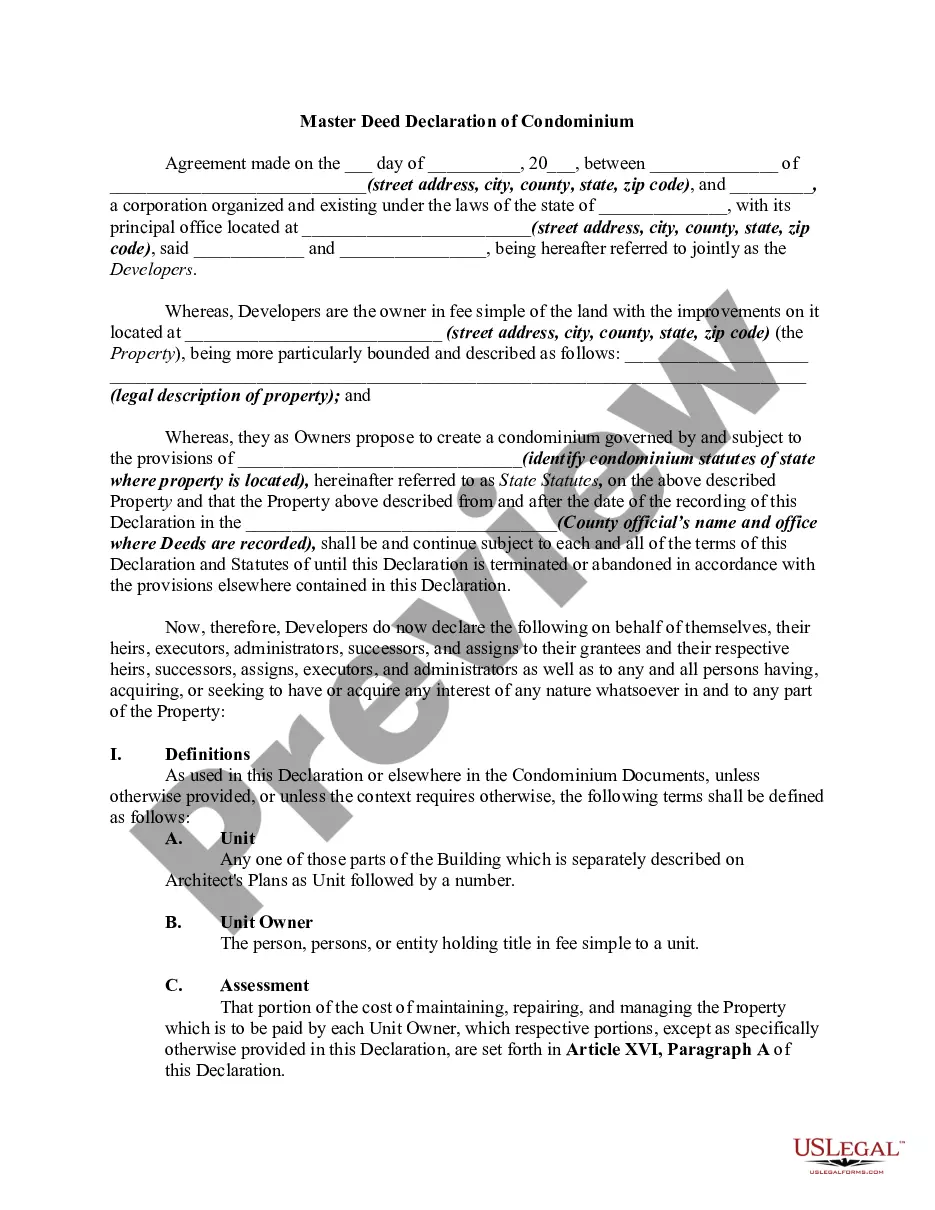
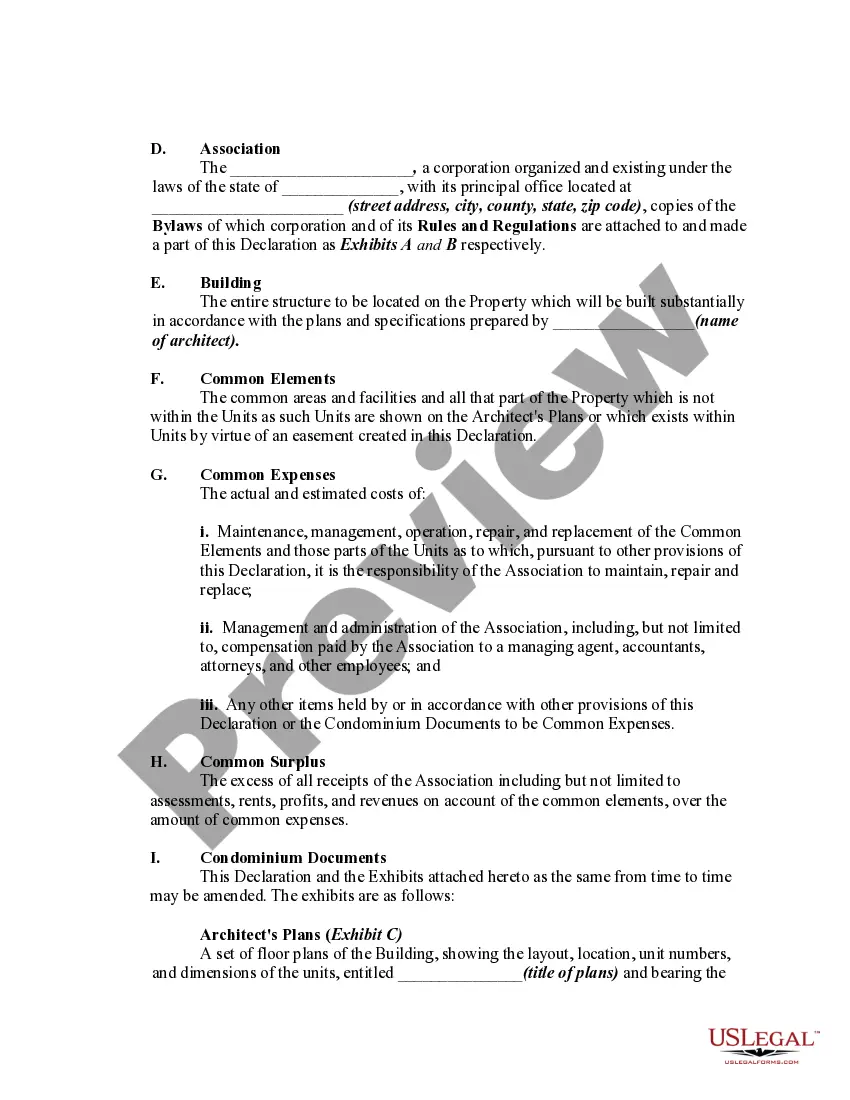
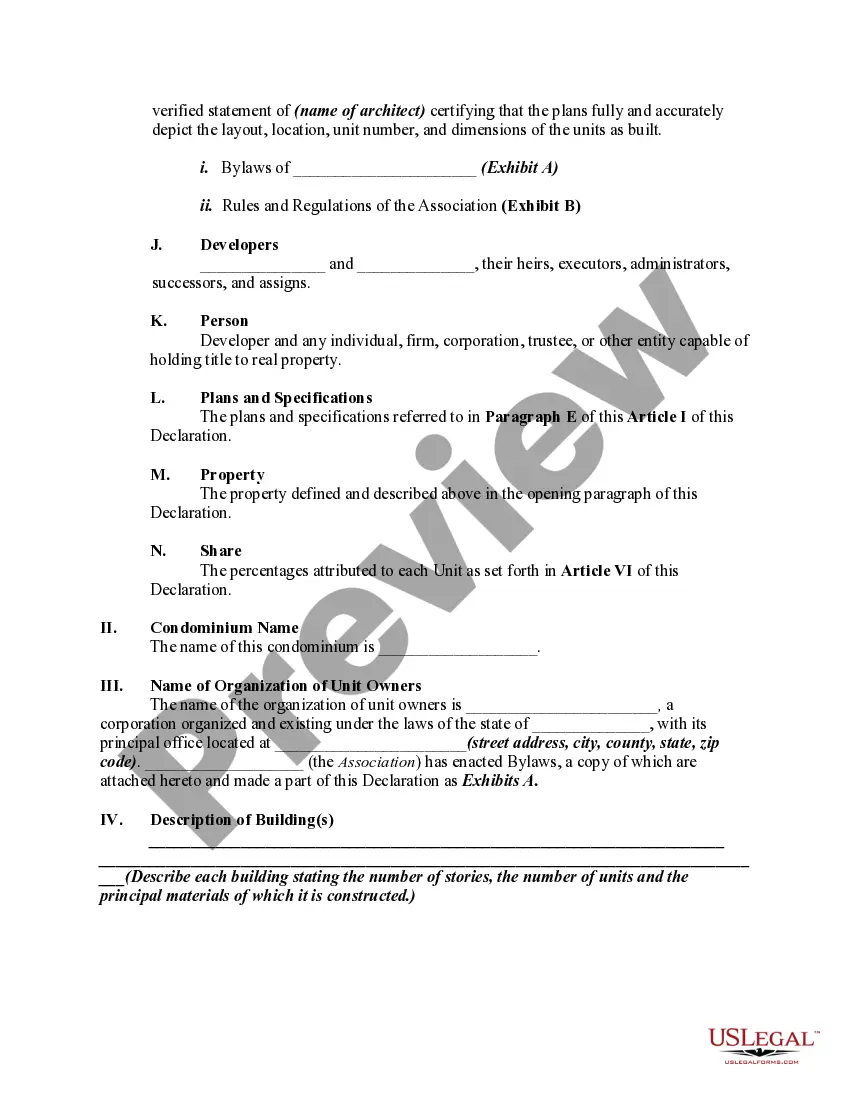
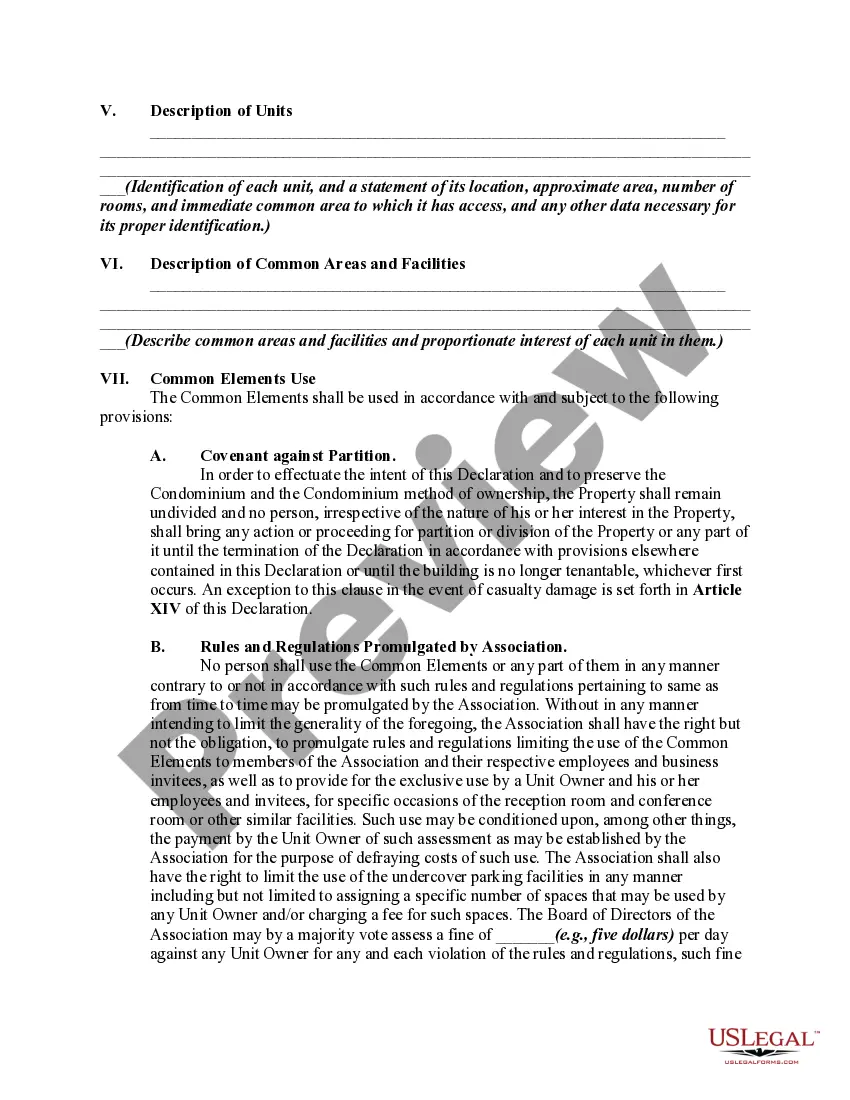
New Jersey Master Deed Declaration of Condominium
Description
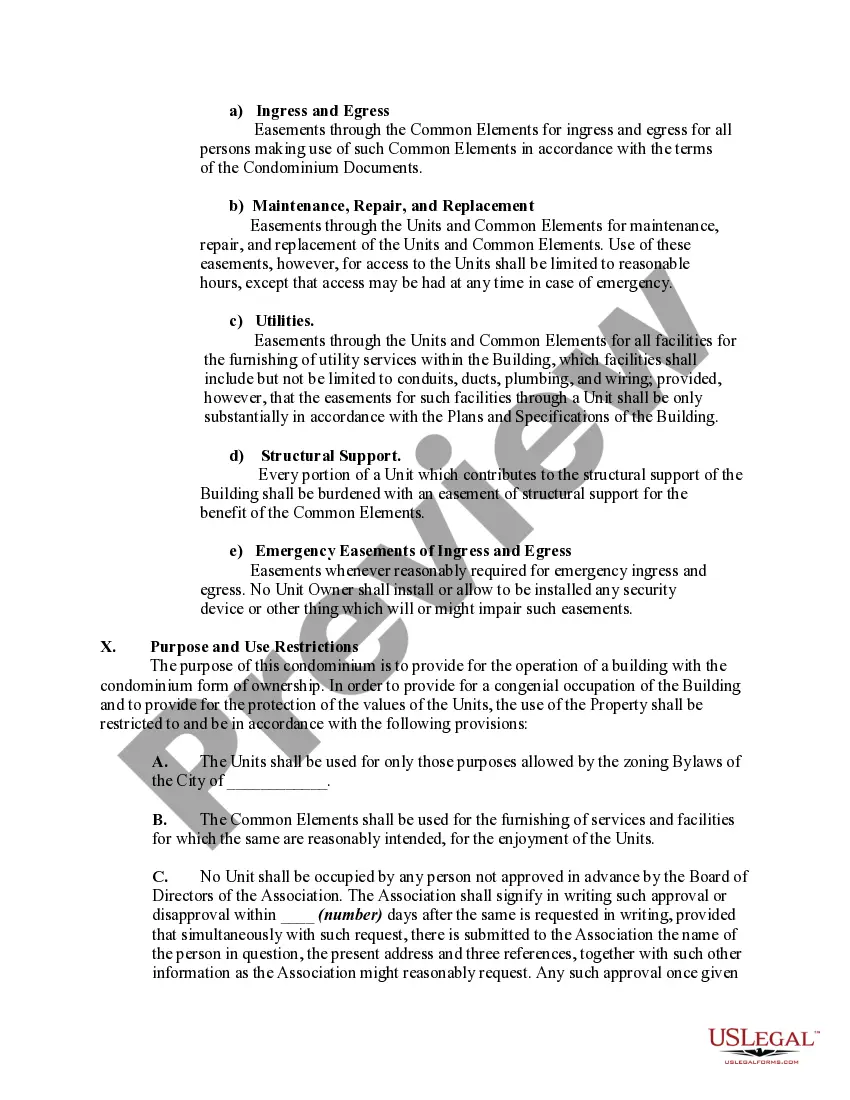
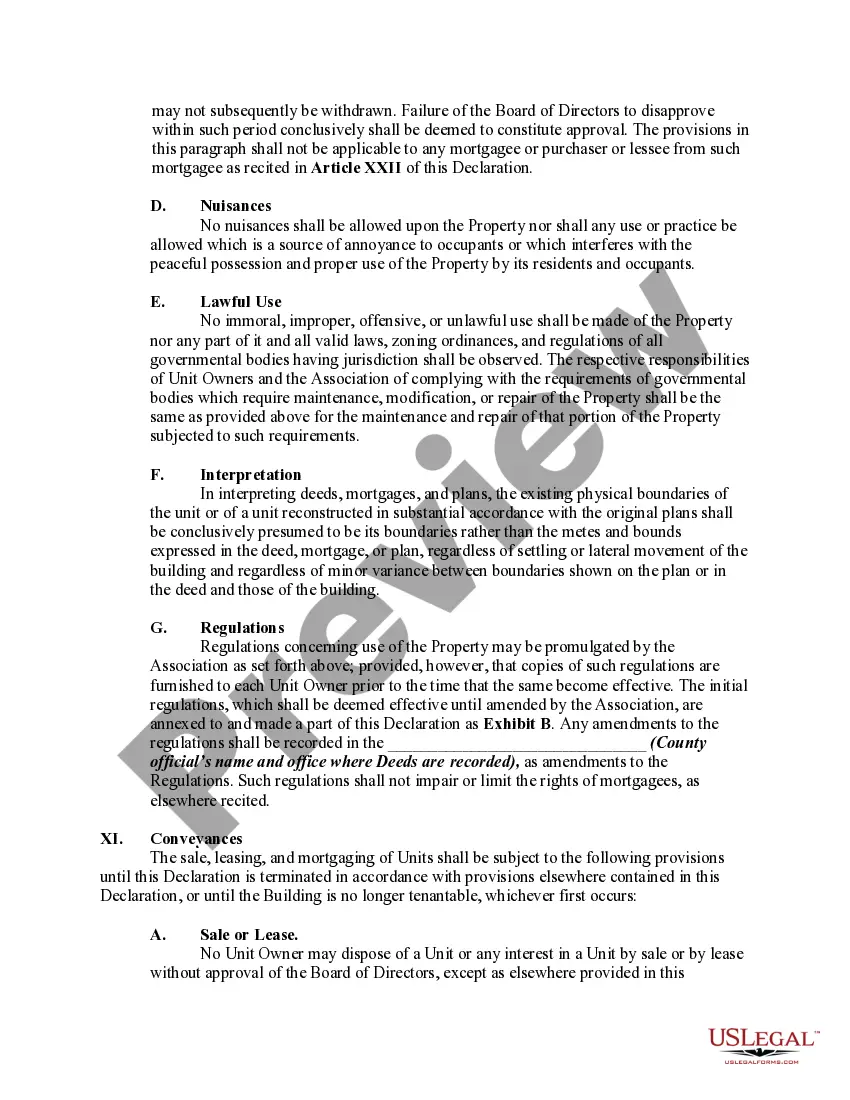


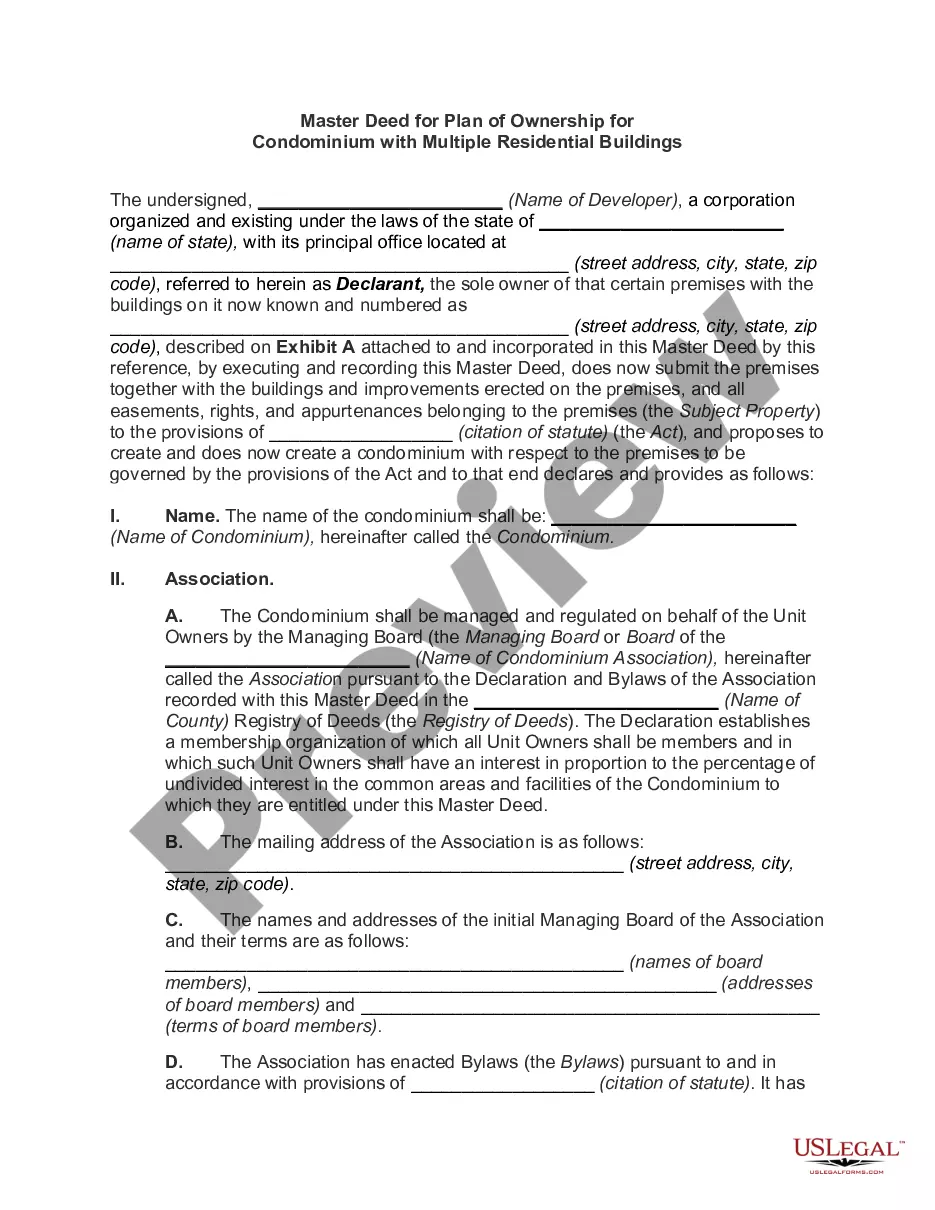

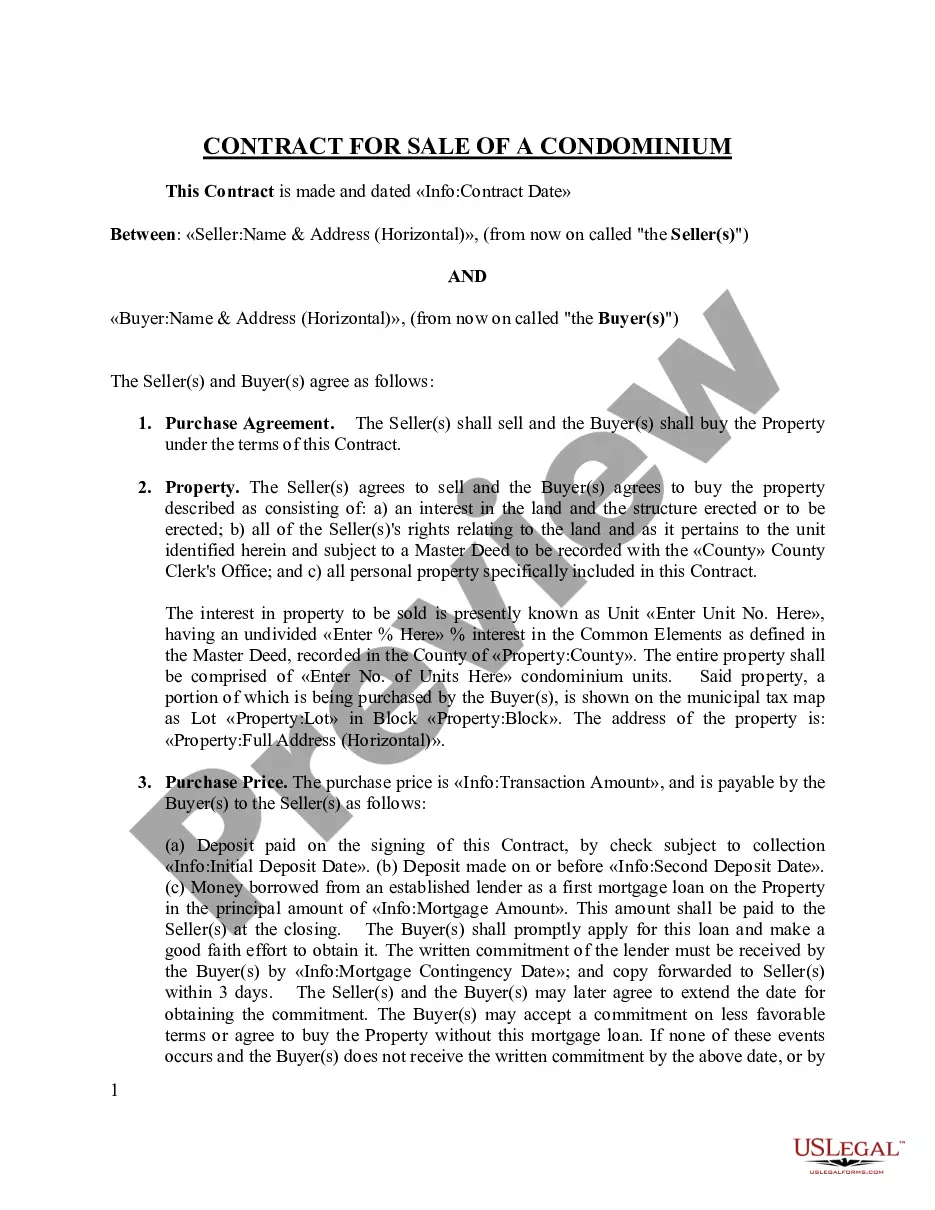
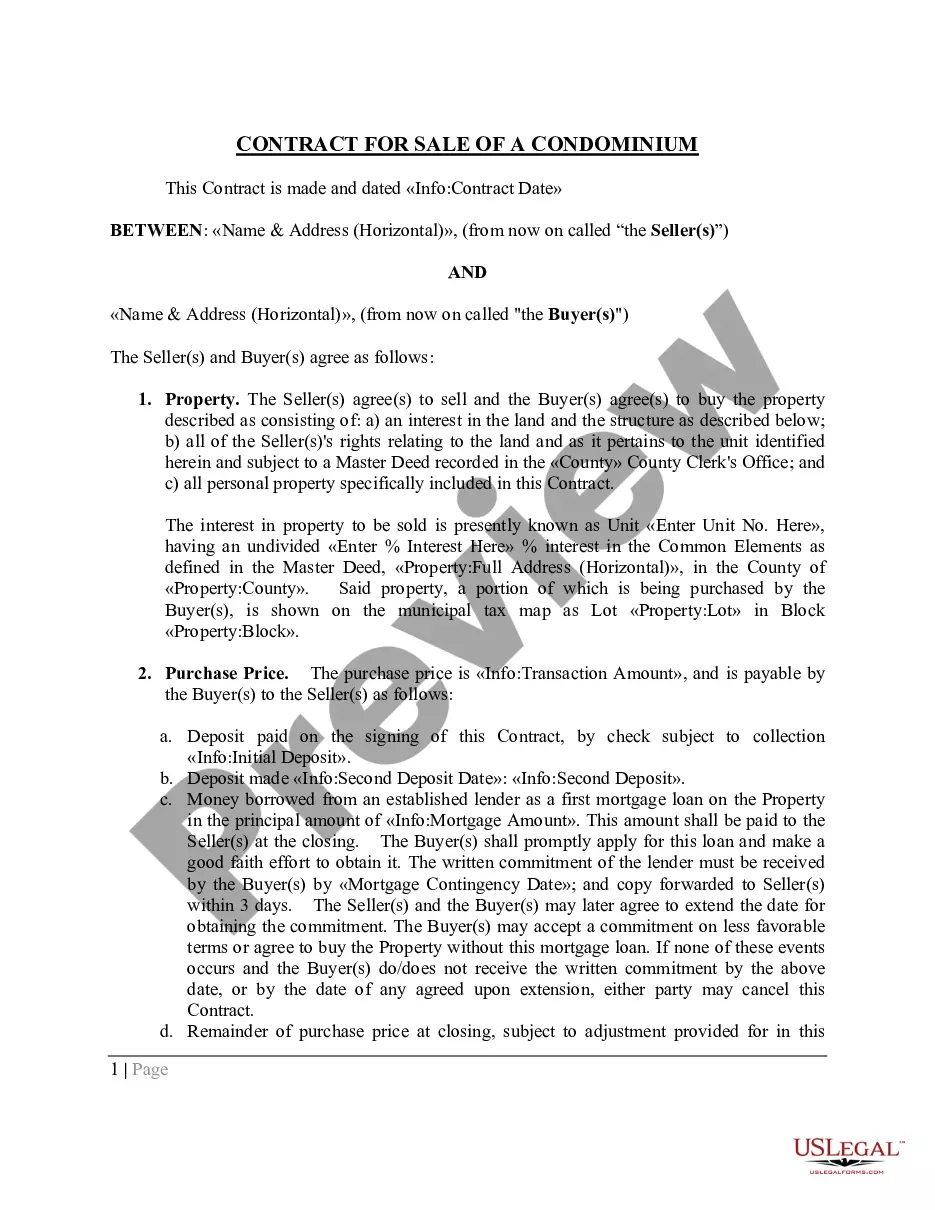
Get your form ready online
Our built-in tools help you complete, sign, share, and store your documents in one place.
Make edits, fill in missing information, and update formatting in US Legal Forms—just like you would in MS Word.
Download a copy, print it, send it by email, or mail it via USPS—whatever works best for your next step.
Sign and collect signatures with our SignNow integration. Send to multiple recipients, set reminders, and more. Go Premium to unlock E-Sign.
If this form requires notarization, complete it online through a secure video call—no need to meet a notary in person or wait for an appointment.
We protect your documents and personal data by following strict security and privacy standards.

Make edits, fill in missing information, and update formatting in US Legal Forms—just like you would in MS Word.

Download a copy, print it, send it by email, or mail it via USPS—whatever works best for your next step.

Sign and collect signatures with our SignNow integration. Send to multiple recipients, set reminders, and more. Go Premium to unlock E-Sign.

If this form requires notarization, complete it online through a secure video call—no need to meet a notary in person or wait for an appointment.

We protect your documents and personal data by following strict security and privacy standards.
Looking for another form?
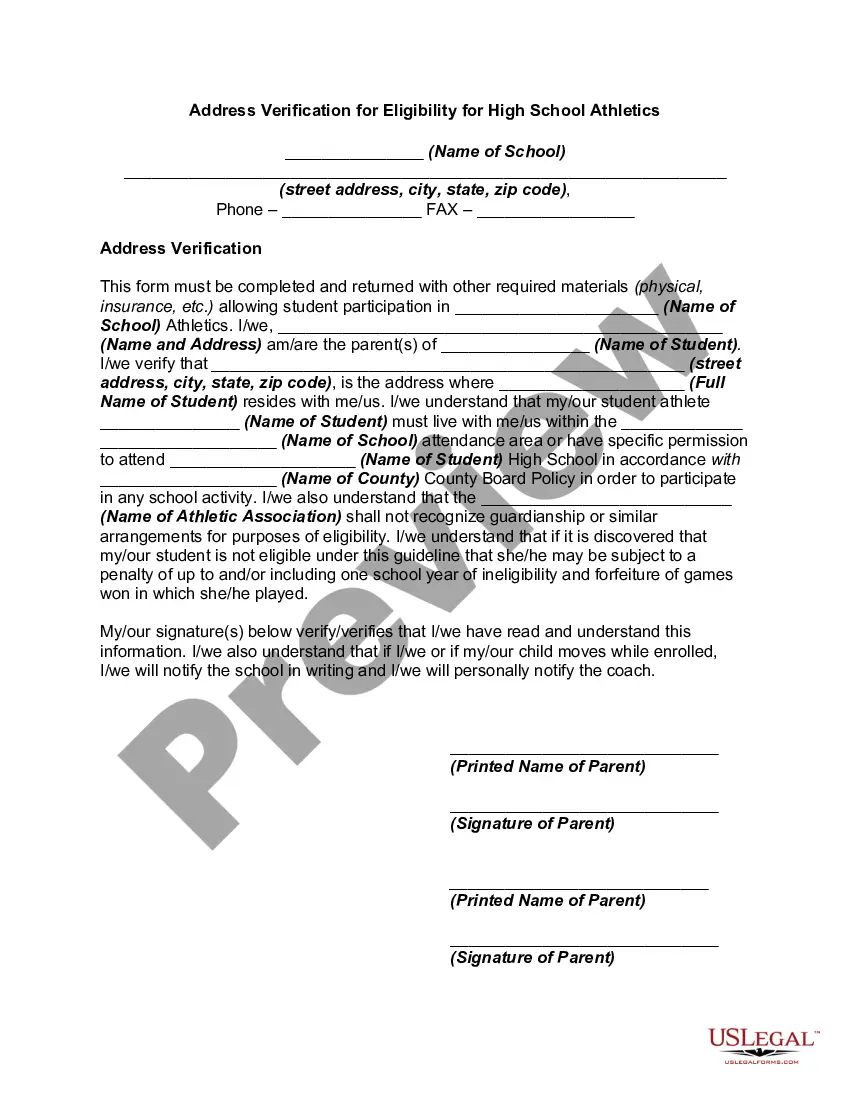
How to fill out Master Deed Declaration Of Condominium?
Are you presently in a situation where you require documents for both business or personal purposes almost every day.
There is a multitude of legal document templates available online, but finding ones you can rely on is challenging.
US Legal Forms offers a wide range of form templates, including the New Jersey Master Deed Declaration of Condominium, which are designed to comply with federal and state regulations.
Choose the pricing plan you prefer, fill in the necessary information to create your account, and pay for the transaction with your PayPal or Visa or Mastercard.
Select a convenient document format and download your copy. Find all the document templates you have purchased in the My documents menu. You can obtain another copy of the New Jersey Master Deed Declaration of Condominium anytime if needed. Just click the required form to download or print the document template.
- If you are already familiar with the US Legal Forms website and have an account, just Log In.
- After that, you can download the New Jersey Master Deed Declaration of Condominium template.
- If you do not have an account and wish to begin using US Legal Forms, follow these steps.
- Find the form you need and ensure it is for the correct city/county.
- Use the Review button to examine the form.
- Read the description to confirm you have selected the right form.
- If the form isn’t what you’re looking for, use the Search field to find the form that suits your needs and requirements.
- When you find the correct form, simply click Acquire now.
Form popularity
FAQ
If your association does not have a procedure, you may file a complaint with the Association Regulation unit by filling in a 'Common Interest Community Association Complaint' form and send it, along with the appropriate supporting documentation, to the Association Regulation unit.
The provisions of the ?Condominium Act,? P.L. 1969, c. 257 (C. B-1 et seq.)
This typically occurs when it is not possible to obtain the required percentage of unit owner consent. To pursue termination through judicial action, the petitioner must file a complaint in the Superior Court of New Jersey, seeking a court order to terminate the condominium.
If a homeowner were to ask, ?Can condo board members be sued?? Yes, because a person can be sued by anyone for anything at any time. A disgruntled homeowner can always choose to sue both the condo or HOA board and its individual members.
The Department of Community Affairs is charged with enforcing the law. Recommended Reading: New Jersey Administrative Code - Planned Real Estate Development Full Disclosure Act Regulations - N.J.A.C.
If you do not have a copy of the ?Common Interest Community Association Complaint? form, you may obtain one from the internet at .state.nj.us/dca under the Division of Codes and Standards, Bureau of Homeowner Protection, or call 609 984-7574 and ask that the form be sent to you.
Any limited common element or common element property which is damaged by a Unit Owner's negligence or neglect or by their family members, pets, or guests becomes the responsibility of the Unit Owner to repair/replace and at the Unit Owner's sole cost and expense.
Homeowners Association's Rights and Responsibilities. The primary purpose of HOAs is to maintain the common elements of the community and to protect property values. To accomplish those goals, the community association can collect reasonable regular assessments from homeowners to create a maintenance budget.