See Preview
New Jersey Public Records Request - Open Public Records Act
Category:
State:
Multi-State
Control #:
US-004-PR
Format:
Word;
Rich Text
Instant download
Description
Free preview
Get your form ready online
Our built-in tools help you complete, sign, share, and store your documents in one place.
Built-in online Word editor
Make edits, fill in missing information, and update formatting in US Legal Forms—just like you would in MS Word.
Export easily
Download a copy, print it, send it by email, or mail it via USPS—whatever works best for your next step.
E-sign your document
Sign and collect signatures with our SignNow integration. Send to multiple recipients, set reminders, and more. Go Premium to unlock E-Sign.
Notarize online 24/7
If this form requires notarization, complete it online through a secure video call—no need to meet a notary in person or wait for an appointment.
Store your document securely
We protect your documents and personal data by following strict security and privacy standards.

Make edits, fill in missing information, and update formatting in US Legal Forms—just like you would in MS Word.

Download a copy, print it, send it by email, or mail it via USPS—whatever works best for your next step.

Sign and collect signatures with our SignNow integration. Send to multiple recipients, set reminders, and more. Go Premium to unlock E-Sign.

If this form requires notarization, complete it online through a secure video call—no need to meet a notary in person or wait for an appointment.

We protect your documents and personal data by following strict security and privacy standards.
Looking for another form?

How to fill out Public Records Request - Open Public Records Act?
You can spend numerous hours online searching for the legal document template that fulfills the state and federal requirements you need.
US Legal Forms provides a vast array of legal forms that are vetted by professionals.
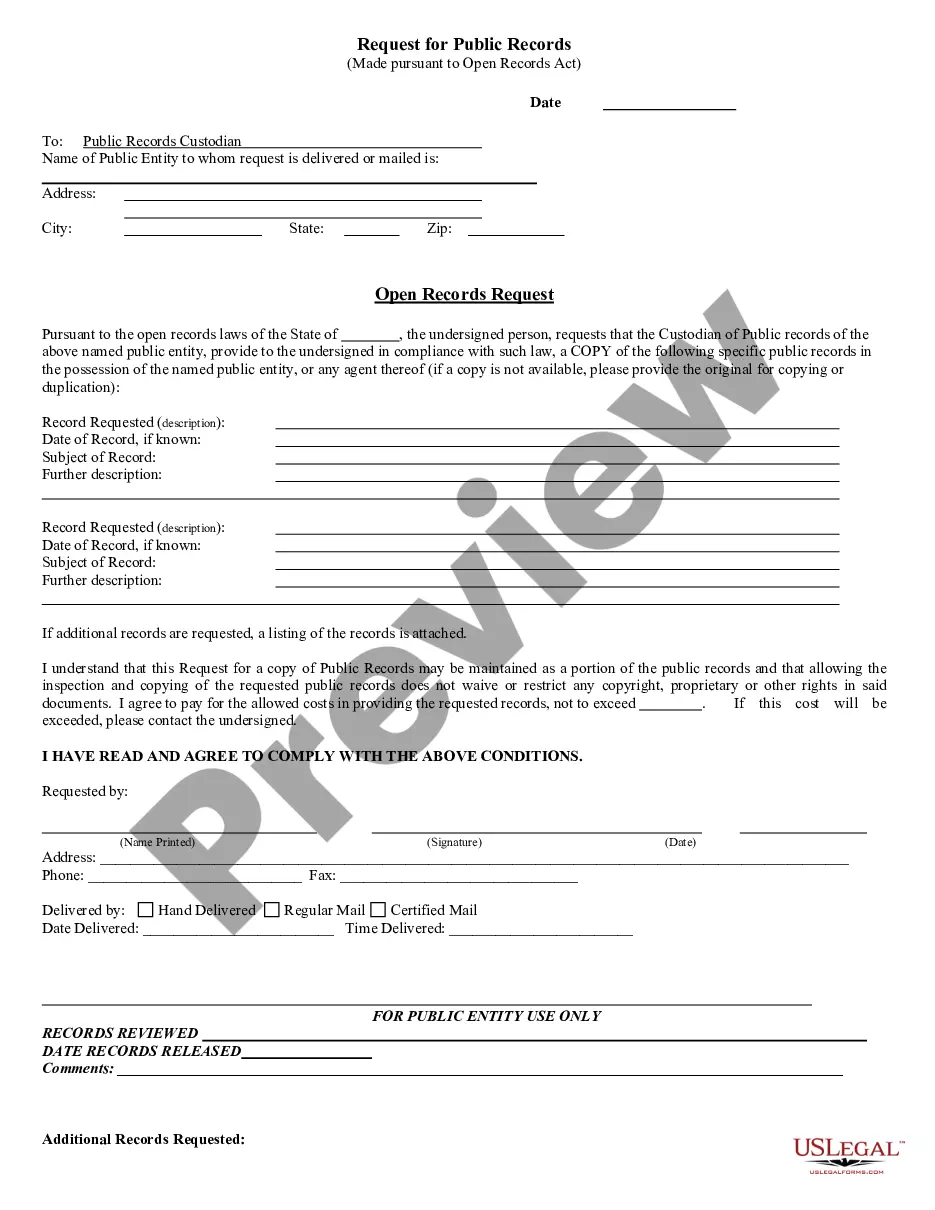
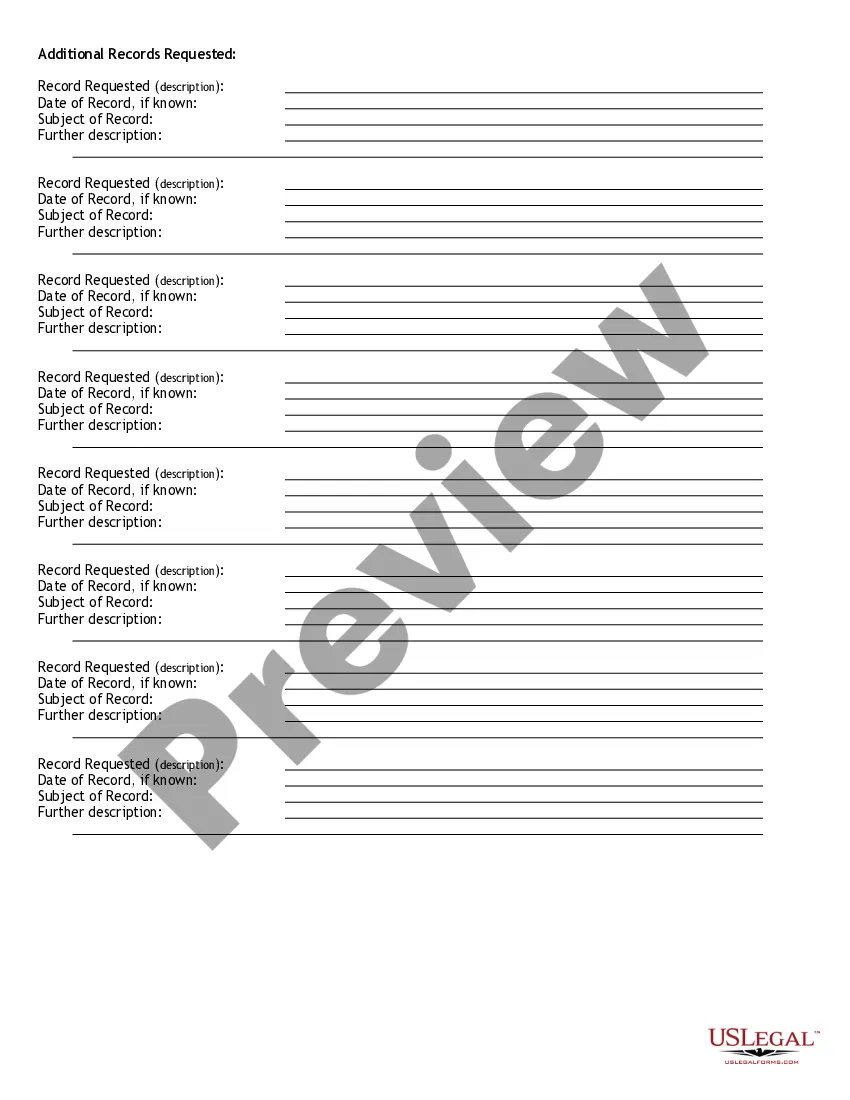
You can download or print the New Jersey Public Records Request - Open Public Records Act from our service.
To get another version of the form, use the Lookup field to find the template that suits you and your needs. Once you've found the template you want, click on Purchase now to proceed. Select the pricing plan you prefer, enter your details, and create your account on US Legal Forms. Complete the transaction. You can use your credit card or PayPal account to purchase the legal form. Select the format of the document and download it to your device. Make modifications to the document if possible. You can fill out, edit, sign, and print the New Jersey Public Records Request - Open Public Records Act. Obtain and print numerous document templates using the US Legal Forms website, which offers the largest collection of legal forms. Utilize professional and state-specific templates to meet your business or personal needs.
- If you already possess a US Legal Forms account, you can Log In and click the Acquire button.
- After that, you can fill out, edit, print, or sign the New Jersey Public Records Request - Open Public Records Act.
- Each legal document template you buy is yours forever.
- To obtain an additional copy of the purchased form, go to the My documents tab and click the corresponding button.
- If you're using the US Legal Forms website for the first time, follow the simple instructions below.
- First, ensure you have selected the correct document template for the area/town of your choice.
- Review the form summary to confirm you have selected the right form.
- If available, use the Review button to browse through the document template as well.
Form popularity
FAQ
Filling out an OPRA request requires attention to detail. Start by obtaining the correct OPRA form and clearly state the records you wish to access in your New Jersey Public Records Request - Open Public Records Act. Include your contact information and any specific details that can help locate the records. If you need assistance or templates, USLegalForms provides valuable resources to help ensure your request is properly completed.
The Open Records Act, known as OPRA, allows citizens to access public records in New Jersey. This law aims to promote transparency and accountability in government operations through your New Jersey Public Records Request - Open Public Records Act. It covers a wide range of documents, including government reports, meeting minutes, and more. Understanding this act empowers you to exercise your right to access information.
Filing an OPRA request in New Jersey starts with obtaining the OPRA request form from your municipal or county government website. Fill out the form with precise details regarding the records you want, ensuring your New Jersey Public Records Request - Open Public Records Act is clear and specific. Once completed, submit the request to the designated records custodian. Consider using USLegalForms to access templates and guidance for a successful submission.
Requesting public records in New Jersey involves completing an OPRA request form, which you can find online. Be clear about the records you seek in your New Jersey Public Records Request - Open Public Records Act to avoid delays. After filling out the form, submit it to the appropriate custodian of records in your locality. USLegalForms offers resources to help you navigate this process smoothly.
To get an OPRA request in New Jersey, begin by visiting the official New Jersey government website dedicated to public records. You can find the required forms and guidelines for submitting your New Jersey Public Records Request - Open Public Records Act. Make sure to review the specifics regarding the types of records you can request. Utilizing platforms like USLegalForms can simplify this process and ensure you have the correct documentation.
The FOIA allows the general public including foreign citizens, military and civilian personnel acting as private citizens, to request records electronically or in writing from the Federal Government.
What is the purpose of FOIA? The FOIA gives a person the right to request access to Federal records. However, some records may be protected from release pursuant to one of the nine FOIA exemptions. For the complete list of FOIA exemptions, visit this page.
Anyone but convicted criminals seeking information on victims may request public documents from the state. There is no requirement for a statement of purpose and no restrictions placed on the use of records. The New Jersey Open Public Records Act allows for up to seven days to respond to a records request.
Through the Freedom of Information Act, anybody in New Jersey interested can access public records at all levels of government. Any paper, written or printed book, microfilm, data/image processed document, and information kept in government offices are considered public records.
What is the FOIA? Since 1967, the Freedom of Information Act (FOIA) has provided the public the right to request access to records from any federal agency. It is often described as the law that keeps citizens in the know about their government.