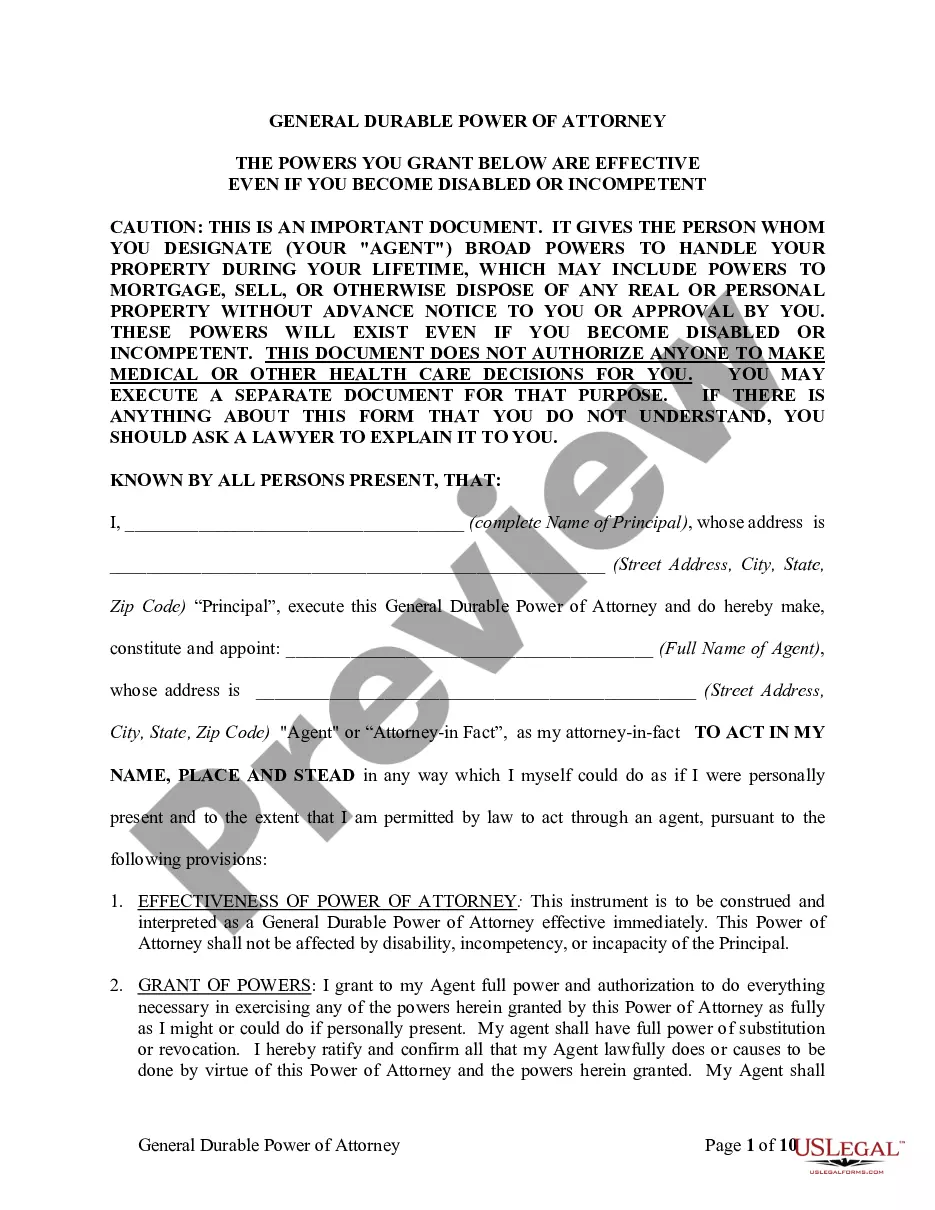
New Jersey Family Part Case Information Statement
What this document covers
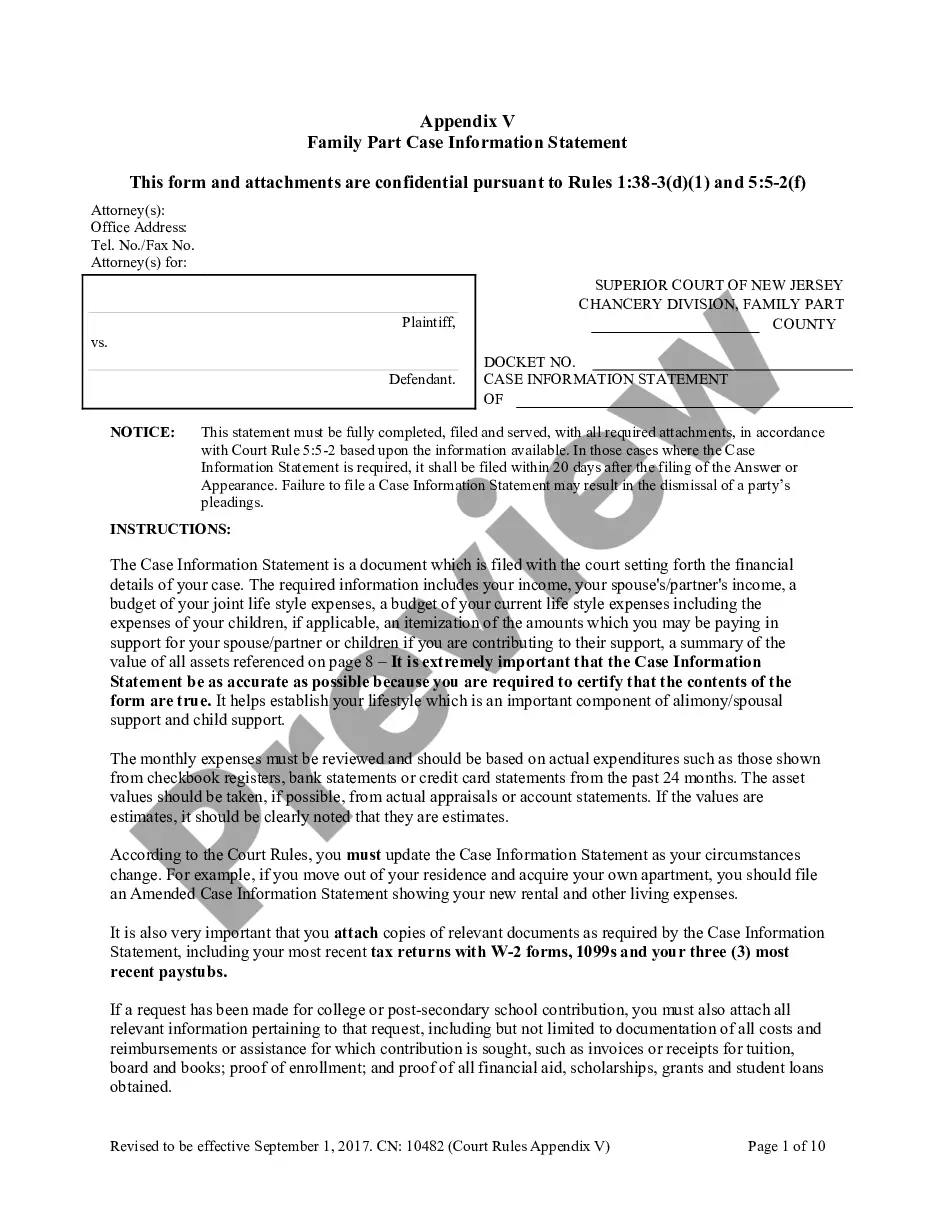
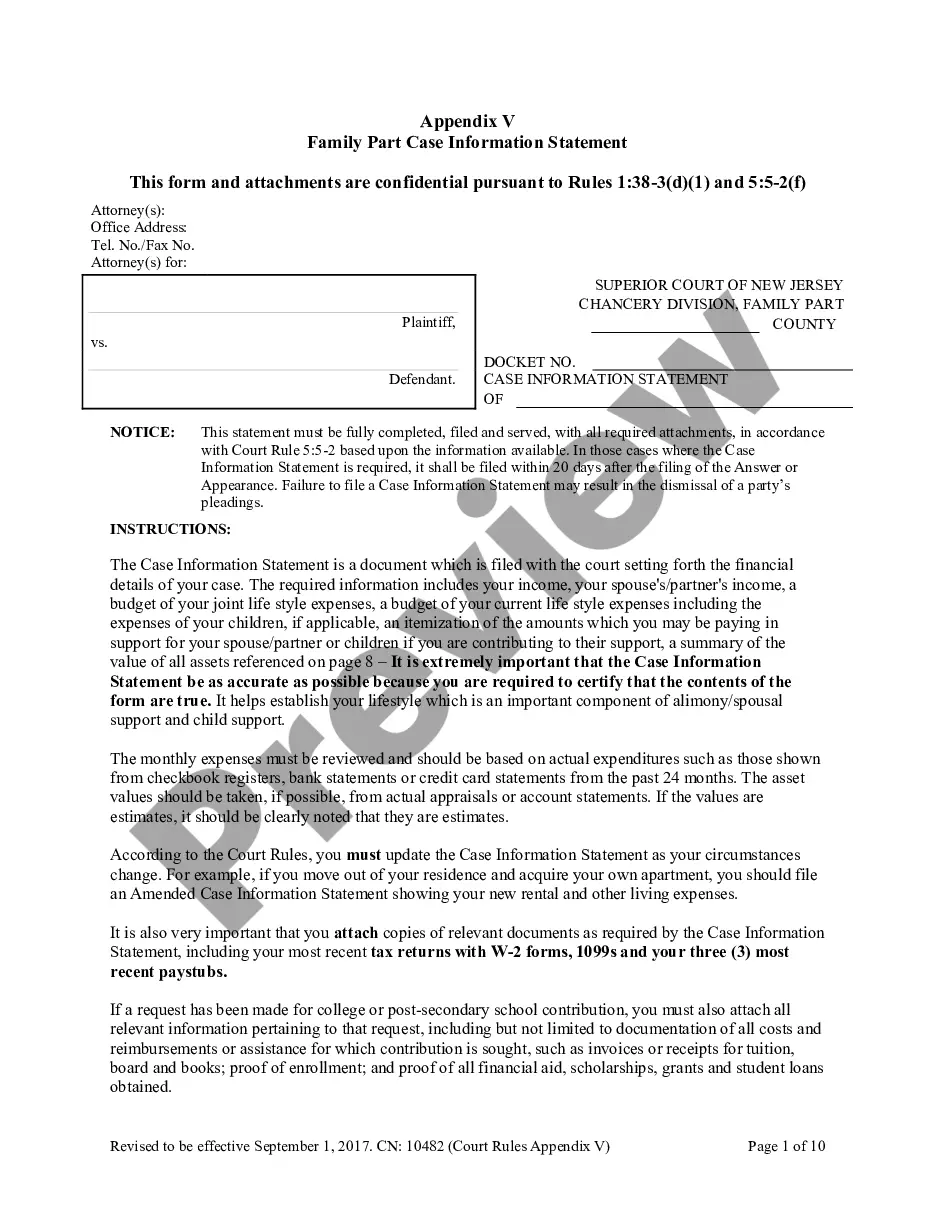
The Family Part Case Information Statement is an official document required by the Superior Court of New Jersey, specifically within the Chancery Division, Family Part. It provides essential financial information that the court uses to assess issues related to alimony, child support, and equitable distribution. This form serves as a vital tool to disclose income, expenses, assets, and liabilities, ensuring that all parties have a clear understanding of the financial circumstances involved in the case.
What’s included in this form
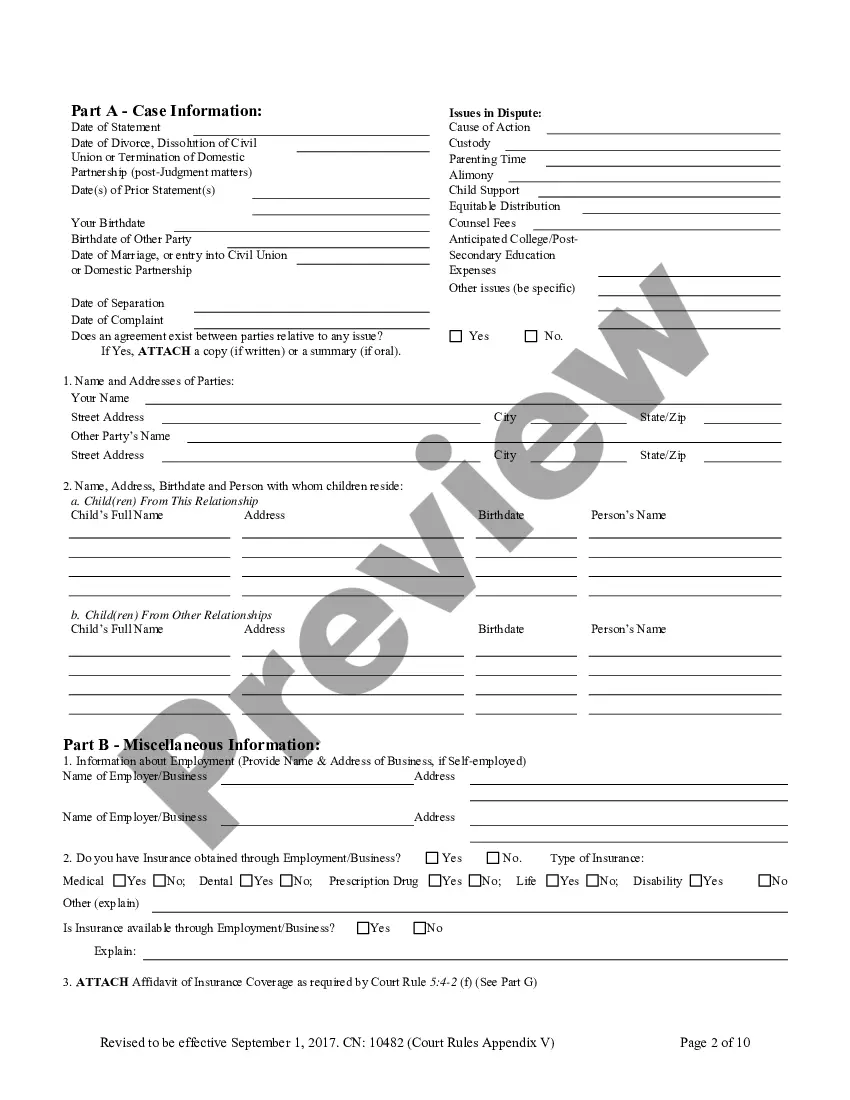
- Case Information: Basic identification details of the parties involved and the issues in dispute.
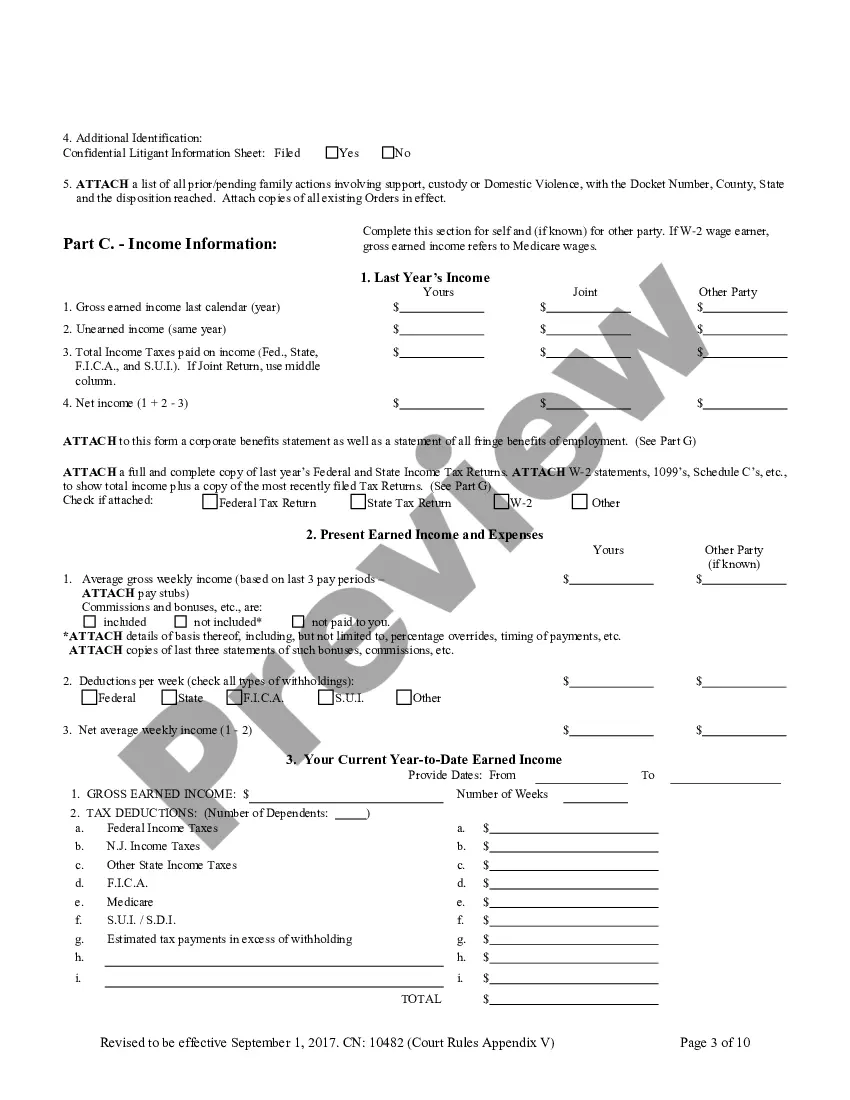
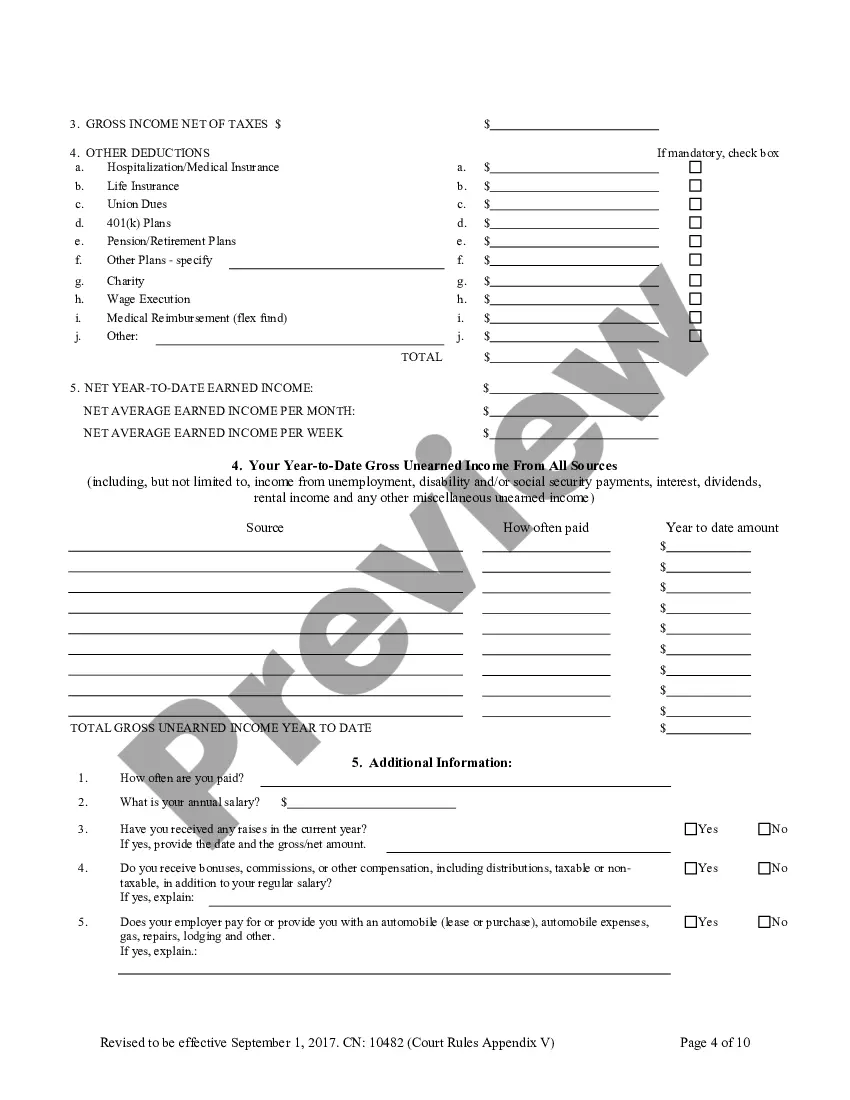
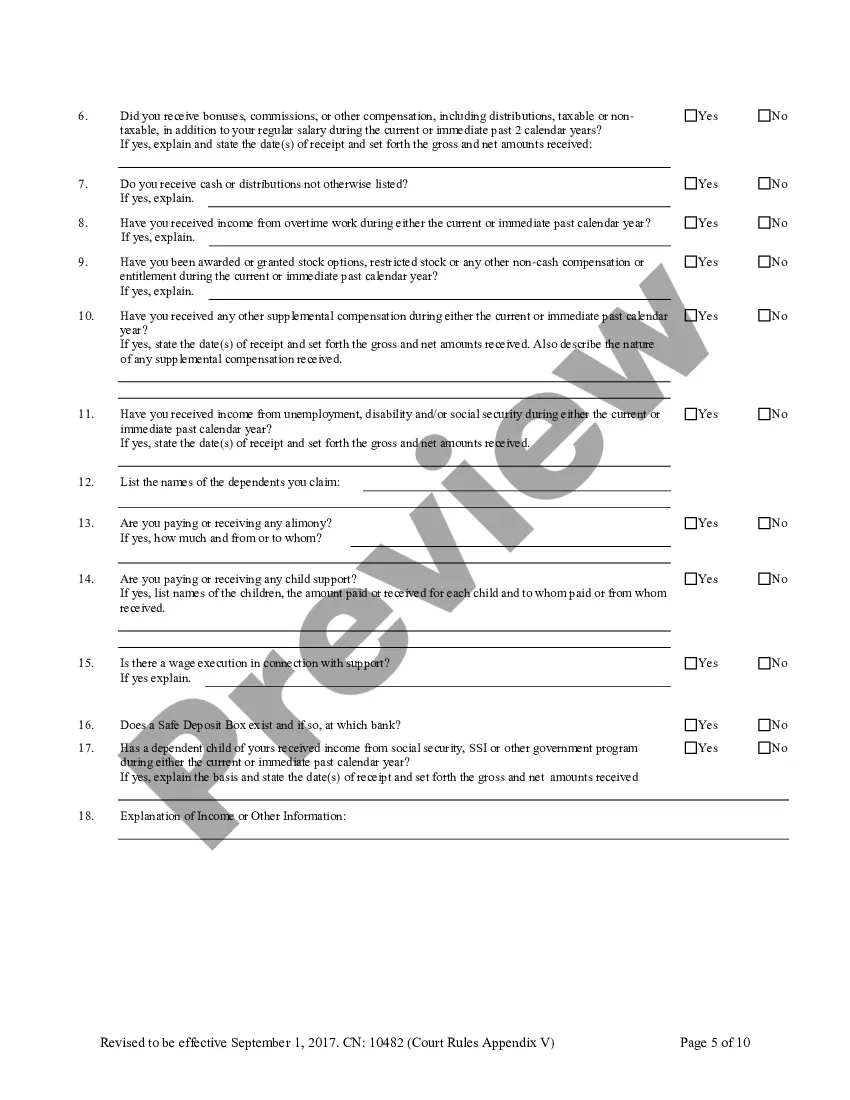
- Income Information: Detailed breakdown of earned and unearned income for both parties.
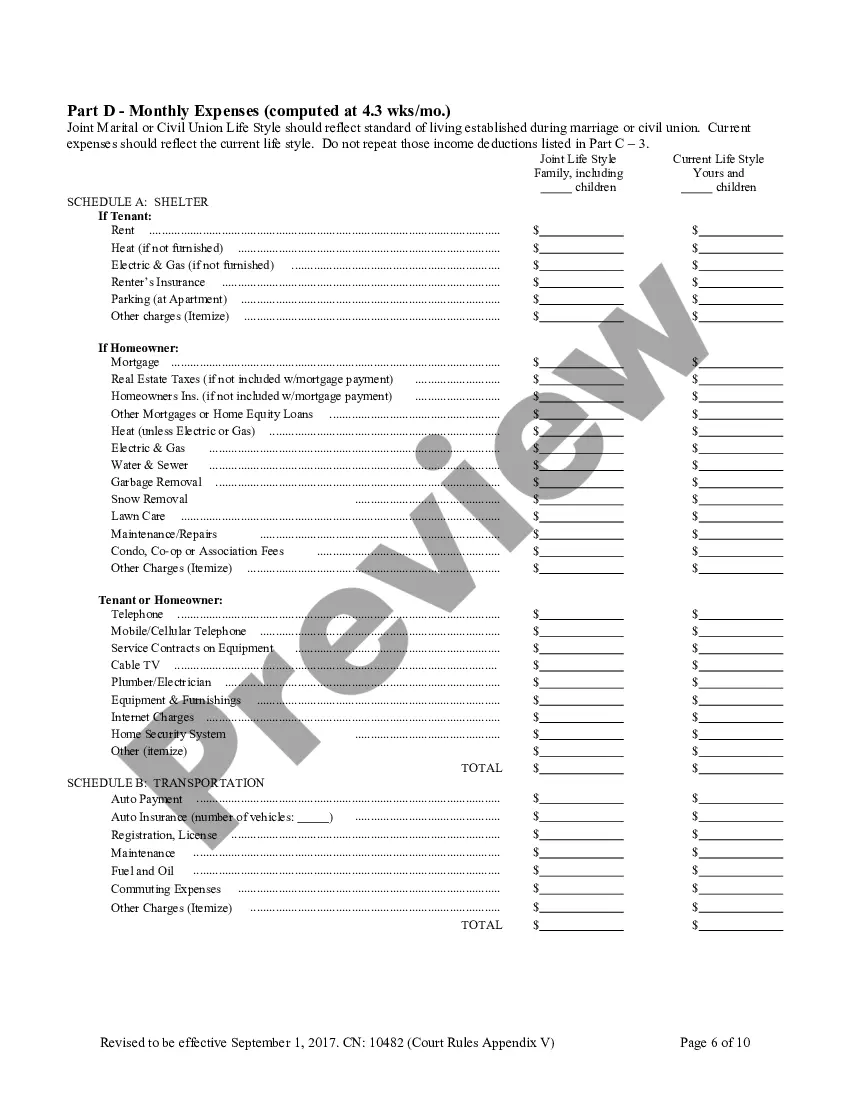
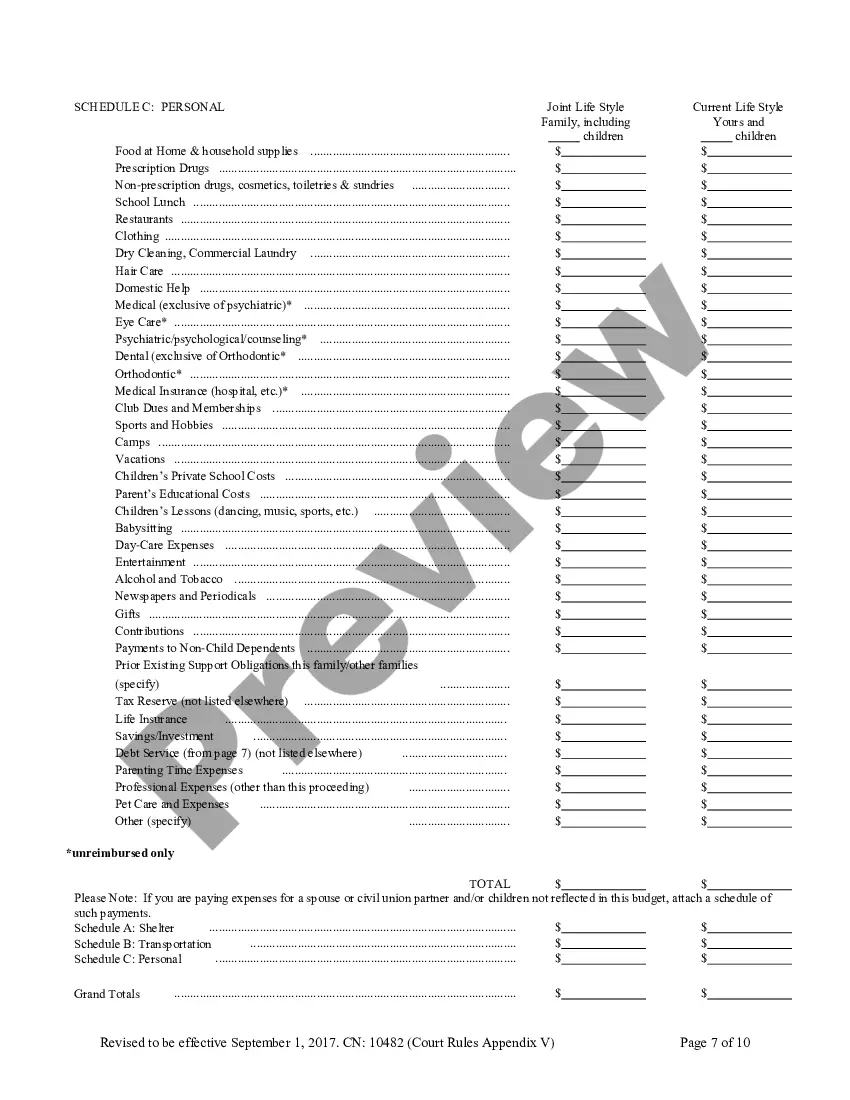
- Monthly Expenses: Comprehensive listing of monthly living expenses for both the joint lifestyle and current individual circumstances.
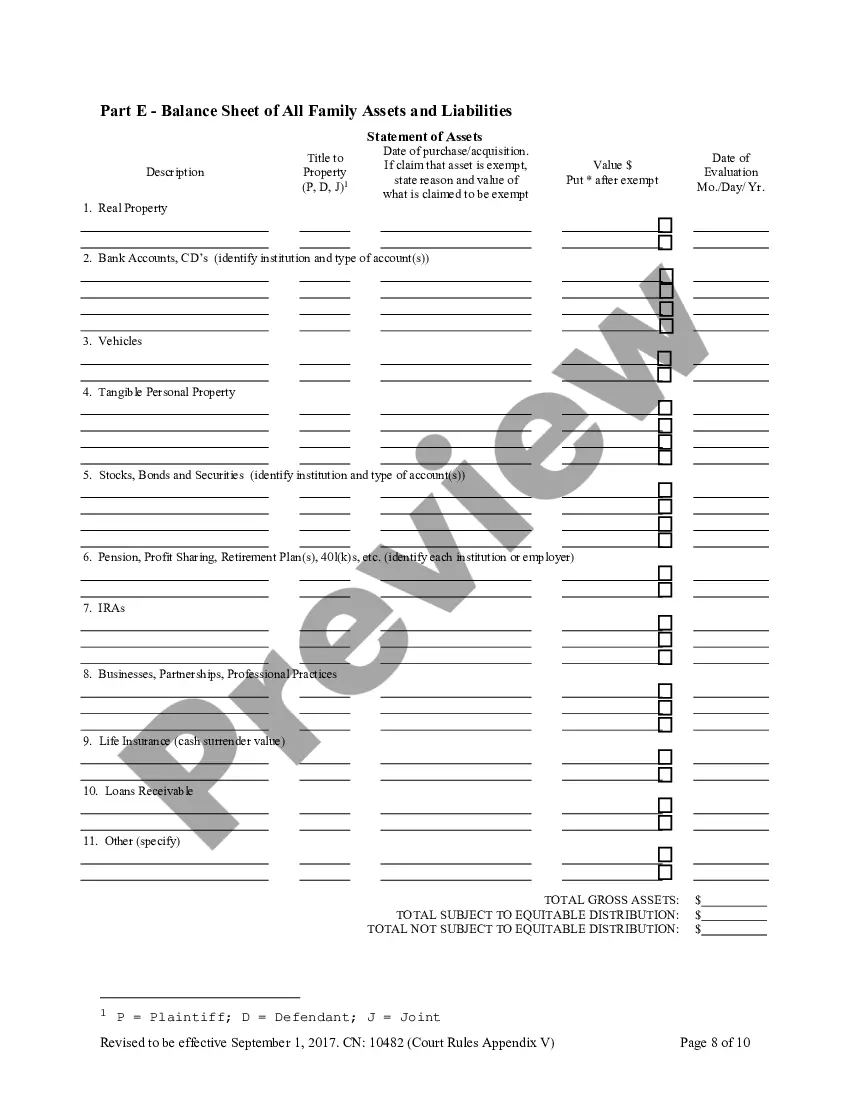
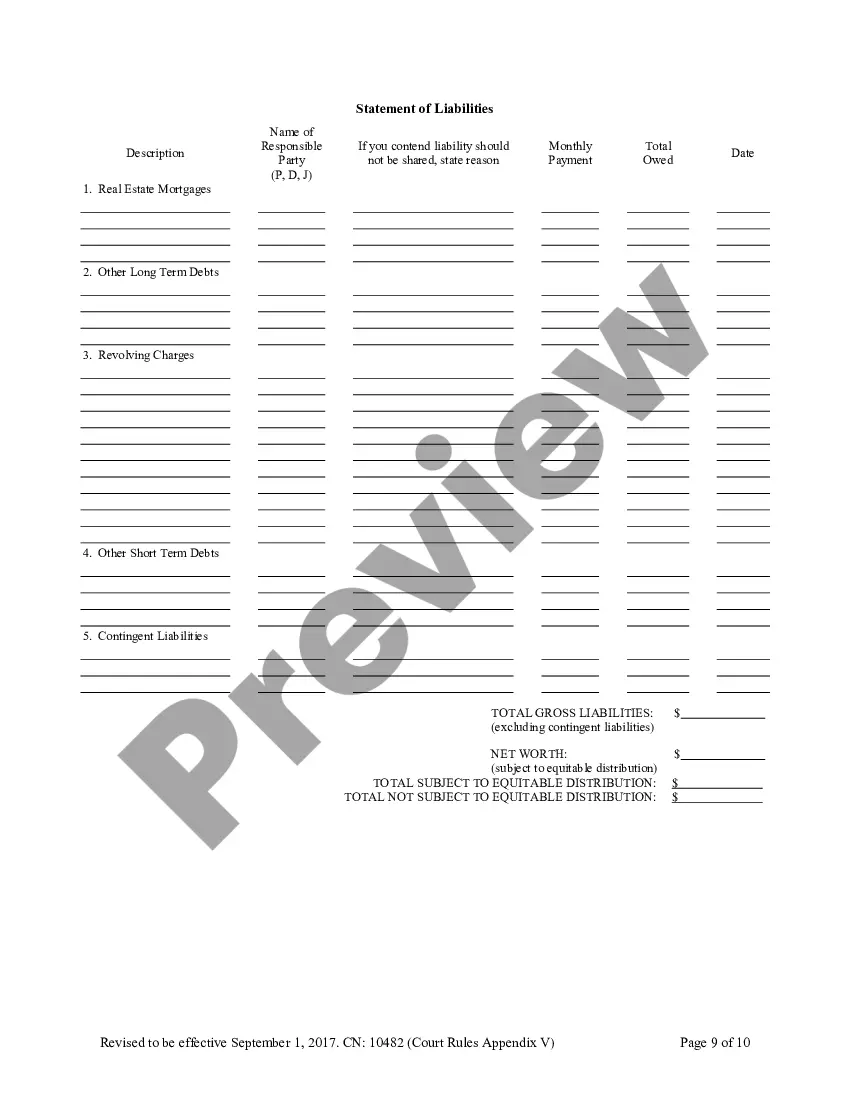
- Assets and Liabilities: A statement detailing all family assets and liabilities to determine financial standing.
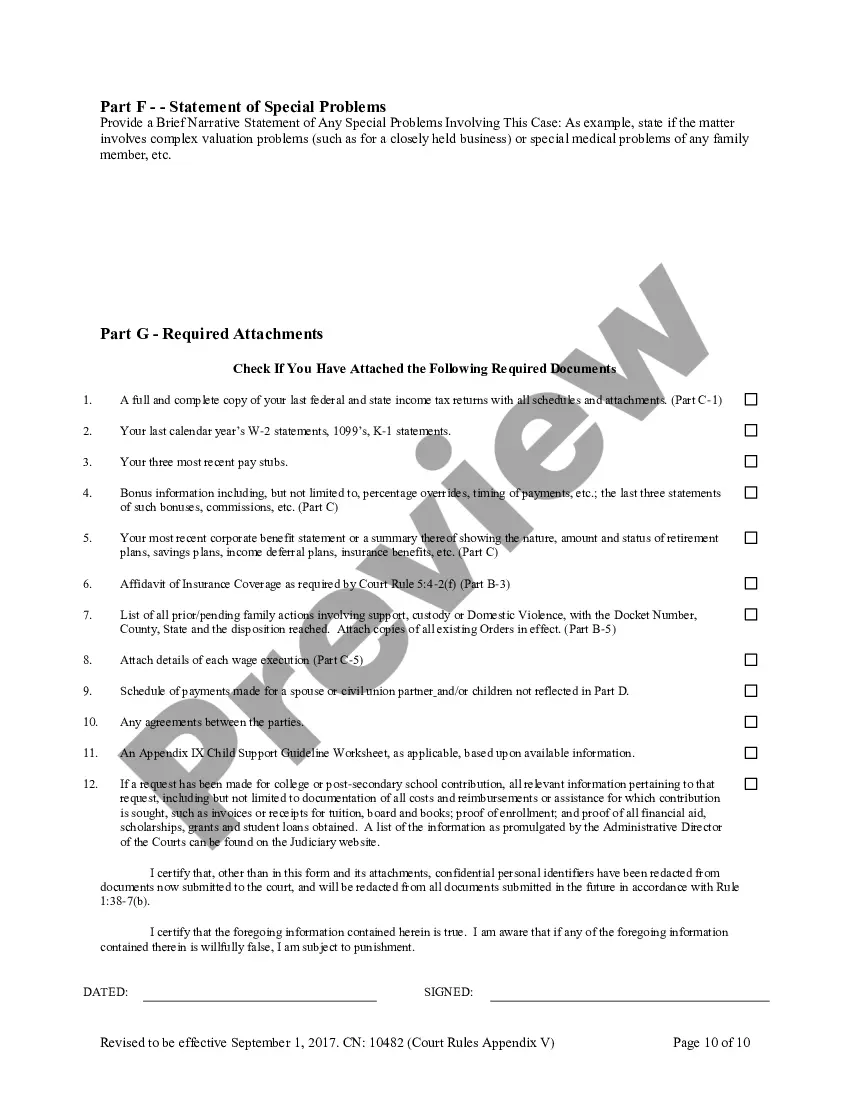
- Required Attachments: Checklist of necessary documents to uphold the accuracy of the financial disclosures.
When this form is needed
The Family Part Case Information Statement is needed when initiating or responding to family court actions that involve financial matters, such as divorce, child support, or spousal support. If you are required by the court to file this statement, it must accompany your initial pleadings, or else it may result in delays or even the dismissal of your case.
Who needs this form
- Individuals filing for divorce or separation who need to disclose their financial information.
- Respondents in family court proceedings who are required to provide financial disclosures.
- Any party involved in issues regarding child support or alimony where financial evidence is necessary.
How to complete this form
- Gather personal and financial information, including income, expenses, assets, and liabilities.
- Complete the Case Information section with the relevant details of both parties.
- Provide accurate income information for the last year and ongoing income details.
- List all monthly expenses, distinguishing between joint lifestyle expenses and your current individual expenses.
- Detail your assets and liabilities to create a complete financial picture.
- Attach all relevant documentation, including tax returns and pay stubs, as needed.
Notarization guidance
This form does not typically require notarization unless specified by local law. However, it is crucial to check specific court requirements to ensure compliance when submitting your documents.
Get your form ready online
Our built-in tools help you complete, sign, share, and store your documents in one place.
Make edits, fill in missing information, and update formatting in US Legal Forms—just like you would in MS Word.
Download a copy, print it, send it by email, or mail it via USPS—whatever works best for your next step.
Sign and collect signatures with our SignNow integration. Send to multiple recipients, set reminders, and more. Go Premium to unlock E-Sign.
If this form requires notarization, complete it online through a secure video call—no need to meet a notary in person or wait for an appointment.
We protect your documents and personal data by following strict security and privacy standards.

Make edits, fill in missing information, and update formatting in US Legal Forms—just like you would in MS Word.

Download a copy, print it, send it by email, or mail it via USPS—whatever works best for your next step.

Sign and collect signatures with our SignNow integration. Send to multiple recipients, set reminders, and more. Go Premium to unlock E-Sign.

If this form requires notarization, complete it online through a secure video call—no need to meet a notary in person or wait for an appointment.

We protect your documents and personal data by following strict security and privacy standards.
Common mistakes to avoid
- Failing to fully complete the statement, which can lead to dismissal of pleadings.
- Providing inaccurate income or expense estimates rather than actual figures.
- Neglecting to attach required documents, which can hinder court processes.
- Not updating the statement as circumstances change, violating court rules.
Advantages of online completion
- Convenience: Complete the form at your own pace from the comfort of your home.
- Editability: Easily modify entries as your financial situation changes.
- Reliability: Access up-to-date templates designed by licensed attorneys to ensure compliance.
Main things to remember
- The Family Part Case Information Statement is essential for family court proceedings in New Jersey.
- Accurate financial disclosures are vital for fair assessments of support and equitable distribution.
- Always verify local requirements and ensure all attachments are included when filing.
Definitions you should know
- Alimony: Financial support provided to a spouse after separation or divorce.
- Equitable distribution: The fair division of assets and debts between spouses during a divorce.
- Unearned income: Income received from sources other than employment, such as investments, rental properties, or social security.
Looking for another form?

Form popularity
FAQ
The five stages of divorce follow the common five stages of grief: denial, anger, bargaining, depression, and acceptance. When a couple is going through a divorce, both people involved experience these stages at different times, in different ways.
You are not happy. Most of your interactions are not positive. You find reasons to avoid your partner. Your friends or family urge you to end the relationship. Your instincts are telling you to get out. You live like roommates. Everything is hard. One or both have changed values or priorities.
The most commonly reported major contributors to divorce were lack of commitment, infidelity, and conflict/arguing. The most common final straw reasons were infidelity, domestic violence, and substance use. More participants blamed their partners than blamed themselves for the divorce.
There are four main types of California divorce options that can be chosen: no-fault divorce, uncontested divorce, simplified divorce and limited divorce.