New Jersey Quitclaim Deed from Individual to two Individuals
Overview of this form
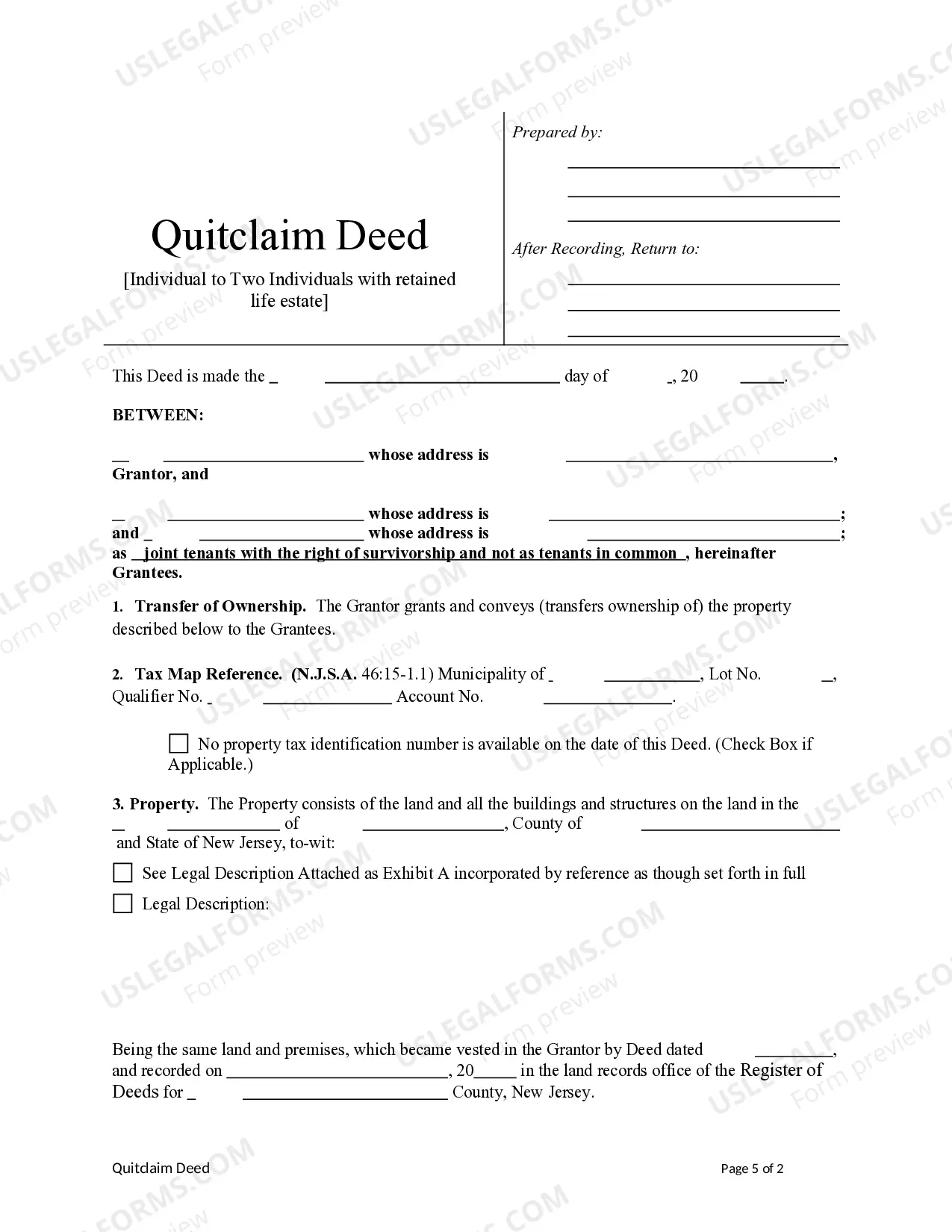
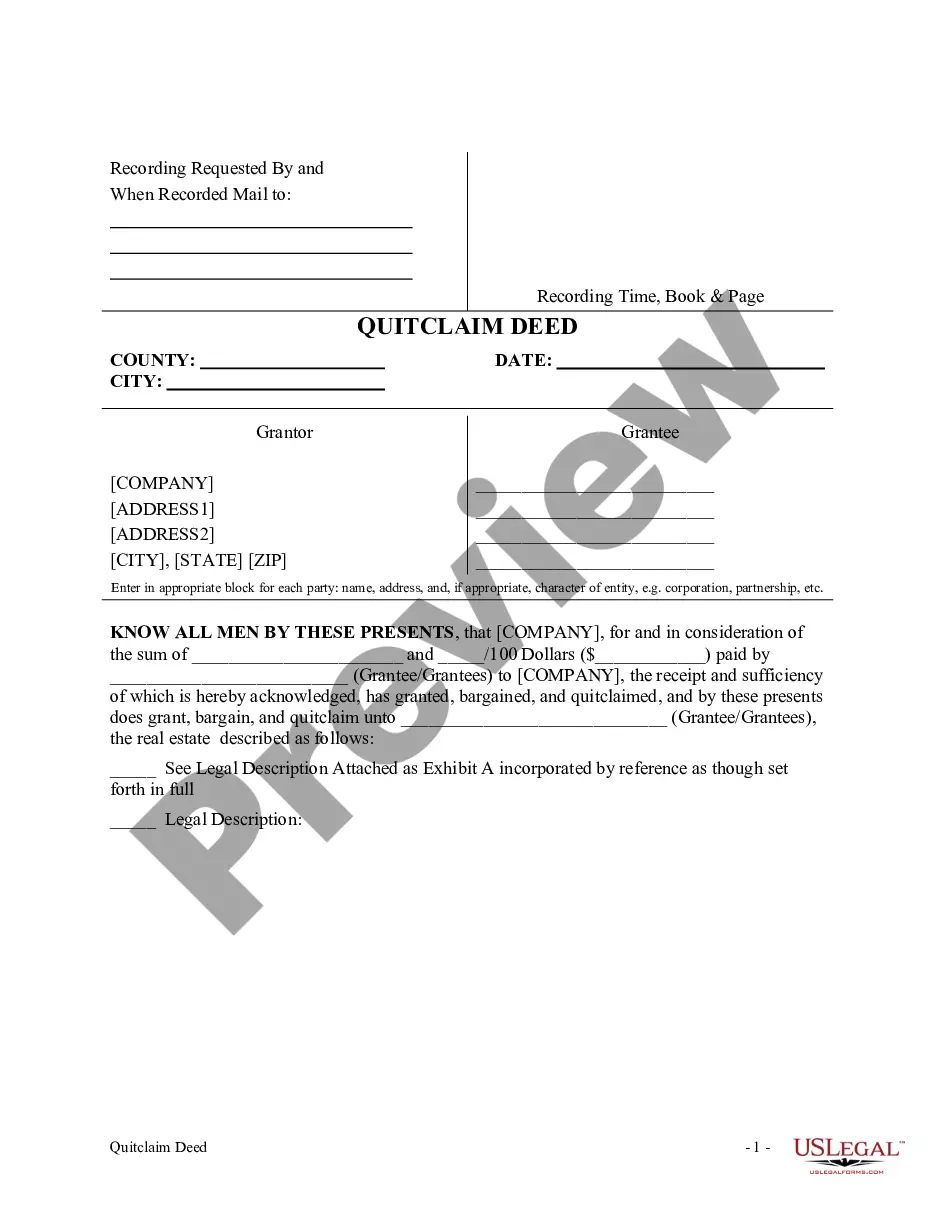
This Quitclaim Deed allows an individual (the Grantor) to transfer property to two individuals (the Grantees). The Grantor retains a life estate in the property, which is an important distinction compared to other forms of property transfer. This form is designed to meet all state statutory laws and is commonly used for conveyancing property without a warranty of title.
Main sections of this form
- Grantor's details: Information about the individual transferring the property.
- Grantees' details: Names and information of the two individuals receiving the property.
- Property description: Detailed legal description of the property being conveyed.
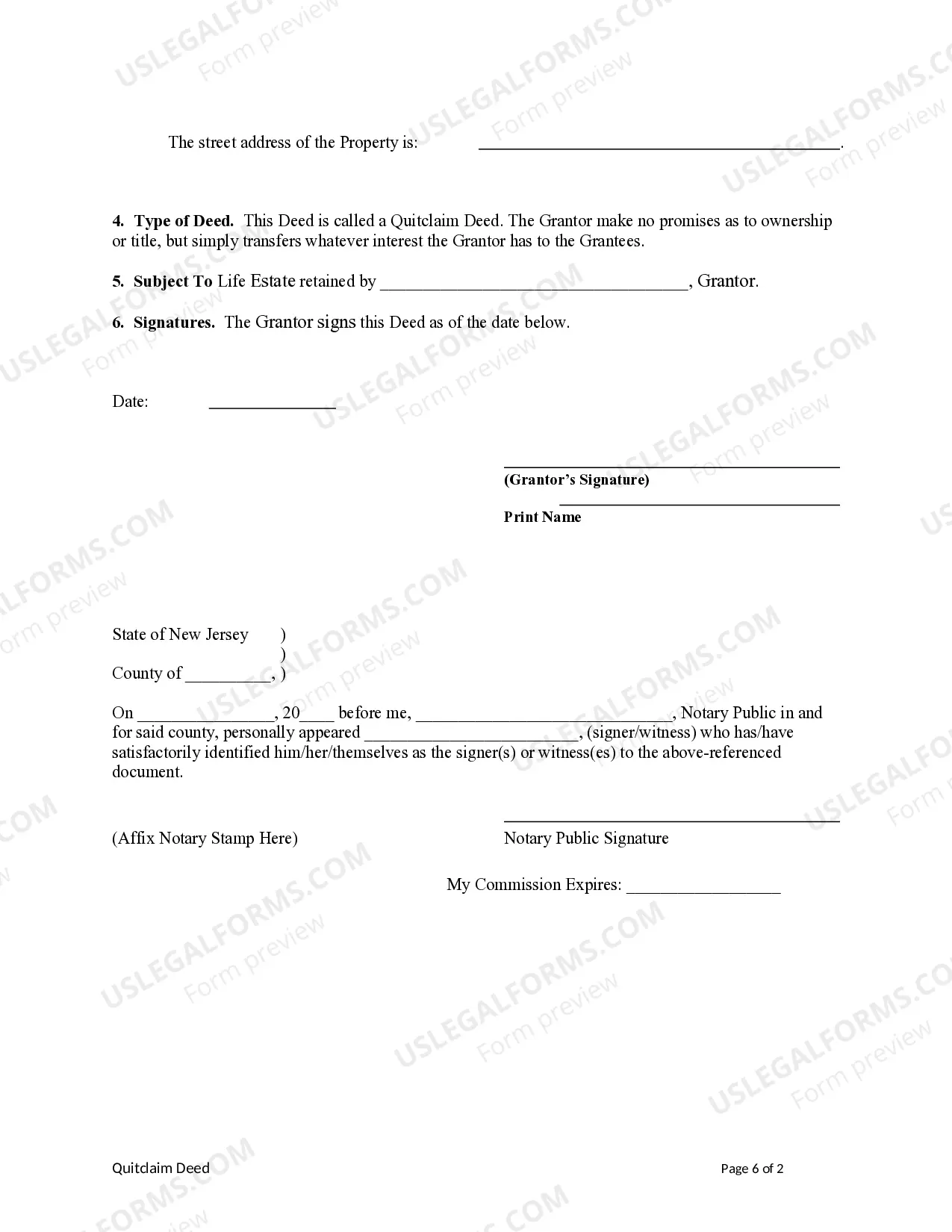
- Life estate clause: Specifies that the Grantor retains a life estate in the property.
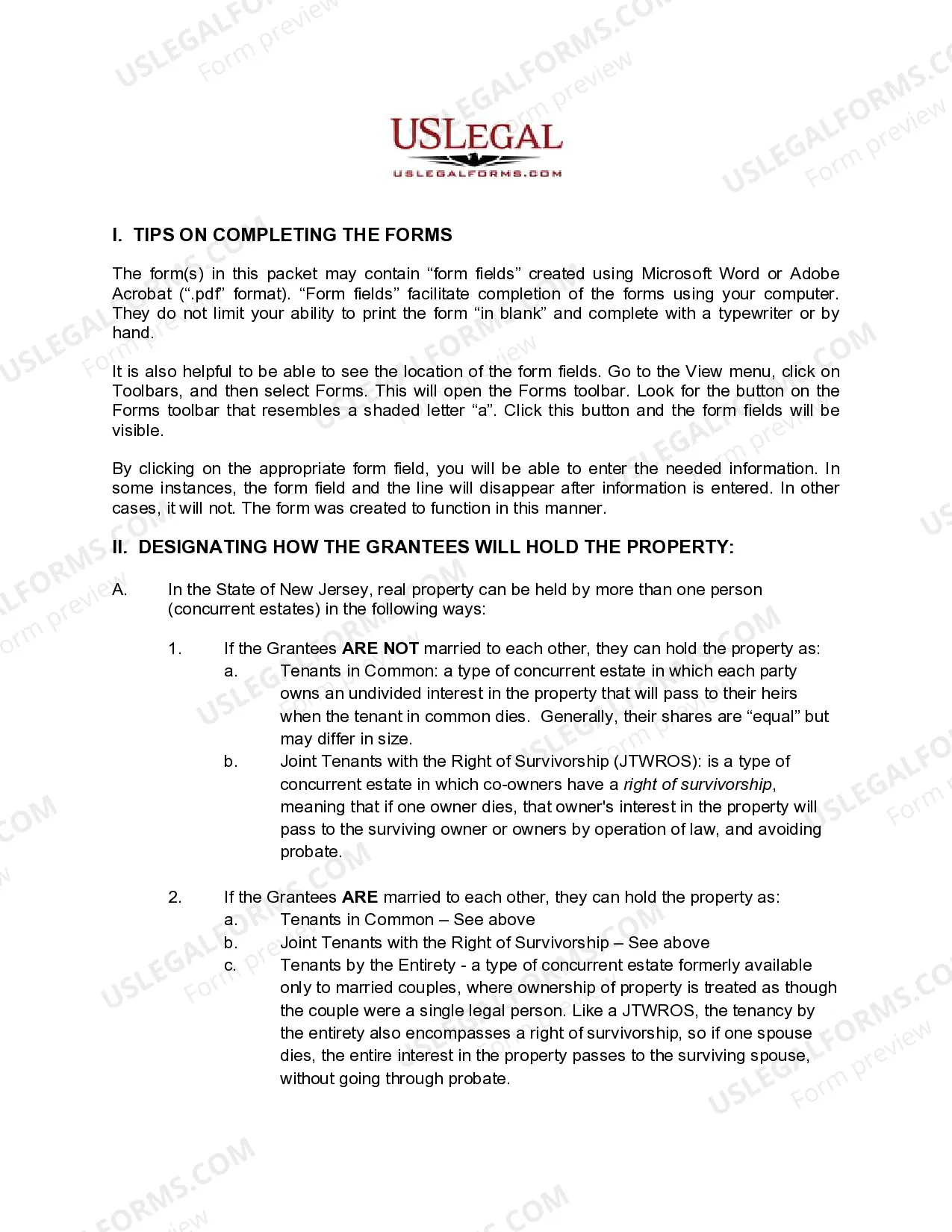
- Property title ownership designation: Options for how Grantees will hold the property (e.g., Tenants in Common, Joint Tenants with Right of Survivorship, or Tenants by the Entirety).
- Signature and notarization fields: Requirements for signing and witnessing the deed.




When this form is needed
This form is necessary when an individual wishes to transfer real estate ownership to two individuals while retaining a life estate. Scenarios include family property transfers, gifting property to friends, or transferring property as part of a divorce settlement. It is suitable for situations where the Grantor wishes to convey ownership without a warranty of the property title.
Who this form is for
- Individuals acting as Grantors who want to transfer property ownership.
- Two individuals receiving property from an individual, whether they are related or not.
- Individuals familiar with real estate transactions who are comfortable completing legal documents.
- Estate planners managing property transfers for clients.
How to prepare this document
- Identify the Grantor: Enter the name of the individual transferring the property.
- List the Grantees: Provide the legal names of the two individuals receiving the property.
- Describe the property: Include a detailed legal description of the property to avoid ambiguity.
- Select the ownership type: Indicate how the Grantees will hold the property (e.g., Tenants in Common, Joint Tenants with Right of Survivorship, or Tenants by the Entirety).
- Sign and date the form: Ensure the Grantor signs the deed in the presence of a notary public if required.
Is notarization required?
Yes, this form must be notarized to be legally valid. Notarization ensures the authenticity of signatures and protects against potential fraud. US Legal Forms offers integrated online notarization, allowing you to complete the process securely via video call without the need for travel.
Get your form ready online
Our built-in tools help you complete, sign, share, and store your documents in one place.
Make edits, fill in missing information, and update formatting in US Legal Forms—just like you would in MS Word.
Download a copy, print it, send it by email, or mail it via USPS—whatever works best for your next step.
Sign and collect signatures with our SignNow integration. Send to multiple recipients, set reminders, and more. Go Premium to unlock E-Sign.
If this form requires notarization, complete it online through a secure video call—no need to meet a notary in person or wait for an appointment.
We protect your documents and personal data by following strict security and privacy standards.

Make edits, fill in missing information, and update formatting in US Legal Forms—just like you would in MS Word.

Download a copy, print it, send it by email, or mail it via USPS—whatever works best for your next step.

Sign and collect signatures with our SignNow integration. Send to multiple recipients, set reminders, and more. Go Premium to unlock E-Sign.

If this form requires notarization, complete it online through a secure video call—no need to meet a notary in person or wait for an appointment.

We protect your documents and personal data by following strict security and privacy standards.
Mistakes to watch out for
- Failing to include a complete property description, leading to potential disputes.
- Not clearly specifying how the Grantees will hold the property.
- Neglecting to have the deed notarized if required by state law.
- Leaving out the Grantor's life estate clause, which may alter the intended transfer.
Benefits of using this form online
- Convenience of downloading the form at any time for immediate use.
- Editable fields allow for easy completion on a computer.
- Access to attorney-drafted forms ensures compliance with state laws.
- The ability to save and print the form as needed.
Quick recap
- This Quitclaim Deed allows an individual to transfer property ownership to two other individuals.
- The Grantor retains a life estate in the property.
- It is essential to specify how the Grantees will hold the property.
- Notarization is required for the deed to be valid.
Looking for another form?
Form popularity
FAQ
A New Jersey (NJ) quitclaim deed allows a property owner (or grantor) to release their ownership rights to a purchaser (or grantee).A quitclaim deed is different from a warranty deed, which warrants to the purchaser that the property owner has (and is conveying) legal title to the property.
To use a Quitclaim Deed to add someone to a property deed or title, you would need to create a Quitclaim Deed and list all of the current owners in the grantor section. In the grantee section, you would list all of the current owners as well as the person you would like to add.
They are commonly used to add/remove someone to/from real estate title or deed (divorce, name changes, family and trust transfers). The quitclaim deed is a legal document (deed) used to transfer interest in real estate from one person or entity (grantor) to another (grantee).
Signing - According to New Jersey law, the quit claim deed must be signed by the seller of the property in the presence of a Notary Public. Recording - All quit claim deeds that have been notarized should be filed with the County Clerk's Office within the jurisdiction that the property falls under.
Adding someone to your house deed requires the filing of a legal form known as a quitclaim deed. When executed and notarized, the quitclaim deed legally overrides the current deed to your home. By filing the quitclaim deed, you can add someone to the title of your home, in effect transferring a share of ownership.
The simplest way to add a spouse to a deed is through a quitclaim deed. This type of deed transfers whatever ownership rights you have so that you and your spouse now become joint owners. No title search or complex transaction is necessary. The deed will list you as the grantor and you and your spouse as grantees.
A Quitclaim Deed must be notarized by a notary public or attorney in order to be valid.Consideration in a Quitclaim Deed is what the Grantee will pay to the Grantor for the interest in the property.
But you might be wondering if an owner can transfer a deed to another person without a real estate lawyer. The answer is yes. Parties to a transaction are always free to prepare their own deeds.A quitclaim deed, for example, is far simpler than a warranty deed.