New Jersey Quitclaim Deed - Individual to Trust
About this form
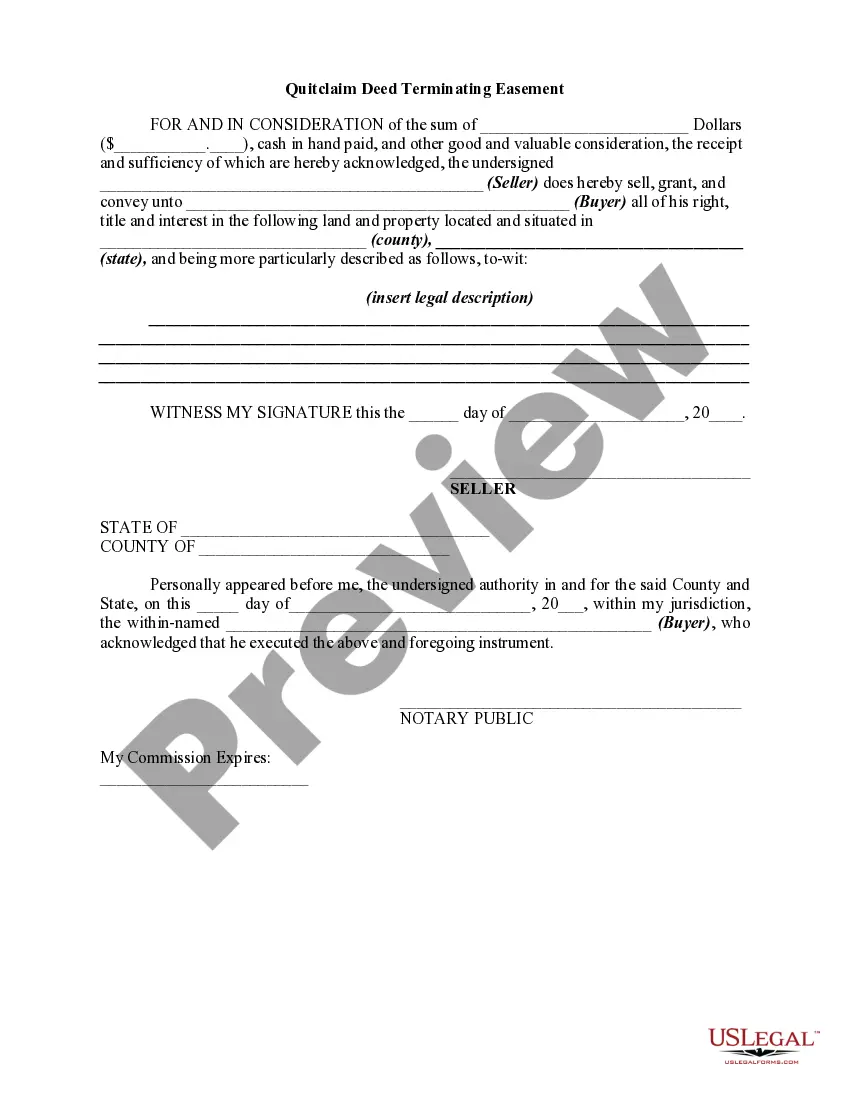
The Quitclaim Deed - Individual to Trust is a legal document that allows an individual (the grantor) to transfer their interest in a property directly to a trust, with the trustee as the recipient. Unlike other deeds, a quitclaim deed does not guarantee that the grantor holds full title or ownership rights, making it a simpler option when the identity of the title holder is not in dispute. This form is particularly useful for estate planning and asset management purposes.
Form components explained
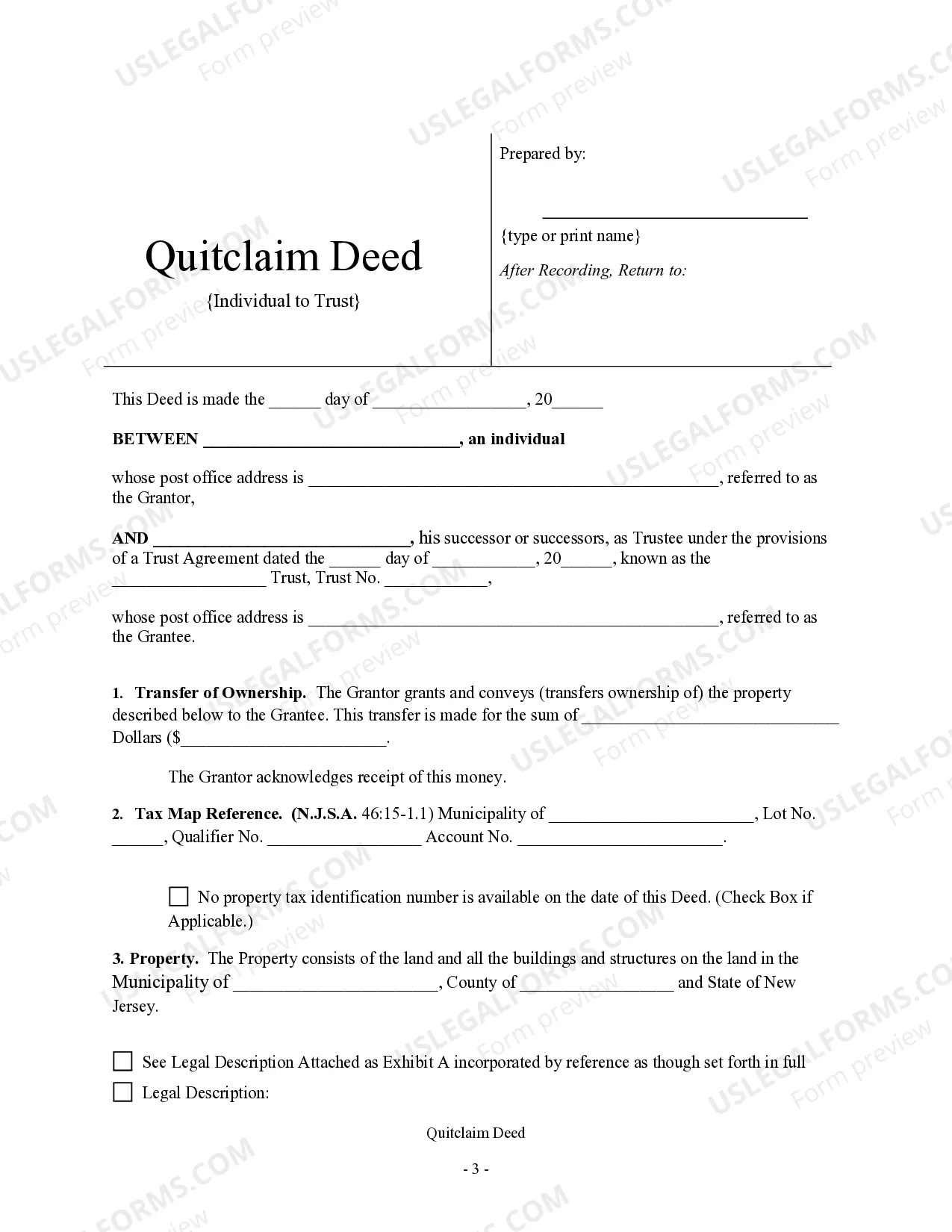
- Parties involved: Identifies the grantor (individual) and the grantee (trustee).
- Property description: Outlines the property being transferred, including its legal description.
- Consideration: States the monetary value exchanged for the property or notes that it is a gift.
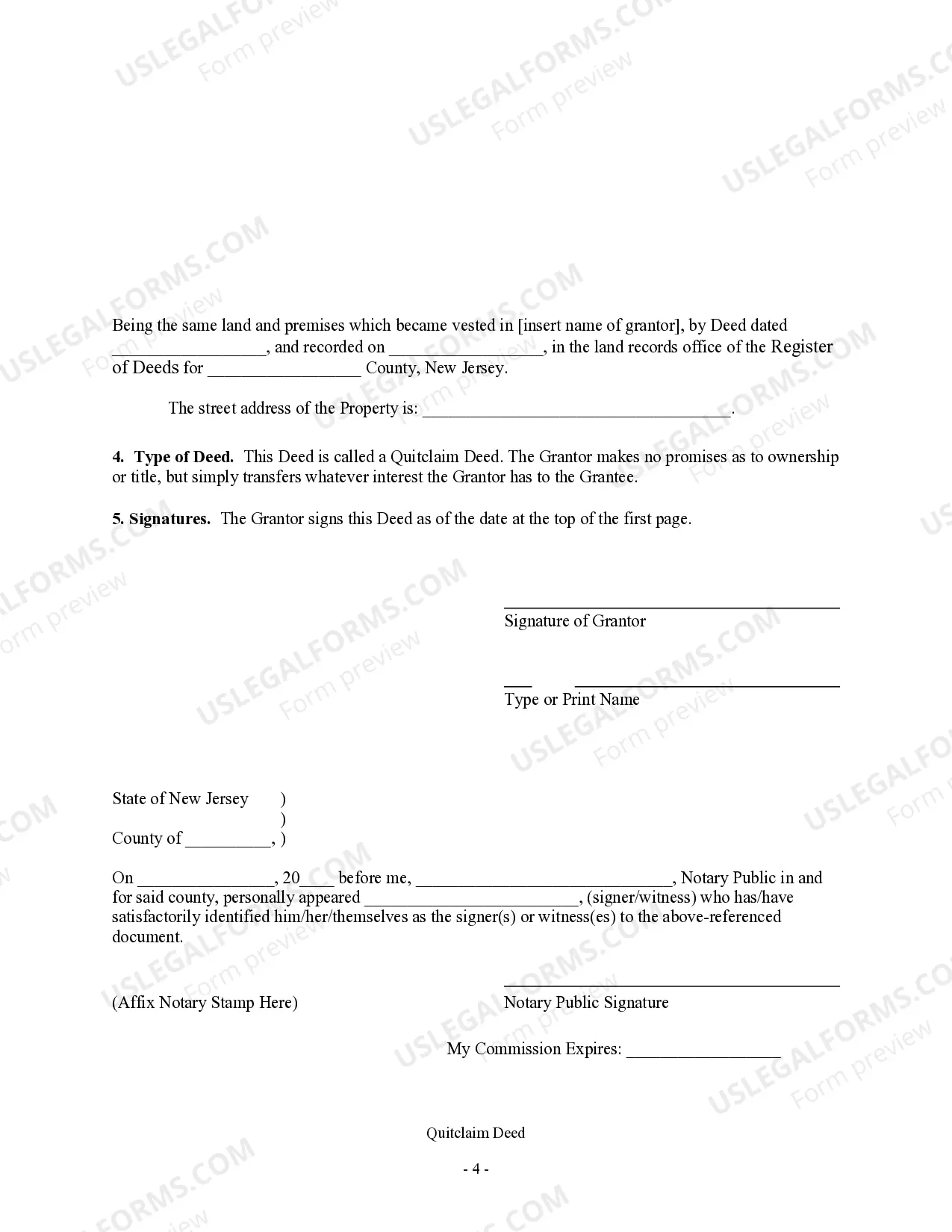
- Type of deed: Specifies this is a quitclaim deed, indicating no warranties on title.
- Signatures: Requires signatures of the grantor and potentially the trustee, along with a notary.



When to use this form
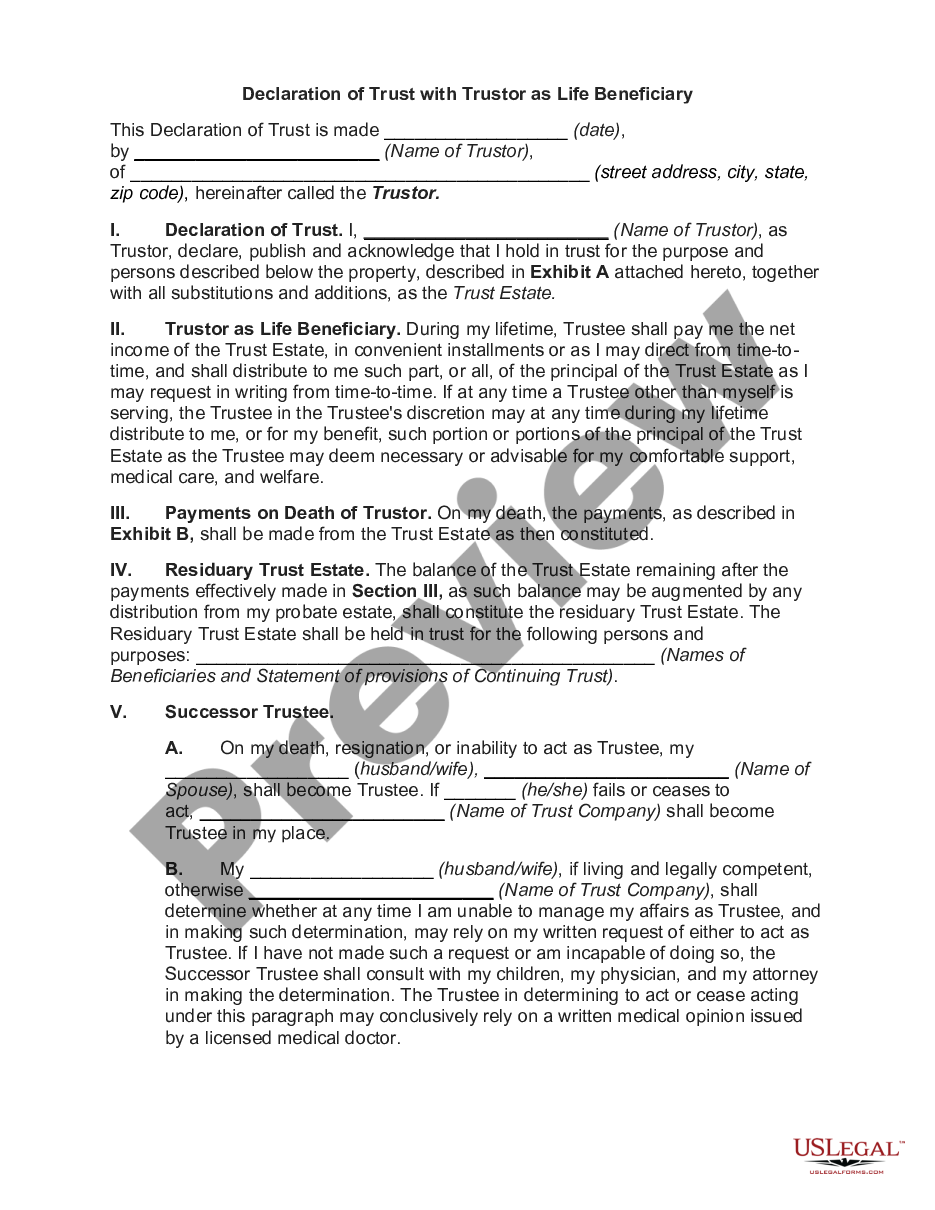
This form is typically used when an individual wants to transfer property ownership to a trust they have established. Common scenarios include estate planning, avoiding probate, or managing assets for beneficiaries. It is ideal for those who wish to consolidate ownership of real estate under a living trust without the complexities of a warranty deed.
Who should use this form
This Quitclaim Deed is suitable for individuals who are:
- Establishing a living trust to manage their assets.
- Transferring property to a trust for estate planning purposes.
- Wishing to simplify the transfer of their property rights to designated trustees.
- Interested in reducing potential estate taxes or avoiding probate.
Completing this form step by step
- Identify the parties: Fill in the names and addresses of the grantor and the trustee.
- Specify the property: Describe the property being transferred, including its legal address and any identifying information.
- Enter the consideration: Indicate the value of the transfer or state if it is a gift.
- Review for accuracy: Ensure all information is complete and accurate, especially the property details.
- Obtain signatures: Both the grantor and the trustee should sign the document in the presence of a notary.
Is notarization required?
To make this form legally binding, it must be notarized. Our online notarization service, powered by Notarize, lets you verify and sign documents remotely through an encrypted video session.
Get your form ready online
Our built-in tools help you complete, sign, share, and store your documents in one place.
Make edits, fill in missing information, and update formatting in US Legal Forms—just like you would in MS Word.
Download a copy, print it, send it by email, or mail it via USPS—whatever works best for your next step.
Sign and collect signatures with our SignNow integration. Send to multiple recipients, set reminders, and more. Go Premium to unlock E-Sign.
If this form requires notarization, complete it online through a secure video call—no need to meet a notary in person or wait for an appointment.
We protect your documents and personal data by following strict security and privacy standards.

Make edits, fill in missing information, and update formatting in US Legal Forms—just like you would in MS Word.

Download a copy, print it, send it by email, or mail it via USPS—whatever works best for your next step.

Sign and collect signatures with our SignNow integration. Send to multiple recipients, set reminders, and more. Go Premium to unlock E-Sign.

If this form requires notarization, complete it online through a secure video call—no need to meet a notary in person or wait for an appointment.

We protect your documents and personal data by following strict security and privacy standards.
Mistakes to watch out for
- Failing to provide a complete property description.
- Not properly signing the deed in front of a notary.
- Leaving out the consideration, which can lead to issues with tax authorities.
- Using outdated forms that may not comply with current state requirements.
Benefits of completing this form online
- Convenient: Download and fill out the form at your convenience.
- Editability: Easily enter details using your computer or fill it out by hand.
- Reliability: Forms are drafted by licensed attorneys to ensure legal compliance.
- Time-saving: Quickly complete and print the document without needing to visit a law office.
What to keep in mind
- The Quitclaim Deed - Individual to Trust allows for straightforward property transfer to a trust.
- This form does not guarantee ownership, making it suitable for specific situations like estate planning.
- Ensure accurate and complete information to avoid legal issues or complications.
- Notarization is required to validate the transfer of property rights.
Looking for another form?

Form popularity
FAQ
Although it's possible to change the names on title deeds yourself, we recommend that you seek professional help from a solicitor. The value of property is sufficiently high to make it worthwhile getting the transfer right.
Locate your current deed. Use the proper deed. Check with your title insurance company and lender. Prepare a new deed. Sign in the presence of a notary. Record the deed in the county clerk's office. Locate the deed that's in trust. Use the proper deed.
Take the signed and notarized quitclaim deed to your county recorder's office to complete the transfer of title into your revocable trust. Check in two to four weeks to ensure it has been recorded. Include the address of the property on the asset list addendum attached to your trust.
Retrieve your original deed. Get the appropriate deed form. Draft the deed. Sign the deed before a notary. Record the deed with the county recorder. Obtain the new original deed.
Obtain a California grant deed from a local office supply store or your county recorder's office. Complete the top line of the deed. Indicate the grantee on the second line. Enter the trustees' names and addresses.
It will depend what state the property is in. For example, the minimum fee payable when changing the title to have someone removed from a property title in NSW is $133.48. This fee must be paid to the NSW Government Land & Property Information Department.
To transfer a property as a gift, you need to fill in a TR1 form and send it to the Land Registry, along with an AP1 form. If either side is not using a Solicitor or Conveyancer, an ID1 form will also be needed.
Transferring Real Property to a Trust You can transfer your home (or any real property) to the trust with a deed, a document that transfers ownership to the trust. A quitclaim deed is the most common and simplest method (and one you can do yourself).
1Locate your current deed.2Use the proper deed.3Check with your title insurance company and lender.4Prepare a new deed.5Sign in the presence of a notary.6Record the deed in the county clerk's office.7Locate the deed that's in trust.8Use the proper deed.How to Transfer a Deed in a Living Trust .com\ninfo..com > article > how-transfer-deed-living-trust