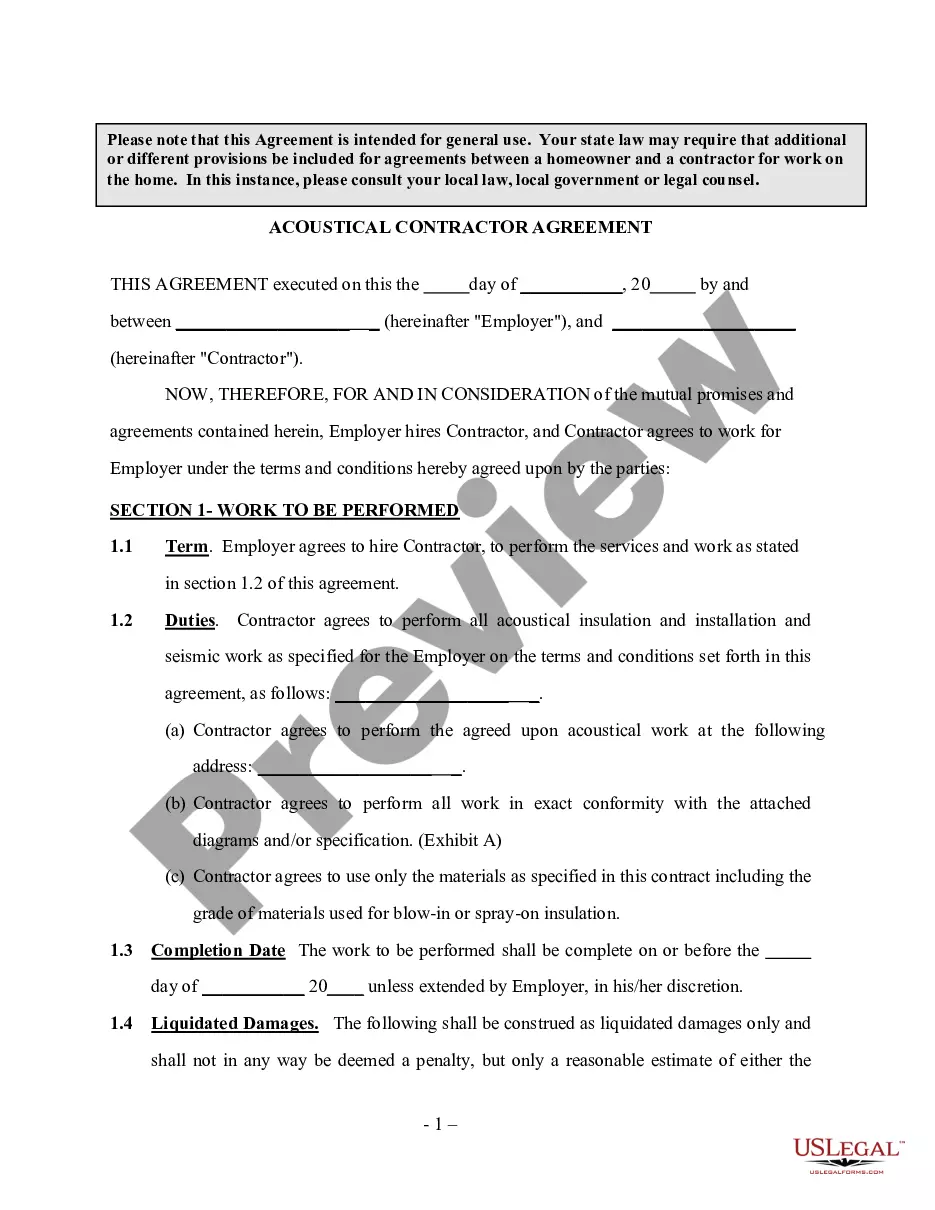
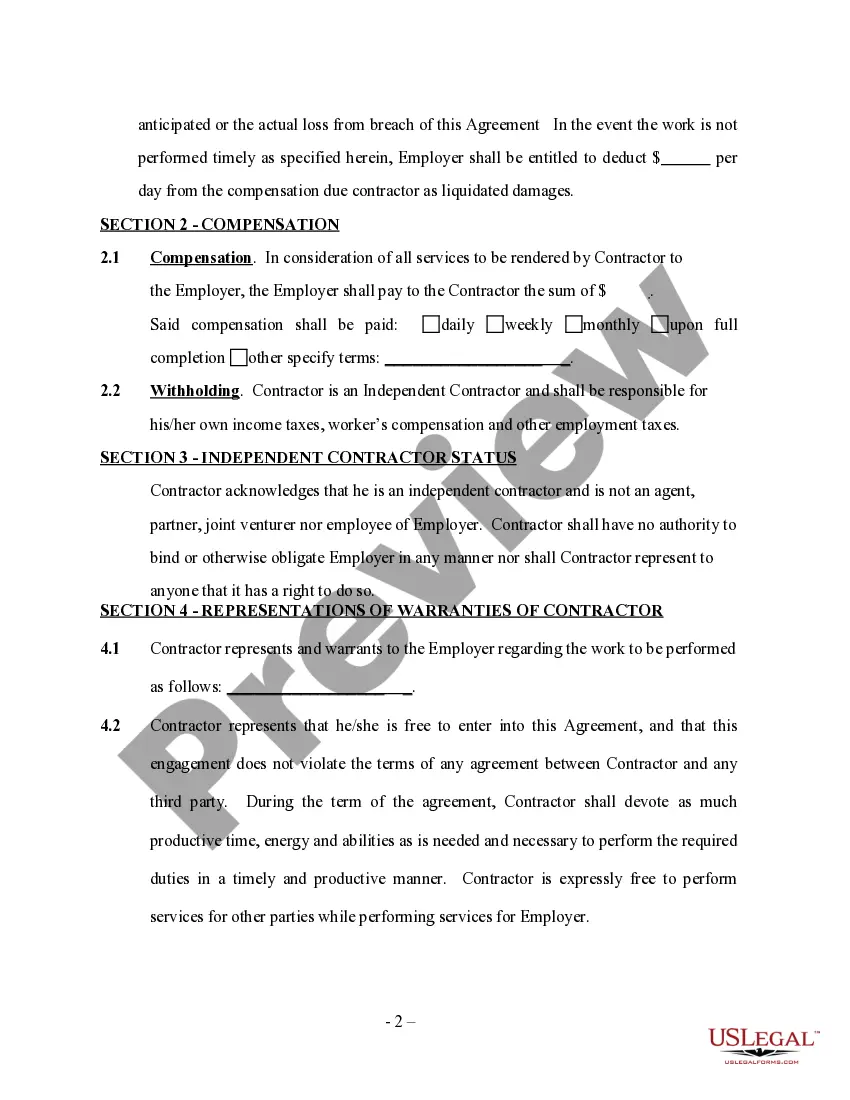
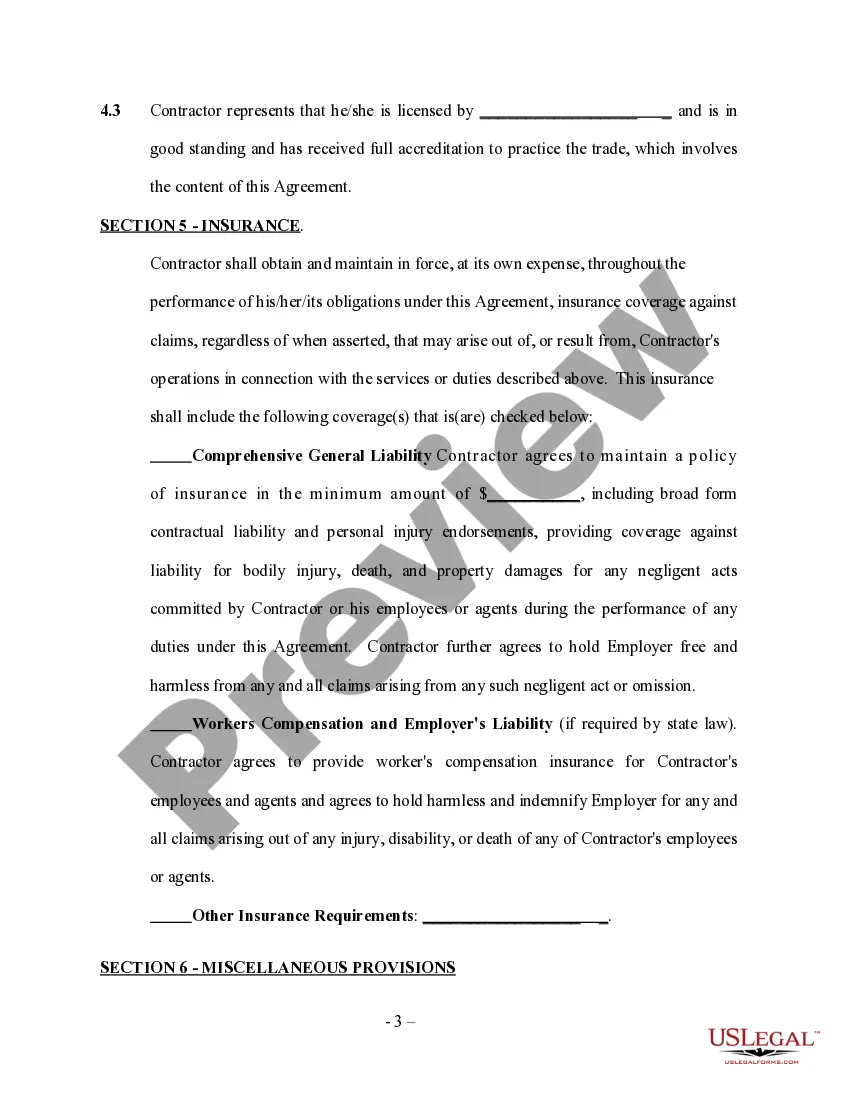
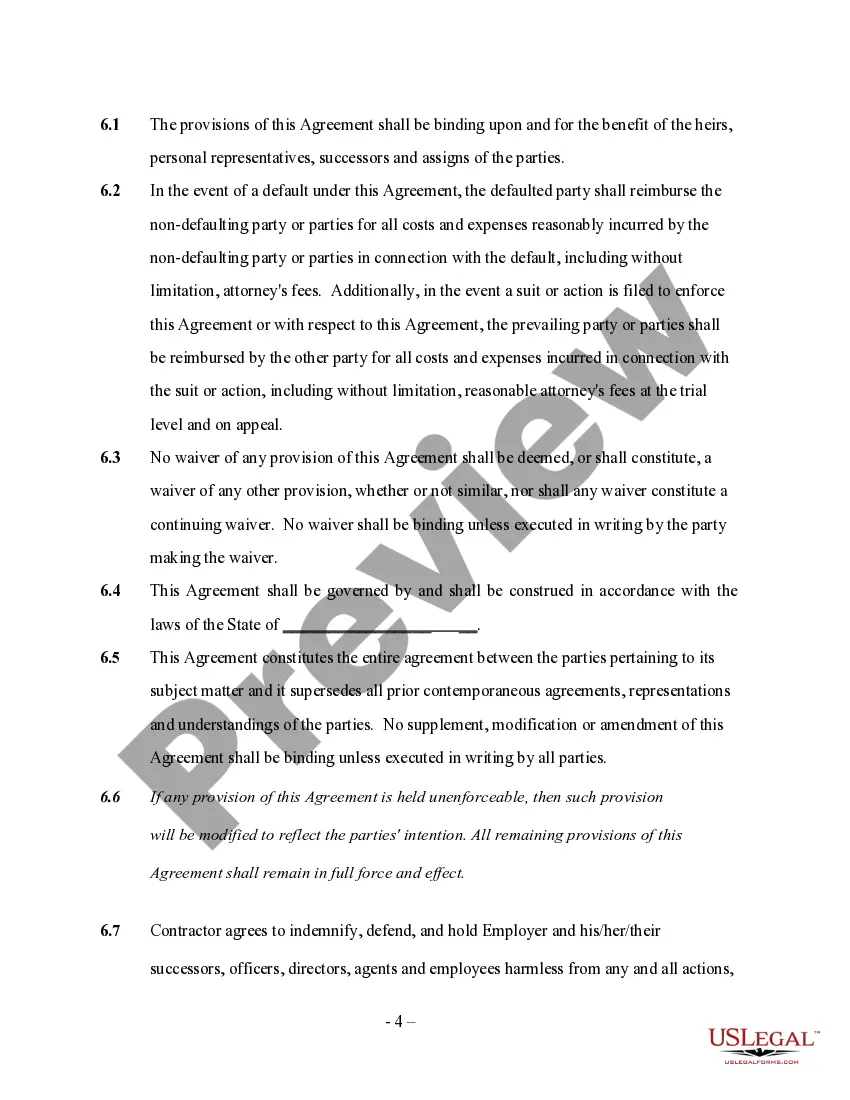
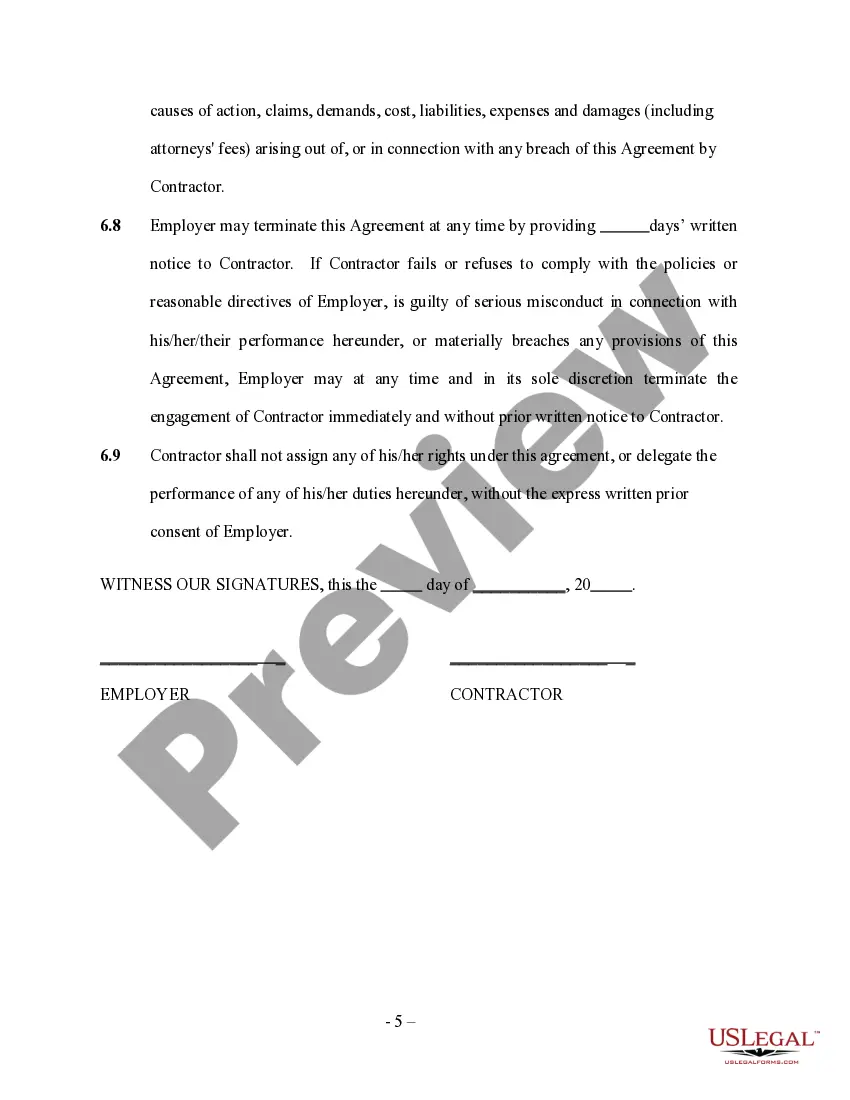
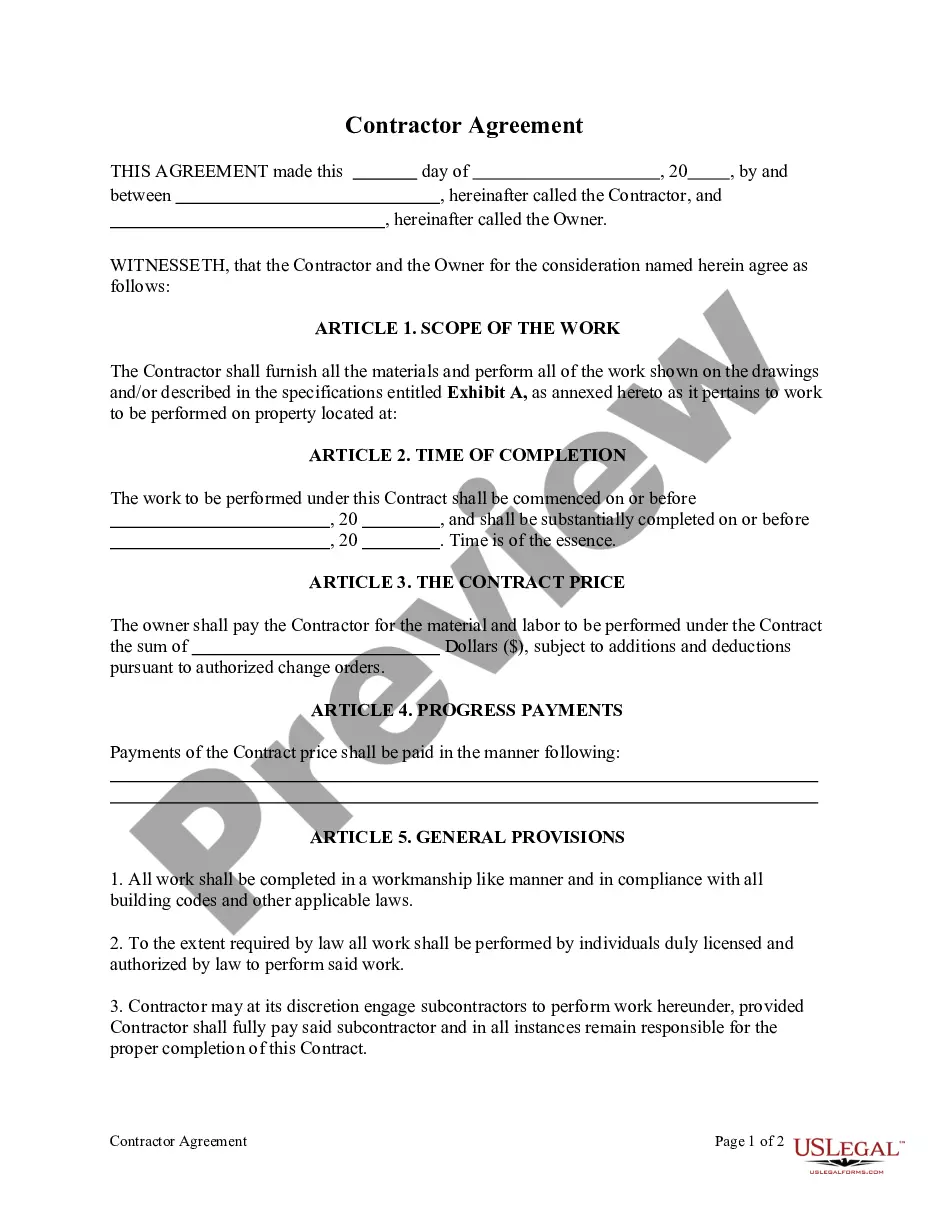
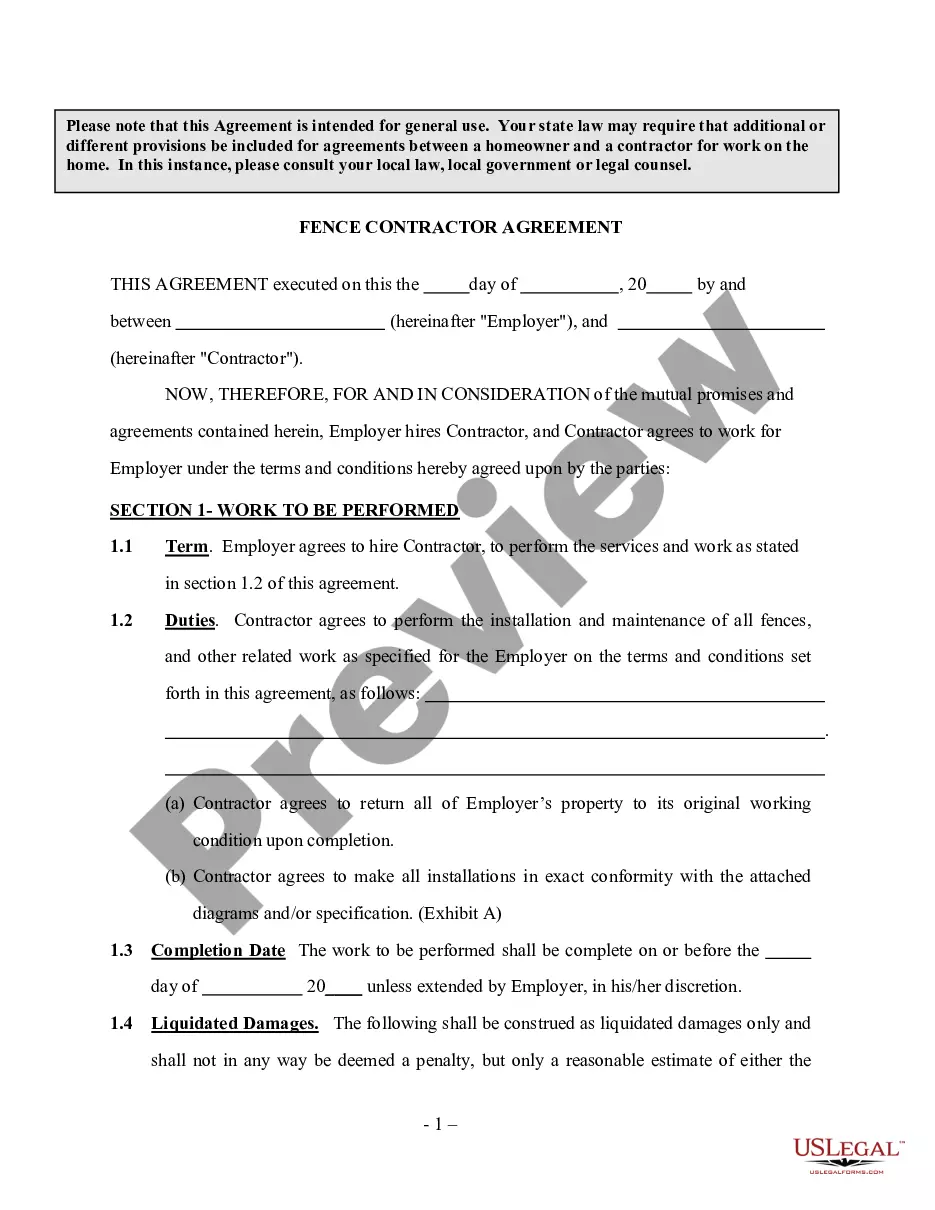
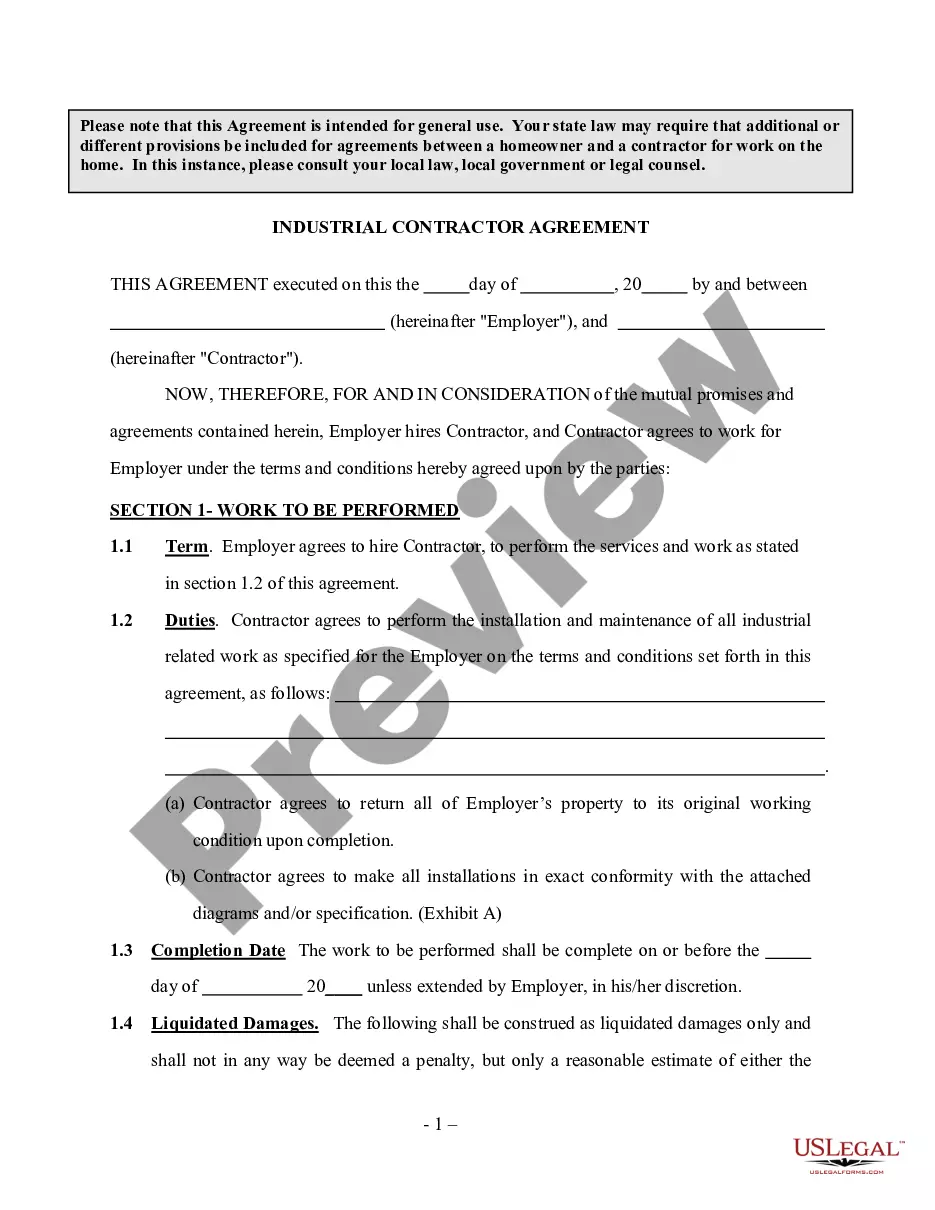
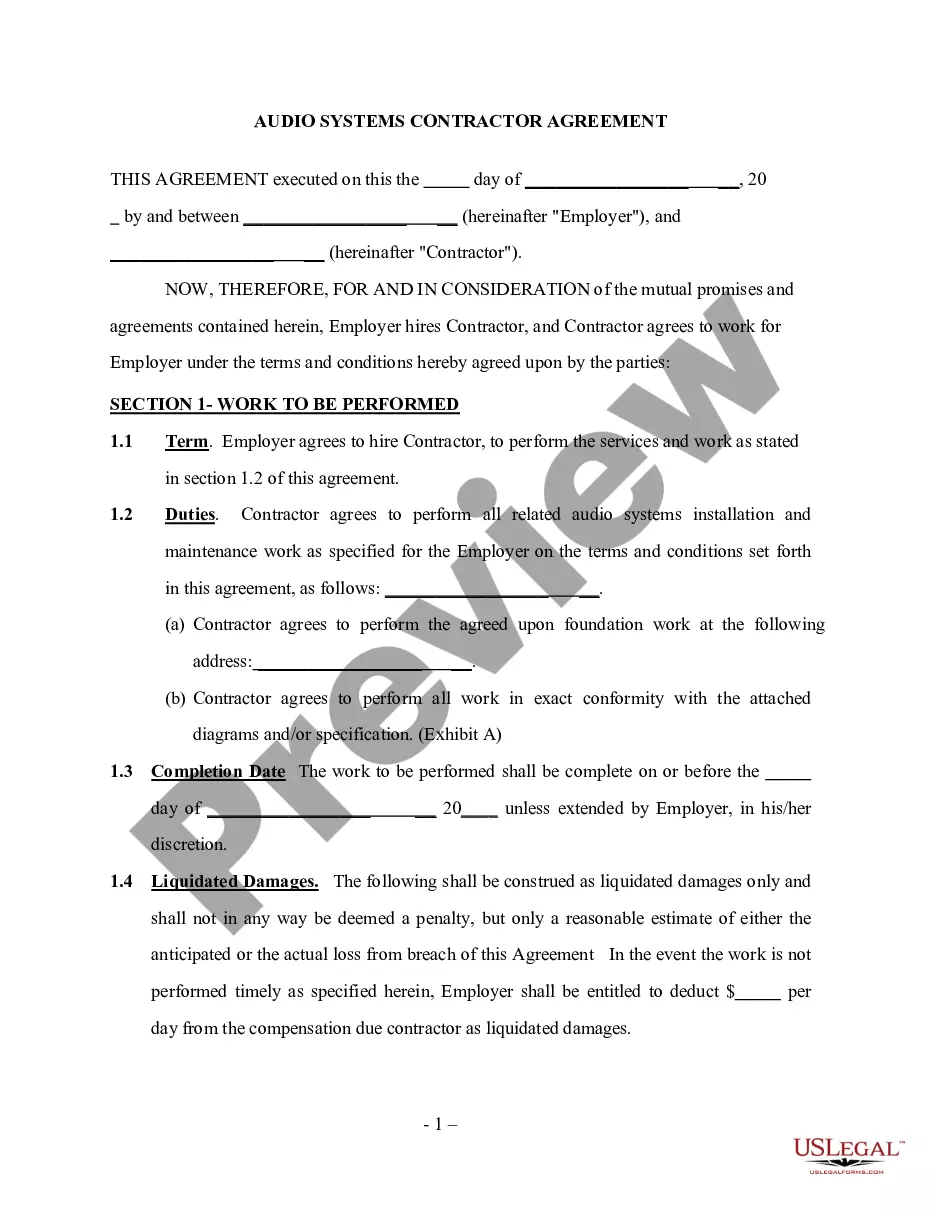
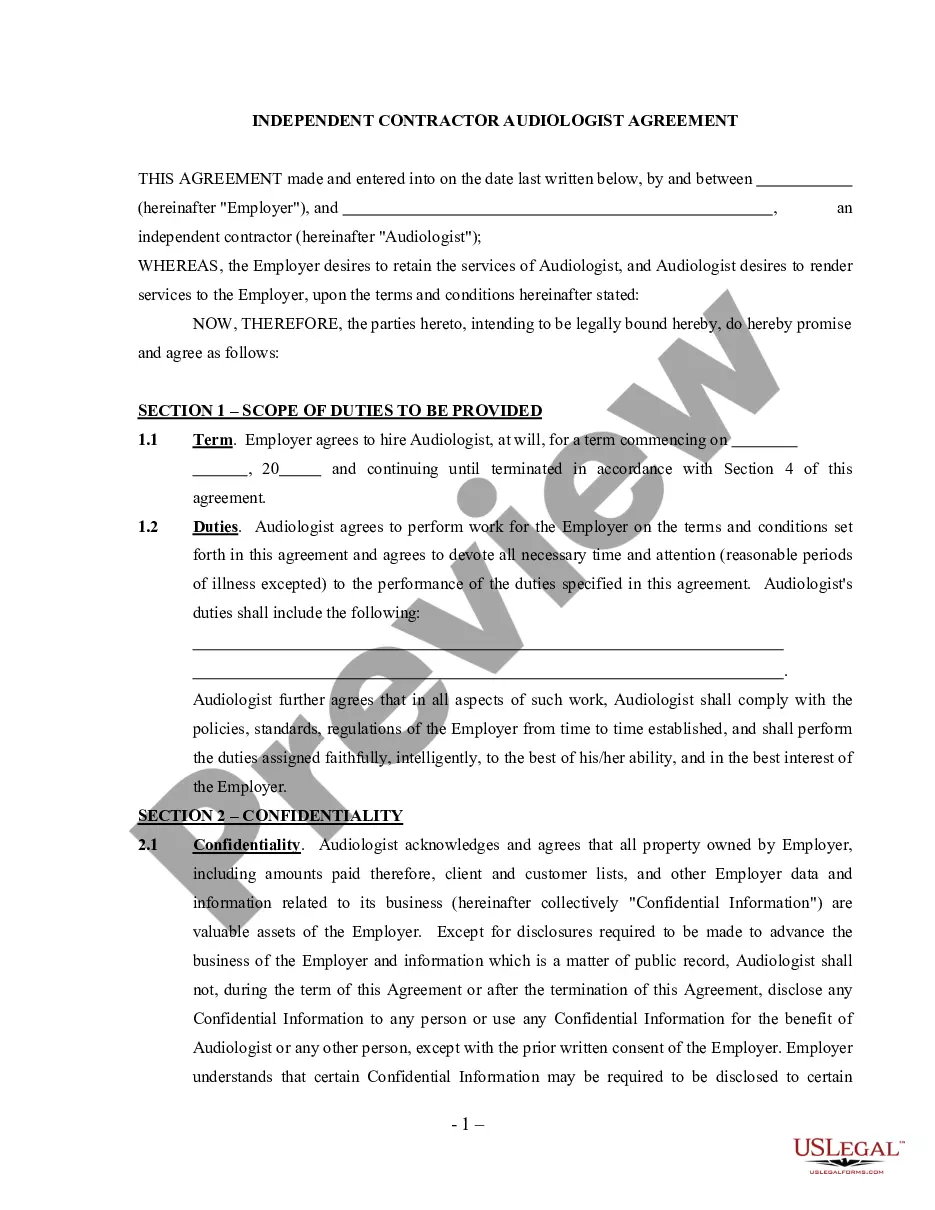
Employer contracts with an independent contractor to provide an acoustical area or building as specified and agreed upon in the contract. Please note that this Agreement is intended for general use. Your state law may require that additional or different provisions be included for agreements between a homeowner and a contractor for work on the home. In this instance, please consult your local law, local government or legal counsel.
New Hampshire Acoustical Contractor Agreement - Self-Employed
State:
Multi-State
Control #:
US-INDC-115
Format:
Word;
Rich Text
Instant download
Description
Free preview







How to fill out Acoustical Contractor Agreement - Self-Employed?
Finding the appropriate legitimate document format can be challenging. Naturally, there are countless templates accessible online, but how can you obtain the valid type you require? Utilize the US Legal Forms website. The platform offers a vast selection of templates, such as the New Hampshire Acoustical Contractor Agreement - Self-Employed, which can be utilized for business and personal purposes. All of the forms are reviewed by experts and comply with federal and state regulations.
If you are already registered, Log In to your account and click on the Download button to locate the New Hampshire Acoustical Contractor Agreement - Self-Employed. Use your account to browse through the legal forms you have previously purchased. Navigate to the My documents section of your account and obtain another copy of the document you need.
If you are a new user of US Legal Forms, here are simple instructions for you to follow: First, ensure you have selected the correct form for your area/region. You can review the document using the Preview button and read the form details to confirm it is suitable for you. If the form does not meet your requirements, use the Search field to find the appropriate form. Once you are certain that the form is correct, click the Purchase now button to obtain the form. Choose the pricing plan you prefer and enter the necessary information. Create your account and pay for your order using your PayPal account or credit card. Select the file format and download the legal document format to your device. Complete, edit, print, and sign the acquired New Hampshire Acoustical Contractor Agreement - Self-Employed.
Make use of this service to simplify your documentation process and ensure that all your legal forms are accurate and compliant.
- US Legal Forms is the largest repository of legal forms where you can find various document templates.
- Utilize the service to download well-crafted paperwork that adhere to state requirements.
- The platform offers a comprehensive range of templates for different legal needs.
- All forms are verified by professionals to ensure compliance with legal standards.
- The user-friendly interface makes it easy to navigate and find the required documents.
- You can easily access and manage previously purchased forms through your account.
Form popularity
FAQ
Yes, New Hampshire does tax self-employment income, but the state does not levy an income tax on wages or salary. Instead, self-employed individuals must file their business income tax through the Business Profits Tax and the Business Enterprise Tax. When structuring your New Hampshire Acoustical Contractor Agreement - Self-Employed, it is wise to account for these tax obligations. This can help you plan your finances effectively and avoid surprises during tax season.
The 72 hour rule in New Hampshire requires that any contractor must provide their clients with a written estimate for work exceeding $1,000. This estimate must be provided within 72 hours of the client’s request. Understanding this rule is essential for anyone entering a New Hampshire Acoustical Contractor Agreement - Self-Employed, as it ensures transparency and protects both parties. As part of contract negotiations, ensure you include this estimate clause for clear communication.
Creating an independent contractor agreement is essential for a smooth working relationship. First, clearly outline the scope of work and responsibilities in the contract. Next, include payment terms, such as rates and payment schedules, relevant to the New Hampshire Acoustical Contractor Agreement - Self-Employed. Lastly, it is wise to specify the duration of the agreement and conditions for termination. For assistance, consider using the uSlegalforms platform, which offers tailored templates to simplify the process.
Writing a self-employed contract starts with identifying the nature of the work and the Agreement's objectives. Clearly outline the terms of payment, work schedule, and any specific expectations. Make sure to include clauses for termination and dispute resolution. Using the New Hampshire Acoustical Contractor Agreement - Self-Employed template from USLegalForms can ensure you cover all necessary details effectively.
To fill out an independent contractor agreement, you must enter the names and contact information of both parties. Specify the deliverables and deadlines, while clearly stating the payment structure. It’s also crucial to describe any legal terms related to liability and confidentiality. For a reliable format, the New Hampshire Acoustical Contractor Agreement - Self-Employed from USLegalForms can serve as a valuable resource.
Filling out an independent contractor form involves providing your personal information, such as name and address, and the contractor’s details. You should also define the services offered and the compensation agreement. Finally, ensure you include any relevant tax information or identification numbers. For comprehensive guidance, consider reviewing the New Hampshire Acoustical Contractor Agreement - Self-Employed available at USLegalForms.
To write an independent contractor agreement, begin by outlining the scope of work, detailing the tasks the contractor will perform. Next, specify payment terms, including the amount and schedule. Additionally, include duration of the contract and any confidentiality or ownership clauses. Utilizing a template, such as the New Hampshire Acoustical Contractor Agreement - Self-Employed from USLegalForms, can simplify this process.
The independent contractor rule distinguishes between self-employed individuals and employees. In New Hampshire, independent contractors operate under their own business and are responsible for their taxes and benefits. When using a New Hampshire Acoustical Contractor Agreement - Self-Employed, you will outline your role as an independent contractor, ensuring clarity in your relationship with clients and compliance with state laws.
In New Hampshire, an employment agreement outlines the terms of the working relationship between an employer and an employee. It typically includes details about job responsibilities, compensation, and termination conditions. If you're a self-employed acoustical contractor, a New Hampshire Acoustical Contractor Agreement - Self-Employed serves a similar purpose, clarifying your role without traditional employment constraints.
Yes, you can be a self-employed contractor in New Hampshire. Many individuals choose this path for its flexibility and independence. By establishing a New Hampshire Acoustical Contractor Agreement - Self-Employed, you can set your own work hours and choose your projects. This agreement helps define your responsibilities and ensure compliance with local regulations.