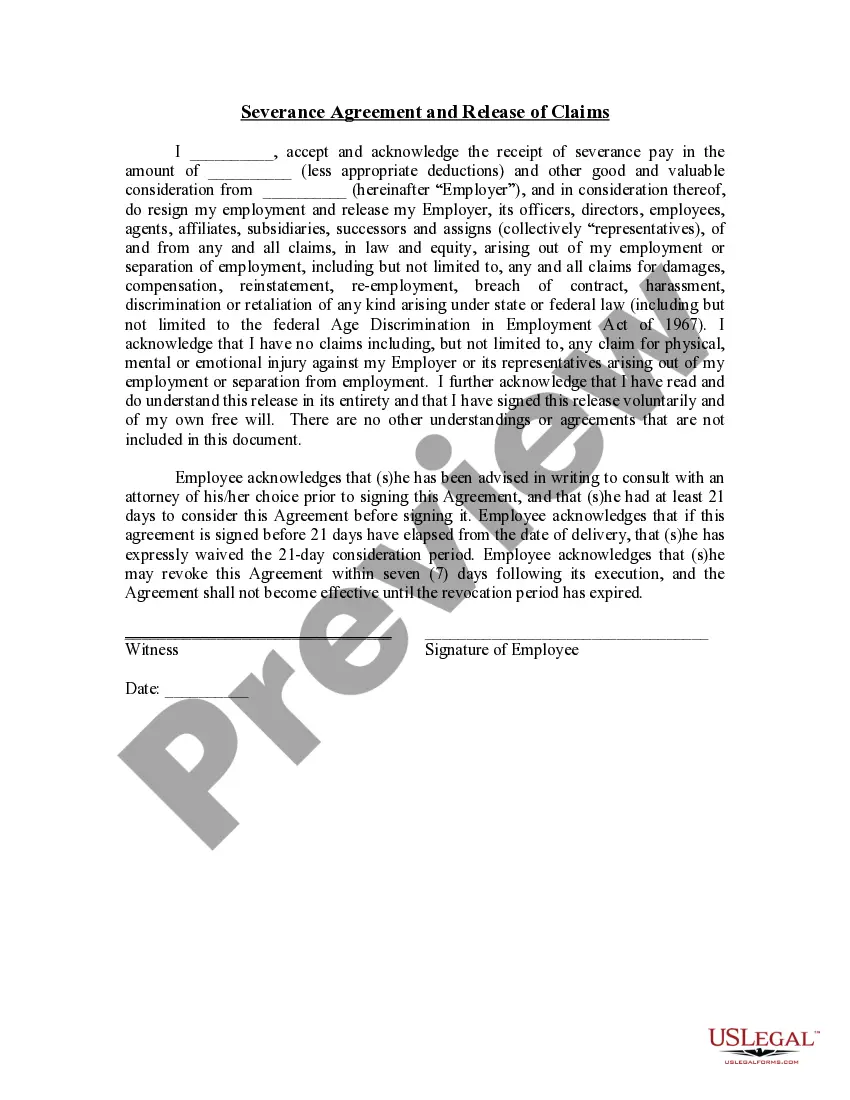
New Hampshire Employment Separation Agreement
Description
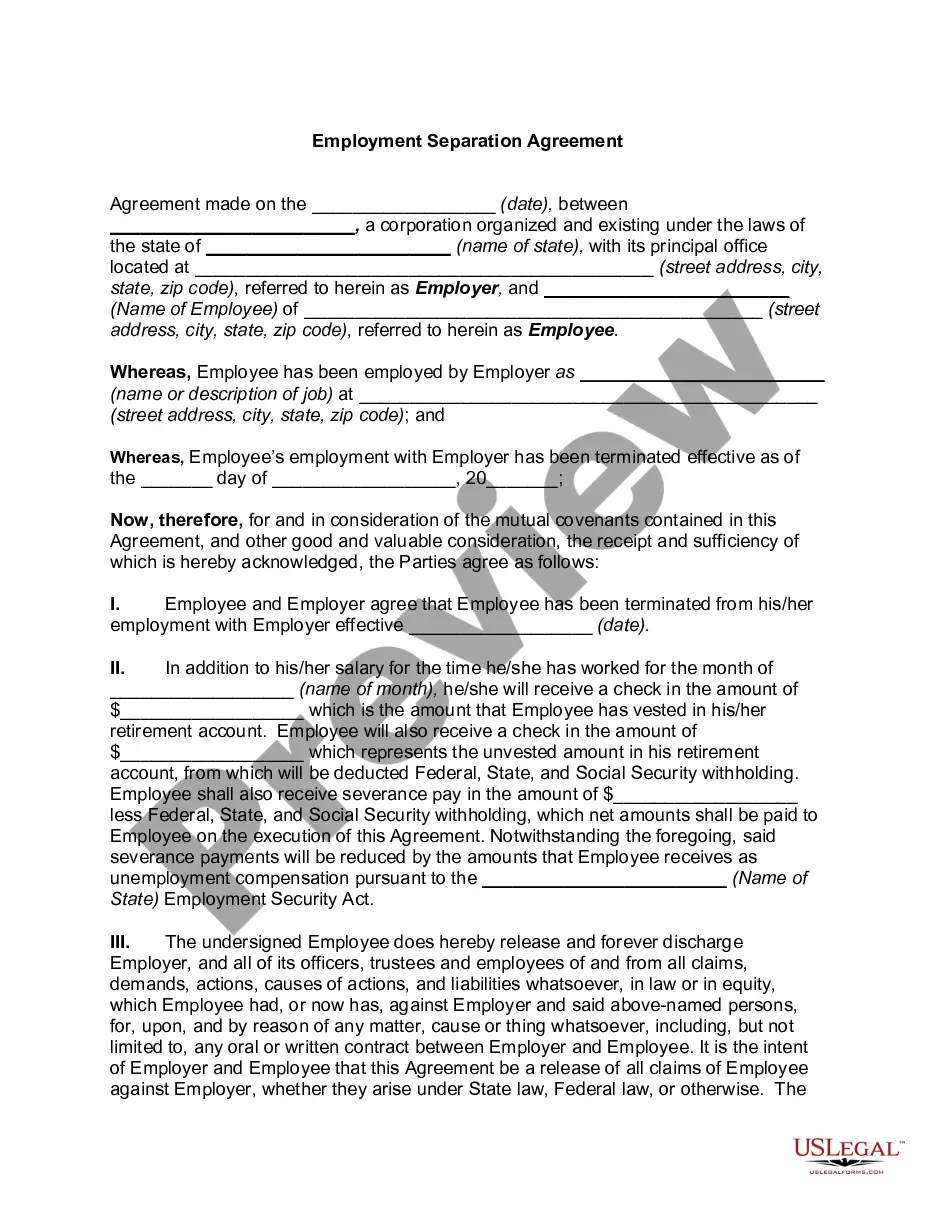
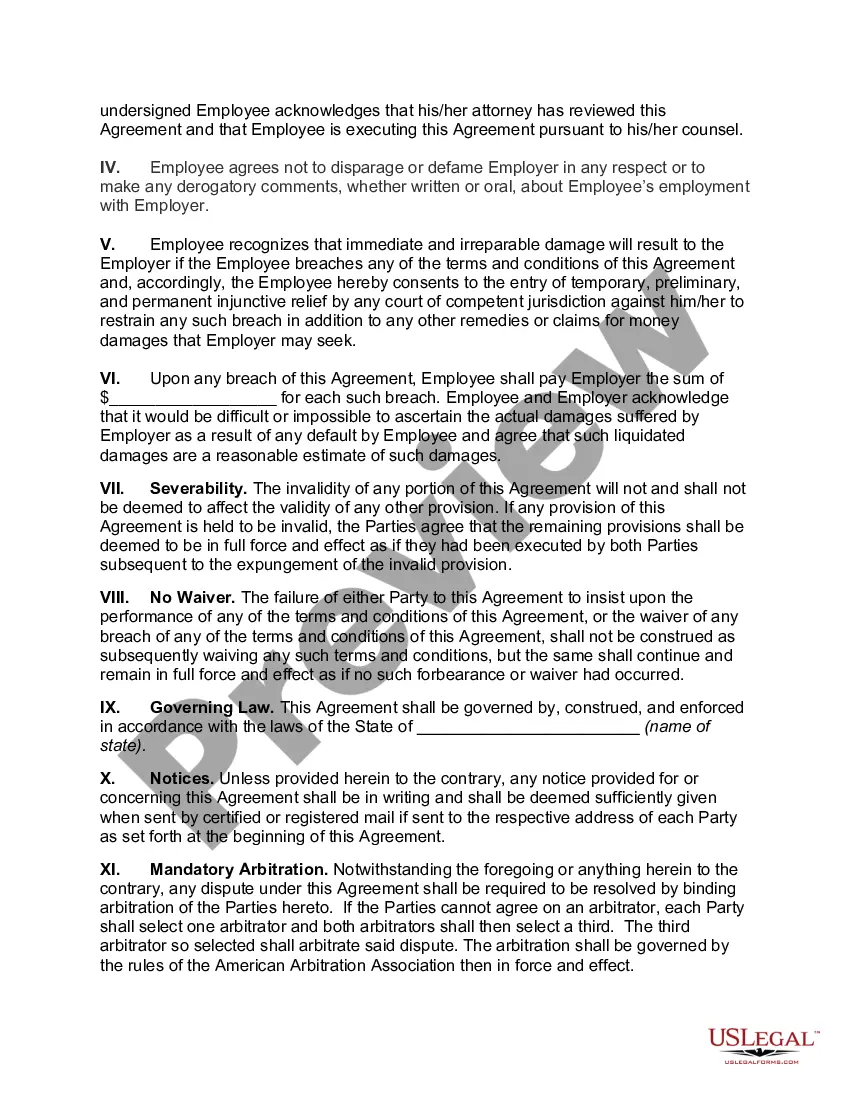
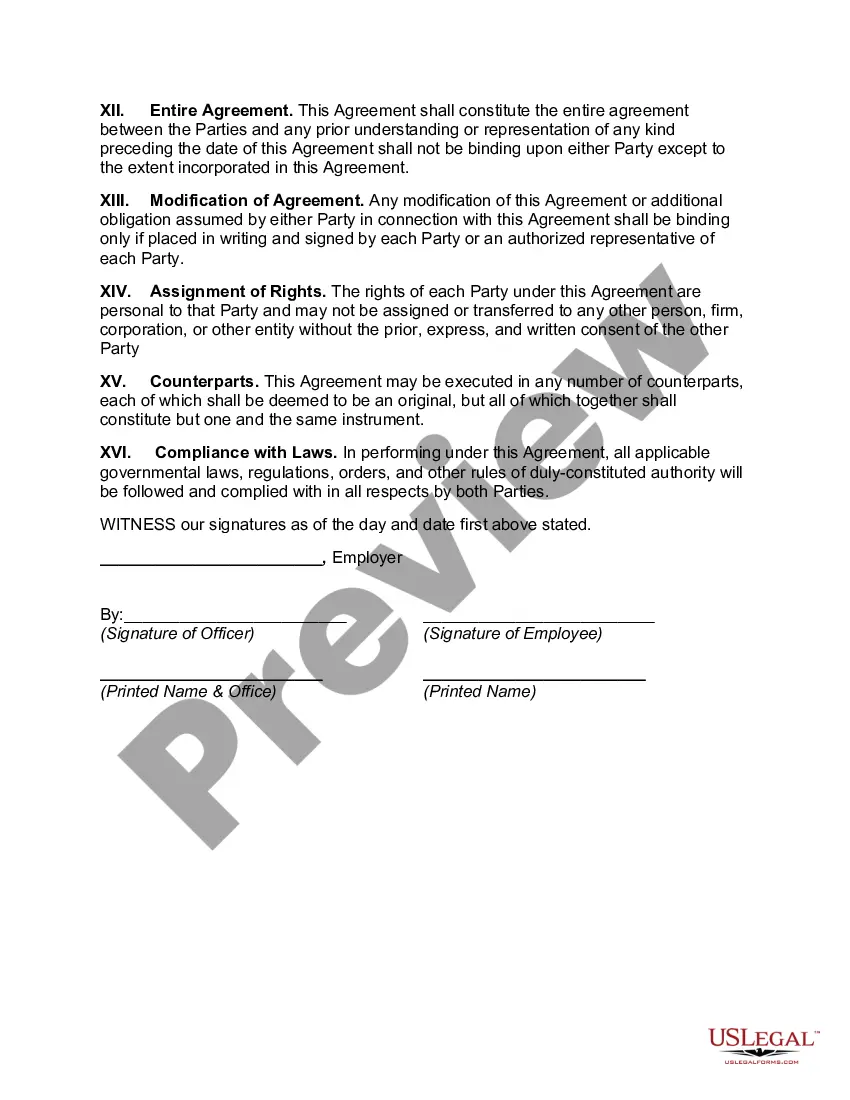
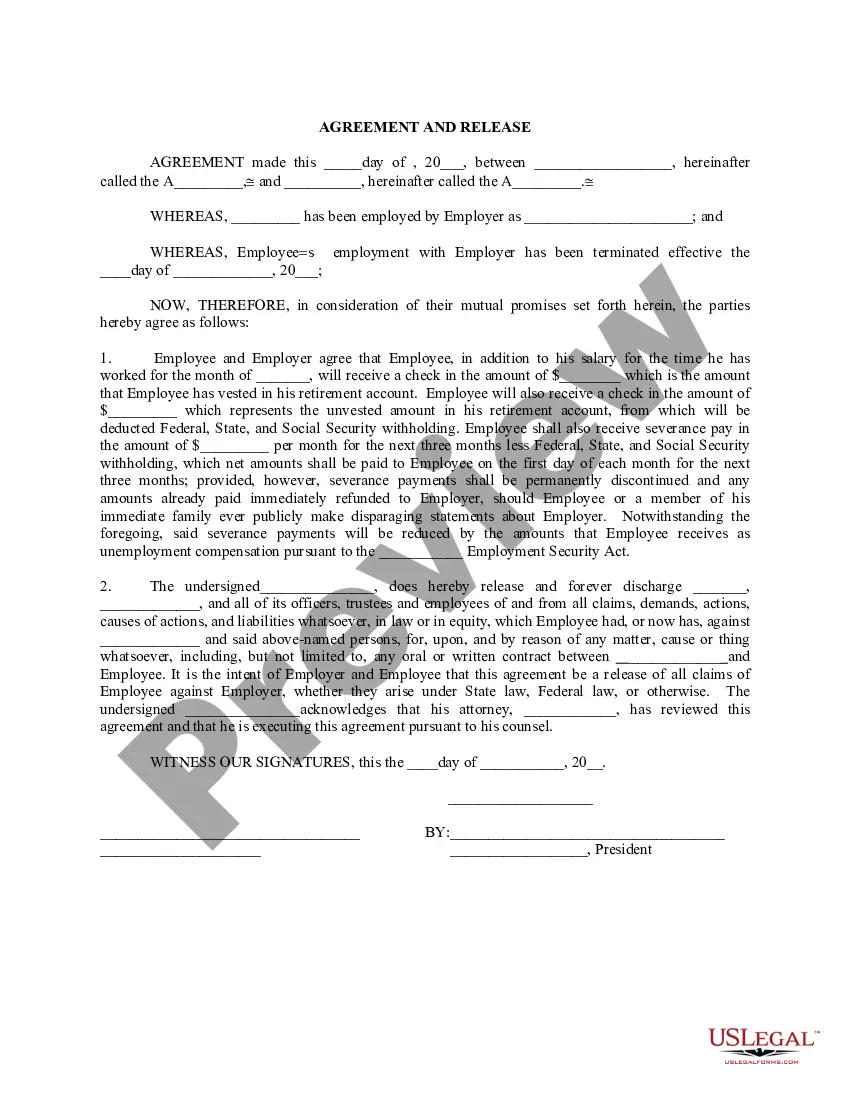
Get your form ready online
Our built-in tools help you complete, sign, share, and store your documents in one place.
Make edits, fill in missing information, and update formatting in US Legal Forms—just like you would in MS Word.
Download a copy, print it, send it by email, or mail it via USPS—whatever works best for your next step.
Sign and collect signatures with our SignNow integration. Send to multiple recipients, set reminders, and more. Go Premium to unlock E-Sign.
If this form requires notarization, complete it online through a secure video call—no need to meet a notary in person or wait for an appointment.
We protect your documents and personal data by following strict security and privacy standards.

Make edits, fill in missing information, and update formatting in US Legal Forms—just like you would in MS Word.

Download a copy, print it, send it by email, or mail it via USPS—whatever works best for your next step.

Sign and collect signatures with our SignNow integration. Send to multiple recipients, set reminders, and more. Go Premium to unlock E-Sign.

If this form requires notarization, complete it online through a secure video call—no need to meet a notary in person or wait for an appointment.

We protect your documents and personal data by following strict security and privacy standards.
Looking for another form?
How to fill out Employment Separation Agreement?
You can spend hours online searching for the legal document template that fulfills the state and federal standards you require.
US Legal Forms offers a vast array of legal forms which are reviewed by experts.
You can download or print the New Hampshire Employment Separation Agreement from my services.
If available, utilize the Review button to examine the document template as well.
- If you already have a US Legal Forms account, you can sign in and then click the Obtain button.
- Next, you can complete, modify, print, or sign the New Hampshire Employment Separation Agreement.
- Each legal document template you acquire is permanently yours.
- To obtain another copy of the purchased form, go to the My documents section and click the relevant button.
- If you are using the US Legal Forms site for the first time, follow the simple instructions below.
- First, ensure that you have selected the correct document template for your area/town of choice.
- Check the form details to make sure you have chosen the appropriate type.
Form popularity
FAQ
New Hampshire is an at-will state, which means employers can generally fire their employees at any time and for any reasonwith some important exceptions. Note that the state's at-will laws do not apply to union employees or those working on employment contracts.
It is an official document from an employer that informs an employee that they are being laid off or fired from their current position in the organization. The reasons for termination can range from gross misconduct, downsizing, layoffs, poor performance, and corporate closures among others.
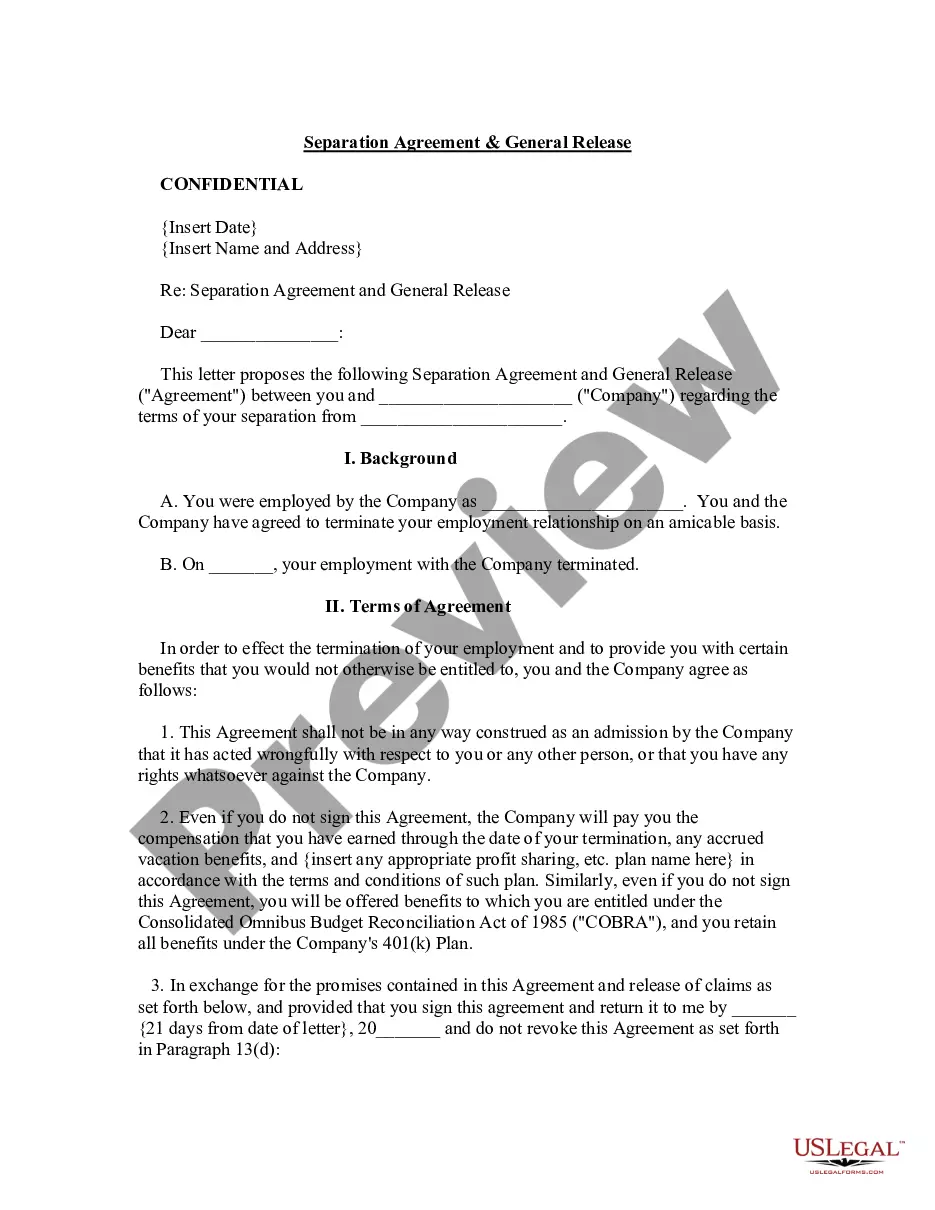
The agreement that records a mutual termination of employment and a waiver and release of claims (in consideration of receipt of an ex gratia payment) is known as a mutual separation agreement. For former employees, a waiver and release of claims letter is typically used instead of a mutual separation agreement.
In circumstances where an employee resigns or retires, UIF benefits are not available. Similarly, if an employee chooses to conclude a mutual separation agreement with her/his/their employer, the employee will not be entitled to claim unemployment insurance benefits in terms of the UIA.
A separation agreement (also commonly referred to as a severance agreement) between an employer and a departing employee specifying terms of the employee's separation from employment, including a release of legal claims against the employer in exchange for a benefit.
All employers must give their employees written Notice to Employee as to Change in Relationship form upon termination. If it is a promotion or demotion, change in location, change in work assignment, voluntary quit, or work stopped due to a trade dispute, the form is not required.
Where parties decide to separate amicably, they may negotiate the relevant terms of separation. Once consensus is reached between the parties, they sign a binding mutual separation agreement. As such, a mutual separation agreement includes a waiver of rights by both parties to enable a soft exit of the employee.
Like many, New Hampshire is an at-will employment state, which means no reason or formal notice needs to be given to fire someone, and conversely no employee is required to provide reason or notice to the employer.
Like many, New Hampshire is an at-will employment state, which means no reason or formal notice needs to be given to fire someone, and conversely no employee is required to provide reason or notice to the employer.
Employers should make sure they have documentation to support any decision to terminate. With that in mind, supervisors should be trained to document issues with employees as they arise. Not all documentation needs to be formal; if it's an isolated minor incident, an email may be enough.