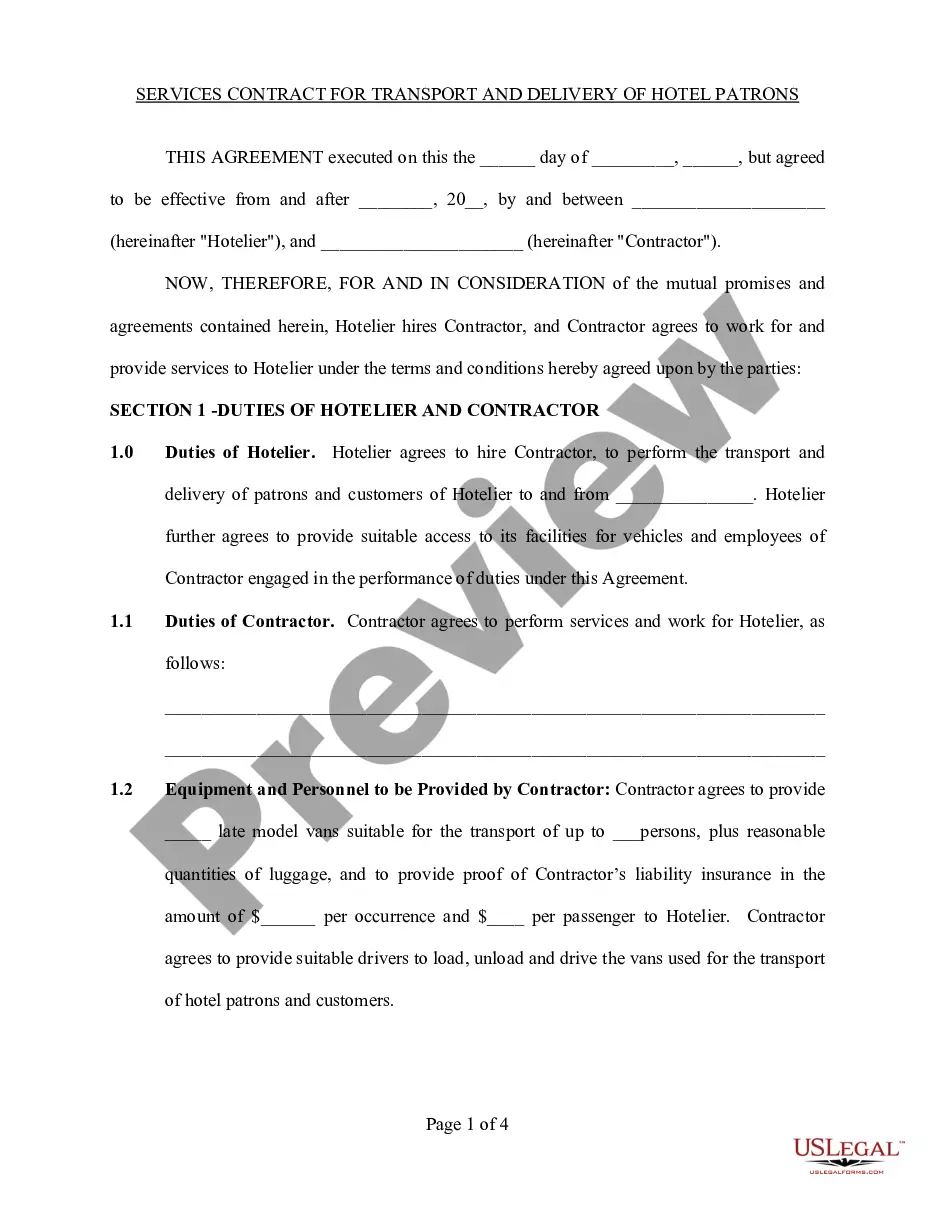
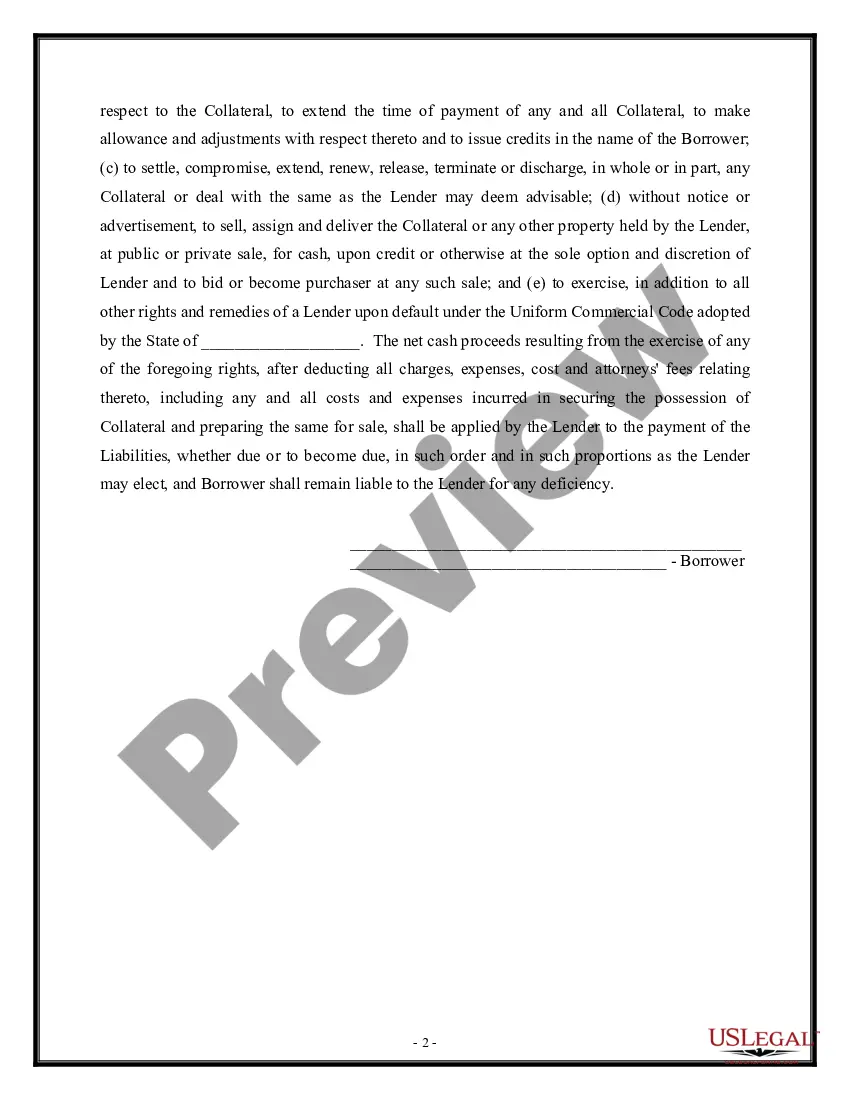
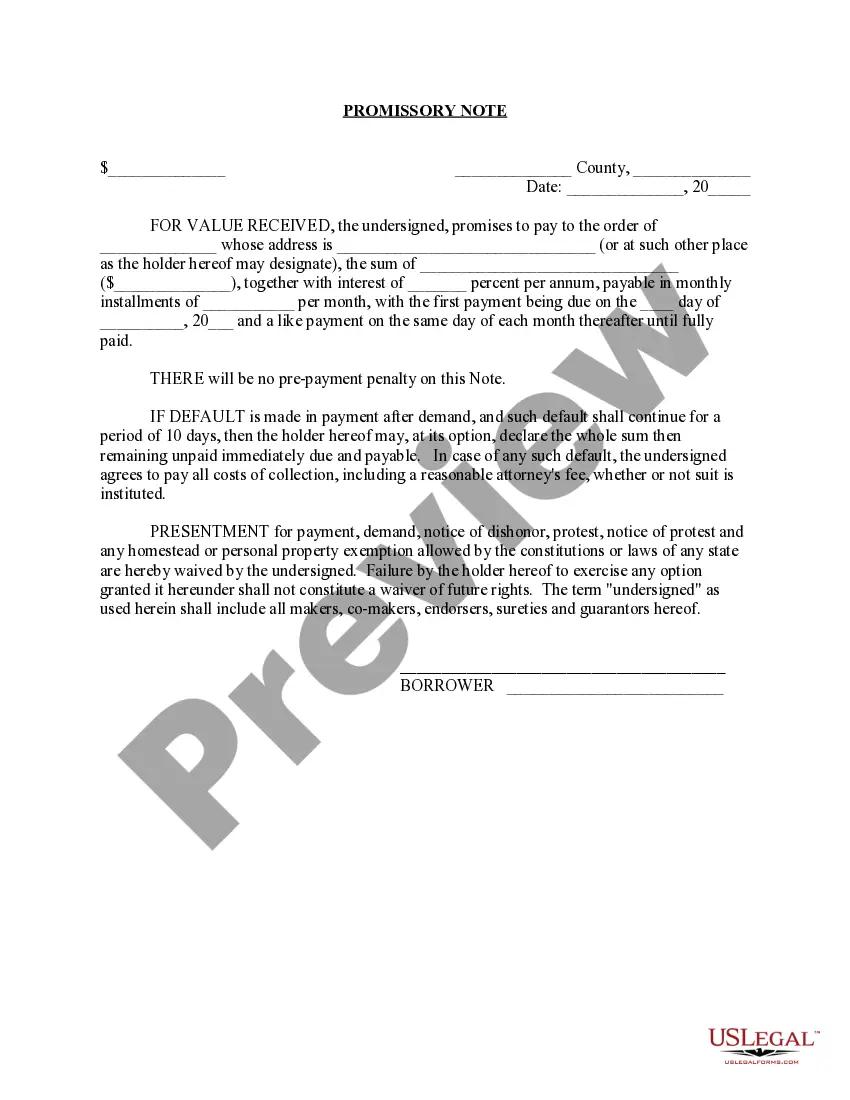
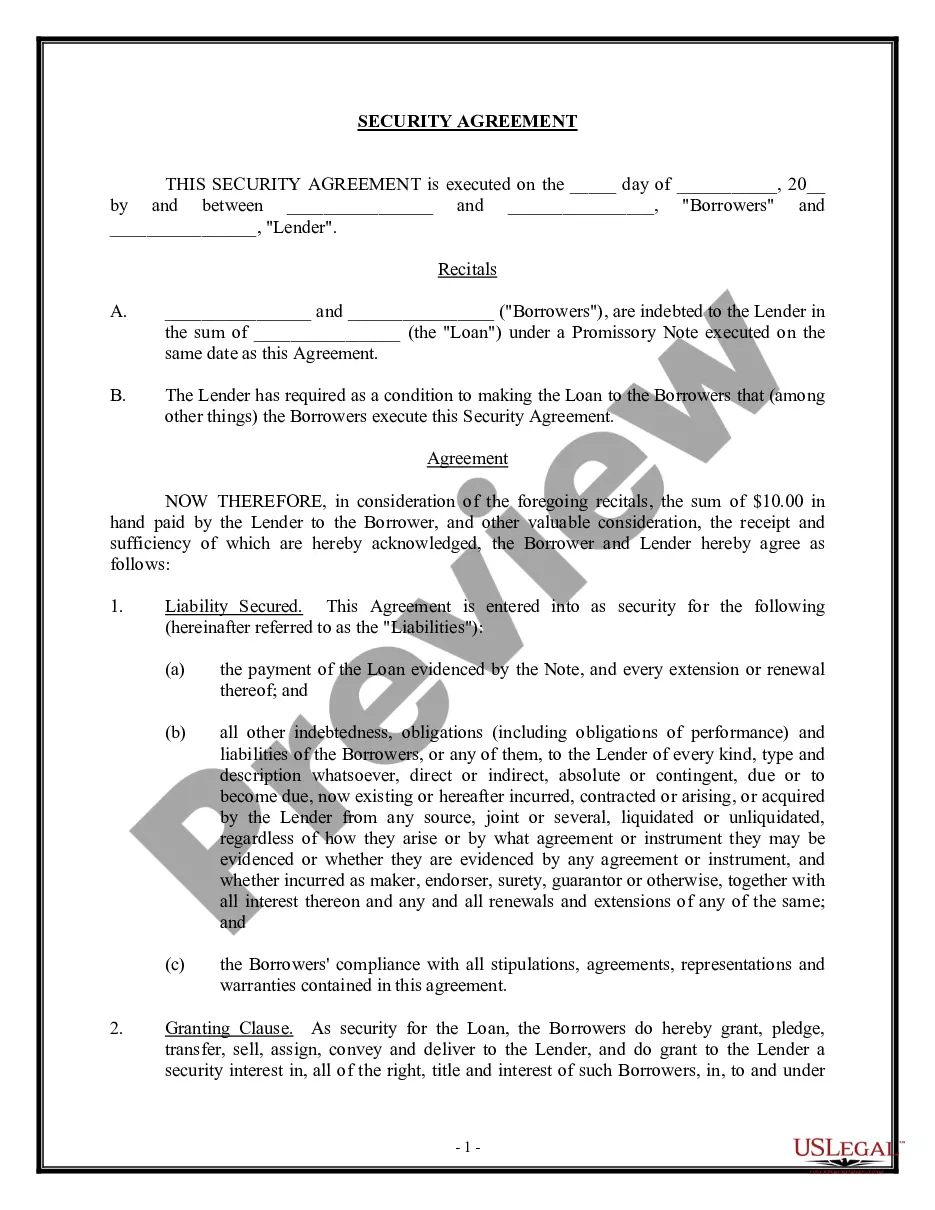
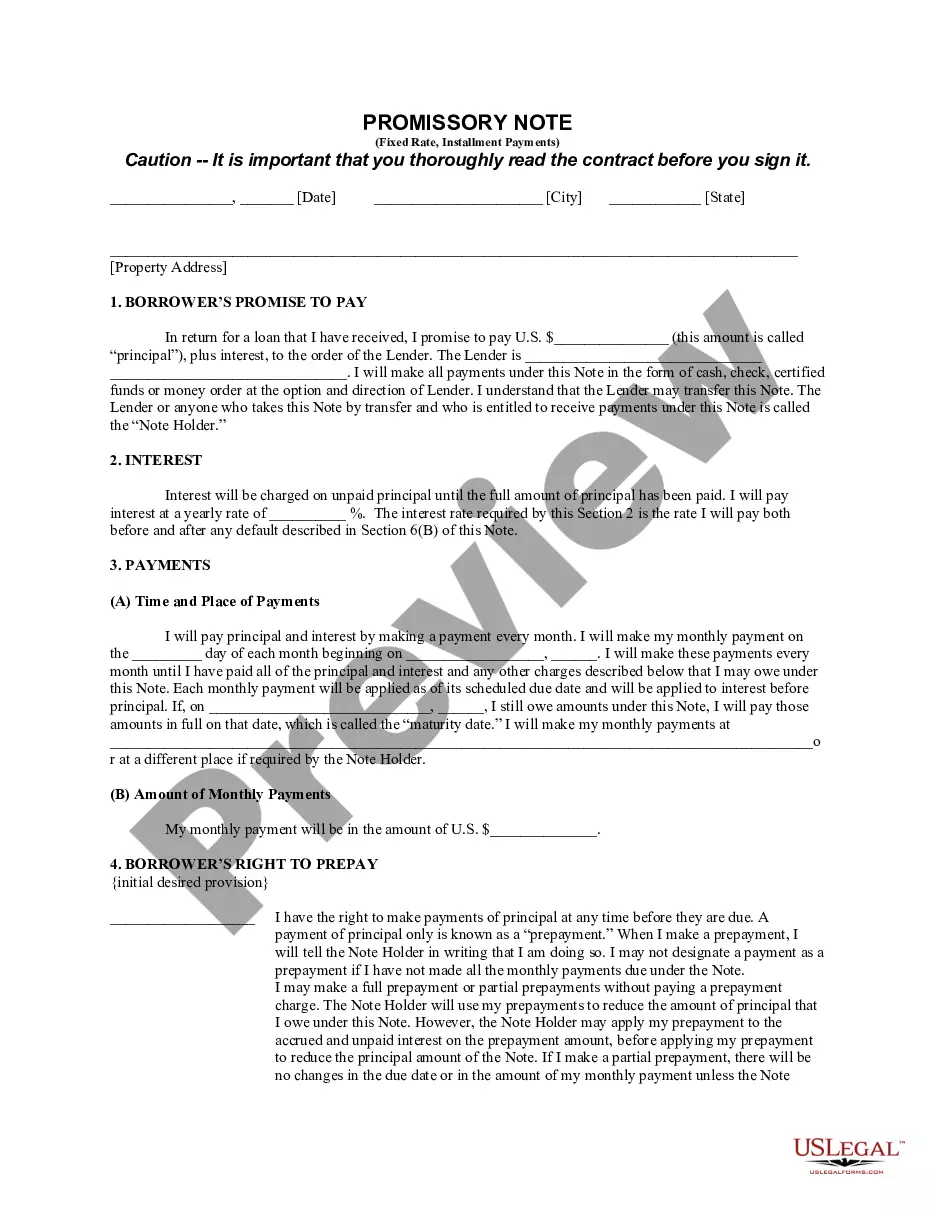
New Hampshire Installment Promissory Note and Security Agreement
Description
Get your form ready online
Our built-in tools help you complete, sign, share, and store your documents in one place.
Make edits, fill in missing information, and update formatting in US Legal Forms—just like you would in MS Word.
Download a copy, print it, send it by email, or mail it via USPS—whatever works best for your next step.
Sign and collect signatures with our SignNow integration. Send to multiple recipients, set reminders, and more. Go Premium to unlock E-Sign.
If this form requires notarization, complete it online through a secure video call—no need to meet a notary in person or wait for an appointment.
We protect your documents and personal data by following strict security and privacy standards.

Make edits, fill in missing information, and update formatting in US Legal Forms—just like you would in MS Word.

Download a copy, print it, send it by email, or mail it via USPS—whatever works best for your next step.

Sign and collect signatures with our SignNow integration. Send to multiple recipients, set reminders, and more. Go Premium to unlock E-Sign.

If this form requires notarization, complete it online through a secure video call—no need to meet a notary in person or wait for an appointment.

We protect your documents and personal data by following strict security and privacy standards.
Looking for another form?




How to fill out Installment Promissory Note And Security Agreement?
If you need to finalize, acquire, or create authentic document templates, utilize US Legal Forms, the largest assortment of authentic forms available online.
Employ the site’s straightforward and convenient search feature to find the documents you require.
A multitude of templates for business and personal purposes are categorized by groups and states, or keywords.
Step 4. Once you have located the form you need, click the Acquire now button. Choose the pricing plan you prefer and provide your information to register for the account.
Step 5. Complete the transaction. You can use your credit card or PayPal account to finalize the purchase.
- Utilize US Legal Forms to secure the New Hampshire Installment Promissory Note and Security Agreement with just a couple of clicks.
- If you are already a US Legal Forms customer, Log In to your account and click the Obtain button to access the New Hampshire Installment Promissory Note and Security Agreement.
- You can also retrieve forms you’ve previously downloaded in the My documents section of your account.
- If you are obtaining US Legal Forms for the first time, follow the steps below.
- Step 1. Ensure you have chosen the form for your specific city/state.
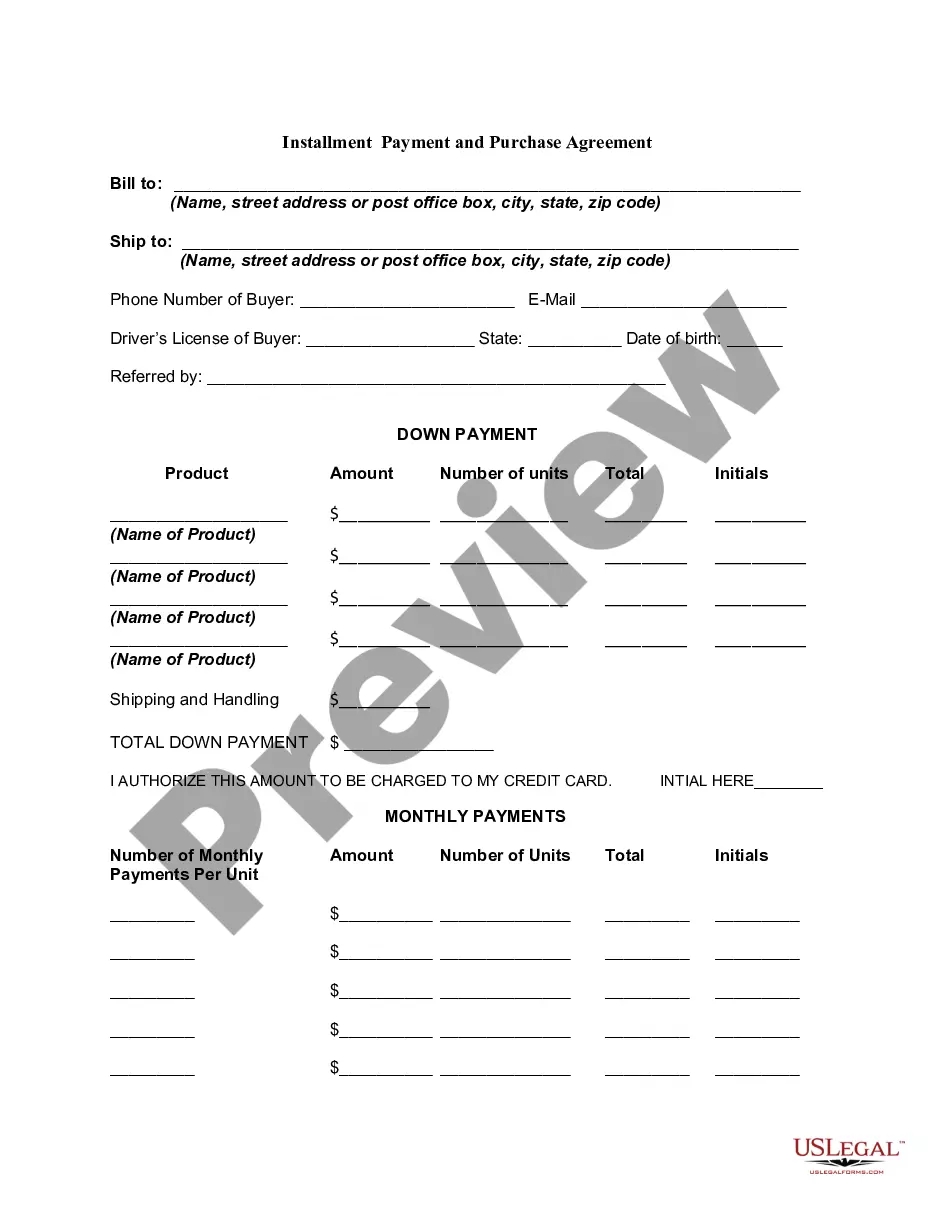
- Step 2. Use the Preview option to review the form’s content. Don’t forget to read the details.
- Step 3. If you are unhappy with the form, use the Search field at the top of the screen to locate other versions of the legal form format.
Form popularity
FAQ
Often there is no legal requirement that a promise to pay be evidenced in a promissory note, nor any prohibition from including it in a loan or credit agreement. Although promissory notes are sometimes thought to be negotiable instruments, this typically is not the case.
In general, the promissory note is your written promise to repay the loan and a security agreement is used when collateral is given for the loan.
Generally, a Secured Promissory Note will be secured using an additional document. If the property being used as collateral is personal property, the Note will be secured using a Security Agreement. If the property being used as collateral is real property, the Note will be secured using a Deed of Trust.
A promissory note must include the date of the loan, the dollar amount, the names of both parties, the rate of interest, any collateral involved, and the timeline for repayment. When this document is signed by the borrower, it becomes a legally binding contract.
A promissory note secured by collateral will need a second document. If the collateral is real property, there will be either a mortgage or a deed of trust. If the collateral is personal property, there will be a security agreement.
A security interest arising out of a sale of a promissory note (i.e., an instrument) is perfected automatically, without additional action, when it attaches. See Section 9-304(4) of the Uniform Commercial Code.
General Definition. Promissory notes are defined as securities under the Securities Act. However, notes that have a maturity of nine months or less are not considered securities.