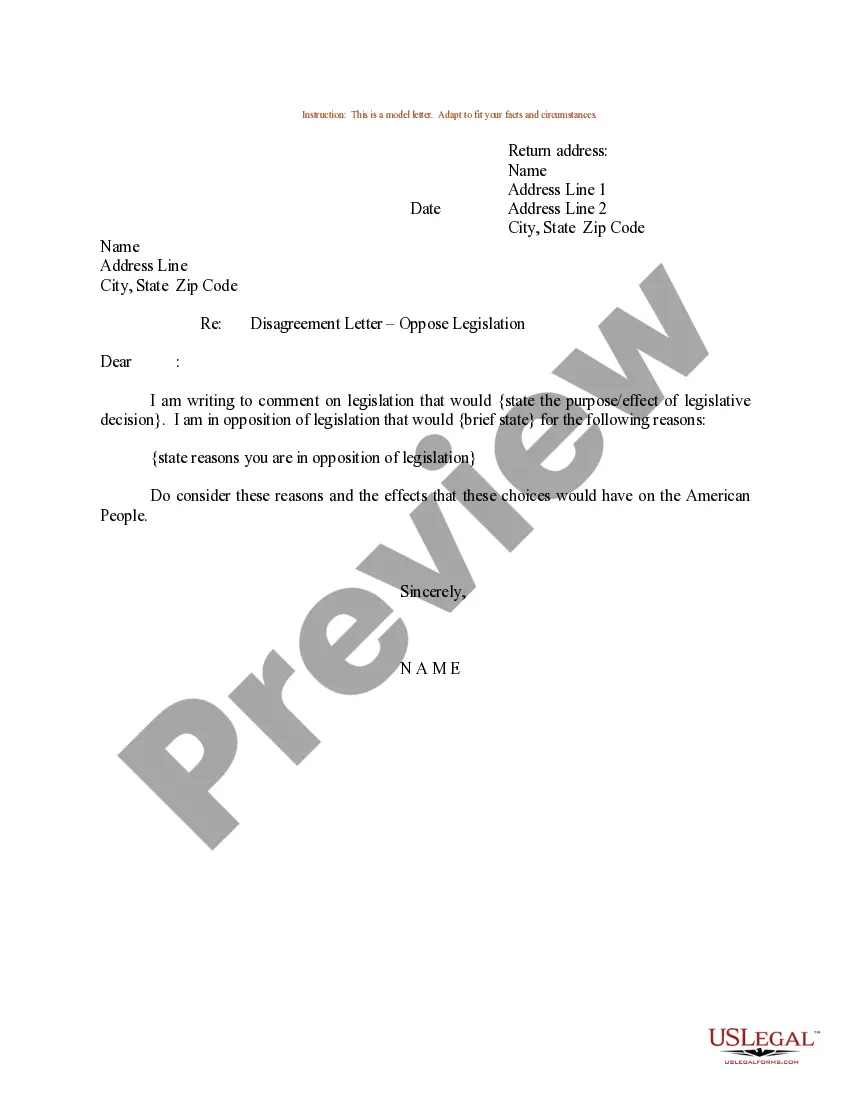
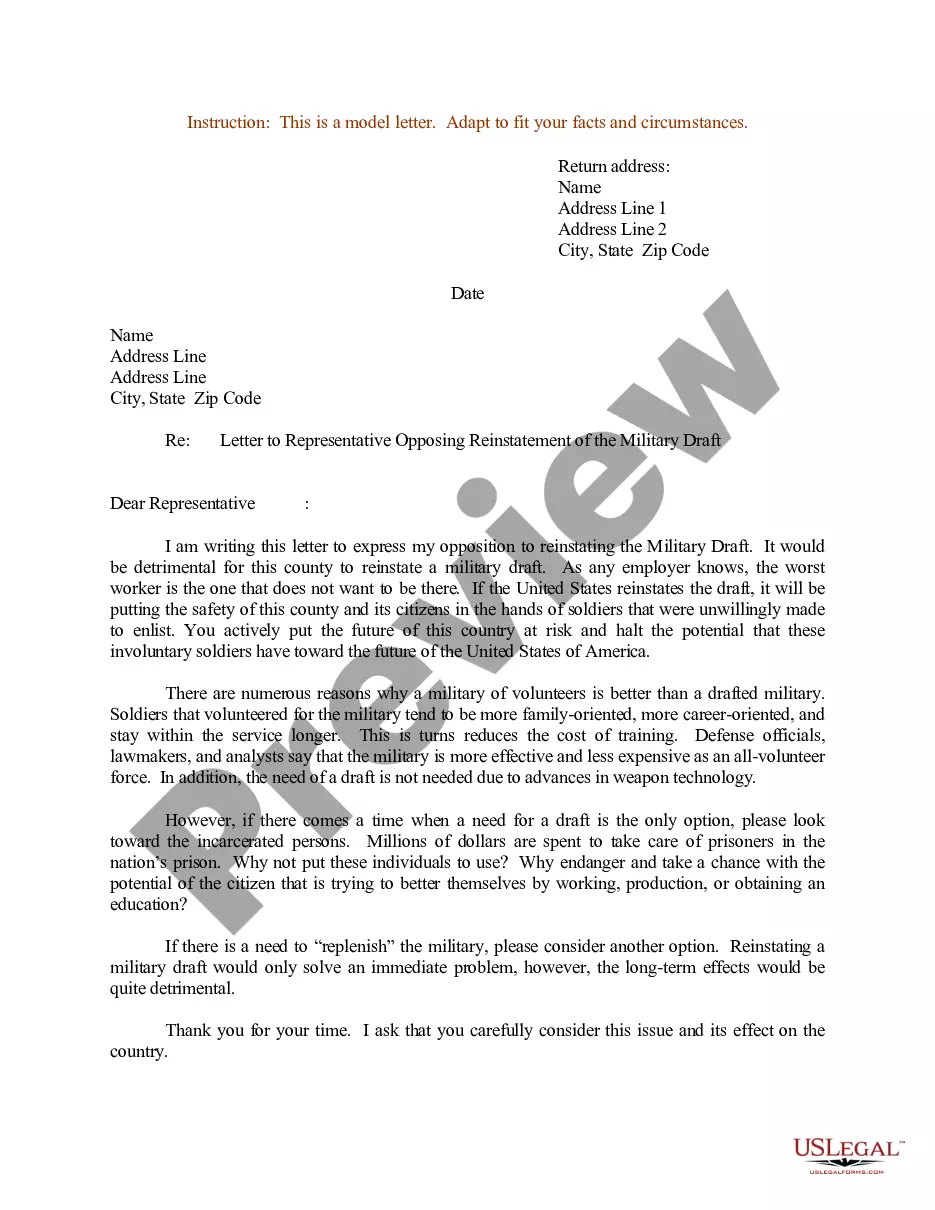
New Hampshire Sample Letter for Opposition to Legislation
Description
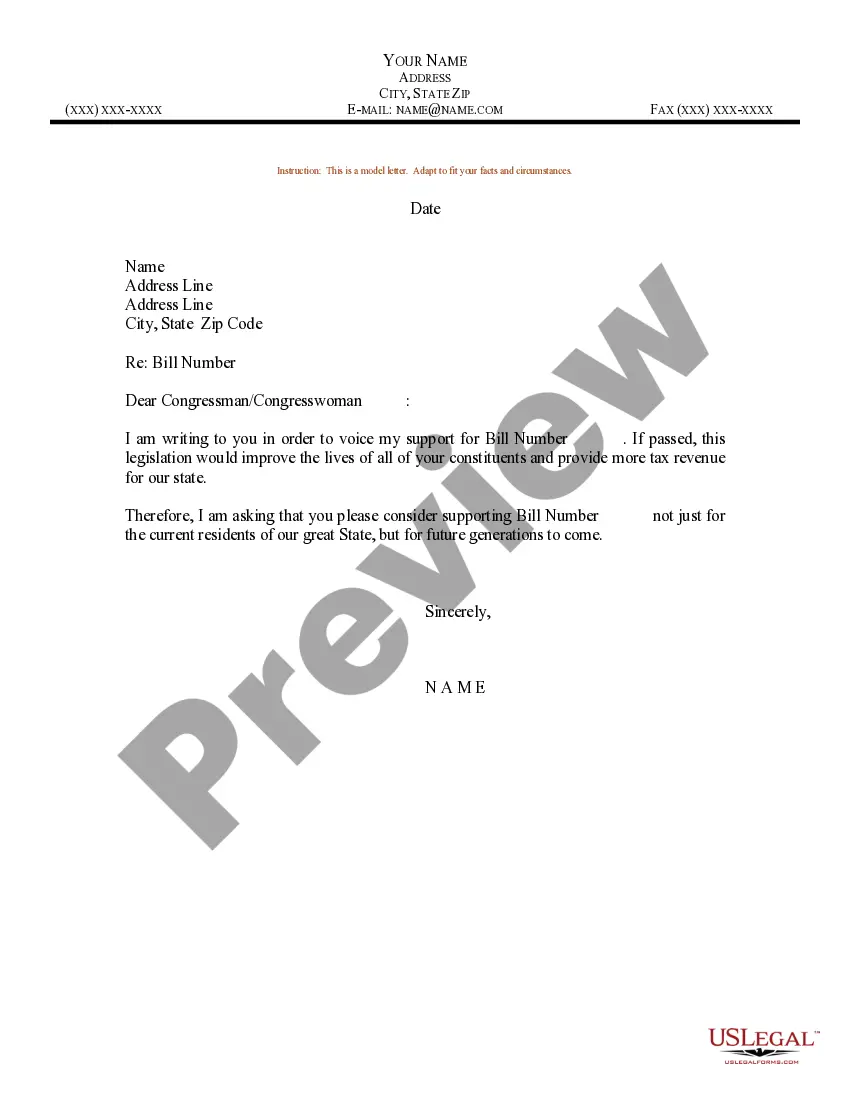
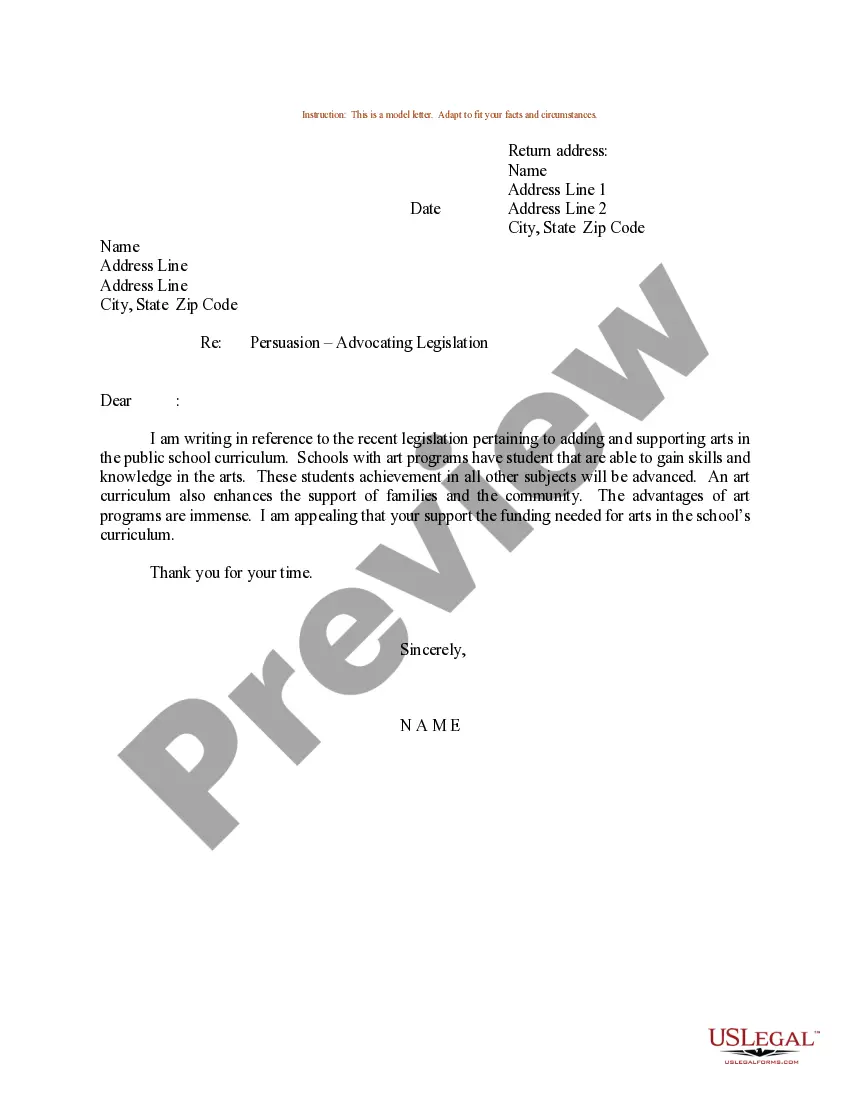
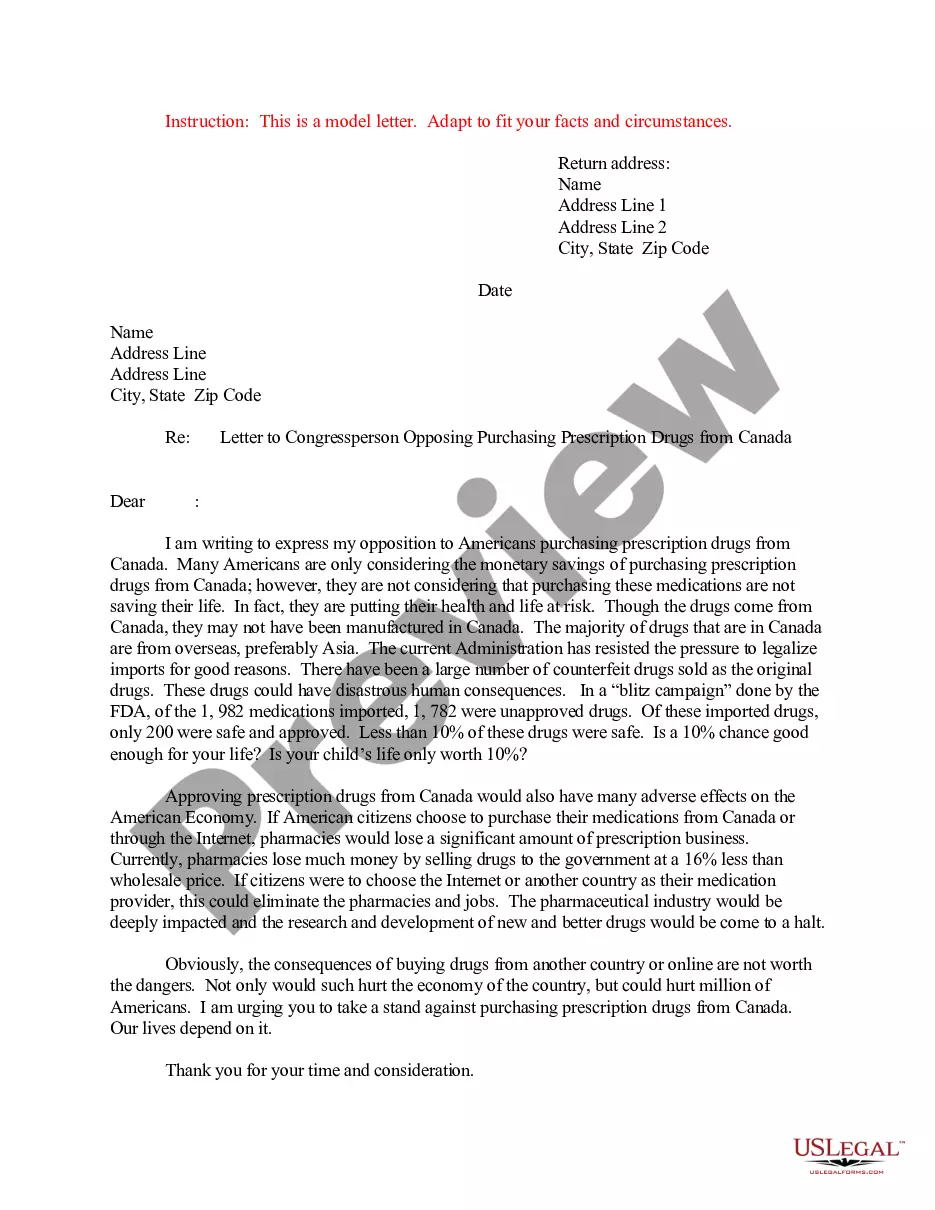
Get your form ready online
Our built-in tools help you complete, sign, share, and store your documents in one place.
Make edits, fill in missing information, and update formatting in US Legal Forms—just like you would in MS Word.
Download a copy, print it, send it by email, or mail it via USPS—whatever works best for your next step.
Sign and collect signatures with our SignNow integration. Send to multiple recipients, set reminders, and more. Go Premium to unlock E-Sign.
If this form requires notarization, complete it online through a secure video call—no need to meet a notary in person or wait for an appointment.
We protect your documents and personal data by following strict security and privacy standards.

Make edits, fill in missing information, and update formatting in US Legal Forms—just like you would in MS Word.

Download a copy, print it, send it by email, or mail it via USPS—whatever works best for your next step.

Sign and collect signatures with our SignNow integration. Send to multiple recipients, set reminders, and more. Go Premium to unlock E-Sign.

If this form requires notarization, complete it online through a secure video call—no need to meet a notary in person or wait for an appointment.

We protect your documents and personal data by following strict security and privacy standards.
Looking for another form?



How to fill out Sample Letter For Opposition To Legislation?
Locating the appropriate valid document template can be challenging.
Certainly, there are numerous templates available online, but how do you find the correct form you require.
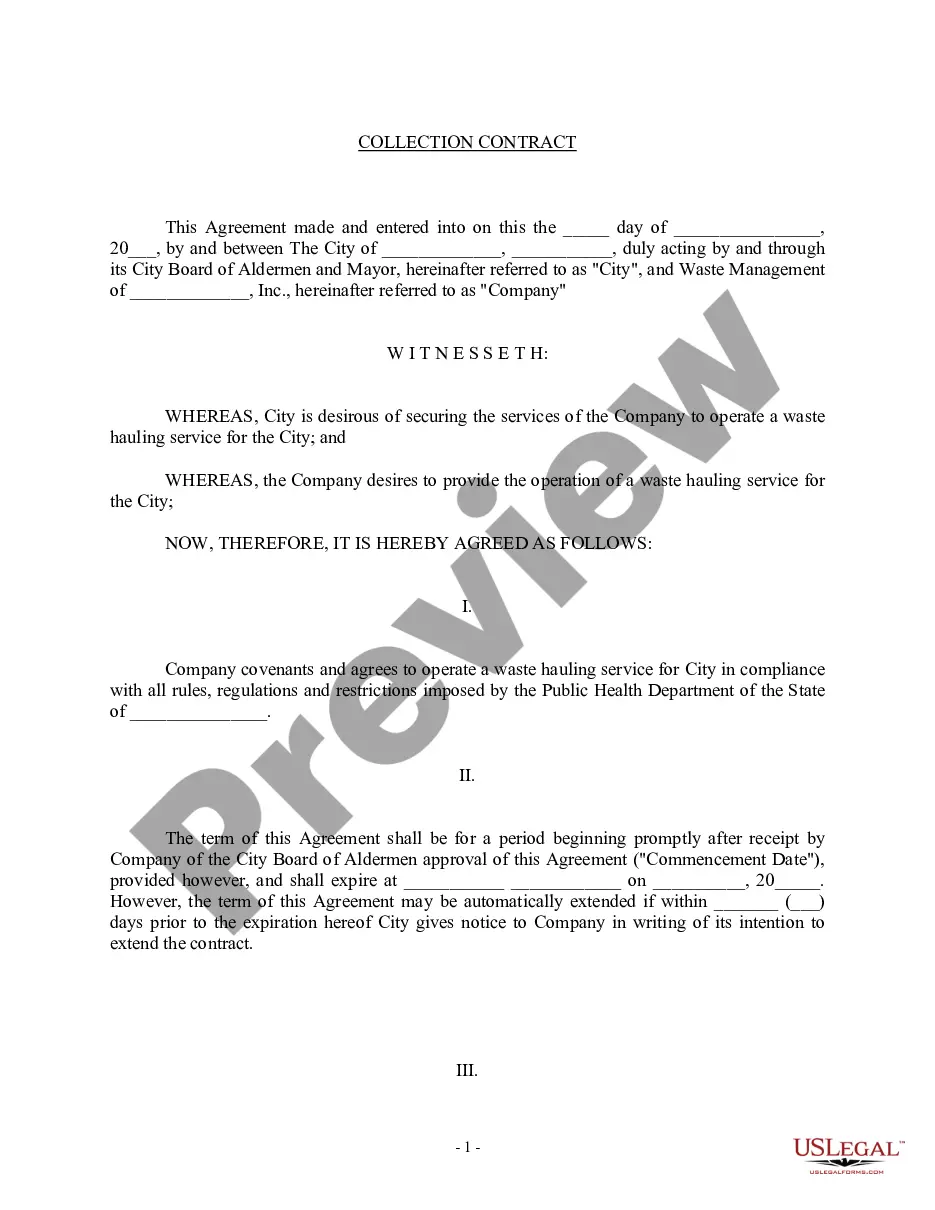
Utilize the US Legal Forms platform. The service offers thousands of templates, including the New Hampshire Sample Letter for Opposition to Legislation, which you can use for business and personal purposes.
If the form does not meet your requirements, use the Search area to find the appropriate form. Once you are convinced that the form is suitable, click the Purchase now button to obtain the form. Choose your preferred pricing plan and enter the required information. Create your account and pay for the order using your PayPal account or credit card. Select the file format and download the valid document template to your device. Complete, edit, print, and sign the obtained New Hampshire Sample Letter for Opposition to Legislation. US Legal Forms is the largest repository of legal forms where you can find various document templates. Utilize the service to download professionally crafted documents that meet state requirements.
- All documents are reviewed by professionals and comply with state and federal regulations.
- If you are already registered, Log In to your account and click the Download button to access the New Hampshire Sample Letter for Opposition to Legislation.
- Use your account to browse through the legal forms you have previously acquired.
- Visit the My documents tab of your account to get another copy of the document you need.
- If you are a new user of US Legal Forms, here are straightforward instructions you can follow.
- First, ensure you have selected the correct form for your city/state. You can review the form using the Preview button and read the form description to verify it is suitable for you.
Form popularity
FAQ
For a Member of the House of Representatives, use the salutation "Dear Mr. or Ms." only; for U.S. Senators, use "Dear Senator (name);" and for the Speaker of the House, use "Dear Mr. or Madam Speaker." When a letter is to a Member in his or her capacity as chairperson of a committee or subcommittee, use "Dear Mr. or
Dear (Representative/Senator/Congressman or Congresswoman) (Last name): My name is (your first and last name) and I am a regional center consumer (family member /service provider/advocate/community member) who resides in your district. (State why you support or oppose the bill or other issue here.
Most importantly, always be courteous and clear when communicating with your legislators.Be specific;Ask for action;Use time wisely;Plan out your remarks;Solicit support from your legislator;Tell the truth;Be respectful;Follow-up: write a thank you note.
Be sure to include your name and address on both your letter and envelope.) Dear (Assembly Member / Senator) (last name) Be courteous and informative in your communication. State the purpose of the letter in the opening sentence and if you are referring to a bill, include the bill number, author and topic.
Use your personal or. business address.Address your. legislator properly.State your. relafionship to the.Be factual. Be personal.Request a response. Include your fitle.Concentrate on a. single issue.Be specific about. what you want.Keep your letter. to one page.
These tips will help increase the effectiveness of your letter: Keep it brief: Letters should never be longer than one page, and should be limited to one issue. Legislative aides read many letters on many issues in a day, so your letter should be as concise as possible.
Date.Representative's Address.Salutation.Introduce yourself: your name, address and school to identify that you are a constituent.Why are you writing your Representative?Ask for a response.Thank your Representative for his/her time.Closing with your name.
Here are some important tips for your letter:Use letterhead.Verify the correct spelling of the legislator's name.Verify the correct title to use when addressing the legislator.Keep it short (one page maximum).Identify the issue.If the issue is a particular bill, verify the full name and bill number.More items...
Here are some important tips for your letter:Use letterhead.Verify the correct spelling of the legislator's name.Verify the correct title to use when addressing the legislator.Keep it short (one page maximum).Identify the issue.If the issue is a particular bill, verify the full name and bill number.More items...