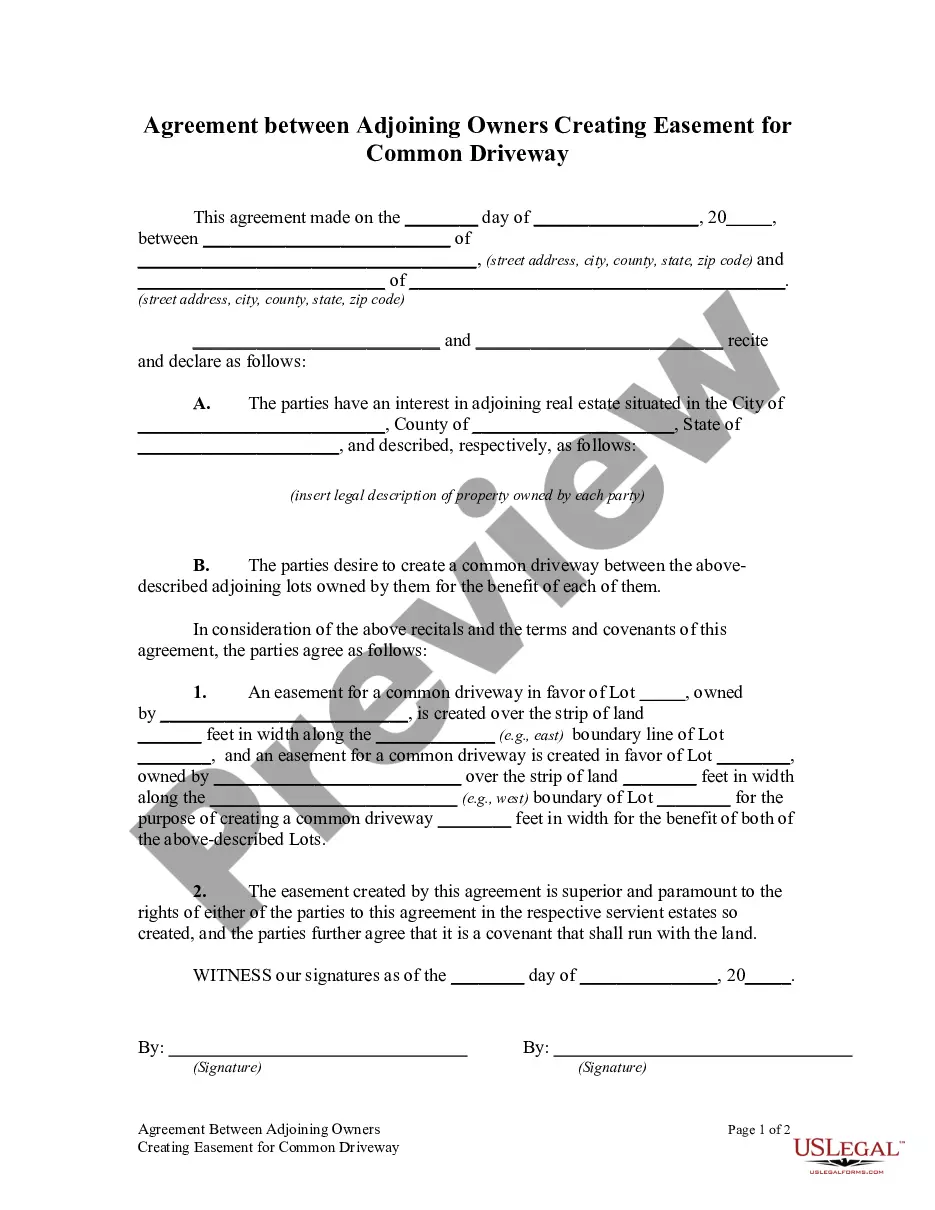
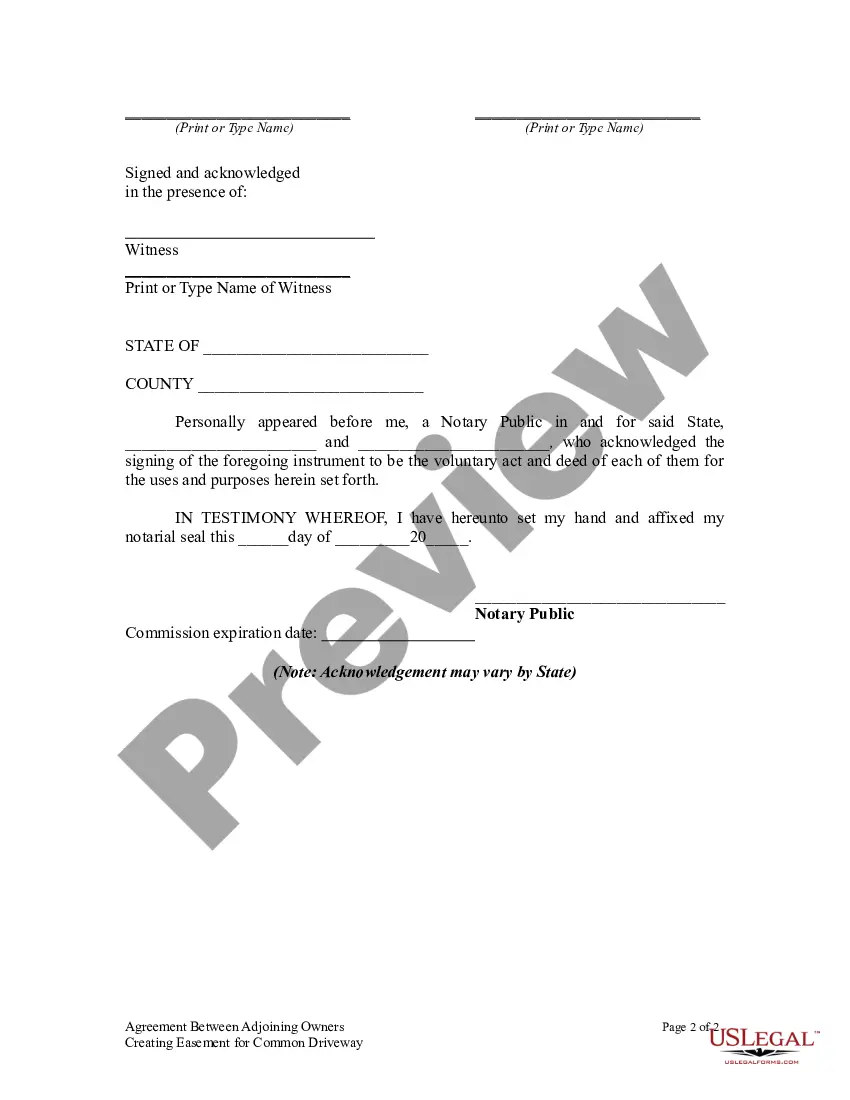
New Hampshire Agreement between Adjoining Owners Creating Easement for Common Driveway
Description
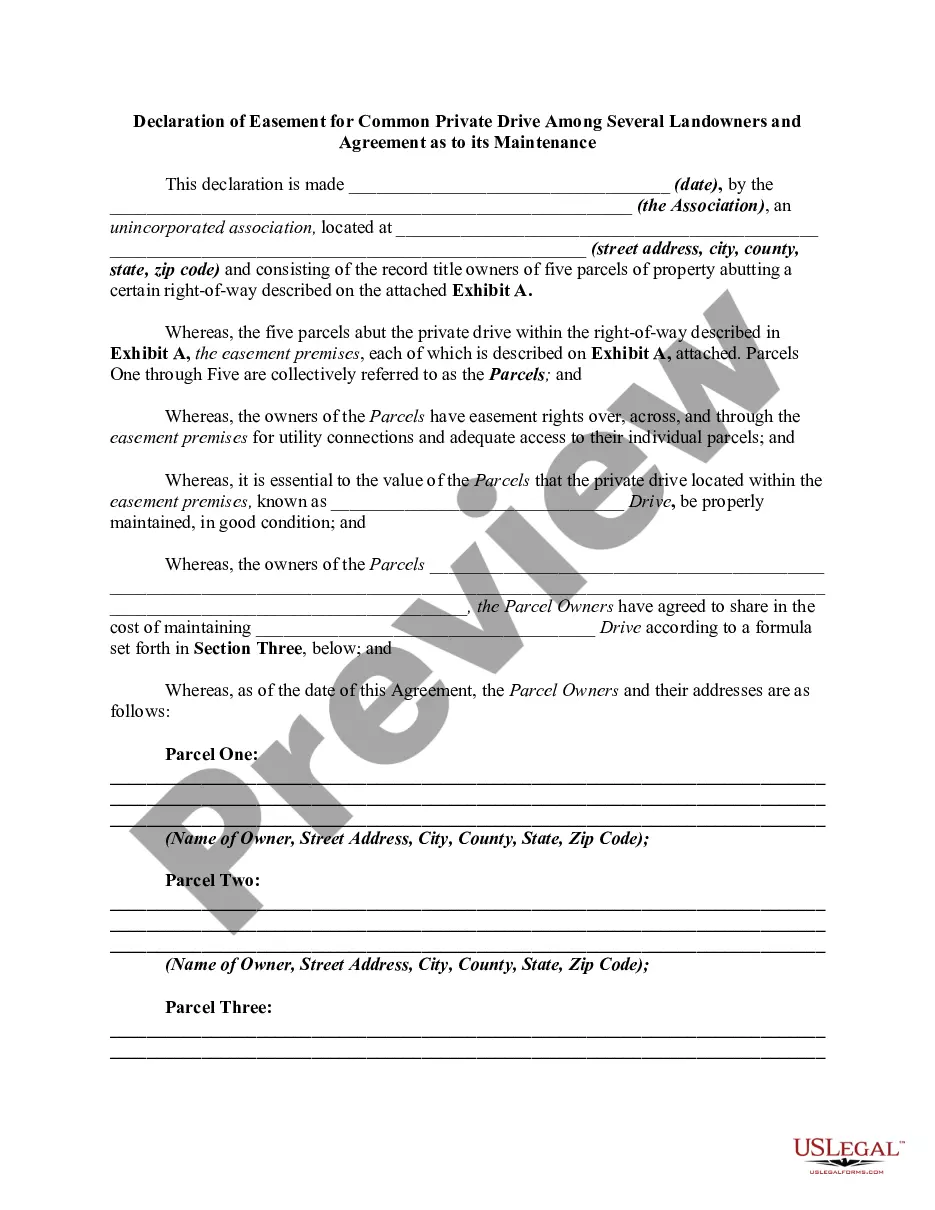
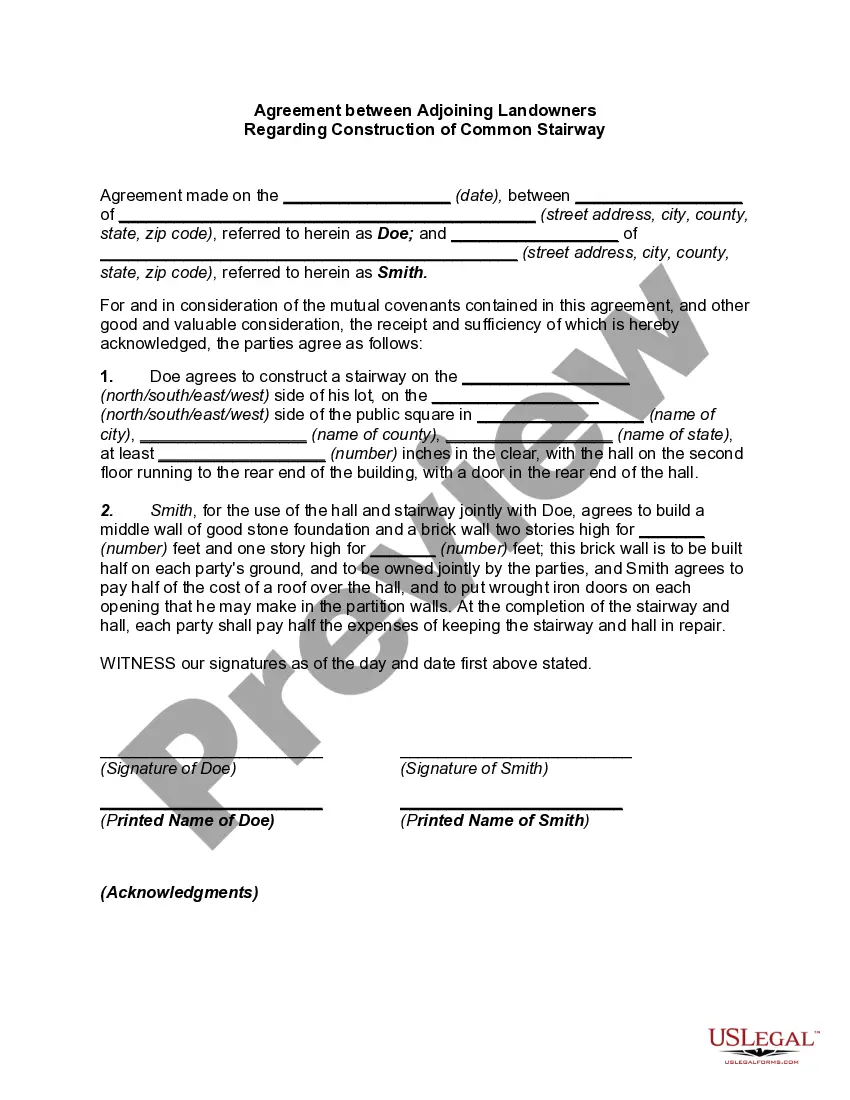
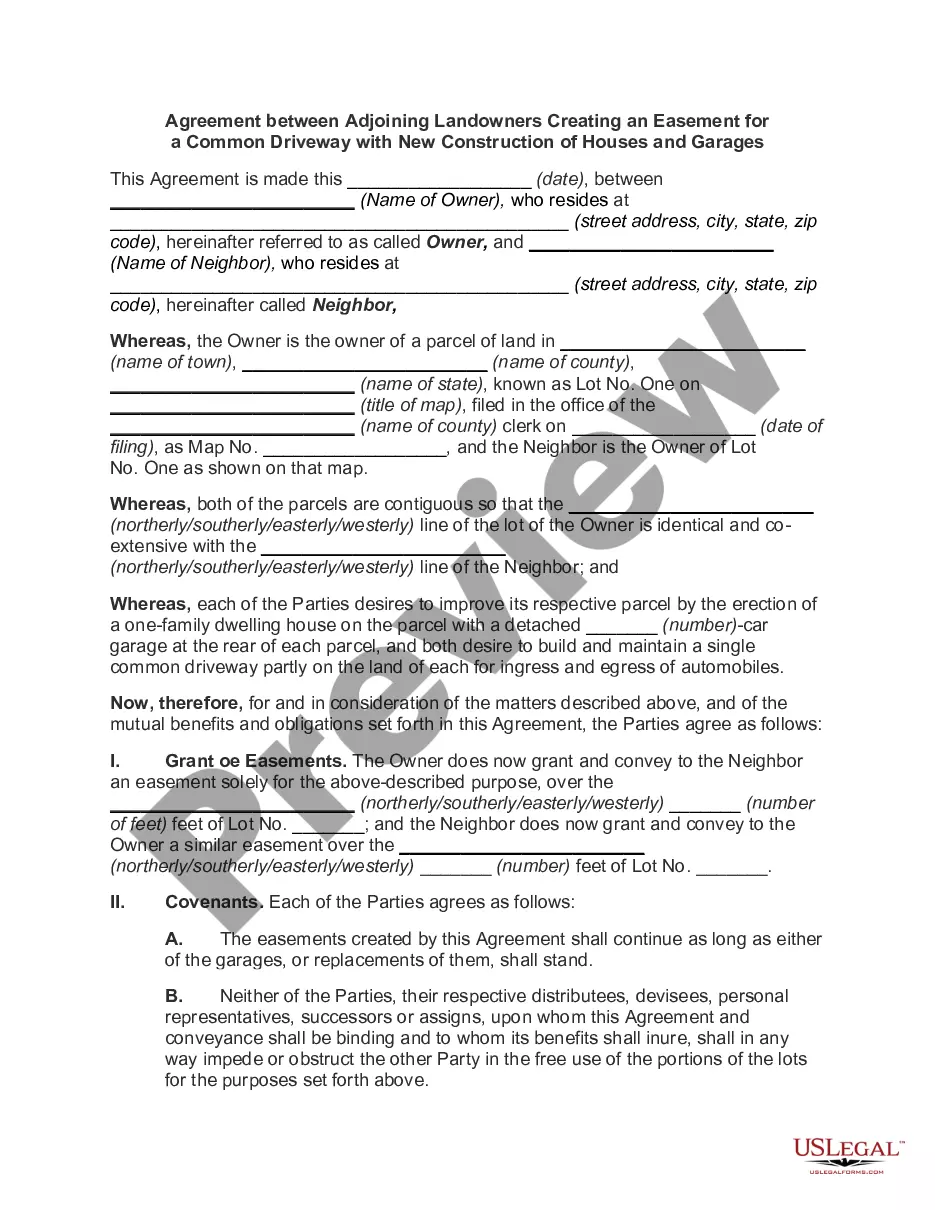
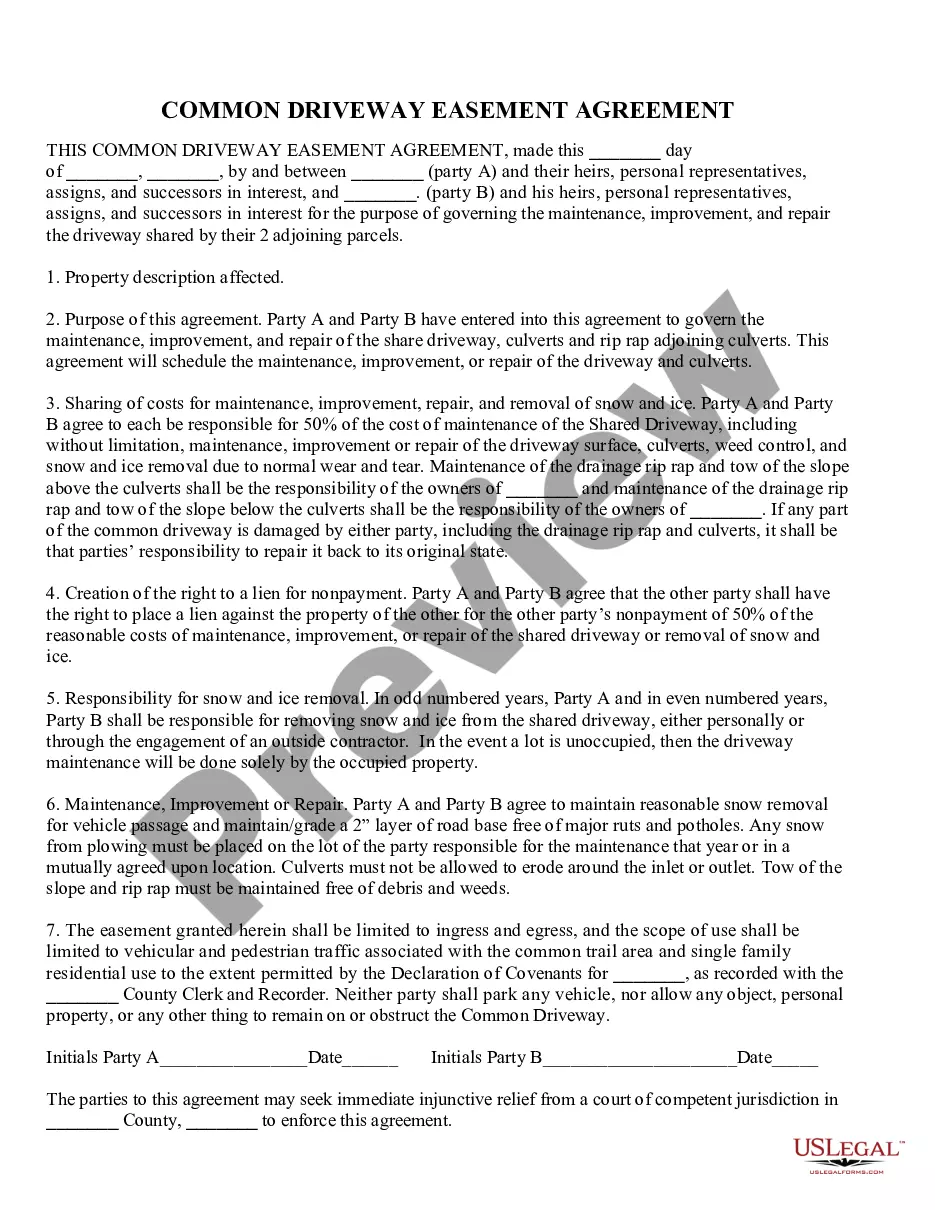
Get your form ready online
Our built-in tools help you complete, sign, share, and store your documents in one place.
Make edits, fill in missing information, and update formatting in US Legal Forms—just like you would in MS Word.
Download a copy, print it, send it by email, or mail it via USPS—whatever works best for your next step.
Sign and collect signatures with our SignNow integration. Send to multiple recipients, set reminders, and more. Go Premium to unlock E-Sign.
If this form requires notarization, complete it online through a secure video call—no need to meet a notary in person or wait for an appointment.
We protect your documents and personal data by following strict security and privacy standards.

Make edits, fill in missing information, and update formatting in US Legal Forms—just like you would in MS Word.

Download a copy, print it, send it by email, or mail it via USPS—whatever works best for your next step.

Sign and collect signatures with our SignNow integration. Send to multiple recipients, set reminders, and more. Go Premium to unlock E-Sign.

If this form requires notarization, complete it online through a secure video call—no need to meet a notary in person or wait for an appointment.

We protect your documents and personal data by following strict security and privacy standards.
Looking for another form?

How to fill out Agreement Between Adjoining Owners Creating Easement For Common Driveway?
Are you in a situation where you require documents for either organizational or personal purposes almost every day.
There are numerous legal document templates available online, but finding ones you can trust is not easy.
US Legal Forms offers a vast array of form templates, such as the New Hampshire Agreement between Adjoining Owners Creating Easement for Common Driveway, that are designed to comply with federal and state regulations.
Select a convenient file format and download your copy.
Access all the document templates you have purchased in the My documents menu. You can obtain an additional copy of the New Hampshire Agreement between Adjoining Owners Creating Easement for Common Driveway at any time, if needed. Click the required form to download or print the document template. Use US Legal Forms, the most extensive collection of legal forms, to save time and avoid mistakes. The service provides professionally crafted legal document templates that can be used for various purposes. Create your account on US Legal Forms and start simplifying your life.
- If you are already familiar with the US Legal Forms website and have an account, simply Log In.
- Then, you can download the New Hampshire Agreement between Adjoining Owners Creating Easement for Common Driveway template.
- If you do not have an account and wish to start using US Legal Forms, follow these steps.
- Find the form you need and ensure it is for the correct city/state.
- Utilize the Review option to evaluate the document.
- Check the summary to confirm that you have selected the right form.
- If the form is not what you're looking for, use the Lookup field to locate the form that meets your needs.
- Once you find the correct form, click Buy now.
- Select the pricing plan you want, fill in the required information to create your account, and pay for the order using your PayPal or credit card.
Form popularity
FAQ
Landlocked is a common term in New Hampshire. I have heard so many landowners use this term when they believe their land, or land they want to purchase, has no access. However, what most of those landowners do not realize is that there is very little landlocked land located in New Hampshire.
Ing to New Hampshire law, private nuisance scenarios include unreasonable noise, unreasonable use of property, and unbearable odors. Since neighborhoods are all different, each nuisance scenario is considered separately from all others.
An easement is a property right that gives its holder an interest in land that is owned by someone else. An easement does not allow the easement holder to occupy the land or to exclude the owner of the land from using the easement area unless the owner's use interferes with the easement holder's use.
I. The driver of every vehicle approaching or entering an intersection on the left shall yield the right of way to the vehicle on the right, unless otherwise designated by an official traffic control device or otherwise directed by a police officer. II.
On newer roads and properties, especially on roads in a subdivision, the property owner's deed only goes to the edge of the right-of-way, and the land for the right-of-way is deeded to the town.
The court's ruling was based on, ?upon the principle that, by using the easement, both the dominant and servient estates contribute to its wear and deterioration and, therefore, distribution of the burden of easement maintenance and repair between both estates is equitable and just?.