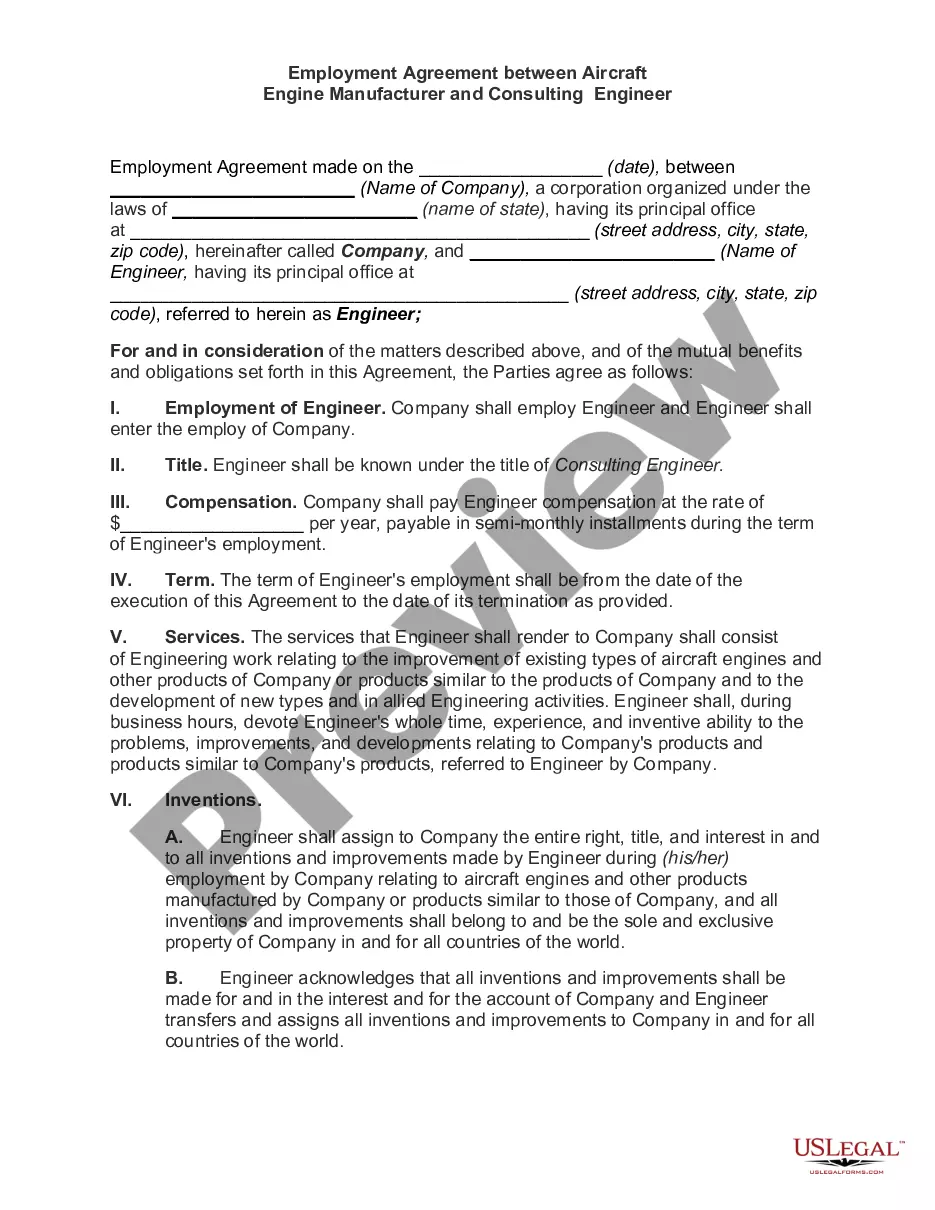
New Hampshire Affidavit by an Attorney-in-Fact in the Capacity of an Administrator of an Estate
Description
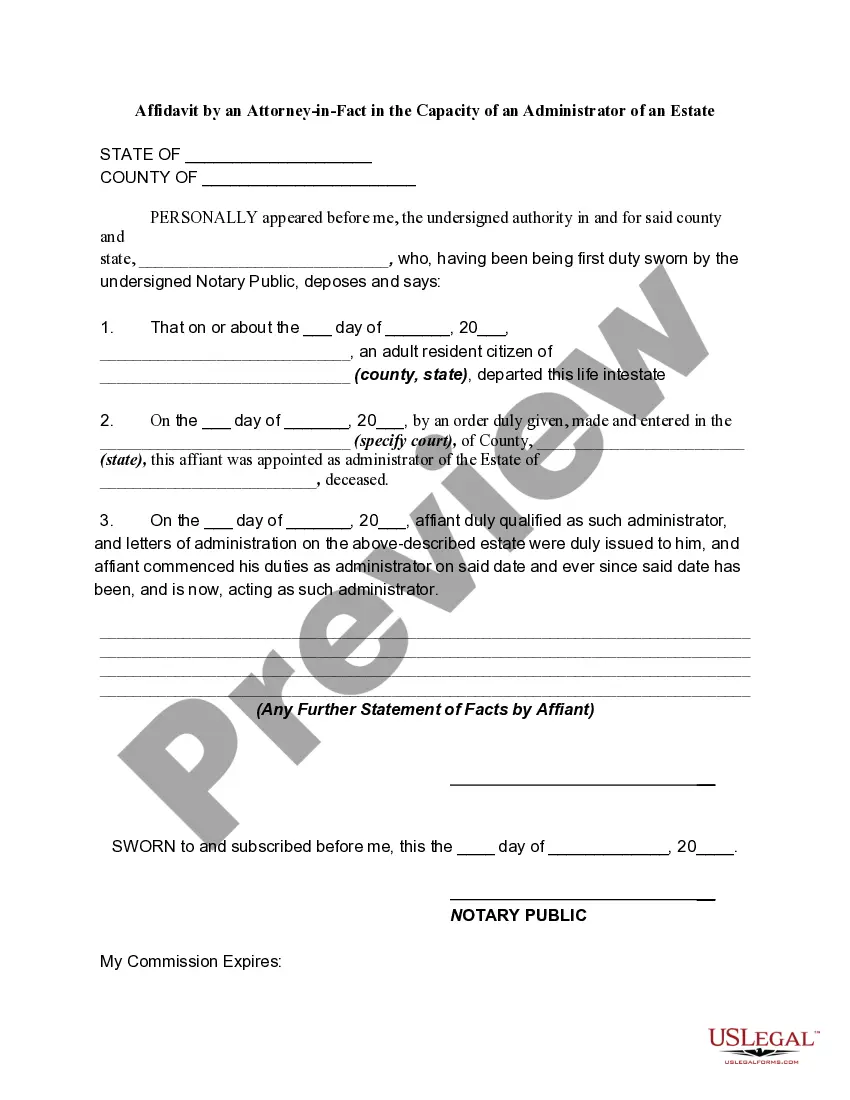

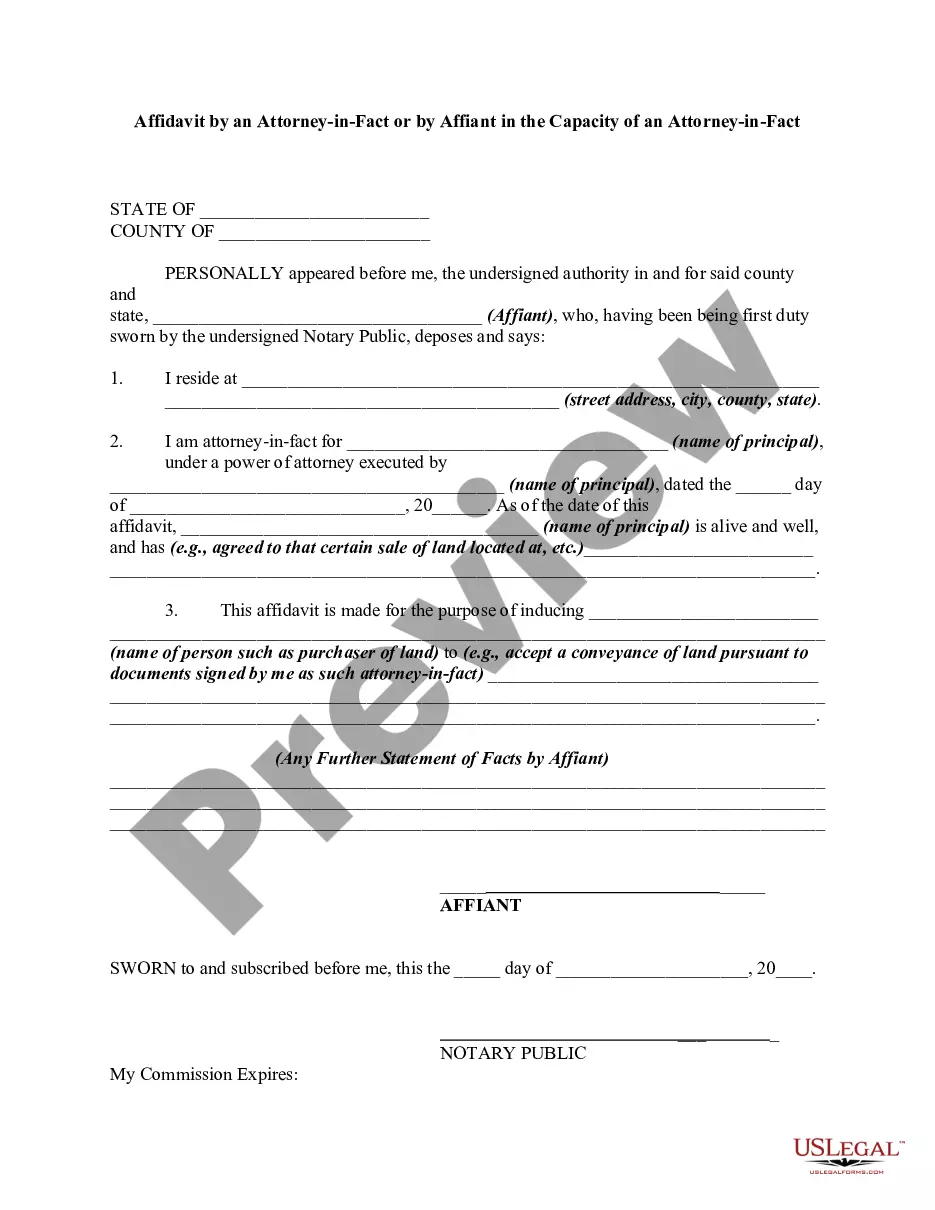
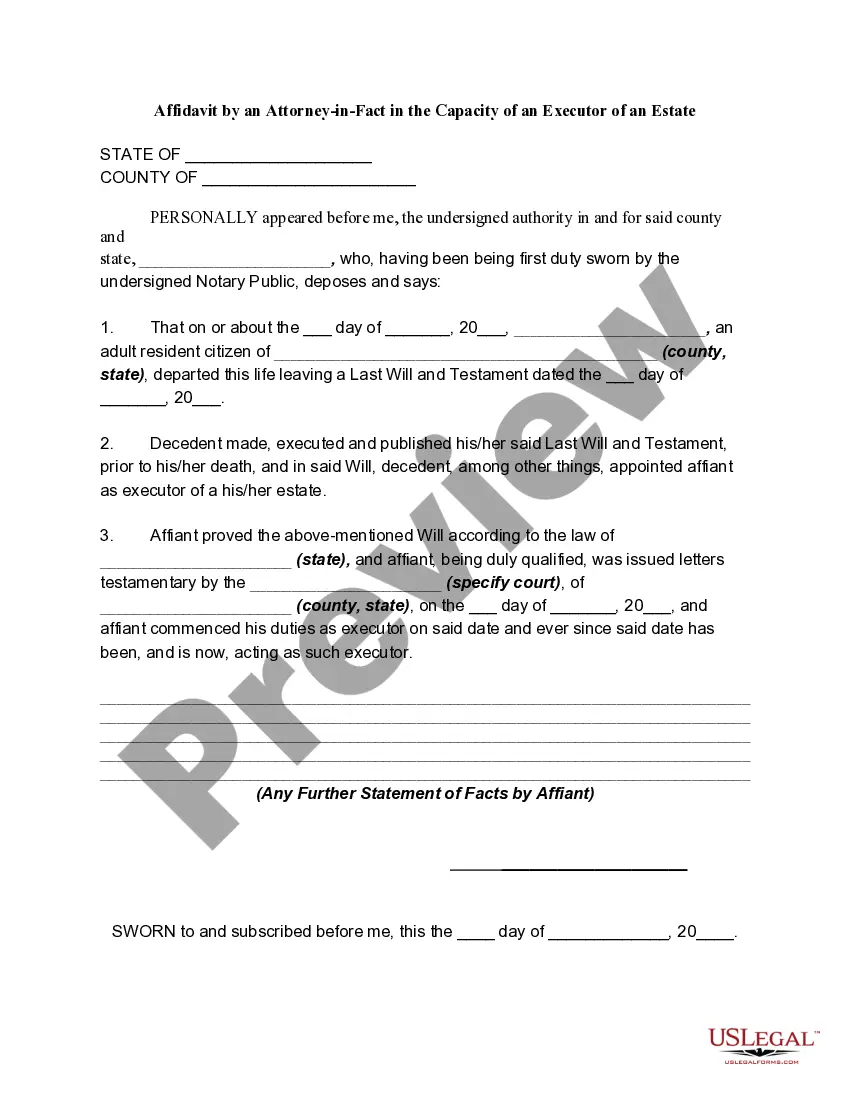
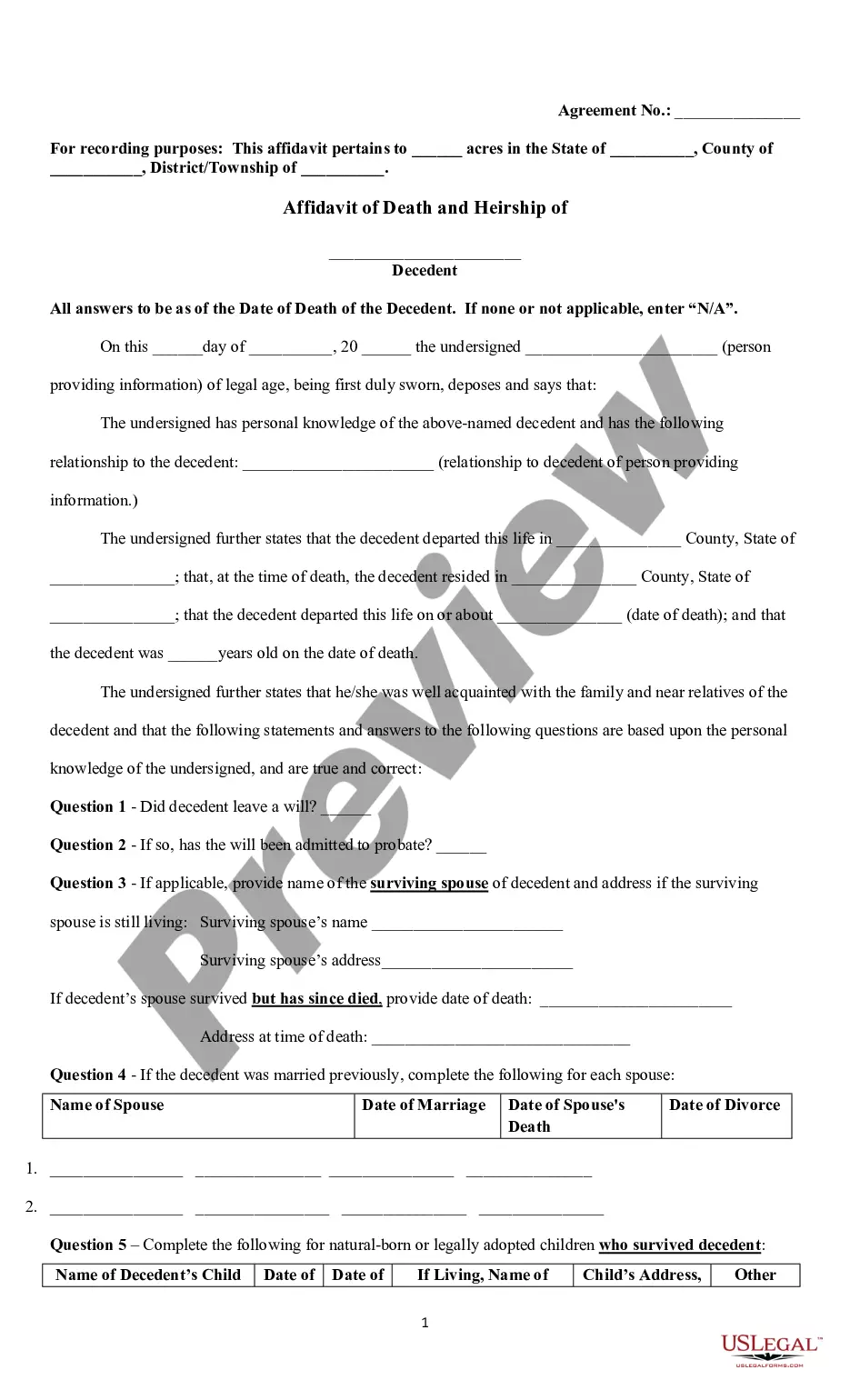
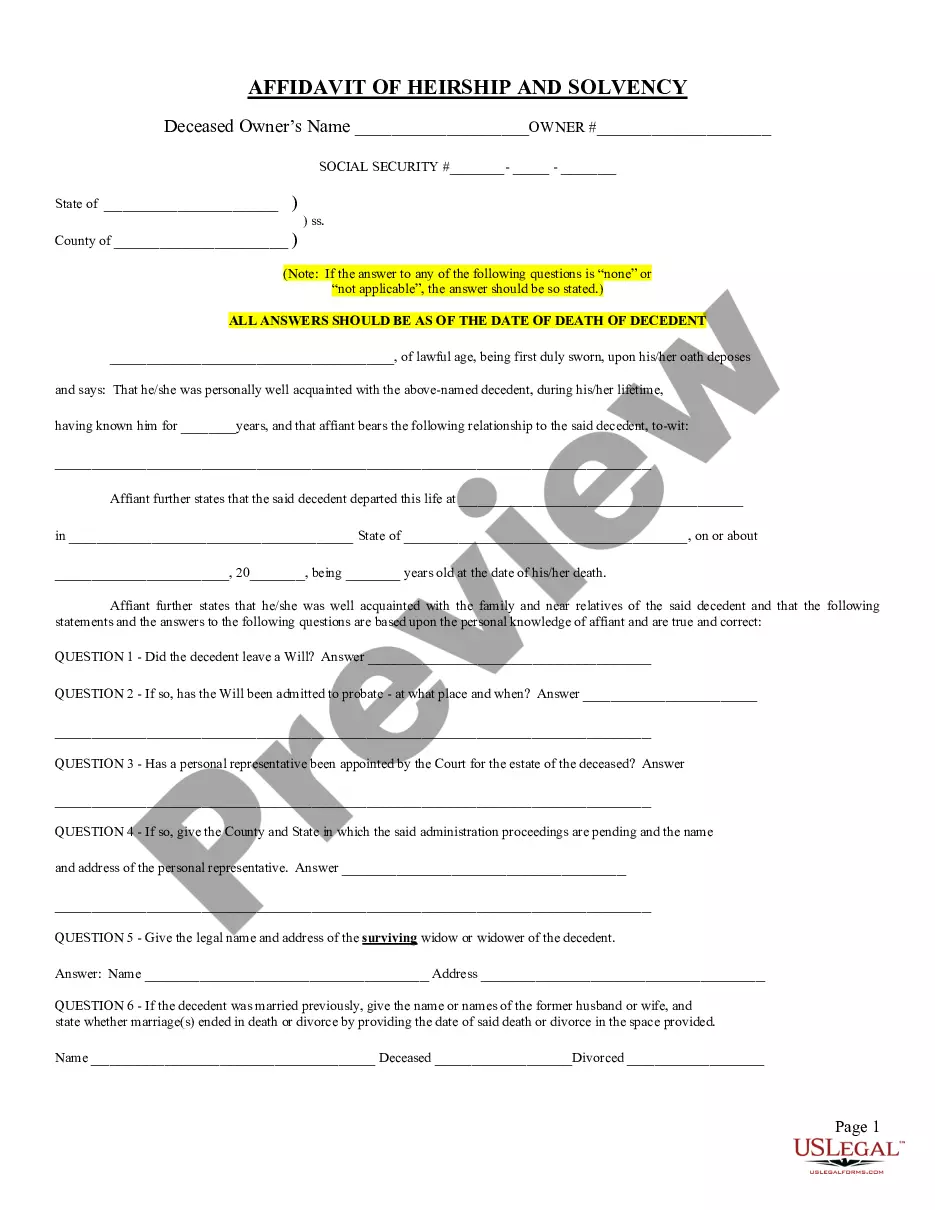

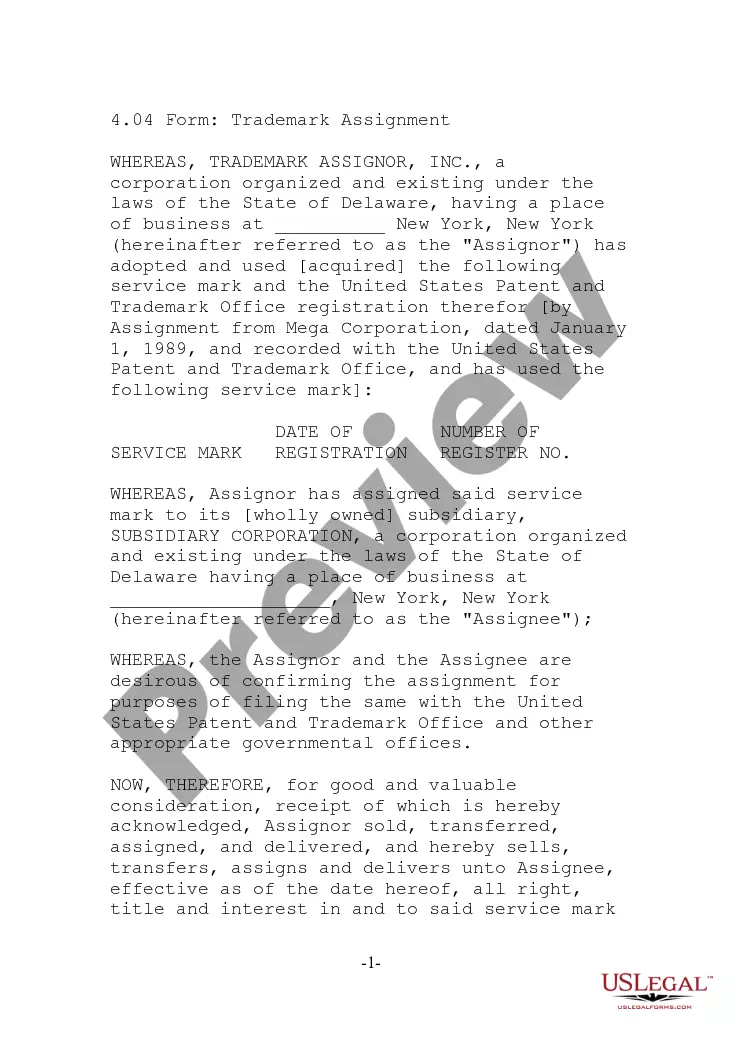
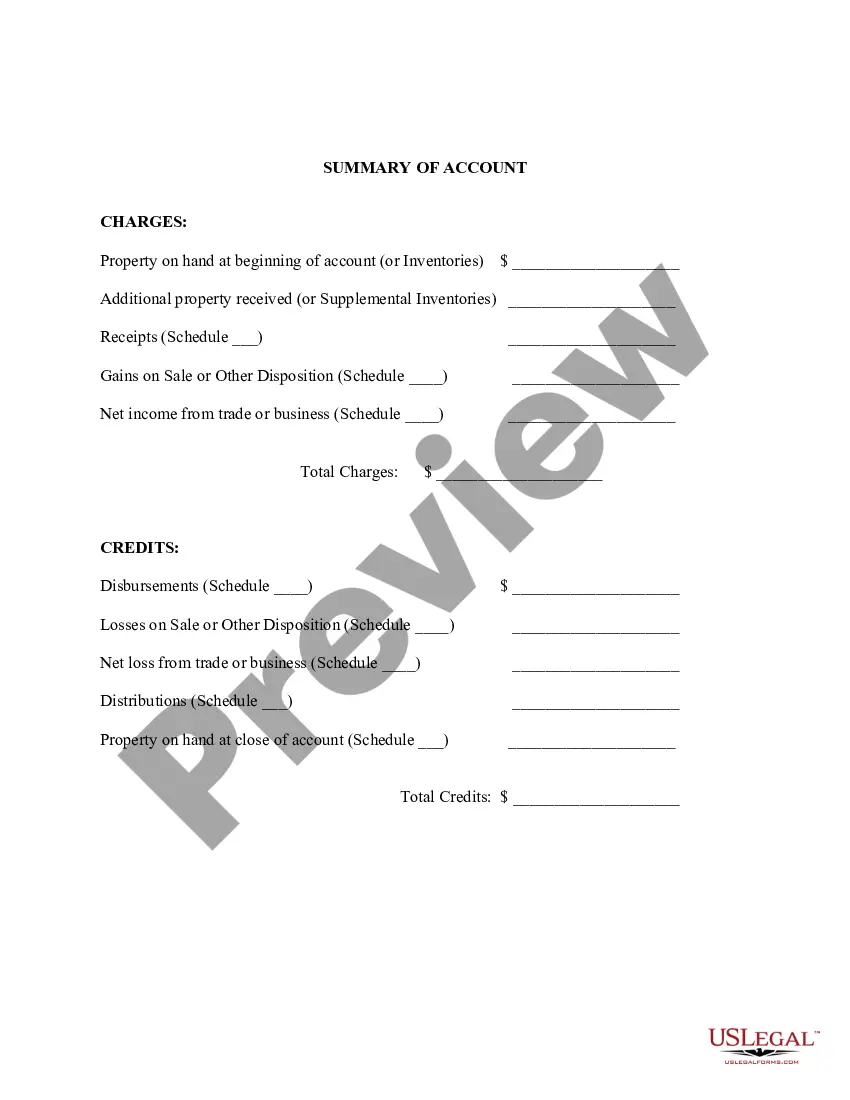
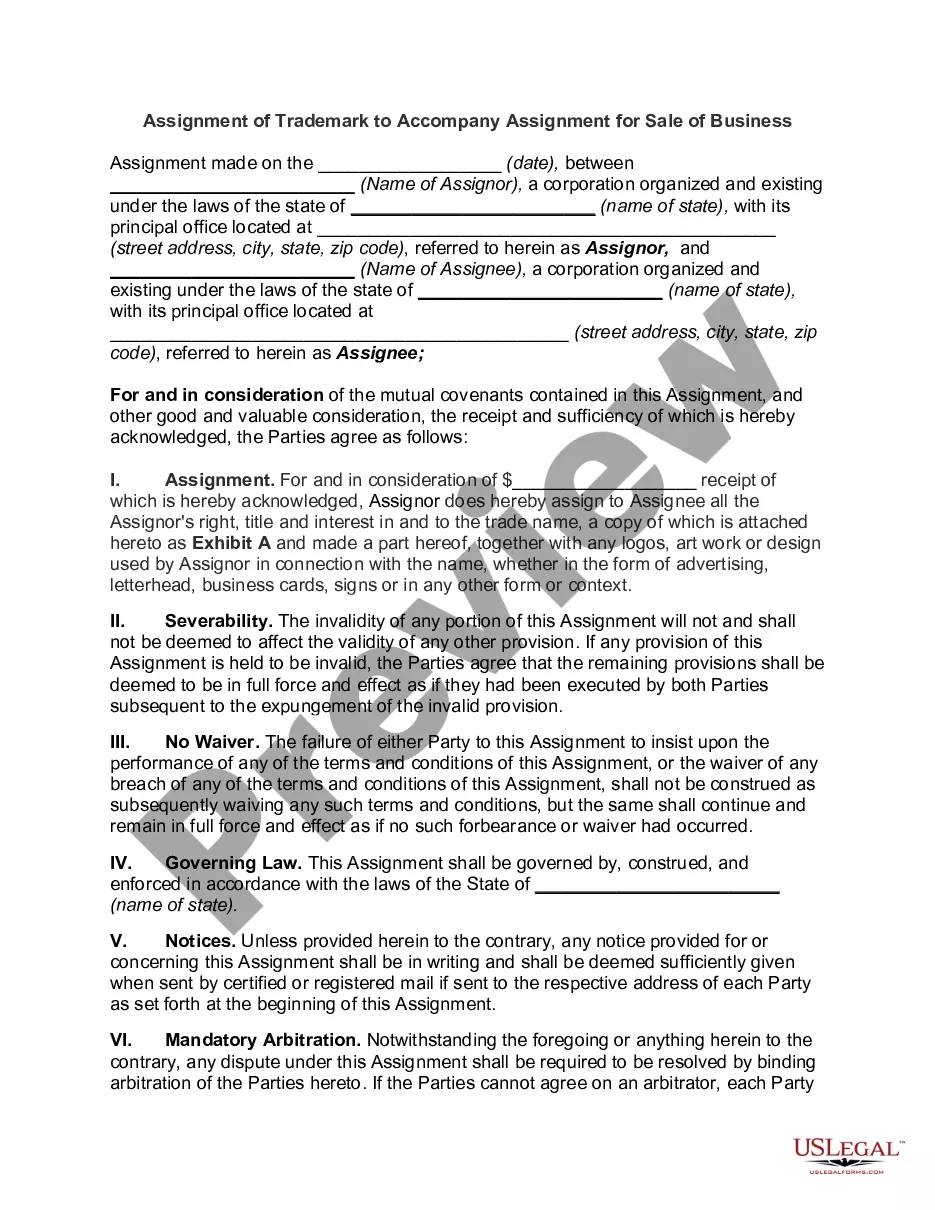

How to fill out Affidavit By An Attorney-in-Fact In The Capacity Of An Administrator Of An Estate?
If you desire to total, obtain, or print legal document templates, utilize US Legal Forms, the largest selection of legal forms available online. Take advantage of the website's simple and convenient search to find the documents you require. Various templates for business and personal purposes are categorized by types and states, or keywords.
Use US Legal Forms to acquire the New Hampshire Affidavit by an Attorney-in-Fact in the Role of an Administrator of an Estate in just a few clicks. If you are currently a US Legal Forms user, Log In to your account and click the Obtain button to get the New Hampshire Affidavit by an Attorney-in-Fact in the Role of an Administrator of an Estate. You can also access forms you have previously downloaded from the My documents section of your account.
If you are utilizing US Legal Forms for the first time, follow the guidelines below: Step 1. Ensure you have selected the form for the appropriate city/state. Step 2. Use the Review option to examine the form's content. Be sure to read the description. Step 3. If you are dissatisfied with the form, use the Search field at the top of the screen to locate alternative versions of the legal form template. Step 4. Once you have found the form you need, click the Buy now button. Choose the pricing plan you prefer and enter your information to register for the account. Step 5. Complete the transaction. You can use your Visa or Mastercard or PayPal account to finalize the payment. Step 6. Choose the format of the legal form and download it to your device. Step 7. Complete, modify and print or sign the New Hampshire Affidavit by an Attorney-in-Fact in the Role of an Administrator of an Estate.
- Every legal document template you purchase is yours permanently.
- You have access to every form you downloaded in your account.
- Visit the My documents section and select a form to print or download again.
- Be proactive and obtain, and print the New Hampshire Affidavit by an Attorney-in-Fact in the Role of an Administrator of an Estate with US Legal Forms.
- There are thousands of professional and state-specific forms you can use for your business or personal needs.
Form popularity
FAQ
Joinder of Offenses and Defendants. (C) Are alleged to have occurred during separate criminal episodes, but nonetheless, are logically and factually connected in a manner that does not solely demonstrate that the accused has a propensity to engage in criminal conduct. (2) Joinder of Related Offenses for Trial.
Confidentiality of Information. (a) A lawyer shall not reveal information relating to the representation of a client unless the client gives informed consent, the disclosure is impliedly authorized in order to carry out the representation, or the disclosure is permitted by paragraph (b).
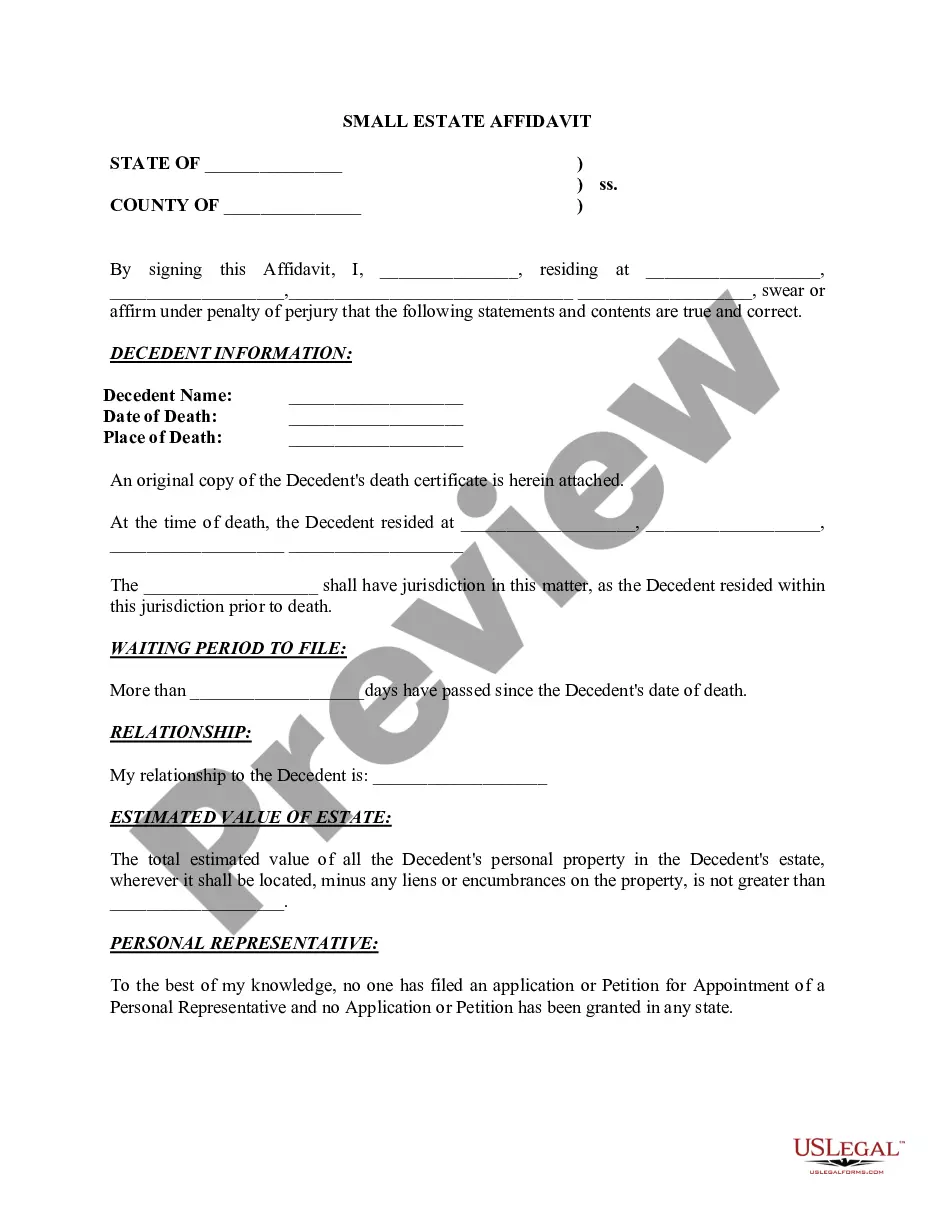
New Hampshire does not recognize an affidavit specifically suited to settling small estates per se; however, certain estates may be closed without the accounting, inventorying, and fiduciary bonds usually required when distributing a decedent's property and assets.
Rule 7. (a) Every Complaint shall contain in the caption, or in the body of the Complaint, the names and addresses of all parties to the proceedings. (b) No filing which is contained in a letter, will be accepted by the clerk, as such, or acted on by the court.
Transfer of Cases. (1) When any party files a motion in any superior court requesting the transfer of a case, or of a proceeding therein, to another superior court, the presiding judge may, after giving notice and an opportunity for a hearing to all parties, order such transfer.
Rule 11. (a) A request for court order must be made by motion which must (1) be in writing unless made during a hearing or trial, (2) state with particularity the grounds for seeking the order, and (3) state the relief sought.
The court shall not consider any brief or memorandum of law after a case has been argued or submitted, unless the court has granted to the party offering to file the brief or memorandum of law special leave to do so in advance.
Rule 19 contemplates the transfer of whole cases, or of particular proceedings in cases, even in the absence of a related pending case or proceeding in the county to which transfer is sought.