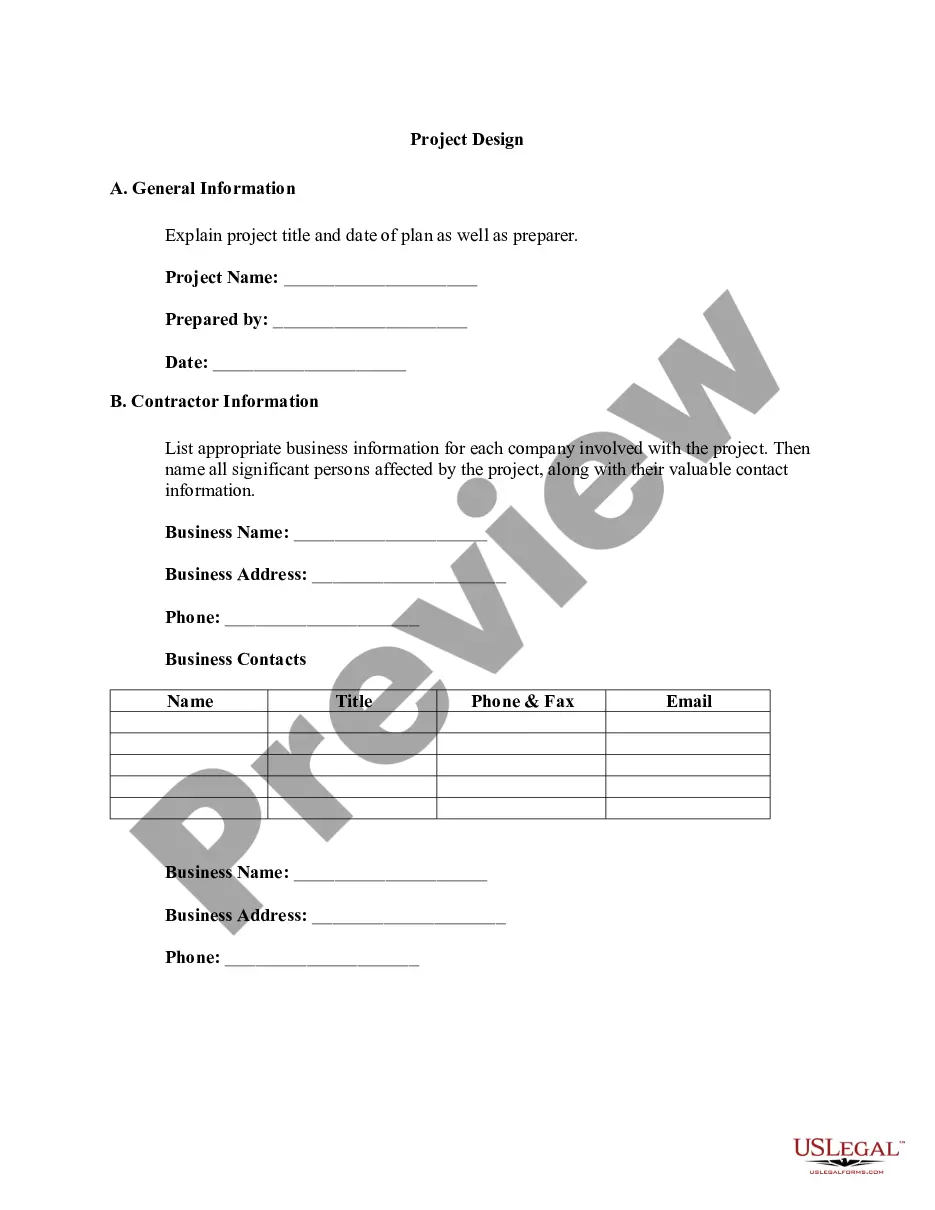
This form is a sample letter in Word format covering the subject matter of the title of the form.
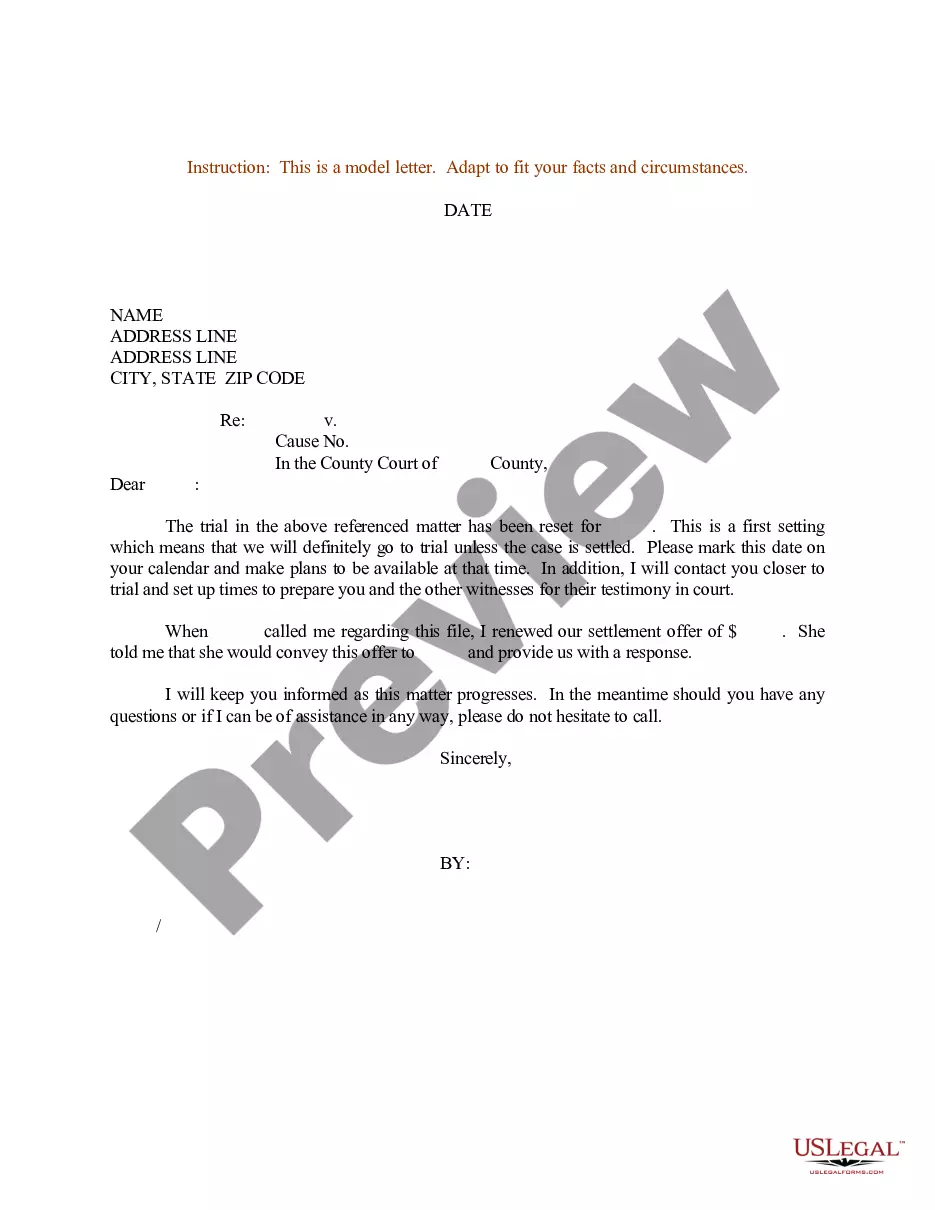
New Hampshire Sample Letter to Judge regarding Agreed Order
Instant download
Description

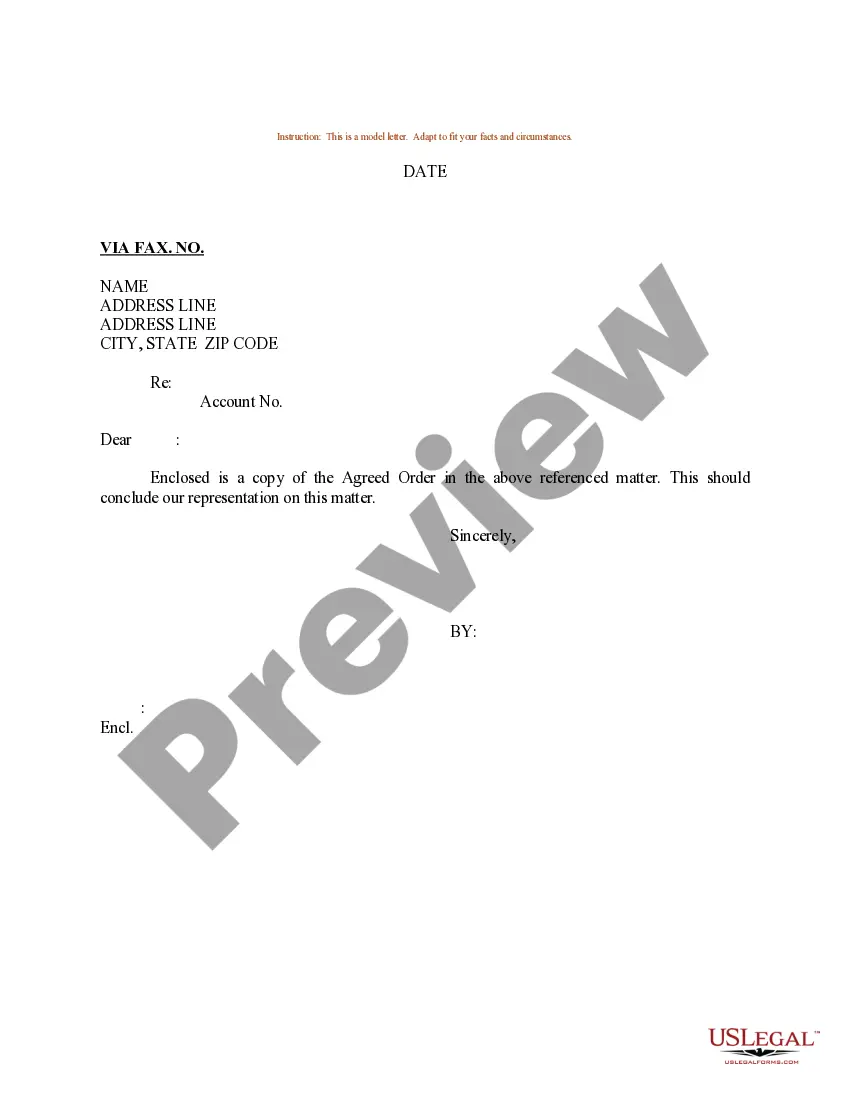

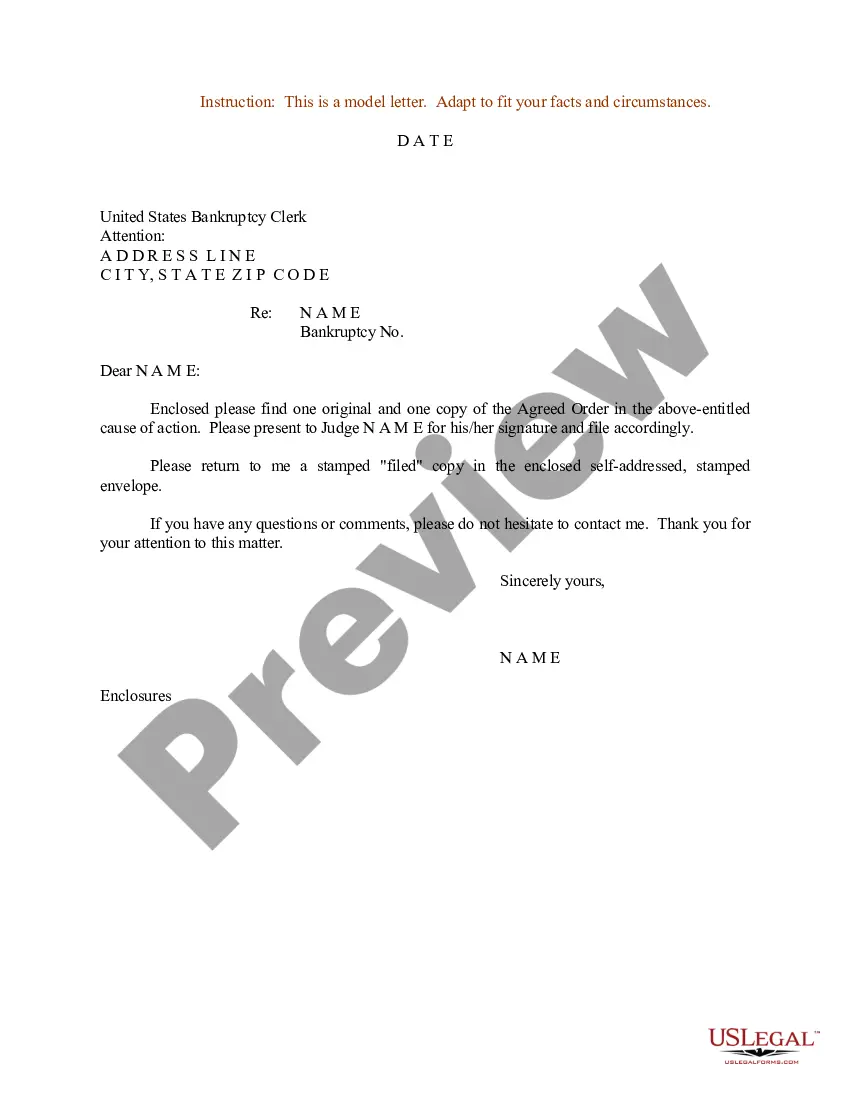
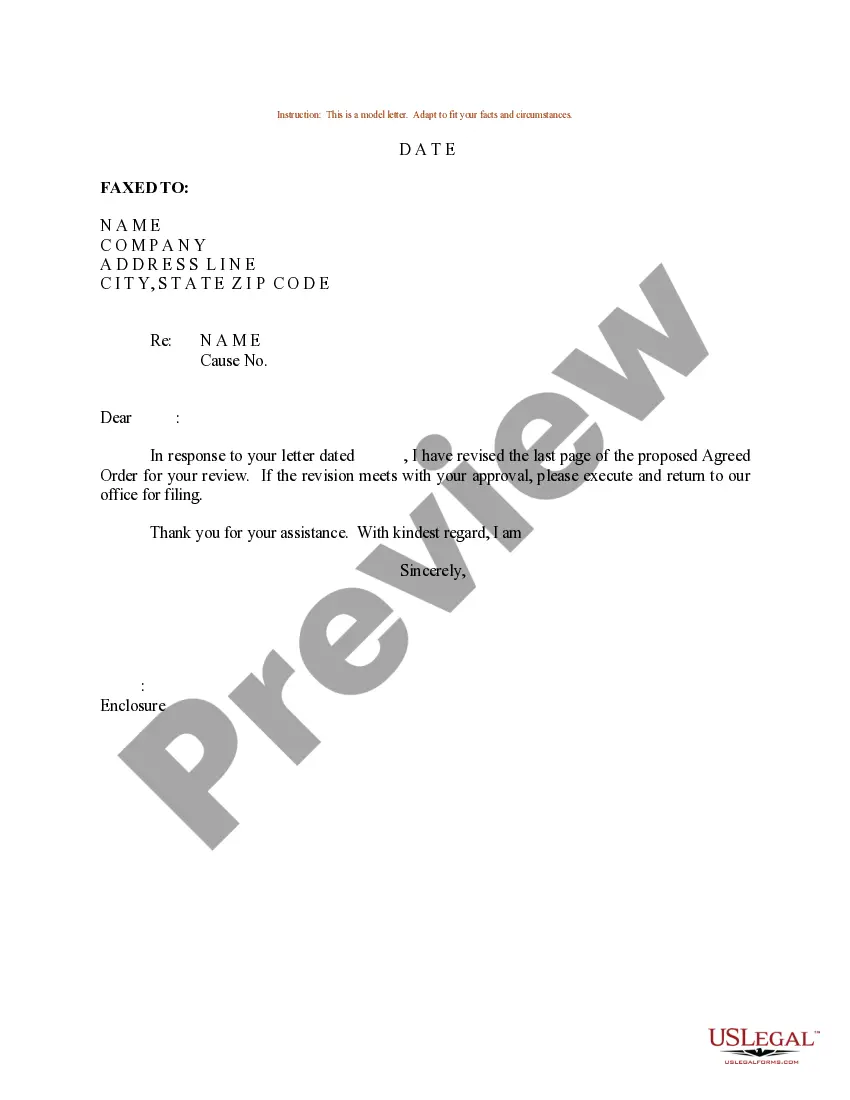

How to fill out Sample Letter To Judge Regarding Agreed Order?
Are you currently in a situation where you require documents for either business or personal purposes almost every day.
There are many legal document templates accessible online, but finding ones you can trust is not easy.
US Legal Forms offers thousands of form templates, including the New Hampshire Sample Letter to Judge regarding Agreed Order, designed to meet federal and state requirements.
If you find the correct form, simply click Buy now.
Select the pricing plan you desire, fill in the necessary information to create your account, and complete the purchase using your PayPal or credit card.
- If you are already familiar with the US Legal Forms website and have an account, simply Log In.
- Then, you can download the New Hampshire Sample Letter to Judge regarding Agreed Order template.
- If you do not have an account and wish to start using US Legal Forms, follow these steps.
- Find the form you need and ensure it is for the correct state/county.
- Use the Review button to examine the form.
- Read the details to confirm that you have selected the right form.
- If the form isn't what you are looking for, use the Search area to locate the form that meets your needs.
Form popularity
FAQ
Yes, you can appeal a restraining order in New Hampshire. The process typically involves filing a notice of appeal within a specific timeframe after the order is issued. It’s important to present valid reasons for the appeal, supported by evidence. For guidance, consider using resources like a New Hampshire Sample Letter to Judge regarding Agreed Order to help you articulate your case effectively.
To write a letter requesting to reopen a case, provide a clear explanation of why you believe the case should be revisited. Include any new evidence or changes in circumstances that support your request. Maintain a respectful tone and be concise while detailing your reasoning. A New Hampshire Sample Letter to Judge regarding Agreed Order can serve as a helpful template to ensure your letter is structured effectively.
When writing a letter to a judge on behalf of the victim, emphasize the victim's perspective and experiences. Begin with a formal greeting, then outline the situation with compassion and clarity. Highlight the victim's needs and how the judge's decision can positively impact their life. Utilizing a New Hampshire Sample Letter to Judge regarding Agreed Order can guide you in crafting a thoughtful and effective request.
To write an impactful letter to a judge, start by clearly stating your purpose. Use a respectful tone and be concise. Include relevant details, such as case numbers and specific requests. For a New Hampshire Sample Letter to Judge regarding Agreed Order, focus on the facts and express your thoughts clearly to make a strong impression.
Filing a motion to continue in New Hampshire requires you to prepare a written motion that outlines your reasons for requesting a delay. Be sure to follow the proper format and include relevant case information. You can refer to resources like the New Hampshire Sample Letter to Judge regarding Agreed Order for guidance. For additional support, consider using the US Legal Forms platform to access templates and legal advice.
To write an effective letter to the judge, start by clearly stating your purpose. Use formal language, and address the judge respectfully. Include all necessary details related to your case, and make sure to refer to the New Hampshire Sample Letter to Judge regarding Agreed Order for a helpful template. Remember, being concise and direct will strengthen your message.
Motions -- General. (a) A request for court order must be made by motion which must (1) be in writing unless made during a hearing or trial, (2) state with particularity the grounds for seeking the order, and (3) state the relief sought.
Rule 7. (a) Every Complaint shall contain in the caption, or in the body of the Complaint, the names and addresses of all parties to the proceedings. (b) No filing which is contained in a letter, will be accepted by the clerk, as such, or acted on by the court.
Every pleading, written motion, and other paper must be signed by at least one attorney of record in the attorney's name?or by a party personally if the party is unrepresented. The paper must state the signer's address, e-mail address, and telephone number.
Any person shown to be interested may become a party to any civil action upon filing and service of an Appearance and pleading briefly setting forth his or her relation to the cause; or, upon motion of any party, such person may be made a party by order of court notifying him or her to appear therein.