New Hampshire Identity Theft Recovery Package
What is this form package?
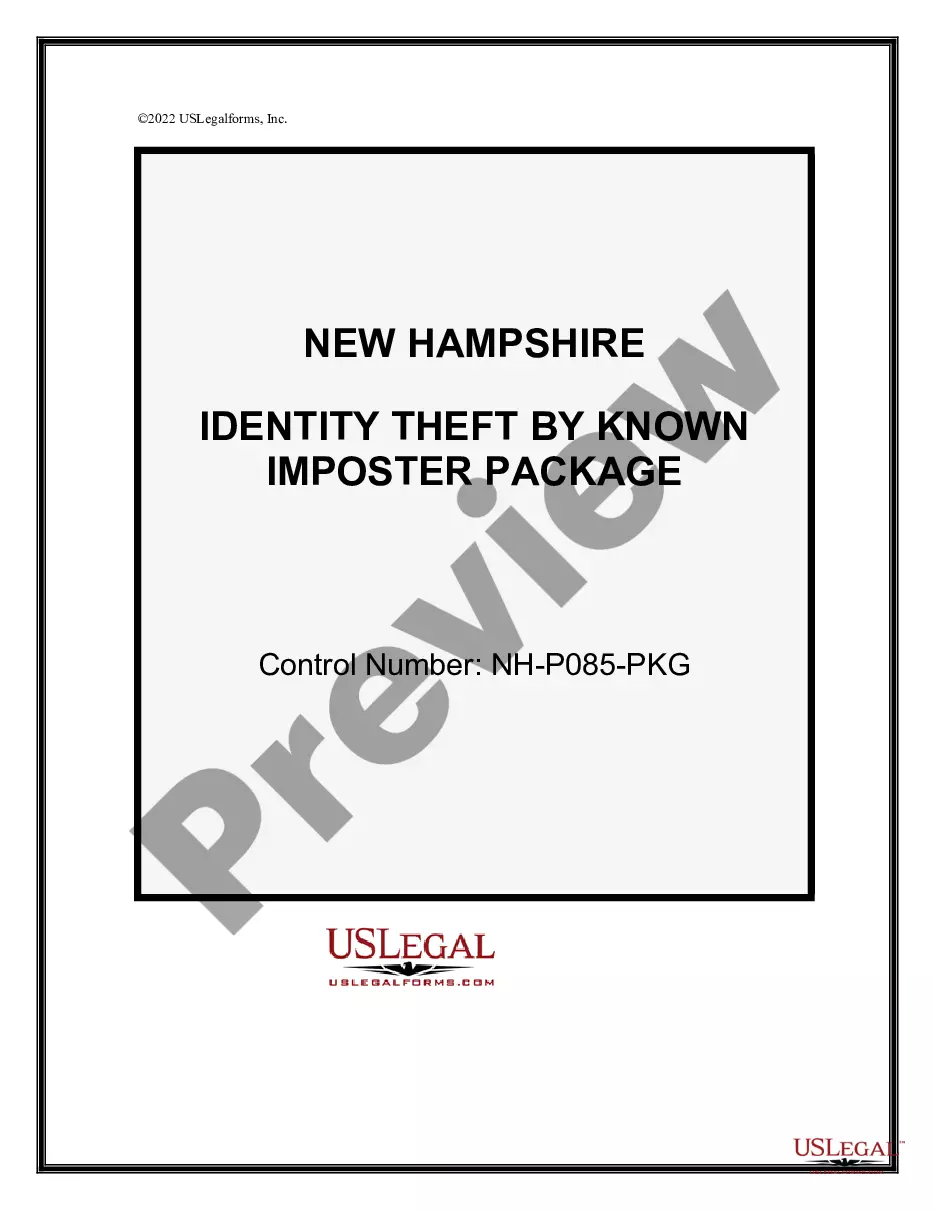
The New Hampshire Identity Theft Recovery Package is a comprehensive set of legal forms designed specifically for individuals who have fallen victim to identity theft. This package contains all necessary documentation to effectively communicate with creditors and government agencies, helping you to clear your name and mitigate the damage caused by identity thieves. Unlike other legal packages, it includes specialized letters and affidavits tailored for the unique challenges faced by identity theft victims in New Hampshire.
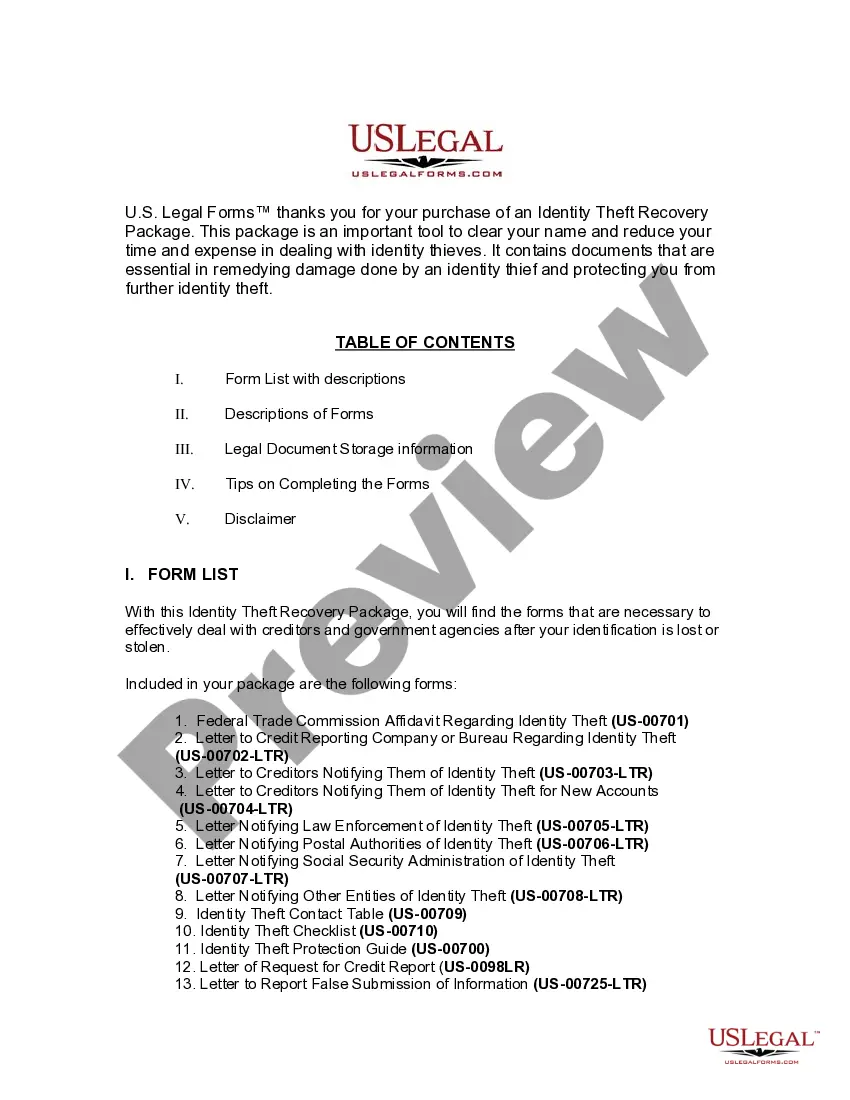
Forms included in this package
- Identity Theft Protection Guide
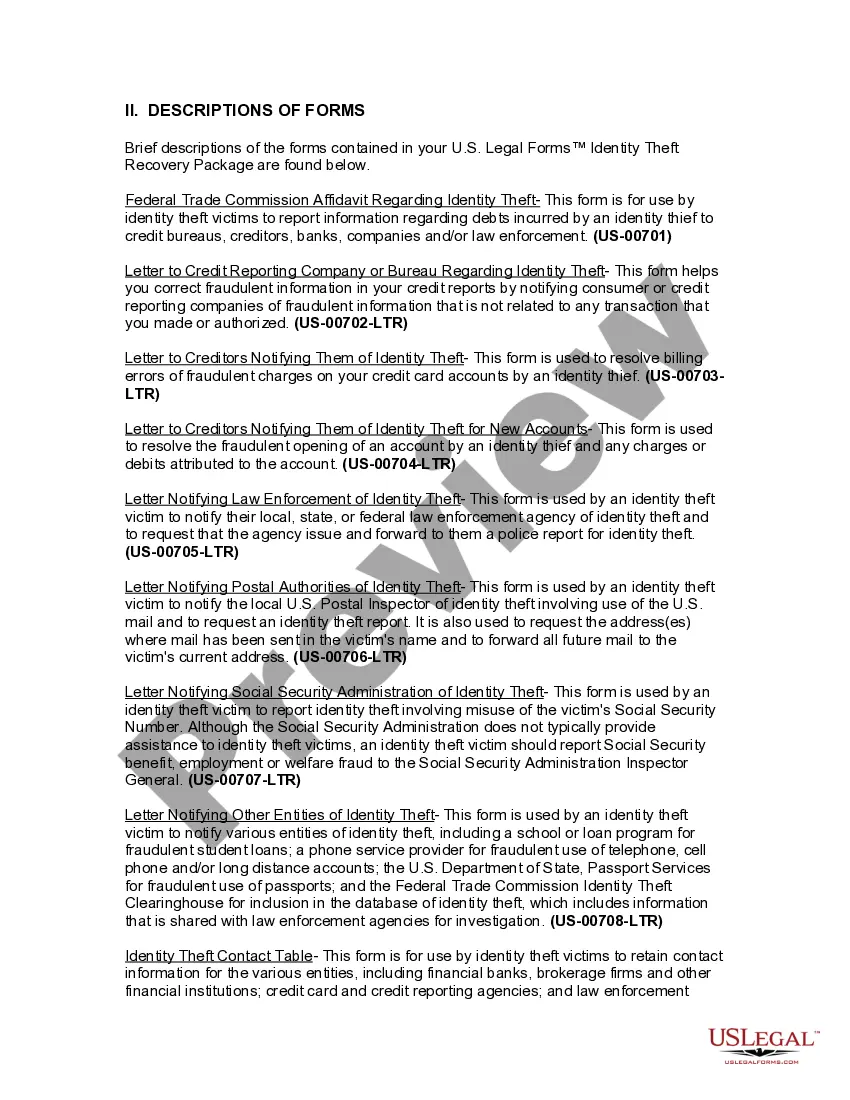
- Federal Trade Commission Affidavit regarding Identity Theft
- Letter to Credit Reporting Company or Bureau regarding Identity Theft
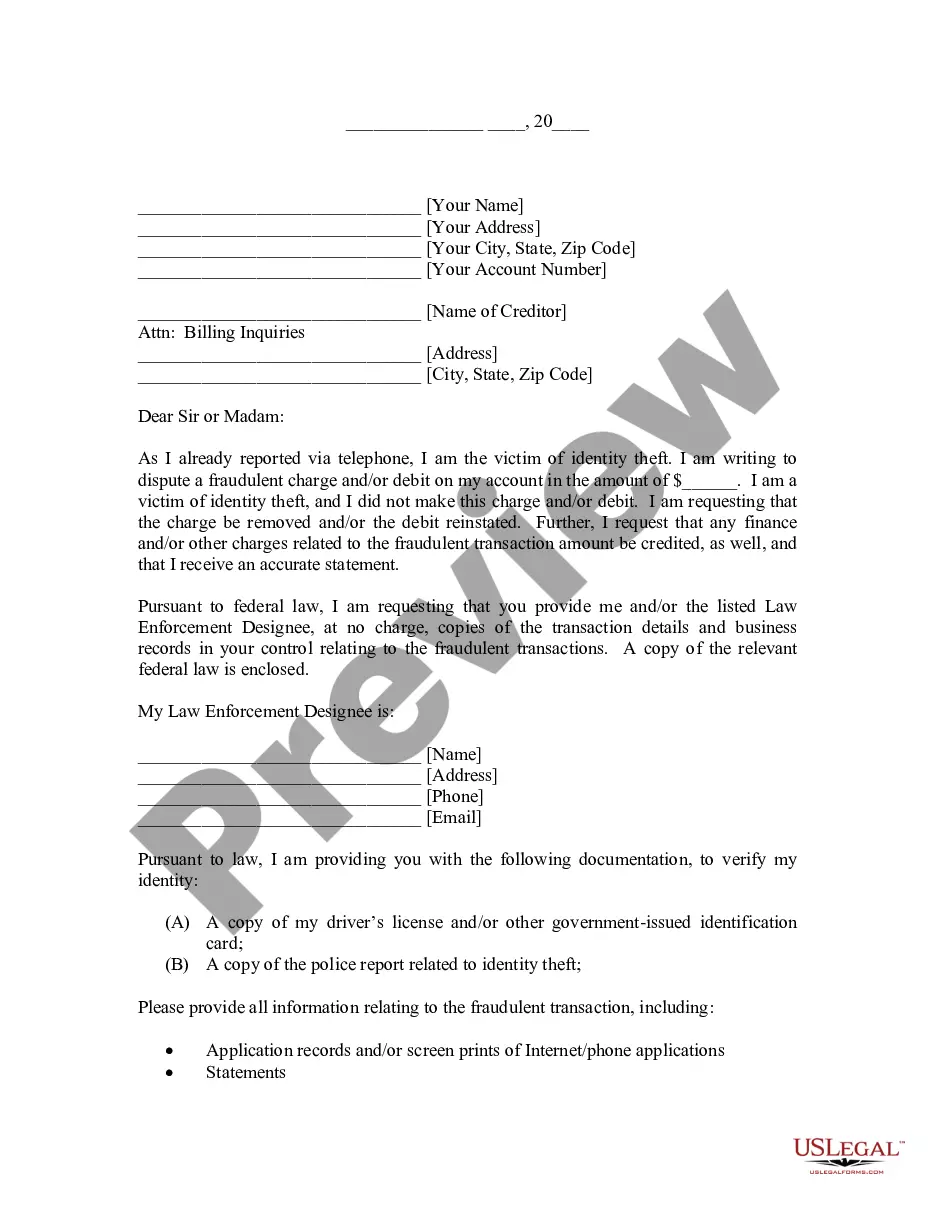
- Letter to Creditors notifying them of Identity Theft
- Letter to Creditors Notifying Them of Identity Theft for New Accounts
- Letter Notifying Law Enforcement of Identity Theft
- Letter Notifying Postal Authorities of Identity Theft
- Letter Notifying Social Security Administration of Identity Theft
- Letter to Other Entities Notifying Them of Identity Theft
- Identity Theft Contact Table
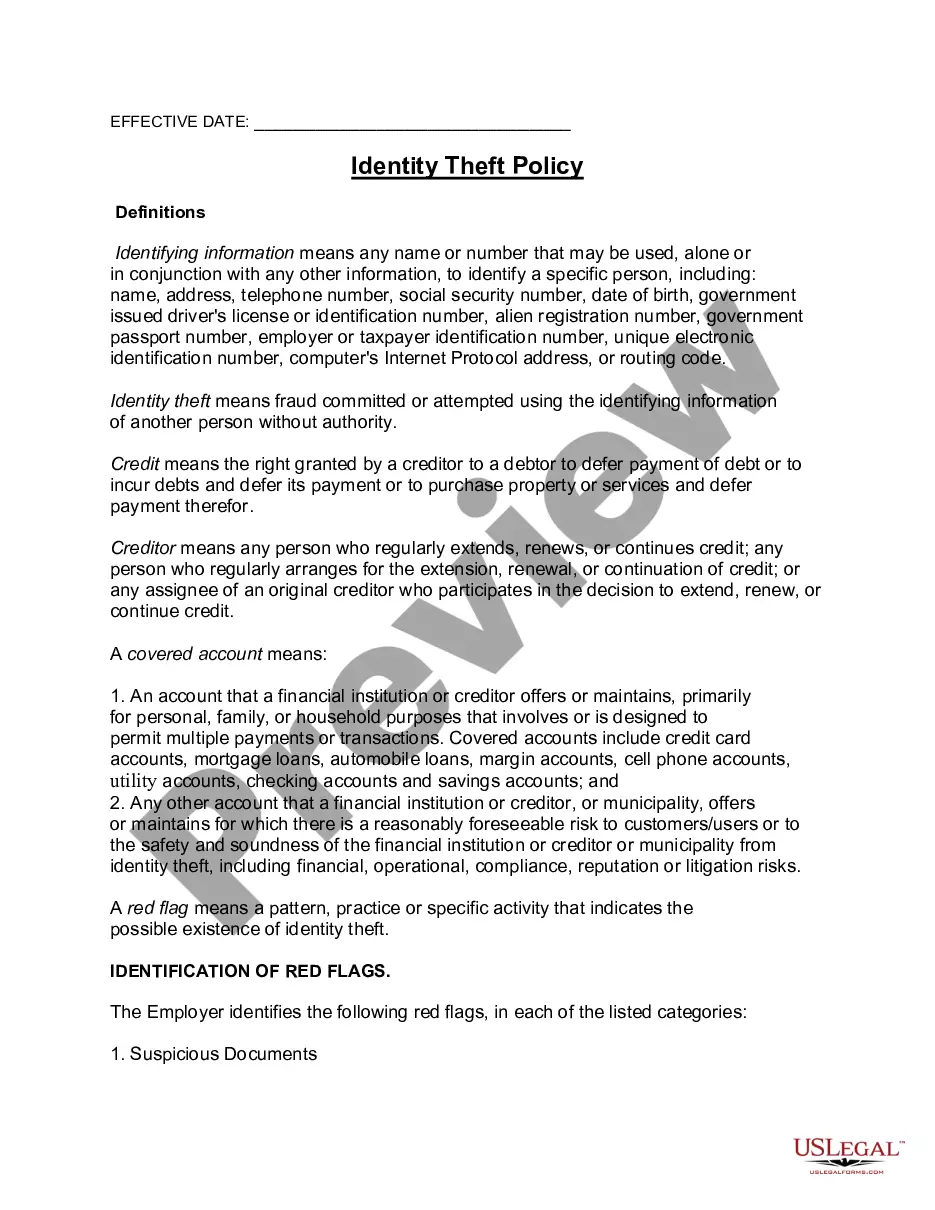
- Identity Theft Checklist
- Sample Letter to Report False Submission of Information
- Sample Letter for Request for Free Credit Report Allowed by Federal Law
Situations where these forms applies
This package is useful in several scenarios, including:
- Your identification has been lost or stolen.
- Fraudulent charges have appeared on your credit card accounts.
- Your financial information has been misused to open new accounts or loans.
- You need to report identity theft to law enforcement or credit reporting agencies.
- You want to protect your credit and financial assets from further misuse.
Intended users of this form package
- Residents of New Hampshire who are victims of identity theft.
- Individuals looking to regain control over their financial identity.
- Those seeking to report fraudulent activities to various agencies.
- Anyone needing to resolve issues related to identity theft, including creditors and law enforcement.
How to complete these forms
- Review the included forms carefully to understand their purpose.
- Gather all necessary information related to your identity theft incident.
- Fill out each form with accurate and complete details.
- Make copies of your completed forms for your records.
- Send the forms to the appropriate agencies and creditors as indicated.
Notarization requirements for forms in this package
Forms in this package typically do not require notarization. However, certain states or document types may still need it. US Legal Forms provides online notarization powered by Notarize, available 24/7 for your convenience.
Get your form ready online
Our built-in tools help you complete, sign, share, and store your documents in one place.
Make edits, fill in missing information, and update formatting in US Legal Forms—just like you would in MS Word.
Download a copy, print it, send it by email, or mail it via USPS—whatever works best for your next step.
Sign and collect signatures with our SignNow integration. Send to multiple recipients, set reminders, and more. Go Premium to unlock E-Sign.
If this form requires notarization, complete it online through a secure video call—no need to meet a notary in person or wait for an appointment.
We protect your documents and personal data by following strict security and privacy standards.

Make edits, fill in missing information, and update formatting in US Legal Forms—just like you would in MS Word.

Download a copy, print it, send it by email, or mail it via USPS—whatever works best for your next step.

Sign and collect signatures with our SignNow integration. Send to multiple recipients, set reminders, and more. Go Premium to unlock E-Sign.

If this form requires notarization, complete it online through a secure video call—no need to meet a notary in person or wait for an appointment.

We protect your documents and personal data by following strict security and privacy standards.
Typical mistakes to avoid
- Failing to provide complete and accurate information on the forms.
- Not keeping copies of submitted documents for reference.
- Overlooking deadlines for reporting identity theft to creditors or agencies.
- Neglecting to follow up on submitted forms for confirmation and action.
Why use this package online
- Convenient access to essential legal forms from anywhere, at any time.
- Edit and customize forms easily to fit your specific situation.
- Reliable templates prepared by licensed attorneys, ensuring legal compliance.
- Cost-effective solution, saving you time and money compared to traditional legal services.
Legal use & context
- Forms must be completed accurately and returned to the appropriate parties to ensure legal validity.
- Understanding the implications of identity theft is essential for informing your actions and protecting your rights.
- While this package helps with notifications and reporting, consult a legal professional for complex situations.
Main things to remember
- The New Hampshire Identity Theft Recovery Package includes essential forms to assist victims of identity theft.
- This package helps in notifying creditors and agencies of identity theft efficiently.
- Completing the forms accurately is crucial to protect your financial identity.
- Using the package online provides convenience and legal assurance, making recovery manageable.
Looking for another form?


Form popularity
FAQ
Identity thieves can also obtain your personal information by stealing your wallet or purse. When this occurs, we recommend that you immediately contact credit card companies, bank, and credit bureaus to let them know of your situation.
Notify affected creditors or banks. Put a fraud alert on your credit report. Check your credit reports. Freeze your credit. Report the identity theft to the FTC. Go to the police. Remove fraudulent info from your credit report.
In short, they do provide a benefit, but it's worth noting that nearly everything an identity theft protection service offers, you can do on your own.For many people though, it's worth the cost simply knowing someone else is watching out for their sensitive information.
Consider paying for an identity theft protection service only if: You're already the victim of identity theft or at high risk of it. You are unwilling to freeze your credit reports.You have checked and don't have adequate identity theft monitoring available for free as a benefit or as a result of a data breach.
You may be able to have your identity theft charges dropped if: You didn't obtain use a person's information unlawfully If you did not obtain or use someone else's personal information unlawfully, you are not guilty of identity theft.
The definition of identity is who you are, the way you think about yourself, the way you are viewed by the world and the characteristics that define you. An example of identity is a person's name . An example of identity are the traditional characteristics of an American. noun.
Identity is simply defined as the characteristics determining who or what a person or thing is. Elements or characteristics of identity would include race, ethnicity, gender, age, sexual orientation, physical attributes, personality, political affiliations, religious beliefs, professional identities, and so on.
Examples of identities include heterosexual, gay, lesbian, bisexual (people who are attracted to people of two genders), pansexual (a term referring to the potential for attractions or love toward people of all gender identities and sexes), asexual (people who either do not feel sexual attraction or do not feel desire
Identity is the qualities, beliefs, personality, looks and/or expressions that make a person (self-identity as emphasized in psychology) or group (collective identity as pre-eminent in sociology).A psychological identity relates to self-image (one's mental model of oneself), self-esteem, and individuality.