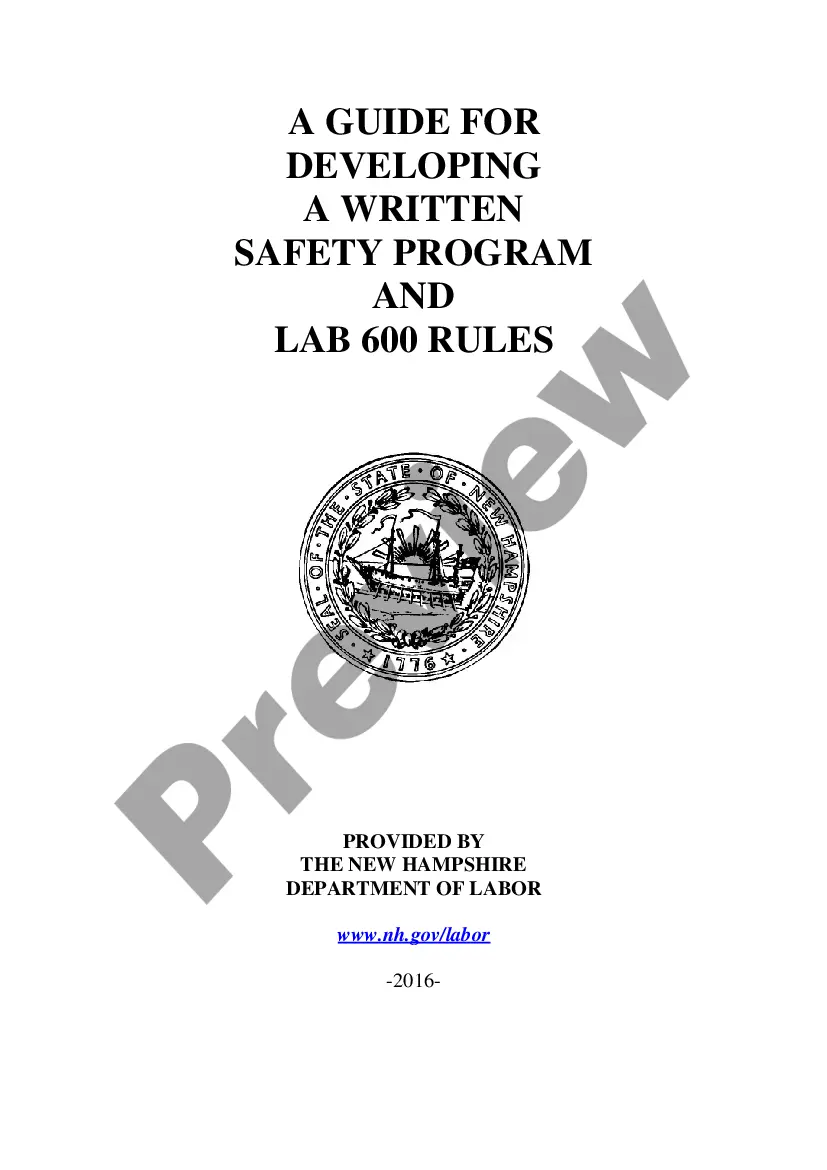
New Hampshire Self Inspection Checklist
About this form
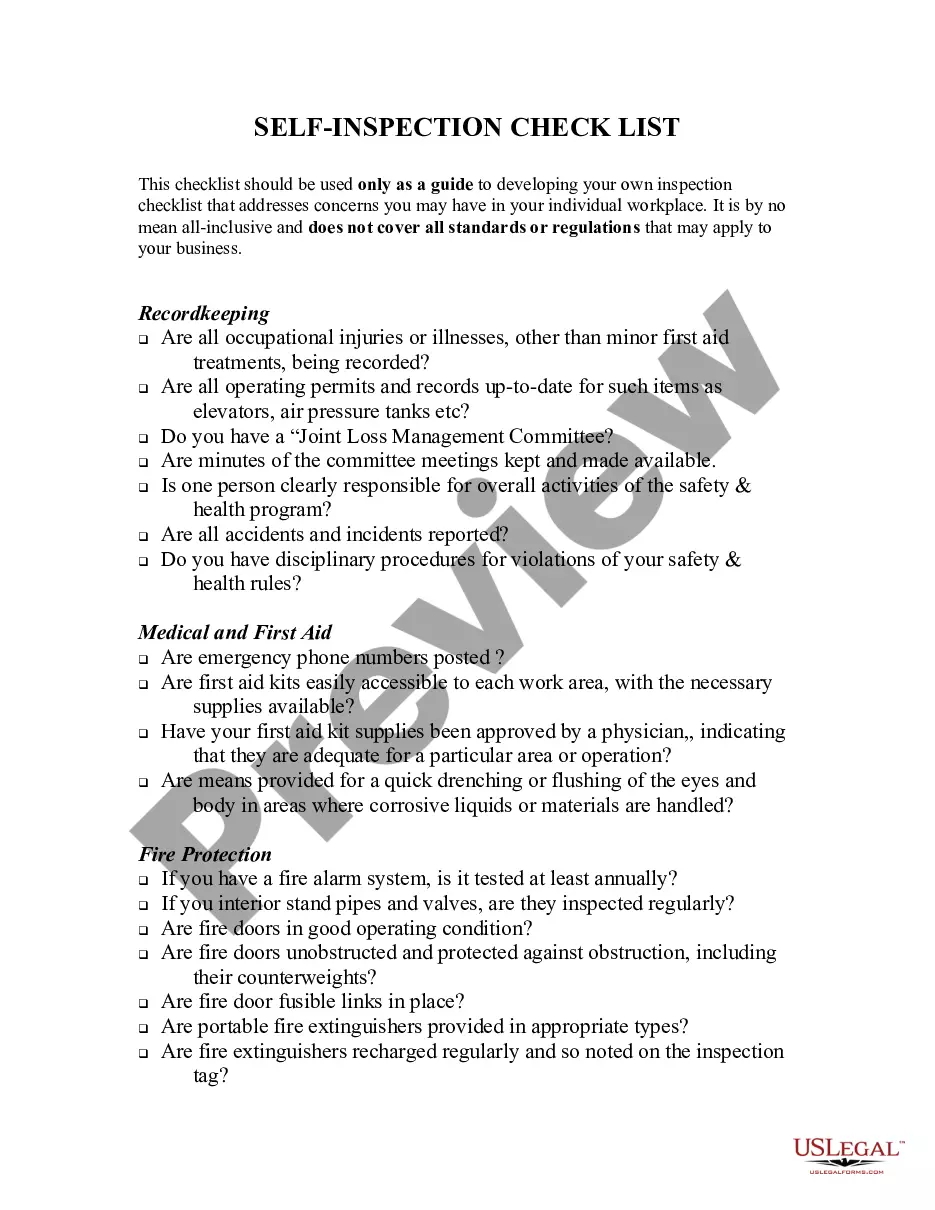
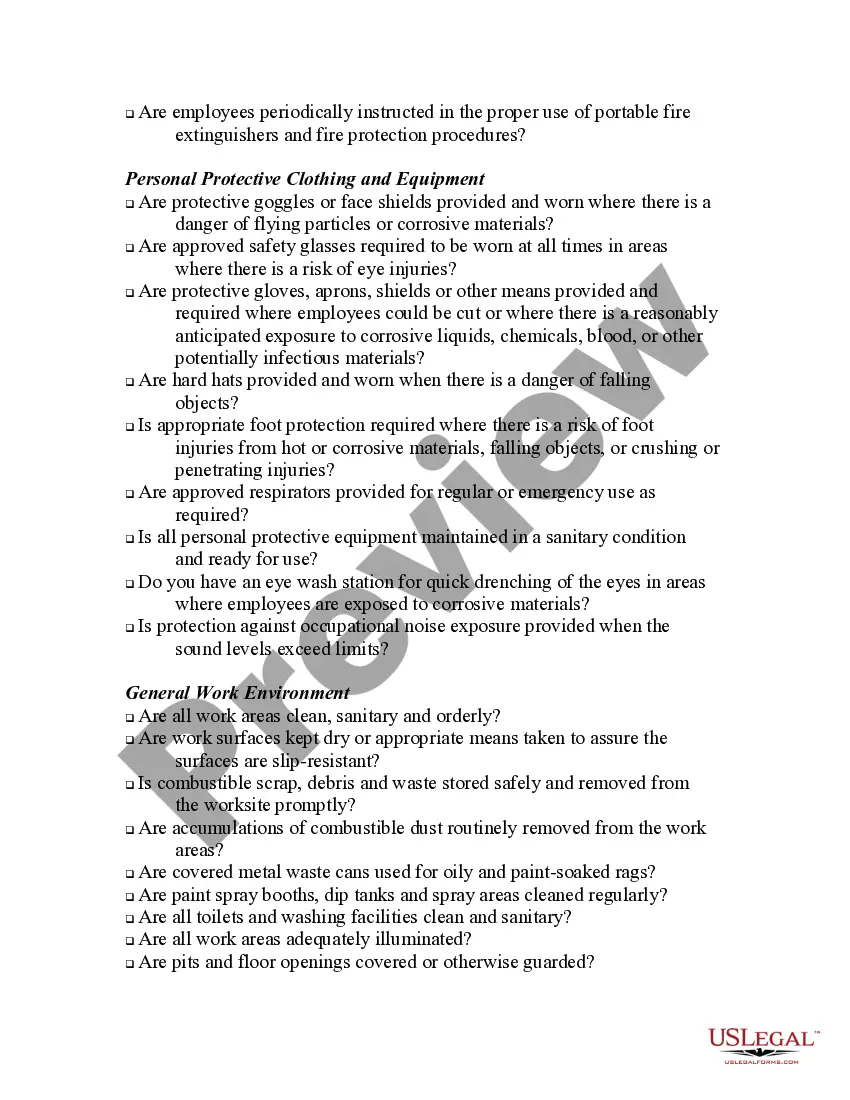
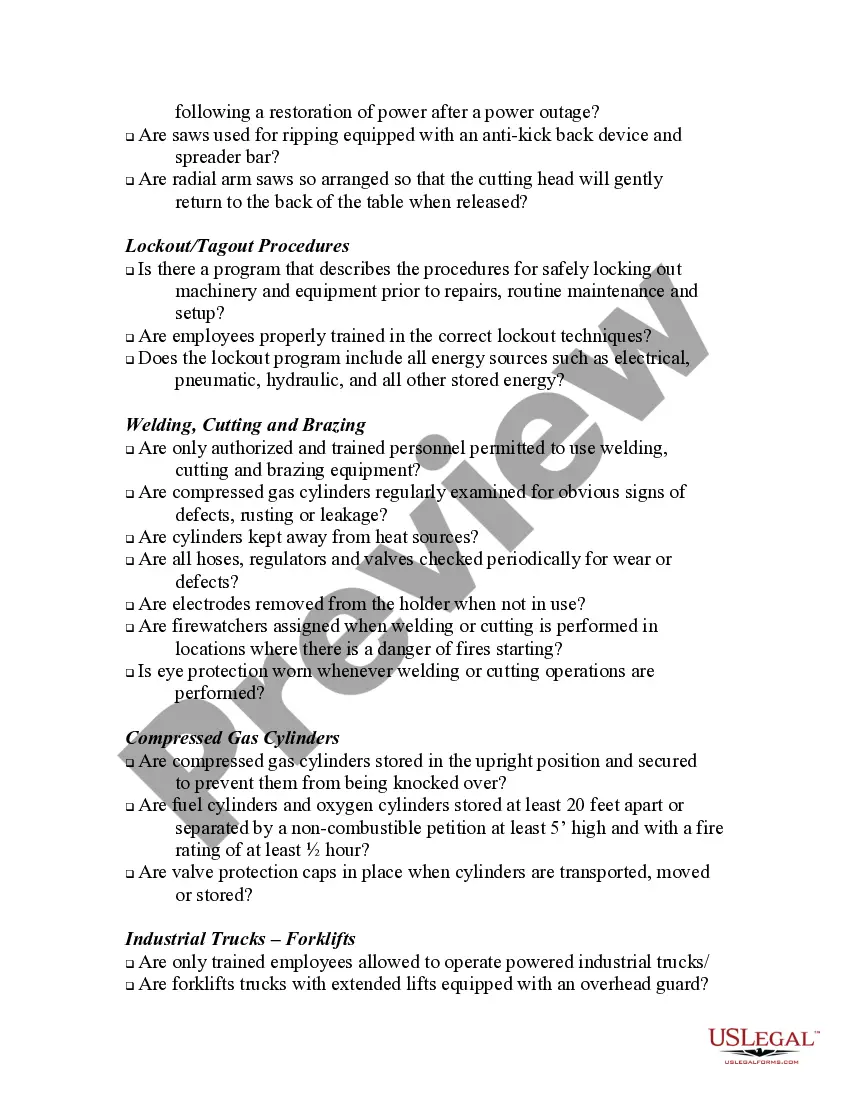
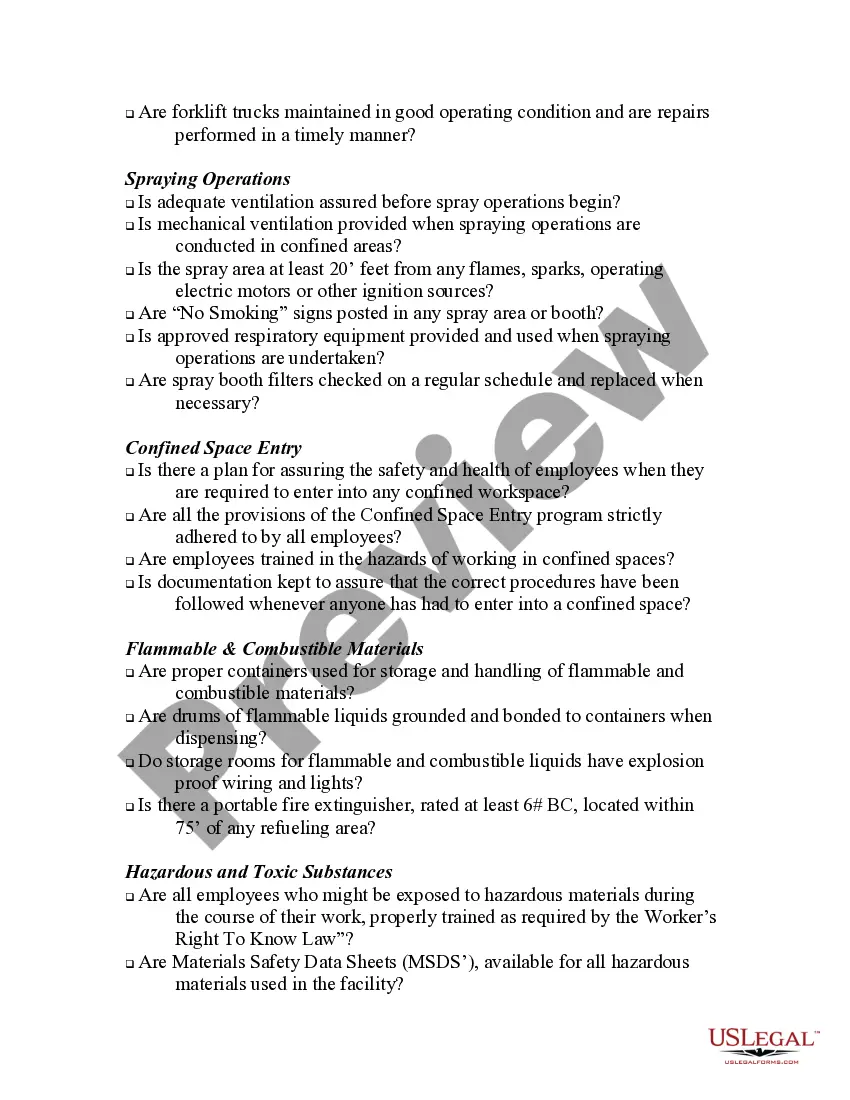
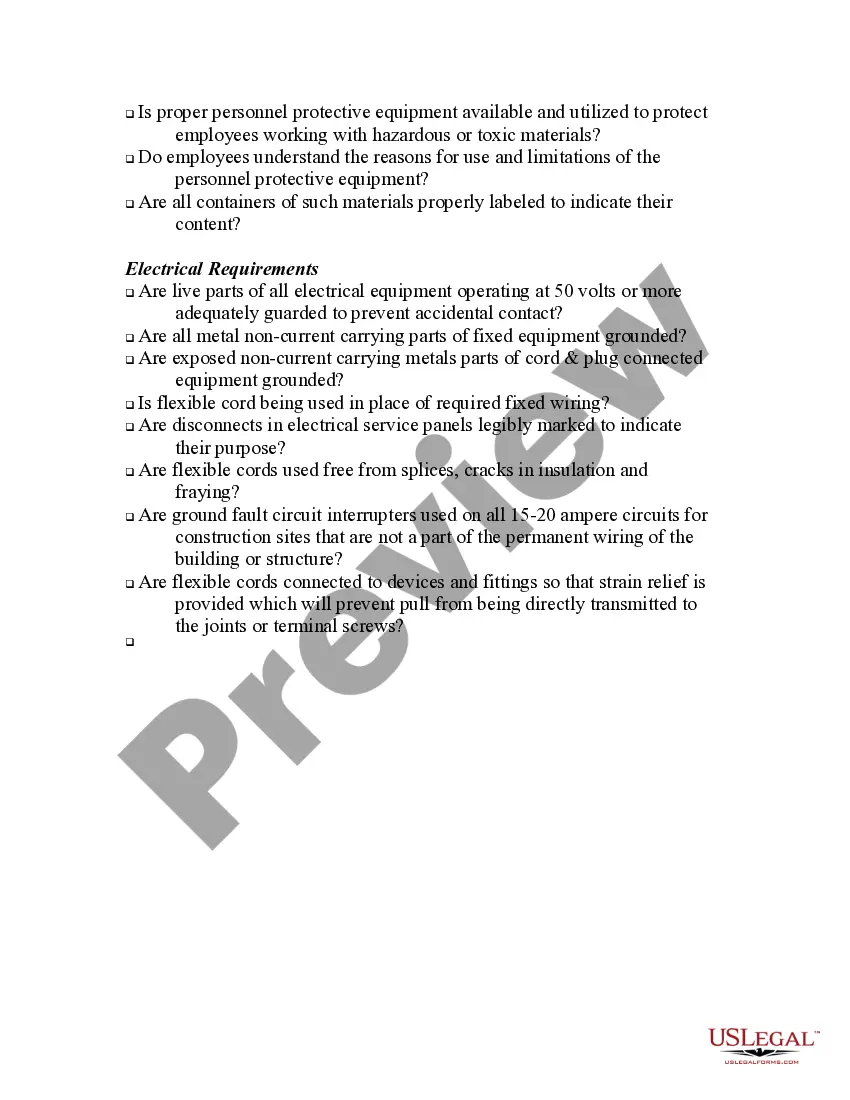
The New Hampshire Self Inspection Checklist is a tool designed for contractors to evaluate safety concerns and compliance with applicable local, state, and federal standards on a project. Unlike other safety checklists, this form specifically assists in organizing an inspection process tailored to your workplace's individual needs, ensuring you focus on relevant issues while assessing safety and compliance.
Key components of this form
- A section for identifying specific safety concerns related to the project.
- Fields for noting compliance with local, state, and federal standards.
- Guidelines for documenting findings and developing personalized inspection criteria.
- Checklists allowing for a systematic review of safety measures in place.
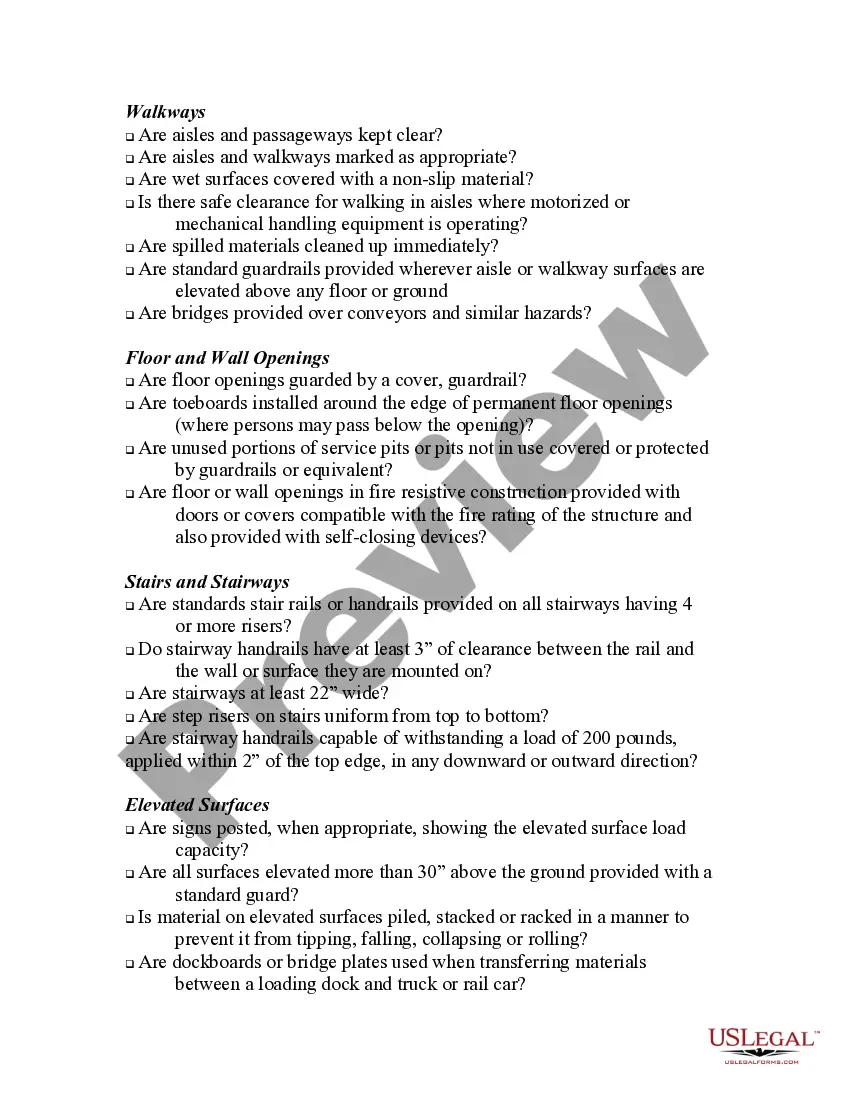
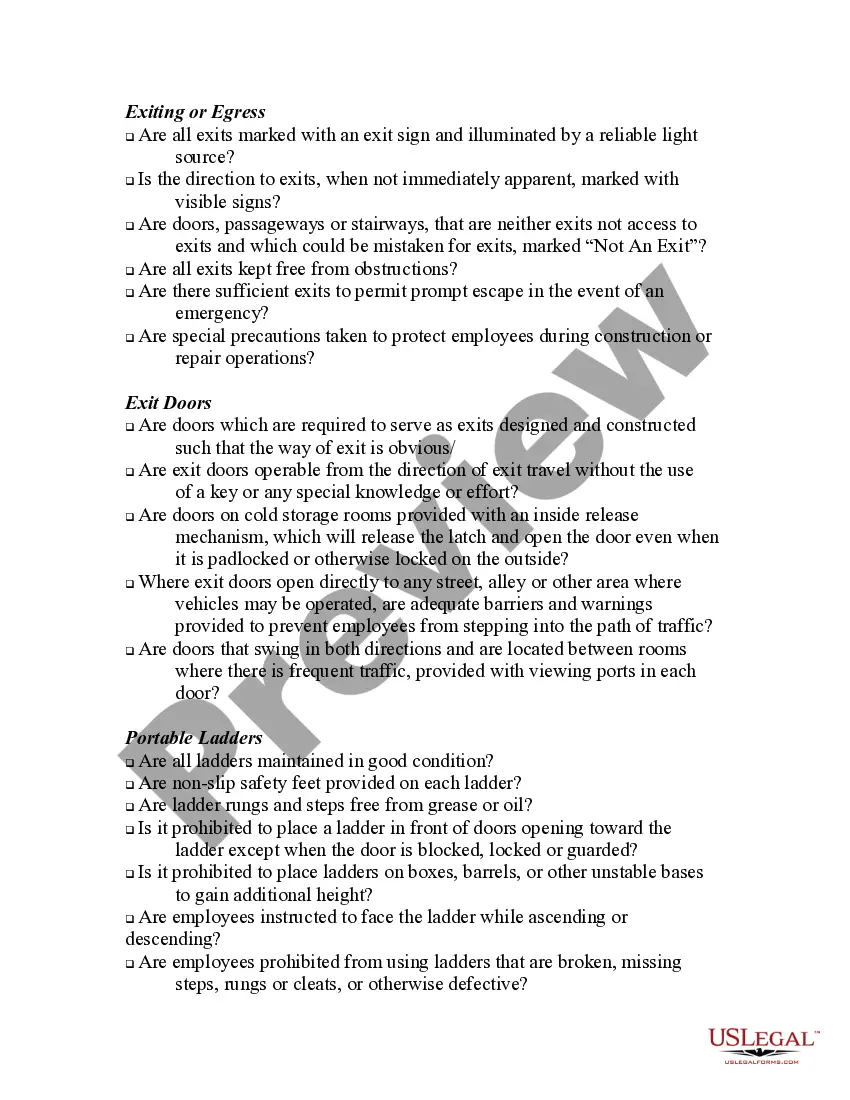
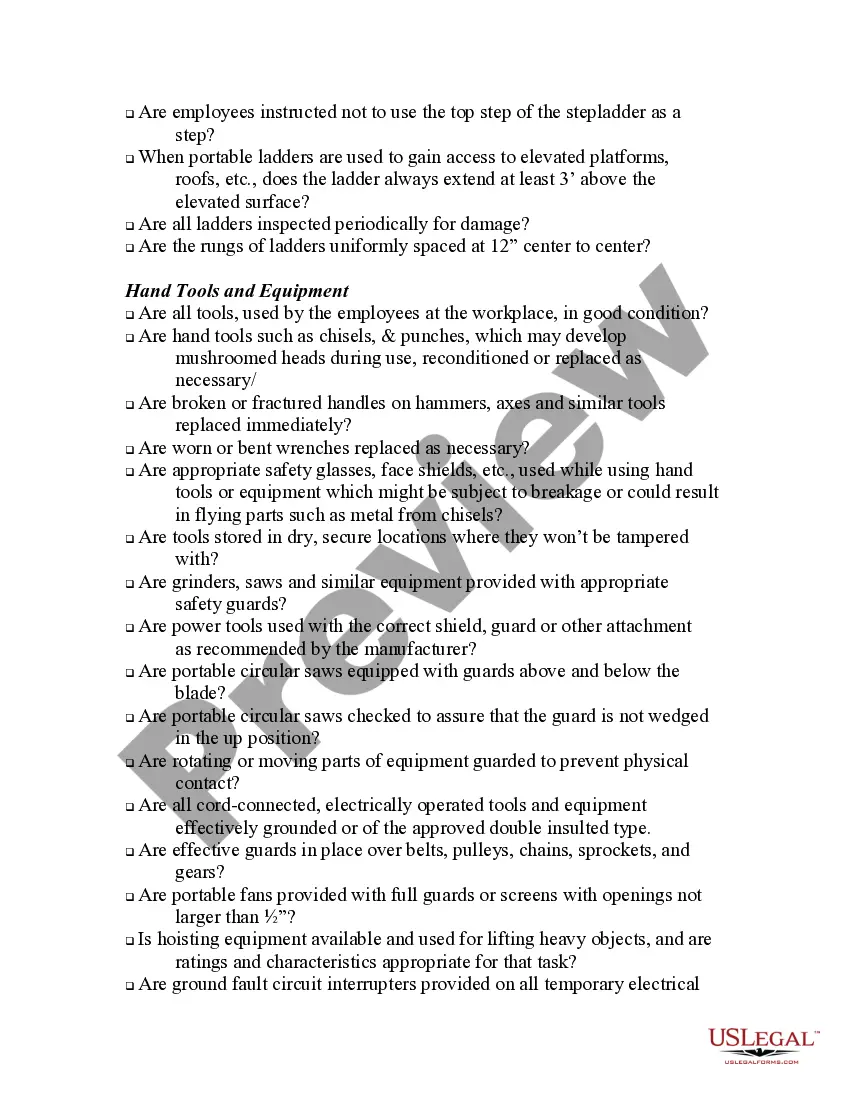
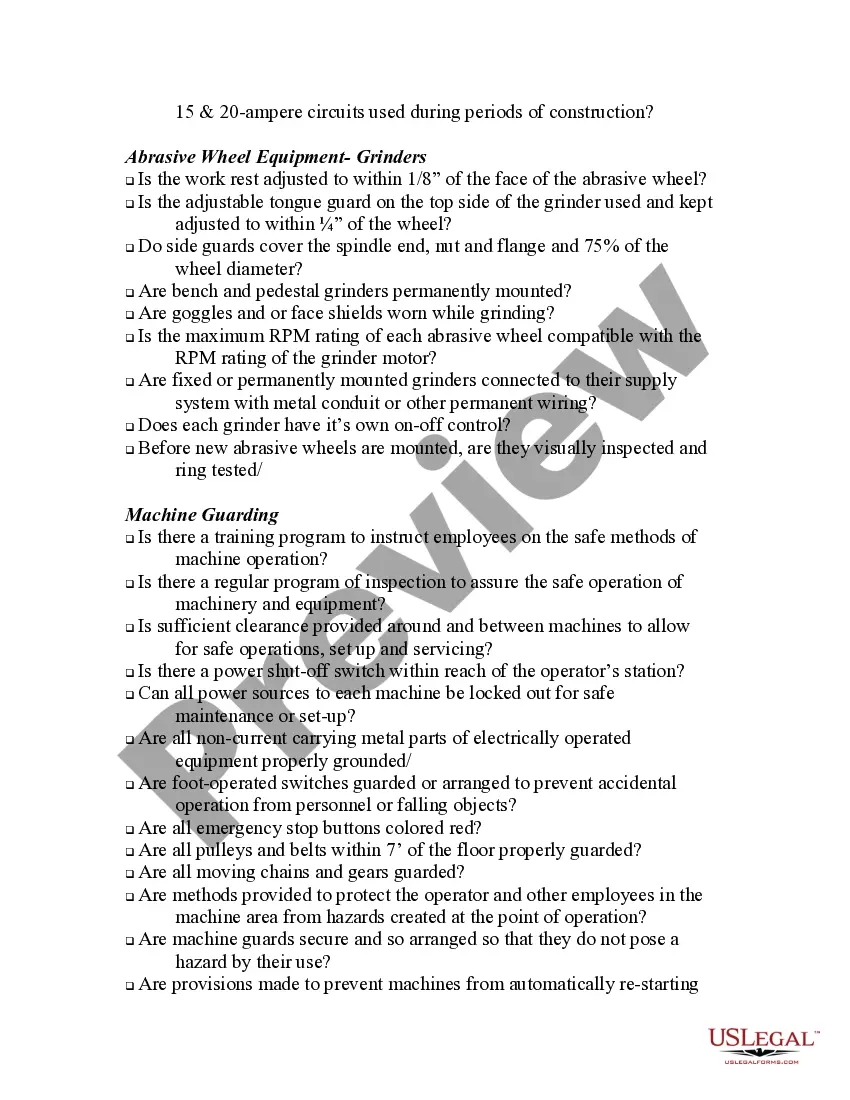
When to use this form
This form should be used when a contractor needs to conduct a safety inspection on a project site. It is applicable at various stages of a project, especially during initial assessments, routine checks, or before final evaluations to ensure that all safety measures and compliance standards are being met.
Who can use this document
This form is suitable for:
- Contractors overseeing construction projects in New Hampshire.
- Sole proprietors who need to maintain safety standards on job sites.
- Project managers responsible for ensuring compliance with safety regulations.
- Any individual or business involved in construction who requires a systematic safety inspection process.
How to complete this form
- Identify the specific project and site for inspection.
- Review each category in the checklist, marking any safety concerns.
- Document compliance status with relevant local, state, and federal standards.
- Record any additional notes or observations in the designated areas.
- Use the findings to develop a comprehensive safety plan for the project.
Is notarization required?
This form does not typically require notarization unless specified by local law. Users are encouraged to check for specific requirements that may apply to their projects based on jurisdictional rules.
Get your form ready online
Our built-in tools help you complete, sign, share, and store your documents in one place.
Make edits, fill in missing information, and update formatting in US Legal Forms—just like you would in MS Word.
Download a copy, print it, send it by email, or mail it via USPS—whatever works best for your next step.
Sign and collect signatures with our SignNow integration. Send to multiple recipients, set reminders, and more. Go Premium to unlock E-Sign.
If this form requires notarization, complete it online through a secure video call—no need to meet a notary in person or wait for an appointment.
We protect your documents and personal data by following strict security and privacy standards.

Make edits, fill in missing information, and update formatting in US Legal Forms—just like you would in MS Word.

Download a copy, print it, send it by email, or mail it via USPS—whatever works best for your next step.

Sign and collect signatures with our SignNow integration. Send to multiple recipients, set reminders, and more. Go Premium to unlock E-Sign.

If this form requires notarization, complete it online through a secure video call—no need to meet a notary in person or wait for an appointment.

We protect your documents and personal data by following strict security and privacy standards.
Common mistakes to avoid
- Failing to customize the checklist for specific projects or workplaces.
- Overlooking local regulations that may impact the inspection process.
- Not recording findings accurately or thoroughly.
- Ignoring follow-up actions needed based on the checklist results.
Why complete this form online
- Immediate access to the form allows for quick inspections instead of delays.
- Customizable checklist lets you focus on relevant safety concerns for your workplace.
- Downloadable format makes it easy to store and reference during inspections.
- Secure and reliable documentation of inspections helps maintain compliance with regulations.
Legal use & context
- This checklist aids in demonstrating compliance with safety standards.
- Properly completed inspections can help protect businesses from liability in case of incidents.
- Local authorities may review this checklist during inspections of project sites.
Summary of main points
- The New Hampshire Self Inspection Checklist is essential for maintaining safety and regulatory compliance on construction projects.
- Contractors and business owners can adapt the checklist to their specific needs.
- Regular self-assessments contribute to improved safety standards and reduced liability.
Looking for another form?
Form popularity
FAQ
Long interruptions of electrical or water service. Significant lack of refrigeration. Backup of sewage into the operation or its water supply. Emergencies such as a building fire or flood. Significant infestation of insects or rodents.
Self-inspection is basically a method of objective overall review of one's own operation on aspects that may have on quality effect on quality assurance. In general, self-inspection aims at identifying defects whether of critical, major or minor nature.
Your self-inspection priorities for kitchen employees should include: food time and temperatures, personal hygiene (including hand washing) and cross contamination. Temperature guidelines include checking the temperature of products when they arrive, when they are stored and when they are served.
Guarantee Your Restaurant Is Completely Clean. Ensure All Employees Are Following Excellent Food Safety Guidelines. Detect (and Correct) Any Potential Health Code Violations Before They Become a Foodborne Illness Outbreak. Impress the Health Inspector.
Self inspection is when you are rechecking or getting checked you own work with you own intention, but internal audit is a work performed by internal audit department to check whether company/organization is doing well in order to acheive its objective.
A self-inspection program can be beneficial to any organization. It should involve everyone from top management to the front-line worker. The main benefit, however, is that it allows for the detection of unsafe conditions in time to provide countermeasures before someone is injured.
Self-inspection is basically a method of objective overall review of one's own operation on aspects that may have on quality effect on quality assurance. In general, self-inspection aims at identifying defects whether of critical, major or minor nature.
When you conduct routine self-inspections, you motivate your staff to clean their assigned areas, follow proper food safety guidelines, and you can also detect (and correct) any potential health code violations.
Preventing miscommunication and solving problems. Your requirements/standards are understood. Certainty in terms of the use of the right materials / designs / dimensions / colours, etc. Implement improvements for the mass production. Prevent additional costs and delays.