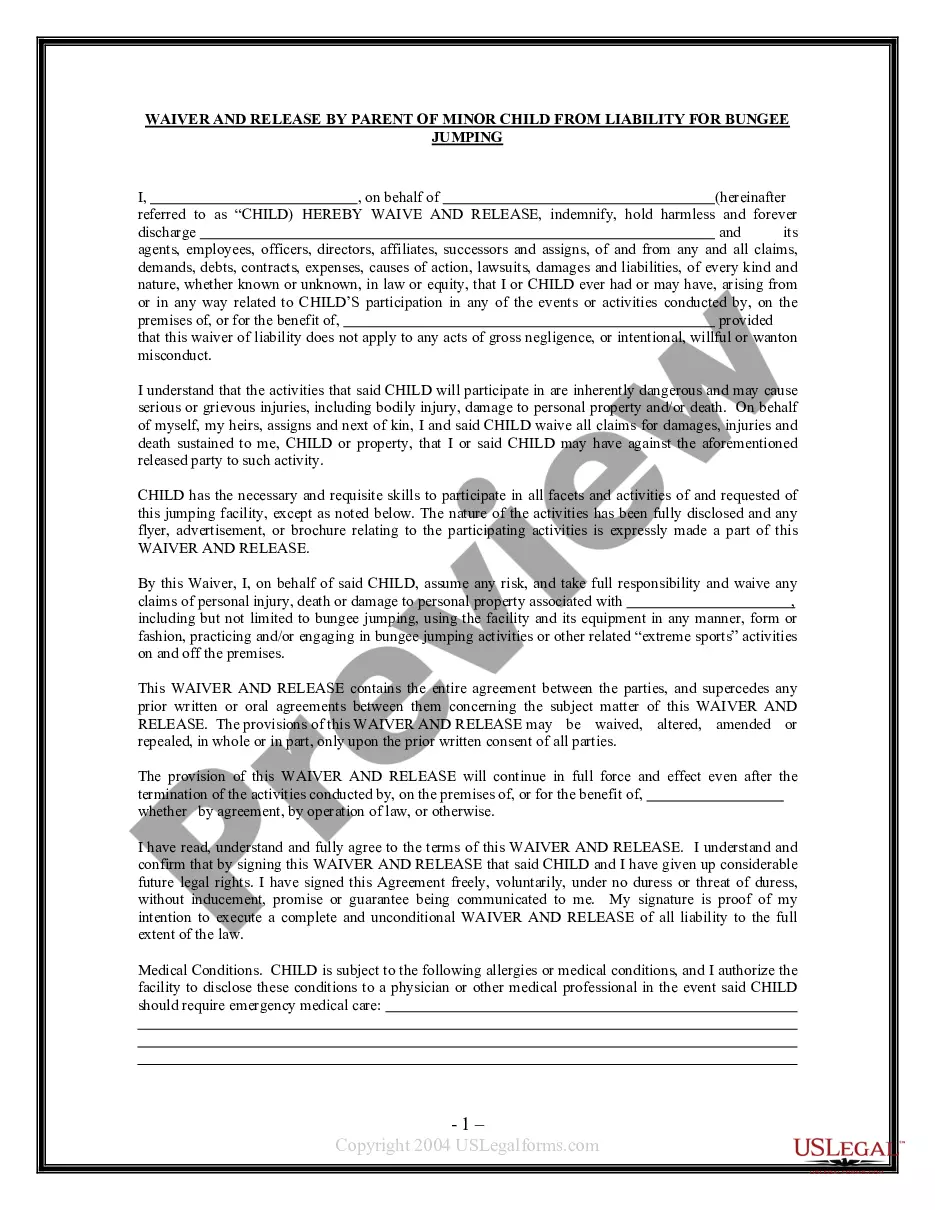
This form allows a parent or guardian to release a parachuting facility from liability for injuries which may be incurred by a minor child while on the premises, taking part in activities, etc.
Nebraska Waiver and Release From Liability For Minor Child for Parachuting
Category:
State:
Multi-State
Control #:
US-WAV-28M
Format:
Word;
Rich Text
Instant download
Description
Free preview
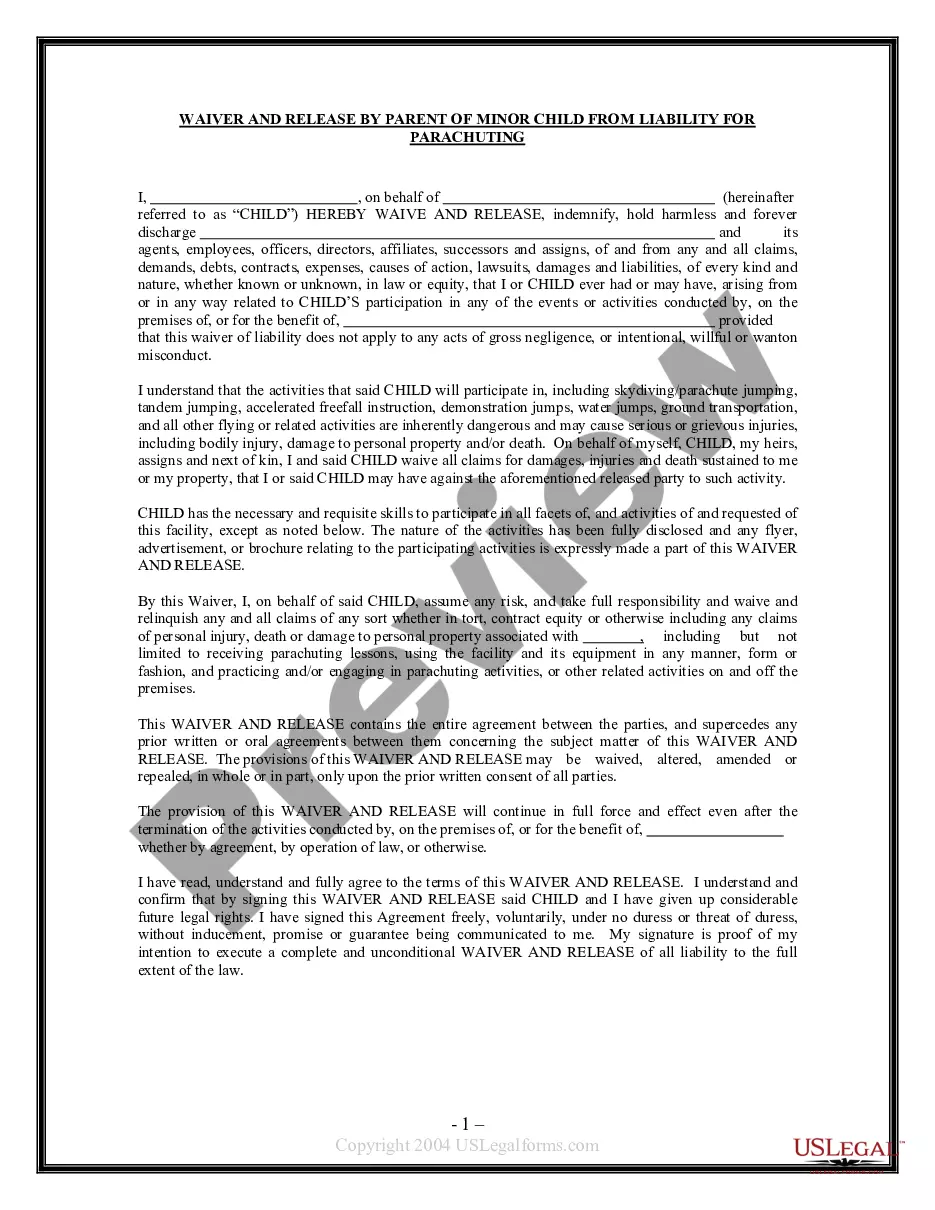
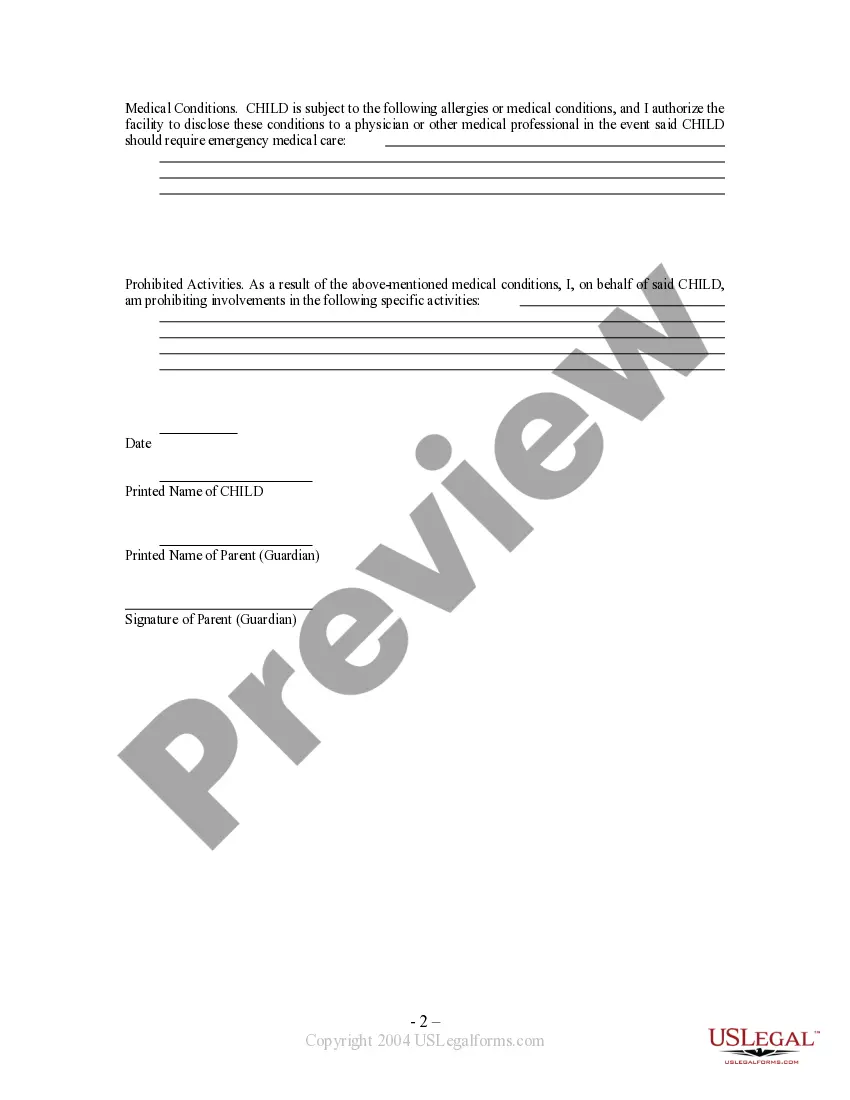
How to fill out Waiver And Release From Liability For Minor Child For Parachuting?
US Legal Forms - one of the largest collections of legal templates in the United States - provides a variety of legal document formats that you can download or print. By using the site, you can access thousands of templates for business and personal purposes, organized by categories, states, or keywords. You can find the most recent versions of templates such as the Nebraska Waiver and Release From Liability For Minor Child for Parachuting in just minutes.
If you currently have a monthly subscription, Log In and retrieve the Nebraska Waiver and Release From Liability For Minor Child for Parachuting from your US Legal Forms collection. The Download button will appear on every form you view. You have access to all previously downloaded templates from the My documents section of your account.
To use US Legal Forms for the first time, here are simple guidelines to get started: Ensure you have selected the correct form for your city/region. Click on the Review button to check the form's details. Review the form information to confirm you have selected the right document. If the form does not meet your needs, use the Search field at the top of the screen to find one that does. If you are satisfied with the form, confirm your choice by clicking on the Acquire now button. Then, choose the pricing plan you prefer and provide your information to sign up for an account. Process the payment. Use your credit card or PayPal account to complete the transaction. Select the format and download the form to your device. Make adjustments. Complete, modify, and print and sign the downloaded Nebraska Waiver and Release From Liability For Minor Child for Parachuting. Each template you added to your account has no expiration date and is yours forever. Therefore, if you wish to download or print another copy, simply navigate to the My documents section and click on the form you need.
- Access the Nebraska Waiver and Release From Liability For Minor Child for Parachuting with US Legal Forms, the most comprehensive collection of legal document templates.
- Utilize thousands of professional and state-specific templates that fulfill your business or personal requirements and specifications.
Form popularity
FAQ
In Nebraska, the minimum age for skydiving is typically 18 years old unless accompanied by a parent or guardian. For minors, a Nebraska Waiver and Release From Liability For Minor Child for Parachuting must be signed to allow participation. This waiver helps ensure that both you and your guardian are aware of the risks involved. Always check with your skydiving center for the most current regulations and guidelines.
Yes, you can skydive at 16 in certain states if you have the appropriate consent from a parent or guardian. This involves completing a Nebraska Waiver and Release From Liability For Minor Child for Parachuting to ensure legal compliance. It's essential to contact your skydiving provider to understand their specific policies regarding age and the necessary paperwork. Each facility may have its unique requirements.
While the general rule is that you must be 18 years or older to skydive in most states, some locations may allow younger participants with specific conditions. In such cases, a Nebraska Waiver and Release From Liability For Minor Child for Parachuting is required to secure parental consent. However, always verify with your local skydiving center, as regulations can vary significantly across the country.
A liability waiver serves as a legal document that protects businesses from claims related to injuries or accidents. When you sign a Nebraska Waiver and Release From Liability For Minor Child for Parachuting, you acknowledge the inherent risks involved in skydiving. This helps ensure that you understand the activity's dangers while providing a safeguard for the operators. Ultimately, it promotes a safer environment for all participants.
In Nebraska, you must be at least 18 years old to skydive without parental consent. For minors, a Nebraska Waiver and Release From Liability For Minor Child for Parachuting is necessary. This waiver allows parents or guardians to authorize the jump, ensuring safety and legal protection. Always check with your chosen skydiving center for their specific age requirements and policies.
A waiver is an exculpatory contract. That means it's used to excuse a party from responsibility when the other contracted party is injured by either known or unknown risks in a particular activity. This includes inherent risks and ordinary negligence.
Ambiguous language or missing information can invalidate a waiver. The waiver contains errors that make it invalid. The language of the waiver must obey relevant state laws. An improperly worded or drafted waiver, as well as one that violates the law or public policy, may not hold up in court.
A release of liability, also known as a liability waiver or a hold harmless agreement, is a contract in which one party agrees not to hold another party liable for damages or injury. These contracts are common in fields that involve some risk to property, finances, or health.
Liability waivers are enforceable in California solely to the extent they shift to the customer the risk of ordinary negligence. Under California law, a liability waiver cannot excuse an injury caused by a defendant's gross negligence, recklessness or intentionally wrongful act.
This may seem like a silly distinction to make, but lack of knowledge or willingness is actually one of the biggest reasons lawyers can completely toss out a waiver in a personal injury case.