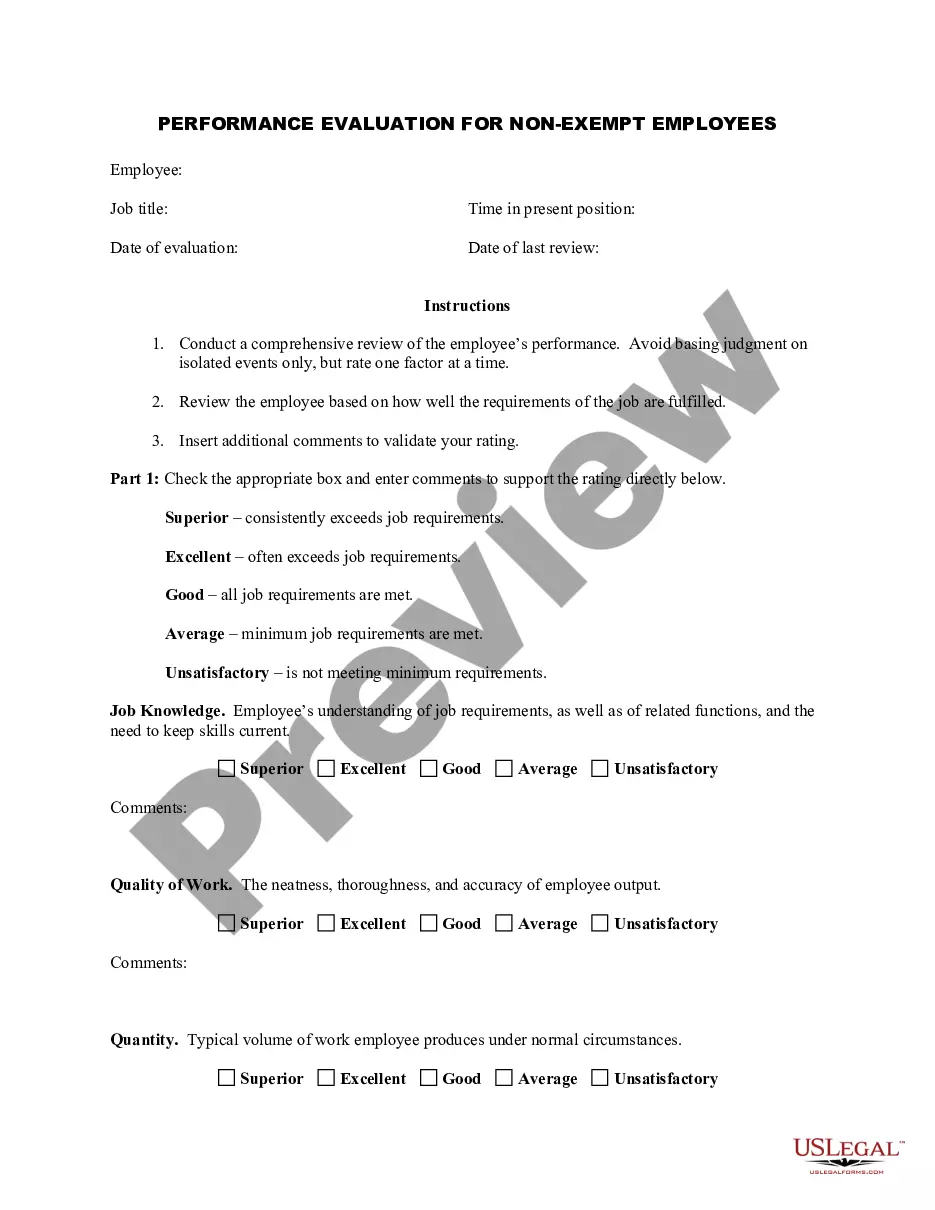
Nebraska Employee Evaluation Form for Psychologist
Description
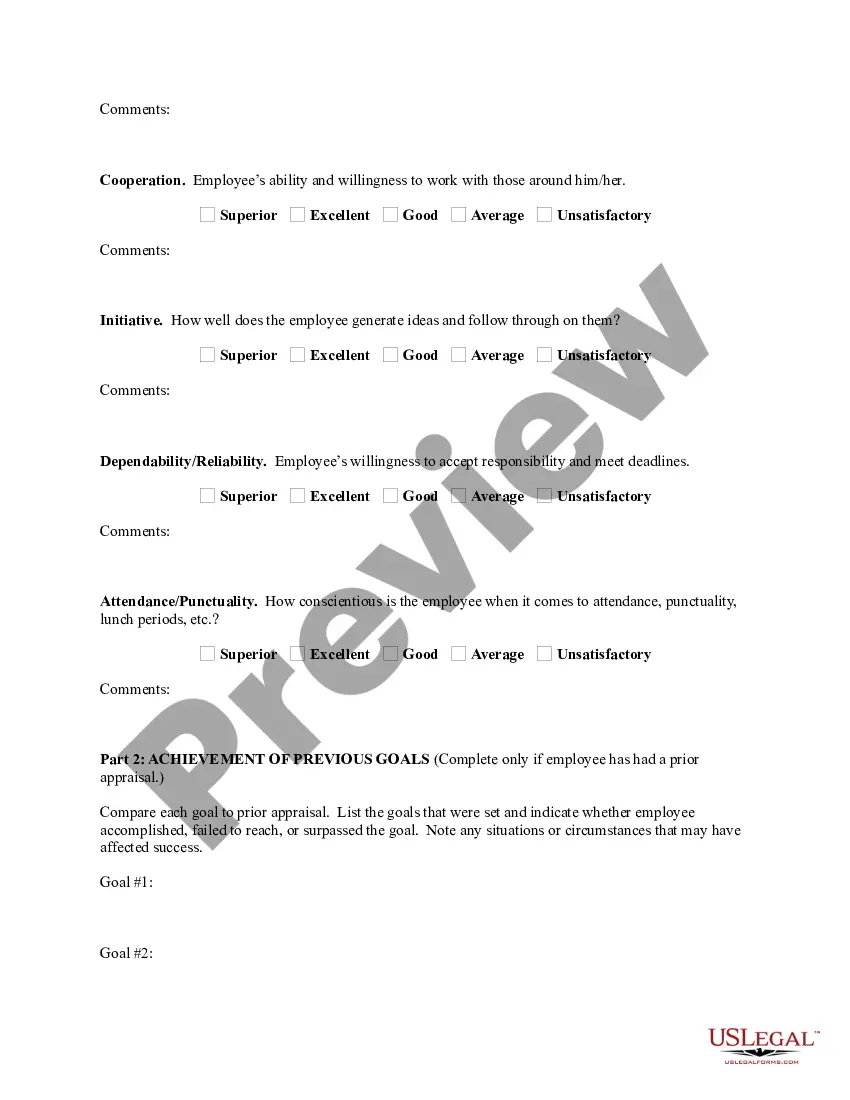
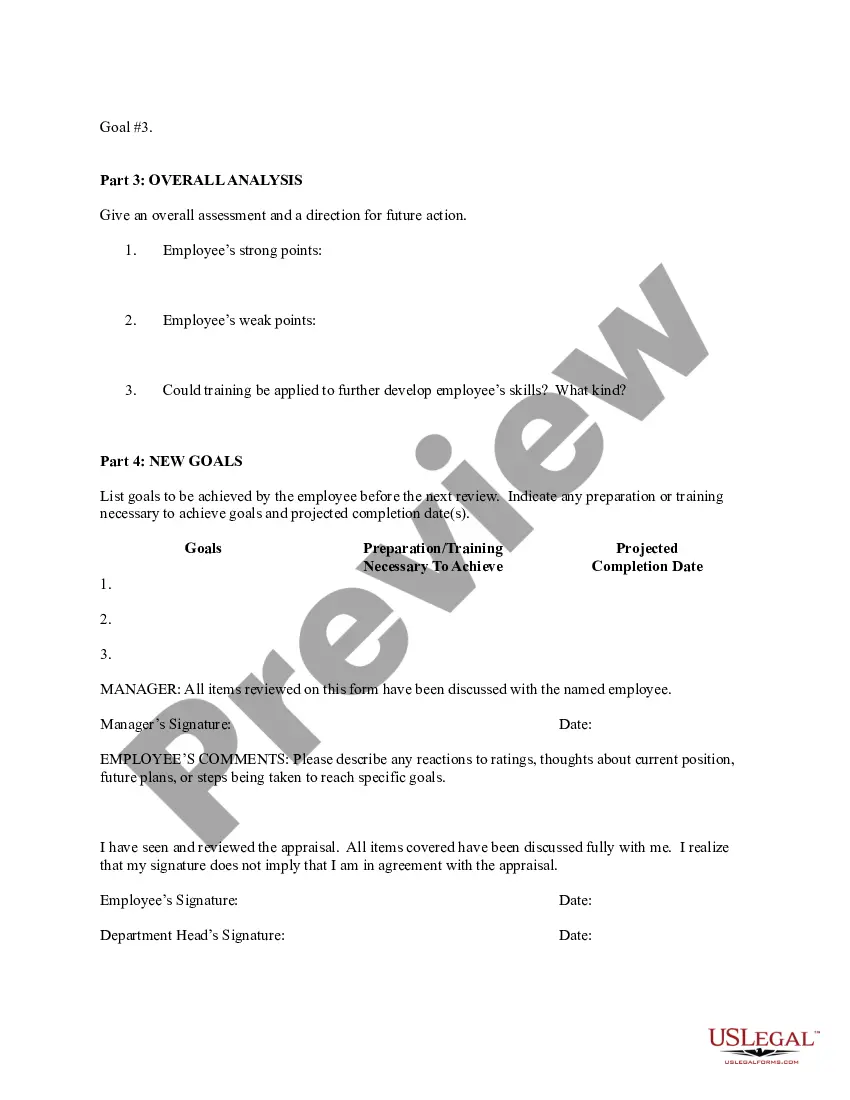
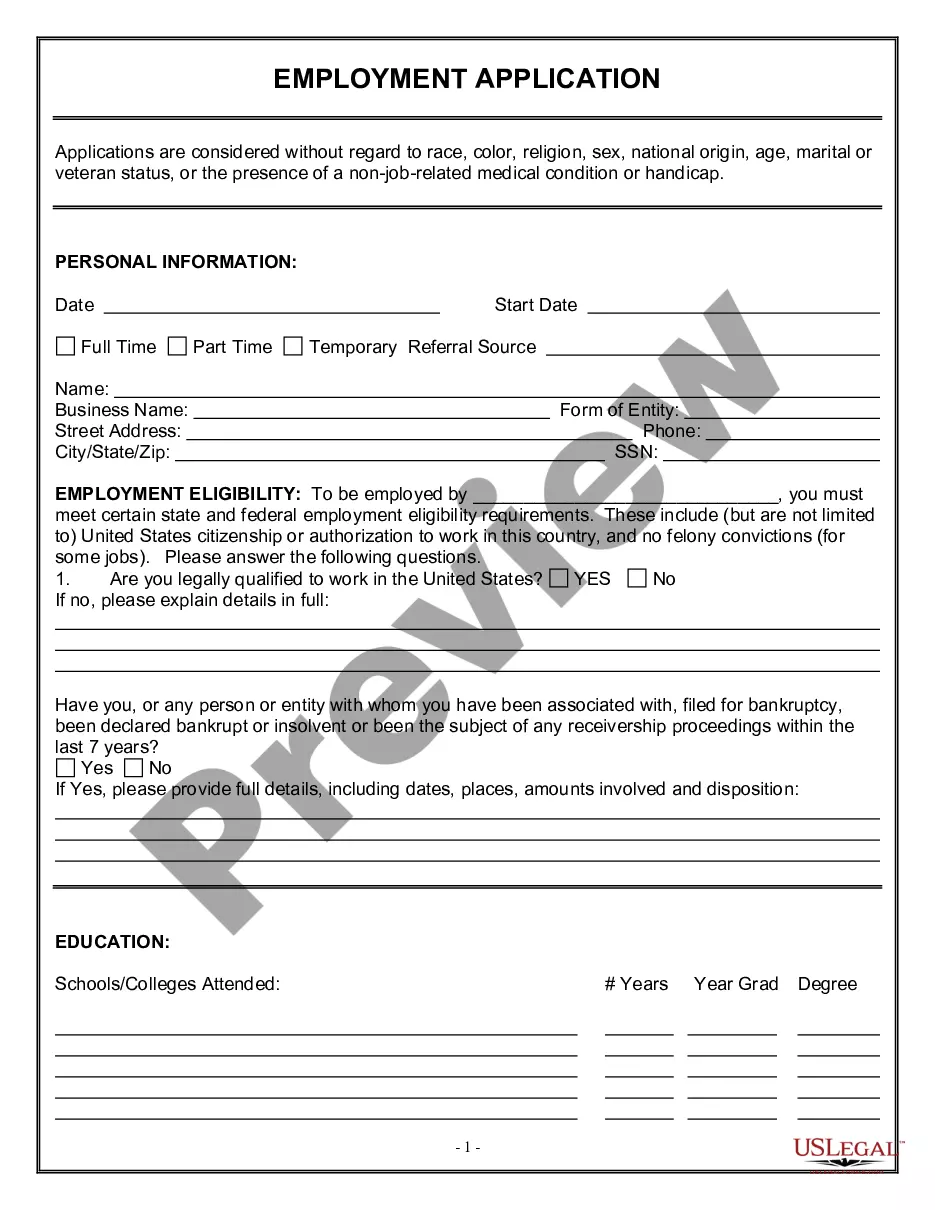
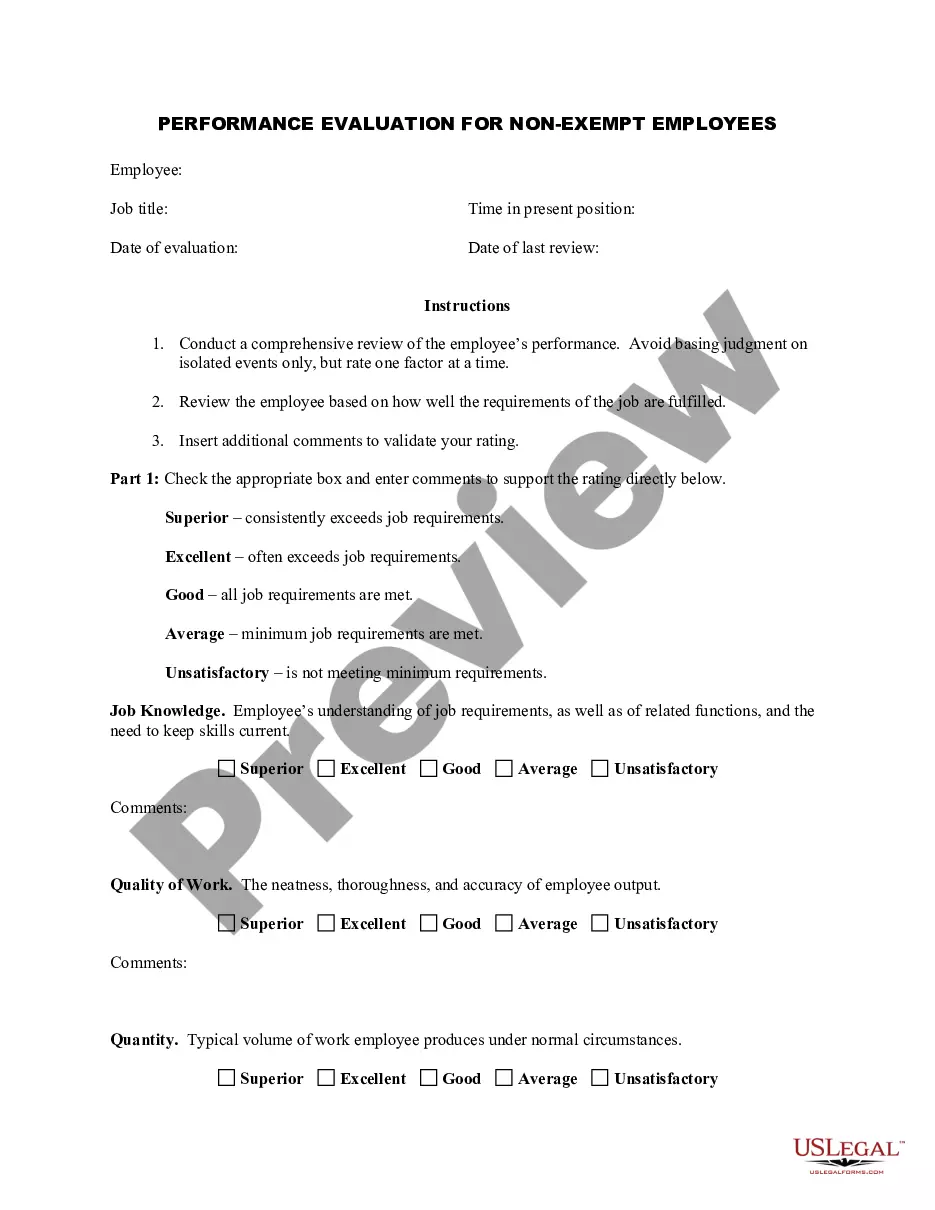
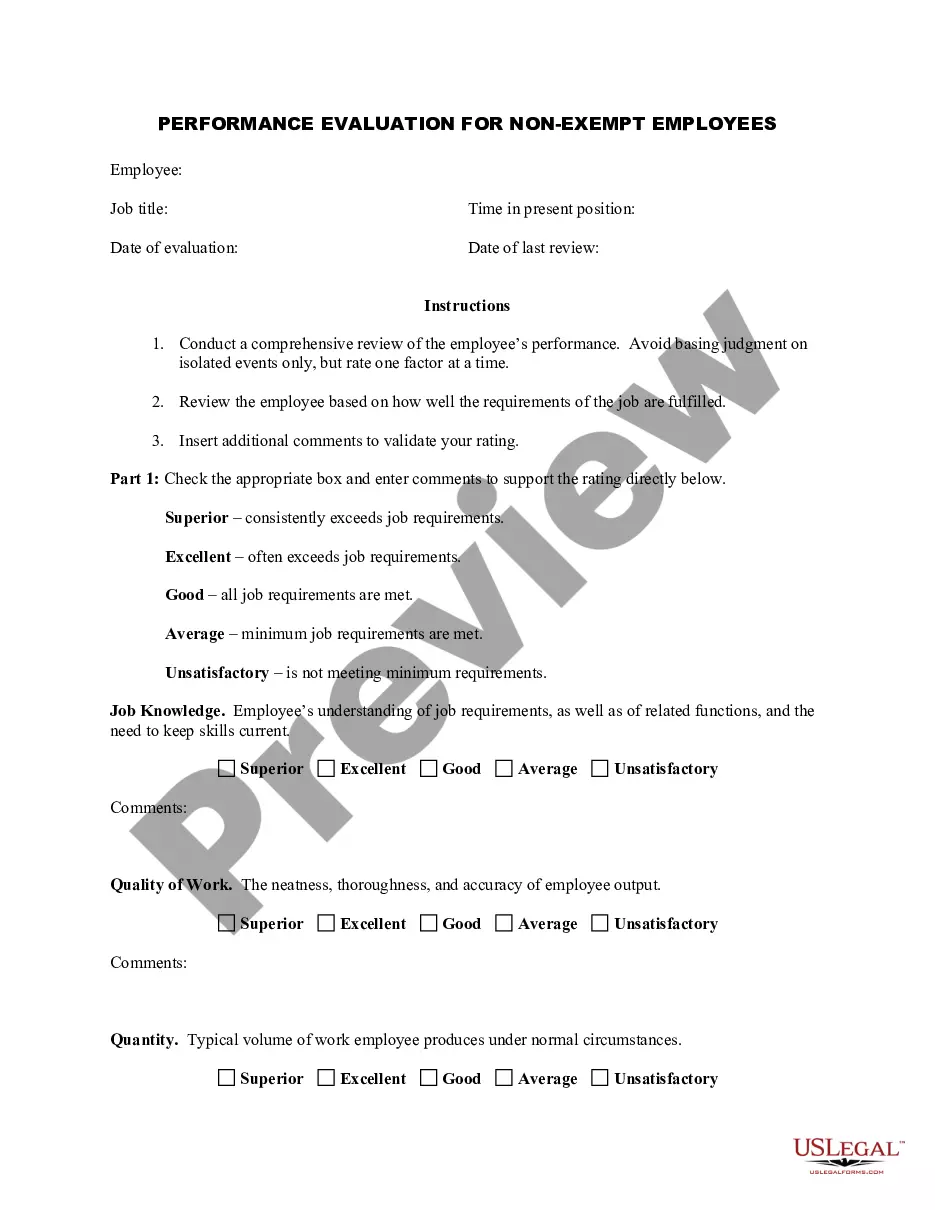
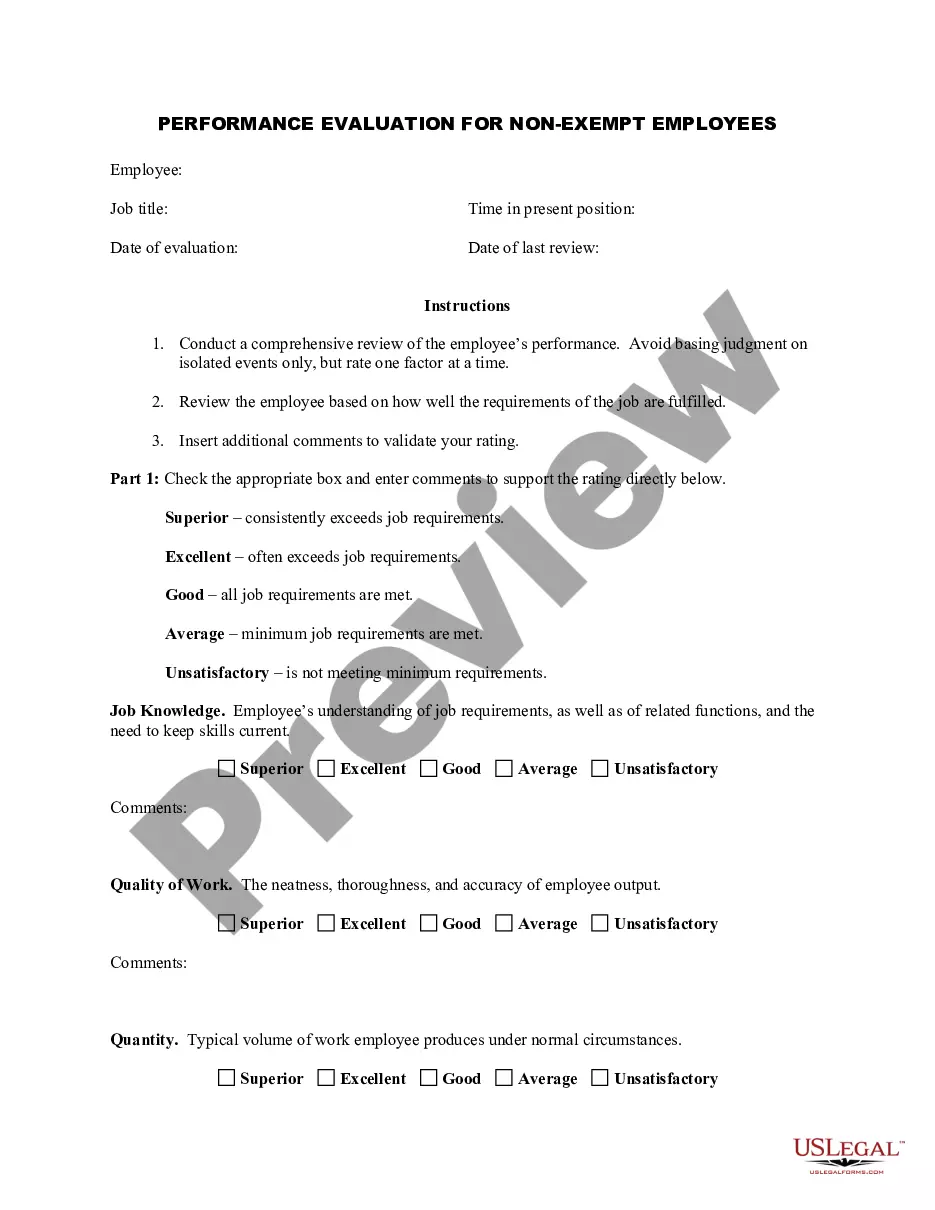

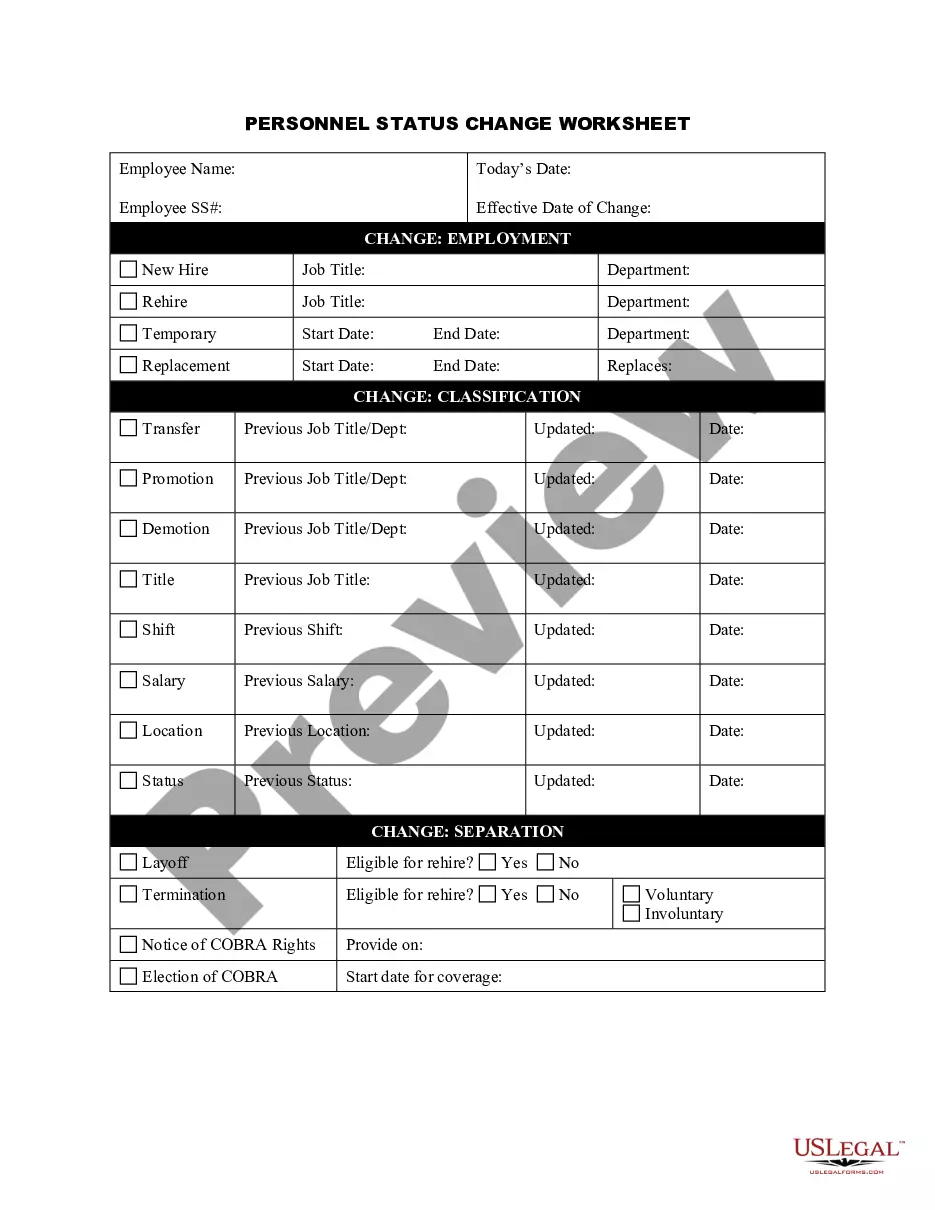
How to fill out Employee Evaluation Form For Psychologist?
US Legal Forms - one of the largest collections of legal documents in the United States - offers a variety of legal document templates that you can download or print.
By using the website, you can access thousands of documents for business and personal use, organized by categories, states, or keywords. You can find the latest forms such as the Nebraska Employee Evaluation Form for Psychologist in just a few minutes.
If you possess a monthly subscription, Log In to download the Nebraska Employee Evaluation Form for Psychologist from the US Legal Forms library. The Download button will appear on each form you open. You can access all previously saved forms in the My documents tab of your profile.
Complete the transaction. Use your credit card or PayPal account to finish the payment.
Choose the format and download the form onto your device. Edit. Fill out, modify, print, and sign the saved Nebraska Employee Evaluation Form for Psychologist. Each document added to your account has no expiration date and is yours permanently. So, if you wish to download or print another copy, simply go to the My documents section and click on the form you need. Access the Nebraska Employee Evaluation Form for Psychologist with US Legal Forms, the most comprehensive collection of legal document templates. Utilize thousands of professional and state-specific templates that fulfill your business or personal needs and requirements.
- If you're using US Legal Forms for the first time, here are simple steps to help you get started.
- Ensure you've selected the correct form for your city/state. Click the Preview button to review the form's content.
- Check the form description to verify that you’ve picked the right form.
- If the form does not meet your needs, utilize the Search bar at the top of the page to locate one that does.
- If you are satisfied with the form, confirm your choice by clicking the Get now button.
- Then, select the pricing plan you want and provide your information to register for an account.
Form popularity
FAQ
To become a psychological evaluator, you should first earn a relevant degree in psychology. After obtaining your degree, complete any necessary internships or supervised training. Finally, obtain the required licenses in your state, as these qualifications ensure you can effectively use the Nebraska Employee Evaluation Form for Psychologist.
Most psychological evaluations involve talking to the psychologist about yourself and symptoms such as anxiety and trouble sleeping in an interview, doing some questionnaires about yourself, and possibly some activities that look at how your brain is working. By the end, you should be given feedback.
3.1 For the purposes of these guidelines, a preemployment psychological evaluation is a specialized examination to determine whether a public safety applicant meets the minimum requirements for psychological suitability mandated by jurisdictional statutes and regulations, as well as any other criteria established by
A psychological assessment can include numerous components such as norm-referenced psychological tests, informal tests and surveys, interview information, school or medical records, medical evaluation and observational data. A psychologist determines what information to use based on the specific questions being asked.
A psychiatric evaluation is a diagnostic tool employed by a psychiatrist. It may be used to diagnose problems with memory, thought processes, and behaviors. Diagnoses can include depression, schizophrenia, anxiety, bipolar disorder, and addiction.
To get a real mental evaluation, you must speak with a professional mental health specialist or a psychiatrist. Your GP will help you diagnose certain other conditions such as alcohol dependence, thyroid disease, learning disabilities, and more.
During the interview, the psychologist will ask you a range of questions about your background, work history, current lifestyle, any symptoms or problems you may be experiencing and what your expectations are about the job. A properly conducted psychological interview should not feel like an interrogation.
You can prepare yourself for a mental health evaluation by thinking about how long your symptoms last, how often they occur and what triggers them. Written and verbal questions, a physical exam and basic lab tests may be used during a mental health evaluation.
There's No Pass or Fail Just as there's no cookie-cutter approach to psychological testing, there aren't right or wrong answers to any test questions. This means you can't pass or fail a test, which eliminates the need to study.
A psychological evaluation may consist of a series of formal or structured psychological or neuropsychological tests as well as clinical interviews designed to identify and describe emotional, behavioral, or learning problems. Psychological assessments may be written or given orally, or administered via a computer.