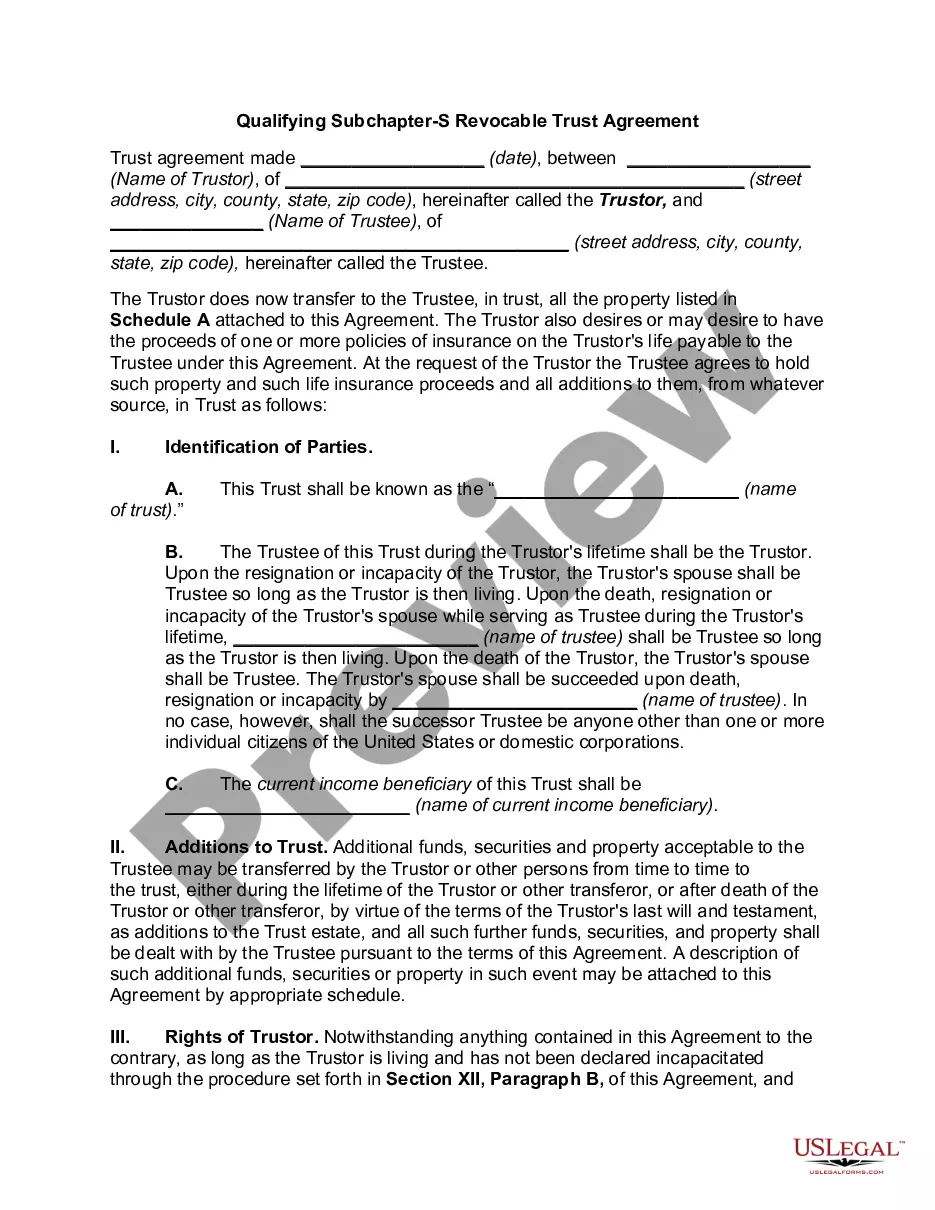
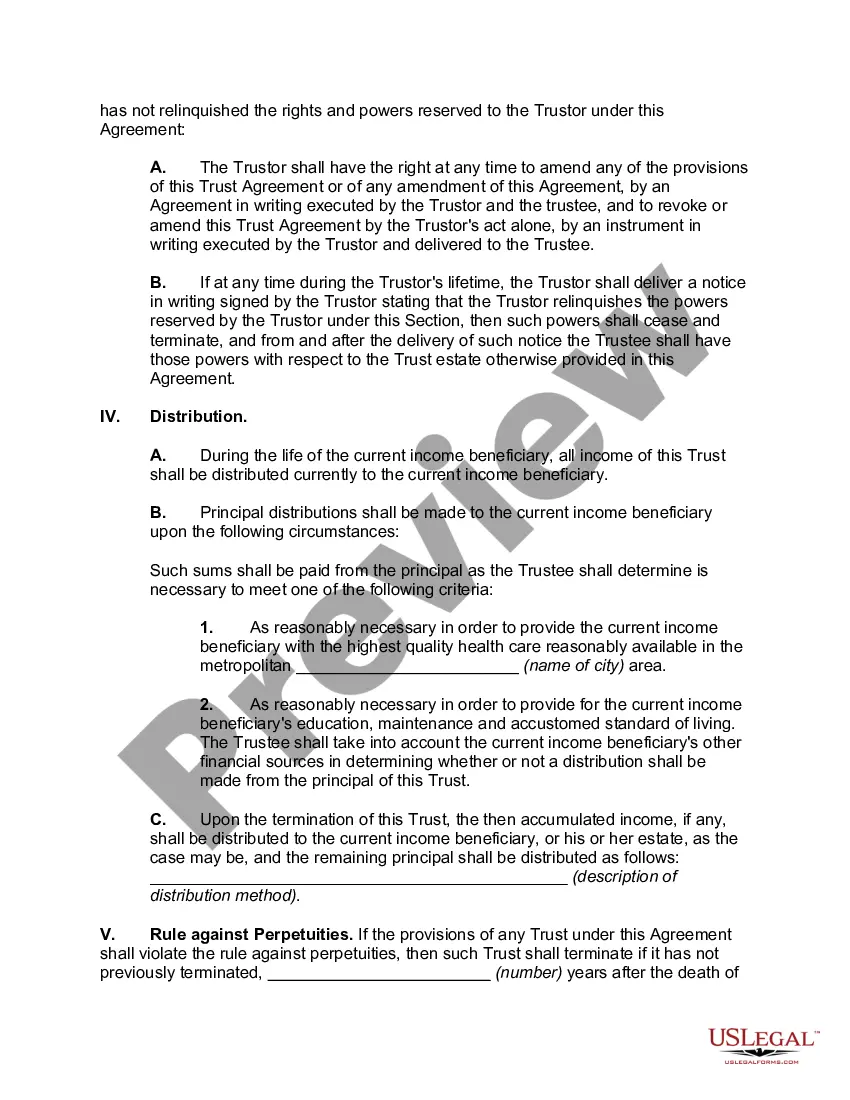
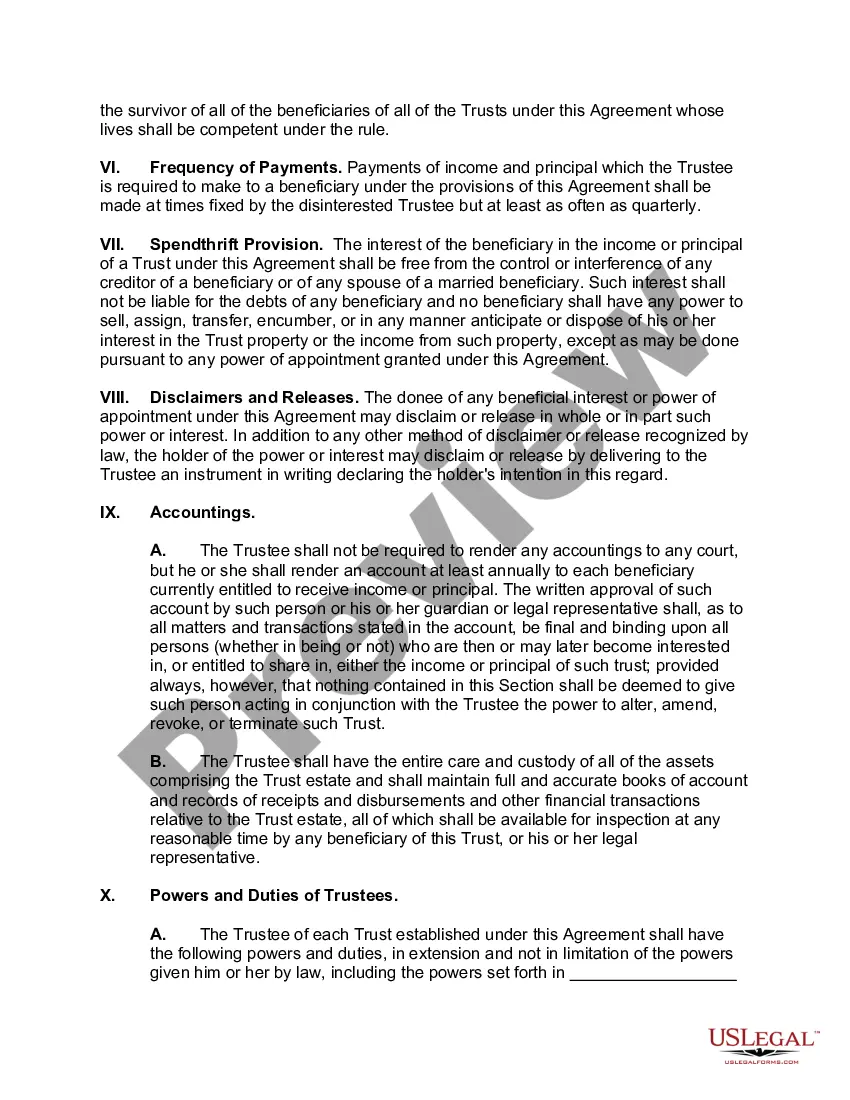
Nebraska Qualifying Subchapter-S Revocable Trust Agreement
Description

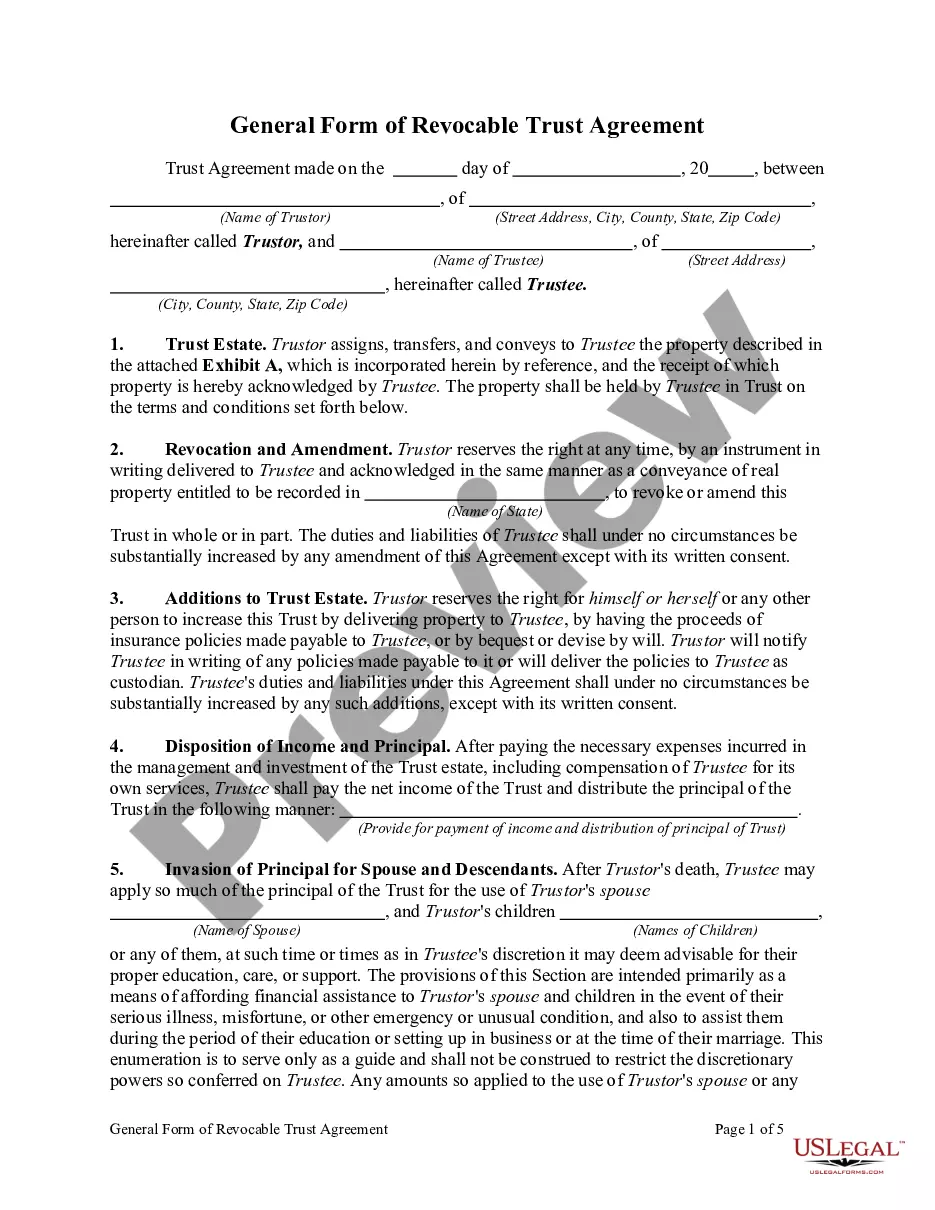
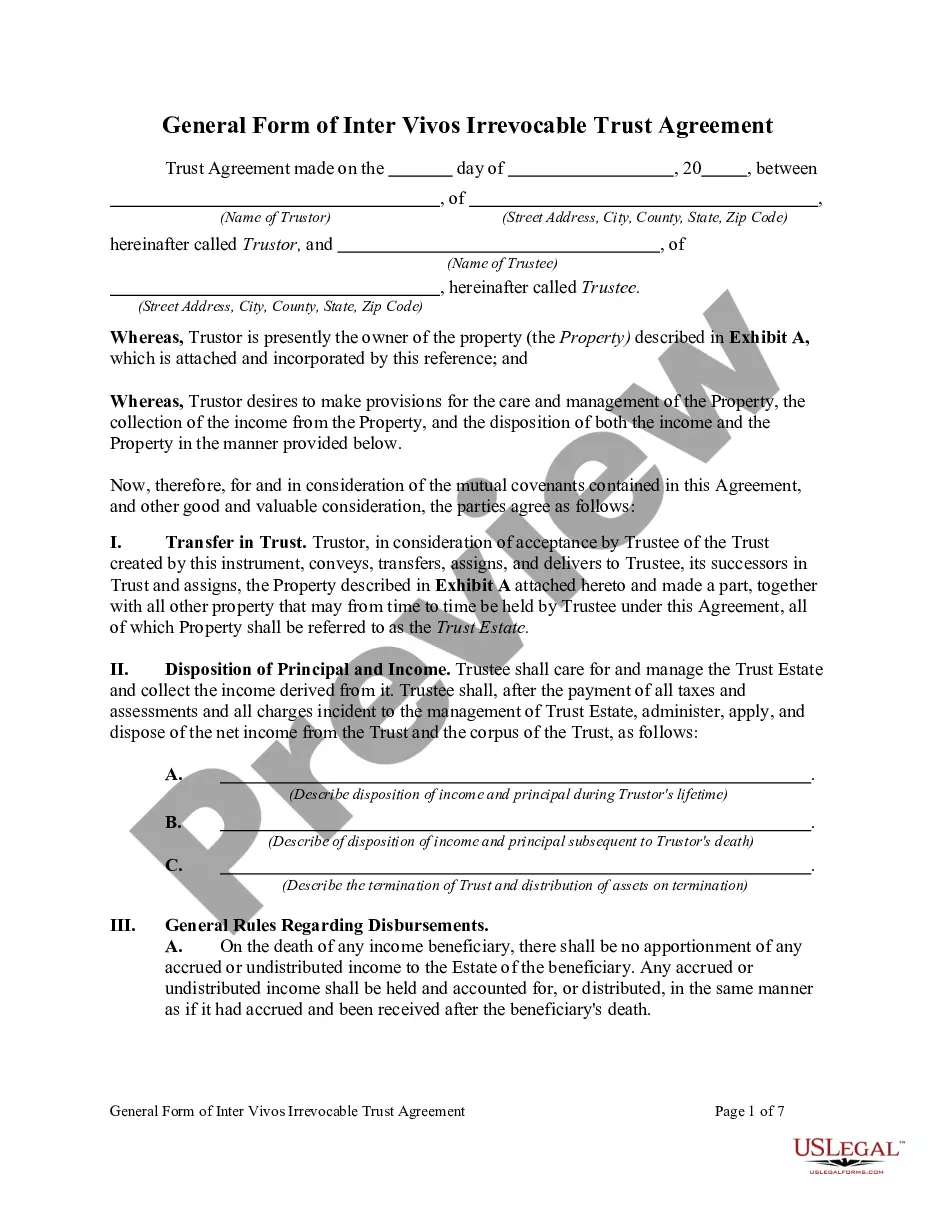
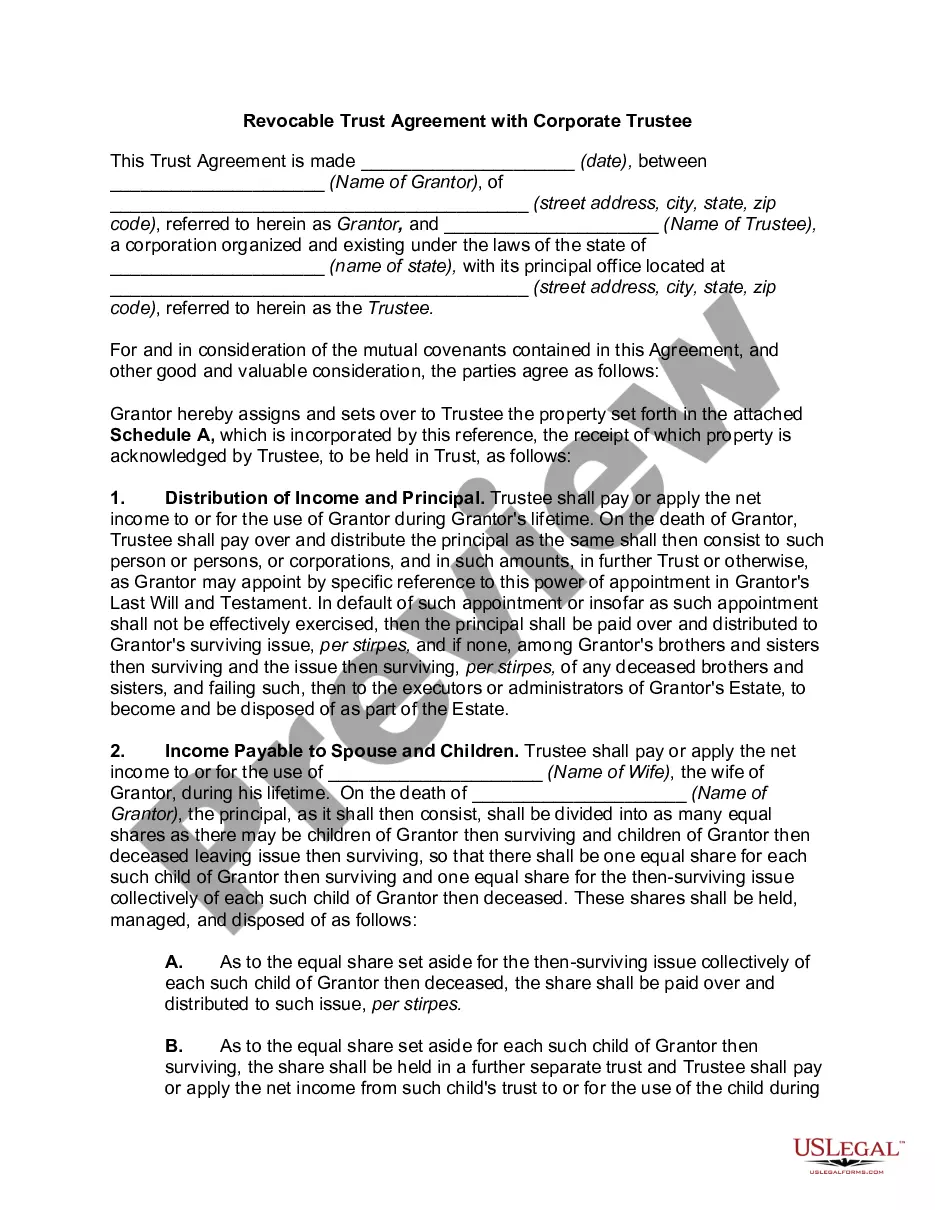
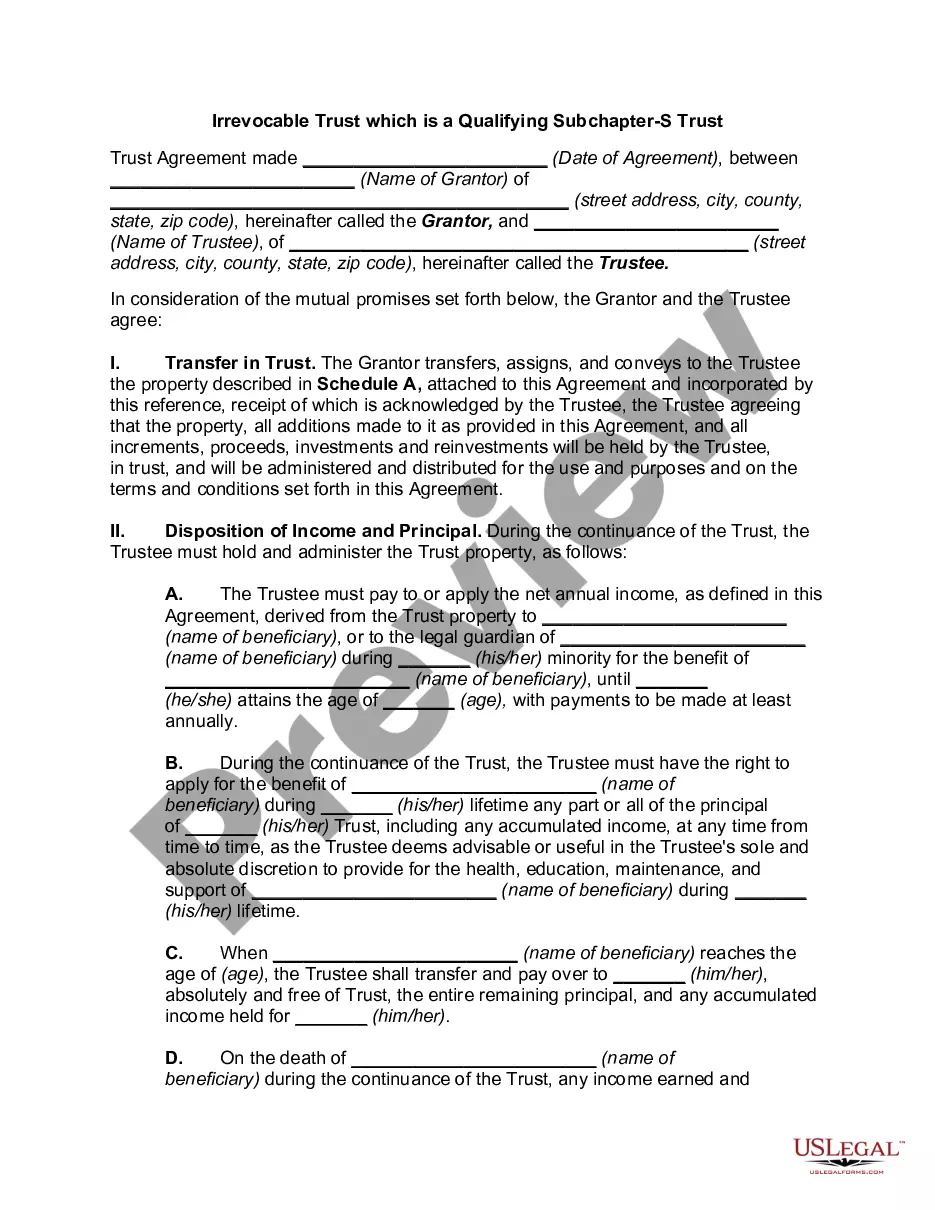
Get your form ready online
Our built-in tools help you complete, sign, share, and store your documents in one place.
Make edits, fill in missing information, and update formatting in US Legal Forms—just like you would in MS Word.
Download a copy, print it, send it by email, or mail it via USPS—whatever works best for your next step.
Sign and collect signatures with our SignNow integration. Send to multiple recipients, set reminders, and more. Go Premium to unlock E-Sign.
If this form requires notarization, complete it online through a secure video call—no need to meet a notary in person or wait for an appointment.
We protect your documents and personal data by following strict security and privacy standards.

Make edits, fill in missing information, and update formatting in US Legal Forms—just like you would in MS Word.

Download a copy, print it, send it by email, or mail it via USPS—whatever works best for your next step.

Sign and collect signatures with our SignNow integration. Send to multiple recipients, set reminders, and more. Go Premium to unlock E-Sign.

If this form requires notarization, complete it online through a secure video call—no need to meet a notary in person or wait for an appointment.

We protect your documents and personal data by following strict security and privacy standards.
Looking for another form?
How to fill out Qualifying Subchapter-S Revocable Trust Agreement?
You can dedicate hours online looking for the legal document template that fits the federal and state regulations you require.
US Legal Forms offers thousands of legal templates that can be reviewed by professionals.
It is easy to obtain or generate the Nebraska Qualifying Subchapter-S Revocable Trust Agreement from our service.
If available, take advantage of the Preview button to look at the document template as well.
- If you possess a US Legal Forms account, you can Log In and click the Download button.
- After that, you can complete, modify, print, or sign the Nebraska Qualifying Subchapter-S Revocable Trust Agreement.
- Each legal document template you purchase is yours indefinitely.
- To obtain another copy of any purchased form, navigate to the My documents tab and click the relevant button.
- If you are using the US Legal Forms website for the first time, follow the simple instructions below.
- First, ensure you have selected the correct document template for your area/city of choice.
- Read the form description to confirm you have chosen the appropriate form.
Form popularity
FAQ
Under this scenario, the subtrust would elect QSST status, while the original trust could continue to be a complex trust. If the original trust has multiple beneficiaries, then a separate S corporation subtrust would need to be created for each beneficiary.
The benefit of a QSST from a tax perspective is that the income beneficiary is treated as the deemed owner over the portion of the trust that consists of stock in the S corporation. This means that the trust's allocable portion of the S corporation income is reported directly by the beneficiary.
To obtain relief, the trustee of an ESBT or the current income beneficiary of a QSST must sign and file the appropriate election form, which must include the following statements: A statement from the trustee of the ESBT or the current income beneficiary of the QSST that includes the information required by Regs.
To make a living trust in Nebraska, you:Choose whether to make an individual or shared trust.Decide what property to include in the trust.Choose a successor trustee.Decide who will be the trust's beneficiariesthat is, who will get the trust property.Create the trust document.More items...
Separate Trust Under this scenario, the subtrust would elect QSST status, while the original trust could continue to be a complex trust. If the original trust has multiple beneficiaries, then a separate S corporation subtrust would need to be created for each beneficiary.
A Qualified Subchapter S Trust, commonly referred to as a QSST Election, or a Q-Sub election, is a Qualified Subchapter S Subsidiary Election made on behalf of a trust that retains ownership as the shareholder of an S corporation, a corporation in the United States which votes to be taxed.
Designing a QSSTThe trust must have only one income beneficiary during the life of the current income beneficiary, and that beneficiary must be a U.S. citizen or resident;All of the income of the trust must be (or must be required to be) distributed currently to the one income beneficiary;More items...?
A Qualified Subchapter S Trust, commonly referred to as a QSST Election, or a Q-Sub election, is a Qualified Subchapter S Subsidiary Election made on behalf of a trust that retains ownership as the shareholder of an S corporation, a corporation in the United States which votes to be taxed.
The trust's current income beneficiary must make the QSST election under Sec. 1361(d)(2), by filing a statement with the information and in the manner prescribed by Regs.
The main difference between an ESBT and a QSST is that an ESBT may have multiple income beneficiaries, and the trust does not have to distribute all income. Unlike with the QSST, the trustee, rather than the beneficiary, must make the election.