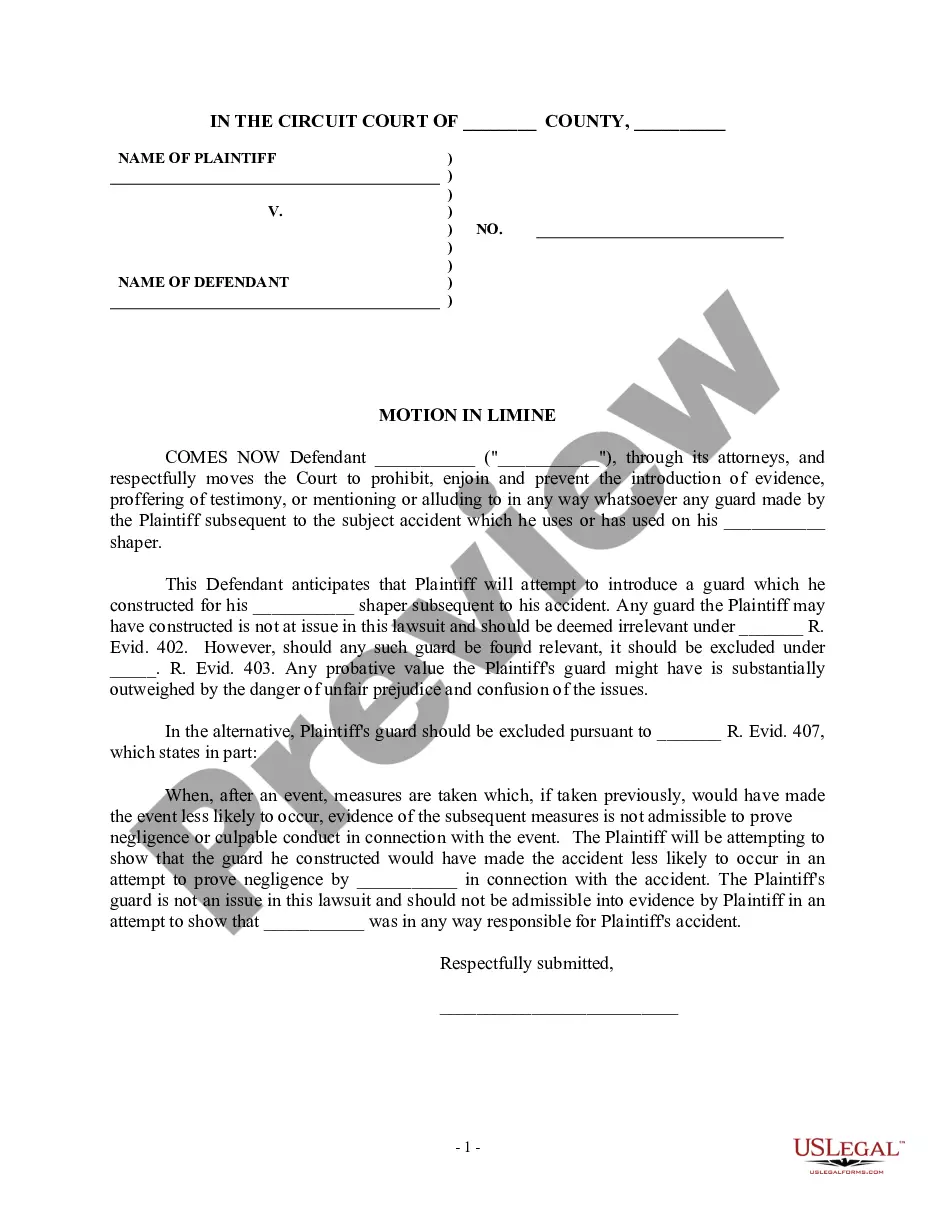
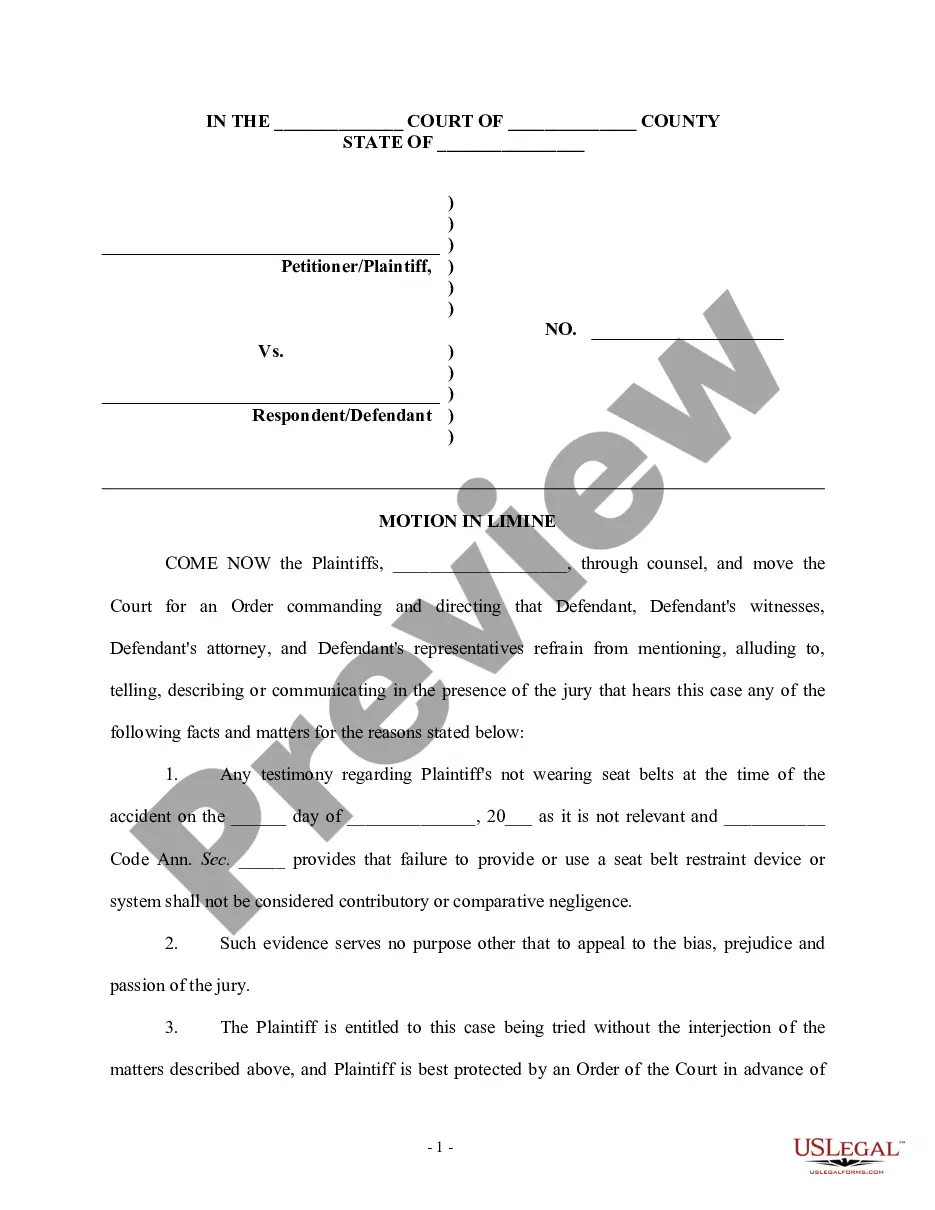
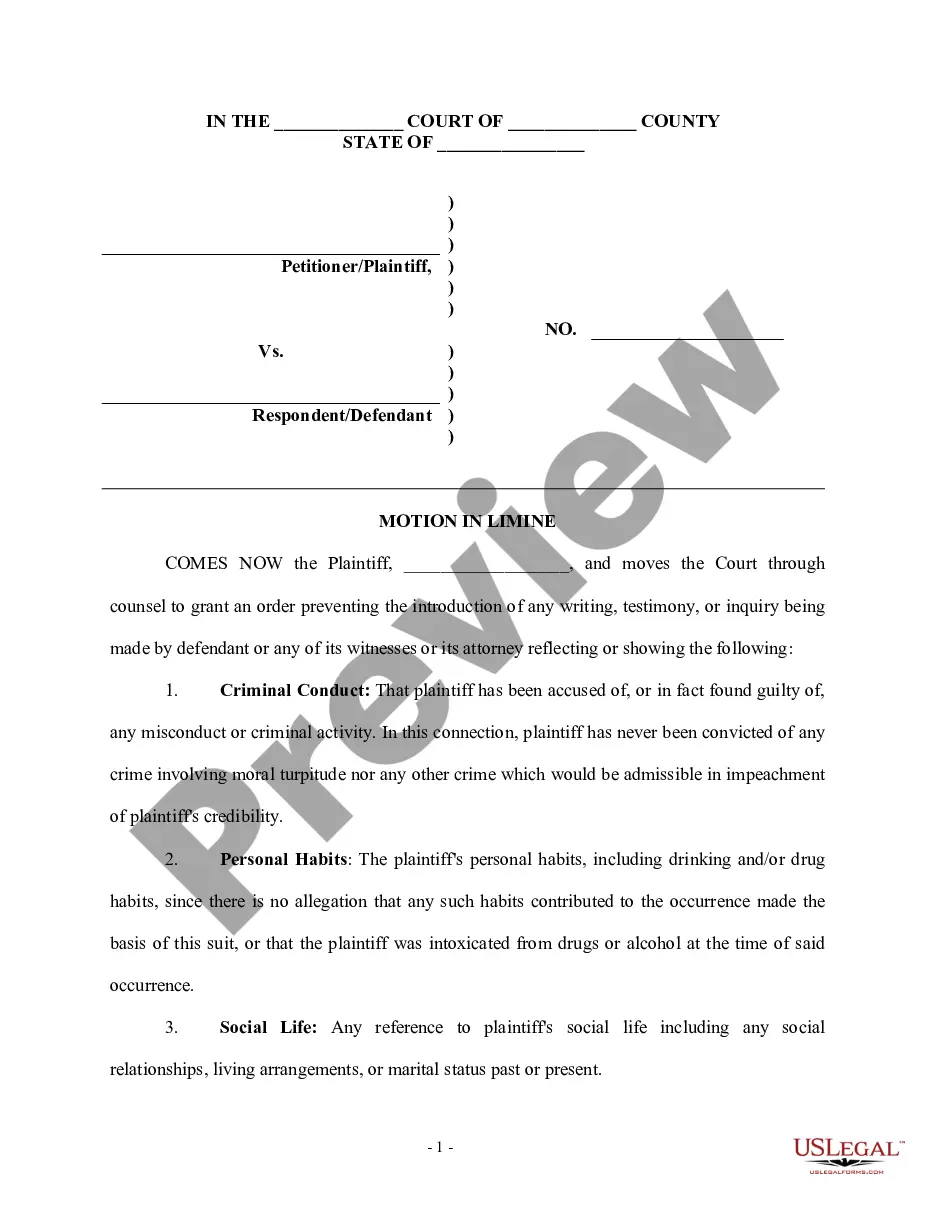
Nebraska Motion in Limine
Description
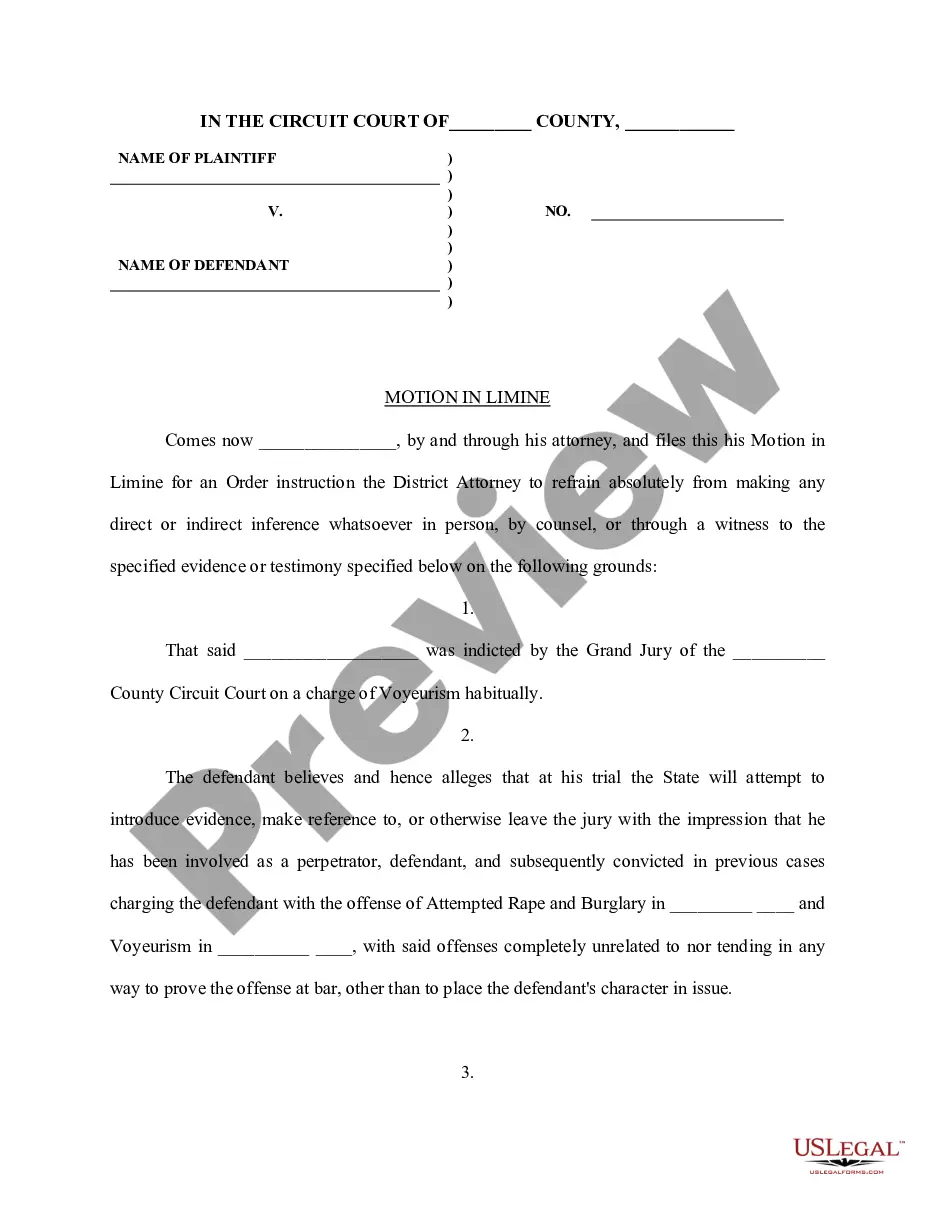
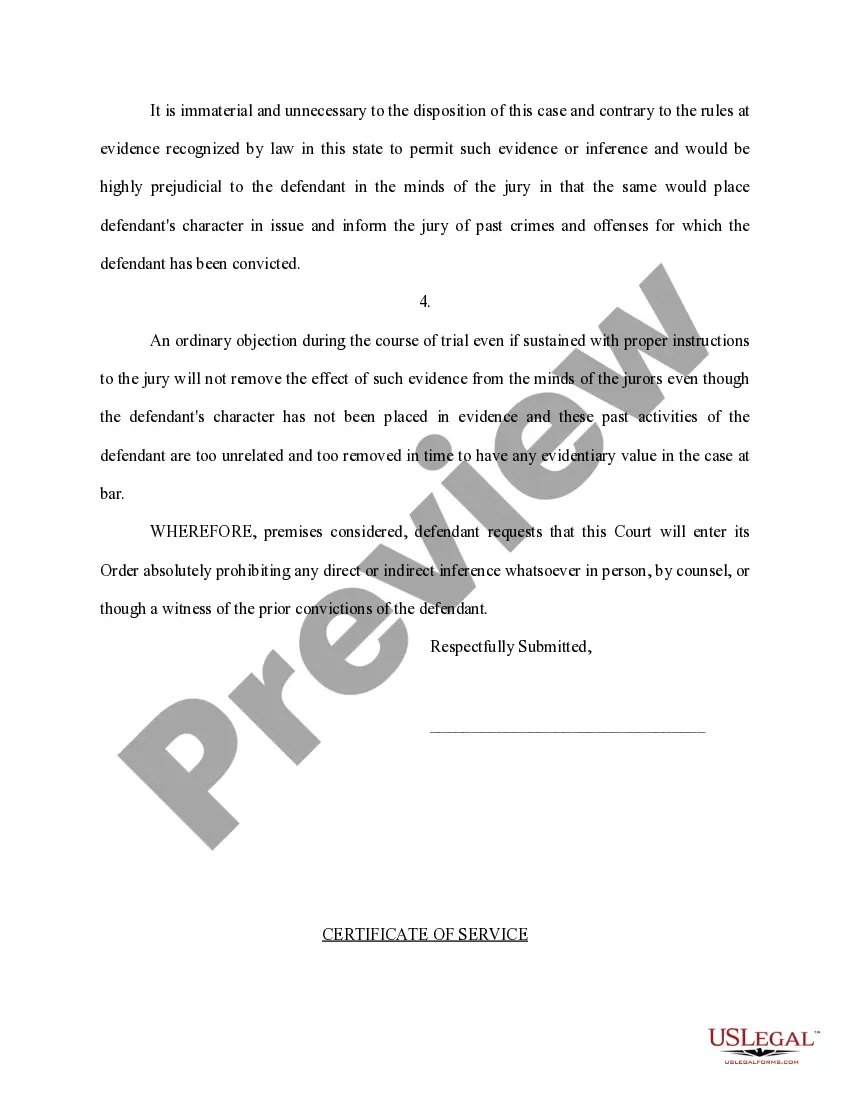

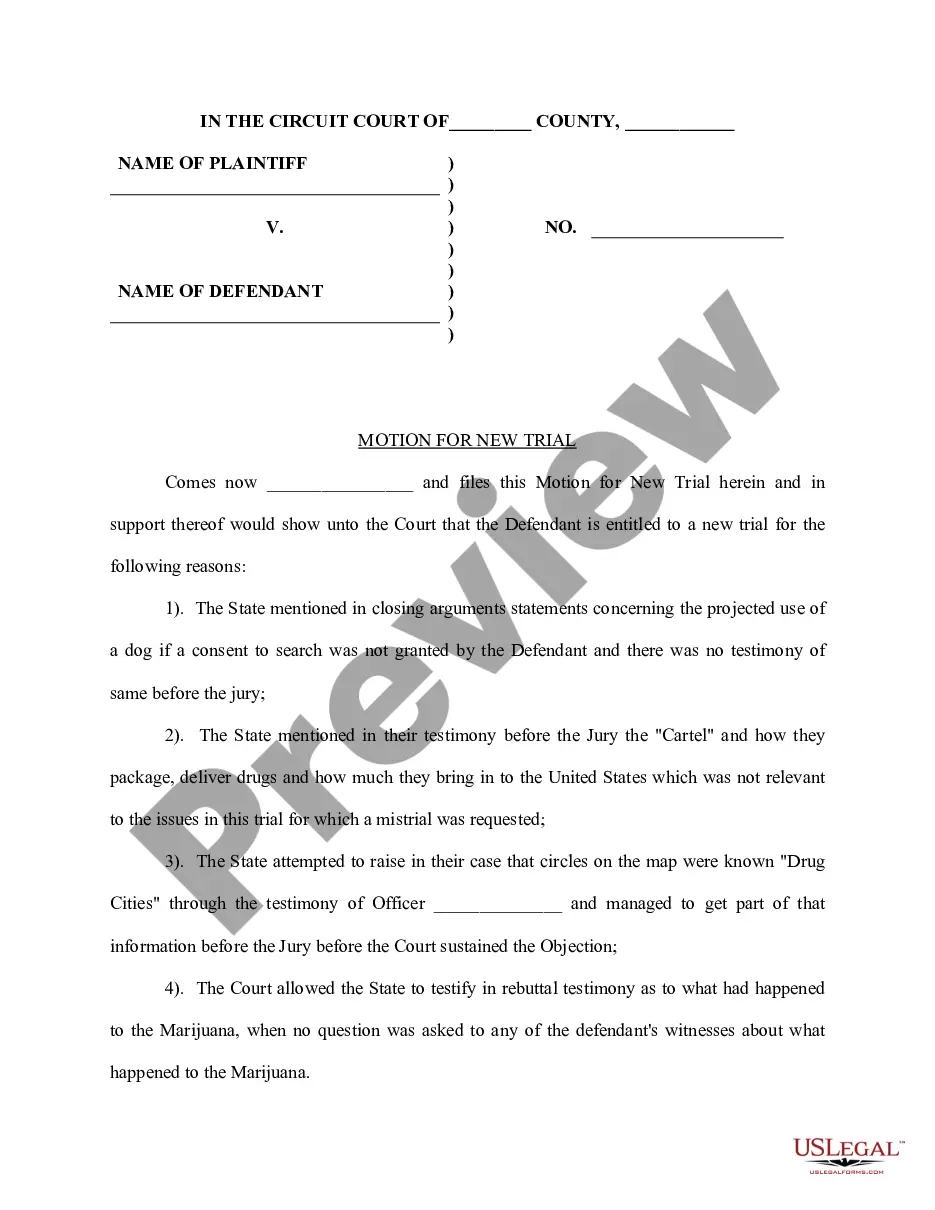
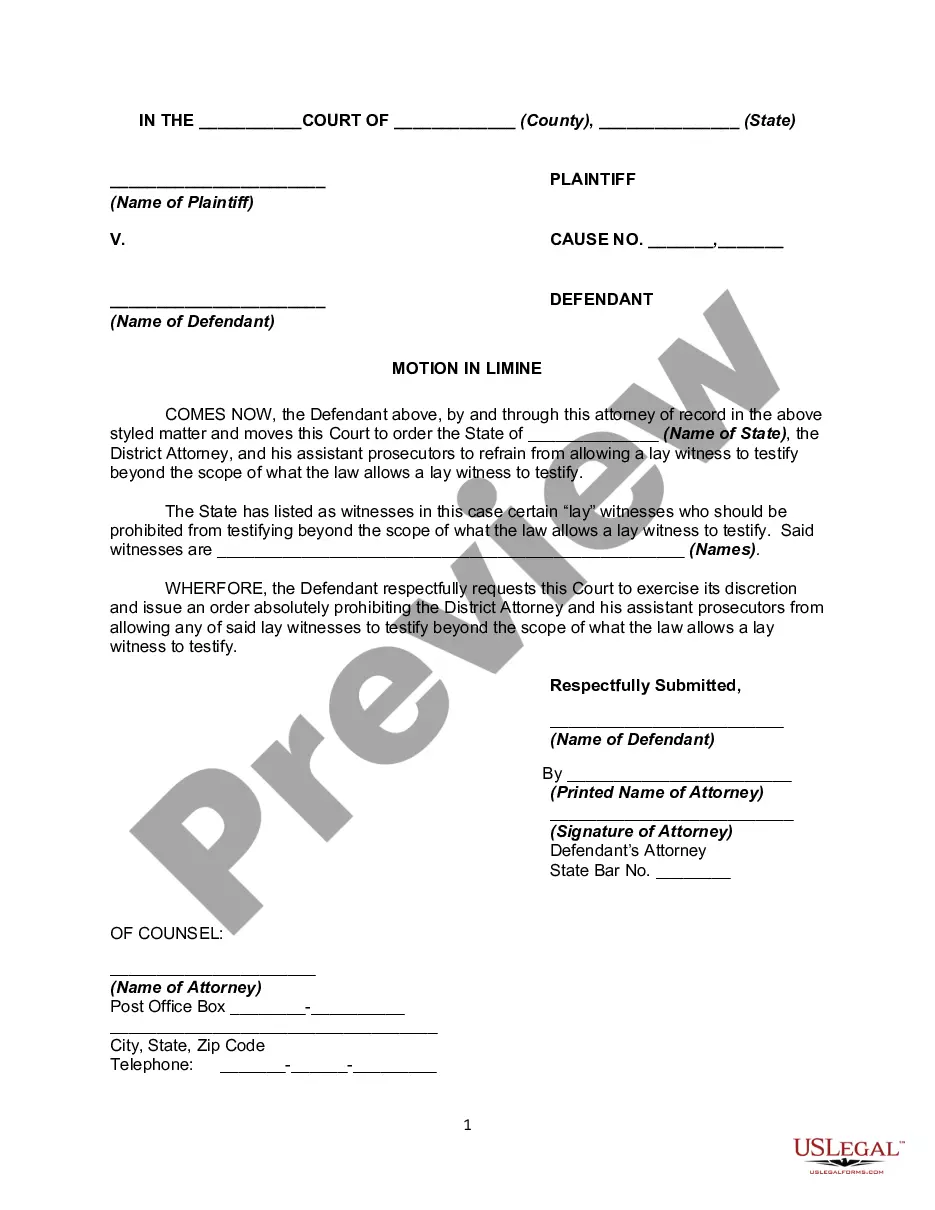
Get your form ready online
Our built-in tools help you complete, sign, share, and store your documents in one place.
Make edits, fill in missing information, and update formatting in US Legal Forms—just like you would in MS Word.
Download a copy, print it, send it by email, or mail it via USPS—whatever works best for your next step.
Sign and collect signatures with our SignNow integration. Send to multiple recipients, set reminders, and more. Go Premium to unlock E-Sign.
If this form requires notarization, complete it online through a secure video call—no need to meet a notary in person or wait for an appointment.
We protect your documents and personal data by following strict security and privacy standards.

Make edits, fill in missing information, and update formatting in US Legal Forms—just like you would in MS Word.

Download a copy, print it, send it by email, or mail it via USPS—whatever works best for your next step.

Sign and collect signatures with our SignNow integration. Send to multiple recipients, set reminders, and more. Go Premium to unlock E-Sign.

If this form requires notarization, complete it online through a secure video call—no need to meet a notary in person or wait for an appointment.

We protect your documents and personal data by following strict security and privacy standards.
Looking for another form?

How to fill out Motion In Limine?
If you need to completely download or print legal document templates, utilize US Legal Forms, the largest collection of legal forms available online. Take advantage of the site's user-friendly search to find the documents you require. A variety of templates for business and personal applications are organized by categories and states, or keywords. Use US Legal Forms to locate the Nebraska Motion in Limine with just a few clicks.
If you are already a US Legal Forms user, sign in to your account and click on the Obtain button to find the Nebraska Motion in Limine. You can also access forms you have previously downloaded in the My documents tab of your account.
If you are using US Legal Forms for the first time, follow the instructions below: Step 1. Make sure you have selected the form for the correct area/state. Step 2. Use the Review option to examine the form's content. Be sure to read the description. Step 3. If you are not satisfied with the form, use the Search box at the top of the screen to find different versions of the legal form template. Step 4. Once you have identified the form you need, select the Get now button. Choose the pricing plan you prefer and provide your information to register for an account. Step 5. Complete the payment. You can use your credit card or PayPal account to finalize the transaction. Step 6. Choose the format of the legal form and download it to your device. Step 7. Complete, modify, and print or sign the Nebraska Motion in Limine.
- Every legal document template you purchase is yours forever.
- You have access to every form you have downloaded in your account.
- Click the My documents section and select a form to print or download again.
- Stay ahead and download, and print the Nebraska Motion in Limine with US Legal Forms.
- There are numerous professional and state-specific forms available for your personal business or individual needs.
Form popularity
FAQ
(1) A motion shall set forth the relief requested and the grounds therefor. (2) A response shall be filed within 10 days of the filing of the motion. Any response by a party shall respond to the motion of the moving party and not to a response filed by another party.
Another way to narrow your motion in limine is to highlight statements, arguments, or lines of questioning by opposing counsel that are in essence "Golden Rule" arguments due to the suggestion that a witness put themselves in the plaintiff's position or the implication that the defendant's conduct endangered the ...
A motion in limine is decided by the judge outside of the presence of the jury. The purpose of a motion in limine is to address potentially prejudicial, irrelevant, or inadmissible information that could unduly influence a jury or hinder the fair administration of justice.
The purpose of a motion in limine is to prevent the introduction of matters at trial which are irrelevant, inadmissible or prejudicial. Some key statutes to rely on in excluding those types of evidence from being introduced at trial are Evidence Code sections 350 and 352.
Provide facts to support why the evidence should be excluded or admitted. Provide a legal explanation why the evidence is properly excluded or admitted. Cite supportive legal authority. Any oppositions to motions in limine should also be direct and clear.
If one party to a case has filed a motion with the court, the other side can file an ?opposition.? An ?opposition? is a written statement explaining to the judge why the other side is not entitled to whatever he is asking for in his motion. It is your opportunity to oppose the other side's request.
Under the "rule of completeness" in this section, a party is entitled to admit the entirety of an act, declaration, conversation, or writing when the other party admits a part and when the entirety is necessary to make it fully understood. State v. Rocha, 295 Neb.
The most common use of the in limine motion is to exclude irrelevant and/or prejudicial evidence.