Nebraska Checklist for Remedying Identity Theft of Deceased Persons
Description
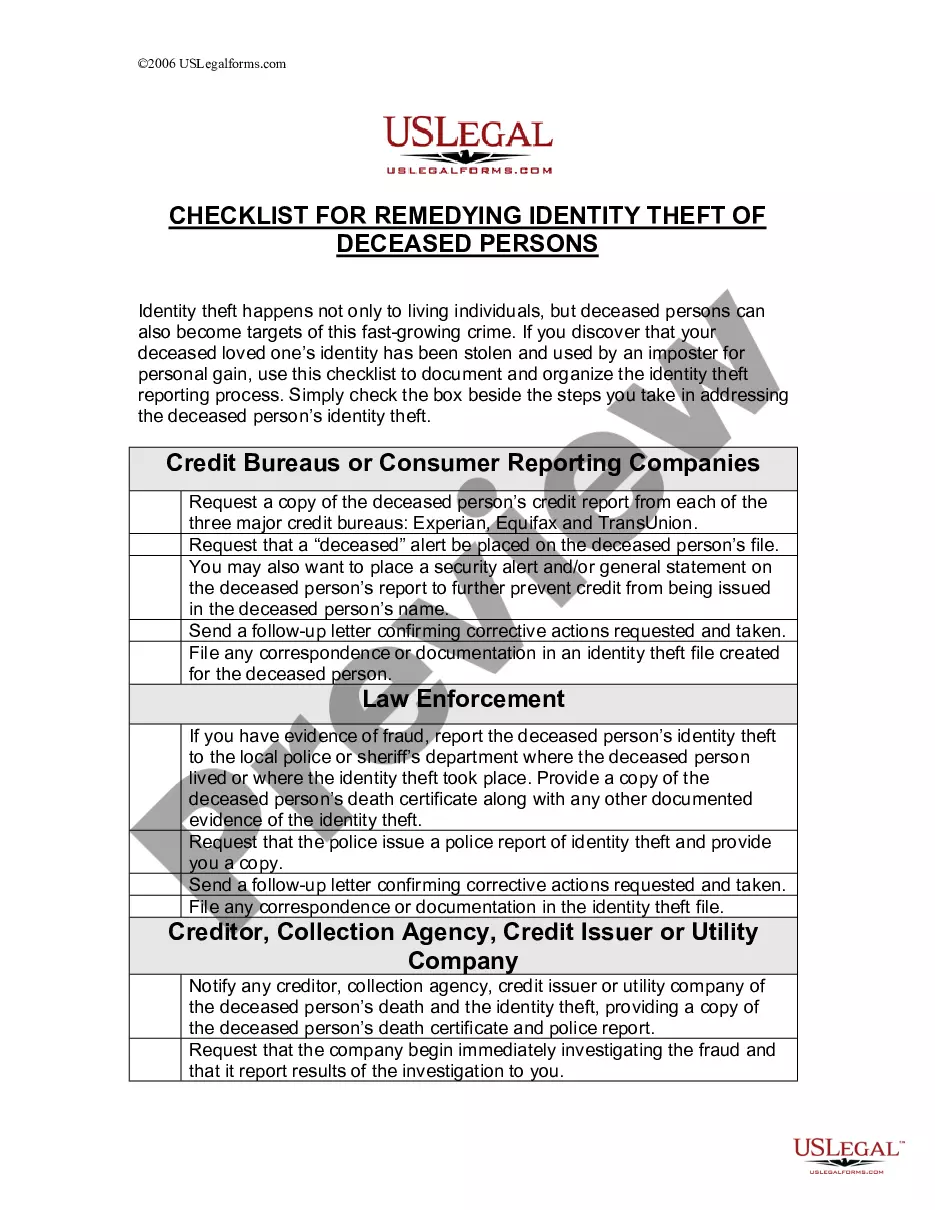
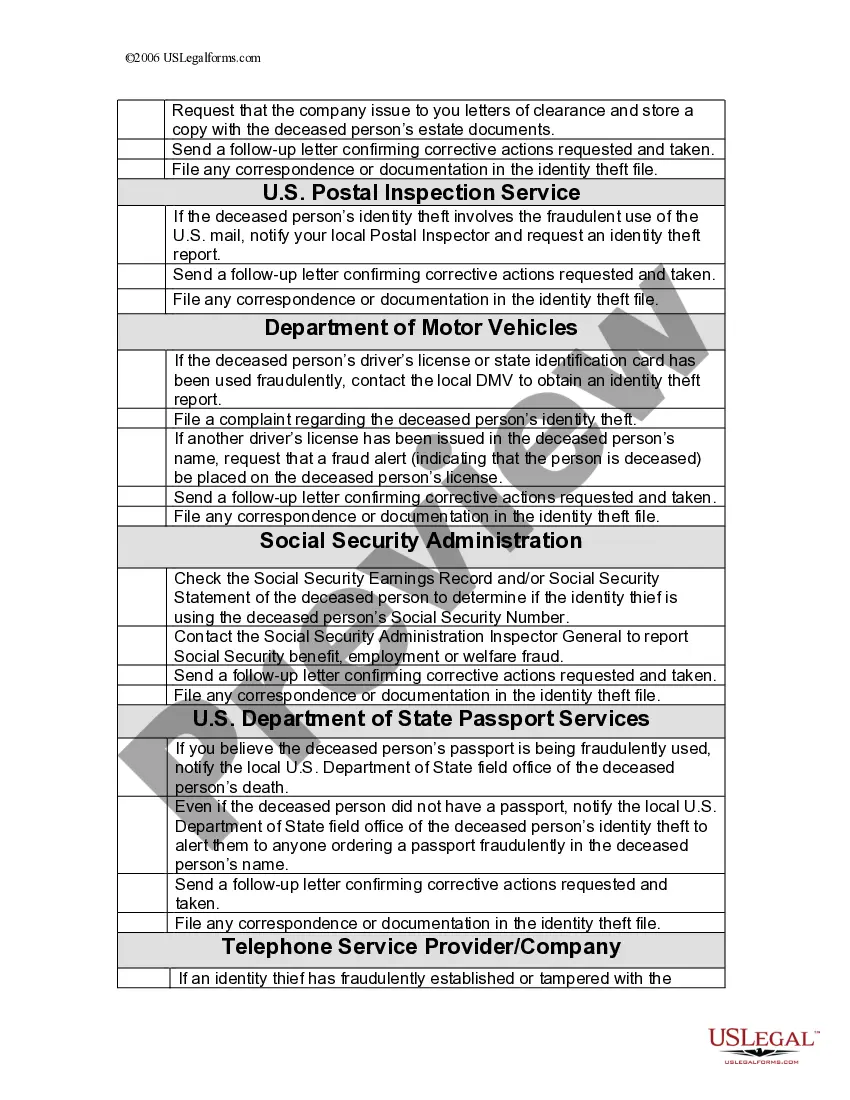
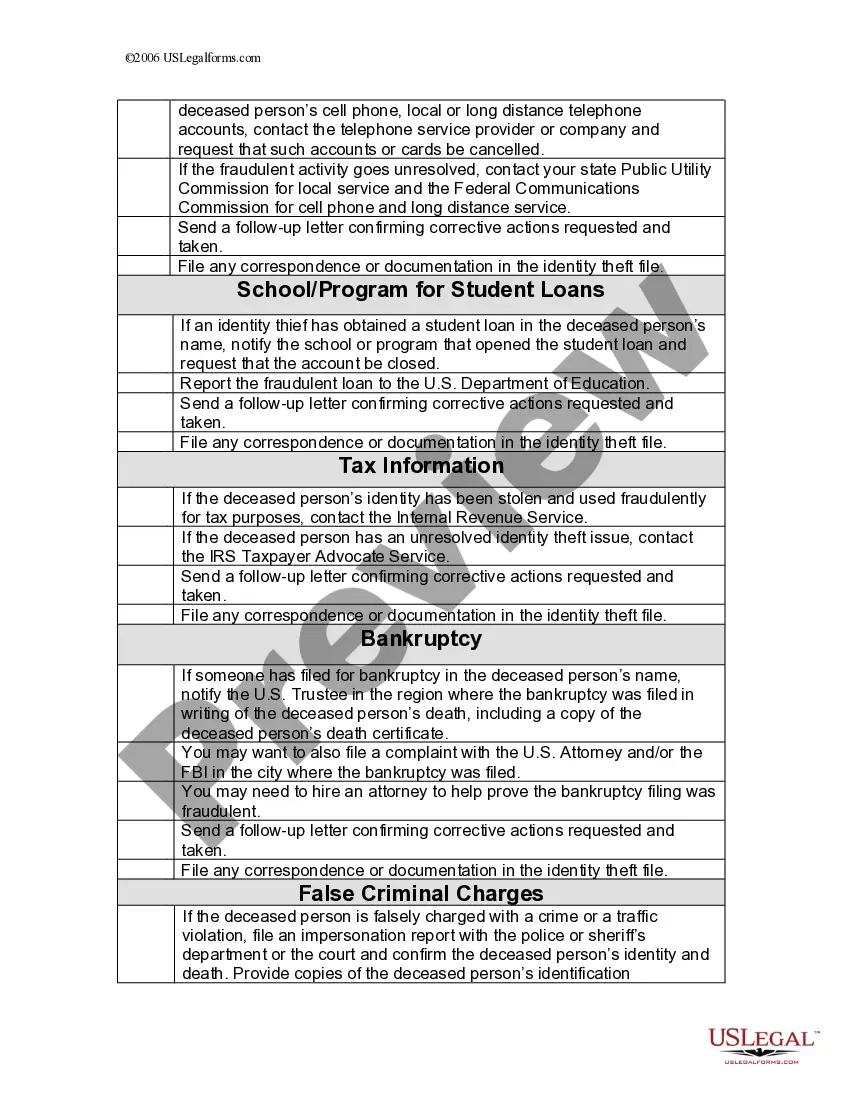
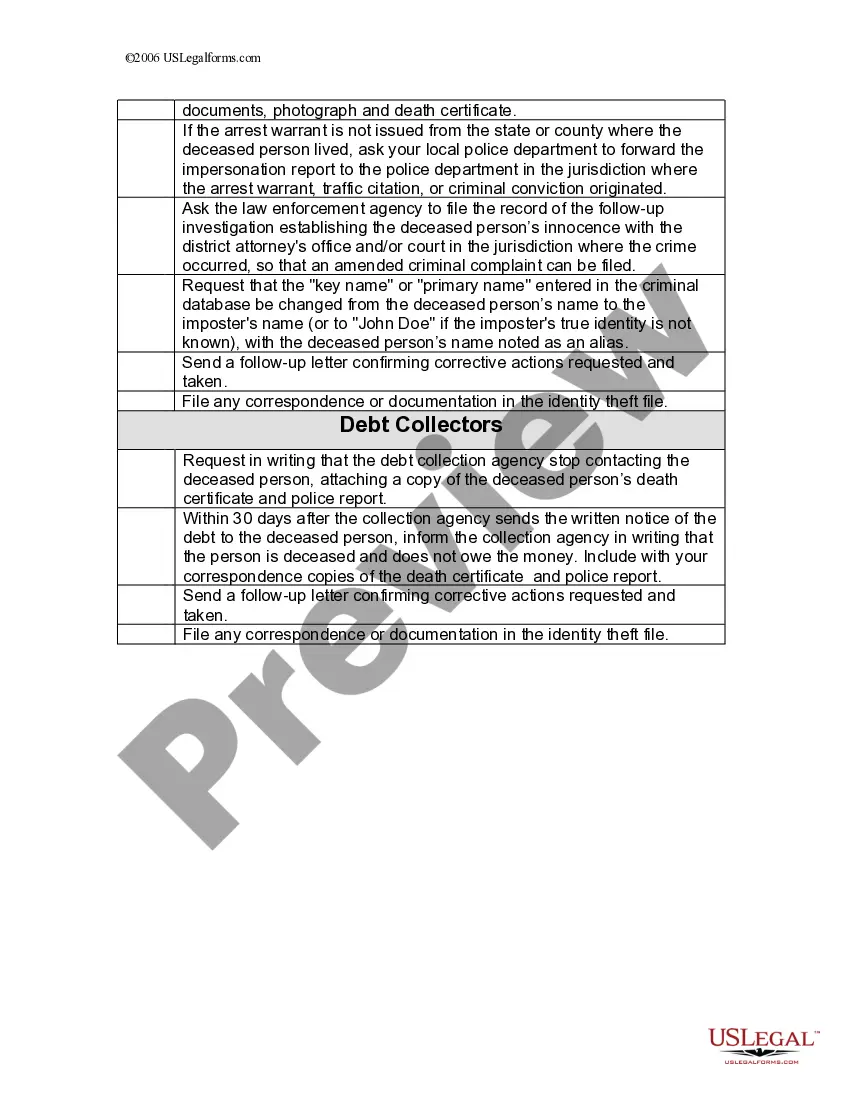
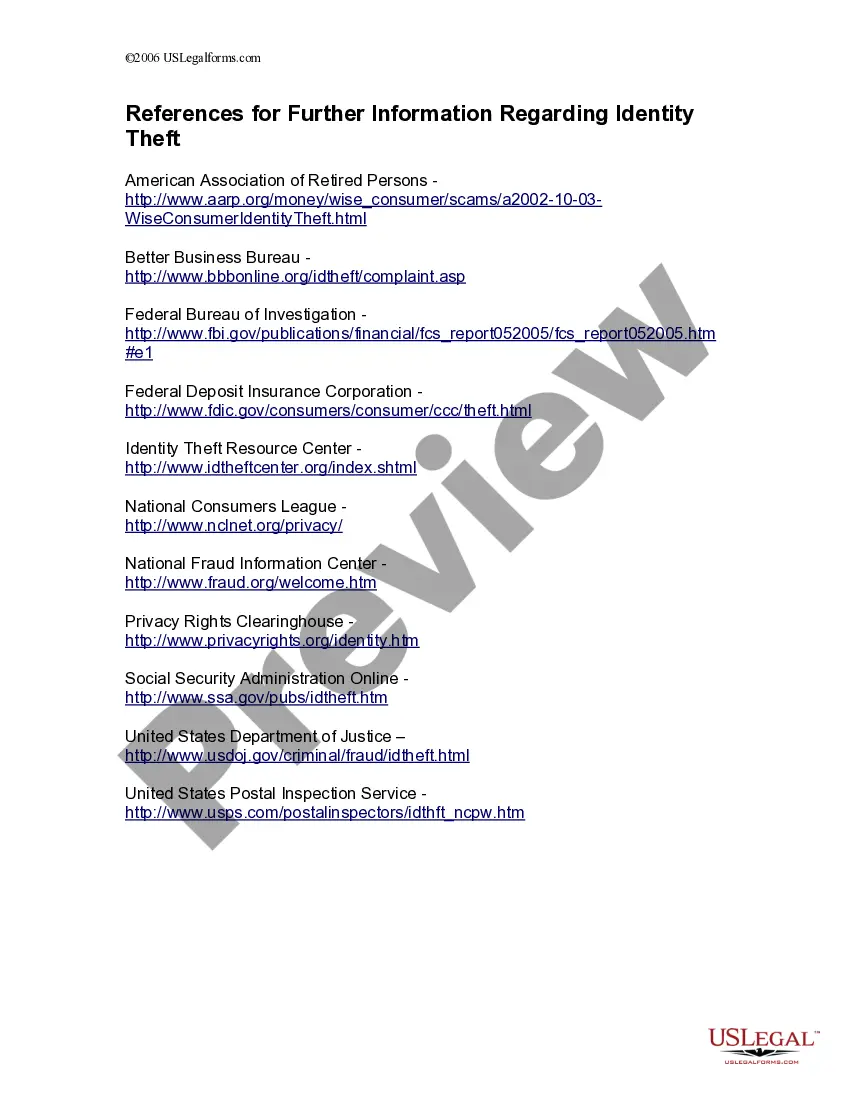
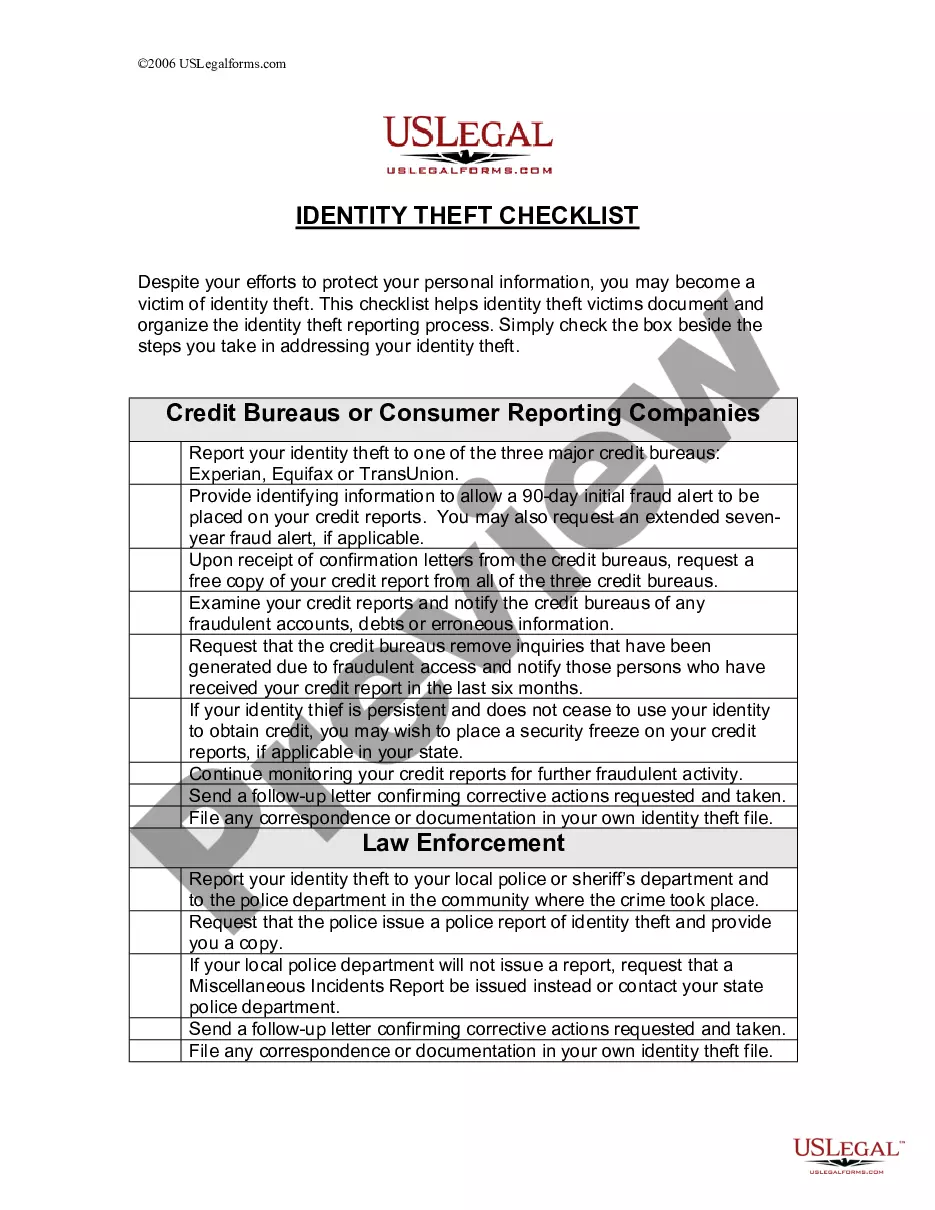
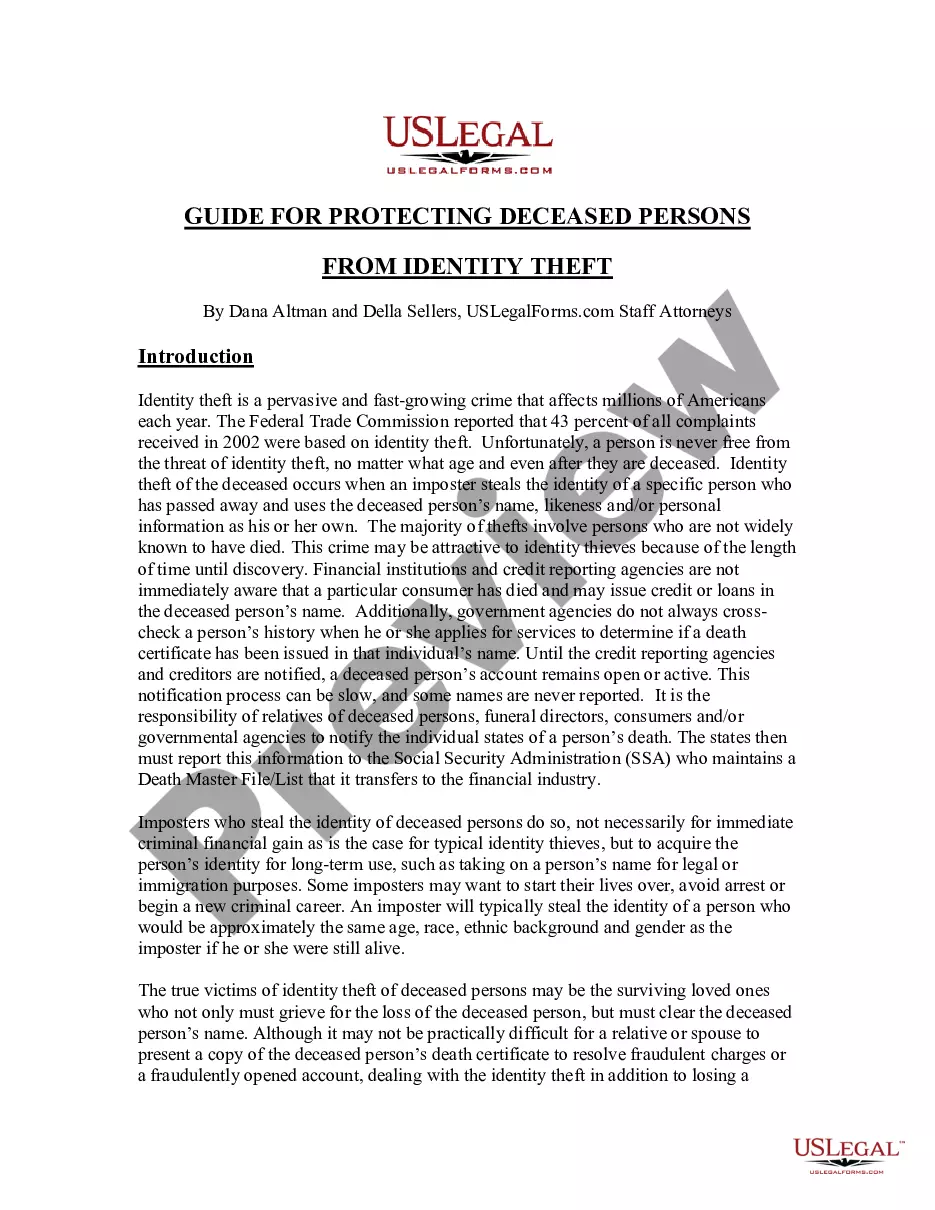
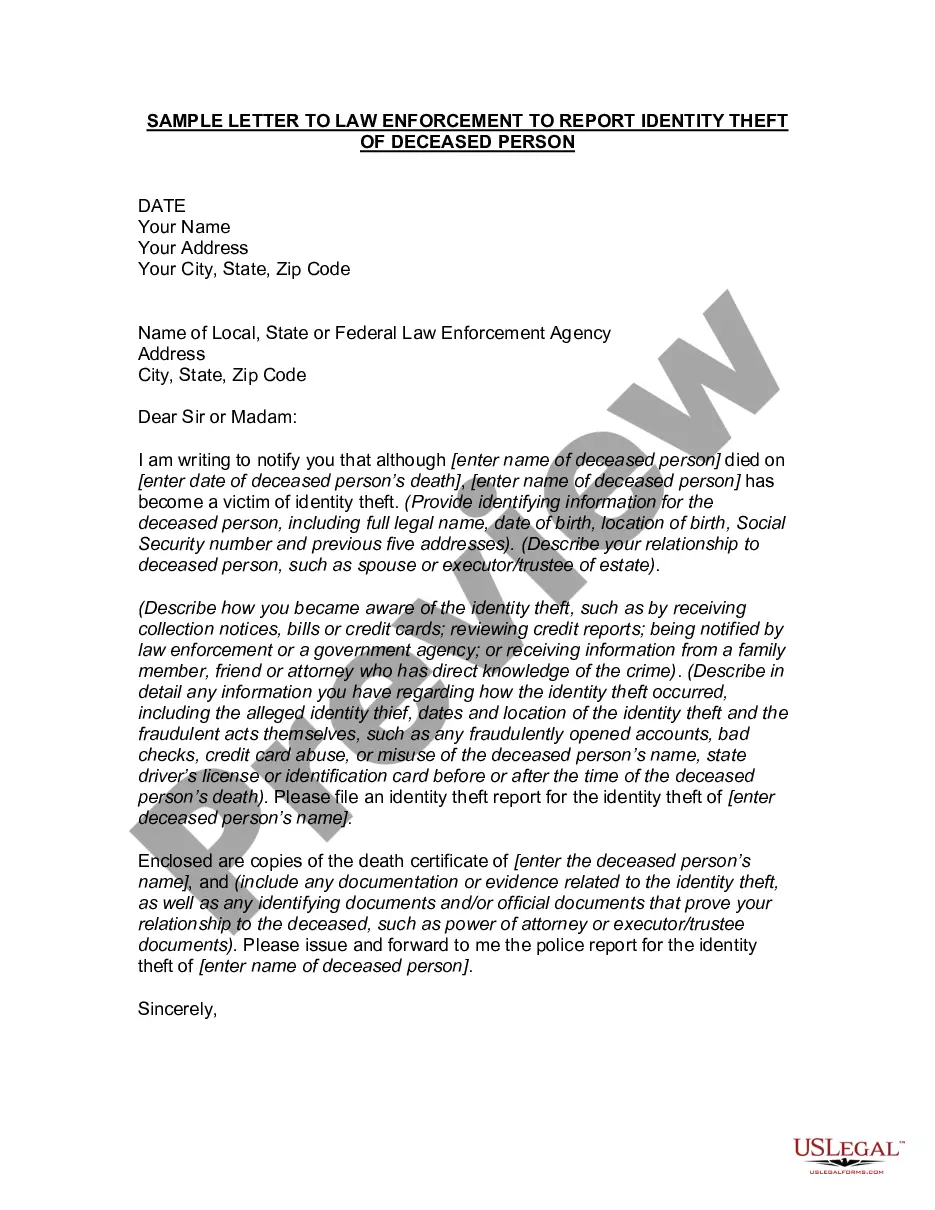
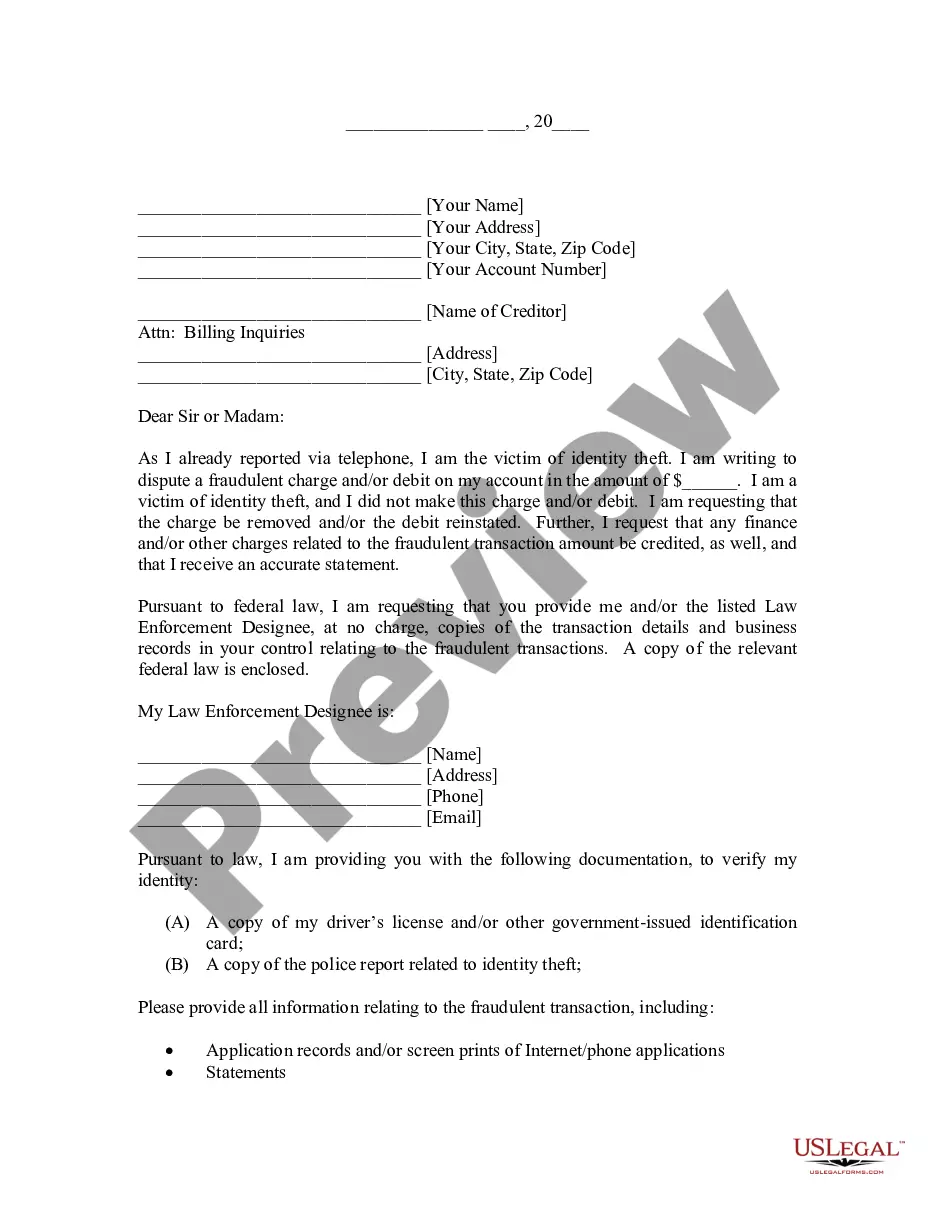
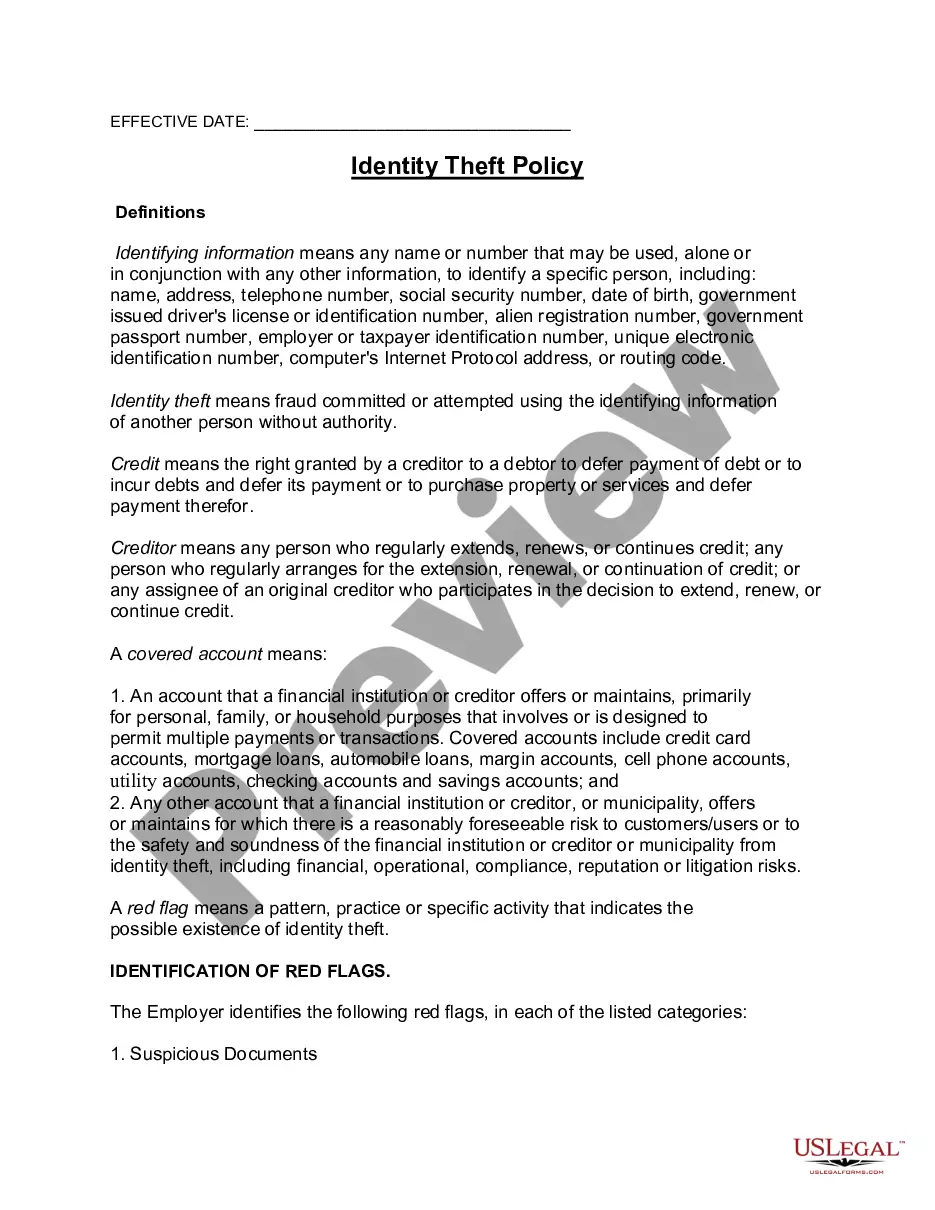


How to fill out Checklist For Remedying Identity Theft Of Deceased Persons?
If you wish to be thorough, download, or create legal document templates, utilize US Legal Forms, the largest collection of legal forms available online.
Employ the site's straightforward and user-friendly search to locate the documents you require.
A selection of templates for business and personal use are organized by categories and states, or keywords. Utilize US Legal Forms to obtain the Nebraska Checklist for Addressing Identity Theft of Deceased Individuals in just a few clicks.
Step 5. Complete the purchase. You can use your credit card or PayPal account to finalize the transaction.
Step 6. Access the format of the legal form and download it to your device. Step 7. Complete, modify, and print or sign the Nebraska Checklist for Addressing Identity Theft of Deceased Individuals. Every legal document template you purchase is yours permanently. You can access every form you downloaded in your account. Select the My documents section and choose a form to print or download again. Stay competitive and download and print the Nebraska Checklist for Addressing Identity Theft of Deceased Individuals with US Legal Forms. There are numerous professional and state-specific forms you can use for your business or personal needs.
- If you are already a US Legal Forms member, Log In to your account and click on the Download button to find the Nebraska Checklist for Addressing Identity Theft of Deceased Individuals.
- You can also access forms you previously downloaded in the My documents section of your account.
- If you are using US Legal Forms for the first time, follow the steps below.
- Step 1. Ensure you have selected the form for the appropriate city/state.
- Step 2. Use the Preview option to review the form's details. Don't forget to check the description.
- Step 3. If you are not satisfied with the form, use the Search field at the top of the screen to find other versions in the legal form template.
- Step 4. Once you have found the form you need, select the Buy now button. Choose the pricing plan you prefer and enter your details to register for an account.
Form popularity
FAQ
Call the local police. The Nebraska Attorney General´s Office recommends that you inform local police as well as federal law enforcement through the Federal Trade Commission. You may need to file a police report to back up the validity of your identity theft claim to your credit card and banking companies.
Report ? .idtheft.utah.gov, the ID Theft Central, which is the official law enforcement web site from which claims are reported to local, state or federal law enforcement agencies.
To report identity theft, contact: The Federal Trade Commission (FTC) online at IdentityTheft.gov or call 1-877-438-4338.
28-640. Identity fraud; penalty; restitution. (b) Willfully and knowingly obtains, possesses, uses, sells or furnishes or attempts to obtain, possess, or furnish to another person for any purpose of deception a personal identification document. (2)(a) Identity fraud is a Class I misdemeanor.
The lowest level theft is a Class II Misdemeanor for when the value is $500 or less. The penalty range for a Class II Misdemeanor is 0 to 6 months imprisonment, and/or up to a $1,000 fine. The other level of theft is a Class I Misdemeanor, when the value is more than $500 but less than $1,500.
28-639. Identity theft; penalty; restitution. (3)(a) Identity theft is a Class IIA felony if the credit, money, goods, services, or other thing of value that was gained or was attempted to be gained was five thousand dollars or more. Any second or subsequent conviction under this subdivision is a Class II felony.
Identity theft can victimize the dead. An identity thief's use of a deceased person's Social Security number may create problems for family members. This type of identity theft also victimizes merchants, banks, and other businesses that provide goods and services to the thief.
Follow these tips to reduce the risk of a deceased person from having their identity stolen: Send copies of the death certificate to each credit reporting bureau, asking them to put a ?deceased alert? on the credit reports. Review the deceased taxpayer's credit report for questionable credit card activity.
Then visit IdentityTheft.gov or call 1-877-438-4338. Answer questions about what happened to you. Get a recovery plan that's just for you. You can create an account on the website.