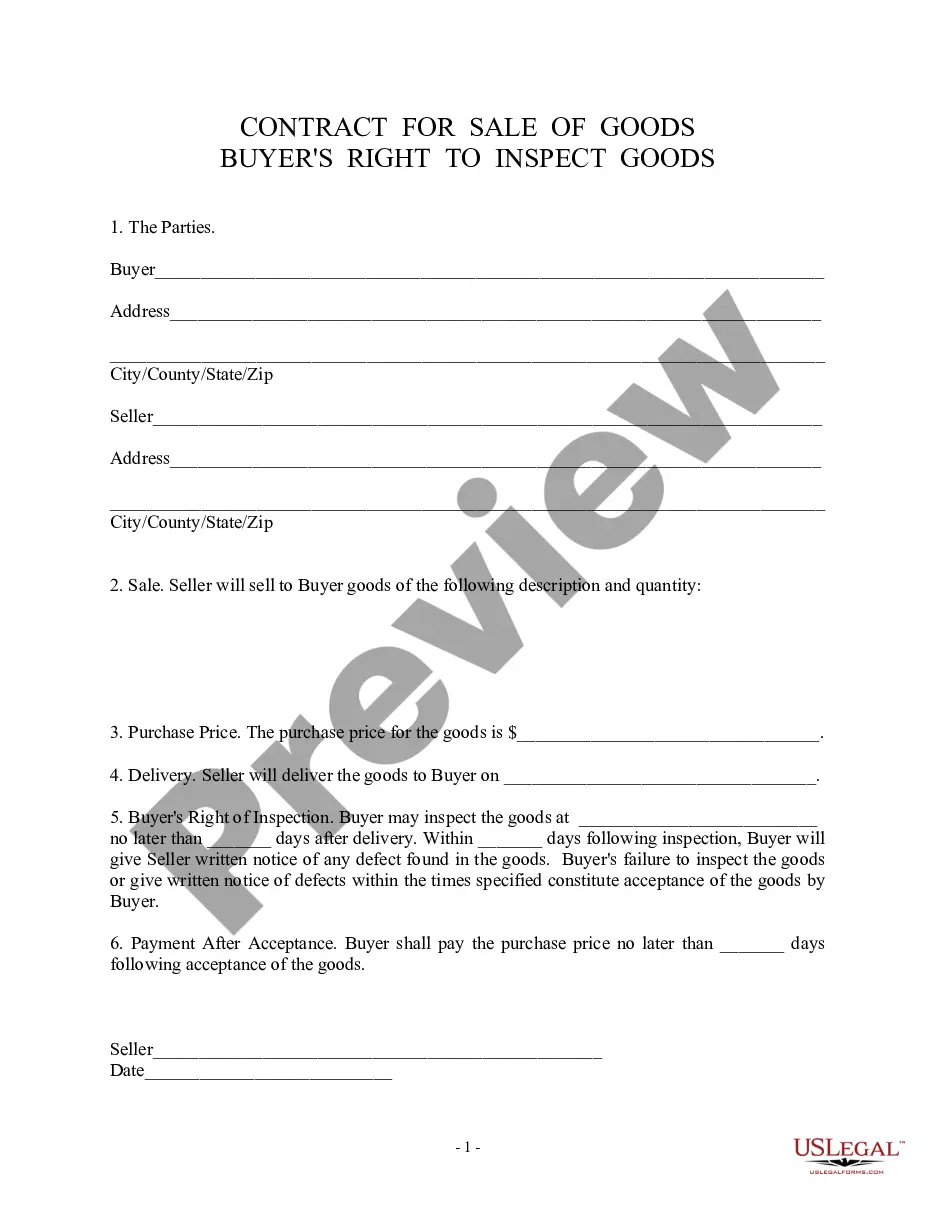
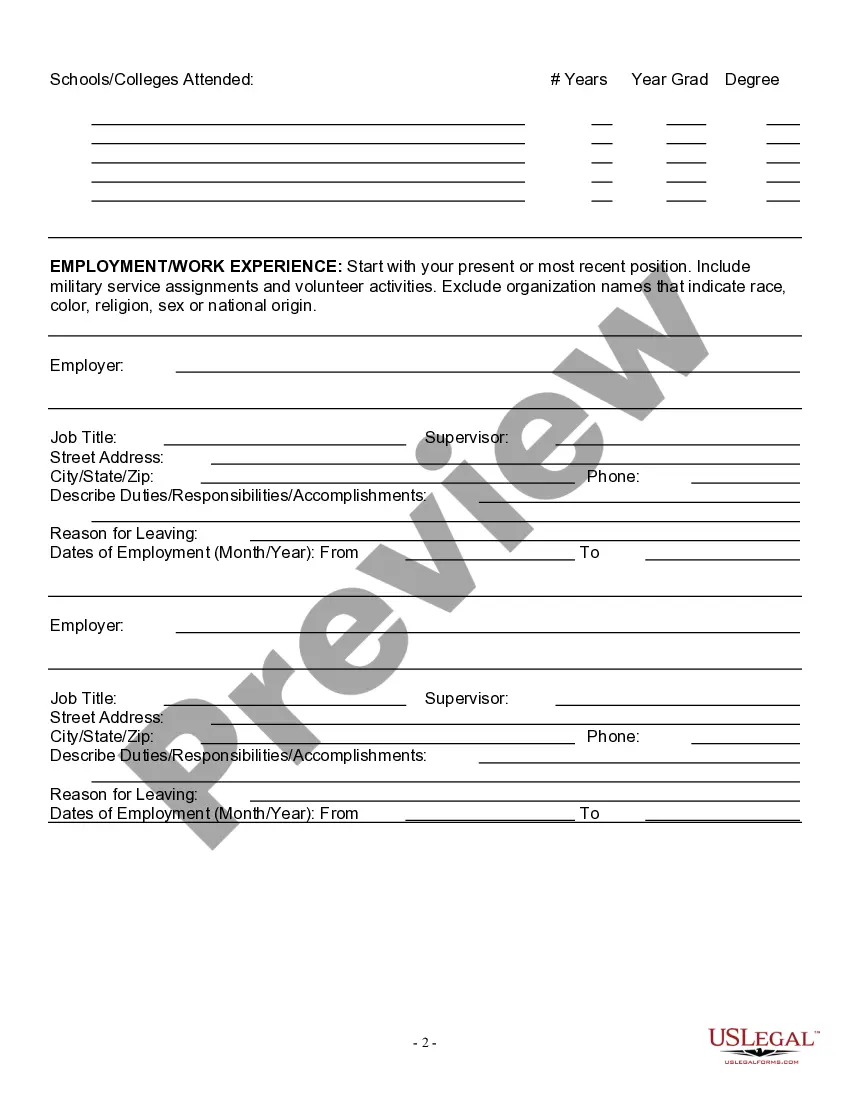
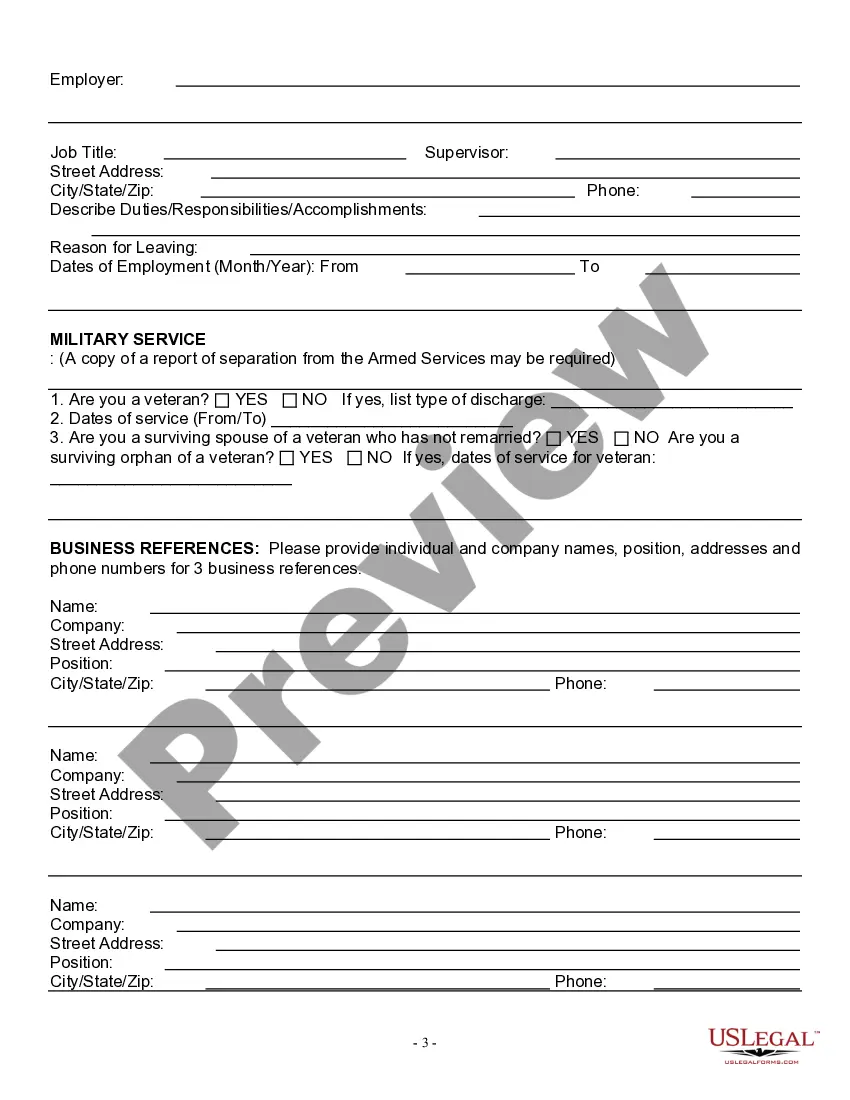
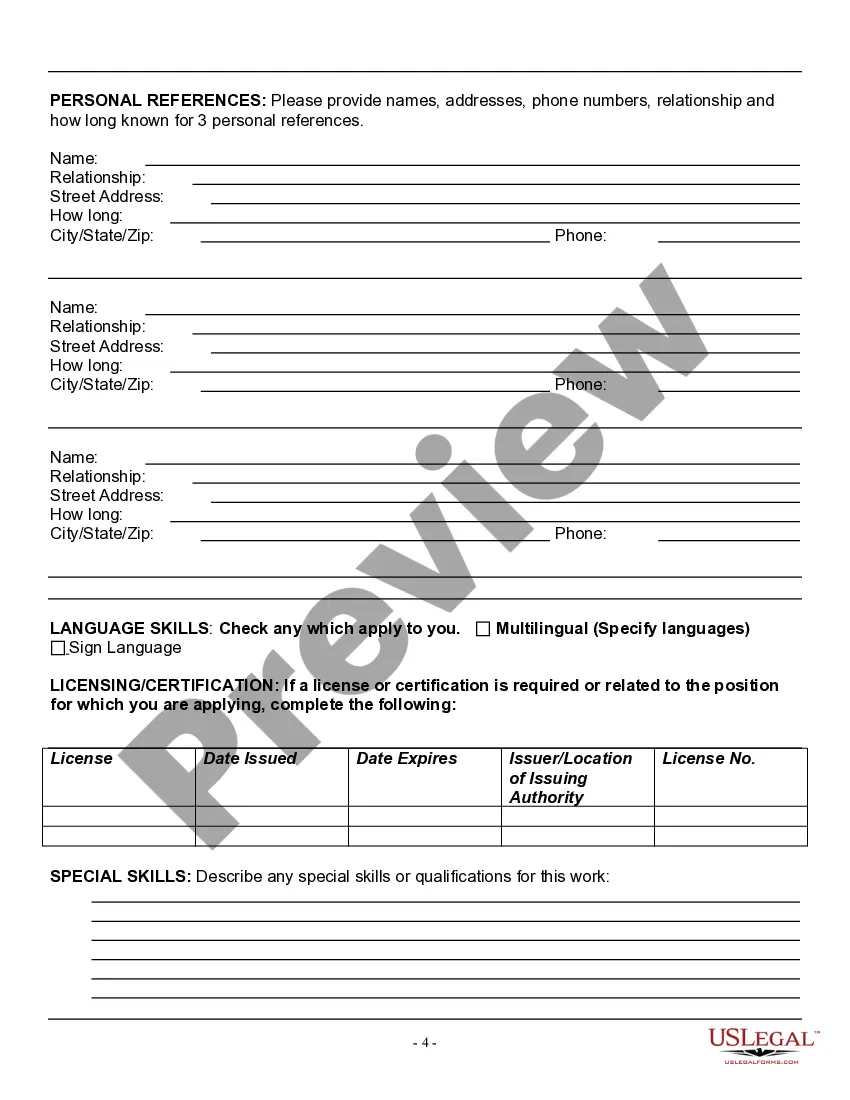
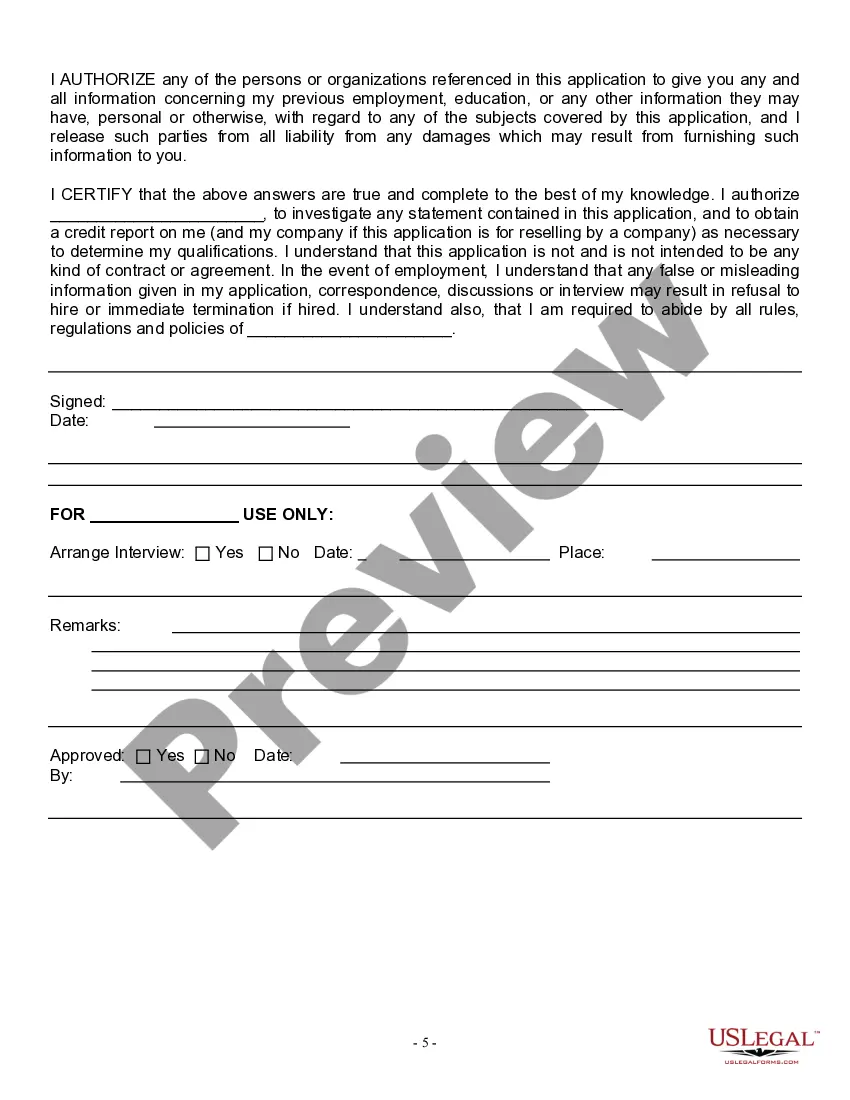
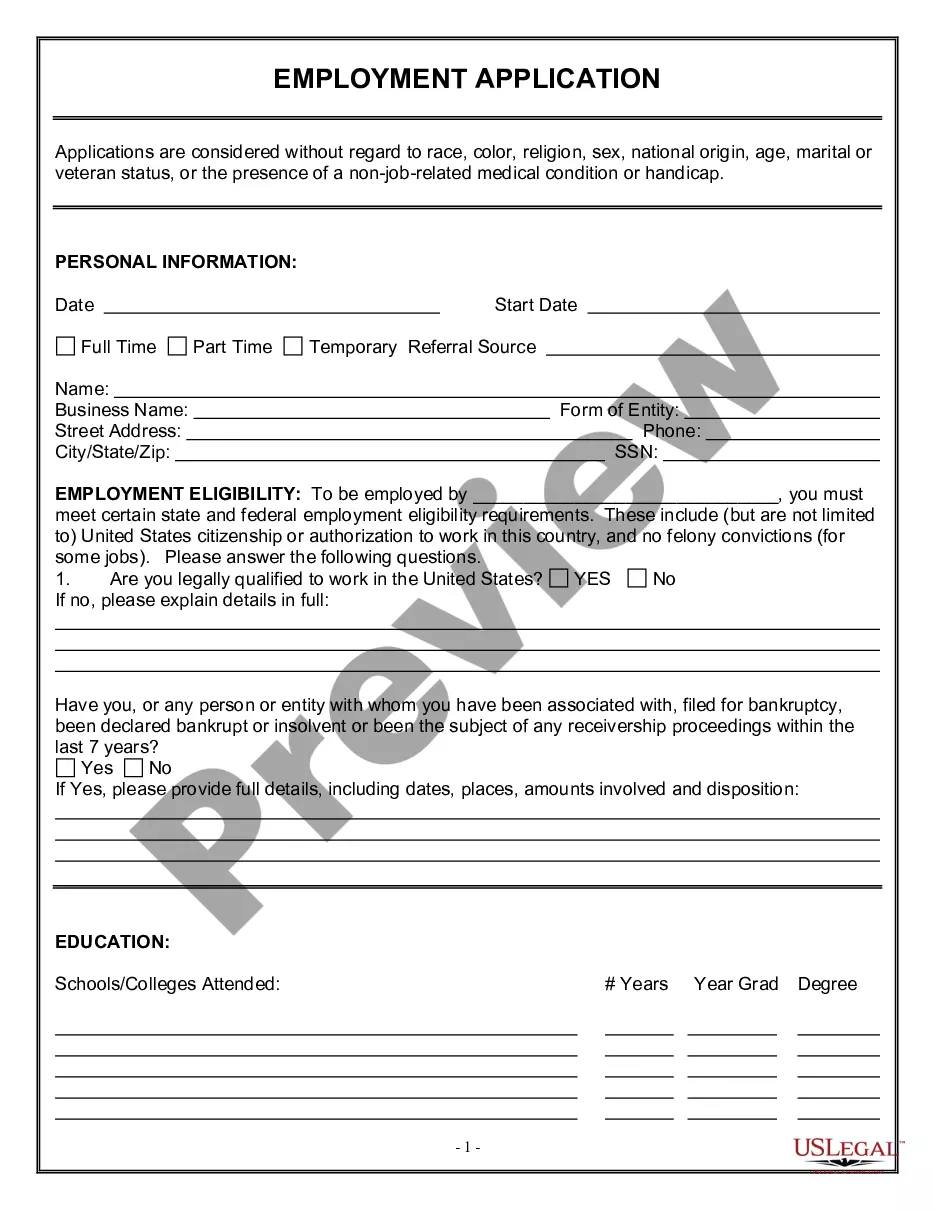
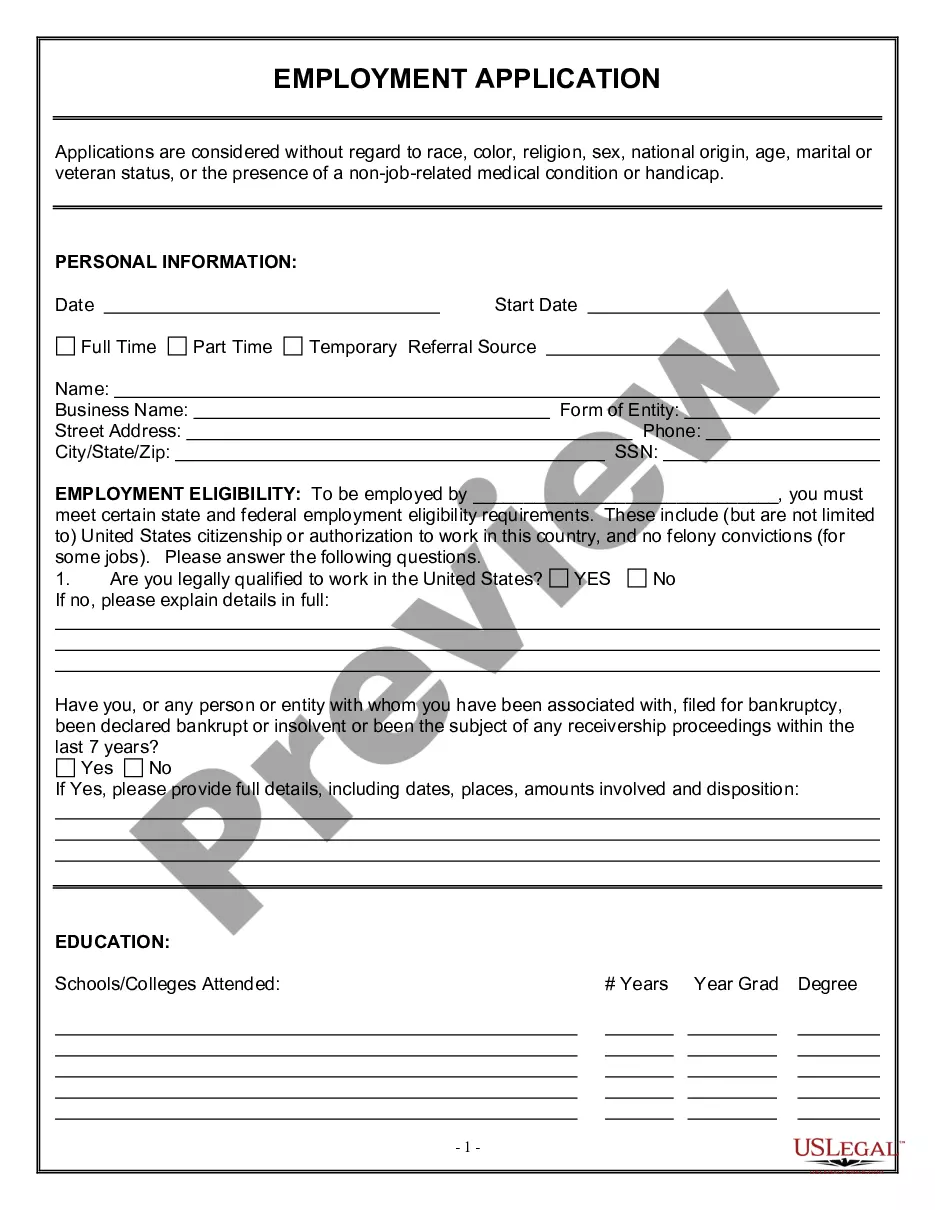
Nebraska Employment Application for Labourer
Description

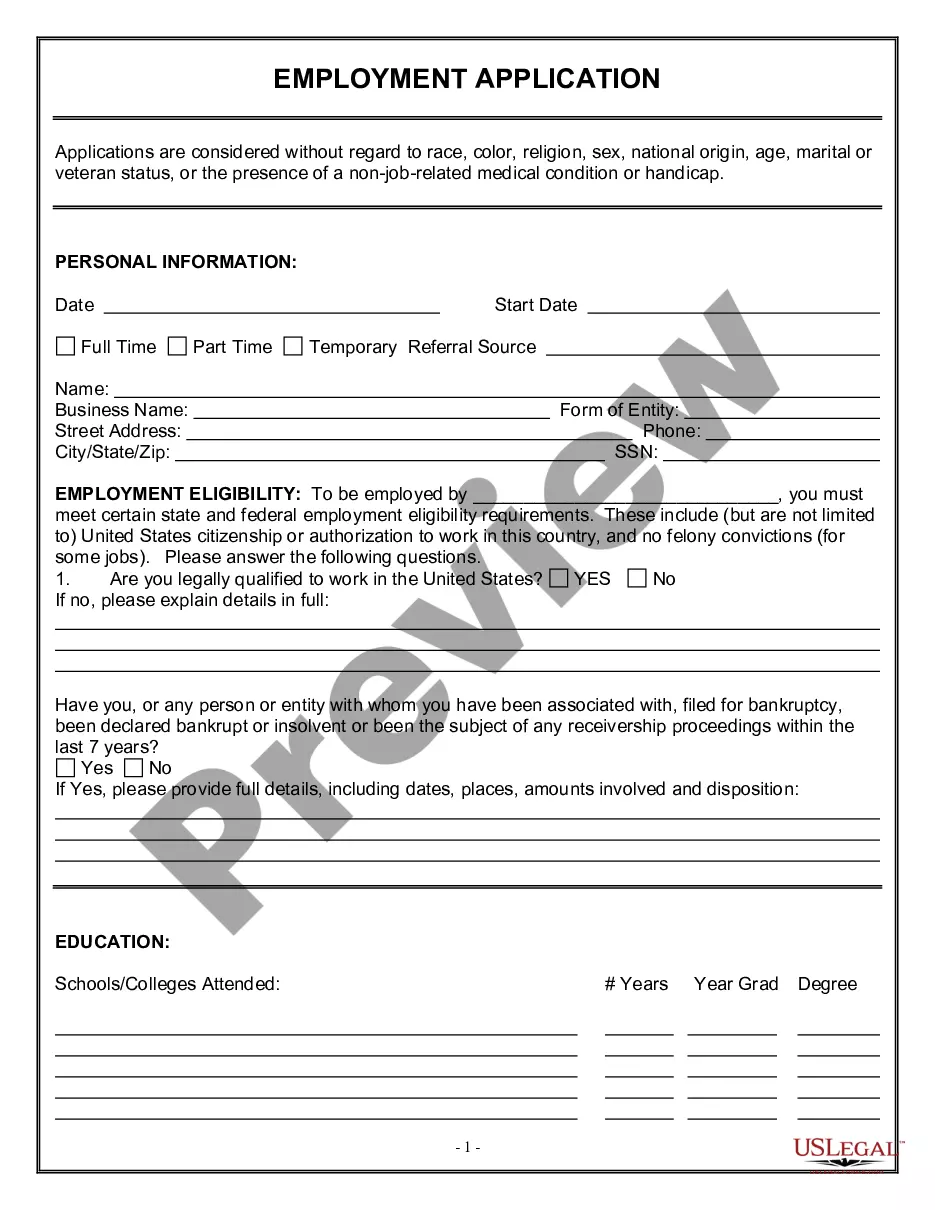
Get your form ready online
Our built-in tools help you complete, sign, share, and store your documents in one place.
Make edits, fill in missing information, and update formatting in US Legal Forms—just like you would in MS Word.
Download a copy, print it, send it by email, or mail it via USPS—whatever works best for your next step.
Sign and collect signatures with our SignNow integration. Send to multiple recipients, set reminders, and more. Go Premium to unlock E-Sign.
If this form requires notarization, complete it online through a secure video call—no need to meet a notary in person or wait for an appointment.
We protect your documents and personal data by following strict security and privacy standards.

Make edits, fill in missing information, and update formatting in US Legal Forms—just like you would in MS Word.

Download a copy, print it, send it by email, or mail it via USPS—whatever works best for your next step.

Sign and collect signatures with our SignNow integration. Send to multiple recipients, set reminders, and more. Go Premium to unlock E-Sign.

If this form requires notarization, complete it online through a secure video call—no need to meet a notary in person or wait for an appointment.

We protect your documents and personal data by following strict security and privacy standards.
Looking for another form?
How to fill out Employment Application For Labourer?
Are you presently in a scenario where you require documentation for various organizations or individuals about every time.
There are numerous legal document templates accessible online, but obtaining trustworthy versions can be challenging.
US Legal Forms offers thousands of form templates, including the Nebraska Employment Application for Laborer, which are crafted to meet federal and state requirements.
Once you find the correct form, click Download now.
Select the pricing plan you prefer, fill in the required information to create your account, and pay for your order using PayPal or credit card.
- If you are already familiar with the US Legal Forms website and have an account, simply Log In.
- Then, you can download the Nebraska Employment Application for Laborer template.
- If you do not have an account and need to use US Legal Forms, follow these steps.
- Choose the form you need and ensure it is for the correct city/state.
- Utilize the Review option to examine the form.
- Check the details to confirm you have selected the right form.
- If the form isn’t what you’re looking for, use the Search field to find the form that meets your needs and requirements.
Form popularity
FAQ
Search models predict that until benefit exhaustion, UI depresses job search effort and increases reservation wages. Over an unemployment spell, search effort should increase up to benefit exhaustion and stay high thereafter. Meanwhile, reservation wages should decrease up to benefit exhaustion and stay low thereafter.
What work search activities count for my claim requirements? Five reemployment activities must be completed per benefit week in order to remain eligible for Unemployment Benefits, and two of the activities must be employment applications.
The requirement to look for work begins when you receive this notice. The requirement applies to finding suitable work that is safe to return to and is comparable to your skills, experience, usual occupation, and health.
Employers can be assigned to a category 20 rate in any of three different ways: A new construction company without the required prior experience will automatically be assigned this category, An employer who is delinquent with their quarterly reports, or.
Federal Pandemic Unemployment Compensation (FPUC), which provides an additional $300 weekly payment to all recipients of state or federal unemployment benefits. Pandemic Unemployment Assistance (PUA), which provides benefits for those who would not usually qualify, such as the self-employed and gig workers.
Workers who do not have a return date within 16 weeks of their layoff or furlough are required to search for work in order to remain eligible for unemployment benefits. Employers can apply for a two-week extension beyond the 16 weeks.
Nebraska Ending Participation in Federal Pandemic Unemployment Programs. LINCOLN - Nebraska will no longer participate in federal pandemic unemployment programs effective June 19.
Workers who do not have a return date within 16 weeks of their layoff or furlough are required to search for work in order to remain eligible for unemployment benefits. Employers can apply for a two-week extension beyond the 16 weeks.
Job Center. 1111 O Street, Suite 222. Lincoln, NE 68508.Hours: 8 a.m. - 5 p.m. M - F.Phone: 402-471-2275.Email: ndol.lincolnwfd@nebraska.gov.
The taxable wage base for employers in UI Tax Categories 1 through 19 is $9,000. Employers pay tax on the first $9,000 earned by every worker during the calendar year. Category 20 employers will pay on the first $24,000 earned by every worker during the calendar year.