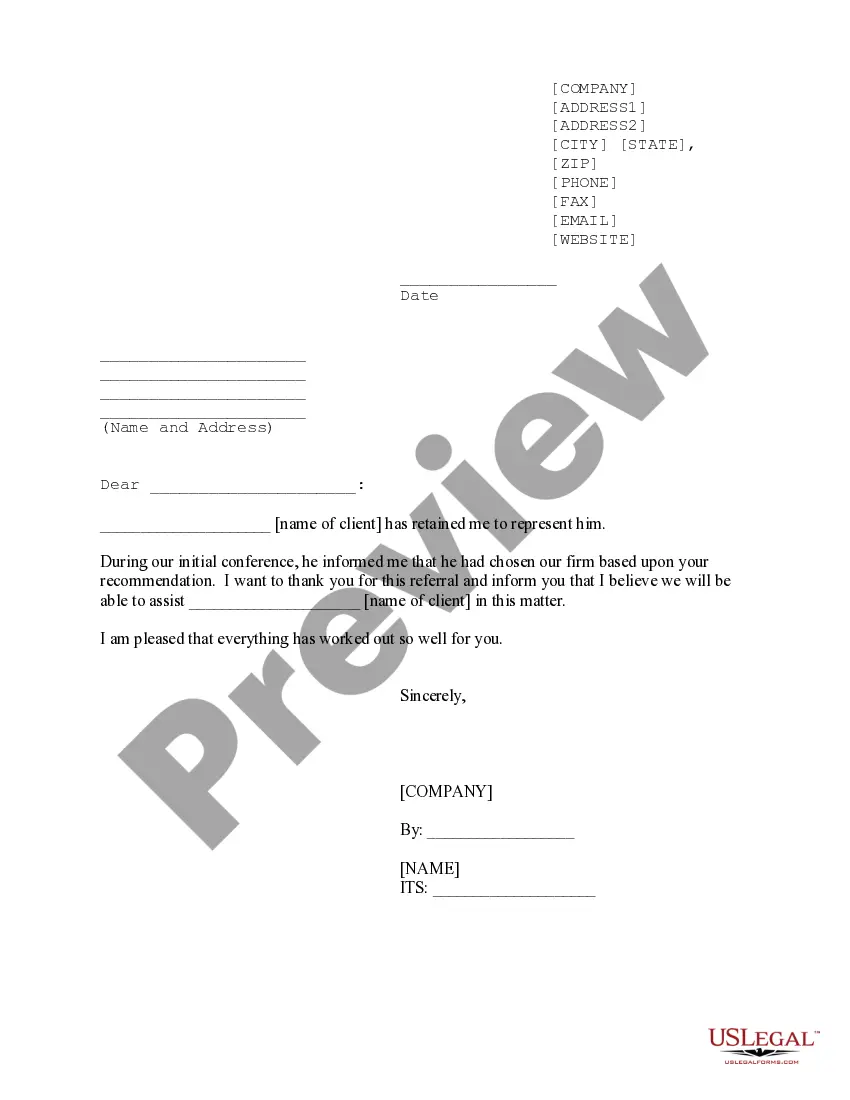
This form is a Complaint For Wrongful Termination of Insurance Under ERISA and For Bad Faith-Jury Trial Demand. Adapt to your specific circumstances. Don't reinvent the wheel, save time and money.
Nebraska Complaint For Wrongful Termination of Insurance Under ERISA and For Bad Faith - Jury Trial Demand
Instant download
This website is not affiliated with any governmental entity
Public form
Description




How to fill out Complaint For Wrongful Termination Of Insurance Under ERISA And For Bad Faith - Jury Trial Demand?
US Legal Forms - one of the most important collections of legal documents in the United States - provides a variety of legal document templates that you can download or print. By using the website, you can access thousands of forms for business and personal use, organized by categories, states, or keywords.
You will find the most current versions of documents like the Nebraska Complaint For Wrongful Termination of Insurance Under ERISA and For Bad Faith - Jury Trial Demand in just a few minutes. If you already have a subscription, Log In and download the Nebraska Complaint For Wrongful Termination of Insurance Under ERISA and For Bad Faith - Jury Trial Demand from the US Legal Forms library. The Download option will be available on each document you view. You can access all previously acquired documents in the My documents section of your account.
If you want to use US Legal Forms for the first time, here are simple steps to get you started: Make sure you have selected the correct form for your city/region. Click on the Preview option to review the document’s details. Check the document summary to ensure you have chosen the right form. If the form doesn’t meet your needs, use the Search field at the top of the page to find the one that does. If you are satisfied with the form, confirm your choice by clicking the Purchase now button. Then, select your preferred payment plan and provide your information to register for an account. Process the transaction. Use your credit card or PayPal account to finalize the purchase. Choose the format and download the form to your device. Make modifications. Fill out, edit, print, and sign the downloaded Nebraska Complaint For Wrongful Termination of Insurance Under ERISA and For Bad Faith - Jury Trial Demand. Each template you add to your account has no expiration date and is yours indefinitely. Thus, if you wish to download or print another copy, simply go to the My documents section and click on the document you need.
- Access the Nebraska Complaint For Wrongful Termination of Insurance Under ERISA and For Bad Faith - Jury Trial Demand through US Legal Forms, the most comprehensive collection of legal document templates.
- Utilize numerous professional and state-specific templates that fulfill your business or personal needs and requirements.
Form popularity
FAQ
A bad faith claim in Nebraska occurs when an insurance company unfairly denies or delays a legitimate claim, failing to uphold their contractual obligations. In such cases, policyholders can pursue legal action to seek compensation for damages. If you think your rights have been violated, consider filing a Nebraska Complaint For Wrongful Termination of Insurance Under ERISA and For Bad Faith - Jury Trial Demand. Our platform offers the tools and information you need to address these issues.
Yes, Nebraska does recognize diminished value claims, which can arise after an accident or damage to your vehicle. This means you may seek compensation for the reduction in your car's value post-repair. If your insurance company denies your claim or acts in bad faith, you can file a Nebraska Complaint For Wrongful Termination of Insurance Under ERISA and For Bad Faith - Jury Trial Demand. Our resources can help you navigate these claims effectively.
In Nebraska, an insurance company typically has a reasonable amount of time to settle a claim, usually within 30 days after receiving the necessary documentation. However, if there are disputes or complexities, this timeframe may extend. If you believe your claim is taking too long, you might consider filing a Nebraska Complaint For Wrongful Termination of Insurance Under ERISA and For Bad Faith - Jury Trial Demand. Our platform can guide you through this process.
The Employee Retirement Income Security Act of 1974 (ERISA) is a federal law that sets minimum standards for most voluntarily established retirement and health plans in private industry to provide protection for individuals in these plans.
An ERISA plan is one you will contribute to as an employer, matching participants' inputs. ERISA plans must follow the rules of the Employee Retirement Income Security Act, from which the plan earned its name. Non-ERISA plans do not involve employer contributions and do not need to follow the stipulations of the Act.
Employee benefit plans maintained by governmental employers are exempt from ERISA's requirements. This exemption includes plans maintained by the federal, state or local (for example, a city, county or township) governments. Church plans are also exempt from ERISA.
Plans that are covered under ERISA include employer-sponsored retirement plans, such as 401(k)s, pensions, deferred compensation plans, and profit-sharing plans. ERISA also covers certain non-retirement plans like HMOs, FSAs, disability insurance, and life insurance.
The easiest way to find out whether you are enrolled in a self-funded ERISA plan or whether you are enrolled directly in the state-regulated HMO or insurance company is to ask your employer. At the time of this writing, Congress was considering adding consumer protections and mandated benefits to ERISA plans.