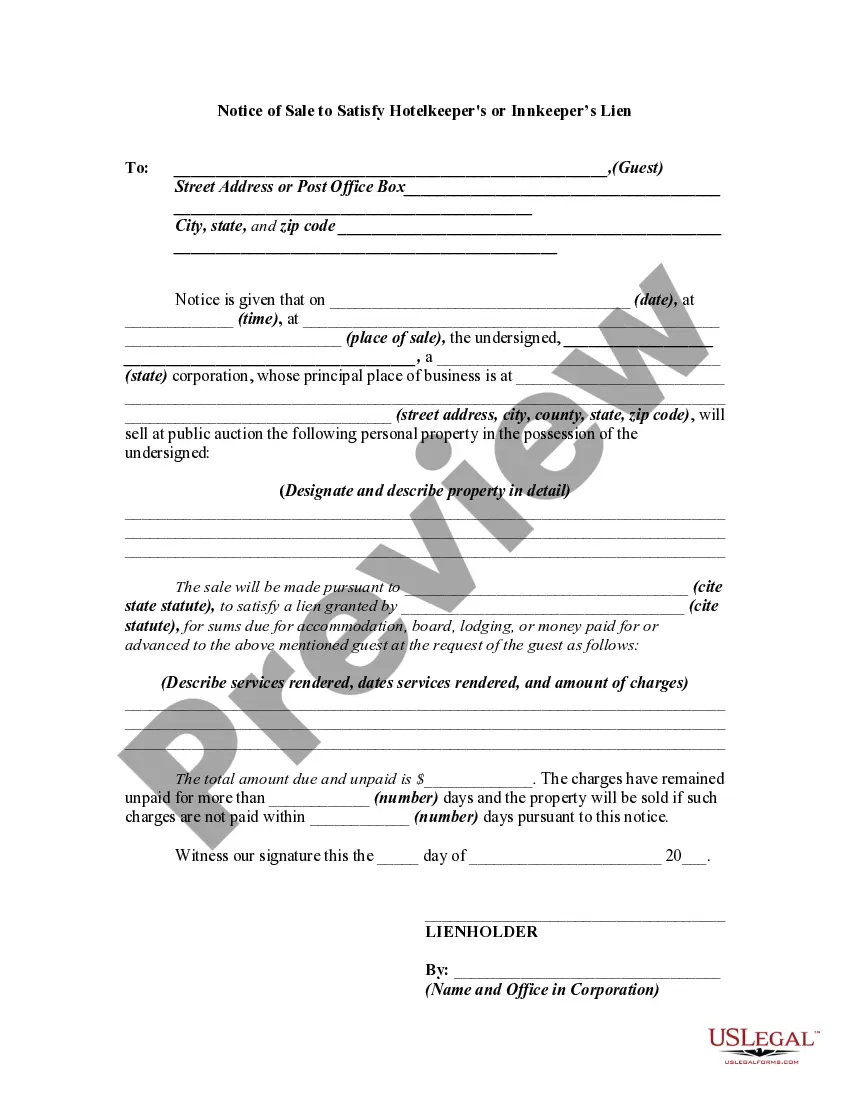
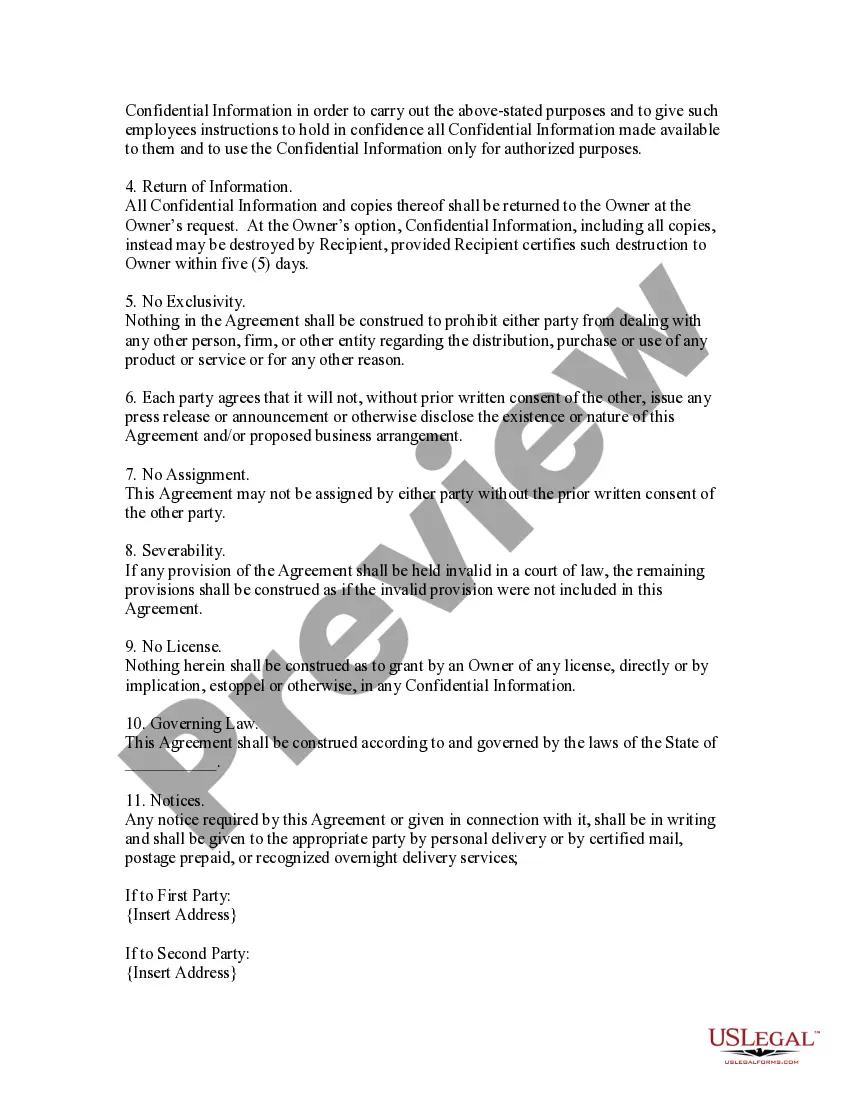
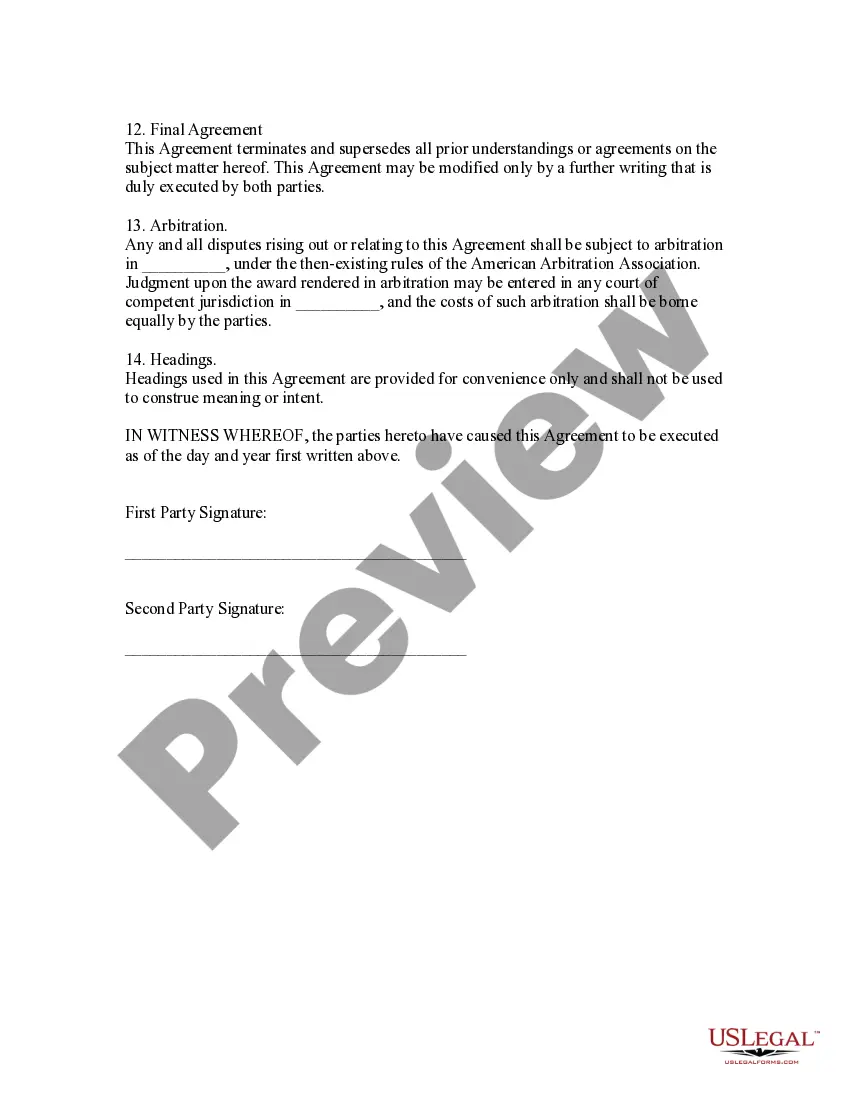
North Dakota Reciprocal Nondisclosure Agreement
Description
Get your form ready online
Our built-in tools help you complete, sign, share, and store your documents in one place.
Make edits, fill in missing information, and update formatting in US Legal Forms—just like you would in MS Word.
Download a copy, print it, send it by email, or mail it via USPS—whatever works best for your next step.
Sign and collect signatures with our SignNow integration. Send to multiple recipients, set reminders, and more. Go Premium to unlock E-Sign.
If this form requires notarization, complete it online through a secure video call—no need to meet a notary in person or wait for an appointment.
We protect your documents and personal data by following strict security and privacy standards.

Make edits, fill in missing information, and update formatting in US Legal Forms—just like you would in MS Word.

Download a copy, print it, send it by email, or mail it via USPS—whatever works best for your next step.

Sign and collect signatures with our SignNow integration. Send to multiple recipients, set reminders, and more. Go Premium to unlock E-Sign.

If this form requires notarization, complete it online through a secure video call—no need to meet a notary in person or wait for an appointment.

We protect your documents and personal data by following strict security and privacy standards.
Looking for another form?
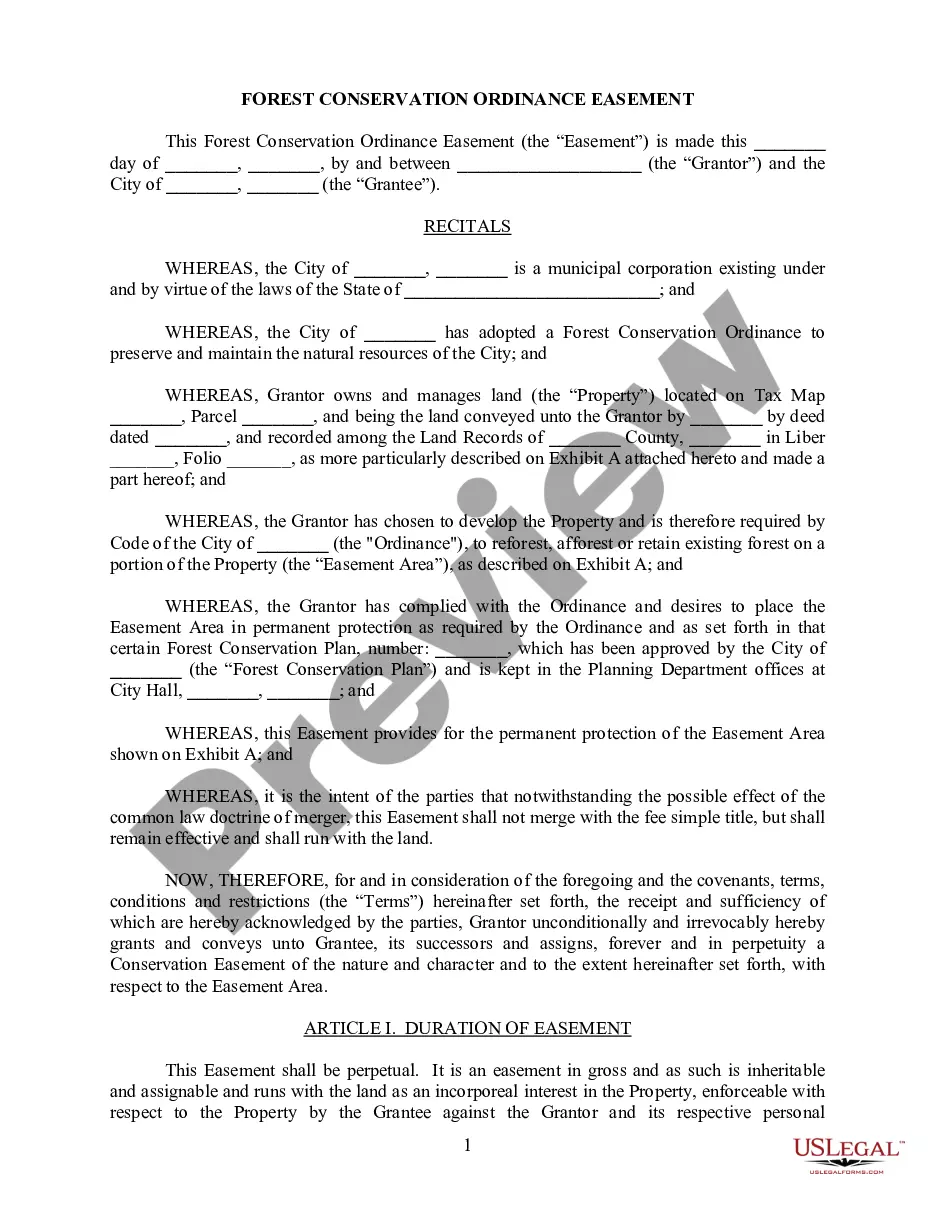
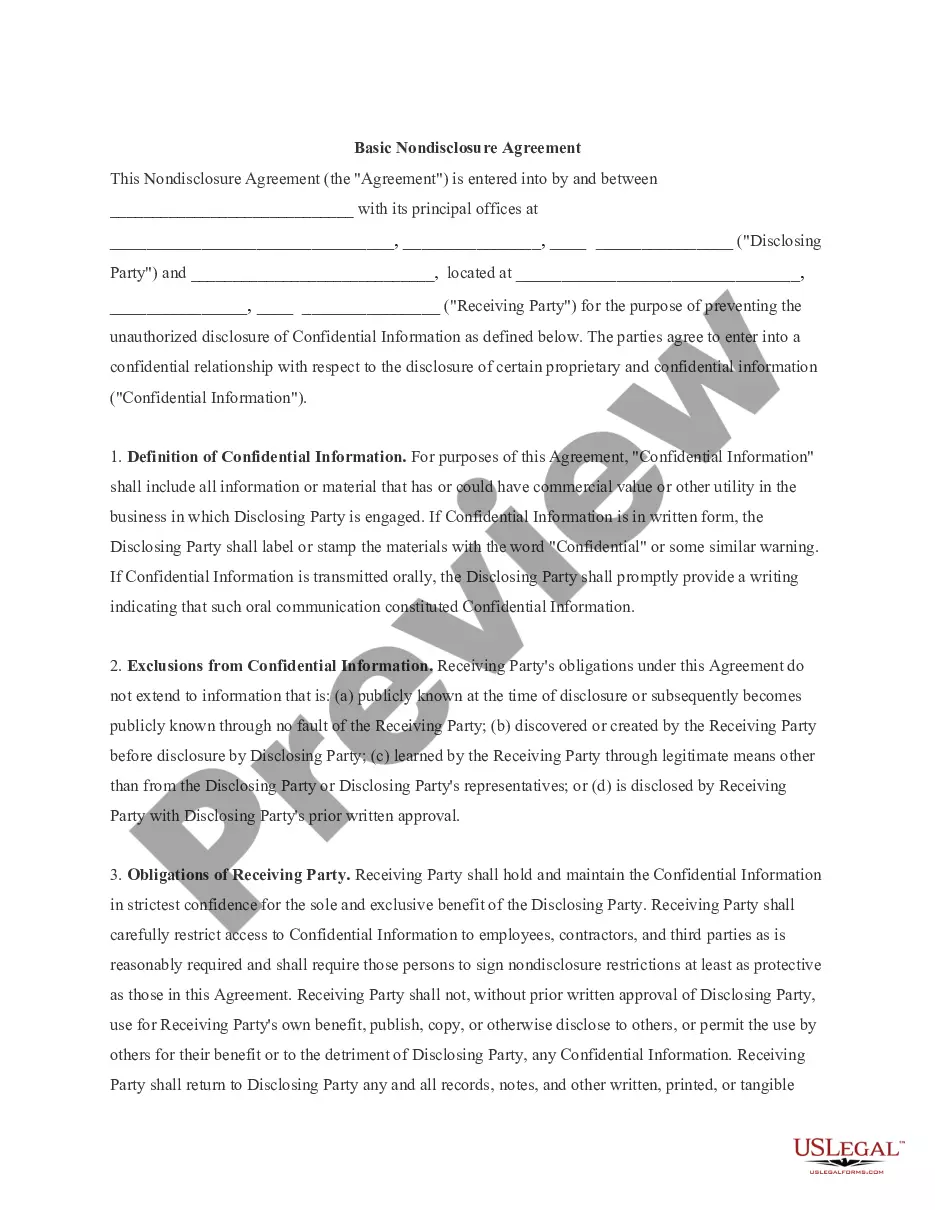
How to fill out Reciprocal Nondisclosure Agreement?
You can spend numerous hours online attempting to locate the validated document template that meets the federal and state requirements you need.
US Legal Forms offers thousands of legal forms that can be reviewed by professionals.
You can conveniently obtain or create the North Dakota Reciprocal Nondisclosure Agreement through the service.
If available, utilize the Preview option to review the document template as well.
- If you already possess a US Legal Forms account, you can Log In and hit the Download button.
- After that, you can complete, modify, print, or sign the North Dakota Reciprocal Nondisclosure Agreement.
- Every legal document template you buy belongs to you indefinitely.
- To retrieve another copy of any purchased form, navigate to the My documents section and select the appropriate option.
- If you are visiting the US Legal Forms site for the first time, adhere to the clear instructions listed below.
- First, ensure that you have chosen the correct document template for your county/city.
- Review the form description to confirm you have selected the right one.
Form popularity
FAQ
Non-compete agreements do face significant restrictions in North Dakota. In fact, North Dakota law prohibits these agreements in most cases, making their enforceability quite limited. Instead, you might consider using a North Dakota Reciprocal Nondisclosure Agreement, which provides protection for businesses while respecting the rights of employees.
It's also possible to draft the jurisdiction or choice of law clause in such a way that there are two exclusive jurisdictions in the same NDA.
The High Court has held that a contract can, where the negotiations are complex, be made in two different jurisdictions. The decision has important ramifications in relation to where proceedings may be issued and therefore affects issues of both certainty and flexibility of where proceedings take place.
Parties are free to choose either one or multiple applicable legal systems for their contract. They could also choose different laws for different aspects of the contract.
Violating an NDA can have serious consequences NDAs are legally binding contracts. If an employee has violated an NDA, then the company may take legal action. The most common claims in NDA lawsuits include: Breach of the contract (such as the breach of NDA)
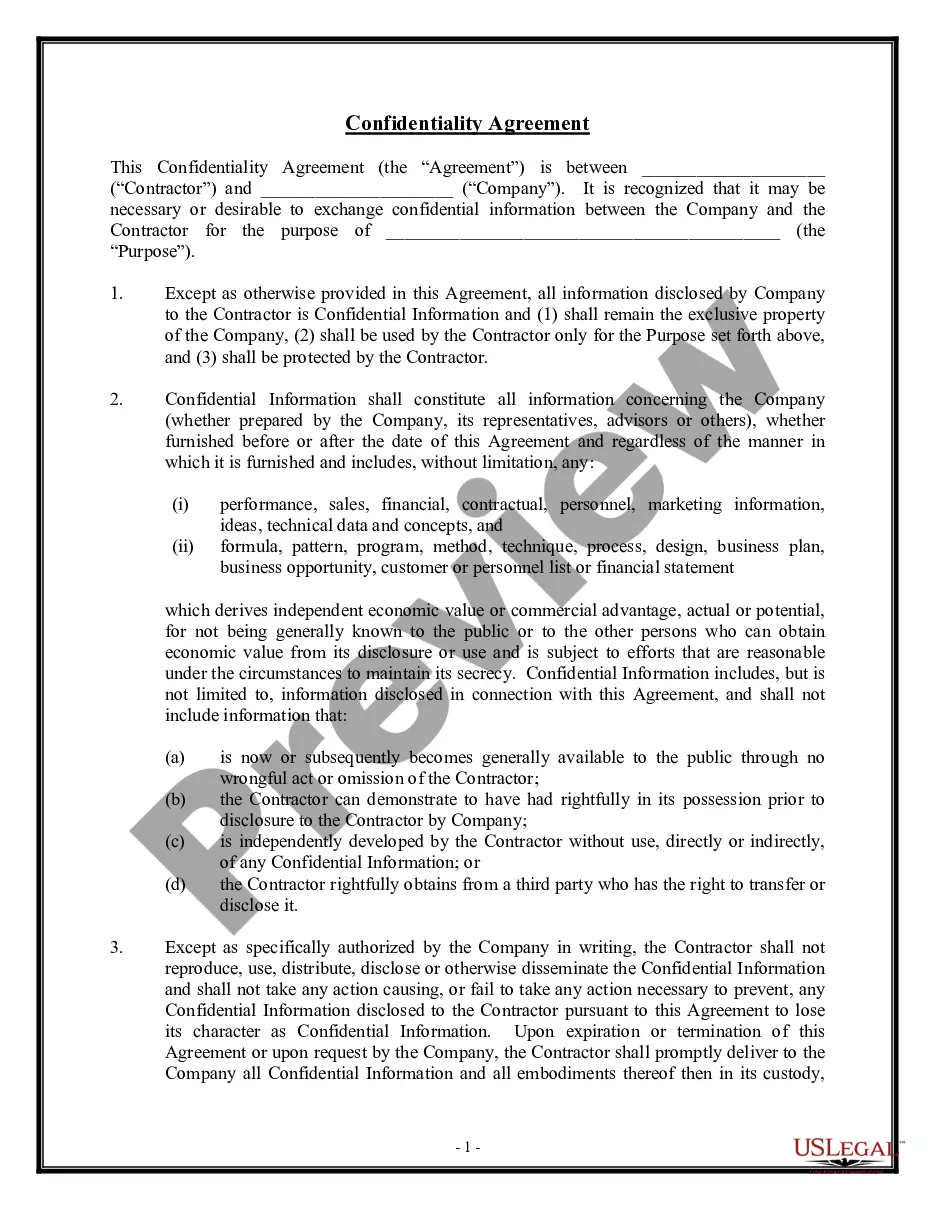
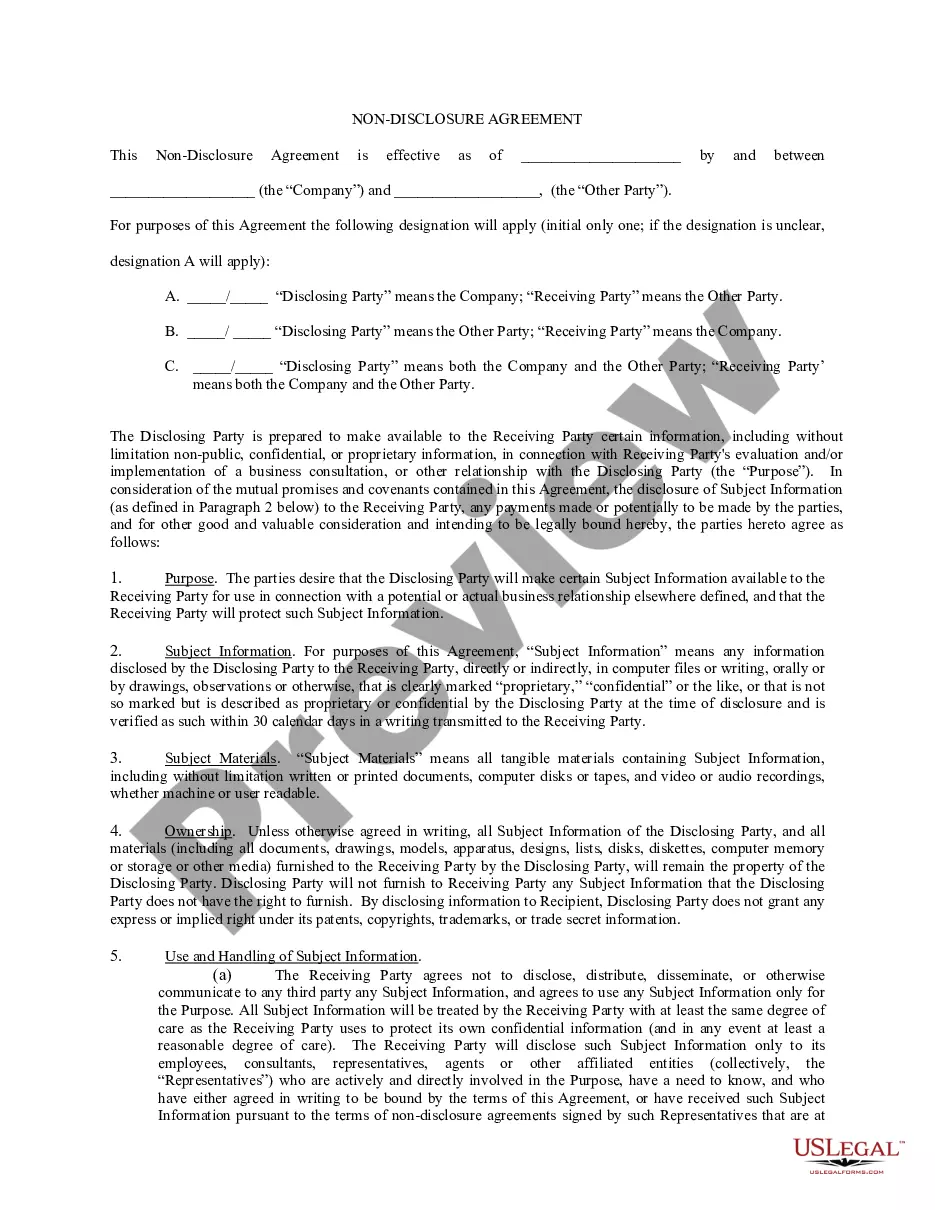
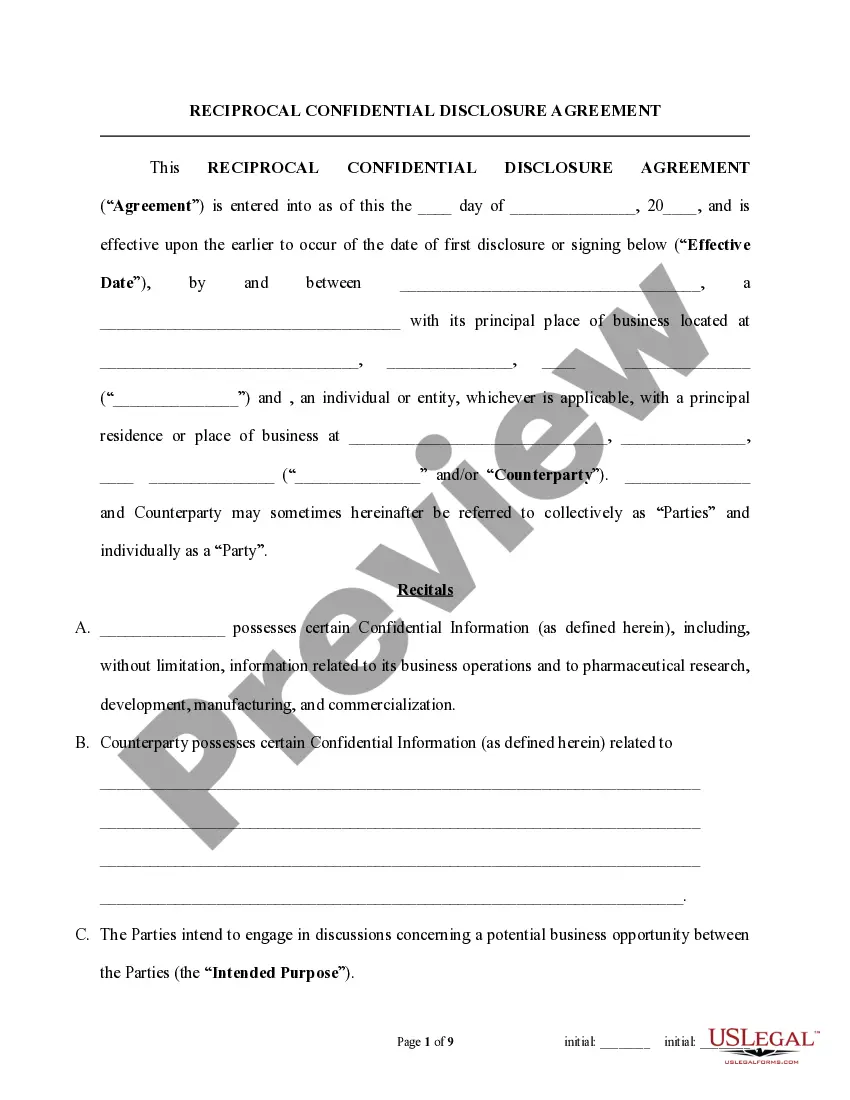
A reciprocal, or mutual, nondisclosure agreement protects both parties who are entering into a business relationship through which confidential information will be exchanged.
Depending on your needs, you can choose from three types of NDAs: unilateral, bilateral, and unilateral. Unilateral NDAs only require one party to disclose confidential information, while bilateral NDAs require two parties to disclose private information.
Summary A Reciprocal Confidentiality Agreement, otherwise known as a Non-Disclosure Agreement or NDA, can help to protect private, sensitive or confidential information disclosed between two people. This NDA provides for a reciprocal duty of confidentiality.
NDAs, or non-disclosure agreements, are legally enforceable contracts that create a confidential relationship between a person who has sensitive information and a person who will gain access to that information. A confidential relationship means one or both parties has a duty not to share that information.
A Confidential Disclosure Agreement (CDA), also referred to as non-disclosure agreement (NDA) or secrecy agreement, is a legal agreement between a minimum of two parties which outlines information the parties wish to share with one another for certain evaluation purposes, but wish to restrict from wider use and