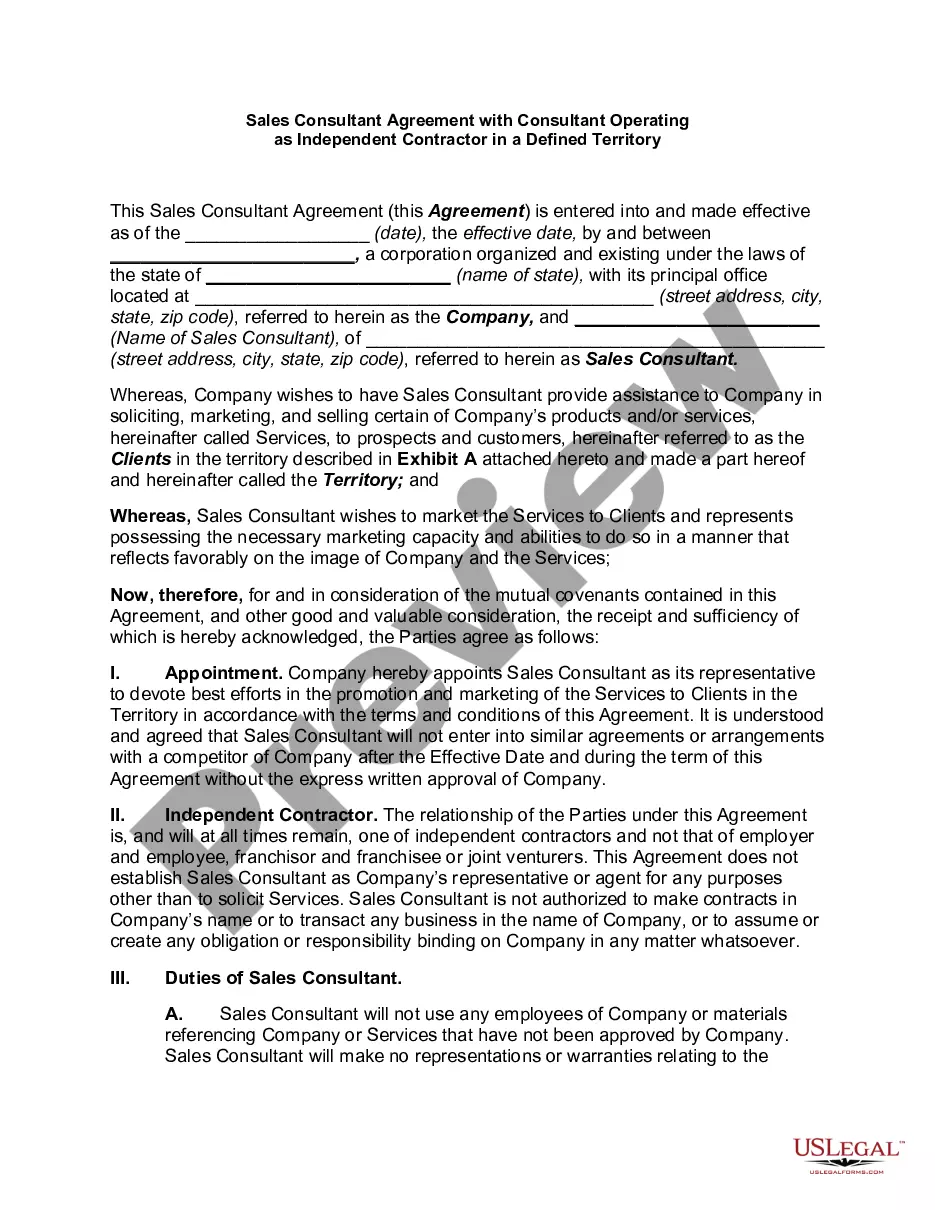
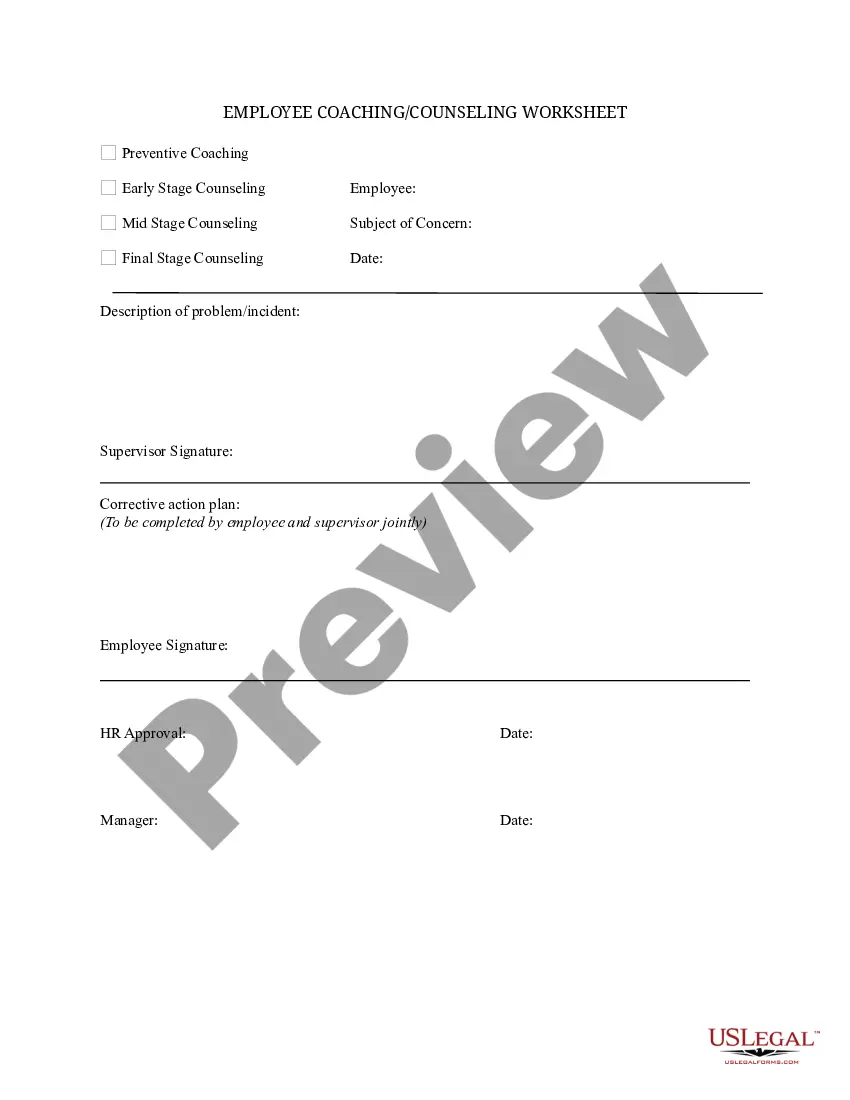
North Dakota Employee Coaching Script
Description
Get your form ready online
Our built-in tools help you complete, sign, share, and store your documents in one place.
Make edits, fill in missing information, and update formatting in US Legal Forms—just like you would in MS Word.
Download a copy, print it, send it by email, or mail it via USPS—whatever works best for your next step.
Sign and collect signatures with our SignNow integration. Send to multiple recipients, set reminders, and more. Go Premium to unlock E-Sign.
If this form requires notarization, complete it online through a secure video call—no need to meet a notary in person or wait for an appointment.
We protect your documents and personal data by following strict security and privacy standards.

Make edits, fill in missing information, and update formatting in US Legal Forms—just like you would in MS Word.

Download a copy, print it, send it by email, or mail it via USPS—whatever works best for your next step.

Sign and collect signatures with our SignNow integration. Send to multiple recipients, set reminders, and more. Go Premium to unlock E-Sign.

If this form requires notarization, complete it online through a secure video call—no need to meet a notary in person or wait for an appointment.

We protect your documents and personal data by following strict security and privacy standards.
Looking for another form?
How to fill out Employee Coaching Script?
US Legal Forms - one of the most prominent collections of legal documents in the USA - offers an array of legal document templates that you can download or create.
By utilizing the website, you can access thousands of forms for both business and personal purposes, categorized by types, states, or keywords.
You can discover the latest forms such as the North Dakota Employee Coaching Script within minutes.
Review the form description to confirm you have chosen the right one.
If the form is unsuitable, utilize the Search box at the top of the screen to find one that fits your needs.
- If you possess a monthly subscription, Log In and download the North Dakota Employee Coaching Script from the US Legal Forms library.
- The Download option will appear on every form you view.
- You have access to all previously downloaded forms in the My documents section of your account.
- If this is your first time using US Legal Forms, here are simple steps to help you begin.
- Ensure you have selected the correct form for your city/state.
- Select the Preview option to review the form's details.
Form popularity
FAQ
What is the purpose of a coaching plan? Coaches use coaching plans as a tool to work with clients, track progress, and make adjustments as needed. A coaching plan template is generalized. However, once completed, it becomes an individualized coaching plan tailored to the client.
What You Should DocumentSend follow-up e-mails. Send direct reports a follow-up e-mail after every performance- or coaching-related conversation.Make notes or memos to self.Keep a running log.Set up an e-mail file.
Common Topics for Coaching ConversationsOnboarding.Time management.Missed deadlines.Overworked or overwhelmed employees.Problem solving.Goal setting.Obstacles.Performance.
5 step coaching processEstablishing the Objective. The beginning of any coaching interaction needs to start with a clear purpose.Understanding through Assessment.Providing Feedback.Identifying Goals.Following up with Support.
Coaching for Success Part III: Elements of a Coaching...Get very specific on what issue they are trying to address.Explore possibilities.Look for the coachable moment.Always move toward action.
Coaching to Engage: 12 Rules to Effective, Ongoing Employee CoachingGive employees regular, frequent feedback.Create a culture of team feedback.Push employees to their attainable limits.Be open to employee ideas.Encourage employees to learn from others.Ask employees for opinions.Build confidence.More items...?
The 5 Essential Components of Successful CoachingThe Coach-Client Relationship.Problem Identification and Goal Setting.Problem-Solving.Transformational Processes.Outcome Definition and Measurement.
How to Build an Effective Coaching ProgramIdentify the Objectives of the Program. Decide exactly what you want to achieve from your coaching program.Provide Training for Coaches.Communication About the New Program.Schedule Coaching Sessions.Support From Leadership.Evaluate Results and Adjust.
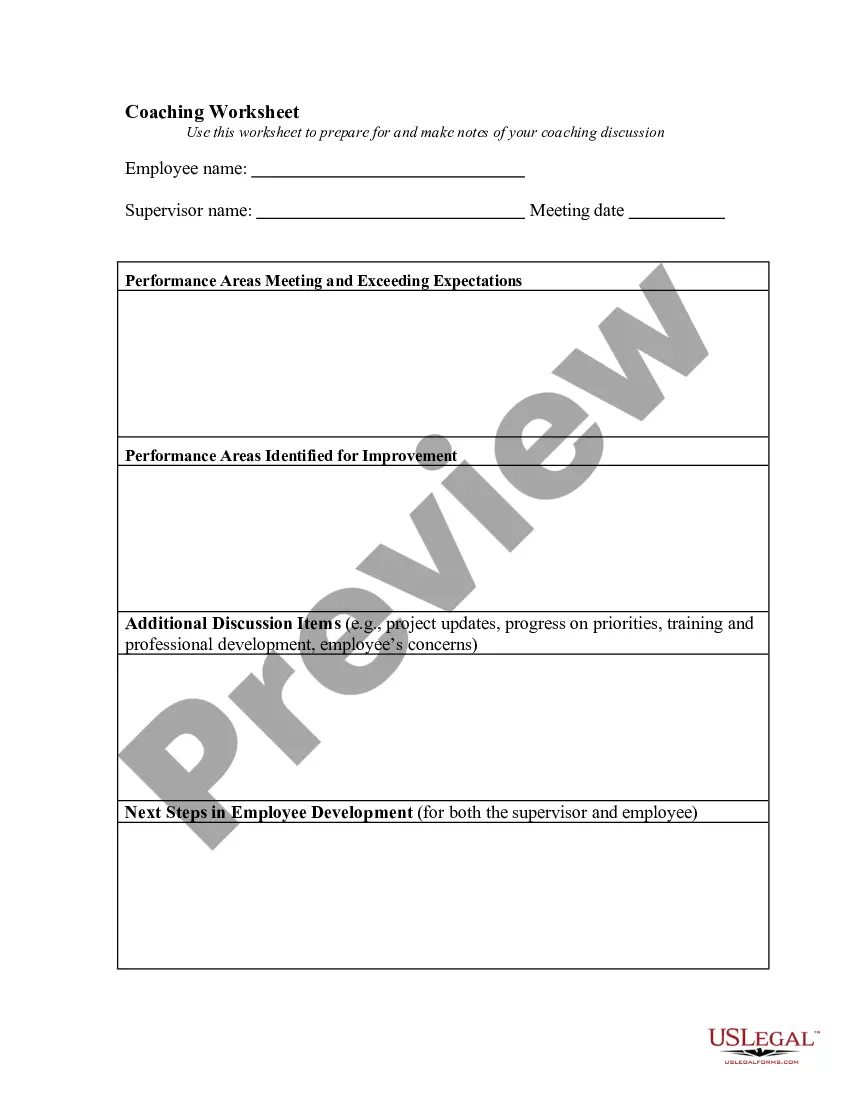
How to create a coaching planEstablish the employees' strengths.Locate any areas of improvement.Ask the employee to evaluate their performance.Determine any obstacles in the way of the employee's success.Provide potential solutions to help the employee overcome the obstacle.Develop short-term and long-term goals.More items...?
Stay ConnectedBegin with POSITIVE intent. Start with an open, encouraging attitude. Focus on the impact of behaviors and actions instead of judgments and reactions.Make the conversation COLLABORATIVE. Engage in a two-way conversation, not a lecture.Ensure a SUPPORTIVE environment.